Property Management
Inflation-Proofing Your Rental: Strategic Pricing for Utilities & Services

Written by
Ishika Pannu
Read Time
8 min read
Posted on
April 23, 2026
Overview
Overview
Inflation-Proofing Your Rental: Strategic Pricing for Utilities & Services
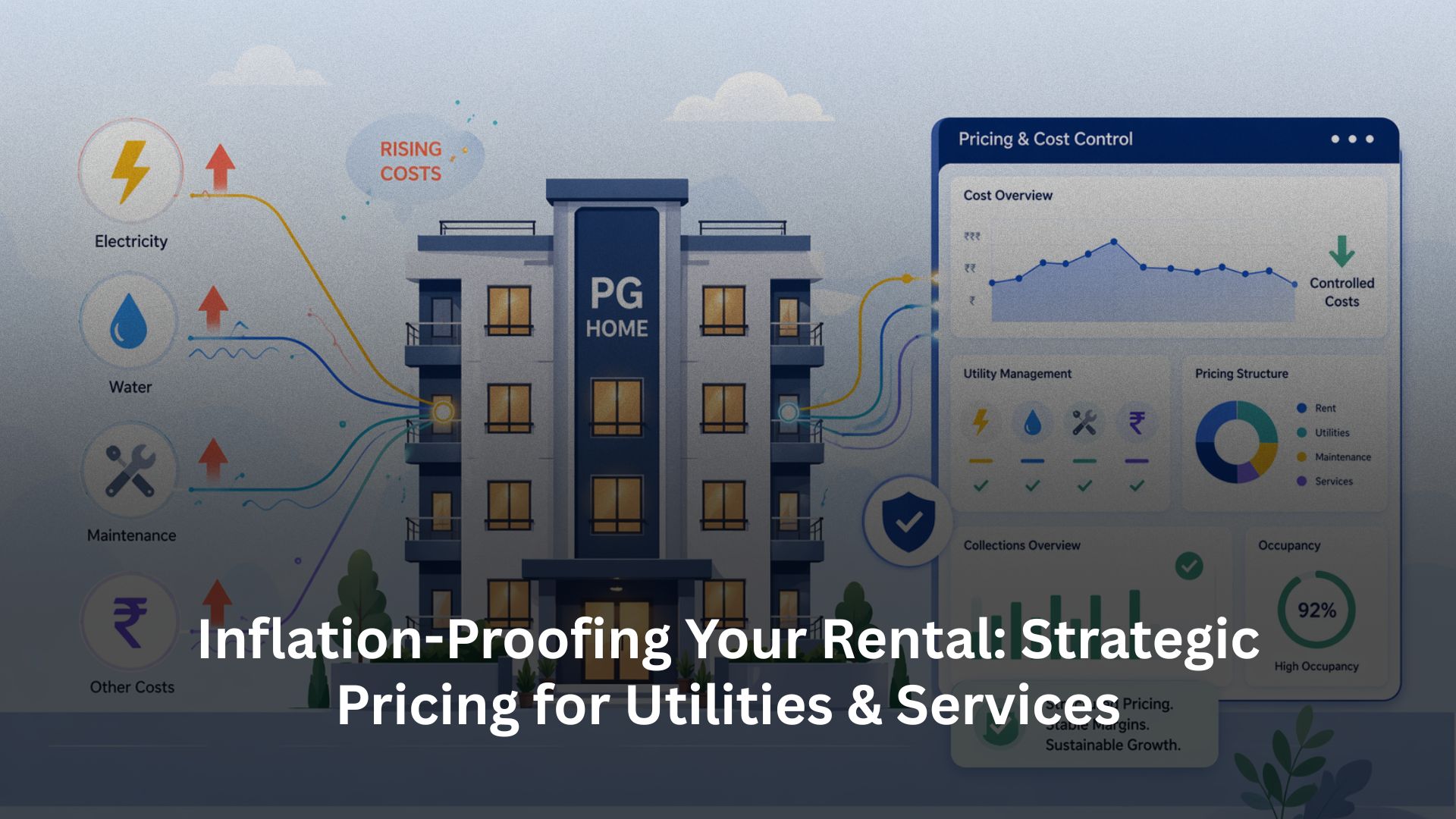
Inflation doesn’t disrupt PG operations in a dramatic or visible way. It rarely shows up as a sudden spike that forces immediate action. Instead, it works in the background, quietly, consistently, and often unnoticed, until the impact becomes difficult to ignore.
For most operators, the early signs are subtle. A slightly higher electricity bill one month. A vendor revising their rates the next. Maintenance costs increasing just enough to feel uncomfortable but not alarming. These changes, taken individually, don’t feel like a problem.
But over time, they begin to stack.
What once felt like stable margins starts feeling tighter. What once felt predictable begins to fluctuate. And eventually, you reach a point where the numbers don’t quite add up the way they used to, even though occupancy hasn’t changed.
That’s the real effect of inflation in PG operations. It doesn’t reduce revenue. It quietly reshapes profitability.
The Real Impact of Inflation on PG Operations
To understand inflation in a PG context, you need to look beyond rent.
A PG is not just a rented room. It is a bundled service, one that includes utilities, maintenance, infrastructure, and ongoing operational support. Each of these components responds differently to rising costs, and most of them trend upward over time.
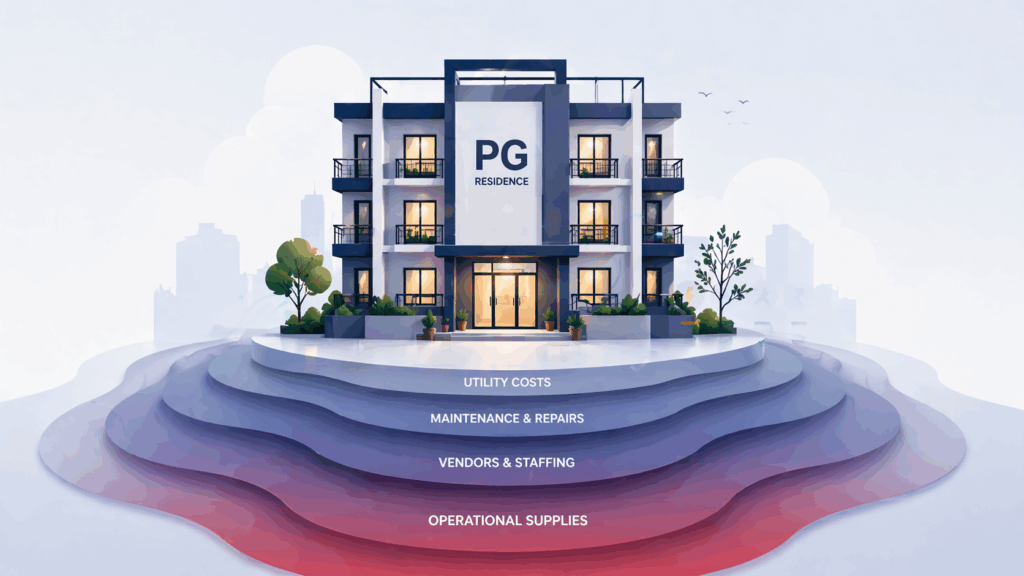
This creates pressure across multiple layers:
- Utilities: Electricity and water costs fluctuate based on usage, seasonality, and local supply conditions
- Maintenance: Wear and tear accelerates in high-density setups, leading to more frequent repairs
- Vendors and staffing: Labour costs and vendor contracts adjust periodically, often without much notice
- Operational supplies: Cleaning materials, consumables, and day-to-day inputs steadily increase in price
The complexity lies in how these costs behave. They are not linear, and they are not predictable in the way fixed rent is. Some months are manageable. Others are not.
Over time, this creates a structural imbalance:
“Your costs evolve dynamically, but your pricing often remains static.”
And that gap is where margins begin to erode.
Fixed Pricing vs Variable Reality: Where Margins Slip
Most PG operators rely on a fixed pricing model because it simplifies operations.
Tenants pay a single amount. Billing is straightforward. There’s no need for constant recalculation or explanation. At a smaller scale, this works well.
But as operations grow, the limitations become clear.
Your costs are not fixed. They are:
- Usage-driven
- Seasonal
- Influenced by external factors
When you continue to operate with fixed pricing in a variable-cost environment, the difference doesn’t disappear, it gets absorbed.
That absorption shows up as:
- Reduced profitability over time
- Increased sensitivity to cost spikes
- Limited flexibility in handling unexpected expenses
You’re not losing money in obvious ways. You’re losing efficiency.
And that’s harder to detect, but far more important to fix.
Why Increasing Rent Alone Is Not Enough
Raising rent seems like the most straightforward response to rising costs. And in some cases, it is necessary. But relying on it as the primary strategy creates its own set of problems.
High-density housing markets are extremely sensitive to pricing changes. Even modest increases can influence tenant decisions, especially in competitive locations.
Frequent rent adjustments can lead to:
- Higher tenant churn
- Reduced occupancy stability
- Perception of inconsistency or unpredictability
More importantly, rent is not a precise tool. It does not distinguish between fixed infrastructure costs and fluctuating operational expenses.
It treats everything the same.
And that’s where the approach falls short.
A more sustainable system doesn’t just increase pricing, it restructures how pricing works.
Separating Fixed and Variable Costs: A Strategic Shift
The most effective way to handle inflation is to align your pricing model with how your costs actually behave.
Instead of bundling everything into rent, you create a distinction between:
- Fixed components: The core value of the property, room, amenities, basic services
- Variable components: Costs that fluctuate, utilities, maintenance, usage-driven services
This shift does more than improve financial control, it changes how your entire system responds to cost changes.
With this approach, you can:
- Keep base rent stable and competitive
- Adjust variable costs without disrupting pricing perception
- Align tenant payments with actual usage
Beyond operational benefits, it introduces a level of fairness often missing in bundled pricing models.
Higher consumption leads to higher payments, while lighter users aren’t subsidizing others. As an operator, you also avoid absorbing hidden inefficiencies.
Utility Bill Management: The Silent Margin Killer
Among all operational costs, utilities are the most commonly mismanaged, and the least visible.
In many PGs, utility costs are either:
- Evenly distributed across tenants, or
- Included in rent without detailed tracking
Both approaches create inefficiencies.
When usage is not tracked accurately:
- High consumption goes unnoticed
- Costs are averaged rather than measured
- Operators absorb excess usage without realizing it
Over time, this leads to a pattern where:
- Bills increase without clear explanation
- Profitability declines without obvious cause
- Decision-making becomes reactive rather than informed
The issue is not just high costs. It is the lack of visibility into those costs.

Smart Metering: Bringing Precision Into the System
Smart metering addresses one of the most fundamental gaps in PG operations, accurate measurement.
Instead of relying on estimates, you track actual consumption at a room or tenant level. This transforms how utilities are managed.
With smart metering, you gain:
- Granular visibility: You know exactly where consumption is happening
- Better control: You can identify unusual patterns early
- Fair billing: Charges are based on real usage, not approximations
But the impact goes beyond numbers.
When tenants are aware that usage is monitored and billed accordingly, behavior naturally changes. Consumption becomes more conscious, and waste reduces without enforcement.
At the same time, billing disputes decrease because the data is clear, measurable, and transparent.
This is not just cost management. It is system-level clarity.
Contract Clauses: Designing for Change, Not Stability
Most PG agreements are built around stability. They define rent, deposits, and rules, but rarely account for change.
In a static cost environment, that might work. In an inflation-driven one, it creates friction.
A more effective agreement structure anticipates variability.
It includes:
- Utility charges linked to actual consumption or defined slabs
- Periodic revision clauses for service-related costs
- Clear definitions of what is included in rent
- Structured processes for communicating adjustments
These clauses do not just protect your margins. They set expectations.
When tenants understand the structure from the beginning, adjustments feel like part of the system, not exceptions to it.
Communication: The Operational Layer Most People Ignore
Even the best pricing model can fail if it is not communicated properly.
Tenants don’t resist change because of the numbers. They resist it because of uncertainty.
When pricing adjustments are unclear:
- They feel arbitrary
- Trust begins to erode
- Conversations become reactive and defensive
Clear communication changes this dynamic entirely.
When tenants understand:
- What they are being charged for
- Why changes are happening
- How those changes are calculated
They are far more likely to accept the structure.
Communication doesn’t eliminate cost increases. It removes friction around them.
Building a Financial System That Adapts
Inflation is not a one-time disruption. It is a continuous variable.
Which means your system cannot remain static.
A resilient PG operation is built on:
- Regular tracking of costs
- Clear categorization of expenses
- Data-driven pricing adjustments
- Consistent execution across operations
This shifts your approach from reactive to controlled.
Instead of adjusting after margins shrink, you maintain alignment as conditions change.
Where Most PGs Still Struggle
Even when operators understand the need for structured pricing, execution becomes the challenge.
The most common gaps are not strategic, they are operational:
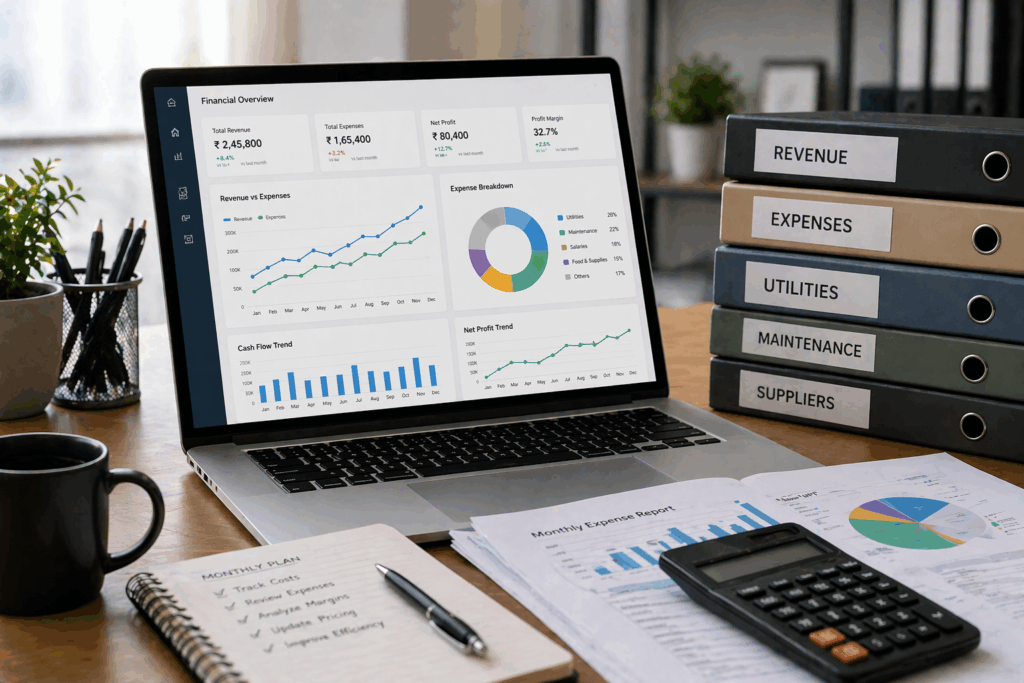
- Financial data spread across multiple tools
- Manual tracking of payments and utilities
- Inconsistent communication with tenants
- Limited visibility into real-time performance
These gaps make it difficult to implement even well-designed systems.
Without structure, decisions remain reactive. And reactive systems rarely scale efficiently.
How Rentok Helps You Stay Ahead of Rising Costs
This is where having a connected system becomes critical.
Rentok brings together tenant management, payment tracking, and operational visibility into a single structured workflow.
With Rentok, you can:
- Track rent collections and pending dues in real time
- Maintain organized tenant records for accurate billing
- Ensure consistent communication across all tenants
- Keep operational and financial data aligned in one place
This creates clarity at multiple levels.
You are no longer relying on fragmented tools or manual processes. Instead, you operate with a system that helps you see where your costs are going, and how they are evolving.
That visibility is what allows you to respond to inflation with control, not guesswork.
Conclusion
Inflation does not force immediate disruption in PG operations. What it does is expose the weaknesses in how pricing and cost structures are built.
Properties that rely on fixed, bundled pricing models will continue to feel pressure as costs rise. Those that separate, track, and manage their expenses with clarity will remain stable, even in fluctuating conditions.
The difference is not in how much you charge. It is in how well you understand what it costs to operate.
If your current system still depends on assumptions, manual tracking, or bundled pricing, the impact of inflation is likely already affecting your margins, just not visibly yet.
A more structured approach doesn’t just protect profitability. It gives you control.
And in a market where costs are constantly shifting, control is what keeps your operations sustainable.
About the Author
Ishika Pannu
Ishika Pannu brings you the latest insights and easy-to-apply strategies in property management—helping you simplify renting and grow with RentOk.