Growth
Eco-Friendly Landlording: Implementing Solar and Water Recycling in PGs

Written by
Ishika Pannu
Read Time
8 min read
Posted on
April 29, 2026
Overview
Overview
Eco-Friendly Landlording: Implementing Solar and Water Recycling in PGs
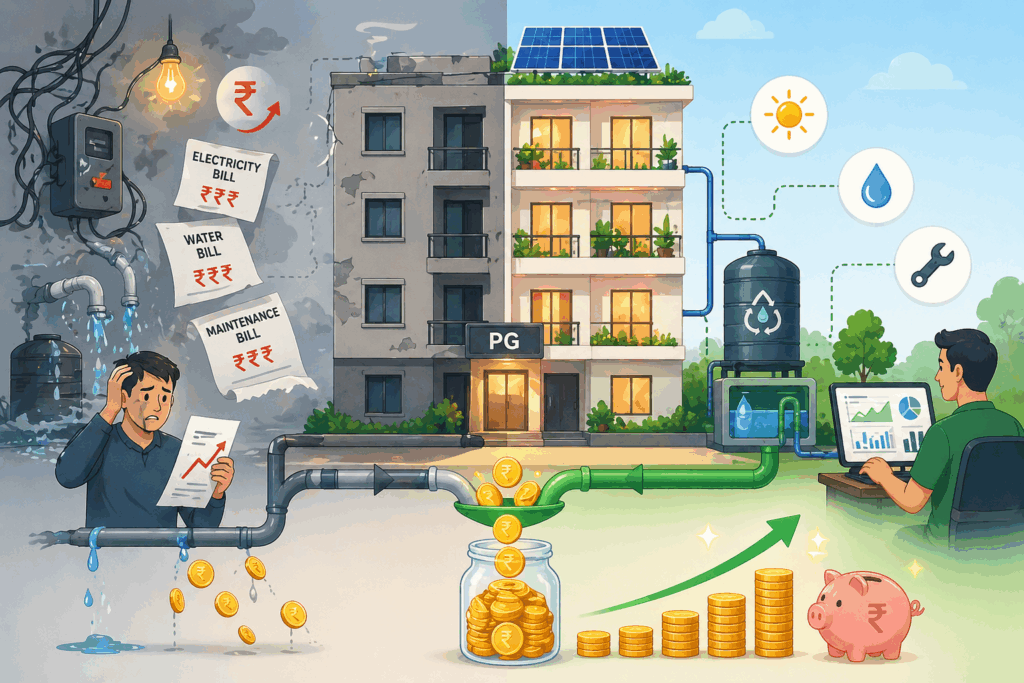
Sustainability in PG operations is often misunderstood as a positioning strategy rather than an operational one. It is seen as something that improves brand perception, attracts a certain kind of tenant, or aligns with broader environmental goals. While all of that is true, it misses the more immediate and practical reality: sustainability, when implemented correctly, is one of the most effective ways to control long-term operating costs.
For most PG operators, the pressure is already visible. Electricity bills don’t remain constant. Water costs fluctuate depending on supply conditions. Maintenance expenses increase as infrastructure ages under heavy usage. These are not one-time spikes; they are recurring patterns. Over time, they quietly compress margins, even when occupancy remains strong.
The question, then, is not whether sustainability is desirable. It is whether your current model can continue to absorb rising input costs without structural change.
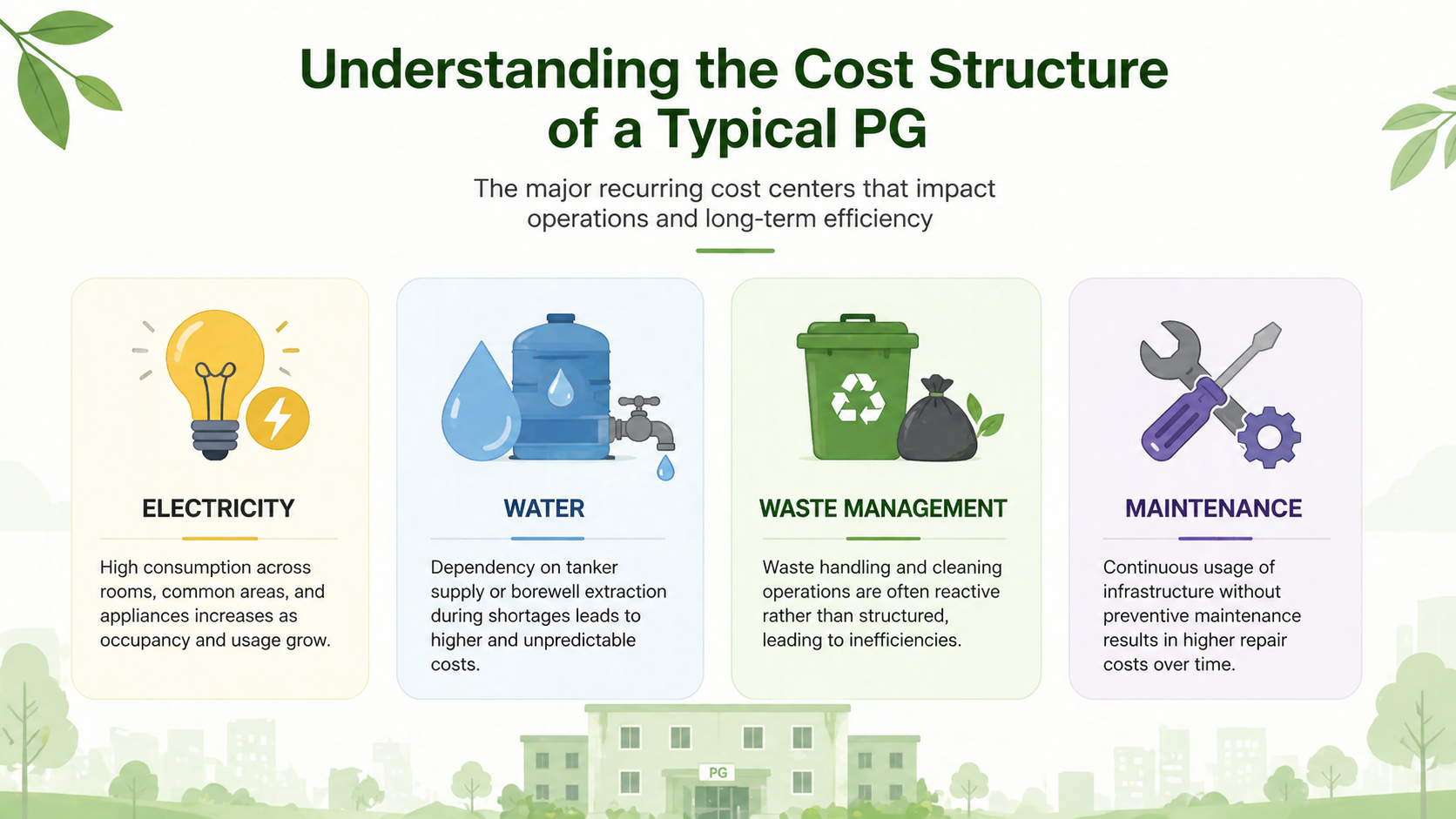
Understanding the Cost Structure of a Typical PG
Before implementing any eco-friendly system, it’s important to understand where the actual pressure points lie. Most PGs operate on a relatively predictable cost structure, but the variability within that structure is what creates long-term inefficiency.
The major recurring cost centers typically include:
- Electricity consumption across rooms, common areas, and appliances, which tends to increase as occupancy stabilizes and usage patterns intensify
- Water dependency, particularly in cities where tanker supply or borewell extraction becomes necessary during shortages
- Maintenance and repair costs driven by continuous usage of infrastructure, often without preventive systems in place
- Waste management and cleaning operations, which are usually handled reactively rather than through structured processes
What makes these costs difficult to manage is not just their size, but their lack of predictability. A system that depends entirely on external inputs will always remain exposed to price fluctuations. This is where sustainability interventions create leverage.
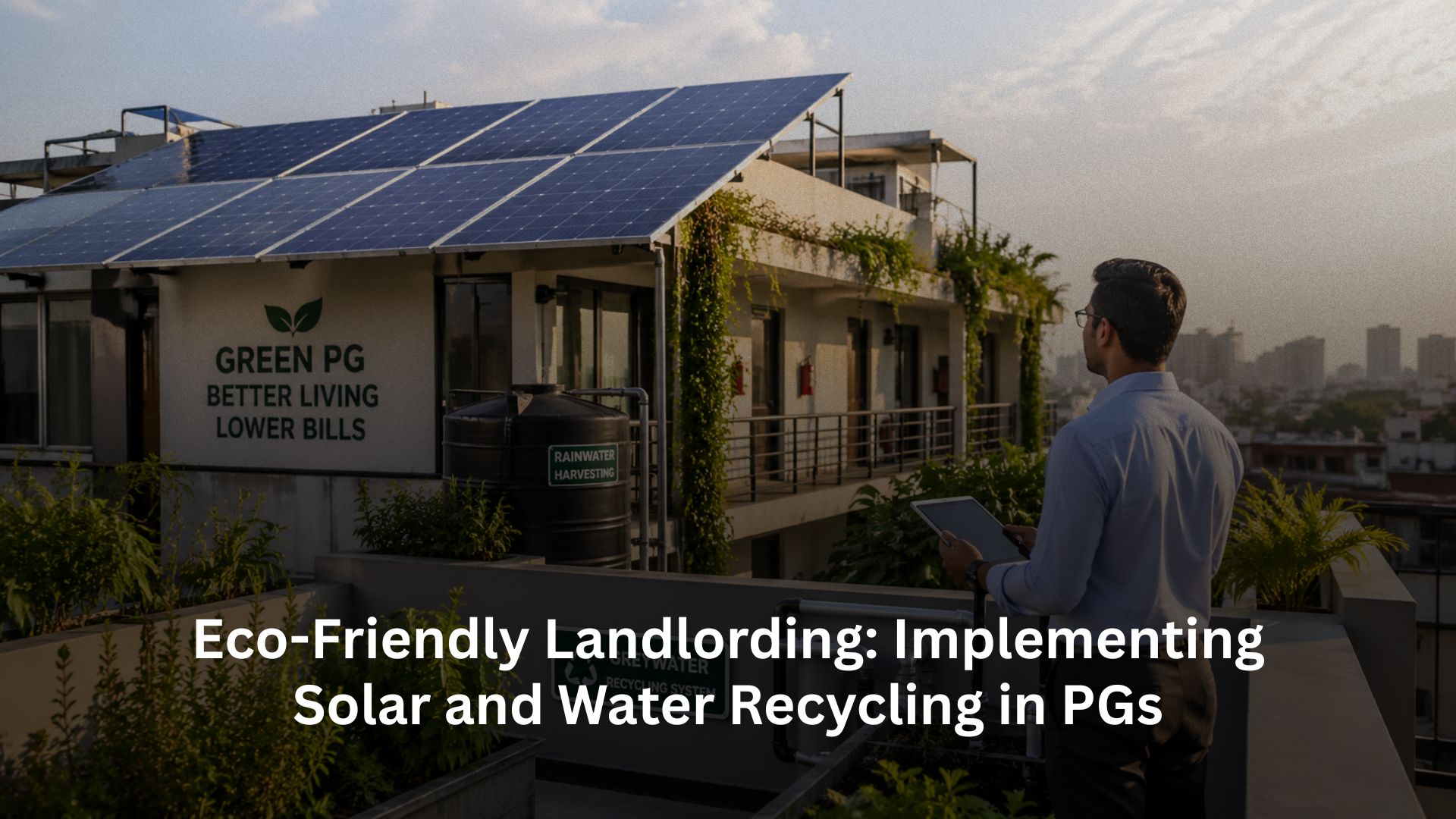
Solar Energy: Moving From Variable Cost to Controlled Cost
Electricity is usually the single largest recurring expense in a PG. Unlike many other costs, it is both continuous and unavoidable. Fans, lighting, air conditioning, heating systems, and shared facilities all contribute to a baseline consumption that remains high regardless of short-term occupancy changes.
Solar energy changes the structure of this cost.
Instead of paying entirely for consumed electricity, you begin to offset a portion of that consumption through self-generated power. The immediate effect is partial cost reduction. The long-term effect is far more significant, cost stabilization.
A well-designed solar setup introduces the following advantages:
- A measurable reduction in monthly electricity bills, particularly during peak usage hours when tariffs are highest
- Protection against future tariff increases, which tend to rise unpredictably and affect long-term planning
- A shift from recurring expenditure to upfront capital investment, allowing better control over financial projections
The hesitation around solar typically comes from the initial investment required. However, when evaluated over a multi-year horizon, the economics become clearer. Most systems reach break-even within a few years, after which the generated energy effectively reduces operational costs without additional input.
The key is not to over-install or under-utilize, but to align capacity with actual consumption patterns.
Evaluating Solar ROI With Operational Context
Return on investment for solar cannot be evaluated in isolation. It must be tied to how your PG consumes energy on a daily basis.
A realistic evaluation should consider:
- Average monthly electricity consumption across seasons, rather than a single billing cycle
- Peak usage hours and how much of that load can be offset through solar generation
- Maintenance requirements and system lifespan, which influence long-term cost efficiency
Operators who approach solar as a financial decision rather than a symbolic upgrade tend to see better results. The goal is not maximum installation, but optimal utilization.
Greywater Recycling: Reducing Dependency on External Supply
Water usage in PGs is both high and repetitive. Showers, washing, cleaning, and general daily usage create a constant demand that rarely fluctuates significantly. In cities where municipal supply is inconsistent, this demand is often met through tanker services or borewell extraction, both of which carry increasing costs.
Greywater recycling addresses this dependency by reusing water that would otherwise be discarded.
Instead of treating all wastewater as unusable, greywater systems separate and process water from sources such as:
- Showers and washbasins, where contamination is relatively low
- Laundry operations, which generate significant volumes of reusable water
Once treated, this water can be redirected toward non-potable uses, including flushing systems, cleaning operations, and in some cases, landscaping.
The impact is immediate in two areas:
- Reduction in fresh water consumption, which directly lowers dependency on external supply
- Increased predictability in water availability, reducing operational disruptions during shortages
For PGs with consistent occupancy, the volume of reusable greywater is substantial. This makes recycling systems particularly effective compared to other property types.
Waste Management SOPs: Structuring What Is Usually Ignored
Waste management is rarely treated as a strategic area in PG operations. It is often handled as a routine task, managed by staff or external vendors without a defined system. However, the absence of structure leads to inefficiencies that affect both cost and quality of living.
A structured waste management system is not about complexity. It is about clarity.
A practical SOP should define:
- Segregation at source, ensuring that dry and wet waste are separated at the point of disposal rather than later
- Clearly marked collection points within the property, making it easier for tenants to follow the system without confusion
- Fixed collection schedules, reducing overflow, odor, and hygiene issues
- Defined responsibility, ensuring that staff and vendors operate within a predictable process rather than reacting to situations
When implemented consistently, this reduces cleaning effort, improves hygiene standards, and creates a more organized living environment. It also aligns with municipal requirements in many cities, reducing compliance risks.
The Financial Case for Sustainable Systems
Sustainability is often framed as an environmental choice, but for PG operators, it is fundamentally a financial one.
Most properties operate with costs that are heavily dependent on external inputs, electricity, water, and maintenance. These costs are not just high; they are unpredictable. Sustainable systems change that by introducing control.
They improve profitability in three clear ways:
- They reduce recurring costs by lowering dependence on external resources, protecting you from rising tariffs and supply fluctuations
- They improve operational efficiency by bringing structure to areas like usage tracking and maintenance, where waste usually goes unnoticed
- They stabilize long-term expenses, making it easier to plan margins instead of reacting to monthly cost variations
The impact may seem gradual at first, but it compounds. Over time, properties that actively manage resource usage consistently operate at a lower and more predictable cost base.
Positioning “Green” Housing Without Overstating It
Sustainability only works as a positioning advantage when it translates into real benefits.
Modern tenants are aware of environmental concerns, but their decisions are still practical. They care less about labels and more about outcomes.
They respond to:
- Lower and predictable utility costs
- Reliable access to water and electricity
- Cleaner, better-maintained spaces
These are operational advantages first, branding advantages second.
If sustainability is only communicated but not experienced, it creates a disconnect. The positioning should not feel like a claim, it should feel like a natural outcome of a well-run property.
Where Implementation Often Fails
The intent to implement sustainable systems is usually clear. The breakdown happens in execution.
Common issues include:
- Installing solar without aligning it to actual consumption, leading to poor utilization
- Setting up recycling systems without maintenance, causing inconsistent performance
- Introducing waste segregation without clear processes, resulting in low adoption
The problem is not complexity, it’s lack of integration.
These systems only work when they are aligned with daily operations. Without that, they remain isolated efforts with limited impact.
Building Sustainability Into Your Operating System
For sustainability to deliver real value, it has to be built into how the property runs, not treated as a one-time upgrade.
This means:
- Monitoring usage regularly instead of reviewing bills after the fact
- Maintaining systems consistently to ensure performance doesn’t drop
- Training staff so processes are followed daily, not occasionally
- Setting clear expectations for tenants to ensure participation
When this structure is in place, sustainability stops being an initiative and becomes part of operations, and that’s when it starts delivering consistent results.
How RentOk Helps You Maintain Sustainable Operations Consistently
As sustainability systems are introduced, solar, water recycling, or structured waste processes, the real challenge shifts from setup to consistency.
Most gaps don’t come from infrastructure. They come from:
- Missed maintenance
- Delayed issue resolution
- Lack of operational visibility
This is where RentOk helps.
It brings structure by:
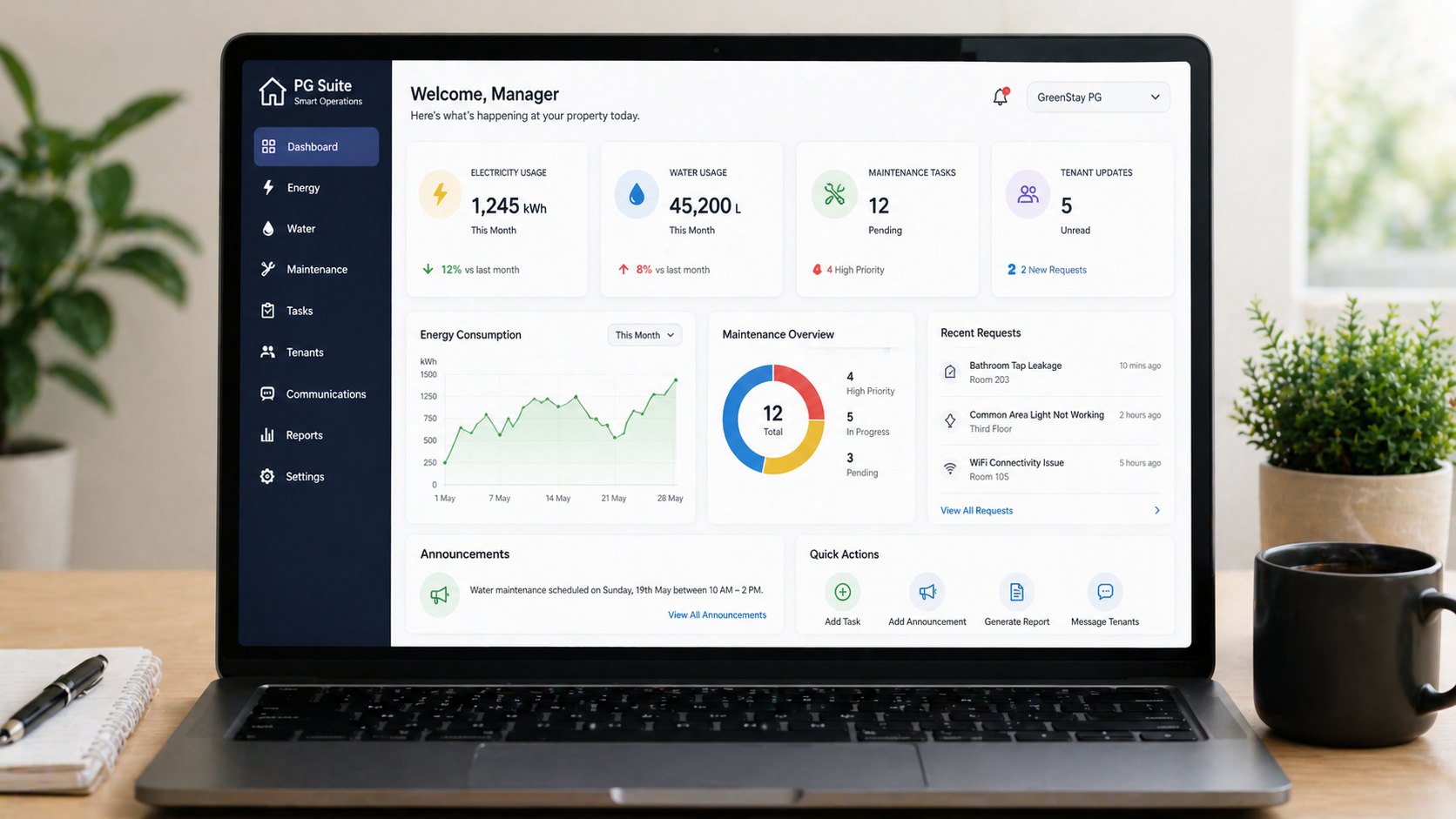
- Tracking maintenance and recurring tasks, so systems continue performing instead of being ignored over time
- Managing tenant-reported issues centrally, ensuring utility or infrastructure problems are addressed without delays
- Providing clear operational visibility, so you know what needs attention before it turns into a cost
The result is simple, your systems don’t just exist, they work consistently.
Conclusion: Building a PG That Is Efficient by Design
Sustainability is not about adding features. It’s about removing inefficiencies.
When your PG relies entirely on external resources, rising costs are unavoidable. But with structured systems in place, you begin to control how those costs behave.
Over time, this leads to:
- More stable operations
- Predictable expenses
- A better tenant experience
The shift is gradual, but it compounds.
If you’re looking to build a more efficient and future-ready PG, focus on systems that work consistently, not just initiatives that sound good.
About the Author
Ishika Pannu
Ishika Pannu brings you the latest insights and easy-to-apply strategies in property management—helping you simplify renting and grow with RentOk.