Market Trends
Complete Guide to Running a Profitable Hostel in India (2026)


Written by
Ishika Pannu
Read Time
5 min read
Posted on
February 19, 2026
Overview
Overview
Complete Guide to Running a Profitable Hostel in India (2026)
Running a hostel in India can be highly profitable, but only if it’s managed like a structured business.
Many hostel owners focus on:
- Filling beds
- Collecting rent
- Handling complaints
But profitability doesn’t come from occupancy alone.
It comes from:
- Smart revenue design
- Cost control
- Efficient operations
- Complaint management
- Rent automation
- Data-driven reporting
If you’re looking for a practical hostel operations guide in India, this complete guide will help you build a system that drives long-term profitability.
What Makes a Hostel Profitable?
Before diving into details, understand this:
A hostel becomes profitable when:
- Occupancy is stable
- Costs are predictable
- Rent collection is disciplined
- Complaints are managed quickly
- Operations are automated
Without systems, even 90% occupancy can feel stressful.
With structure, even 75–80% occupancy can generate stable profit.
Revenue Model: How Do Hostels Actually Make Money?
Let’s start with revenue.
What Are the Primary Revenue Streams in a Hostel?
1. Bed Rent
This is your main revenue source.
You can price based on:
- Single occupancy
- Double sharing
- Triple sharing
- Dormitory model
Higher density increases revenue per room, but may reduce comfort.
Balance matters.
2. Electricity Charges
You can:
- Include electricity in rent
- Charge per unit consumption
- Use slab-based pricing
Transparent electricity management reduces disputes and improves trust.
3. Food / Mess Charges
If you provide food:
- Charge separately
- Or bundle into rent
Food can significantly increase revenue, but also increases operational complexity.
4. Add-On Services
Additional revenue opportunities include:
- Laundry services
- Parking fees
- AC upgrade charges
- Premium room upgrades
Diversified income improves overall margin.
How Should You Design a Smart Revenue Structure?
Instead of guessing rent, calculate:
- Total monthly lease/property cost
- Staff salaries
- Utility expenses
- Maintenance
- Food cost (if applicable)
- Software & management cost
- Desired profit margin
Work backward from expenses to set pricing.
Never price only based on competition.
Cost Breakdown: Where Does Hostel Money Actually Go?
To run a profitable hostel management, cost clarity is essential.
What Are the Fixed Costs?
These remain stable monthly:
- Property rent or EMI
- Security staff
- Basic salaries
- Internet charges
- Software subscriptions
Fixed costs must be covered by the minimum occupancy.
What Are the Variable Costs?
These increase with occupancy:
- Electricity
- Water
- Food
- Maintenance
- Cleaning
Higher occupancy increases revenue, but also increases variable costs.
Profit lies in managing the gap.
Example Cost Breakdown
Let’s say:
- Monthly lease: ₹3,00,000
- Staff salaries: ₹1,50,000
- Utilities: ₹80,000
- Maintenance: ₹40,000
- Miscellaneous: ₹30,000
Total cost = ₹6,00,000
If you have:
- 60 beds
- Average rent ₹10,000
At full occupancy: ₹6,00,000 revenue
At 80% occupancy: ₹4,80,000 revenue
You must maintain 85–90% occupancy for profit in this example.
This is why occupancy strategy matters.
How Do You Keep Beds Filled Consistently – Occupancy Strategy?
High occupancy drives profitability.
But it’s not just about marketing.
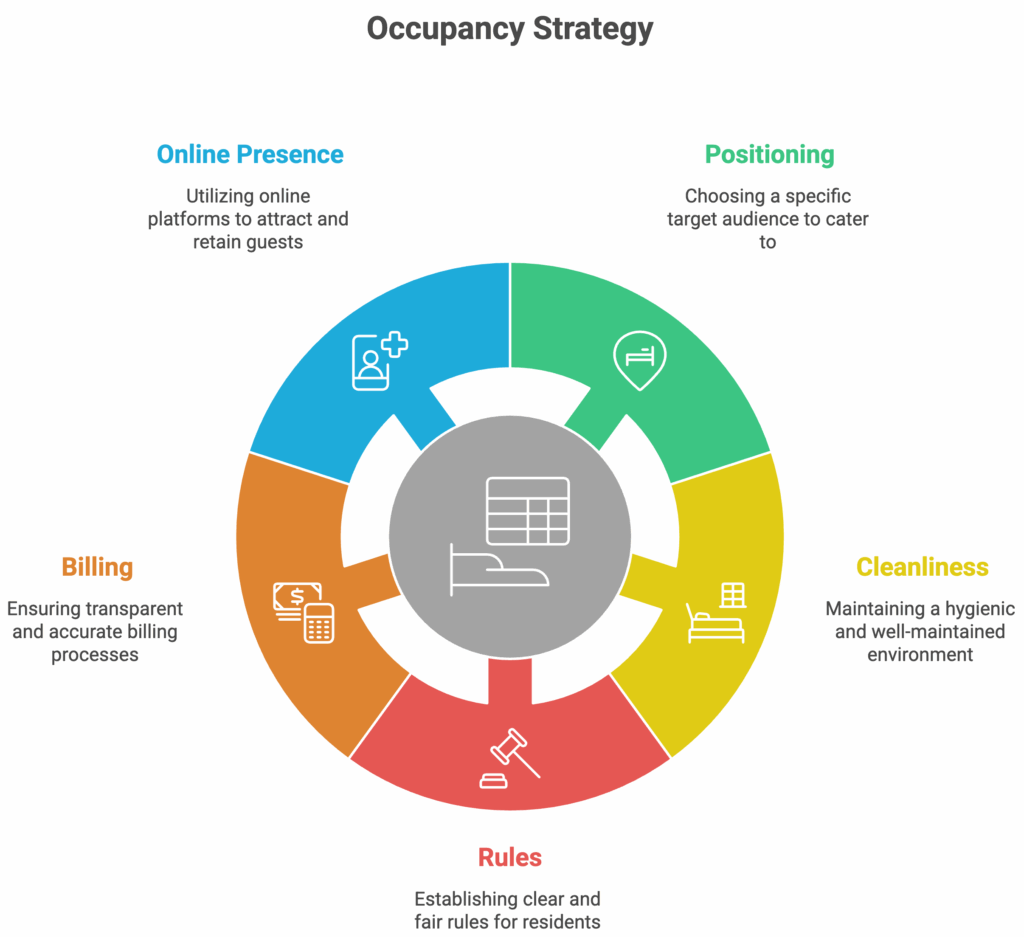
How Should You Position Your Hostel?
Choose a clear segment:
- Budget student hostel
- Corporate employee hostel
- Premium co-living style hostel
Don’t try to serve everyone.
What Drives Long-Term Occupancy?
1. Cleanliness & Maintenance
Poor maintenance increases turnover.
Retention reduces marketing costs.
2. Clear Rules & Agreements
Every resident should sign structured agreements.
Digital agreements reduce disputes.
3. Transparent Billing
When rent, electricity, and deposits are clearly recorded, trust increases.
Trust improves retention.
4. Online Presence
Use:
- Listing platforms
- Google reviews
- Social media
Good reviews reduce vacancy risk.
How Does Complaint Management Directly Impact Profit?
Many hostel owners underestimate complaint systems.
But unresolved complaints:
- Increase churn
- Damage reputation
- Reduce referrals
Why Do Most Complaint Systems Fail?
Because complaints are:
- Received verbally
- Lost in WhatsApp chats
- Not recorded properly
- Not tracked for resolution
Without tracking, accountability drops.
What Does a Structured Complaint System Look Like?
A proper complaint system should:
- Allow residents to log issues digitally
- Assign staff automatically
- Track status (Open / In Progress / Resolved)
- Maintain history
When complaints are resolved quickly, residents stay longer.
Retention improves profit margins.
Rent Automation: Why It Is Non-Negotiable in 2026
Manual rent collection kills profitability.
Here’s why.
What Happens Without Automation?
Every month:
- You remind residents manually
- Track payments manually
- Check bank statements
- Update Excel
- Calculate late fees
This consumes time and energy.
Delayed payments disturb cash flow.
What Does Automated Rent Collection Do?
Using platforms like RentOk, you can:
- Auto-generate monthly rent
- Send automatic reminders
- Track dues instantly
- Apply late fees automatically
- Monitor collection percentage
Automation stabilizes revenue flow.
Why Does Automation Improve Profitability?
Because it:
- Reduces delayed payments
- Minimizes staff time
- Improves reporting accuracy
- Reduces disputes
Time saved can be reinvested in occupancy growth.
Reports: The Backbone of Profitable Hostel Management
If you don’t track data, you can’t improve profit.
What Reports Should You Monitor Monthly?
1. Occupancy Report
- Total beds
- Occupied beds
- Vacancy rate
2. Collection Report
- Total rent generated
- Collected amount
- Outstanding dues
- Collection percentage
3. Expense Report
- Electricity
- Food cost
- Staff cost
- Maintenance
4. Complaint Report
- Number of complaints
- Resolution time
- Repeat issues
Reports help you identify:
- Revenue leakage
- Cost spikes
- Weak enforcement
- Maintenance gaps
Without reporting, you operate reactively.
7️⃣ How to Build a Profitable Hostel System from Day One
If you’re starting or restructuring, follow this roadmap.
Step 1: Design Revenue & Cost Model
Calculate:
- Break-even occupancy
- Target monthly profit
- Required average rent
Step 2: Implement Digital Management
Before scaling, implement:
- Tenant database
- Rent automation
- Complaint tracking
- Occupancy dashboard
Step 3: Standardize Rules
Define clearly:
- Due dates
- Late fees
- Deposit rules
- Complaint resolution timeline
Consistency builds professionalism.
Step 4: Monitor Reports Monthly
Every month, review:
- Occupancy rate
- Collection rate
- Expense variance
- Complaint trends
Data drives decisions.
What are the Common Mistakes That Kill Hostel Profit?
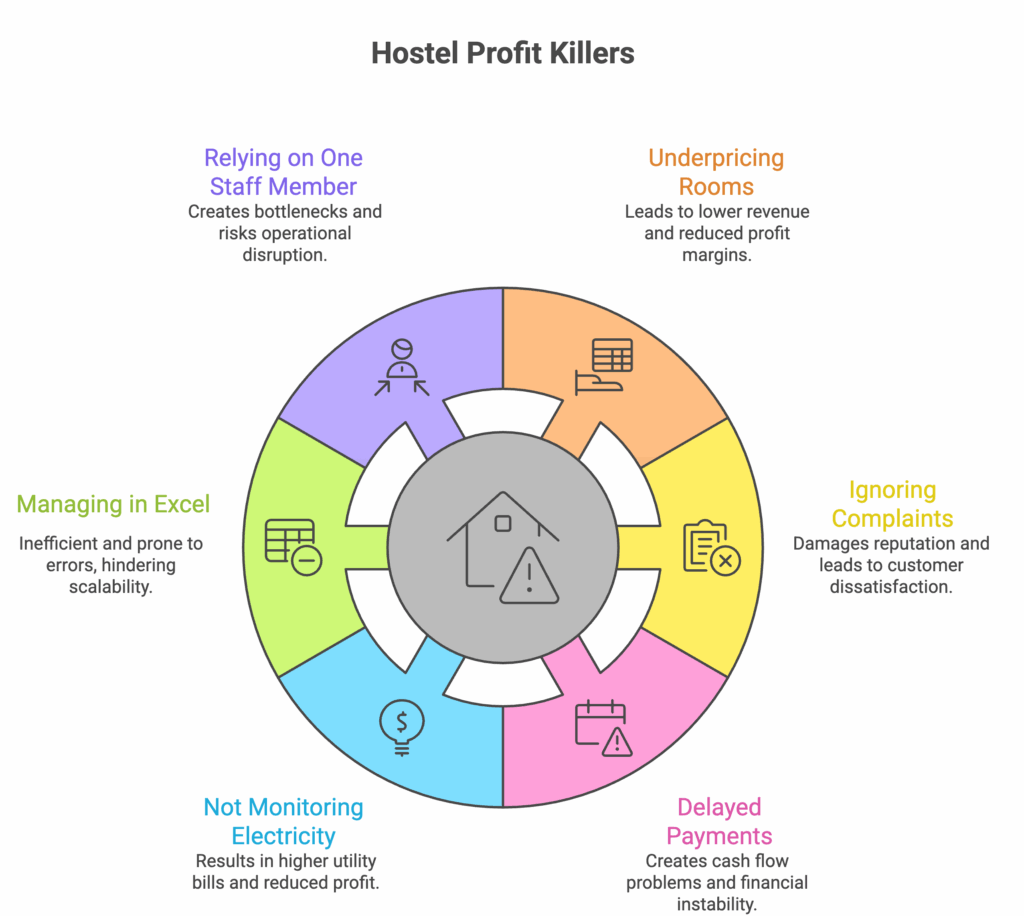
Avoid these mistakes:
- Underpricing rooms
- Ignoring complaint tracking
- Allowing delayed payments repeatedly
- Not monitoring electricity usage
- Managing everything in Excel
- Relying heavily on one staff member
Profit comes from systems, not effort alone.
Final Thoughts: What Truly Makes a Hostel Profitable?
A profitable hostel in India is not just:
- Fully occupied
- Well-furnished
It is:
- System-driven
- Data-monitored
- Automation-enabled
- Operationally structured
If you:
- Control costs
- Maintain high occupancy
- Automate rent
- Track complaints
- Review reports monthly
Profit becomes predictable.
Want to Run a Structured, Profitable Hostel?
If you’d like to:
- Automate rent collection
- Track occupancy in real time
- Manage complaints digitally
- Monitor reports easily
Book a soft demo and explore how a structured hostel management system can help you run a more profitable operation.
No pressure, just clarity.
Book a Demo.
About the Author
Ishika Pannu
Ishika Pannu brings you the latest insights and easy-to-apply strategies in property management—helping you simplify renting and grow with RentOk.