Cost of Living
PG vs Flat-Sharing for Your First Job: Real Monthly Costs Compared

Written by
Ishika Pannu
Read Time
11 min read
Posted on
October 27, 2026
Overview
Overview
PG vs Flat-Sharing for Your First Job: Real Monthly Costs Compared
Your first salary has to cover more than a place to sleep. Before you settle into a new job, you may need a deposit, a mattress, an internet connection and enough money to get through the month. A flat advertised at ₹12,000 per person can therefore demand a very different budget from a ₹12,000 PG package.
The PG vs flat sharing decision comes down to three numbers: your complete monthly spending, the cash you need before moving in and the cost of leaving. This comparison puts those numbers side by side, then considers the privacy and daily work behind each option. The worked budgets are illustrative, with current listing checks for context; replace the assumptions with written quotes for your own city and neighbourhood.
PG and flat-sharing offer different kinds of space
In this example, the PG option is a double-sharing bed with meals, Wi-Fi, cleaning and basic furniture included. The flat option is a private bedroom in a semi-furnished 2BHK, with two people splitting the household costs equally. You gain privacy in the flat, so this comparison does not treat the accommodation as identical.
For context, checked on 27 October 2026, Stanza Living’s Bengaluru guide publishes standard-locality double-sharing ranges of ₹8,500–₹14,000 monthly. Meanwhile, NoBroker’s BTM Layout listings include semi-furnished 2BHK examples at ₹22,000 and ₹25,000 for the whole home. These are asking prices, not guaranteed availability or a city-wide average.
The budget below assumes a ₹12,000 PG package and a ₹24,000 flat shared by two. It excludes commuting, personal shopping and entertainment. Compare locations with a similar journey to work, then add your actual travel cost to both totals.
Monthly costs, line by line
The same base payment can produce different bills
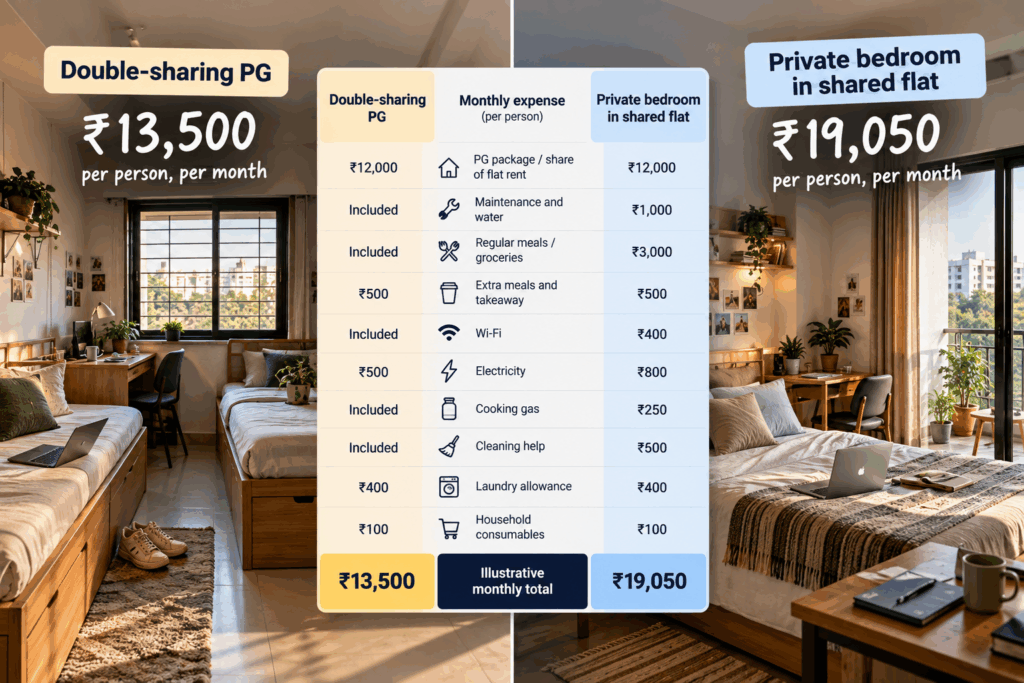
Every figure below is per person, per month. “Included” describes the assumed PG package, not every PG. The flat’s electricity, maintenance, internet, gas and cleaning figures represent each resident’s share; groceries and other personal allowances also appear per person.
| Monthly expense | Double-sharing PG | Private bedroom in shared flat |
|---|---|---|
| PG package / share of flat rent | ₹12,000 | ₹12,000 |
| Maintenance and water | Included | ₹1,000 |
| Regular meals / groceries | Included | ₹3,000 |
| Extra meals and takeaway | ₹500 | ₹500 |
| Wi-Fi | Included | ₹400 |
| Electricity | ₹500 | ₹800 |
| Cooking gas | Included | ₹250 |
| Cleaning help | Included | ₹600 |
| Laundry allowance | ₹400 | ₹400 |
| Household consumables | ₹100 | ₹100 |
| Illustrative monthly total | ₹13,500 | ₹19,050 |
What does the ₹5,550 difference tell you?
The flat costs ₹5,550 more per month in this example. It also provides a private bedroom and more control over cooking and shared spaces. Whether that extra spending makes sense depends on your take-home pay, priorities and actual alternatives.
The result can change if your PG excludes meals, your flat includes appliances, you share a bedroom or your employer provides food. Update the relevant rows instead of copying the total. RentOK’s guide to rent inclusions and extra charges explains why “available” and “included” can mean different things.
Deposit, brokerage and furniture: the move-in bill
How much cash do you need before the first salary?
Monthly affordability does not guarantee you can fund move-in. This second illustrative budget assumes a ₹12,000 PG deposit, a ₹72,000 whole-flat deposit split equally, and a broker charging ₹24,000 for the flat, also split equally. These are assumptions, not standard fees or legal deposit limits.
| Move-in payment | PG: your payment | Shared flat: your share |
|---|---|---|
| First month’s base rent/package | ₹12,000 | ₹12,000 |
| Security deposit | ₹12,000 | ₹36,000 |
| Brokerage | ₹0 | ₹12,000 |
| Furniture and appliance purchases | ₹0 | ₹15,000 |
| Connections and household setup | ₹0 | ₹2,000 |
| Moving expense | ₹1,000 | ₹1,000 |
| Cash needed at move-in | ₹25,000 | ₹78,000 |
The flat requires ₹53,000 more upfront under these assumptions. Add other monthly bills when they fall due: this table includes the first month’s base payment, not every expense for that month. A direct-owner flat may remove brokerage, while a furnished property may reduce purchases but charge higher rent.
Salary timing matters as much as the amount
Build your budget around take-home pay, rather than the annual CTC in your offer letter. Confirm your first salary date, especially if you join partway through a payroll cycle. You may need to fund accommodation and meals before receiving a full month’s pay. If your employer offers relocation reimbursement, check when it arrives and which expenses qualify; a reimbursement after move-in does not remove the need for cash upfront.
A refundable deposit is still unavailable cash
Do not count the deposit as an ordinary monthly expense, but do account for the cash it ties up. Brokerage and moving charges usually do not create an asset; purchased furniture may retain some resale value, without guaranteeing a particular recovery.
Ask for the deposit amount, refund process, possible deductions and any joining fee in writing. RentOK’s security-deposit refund guide explains why payment and property-condition records matter. Avoid funding setup on the assumption that a previous landlord will refund a deposit immediately.
Food, Wi-Fi, electricity and help
Will the meal plan fit your workday?
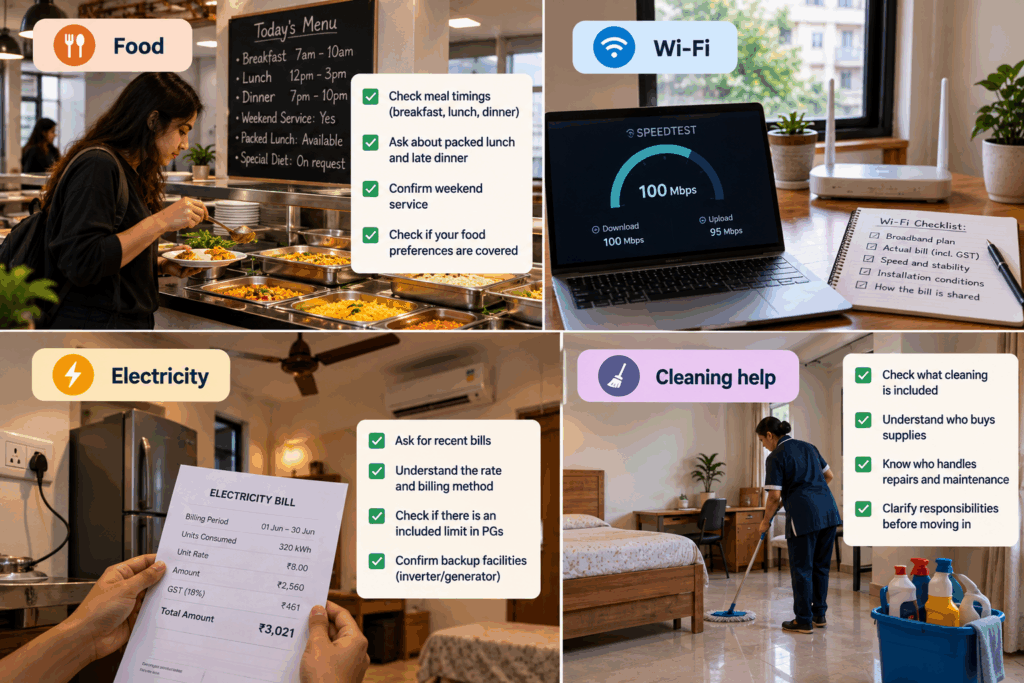
A PG meal plan offers value only when you can use it. Check breakfast hours, packed lunch, late dinner, weekend service and food preferences. If you miss meals because of shifts, replace the ₹500 extra-food allowance with a realistic figure.
In a flat, the grocery budget assumes you cook regularly. It does not include a cook’s salary. Hiring one, ordering frequently or wasting shared groceries can increase the total. Agree on which food items belong to the household and which remain personal before you start splitting bills.
Internet, utility bills and household work
Check broadband speed, taxes, installation conditions and the complete invoice. For example, Airtel’s published broadband plans quote rentals before GST; divide the actual payable bill, not just the headline amount. The ₹400 flat allowance above is a budgeting assumption, not a provider quote.
Electricity depends on usage, appliances and the billing arrangement. Ask a prospective flatmate for recent bills, and ask a PG operator about meters, rates and any included limit. Check backup facilities separately rather than assume that paying more guarantees uninterrupted power.
Cleaning help does not remove every household task. Someone still buys supplies, manages repairs and coordinates visits. Review rent and maintenance terms before signing so responsibilities do not emerge only after an appliance stops working.
When does a PG cost less?
A PG can be the cheaper starting point when its package replaces several bills and its setup requirements are modest. That is particularly useful when you have little furniture, limited savings or uncertainty about your first posting.
- You expect a short stay: Avoiding brokerage and purchases can matter more than a small difference in monthly rent. Compare the actual notice and lock-in terms before assuming flexibility.
- You would otherwise buy most meals outside: A usable meal package can reduce daily spending and preparation. Include missed meals and your usual takeaway habits in the comparison.
- Your flat budget depends on unconfirmed roommates: One PG bed does not normally require you to fill an entire apartment. A shared lease needs a plan for vacancies and replacement residents.
A single-occupancy or premium PG may cost more than a modest shared flat. The useful PG cost comparison is between the exact offers you can book, with services and privacy clearly identified. Request a current written quote rather than assume one accommodation model always wins.
Can a shared flat beat a PG on cost?
A flat can win when you find a suitable rent share, already own essential items and split running costs reliably. An established household with a working kitchen can remove much of the setup burden. Sharing a bedroom can reduce your rent further, but changes the privacy comparison.
Use your all-in flat cost, not rent alone. If your confirmed flat spending totals ₹12,500 monthly against a ₹13,500 PG, you save ₹1,000 a month. That is a separate alternative scenario, not the result of the main table.
Suppose switching also requires ₹12,000 in extra non-recoverable setup spending. At ₹1,000 monthly savings, you need 12 months to recover it: ₹12,000 ÷ ₹1,000. Refundable deposits sit outside this expense calculation, although you still need to fund them.
This gives you a practical test: will you stay long enough for the saving to outweigh the extra setup cost? A longer stay can make a flat financially attractive; a transfer after three months may leave little time to recover the spending.
Flatmates, commutes and exit terms can change the result
A shared flat also needs an agreement between residents about money. Decide who pays each bill, how you divide unequal rooms, who owns purchased items and what happens when someone leaves. Equal splitting works only when everyone accepts what it covers.
In the main example, one departing roommate leaves a ₹24,000 whole-flat rent bill to resolve. Your responsibility depends on the lease and agreed arrangements; do not assume the landlord automatically reduces it until you find a replacement. Ask about subletting and replacement approval before making plans.
Commute costs can reverse a small saving. A ₹1,000 cheaper stay that adds ₹1,500 in monthly travel costs leaves you ₹500 worse off. Also compare the route, working hours and time you will spend cooking or coordinating the household.
Finally, review the agreement before signing and the notice and lock-in terms for vacating a flat. These are separate commitments. An early exit can add costs even when the monthly budget looked comfortable.

How RentOK helps make accommodation costs clearer
Whichever option you choose, clear property information and payment records make the arrangement easier to understand. RentOK supports PG, flat and co-living owners with tools that can also improve the information tenants receive at participating properties.
- Clearer property comparisons: RentOK property websites can show rent, facilities and photos. Confirm the complete package with the operator before using a listing in your budget.
- Organised payment records: Tenant ledgers and payment history help property teams track rent and other recorded dues, giving them a clearer basis for answering billing questions.
- Consistent room information: Owners can track sharing types, rents and available beds together, helping prospects enquire about the relevant accommodation category.
RentOK is a property-management platform, not a personal grocery-budgeting or flatmate bill-splitting app. Owners managing either model can use its records to explain charges and maintain a more consistent rental process.
Conclusion
For your first job, choose accommodation against the money you can actually spend and the routine you can maintain. In the worked example, the PG costs less monthly and needs less move-in cash, while the flat provides a private bedroom. A different rent share, meal arrangement or furnishing package can change that result.
Compare the complete monthly bill, keep deposits separate from non-recoverable costs, and check how long you expect to stay. Get the final charges and exit terms in writing before committing. If you manage PGs or shared flats, start your free RentOK trial to organise property details, payments and rental records in one place.
Frequently Asked Questions
Find answers to common questions about this topic
About the Author
Ishika Pannu
Ishika Pannu brings you the latest insights and easy-to-apply strategies in property management—helping you simplify renting and grow with RentOk.