Legal
Dealing with Difficult Tenants: A Legal and Diplomatic Guide

Written by
Ishika Pannu
Read Time
10 min read
Posted on
May 12, 2026
Overview
Overview
Dealing with Difficult Tenants: A Legal and Diplomatic Guide
Managing a PG successfully is not just about occupancy, rent collection, or maintenance. Those are operational responsibilities. The real challenge begins when multiple people with different lifestyles, routines, expectations, and financial habits start sharing the same property every single day.
That is where tenant management becomes the actual business.
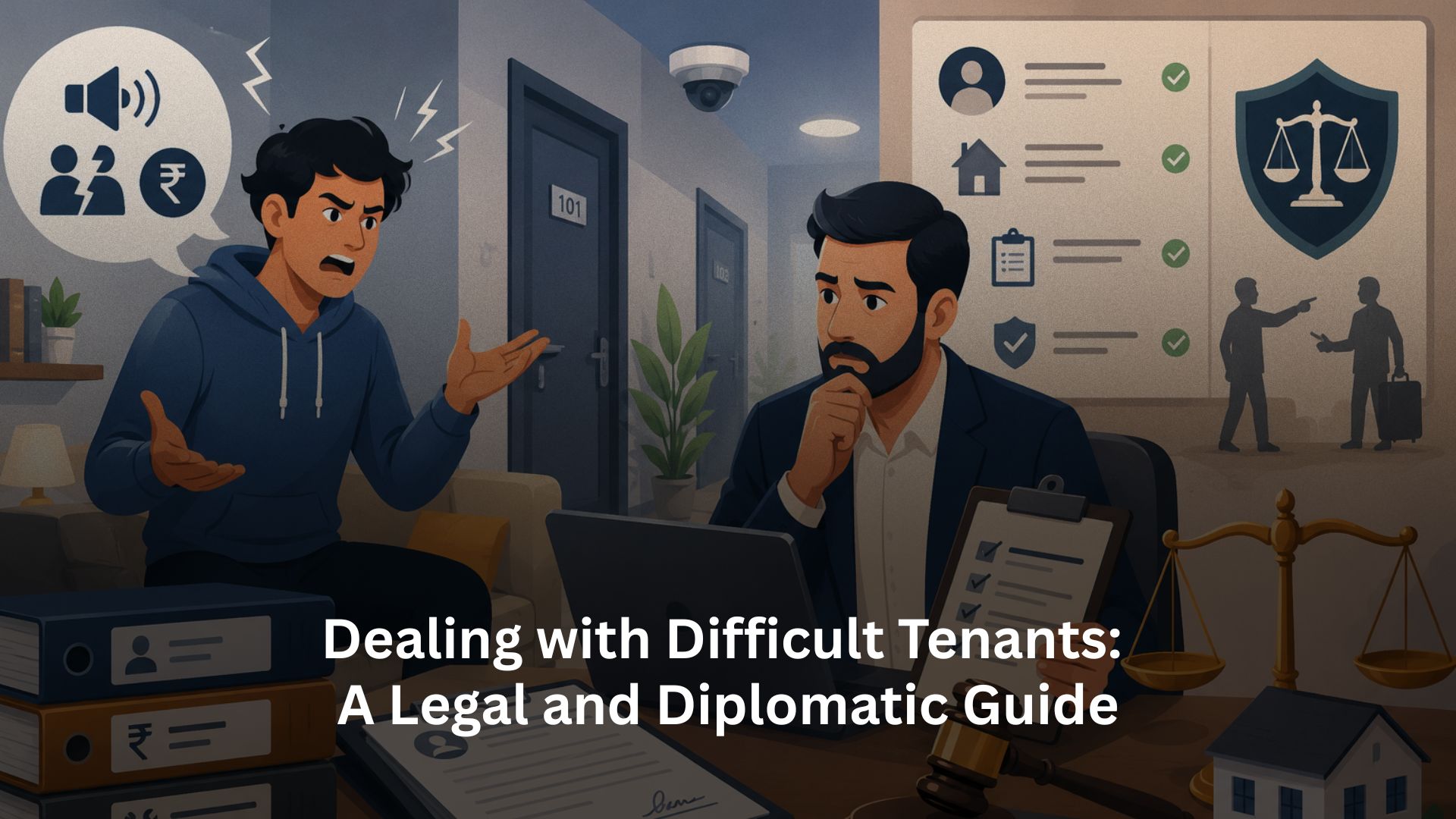
Every experienced landlord eventually faces difficult tenant situations. Sometimes it starts with repeated rent delays that slowly disrupt monthly cash flow. In other cases, it begins with roommate conflicts, excessive complaints, property misuse, or aggressive behavior toward staff and management. What makes these situations difficult is not just the issue itself, but the way they spread operationally. One unresolved conflict can start affecting the atmosphere of the entire property within days.
The mistake most landlords make is reacting emotionally instead of structurally. They either become too aggressive too quickly or remain too flexible for too long. Both approaches create instability.
Professional property management works differently. Strong operators rely on systems that help them:
- Address disputes early before they affect other tenants or damage the operational environment inside the property
- Maintain proper documentation so conversations remain factual instead of becoming emotional arguments later
- Follow structured escalation processes that protect both operational authority and legal positioning
- Create consistency in communication and enforcement so tenants clearly understand expectations from the beginning
This is what separates professionally managed PGs from properties that constantly operate in crisis mode.
Why Tenant Conflicts Have Increased in Modern PGs
The shared living market has changed significantly over the last few years. Earlier, tenants evaluated PGs mainly on affordability and location. Today, expectations are much more operational.
Modern tenants expect:
- Faster issue resolution instead of repeated follow-ups for basic maintenance requests or utility complaints
- Transparent communication regarding rent, electricity charges, and operational policies without confusion or vague explanations
- Professional handling of disputes so conflicts are addressed fairly and consistently instead of emotionally or casually
- Better living standards where safety, cleanliness, privacy, and communication feel structured and predictable
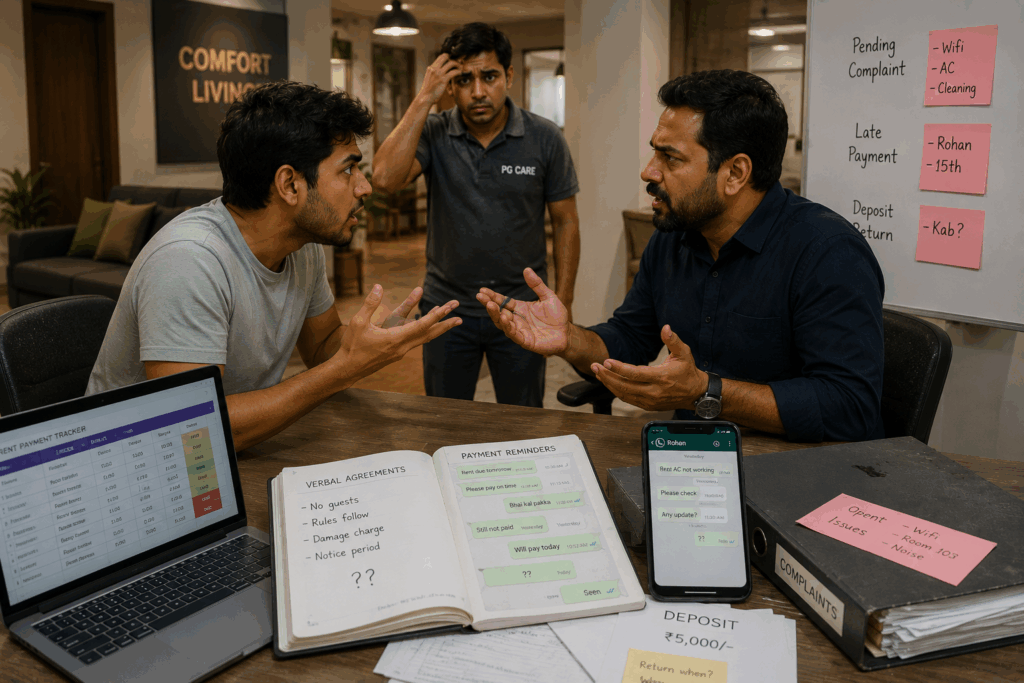
At the same time, many PG operations still function informally. Payments are tracked manually, complaints are resolved verbally, and important operational records are scattered across chats, notebooks, and spreadsheets.
This mismatch creates friction very quickly.
For example, when a maintenance complaint remains unresolved for several days without clear communication, the issue usually stops being about maintenance itself. The tenant starts questioning management responsiveness, operational quality, and reliability overall. Similarly, when one tenant repeatedly violates noise or visitor policies without consequences, other residents stop trusting the fairness of management systems.
Over time, these small operational gaps turn into larger behavioral and reputational problems.
The reality is simple:
Most difficult tenant situations become worse because the operational systems around them are weak.
Understanding the Different Types of Difficult Tenants
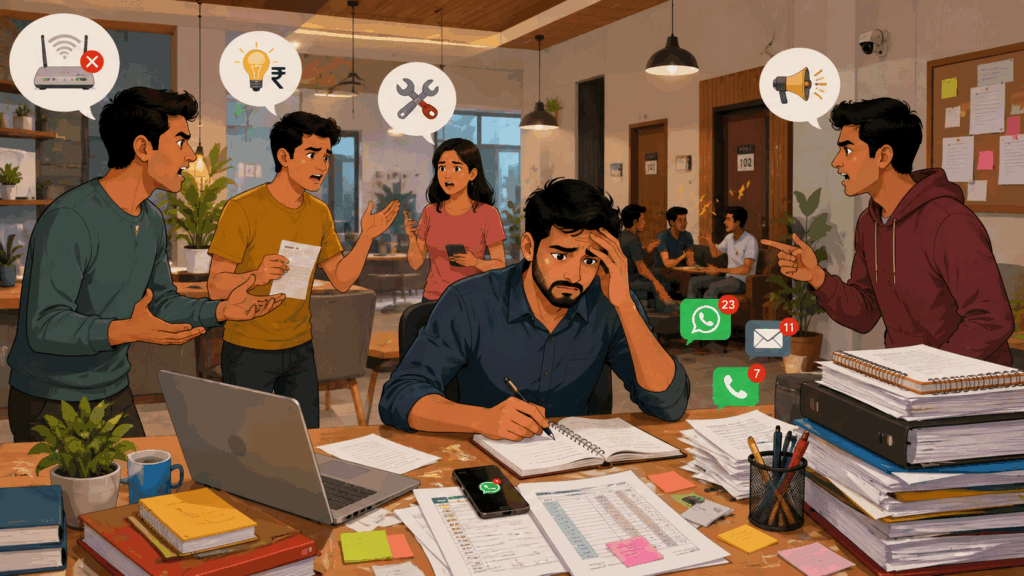
One of the biggest mistakes landlords make is treating all tenant conflicts similarly. In reality, different situations require completely different handling approaches. Understanding the type of tenant issue you are dealing with is the first step toward resolving it professionally.
| Tenant Type | Common Behavior | Operational Impact |
|---|---|---|
| Chronic Late-Payer | Repeated payment delays with constant excuses and missed deadlines | Disrupts cash flow and weakens payment discipline across the property |
| Constant Complainer | Escalates every issue emotionally and consumes disproportionate management time | Creates operational pressure and affects staff efficiency |
| Rule Violator | Ignores guest policies, quiet hours, or shared living etiquette repeatedly | Disturbs other tenants and weakens management authority |
| Aggressive Tenant | Uses confrontation, threats, or manipulation during disputes | Creates reputational and legal risk if handled poorly |
Now, not every complaint-heavy tenant is unreasonable. In fact, some recurring complaints reveal genuine operational weaknesses that management needs to improve. The problem begins when:
- Communication becomes emotional instead of solution-focused
- Complaints start disrupting operations repeatedly without structure
- Tenants stop cooperating and begin escalating every issue publicly
Similarly, repeated payment delays are not just financial issues. They gradually affect:
- Vendor payments and operational planning because cash flow becomes unpredictable every month
- Overall tenant discipline as others observe weak enforcement and delayed follow-ups
- The landlord’s decision-making because energy starts getting consumed by constant collection efforts
The strongest operators understand that unresolved small issues eventually become larger operational patterns.
The First Rule of Conflict Resolution: Stay Professional, Not Emotional
Most tenant disputes become difficult because conversations stop being operational and become personal.
Landlords naturally feel frustrated when:
- Rent remains unpaid despite repeated reminders and verbal commitments
- Complaints continue even after management efforts are made to resolve issues
- Property rules are violated openly without accountability from the tenant
- Aggressive communication creates pressure inside the property environment
But emotional reactions almost always weaken the operator’s position.
For example, aggressive calls, public arguments, or threatening language may provide temporary emotional release, but operationally they create larger risks:
- Other tenants begin perceiving the environment as unstable or hostile
- Escalation becomes more likely because conversations stop being solution-oriented
- Legal exposure increases if communication becomes abusive or forceful
- The focus shifts away from the actual issue and toward the landlord’s behavior itself
Professional landlords handle disputes differently. They focus on:
- Payment timelines and written agreements instead of verbal accusations
- Complaint records and documented communication instead of assumptions or memory
- Clear next steps and timelines instead of emotional back-and-forth conversations
The objective is not to “win” the argument.
The objective is to regain operational control calmly and professionally.
Why Documentation Is the Foundation of Strong Tenant Management
Most landlords underestimate documentation until conflicts become serious.
Until then, operations usually depend on:
- Memory
- Informal conversations
- WhatsApp chats scattered across devices
- Verbal reminders and assumptions
The problem with this system is simple:
Informal operations collapse during disputes.
Once disagreements escalate, nobody remembers conversations accurately. Tenants claim expectations were unclear, timelines become disputed, and verbal warnings suddenly become impossible to verify.
This is why structured documentation is no longer optional for modern PG management.
Every professionally managed property should maintain:
- Tenant agreements and KYC documents that clearly establish rules, timelines, and responsibilities from the beginning
- Rent payment history and due reminders so financial discussions remain factual instead of emotional during escalations
- Complaint records and maintenance logs that show whether issues were acknowledged and addressed properly
- Property damage reports and written warnings that create accountability during repeated violations or behavioral problems
Strong documentation does not make operations “too legal.” It makes operations predictable.
Because once disputes depend entirely on memory, resolution becomes much harder.
Why Verbal Warnings Usually Fail
One of the most common operational mistakes in PG management is relying too heavily on verbal communication.
Most landlords say things like:
“I already explained this multiple times.”
But unless those conversations are documented:
- The tenant may later claim expectations were never clarified properly
- Escalation actions start feeling sudden or unfair from the tenant’s perspective
- Timelines become difficult to verify during serious disputes
For example, if a tenant repeatedly violates quiet-hour policies but every warning happened casually in person, stronger action later immediately feels aggressive because there is no visible escalation trail.
Written communication changes this entirely.
Even simple follow-up messages after conversations create:
- Accountability because both parties can clearly reference previous communication later
- Better operational consistency since rules and warnings no longer depend on memory alone
- Stronger management credibility because actions appear structured instead of emotional or random
Professional landlords document important discussions because operational clarity matters more than informal flexibility.
Conflict De-escalation: Solving Problems Before They Become Legal
The strongest property operators are not the ones who escalate fastest.
They are the ones who prevent escalation entirely.
Most tenant conflicts can still be resolved early if communication is handled properly. Effective conflict de-escalation usually includes:
- Listening carefully before reacting emotionally so the actual operational issue becomes clear instead of assuming intent immediately
- Bringing conversations back to agreements, timelines, and documented expectations instead of personal frustration or arguments
- Defining next steps clearly so tenants understand exactly what needs to happen and what escalation process follows afterward
For example, when handling repeated payment delays, avoid emotionally charged conversations like:
“You always create problems.”
Instead, structure the discussion professionally:
- Mention the exact pending amount along with previous reminder timelines and payment commitments clearly
- Explain the operational impact delayed payments create for monthly financial planning and property operations
- Define the next deadline along with the formal escalation process calmly and professionally
This approach keeps the issue operational instead of personal.
And that distinction matters enormously in shared living environments.
Understanding the Legal Notice Process in India
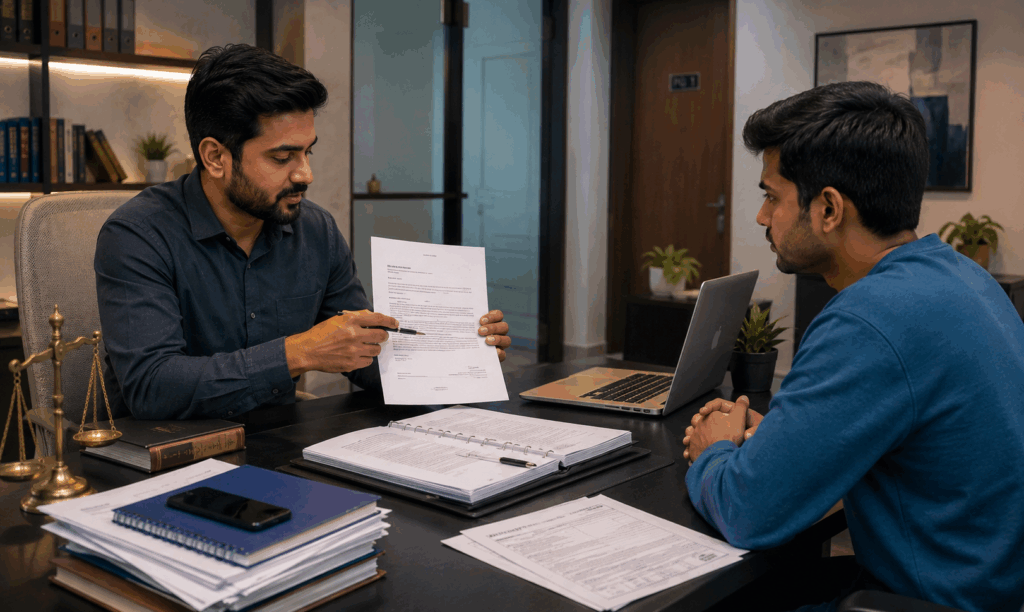
Legal escalation should always be the final step, not the first reaction.
Unfortunately, many landlords attempt forceful actions too early because frustration has already built up over time. This usually creates larger legal and reputational problems instead of resolving the issue.
The correct process begins with reviewing the rental agreement carefully. Many operators weaken their own legal position because:
- Agreement clauses are vague or incomplete regarding payment timelines and behavioral expectations
- Property policies were communicated verbally instead of documented formally during onboarding
- Escalation procedures were never explained clearly to tenants from the beginning
Once the agreement is reviewed, a formal written notice should clearly mention:
- The exact nature of the issue or violation involved along with supporting details and timelines
- Relevant agreement clauses that establish operational expectations and responsibilities clearly
- Timelines for corrective action, pending payment clearance, or compliance improvement
- The escalation process that may follow if the issue remains unresolved further
This creates:
- Official communication records
- Structured escalation history
- A visible opportunity for resolution before legal action becomes necessary
The worst approach is forceful eviction attempts driven by frustration.
Actions like:
- Changing locks suddenly
- Disconnecting utilities impulsively
- Removing belongings without process
can create serious legal complications even when the tenant is clearly violating rules.
Professional landlords understand that process protects the operator just as much as it controls the tenant.
How RentOK Helps You Handle Tenant Disputes More Professionally
Most tenant disputes become difficult because operational information is scattered across different systems. Payment records exist in one place, complaints happen verbally, communication gets buried inside chats, and important details become difficult to retrieve during escalations.
This is where structured operational systems become critical.
RentOK helps landlords bring clarity into daily PG operations by helping you:
- Maintain organized tenant records, onboarding details, agreements, and KYC documentation without relying on scattered files or manual coordination
- Track rent payments, pending dues, reminders, and financial timelines clearly so recurring payment disputes become easier to manage professionally
- Keep complaint records and communication history documented properly, creating accountability and visibility during operational escalations
- Maintain better operational visibility across tenant interactions, issue-resolution timelines, and room-level management through one centralized workflow
The biggest advantage of structured systems is not just efficiency.
It is operational control.
When information is organized properly:
- Conversations remain factual instead of emotional
- Escalations become easier to manage professionally
- Tenant communication becomes clearer and more predictable
- The overall property environment becomes significantly easier to stabilize and scale
That is what separates reactive property management from professionally managed PG operations.
Final Thoughts
Difficult tenant situations are an inevitable part of running any PG, hostel, or co-living business. The goal is not eliminating conflict completely. That is unrealistic in shared living environments where multiple personalities, routines, expectations, and lifestyles interact every day.
The real objective is building systems strong enough to prevent small operational issues from becoming larger financial, legal, or reputational problems.
The landlords who manage disputes effectively are rarely the loudest or the strictest. They are the ones with:
- Better operational clarity
- Stronger documentation systems
- Consistent communication practices
- Structured escalation processes
Because in modern property management, authority does not come from aggression.
It comes from professionalism, consistency, and operational control.
If you want to build a more organized and professionally managed PG business, explore how RentOk helps landlords manage tenant communication, payments, operational workflows, and dispute resolution with greater visibility and efficiency.
About the Author
Ishika Pannu
Ishika Pannu brings you the latest insights and easy-to-apply strategies in property management—helping you simplify renting and grow with RentOk.