Market Trends
PG Rental Agreement Format (Free Template)

Written by
Ishika Pannu
Read Time
6 min read
Posted on
February 23, 2026
Overview
Overview
PG Rental Agreement Format (Free Template)
Most PG owners spend weeks setting up their property, interiors, food vendors, electricity setup, marketing, tenant sourcing.
But when it comes to the rental agreement, it’s often rushed.
A template copied from Google.
A document shared by another PG owner.
A generic residential lease edited slightly.
And months later, when a tenant leaves without notice or disputes a deposit deduction, the real cost of that shortcut becomes visible.
A proper PG rental agreement format is not just a document. It’s operational protection. It defines expectations, reduces misunderstandings, and protects your revenue.
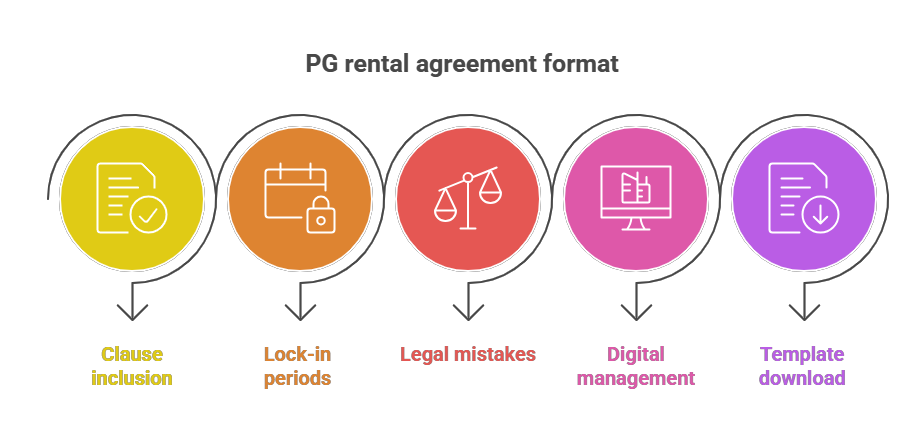
If you’re looking for a PG rental agreement format or a PG agreement sample in India, this guide will walk you through:
- What clauses must be included
- How to structure lock-in and notice periods properly
- Legal mistakes PG owners commonly make
- How to manage agreements digitally
- And where to download a ready-to-use template
Let’s build this properly.
Why a PG Rental Agreement Is Different from a Regular Lease
Many owners make the mistake of using a standard residential rental agreement for their PG.
But PG accommodation is different.
Unlike traditional leases, PG setups often include:
- Shared rooms
- Common amenities
- Food services
- Utility bundling
- House rules and behavioral expectations
This makes the agreement more operational in nature, not just legal.
Without clarity in documentation, most disputes happen around:
- Early exits
- Security deposit deductions
- Electricity billing
- Lock-in misunderstandings
- House rule violations
A structured agreement prevents confusion before it starts.
Essential Clauses Every PG Rental Agreement Must Include
A strong PG agreement sample in India should cover more than just rent and deposit. It should clearly define the relationship between the owner and the occupant.
Here are the essential sections that should always be included:
1. Tenant and Owner Details
Full legal names, permanent addresses, ID proof details, and contact information must be clearly mentioned. This protects both parties legally and ensures documentation is complete.
2. Property Description
Clearly mention the full property address along with the specific room or bed number. In shared accommodations, this prevents confusion over space allocation.
3. Rent and Payment Terms
This section should define:
- Monthly rent amount
- Exact due date
- Accepted payment modes
- Late payment penalty (if applicable)
Vague payment terms create operational ambiguity. Clarity creates discipline.
4. Security Deposit Clause
Deposit disputes are one of the most common issues in PG setups. The agreement must specify:
- Deposit amount
- Conditions for deduction
- Refund timeline
- Inspection process upon exit
The more detailed this clause, the fewer disputes later.
5. Lock-In Period
The lock-in clause defines the minimum duration the tenant must stay. If they exit early, financial consequences should be clearly defined.
Without a lock-in clause, occupancy planning becomes unstable.
6. Notice Period
This section should specify:
- How much notice is required
- Whether notice must be written
- Rent liability during notice period
Notice clarity protects vacancy planning and revenue continuity.
7. Utility & Additional Charges
If electricity, WiFi, water, or food are charged separately, the billing structure must be defined clearly. If electricity is metered separately, specify the per-unit rate and billing cycle.
Ambiguity here almost guarantees disputes.
8. House Rules & Conduct
This section should cover guest policies, behavior expectations, damage liability, and shared space responsibilities.
House rules are easier to enforce when they are documented and acknowledged at the time of signing.
If you’d like a structured clause-by-clause reference before drafting your agreement, go through our detailed Rent Agreement Checklist to ensure nothing critical is missed.
Lock-In Period vs Notice Period: Understanding the Difference
These two terms are often confused.
A lock-in period is the minimum stay duration.
A notice period is the advance time required before vacating.
For example:
If your agreement includes a 6-month lock-in and a 30-day notice period:
- The tenant cannot leave before 6 months without penalty.
- After 6 months, they must still give 30 days’ written notice before vacating.
If this distinction is not clearly written, misunderstandings are inevitable.
Common Legal Mistakes PG Owners Make
Even experienced operators make avoidable documentation mistakes.
Some of the most frequent ones include:
- Using generic residential lease templates
- Failing to mention late payment penalties
- Not defining deposit refund conditions clearly
- Ignoring lock-in structure
- Accepting unsigned agreements
- Not updating agreements when policies change
Another common issue is relying on verbal agreements.
Verbal understandings work, until there is disagreement.
And when disagreement arises, only written documentation protects you.
Should PG Agreements Be on Stamp Paper?
In India, rental agreements typically require stamp duty as per state laws.
However, PG arrangements sometimes fall under service agreements rather than pure tenancy agreements, especially when food and amenities are included.
The requirement may vary depending on:
- State regulations
- Duration of stay
- Nature of services provided
While legal consultation is recommended for stamp duty compliance, the most important factor remains this: documentation must exist.
Unsigned or informal arrangements increase risk.

Traditional agreement handling usually follows a familiar pattern.
An agreement is printed, signed by the tenant, scanned, and stored away in a folder, often untouched until the exit process begins.
At a small scale, this may seem manageable.
But once you’re handling 80 – 100 tenants across multiple properties, the cracks start to show. Monitoring agreement start dates, renewal timelines, notice periods, and lock-in clauses gradually turns into a manual and error-prone process. Important dates get missed. Renewals are delayed. Compliance becomes reactive instead of planned.
This is where a digital agreement workflow changes the structure.
Instead of physical files and scattered records, you get:
- Standardized agreement templates
- Secure document storage
- Automated timeline tracking
- Centralized access across properties
- Reduced dependency on paperwork
For growing PG operators, this isn’t just convenience, it’s operational stability.
If you’re exploring how digital documentation works in practice, read our Ultimate Guide to Digital Rent Agreement (Free Template) to understand the legal structure, workflow setup, and compliance considerations in detail.
How RentOK Helps Streamline PG Agreements
While the agreement template defines legal structure, managing agreements operationally requires organization.
This is where RentOK supports PG and hostel operators.
Through its Agreement Page and Renting Rules setup, RentOK enables you to:
- Maintain standardized rental agreement formats
- Digitally store tenant agreement records
- Track agreement duration and renewal timelines
- Link house rules clearly with tenant documentation
- Maintain centralized documentation across properties
Instead of scattered files and manual reminders, agreements become part of your operational system.
As tenant count increases, this structured documentation prevents chaos.
Download Free PG Rental Agreement Template
To simplify your process, we’ve created a ready-to-use PG Rental Agreement Template tailored specifically for Indian PG setups.
The template includes:
- Essential legal clauses
- Lock-in and notice period structure
- Deposit and refund clarity
- Utility billing language
- House rule framework
You can customize it based on your property model and state-specific requirements.
Enter your email to download the free PG rental agreement format and start documenting your tenant relationships properly from day one.
Final Thoughts
A proper PG rental agreement is not a formality.
It is operational protection.
It reduces disputes, protects deposits, clarifies expectations, and creates professionalism.
As your PG business grows, structured documentation combined with a digital workflow ensures that legal clarity scales along with occupancy.
Start with a strong agreement template.
Then build a system that manages it properly.
Download the free PG agreement sample and ensure your rental operations are legally secure and operationally organized from the beginning.
About the Author
Ishika Pannu
Ishika Pannu brings you the latest insights and easy-to-apply strategies in property management—helping you simplify renting and grow with RentOk.