Growth
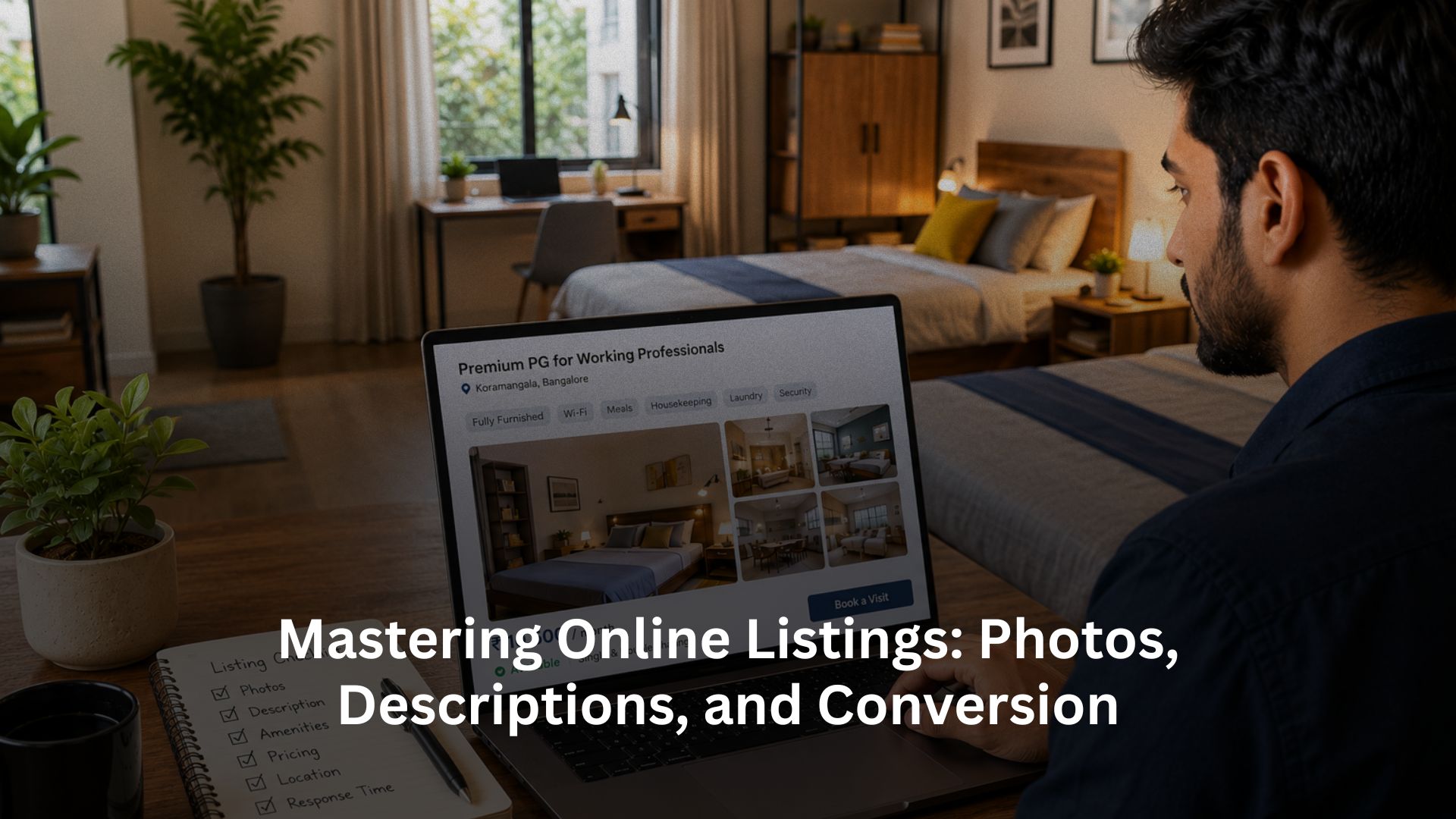
Mastering Online Listings: Photos, Descriptions, and Conversion

Written by
Ishika Pannu
Read Time
10 min read
Posted on
May 7, 2026
Overview
Overview
Mastering Online Listings: Photos, Descriptions, and Conversion
In today’s rental market, most occupancy problems begin much earlier than property owners realize. Operators often assume vacant rooms are caused by pricing, competition, or low demand in the area. While those factors do matter, they are rarely the first reason a property struggles online. More often, the issue starts with how the property is being presented digitally.
Tenants today do not discover PGs and co-living spaces the way they did a few years ago. Earlier, rental decisions were driven heavily through brokers, local references, and physical visits. Now, the first interaction happens online. A tenant scrolls through multiple listings, compares photos, checks descriptions, evaluates amenities, and forms an opinion within seconds. Before they call you or schedule a visit, they have already decided whether your property feels trustworthy, professionally managed, and worth considering.
This is why rental listing optimization has become one of the most important growth drivers for modern property operators. Your listing is no longer just an advertisement uploaded on a platform. It has effectively become your digital storefront. It shapes first impressions, influences inquiry quality, and directly affects conversion rates.
A strong listing creates confidence. A weak listing creates hesitation. And in highly competitive rental markets, hesitation is usually enough to lose a lead.
Why Most Rental Listings Underperform Online
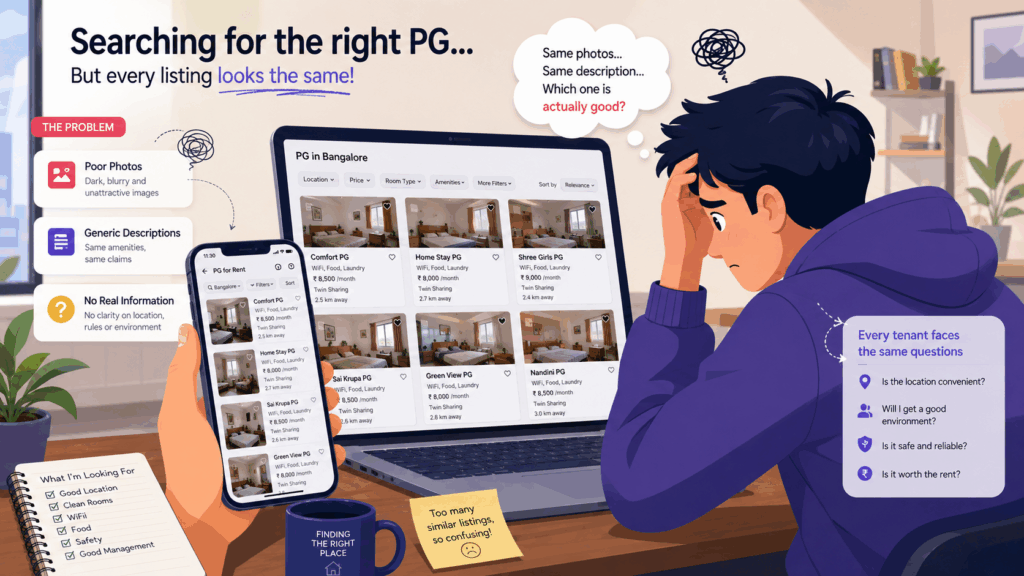
One of the biggest mistakes property owners make is treating listings like a routine operational task instead of a structured conversion process. The standard approach usually looks the same everywhere: upload a few room pictures, mention “WiFi and food available,” add the rent amount, and wait for inquiries to come in.
The problem is that almost every listing follows this exact pattern.
As a result, tenants browsing platforms are exposed to hundreds of properties that sound and look nearly identical. Every listing claims to be:
- fully furnished with modern amenities and comfortable living spaces, even though very few explain what actually makes the experience better for the tenant.
- affordable and conveniently located, without giving practical context around commute, accessibility, or daily convenience.
- ideal for students and professionals, despite having completely different environments, occupancy structures, and management quality.
This creates a major challenge because tenants are no longer evaluating listings only on features. They are evaluating professionalism, trust, and overall living experience.
A listing that feels organized, transparent, and thoughtfully presented automatically performs better than a listing that feels rushed or incomplete. Even when two properties offer similar infrastructure, the one with stronger presentation usually generates better leads because tenants associate presentation quality with management quality.
That perception matters far more than most operators realize.
Understanding How Modern Tenants Browse Listings
Most tenants today do not spend several minutes deeply analyzing one listing at a time. They browse rapidly. This means your listing has a very short window to create impact. Within a few seconds, tenants subconsciously decide whether the property feels worth exploring further.
At this stage, they are evaluating questions like:
- Does this property actually look clean and professionally maintained, or does it feel poorly managed despite the amenities being listed?
- Are the photos clear enough to understand the room layout, lighting, and storage setup, or does the listing feel intentionally incomplete?
- Does the property appear trustworthy and transparent, or does it create uncertainty because of vague descriptions and inconsistent information?
- Can the tenant imagine themselves living comfortably in the space, or does the property feel generic and forgettable?
This is why strong rental listings focus heavily on reducing uncertainty. Good listings help tenants visualize the living experience clearly. They make the property feel easier to trust before communication even begins.
The properties that convert consistently are usually the ones that make decision-making easier for tenants.
Why Photos Influence Conversion More Than Most Owners Think
In rental listings, photos do most of the selling before the description is even read. A tenant scrolling through a platform will almost always evaluate visuals first because photos provide immediate emotional and practical context.
Poor photography instantly damages perception. Even a decent property can feel:
- cramped and uncomfortable because of poor lighting or badly framed camera angles.
- cluttered and unmanaged when unnecessary objects, messy furniture placement, or untidy common areas are visible in the photos.
- outdated and low quality if the images are blurry, poorly edited, or uploaded without consistency.
On the other hand, strong visuals create confidence immediately. Well-structured photography improves:
- perceived room quality because clean presentation makes spaces feel more comfortable and professionally maintained.
- inquiry intent since tenants feel more confident about what they are seeing and experience less uncertainty while browsing.
- pricing flexibility because professionally presented properties are often able to justify slightly higher rent expectations.
This does not mean every property requires expensive professional shoots. In reality, clarity matters more than expensive equipment. Most high-performing listings simply present the property properly.
What Good Rental Photography Actually Looks Like
Good rental photography is not about making the property look unrealistically luxurious. It is about helping tenants understand the space naturally and comfortably. The goal should always be visual clarity, not artificial enhancement.
A strong rental photo setup usually includes:
- rooms photographed during daylight so that natural lighting improves warmth, visibility, and the perception of space without making the property feel artificially edited.
- properly arranged furniture layouts that help tenants understand how the room functions practically during daily living instead of showing random corners or incomplete angles.
- complete coverage of the living experience, including washrooms, storage areas, common spaces, study zones, and shared facilities so the listing feels transparent and complete.
One major mistake operators make is uploading only bedroom pictures while ignoring the rest of the property. Modern tenants evaluate the overall experience, not just the bed. They want to understand how the property feels operationally.
For example, a well-maintained common area often influences tenant perception more strongly than owners expect because it signals that the property is managed consistently instead of only cleaned during photography.
Why Most Property Descriptions Feel Generic
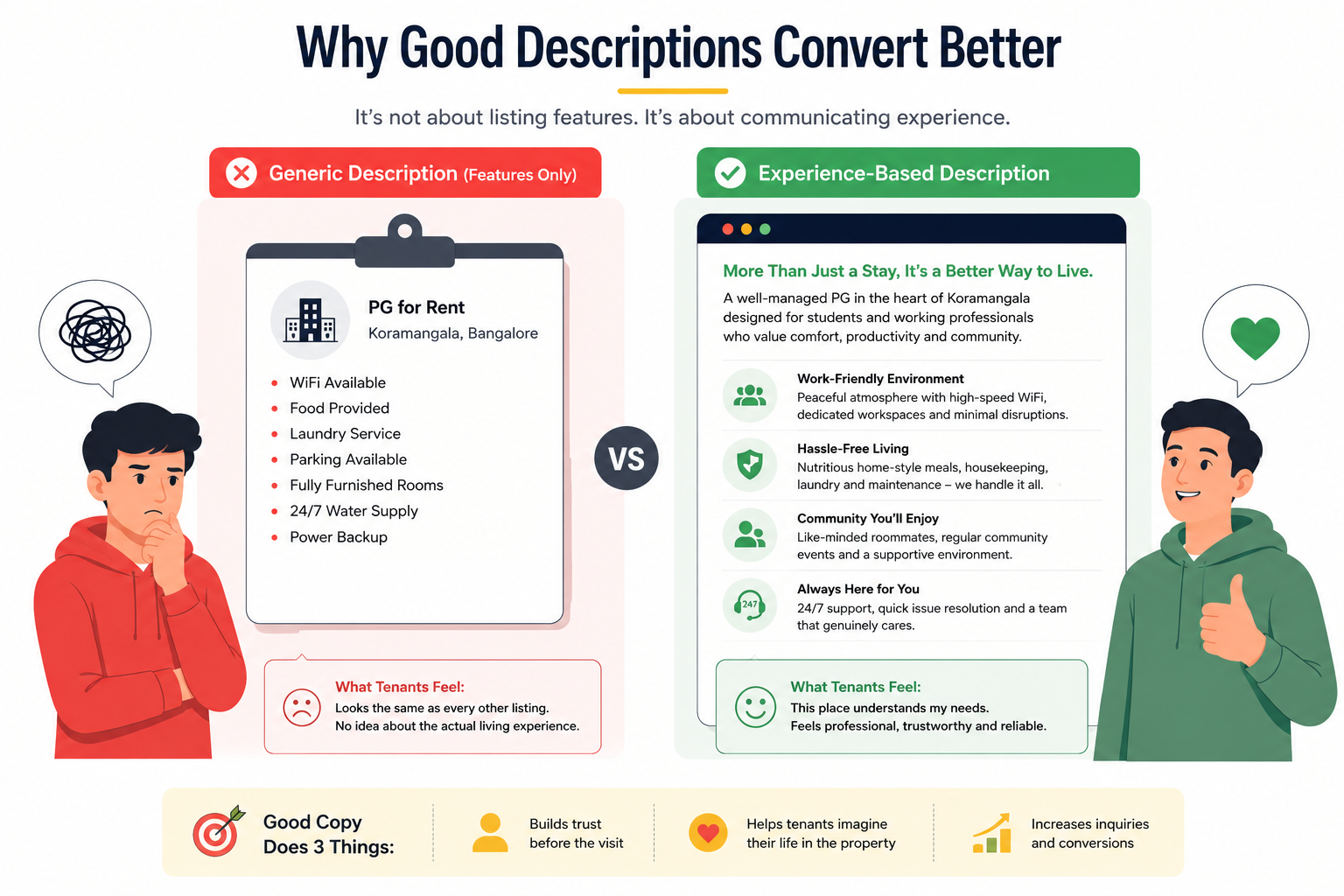
Many rental descriptions fail because they only communicate features instead of experience. A listing that simply says:
“PG available with WiFi, food, laundry, and parking”
is technically informative, but emotionally empty.
It tells the tenant what exists without explaining why the property feels comfortable, convenient, or professionally managed.
Good copywriting helps tenants understand:
- how the property supports daily routines and lifestyle convenience instead of simply listing amenities mechanically.
- what type of tenant environment exists inside the property, whether it is quiet and work-friendly, socially active, student-oriented, or professional.
- how management handles operations, communication, maintenance, and onboarding in a way that reduces uncertainty for new residents.
This is what separates high-converting descriptions from forgettable ones.
Strong descriptions should feel structured and experience-oriented instead of sounding like random amenity lists copied across platforms.
Copywriting That Actually Improves Rental Conversion
One of the biggest differences between weak and strong listings is how amenities are explained. Most operators mention features. Strong listings explain usability.
For example, instead of writing:
- “High-speed WiFi available”
a stronger version would explain:
- “Reliable high-speed WiFi suitable for work-from-home professionals, online classes, video calls, and uninterrupted streaming throughout the day.”
Similarly, instead of:
- “Power backup available”
you can write:
- “Full power backup support to ensure uninterrupted comfort during outages and maintain smooth daily routines for residents.”
These changes may seem small, but they improve conversion significantly because they help tenants visualize convenience instead of just reading specifications.
Another important point is avoiding exaggerated marketing language. Many listings repeatedly use terms like:
- luxury living,
- premium PG,
- world-class experience,
- or best property in the area,
without actually explaining what makes the property better.
Modern tenants trust specifics more than promotional claims. Clarity builds credibility. Generic marketing weakens it.
The Operational Side of Conversion Most Operators Ignore
A listing may successfully generate inquiries, but conversion depends heavily on what happens afterward. Many operators focus only on visibility while ignoring communication quality and operational responsiveness.
This becomes a major issue because rental inquiries are highly time-sensitive. A tenant actively searching today may finalize accommodation within a few hours if another property responds faster and communicates more professionally.
Strong operators usually stand out because they:
- respond quickly and consistently to inquiries instead of allowing high-intent leads to lose momentum through delayed communication.
- provide clear information around pricing, availability, onboarding, and policies without forcing tenants to repeatedly ask follow-up questions.
- create smoother coordination during visits and onboarding, making the entire experience feel more reliable and professionally managed.
In modern rental markets, responsiveness itself has become part of the product experience.
Tenants often associate communication quality directly with management quality. Slow responses create the perception that future support and issue resolution may also be slow.
Common Listing Mistakes That Quietly Reduce Occupancy
Many occupancy problems are actually listing-performance problems disguised as market issues. Small mistakes collectively reduce conversion quality far more than operators expect.
Some of the most common issues include:
- uploading too few images, which creates uncertainty because tenants assume important spaces are intentionally hidden from the listing experience.
- using outdated or heavily edited photos that no longer match the actual property condition, leading to disappointment during visits and reduced trust.
- writing generic descriptions that sound identical to every competing property on the platform, making differentiation almost impossible.
- failing to mention operational clarity around food systems, visitor rules, maintenance handling, and utility management, which leaves tenants with unanswered concerns.
- responding slowly to inquiries and follow-ups, causing high-intent tenants to shift toward more responsive competitors.
Individually, these may appear like minor operational gaps. Together, they create significant friction throughout the tenant decision-making journey.
Why Listing Optimization Should Be an Ongoing Process
One major misconception among property owners is treating listings as static assets that only need to be created once. In reality, strong listings evolve continuously because tenant expectations keep changing.
The operators maintaining strong occupancy rates consistently are usually refining:
- photo quality and presentation standards as competition improves across platforms.
- descriptions and communication styles to match changing tenant expectations around professionalism and transparency.
- lead handling systems and response speed to improve inquiry conversion efficiency over time.
This continuous improvement creates long-term advantages because strong listings eventually become competitive assets instead of simple advertisements.
Properties with better presentation usually experience:
- stronger inquiry quality because tenants approach the conversation with higher trust and clearer expectations.
- better pricing confidence since professionally presented properties justify perceived value more effectively.
- smoother conversion journeys because tenants experience less uncertainty from discovery to onboarding.
That operational consistency becomes extremely valuable as rental competition increases.
How RentOk Helps You Create a More Professional Rental Experience
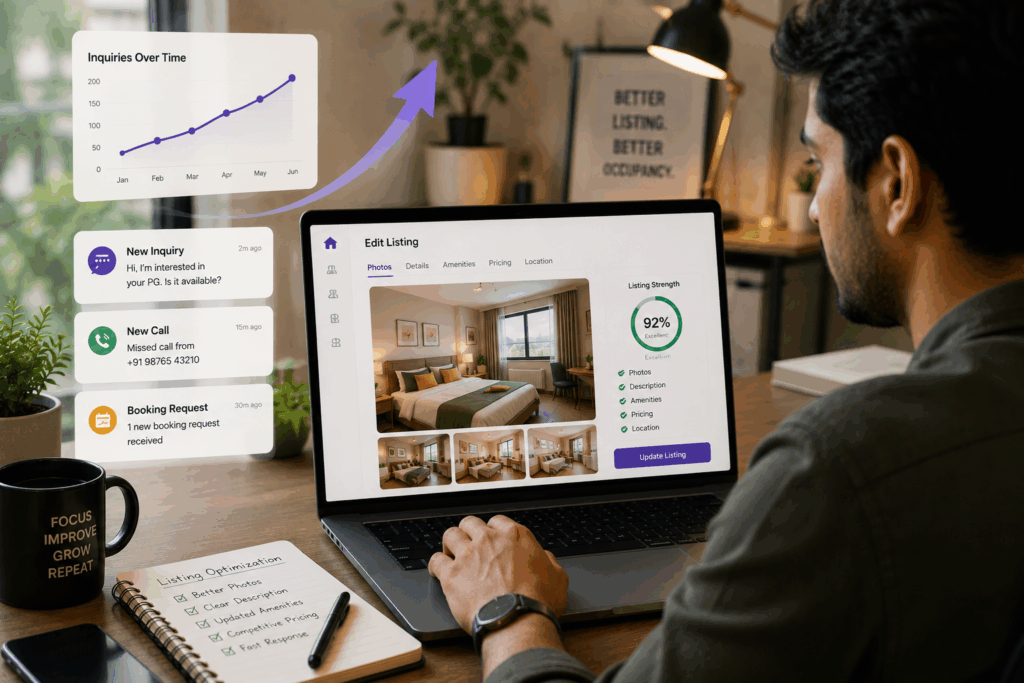
A strong listing generates attention, but conversions depend on how professionally the property is managed afterward. Many operators lose potential tenants because communication, occupancy tracking, onboarding, and follow-ups become fragmented across spreadsheets, calls, and multiple platforms.
RentOk helps streamline rental operations by bringing tenant management, occupancy tracking, communication, and payment workflows into one organized system. This allows property owners to:
- manage tenant records and room availability more efficiently without operational confusion.
- streamline inquiry handling and communication for faster responses and smoother onboarding.
- improve professionalism across the tenant journey through structured coordination and payment tracking.
- build their own branded app and website, creating a stronger digital presence instead of relying entirely on third-party listing platforms.
A dedicated website and branded app also help properties establish stronger credibility, generate direct inquiries, and build long-term brand recall among tenants.
As rental markets become more competitive, operational structure and digital presence are becoming just as important as the property itself.
Conclusion
Online listings are no longer simple advertisements uploaded on rental platforms. They are the first stage of tenant experience and one of the strongest factors influencing occupancy performance.
A well-optimized listing does much more than generate inquiries. It builds trust, improves lead quality, reduces uncertainty, and positions your property as professionally managed before the first conversation even begins.
The operators consistently achieving stronger occupancy today are usually not the ones offering the cheapest rooms. They are the ones presenting their properties more clearly, communicating more professionally, and creating smoother experiences from inquiry to move-in.
If you want to improve your rental listing optimization strategy, streamline operations, and create a more professional tenant experience, explore RentOk and discover how structured property management can help you convert more inquiries into confirmed occupancy more consistently.
About the Author
Ishika Pannu
Ishika Pannu brings you the latest insights and easy-to-apply strategies in property management—helping you simplify renting and grow with RentOk.