Legal
How a Simple Tenant Dispute Froze a PG Owner’s Bank Account

Written by
Ishika Pannu
Read Time
6 min read
Posted on
June 11, 2026
Overview
Overview
How a Simple Tenant Dispute Froze a PG Owner’s Bank Account
Running a PG or rental property business involves much more than managing rooms and collecting rent. Every booking, payment, refund request, and tenant interaction carries a level of operational risk that many property owners often underestimate. While most disputes are resolved through conversation, some situations can escalate unexpectedly and create challenges far beyond the original issue.
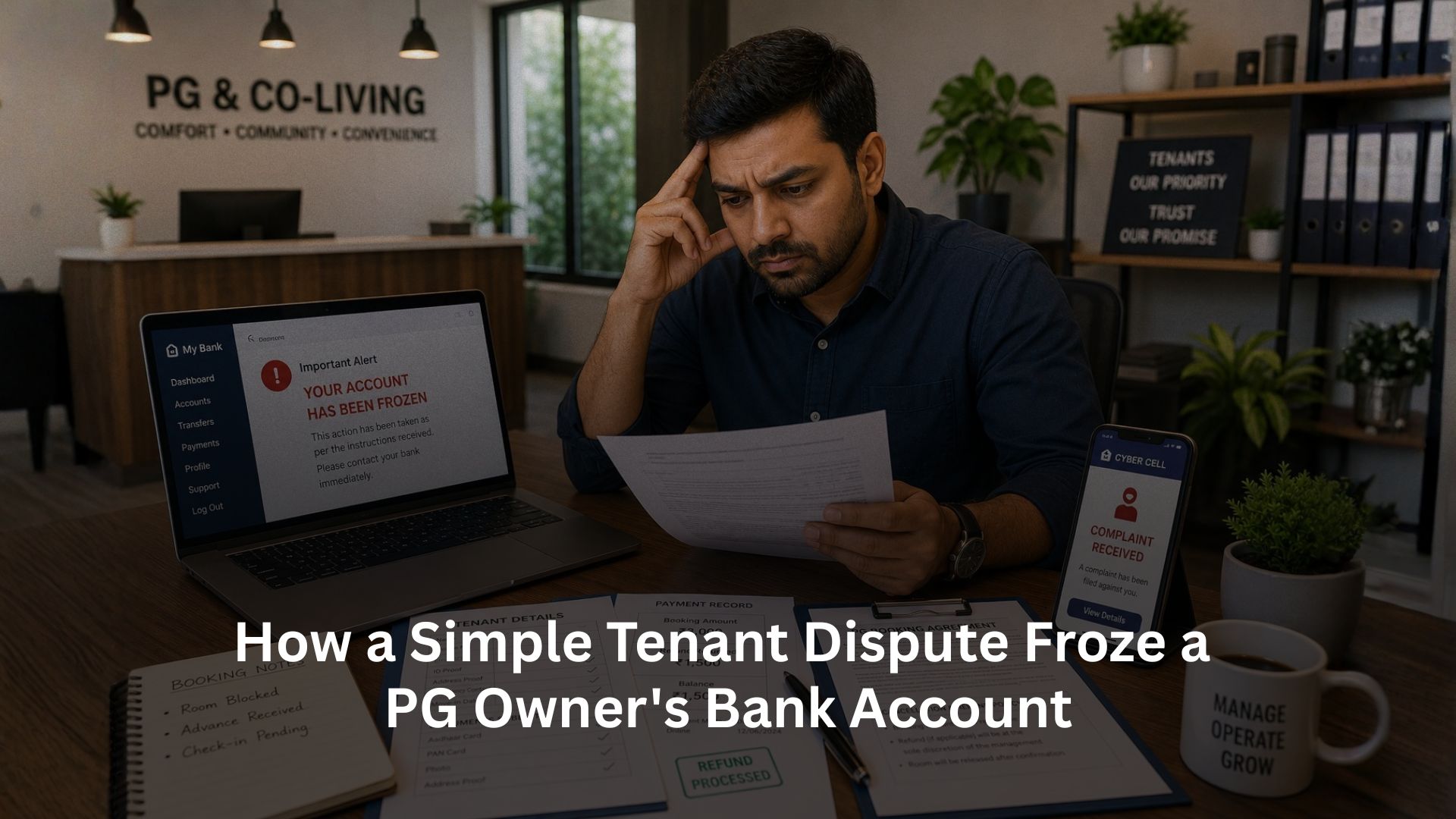
Recently, a PG owner found himself dealing with exactly such a situation. A prospective tenant approached the property looking for accommodation and agreed to take a room for a monthly rent of ₹7,000. As part of the booking process, the tenant transferred ₹3,000 online and informed the owner that the remaining amount would be paid in cash at the time of move-in.
At that stage, everything appeared routine. Similar booking arrangements take place every day across PGs, hostels, and co-living spaces, and there seemed to be no reason to expect any complications.
A Refund Request Changed Everything
However, the situation took an unexpected turn the very next day. The tenant returned and informed the owner that he no longer wished to stay at the property due to certain personal issues. He requested a complete refund of the amount he had paid.
The owner explained that the room had already been blocked and reserved for him, making a full refund difficult. Nevertheless, in an effort to resolve the matter amicably, he returned ₹1,500 to the tenant and retained proof of the refund transaction. From his perspective, the matter had been settled fairly and transparently.
From a Rental Dispute to a Frozen Bank Account
Unfortunately, the issue did not end there. The tenant reportedly filed a complaint through the cyber cell, and the matter escalated beyond what the property owner had anticipated.
As the complaint remained active, the PG owner’s bank account was frozen. What began as a disagreement over a booking amount and refund request suddenly started affecting his ability to access funds and manage day-to-day business operations.
The most surprising aspect of this incident is that it was not a traditional cybercrime case involving hacking, identity theft, or fraudulent online activity. It was essentially a dispute between a tenant and a property owner regarding payment expectations. Yet the operational impact was significant enough to disrupt the business itself.
Why Incidents Like These Are Becoming a Concern
The rental industry still functions largely on trust-based interactions. Property owners frequently accept advance payments over UPI, discuss terms over phone calls, and finalize bookings through WhatsApp conversations. These methods are convenient, but they often leave room for interpretation when disagreements arise later.
A tenant may believe that an advance payment is fully refundable if they decide not to move in. On the other hand, the property owner may consider that amount a booking charge because the room was blocked and made unavailable to other prospective tenants. Both parties may genuinely believe they are correct, which is where disputes begin.
The challenge is that once a complaint is filed, the focus shifts from what was verbally discussed to what can actually be documented and verified. If policies, payment terms, and booking conditions are unclear, proving either side’s position becomes considerably more difficult.

The Real Problem Is Not the Refund Amount
Most operators looking at this case focus on the amount involved. However, the real issue is not whether ₹1,500 or ₹3,000 should have been refunded.
The bigger concern is how quickly a routine operational disagreement can create financial and administrative complications for a property owner.
When booking processes are informal, there are often gaps in documentation such as:
- No written explanation of cancellation and refund policies shared before payment is accepted.
- No formal booking confirmation explaining the conditions under which a room is being reserved.
- Partial online payments combined with cash arrangements that create incomplete financial records.
- Important discussions taking place over calls instead of documented communication channels.
Individually, these gaps may seem harmless. Together, they create uncertainty when a dispute needs to be reviewed objectively.
Why Every PG Needs Clear Booking Policies
Many property owners establish refund rules verbally because it feels faster and more convenient. The problem is that verbal agreements are often interpreted differently by different people.
A professionally managed booking process should clearly define:
- Whether an advance payment is adjustable, refundable, or non-refundable.
- How long a room will remain blocked after a booking amount is received.
- What happens if a tenant cancels before moving in.
- Whether administrative or room-blocking charges apply.
- How refund requests are evaluated and processed.
When these expectations are communicated before payment is accepted, disputes become far easier to manage because both parties understand the terms from the beginning.
Clear policies do not eliminate disagreements entirely, but they significantly reduce confusion and strengthen transparency.
Why Tenant Verification Is Also a Risk-Management Tool
Most discussions around tenant verification focus on compliance and security. While those benefits are important, verification also serves another purpose that often goes unnoticed.
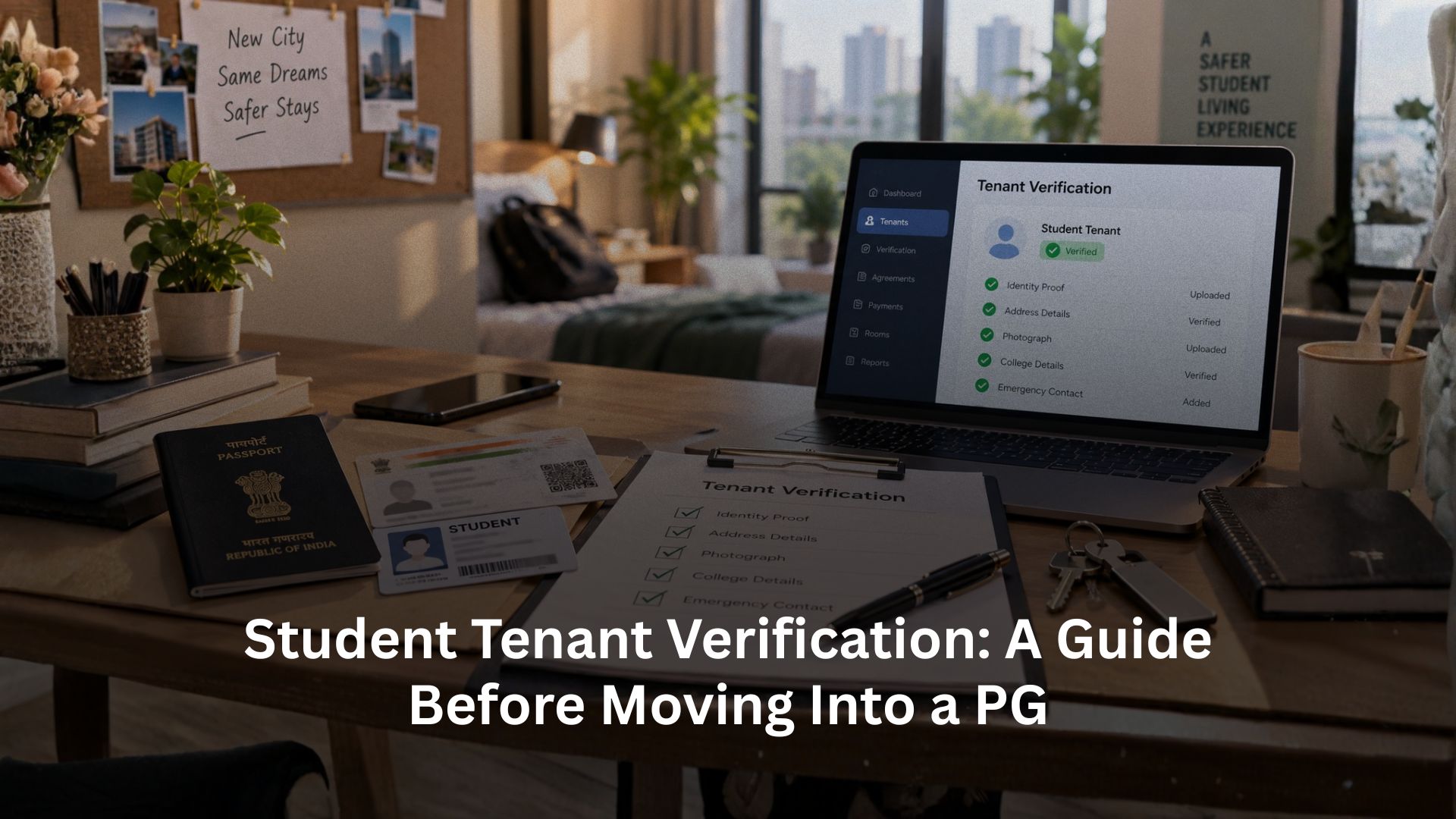
A structured verification process helps property owners create reliable records regarding who booked the room, when the booking was made, what documents were submitted, and how communication progressed throughout the onboarding process.
Strong verification systems provide visibility into:
- Tenant identity and supporting documents.
- Booking timelines and occupancy history.
- Payment records and transaction details.
- Communication logs related to move-in decisions.
- Documentation supporting operational decisions.
This information becomes extremely valuable whenever disputes arise because it creates a clear timeline rather than forcing operators to rely on memory or fragmented conversations.

Protecting Your Rental Business from Similar Situations
As rental businesses become more digital, operators need to think beyond occupancy and rent collection. Administrative processes that once seemed secondary are becoming increasingly important for protecting the business itself.
Property owners should focus on creating systems that improve transparency at every stage of the tenant journey. This includes maintaining complete payment records, documenting booking conditions, verifying tenant information properly, and ensuring that important operational decisions are recorded rather than discussed informally.
More importantly, operators should view onboarding as a structured business process instead of a casual transaction. The stronger the process, the lower the likelihood of misunderstandings escalating into larger disputes later.
How RentOk Helps Create More Structured Tenant Onboarding
Many disputes arise because important information is scattered across payment screenshots, WhatsApp chats, call records, and handwritten notes. As occupancy grows, managing these records manually becomes increasingly difficult.
RentOk helps property managers bring more structure to tenant onboarding and record management by supporting tenant verification, centralized record keeping, payment visibility, and occupancy tracking. Having these details organized in one place helps operators maintain better visibility into their tenant relationships while reducing the operational confusion that often contributes to disputes.
For growing PGs and co-living businesses, structured verification and documentation are becoming just as important as occupancy management itself.
Final Thoughts
The incident involving this PG owner is a reminder that not every operational risk comes from vacancies, maintenance issues, or delayed rent payments. Sometimes a disagreement over a booking amount can create consequences that far exceed the value of the original transaction.
As the rental industry continues to become more digital, operators need stronger processes around bookings, payments, documentation, and tenant verification. These systems not only help resolve disputes more effectively but also reduce the chances of those disputes escalating in the first place.
For property owners looking to build more transparent and professionally managed operations, it is worth evaluating whether existing onboarding and documentation processes are strong enough to protect the business when unexpected situations arise. Exploring solutions like RentOk can be a practical step toward creating that additional layer of operational clarity and protection.
About the Author
Ishika Pannu
Ishika Pannu brings you the latest insights and easy-to-apply strategies in property management—helping you simplify renting and grow with RentOk.