Market Trends
Landlord Tenant Management Software: A Complete Overview

Written by
Ishika Pannu
Read Time
7 min read
Posted on
April 1, 2026
Overview
Overview
Landlord Tenant Management Software: A Complete Overview
Managing tenants may seem straightforward when you’re handling a few rooms or a single property. You collect rent, track payments, and address tenant concerns as they come. But as your rental business grows, things quickly become more complex.
More tenants mean more payments, more documentation, more communication, and more chances for confusion. What once took a few minutes a day can soon start consuming hours.
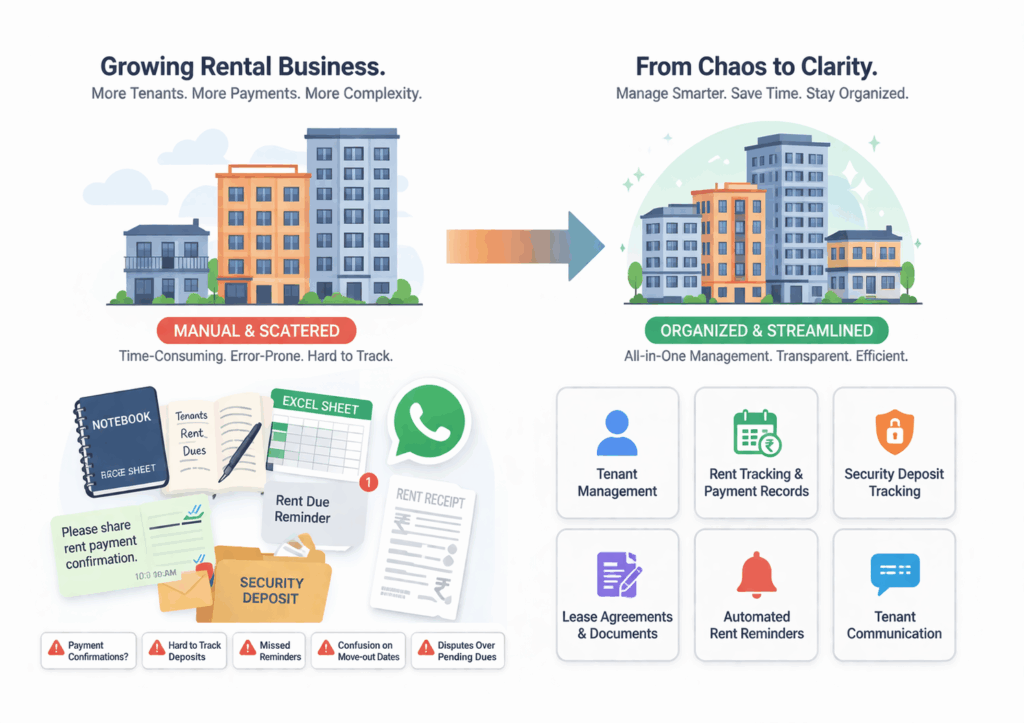
Many landlords initially rely on notebooks, Excel sheets, or WhatsApp messages to manage everything. These methods may work at the beginning, but as operations expand, gaps start appearing.
You may begin noticing:
- Tenants asking for payment confirmations
- Difficulty tracking security deposits
- Missed rent reminders
- Confusion around move-out dates
- Disputes over pending dues
These challenges aren’t unusual. They simply indicate that manual systems are no longer enough.
This is where landlord tenant management software becomes essential. It helps landlords bring structure, transparency, and efficiency to tenant management without increasing workload.
In this complete overview, we’ll break down how landlord tenant management software works, why it’s becoming essential, and how platforms like RentOk help simplify rental operations.
Why Landlord-Tenant Management Gets Complicated Over Time
At the start, managing tenants manually feels manageable. You remember who paid rent, who is under notice, and which rooms are vacant.
But as your tenant base grows, tracking everything manually becomes harder.
You may start experiencing:
- Payments coming from multiple sources
- Difficulty tracking deposit deductions
- Missed follow-ups
- Confusion around tenant move-outs
- Scattered documents and agreements
These small inefficiencies slowly turn into operational challenges.
Instead of focusing on improving occupancy or expanding your properties, you spend more time managing routine tasks.
This is where structured landlord tenant management software starts making a real difference.
What is Landlord Tenant Management Software?
Landlord tenant management software is a centralized platform that helps landlords manage tenants, payments, agreements, and operations from one system.
Instead of using multiple tools, everything is organized in one place.
This typically includes:
- Tenant records
- Rent tracking
- Security deposits
- Agreements
- Notices
- Complaints
- Vacancy tracking
With everything centralized, landlords gain better visibility and control over operations.
This also helps landlords run their rental business more professionally.
When Do Landlords Usually Need Tenant Management Software?
Many landlords consider software only after operations start becoming difficult.
Common signs include:
- Managing multiple tenants
- Handling multiple properties
- Spending too much time tracking payments
- Facing frequent disputes
- Difficulty managing documents
These signs indicate that manual tracking is no longer efficient.
At this stage, landlord tenant management software helps streamline operations and reduce stress.
Balancing Owner Needs and Tenant Needs
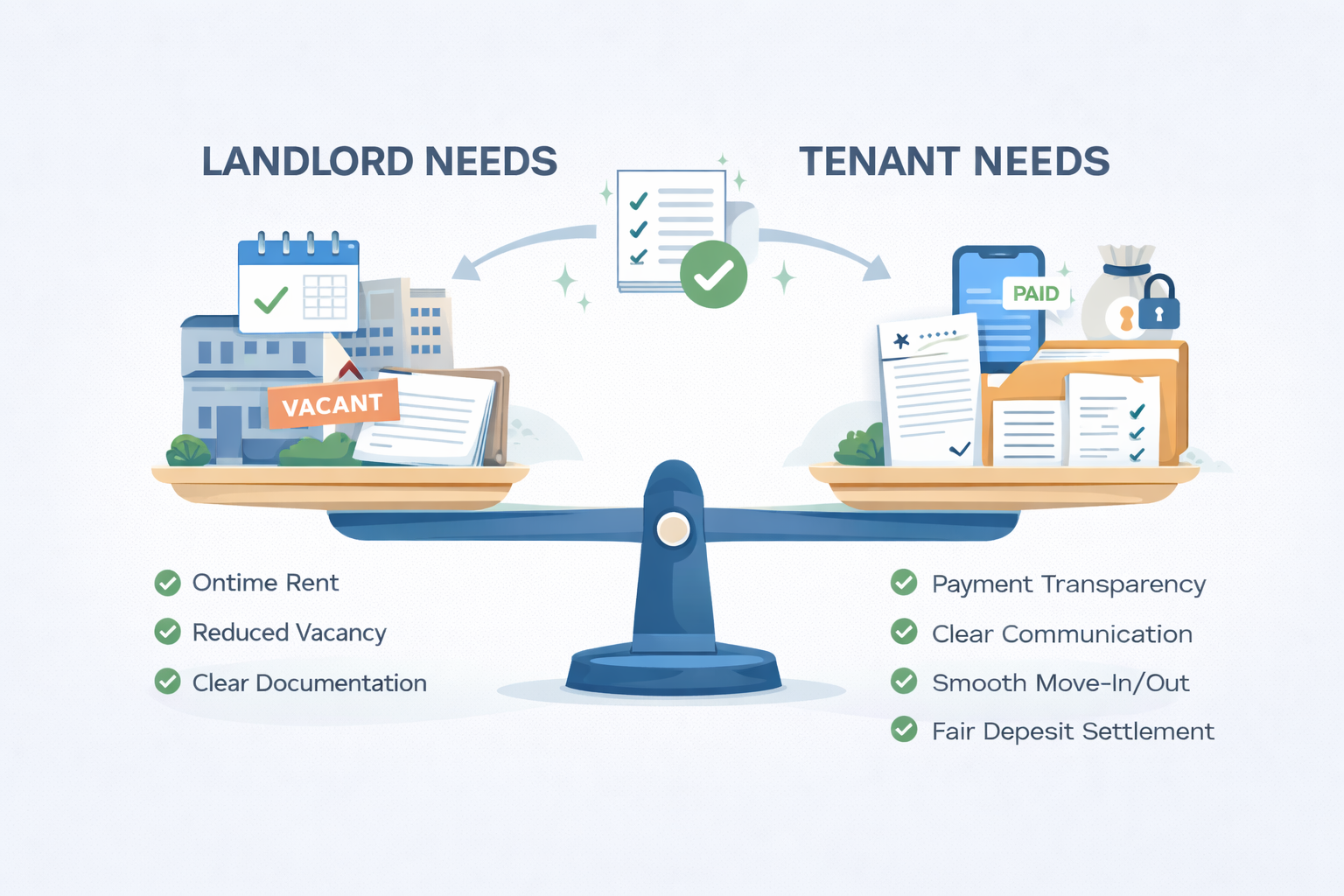
One of the biggest challenges in rental management is balancing expectations between landlords and tenants.
Landlords want:
- On-time rent payments
- Reduced vacancy
- Clear documentation
- Less operational stress
Tenants expect:
- Payment transparency
- Clear communication
- Smooth move-in and move-out
- Fair deposit settlement
Without structured management, balancing both sides becomes difficult.
For example, a tenant may claim they paid rent, while the landlord struggles to verify the payment. Similarly, deposit deductions during move-out can create friction if records are unclear.
These situations often lead to unnecessary disputes.
Landlord tenant management software helps remove confusion by maintaining clear documentation and visibility for both sides.
Transparency in Ledgers Improves Trust
Financial transparency is one of the biggest benefits of landlord tenant management software.
Manual tracking often leads to confusion, especially when managing multiple tenants.
With software, payment records are automatically maintained.
This helps landlords:
- Track rent payments in real time
- Monitor pending dues
- Record deposits
- Track utility charges
- Generate payment summaries
Tenants also benefit from this transparency.
They can clearly see:
- What they paid
- What is pending
- What deductions apply
This clarity reduces misunderstandings and improves relationships.
Dispute Resolution Through Software
Tenant disputes are common in rental operations. Most disagreements revolve around:
- Security deposit deductions
- Pending rent
- Utility charges
- Move-out conditions
Without proper records, resolving these disputes becomes difficult.
Manual tracking often relies on memory or scattered notes.
Landlord tenant management software helps prevent this by maintaining documented records.
For example:
- Payment history is recorded automatically
- Notices are logged with timestamps
- Deposit deductions are documented
- Settlement calculations are clear
When everything is documented, disputes become easier to resolve.
Where Manual Systems Create Operational Stress
Many landlords underestimate how much time manual management consumes.
Daily tasks often include:
- Tracking payments
- Sending reminders
- Managing tenant communication
- Tracking notices
- Handling documentation
Individually, these tasks seem small. But combined, they create operational overload.
Over time, this affects productivity and growth.
Landlord tenant management software helps reduce this workload by organizing everything in one place.
What to Look for in the Best Landlord Tenant Software
Not all landlord tenant software is designed the same way. Some tools only track rent, while others provide full operational visibility. Choosing the right platform depends on how well it simplifies your daily management.
A good landlord tenant management software should not just store information, it should help you manage operations more efficiently.
Here are the features that truly make a difference.
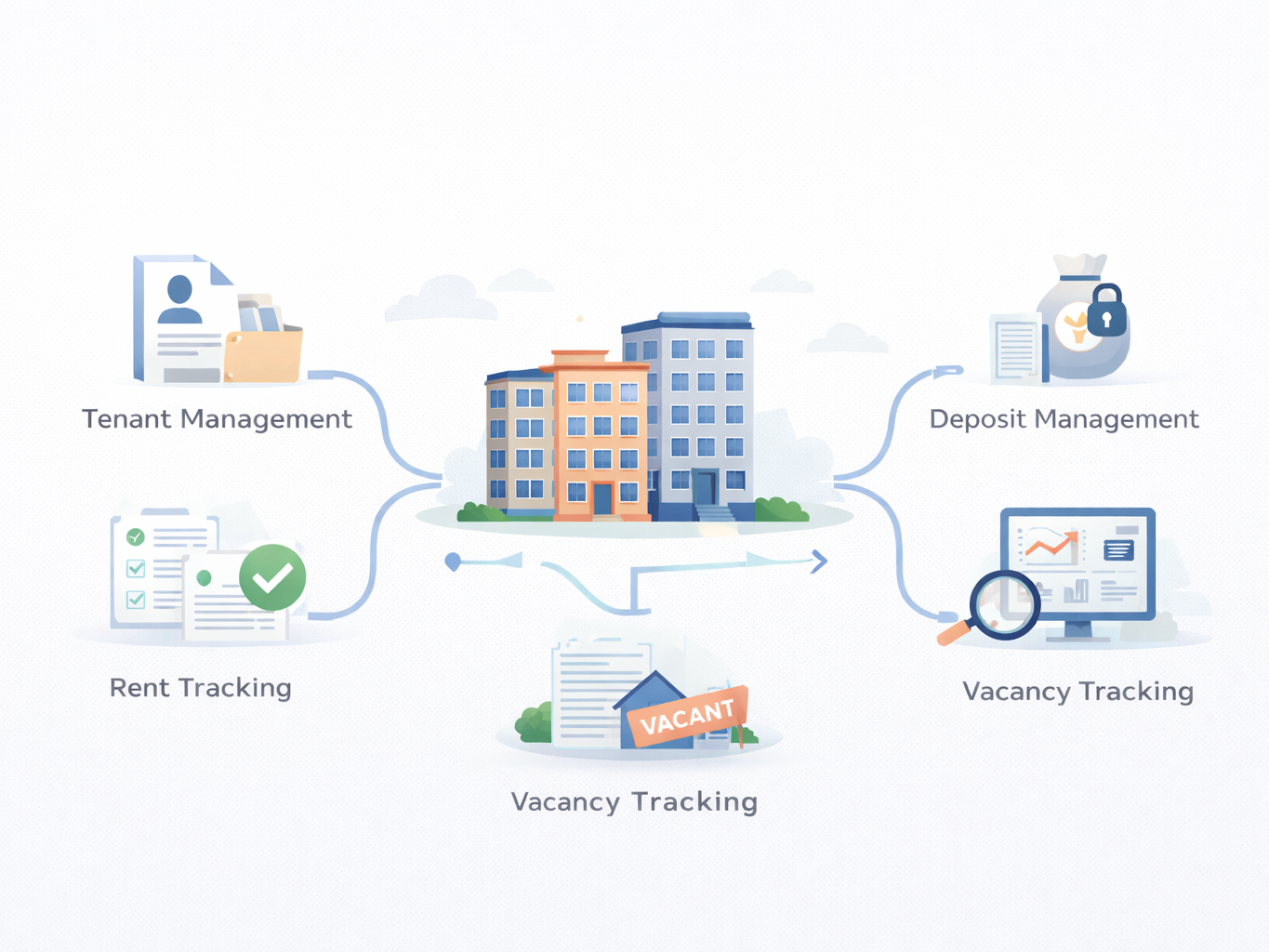
Tenant Management That Keeps Everything Organized
As your tenant base grows, keeping track of individual details becomes harder. A structured tenant management system helps you store everything in one place.
This includes:
- Tenant contact details
- Documents and ID proofs
- Move-in and move-out dates
- Payment history
- Room allocation
Having this information centralized helps reduce confusion and makes tenant management smoother.
Smart Rent Tracking and Payment Visibility
Manual rent tracking often leads to confusion, especially when payments come through different sources.
A good system should allow you to:
- Track payments in real time
- View pending dues instantly
- Send automated reminders
- Maintain payment history
This reduces manual follow-ups and ensures better cash flow.
Security Deposit Management Without Confusion
Security deposits often lead to disputes if records are unclear.
A structured system helps track:
- Deposit amount
- Deductions
- Pending dues
- Final settlement
This makes move-outs smoother and more transparent.
Vacancy Tracking That Reduces Revenue Loss
Vacant rooms directly impact revenue. Without proper tracking, landlords often realize vacancies too late.
Landlord tenant software should help you:
- Track occupied rooms
- Monitor notice periods
- View upcoming vacancies
- Plan replacements
This helps reduce vacancy gaps.
Centralized Dashboard for Better Visibility
Managing multiple properties becomes easier with a centralized dashboard.
This allows landlords to:
- Monitor occupancy
- Track payments
- Manage tenants
- View property performance
This improves operational control.
Scaling Rental Operations Becomes Easier
As your rental business grows, operational complexity increases. More tenants mean more payments, documentation, and communication.
Without structured systems, growth creates stress.
Landlord tenant management software helps you:
- Manage multiple properties
- Track tenants efficiently
- Reduce manual work
- Improve occupancy planning
- Handle disputes professionally
This makes scaling smoother.
How RentOk Helps Simplify Landlord-Tenant Management
Managing tenants, payments, and documentation manually can quickly become overwhelming. This is where RentOk helps bring structure to rental operations.
RentOk provides a centralized dashboard where landlords can manage everything from one place.
With RentOk, you can:
- Manage tenant records
- Track payments automatically
- Monitor occupancy
- Store agreements securely
- Track deposits and dues
- Manage notices
Instead of switching between spreadsheets and notebooks, everything is available in one system.
This improves efficiency and reduces operational stress.
Why More Landlords Are Moving to Digital Management
Rental businesses today are becoming more structured and professional. Tenants expect clarity, communication, and smooth processes.
Manual systems make it harder to meet these expectations.
Landlord tenant management software helps landlords:
- Save time
- Reduce disputes
- Improve tenant experience
- Maintain transparency
- Scale operations
As rental operations grow, structured management becomes essential.
Bring Clarity to Your Tenant Management
Managing tenants manually may work when operations are small. But as your rental business grows, manual systems create confusion, delays, and disputes.
Landlord tenant management software helps bring clarity by organizing tenant data, automating rent tracking, and improving transparency.
If managing tenants, payments, and records is starting to feel complicated, it may be time to shift toward a smarter system.
About the Author
Ishika Pannu
Ishika Pannu brings you the latest insights and easy-to-apply strategies in property management—helping you simplify renting and grow with RentOk.