
Market Trends
Which City in India Has the Highest Rent?


Written by
Ishika Pannu
Read Time
11 min read
Posted on
October 12, 2026
Overview
Overview
Which City in India Has the Highest Rent?
Rent is one of the biggest expenses to consider when moving to a new city. Whether you’re a student moving for college, a professional starting a new job, or a family looking for a larger home, the city you choose can significantly affect your monthly budget.
In India, rental prices vary based on employment opportunities, population density, connectivity, and housing availability. Mumbai is widely regarded as India’s most expensive major rental market, while Bengaluru, Delhi NCR, Gurugram, Pune, and Chennai also have neighbourhoods with substantial rental demand.
But how much does it actually cost to rent a home in these cities? And what makes one neighbourhood more expensive than another? Let’s explore the rental landscape across India’s major cities and the factors that influence what tenants pay.
Which City Has the Highest Rent in India?
Mumbai is widely regarded as India’s most expensive major city for residential rentals, particularly in premium neighbourhoods. High housing demand, limited land availability, and proximity to major employment centres contribute to its high rental costs.
Areas such as Bandra West, Worli, and South Mumbai can command substantial premiums. In these locations, tenants may pay significantly more for a smaller apartment than they would for a larger property in an outer suburb.
However, rental prices are not uniform across the city. Locality, property size, furnishing, building amenities, and connectivity all influence the final amount. A home near a major business district may cost more because it reduces commuting time and offers easier access to everyday services.
Other cities also have expensive rental pockets. Gurugram’s premium residential developments, Bengaluru’s technology corridors, and sought-after areas of Delhi can command high rents. This makes it important to compare specific neighbourhoods instead of relying only on citywide averages.

Average Monthly Rent in India’s Major Cities
The following table provides an indicative comparison of monthly residential rents across major Indian cities. These ranges are based on the market estimates provided for this article and should be treated as broad benchmarks rather than fixed averages.
| City | 1 BHK | 2 BHK | 3 BHK |
|---|---|---|---|
| Mumbai | ₹35,000–₹65,000 | ₹50,000–₹1,92,000+ | ₹90,000–₹3,28,000+ |
| Delhi NCR | ₹12,000–₹25,000 | ₹20,000–₹40,000 | Varies by locality |
| Gurugram | Varies widely | ₹45,000–₹2,00,000 in premium markets | Varies by property |
| Bengaluru | ₹15,000–₹30,000 | ₹22,000–₹45,000 | ₹40,000–₹80,000 |
| Chennai | ₹10,000–₹22,000 | ₹18,000–₹35,000 | ₹35,000–₹60,000 |
| Pune | ₹10,000–₹20,000 | ₹16,000–₹30,000 | ₹30,000–₹55,000 |
Note: These are indicative ranges, not official citywide averages. Actual rent depends on the neighbourhood, furnishing, property condition, amenities, and date of listing. Premium properties may exceed these ranges, while homes in outer areas may be more affordable. Gurugram’s figures refer to premium rental markets and are not directly comparable with citywide estimates.
The table shows why rental costs need context. Mumbai’s premium market stands out, but the gap between two properties within the same city can also be substantial. A centrally located apartment and a similar home farther from employment hubs may have very different rents.
For renters, comparing properties with similar features is more useful than looking at a single citywide figure. It also helps to account for maintenance charges, transport expenses, and other costs that affect the total cost of renting.
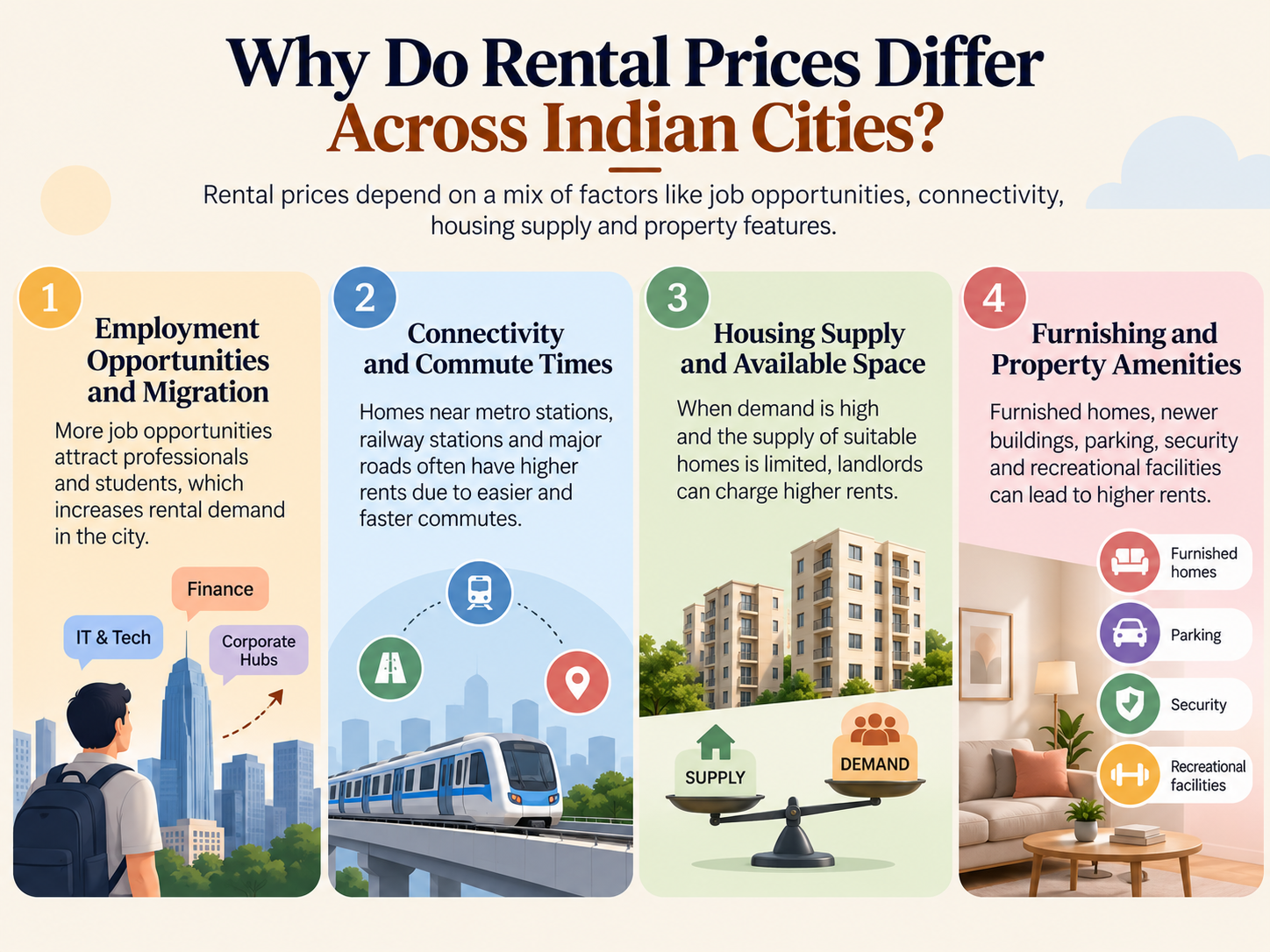
Why Do Rental Prices Differ Across Indian Cities?
Rental prices are shaped by more than the cost of a property itself. The local economy, housing supply, infrastructure, and concentration of jobs all influence how much tenants are willing or able to pay.
Employment Opportunities and Migration
Cities with large employment markets attract people from across the country. When professionals and students move into an area faster than suitable housing becomes available, rental demand can increase.
Bengaluru’s technology sector, Mumbai’s financial and commercial industries, and Gurugram’s corporate ecosystem all contribute to demand in their respective rental markets. Areas near major offices, universities, and business districts often experience stronger demand than locations with fewer nearby opportunities.
Connectivity and Commute Times
Transport access plays a major role in rental decisions. Properties near metro stations, railway stations, major roads, and employment hubs may command higher rents because they make daily travel more convenient.
For some tenants, paying more for a well-connected home is worthwhile if it reduces commuting time and transport expenses. Others may choose a less expensive neighbourhood and accept a longer journey.
The best option depends on the tenant’s work location, travel habits, and overall budget.
Housing Supply and Available Space
Rental prices also depend on how much housing is available in an area. When demand is high and the supply of suitable homes is limited, landlords may be able to charge more.
This is particularly relevant in densely populated urban centres and established premium neighbourhoods. Property size, building quality, parking, security, and amenities can further affect the rent.
Furnishing and Property Amenities
Two apartments in the same locality may have different rental prices because of their condition and features. Furnished homes, newer buildings, dedicated parking, security services, and recreational facilities can all influence the asking price.
Tenants should therefore compare properties with similar features before deciding whether a rent is reasonable.
A Closer Look at Major Rental Markets
Each major Indian city has its own rental patterns. Understanding these differences can help tenants shortlist locations and set realistic budgets before moving.
Mumbai
Mumbai’s rental market is shaped by high demand and limited space in many established residential areas. Premium localities can command exceptionally high rents, especially for larger apartments and homes close to major commercial centres.
Tenants looking to manage costs often explore suburbs and areas with suitable public transport connections. The trade-off may involve a longer commute, but the difference in rent can be significant.
Delhi NCR and Gurugram
Delhi NCR is not a single, uniform rental market. Delhi, Noida, and Gurugram have different residential areas, employment clusters, and price points.
Gurugram’s premium apartments and corporate housing markets can be expensive, particularly in sought-after developments. In other parts of the region, tenants may find more options across different budgets. Metro access, office proximity, and the type of residential society can influence prices considerably.
Bengaluru
Bengaluru’s rental demand is closely linked to its technology industry, startup ecosystem, and educational institutions. Areas near major employment corridors can command higher rents, particularly when tenants prioritise a shorter commute.
Renters often need to balance the cost of housing against the time and expense of travelling to work. Comparing localities around an office, rather than searching across the entire city, can make the decision more manageable.
Pune
Pune’s rental market serves students, working professionals, and families. Demand varies across areas near educational institutions, IT parks, and established residential neighbourhoods.
The type of accommodation also matters. Students may consider shared flats or PGs, while families may prioritise larger apartments and access to schools. Rent can vary significantly depending on the neighbourhood and property type.
Chennai
Chennai has rental options across a range of budgets. Prices depend on access to employment centres, educational institutions, transport, and everyday amenities.
Tenants comparing homes should look beyond the monthly rent. Maintenance charges, furnishing, travel requirements, and the condition of the property can change the overall cost of living in a particular area.
How Can Tenants Find a Rental That Fits Their Budget?
Choosing a rental property involves more than finding the lowest advertised price. A home that seems affordable initially may become expensive once maintenance, transport, utilities, and other charges are included.
A practical way to evaluate options is to compare the total cost of renting in each shortlisted neighbourhood.
- Set a complete monthly budget. Include rent, maintenance, utilities, commuting, and other regular expenses before deciding how much you can afford.
- Compare similar properties. Check homes with comparable sizes, furnishing, amenities, and connectivity to understand whether the asking rent is reasonable.
- Review the rental agreement. Check the security deposit, notice period, lock-in period, maintenance responsibilities, and conditions for ending the tenancy.
- Inspect the property before committing. Confirm its condition, available facilities, and any additional charges with the landlord or property manager.
- Compare several listings. Looking at multiple properties in the same neighbourhood provides a more realistic picture of current asking prices.
The agreement deserves particular attention because the advertised rent does not tell you everything about the cost of living in a property. Maintenance charges, deposit conditions, and exit clauses can all affect your financial commitment. Before signing, read How to Read a Rent Agreement Before Signing: What to Watch Out For to understand which terms deserve closer review.
If the quoted rent or additional charges seem high, negotiation may also be possible. Comparing similar properties in the same locality gives you a stronger basis for that conversation. RentOk’s guide on How to Negotiate Rent and Maintenance Terms Before Signing explains how tenants can discuss these costs before committing to a property.
How Rental Businesses Can Respond to Changing Market Demand
Rental prices are only one part of a property’s performance. For property operators, demand, occupancy, rent collection, and tenant experience also influence how well a rental business performs.
Understanding local demand helps operators make better decisions about pricing and property positioning. However, managing a rental property also requires organised records, consistent communication, and visibility into payments and vacancies.
For example, operators who track collections can identify delayed payments and outstanding dues more easily. How to Track Rent Collection Performance explains which metrics help rental operators understand their collection patterns and identify areas for improvement.
The collection process itself matters, too. As the number of tenants grows, manual follow-ups and payment tracking can become time-consuming. A structured process can help operators maintain clearer records and make monthly collections easier to manage. Learn more in How to Collect Rent Online from Tenants in India.

How RentOk Helps Property Operators Manage Rentals
As rental businesses grow, keeping track of tenants, payments, dues, and property operations can become increasingly difficult. Managing these activities through scattered spreadsheets and messages may create gaps in records and delay follow-ups.
RentOk helps PG, hostel, and co-living operators manage these activities through a centralised platform. Features for rent collection, tenant management, dues, and day-to-day operations help operators maintain clearer records across their properties.
These tools become particularly useful when operators manage several properties or a growing number of residents. Instead of treating rent collection, tenant records, and daily operations as separate tasks, a rental management system can bring essential information into one place.
For a closer look at how these systems work, read What Is Rental Management? Tools to Manage Your Property Efficiently. It explains how rental management systems support routine tasks and help operators maintain better visibility as their businesses grow.
Conclusion
Mumbai is widely regarded as India’s most expensive major rental market, particularly in premium residential areas. However, rental prices across the country depend on several factors, including employment demand, housing supply, property size, and connectivity.
For tenants, the most useful comparison is not simply between cities. It is between the actual homes and neighbourhoods that fit their budget and everyday requirements. Reviewing the full cost of renting can help them make a more informed decision.
For property operators, understanding local rental demand and maintaining efficient management processes can support better decisions as the market evolves.
Explore RentOk to see how smarter property management can help simplify rental operations.
Frequently Asked Questions
Find answers to common questions about this topic
About the Author
Ishika Pannu
Ishika Pannu brings you the latest insights and easy-to-apply strategies in property management—helping you simplify renting and grow with RentOk.
You may also like these
Related Articles

1 min read
Renting vs. Buying a House in India in 2026: Which Makes More Financial Sense?
Written by
Posted on
Ishika Pannu
Oct 9, 2026
1 min read
Rent vs Commute in Gurgaon: How Much Is Convenience Worth?
Written by
Posted on
Ishika Pannu
Oct 9, 2026

1 min read
Delhi-NCR’s PG Boom: When Family Homes Turn into Hostels
Written by
Posted on
Ishika Pannu
Oct 8, 2026
1 min read
How to Avoid MDR on Rent Payments: A Guide for PG Owners
Written by
Posted on
Shivanshi Dheer
Oct 6, 2026

1 min read
RentOk AutoPay & e-NACH for Automatic Rent Collection
Written by
Posted on
Shivanshi Dheer
Oct 6, 2026

1 min read
What’s Included in My Rent and What Am I Paying Extra For?
Written by
Posted on
Ishika Pannu
Sep 30, 2026

1 min read
Which Indian City Gives Landlords the Best Rental Yield Right Now?
Written by
Posted on
Ishika Pannu
Sep 28, 2026

1 min read
How Much Can My Landlord Legally Increase My Rent Each Year?
Written by
Posted on
Ishika Pannu
Sep 23, 2026

1 min read
India’s Rental Market Grows 16%: What Owners Should Know
Written by
Posted on
Ishika Pannu
Sep 22, 2026
1 min read
Why Landlords Check CIBIL Scores Before Renting
Written by
Posted on
Ishika Pannu
Sep 21, 2026
Stay ahead in property management with expert insights
Join thousands of property managers receiving exclusive tips delivered straight to your inbox.
Browse posts by category
Case Study
Cost of Living
Growth
Legal
Market Trends
News
Pg owner app
Property Management
Property Tax
Tech
RentOk
The easiest way to rent and manage your PGs and hostels.
Grievance Officer
Get the app


Contact us
hello@eazyapp.tech
HQ Office
COGROW, BASEMENT F-12/8A
BESIDE HOUSE OF STYLE SALON, SECTOR 28, DLF PHASE 1
GURUGRAM, HARYANA - 122002
South India Office
LUMIODESK COWORKING, 2ND FLOOR, 40, 14TH MAIN RD
BESIDE MC DONALD, 7TH SECTOR, HSR LAYOUT
BENGALURU, KARNATAKA - 560102
©️ 2026 EazyApp Tech Pvt Ltd. All rights reserved


