Market Trends
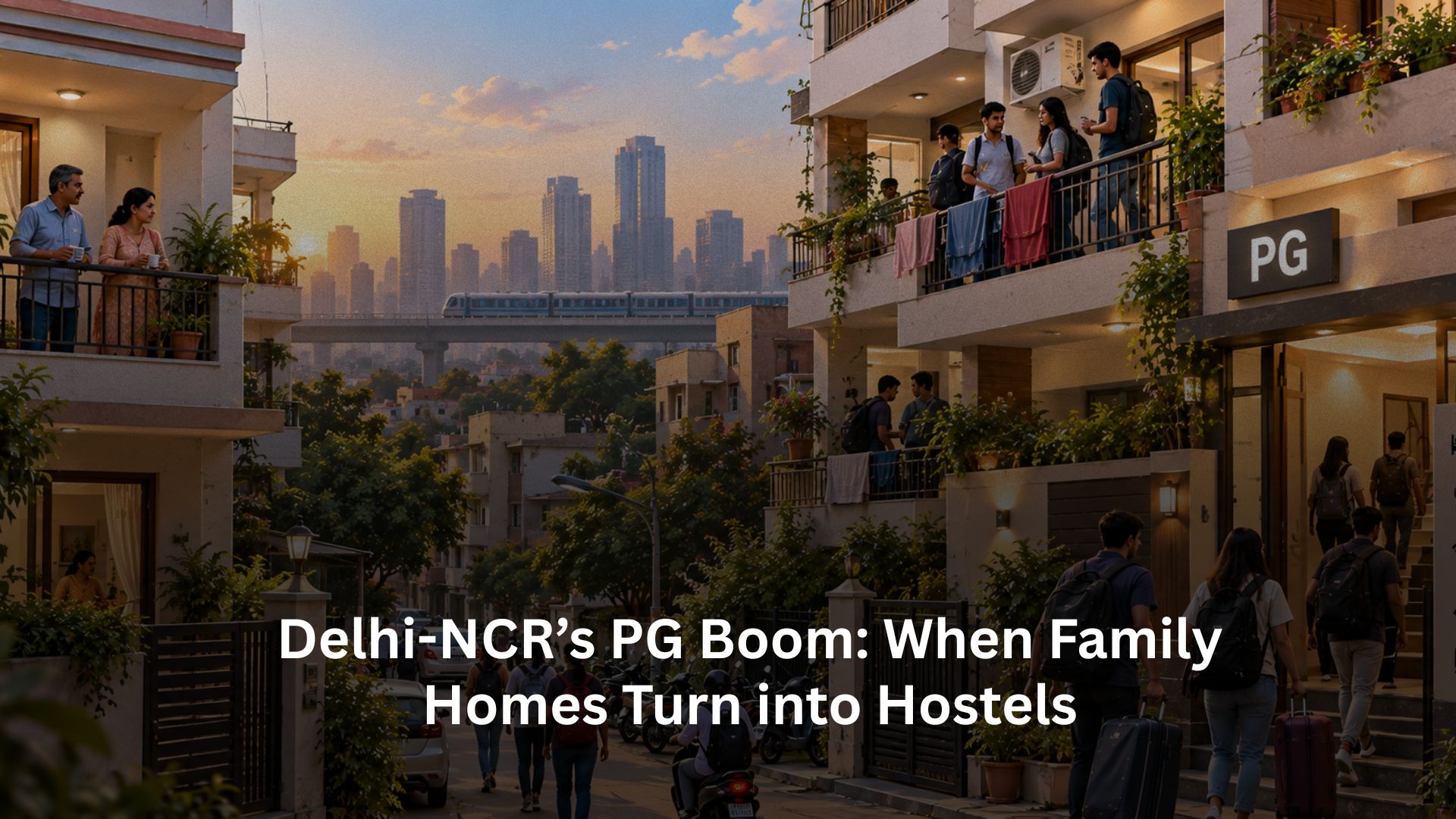
Delhi-NCR’s PG Boom: When Family Homes Turn into Hostels

Written by
Ishika Pannu
Read Time
12 min read
Posted on
October 8, 2026
Overview
Overview
Delhi-NCR’s PG Boom: When Family Homes Turn into Hostels
Delhi-NCR has become one of India’s biggest hubs for students, young professionals and workers moving from different cities. Universities, offices and business districts continue to attract people who need affordable accommodation close to where they study or work. PGs have become an important part of this housing ecosystem because they offer a simpler alternative to renting and managing an entire home.
At the same time, residential neighbourhoods across Delhi-NCR are changing. Houses that were once occupied by individual families are increasingly being converted into high-occupancy PGs. A property that once housed one family may now accommodate 10, 15 or even 20 residents. The question is not whether PGs should exist in these neighbourhoods. The more important question is whether infrastructure, safety and property management are keeping pace with this change.
Why Are Residential Neighbourhoods Becoming PG Hubs?
The reason is simple: people want convenience.
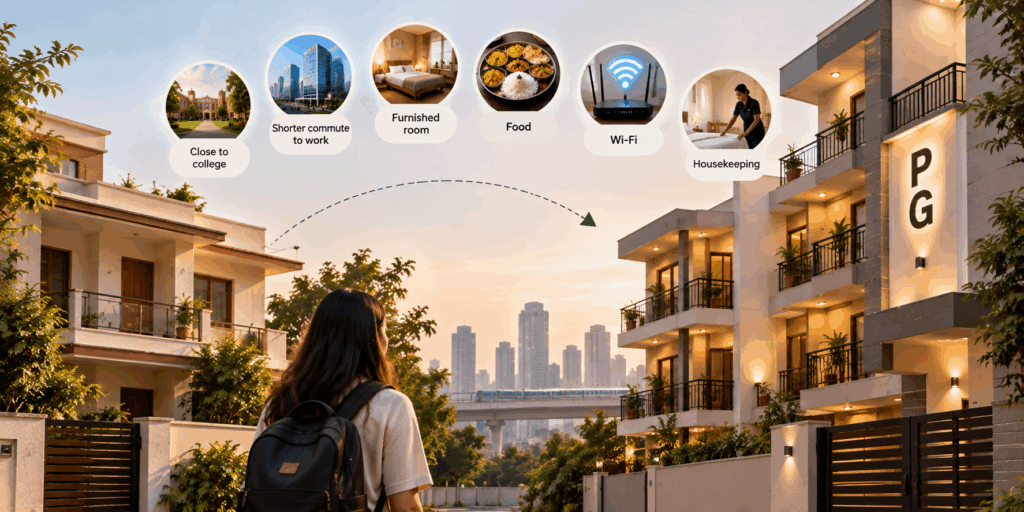
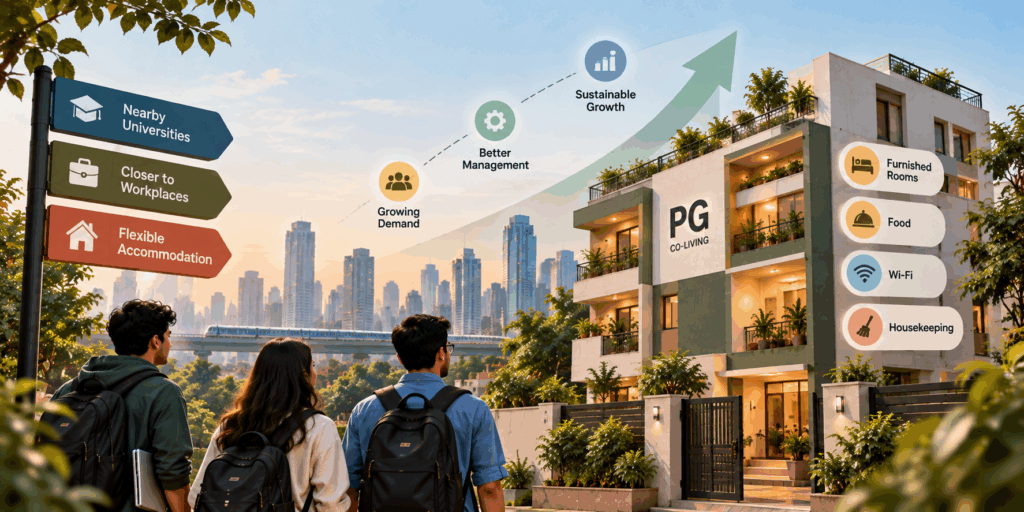
A student may want to live close to college. A young professional may want to avoid a long commute to Gurugram or Noida. Someone moving to Delhi-NCR for the first time may also prefer a furnished room with food, Wi-Fi and housekeeping.
PGs meet these needs without requiring tenants to arrange an entire home themselves.
This demand has also created an opportunity for property owners. An existing residential property can be converted into accommodation for people who are actively looking for rooms. As more owners respond to this demand, some neighbourhoods begin to change quite quickly.
A locality that once had mostly family homes may now have several PGs. This means more residents, vehicles, deliveries and daily activity within the same area.
The PG is solving a genuine housing need. The challenge is making sure that the systems supporting it can handle the increased occupancy.
A Family Home and a High-Occupancy PG Have Different Demands
A house occupied by one family and the same house occupied by 15 or 20 tenants may look the same from outside. Operationally, they are very different.
A family home usually has a much lower daily demand for water, electricity and shared facilities. A high-occupancy PG puts greater pressure on bathrooms, drainage, waste collection and common areas.
There is also more movement through the property. Tenants, visitors, delivery workers, housekeeping staff and maintenance teams may all be entering and leaving throughout the day.
The pressure becomes more visible when several homes in the same neighbourhood become PGs. Some areas that require greater attention include:
- Water and sanitation: Higher occupancy can increase daily consumption and pressure on drainage.
- Electricity: More residents can mean higher and more frequent electricity usage.
- Waste management: More people naturally generate more household and food waste.
- Parking: More residents can mean more two-wheelers, cars and visitors.
- Maintenance: Shared facilities and appliances experience more frequent use.
This does not mean every PG creates an infrastructure problem. It means that occupancy needs to be considered when a property is planned and managed.
For operators dealing with growing occupancy, RentOk’s guide on How to Improve Occupancy Rate in PG explains why occupancy needs to be actively managed rather than treated as a simple number.
Where Does the Safety Gap Begin?
Higher occupancy does not automatically make a property unsafe. The concern begins when high occupancy is combined with poor maintenance, unsafe alterations or inadequate safety arrangements.
Some properties also evolve gradually. A house may start with a few tenants. More rooms may then be added as demand increases. Internal spaces may be altered. The number of residents may keep rising.
Eventually, the way the property is being used can become very different from its original setup.
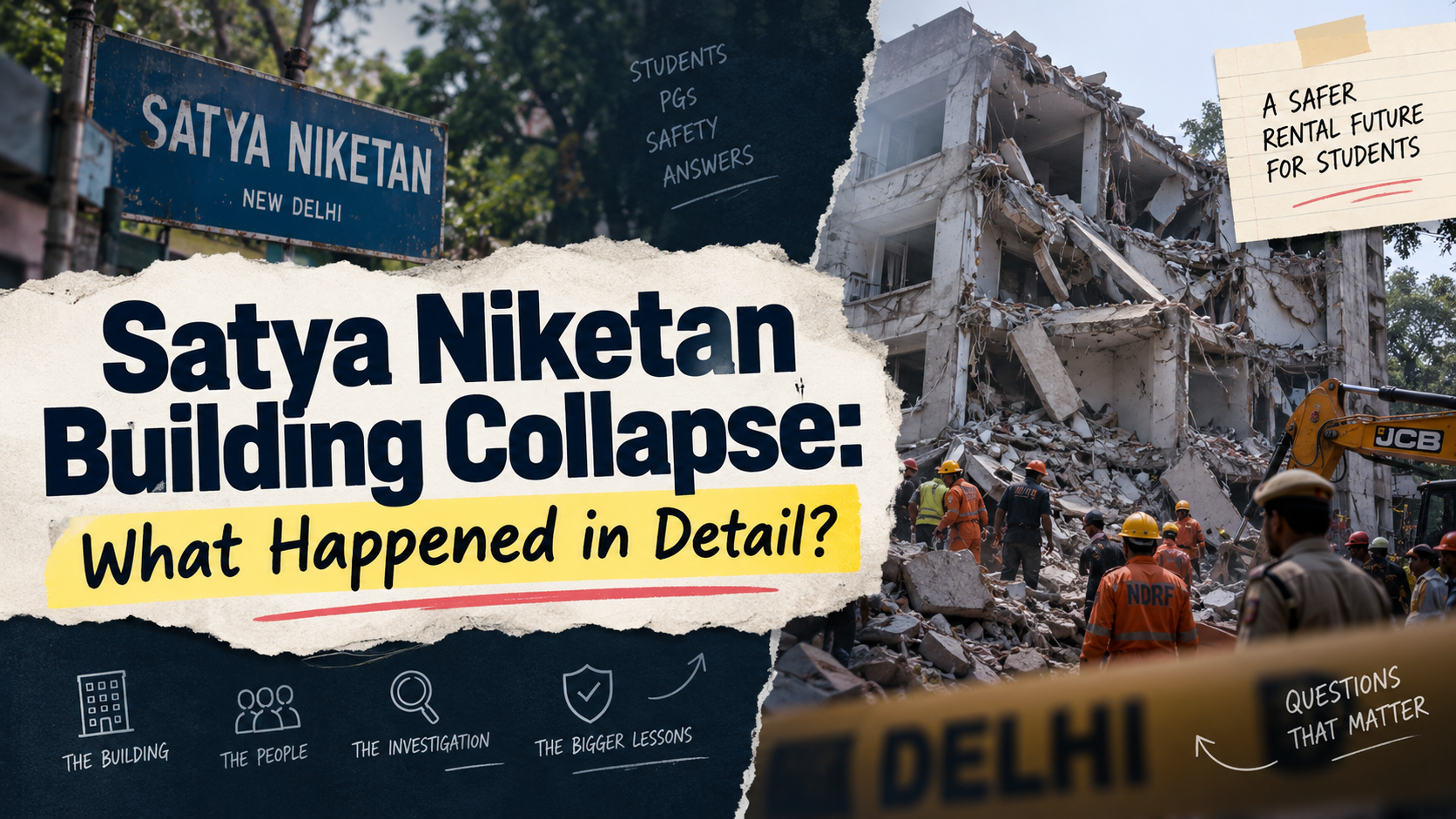
This has made PG safety an important part of the wider discussion around Delhi-NCR’s rental market. Following the collapse of a five-storey PG building in Satya Niketan, authorities examined PG buildings for issues such as building plans, structural conditions, occupancy and fire-safety arrangements.
The important point is not that every PG is unsafe. It is that higher occupancy requires greater attention to safety and property management.
Safety should therefore not be treated as something that matters only during an inspection. It needs to remain part of everyday property operations.
Operators also need to understand the applicable requirements for running a PG. RentOk’s guide on What Licenses Do You Need to Run a PG in India? covers the compliance side of running a rental property.
The Infrastructure Question Goes Beyond the Building
The impact of PG growth is not limited to what happens inside the property.
Consider a residential lane where most homes traditionally accommodated four or five people. Now imagine several properties in that lane housing 15 or 20 residents each.
The total demand on the neighbourhood changes.
There may be more vehicles on the road. Water consumption can increase. Waste generation can rise. Deliveries and visitor movement can become more frequent.
Emergency access also matters. Dense residential areas can have narrow roads and limited space between buildings. Higher activity makes clear access and proper planning even more important.
This is why the conversation around PGs should not focus only on the building.
The larger question is whether the property and its surrounding infrastructure can support the level of occupancy responsibly.
Everyday maintenance is part of this equation too. Leaks, drainage issues, damaged fittings and problems in common areas can become harder to manage when many residents depend on the same facilities.
RentOk’s How to Handle Maintenance Requests in Your PG looks at how operators can create a more structured maintenance process and reduce delays caused by scattered complaints.
What Should Tenants Check Before Choosing a PG?
For most students and young professionals, choosing a PG starts with three questions: Where is it? How much does it cost? What does it offer?
Those questions are important, but they are not the only ones.
Tenants should also look at how the property is maintained and managed. They do not need to become building experts. A few simple checks can still reveal a lot about the property.
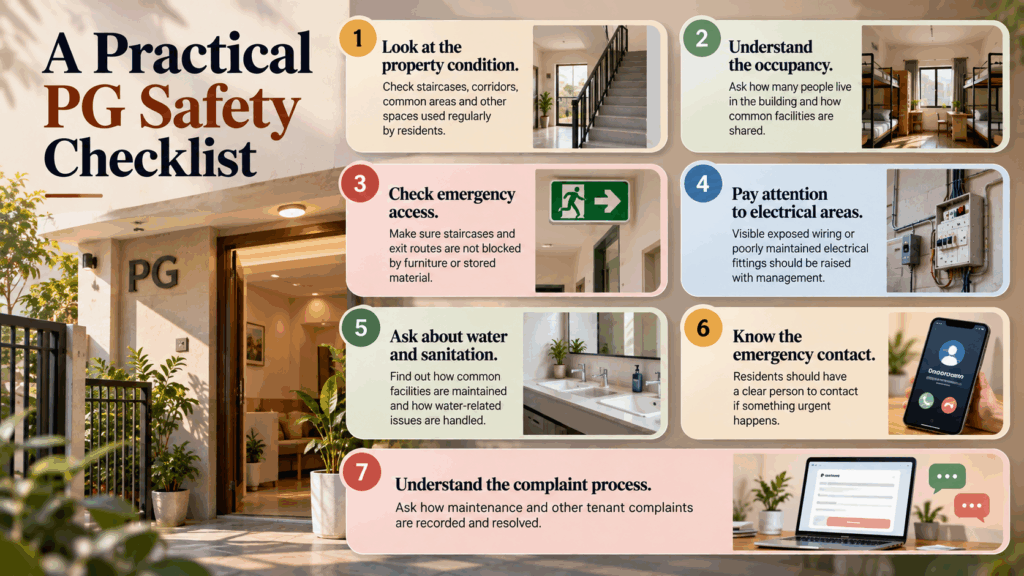
A practical PG safety checklist
- Look at the property condition. Check staircases, corridors, common areas and other spaces used regularly by residents.
- Understand the occupancy. Ask how many people live in the building and how common facilities are shared.
- Check emergency access. Make sure staircases and exit routes are not blocked by furniture or stored material.
- Pay attention to electrical areas. Visible exposed wiring or poorly maintained electrical fittings should be raised with management.
- Ask about water and sanitation. Find out how common facilities are maintained and how water-related issues are handled.
- Know the emergency contact. Residents should have a clear person to contact if something urgent happens.
- Understand the complaint process. Ask how maintenance and other tenant complaints are recorded and resolved.
These checks are not meant to make tenants suspicious of every PG. They simply help residents make a more informed decision.
Tenant verification and onboarding are also important parts of responsible PG operations. RentOk’s Why Students Need Tenant Verification Done Before Moving Into a PG explores this area in more detail.
Why PG Management Needs to Change as Occupancy Grows
Managing five or six tenants is very different from managing 50 or 100 residents.
At a smaller property, the owner may know every tenant personally. Maintenance requests may come through calls. Updates may be shared through WhatsApp. Payments may be tracked in a spreadsheet.
That system becomes harder to maintain as the property grows.
There are more tenants to onboard. More payments need to be tracked. More complaints need to be resolved. Staff members also need to coordinate across rooms and floors.
A growing PG should have visibility into basic questions such as:
- Who is currently staying at the property?
- Which rooms or beds are vacant?
- Which complaints are still pending?
- Has an important announcement reached residents?
- Are tenant and payment records updated?
- Who is responsible for a particular task?
These questions may sound simple. Finding the answers quickly becomes difficult when information is spread across different systems.
This is where structured tenant management becomes useful. RentOk’s Best Tenant Management Software in India explains why centralised tenant information, occupancy visibility and payment tracking become more important as rental businesses scale.
Maintenance Is Part of the Safety Conversation
Maintenance is often treated as a separate operational task. In a high-occupancy PG, it is closely connected to the overall resident experience.
A property may be in good condition when tenants move in. That does not mean every facility will remain in the same condition forever. More residents also mean more frequent use of bathrooms, appliances, plumbing systems and common areas.
Small issues can become bigger when they are repeatedly ignored.
A leaking tap may seem minor. A broken staircase light may seem like a quick repair. A recurring electrical complaint may be treated as an inconvenience.
The bigger problem is what happens when there is no system to track these issues.
A structured maintenance management process allows the property team to record complaints, assign responsibility and track progress. It also helps operators identify recurring problems instead of treating every complaint as a separate incident.
For a growing PG, that visibility can make everyday operations much easier to manage.
Communication Becomes More Important With More Residents
The same principle applies to communication.
When a property has a small number of tenants, the owner can often communicate with everyone directly. That becomes difficult when the resident count reaches dozens or hundreds.
Consider a simple water shutdown. If 100 residents need to know about it, sending individual messages is inefficient. Posting it in a busy WhatsApp group may also mean that some residents miss the update.
This is why tenant communication needs structure as occupancy grows.
Different situations may require different channels. An urgent notice may need immediate visibility. A routine update may work better through an app notification. A complaint may require a more direct communication flow.
RentOk’s Best Communication Channels for Property Management explores how SMS, WhatsApp and push notifications can support different property-management requirements.
The goal is not to communicate more. It is to make communication clearer and more reliable.
The Future of PGs Is About Managing Growth Better
Delhi-NCR genuinely needs affordable rental accommodation.
Students need rooms near universities. Professionals want homes close to their workplaces. People moving to the city need flexible accommodation without immediately taking on an entire apartment.
PGs and co-living properties have emerged partly because they meet these needs.
The solution, therefore, cannot simply be to stop residential neighbourhoods from changing. The more useful approach is to make sure that property use, infrastructure and management evolve together.
Property owners need to understand how higher occupancy changes their operational requirements. Tenants need to know what they should look for before moving in. Authorities and planners need to recognise how residential areas are changing.
PG operators also need to move beyond informal management.
Occupancy is not the only measure of a successful PG. Tenant experience matters too. Communication, maintenance, cleanliness and complaint resolution can influence whether residents choose to stay.
RentOk’s Why Tenants Leave PGs in the First 30 Days and How to Prevent It looks at how early tenant experiences can affect retention.
How RentOk Helps PG Operators Manage Growing Properties
As a PG grows, the challenge is not only managing more tenants. It is maintaining visibility across the entire property.
RentOk helps PG and co-living operators manage key operations through one connected property management platform. This includes tenant information, payments, complaints, communication, occupancy and team coordination.
The benefit becomes more noticeable as a property grows. Instead of depending on different spreadsheets, registers and conversations, the team has a more organised way to manage daily operations.
RentOk also helps operators manage tenant complaints and communication. This gives teams better visibility into what has been reported and what still needs attention.
Technology cannot replace building compliance or structural safety. It can, however, help operators manage the daily processes that become more complex as occupancy increases.
The PG Boom Needs Better Systems Along With More Beds
The transformation of family homes into PGs reflects a genuine change in Delhi-NCR’s housing needs. As occupancy grows, however, properties need better systems to manage safety, maintenance and daily operations.
The future of Delhi-NCR’s PG market does not have to be a choice between housing demand and safety. Both can exist together with better planning, responsible operations and professional property management.
For growing PGs, RentOk brings tenant management, payments, complaints, communication and property operations together in one platform.
Ready to simplify your PG management? Start your free RentOk trial today.
Frequently Asked Questions
Find answers to common questions about this topic
About the Author
Ishika Pannu
Ishika Pannu brings you the latest insights and easy-to-apply strategies in property management—helping you simplify renting and grow with RentOk.
You may also like these
Related Articles
1 min read
How to Avoid MDR on Rent Payments: A Guide for PG Owners
Written by
Posted on
Shivanshi Dheer
Oct 6, 2026
1 min read
RentOk AutoPay & e-NACH for Automatic Rent Collection
Written by
Posted on
Shivanshi Dheer
Oct 6, 2026
1 min read
What’s Included in My Rent and What Am I Paying Extra For?
Written by
Posted on
Ishika Pannu
Sep 30, 2026

1 min read
Which Indian City Gives Landlords the Best Rental Yield Right Now?
Written by
Posted on
Ishika Pannu
Sep 28, 2026
1 min read
How Much Can My Landlord Legally Increase My Rent Each Year?
Written by
Posted on
Ishika Pannu
Sep 23, 2026

1 min read
India’s Rental Market Grows 16%: What Owners Should Know
Written by
Posted on
Ishika Pannu
Sep 22, 2026
1 min read
Why Landlords Check CIBIL Scores Before Renting
Written by
Posted on
Ishika Pannu
Sep 21, 2026
1 min read
Why Students Need Tenant Verification Done Before Moving Into a PG
Written by
Posted on
Ishika Pannu
Sep 14, 2026
1 min read
What to Do When Your Landlord Won’t Make Repairs
Written by
Posted on
Ishika Pannu
Sep 12, 2026
1 min read
Satya Niketan Building Collapse: What Happened in Detail?
Written by
Posted on
Shivanshi Dheer
Sep 9, 2026
Stay ahead in property management with expert insights
Join thousands of property managers receiving exclusive tips delivered straight to your inbox.
Browse posts by category
Case Study
Cost of Living
Growth
Legal
Market Trends
News
Pg owner app
Property Management
Property Tax
Tech
RentOk
The easiest way to rent and manage your PGs and hostels.
Grievance Officer
Get the app


Contact us
hello@eazyapp.tech
HQ Office
COGROW, BASEMENT F-12/8A
BESIDE HOUSE OF STYLE SALON, SECTOR 28, DLF PHASE 1
GURUGRAM, HARYANA - 122002
South India Office
LUMIODESK COWORKING, 2ND FLOOR, 40, 14TH MAIN RD
BESIDE MC DONALD, 7TH SECTOR, HSR LAYOUT
BENGALURU, KARNATAKA - 560102
©️ 2026 EazyApp Tech Pvt Ltd. All rights reserved


