
Market Trends
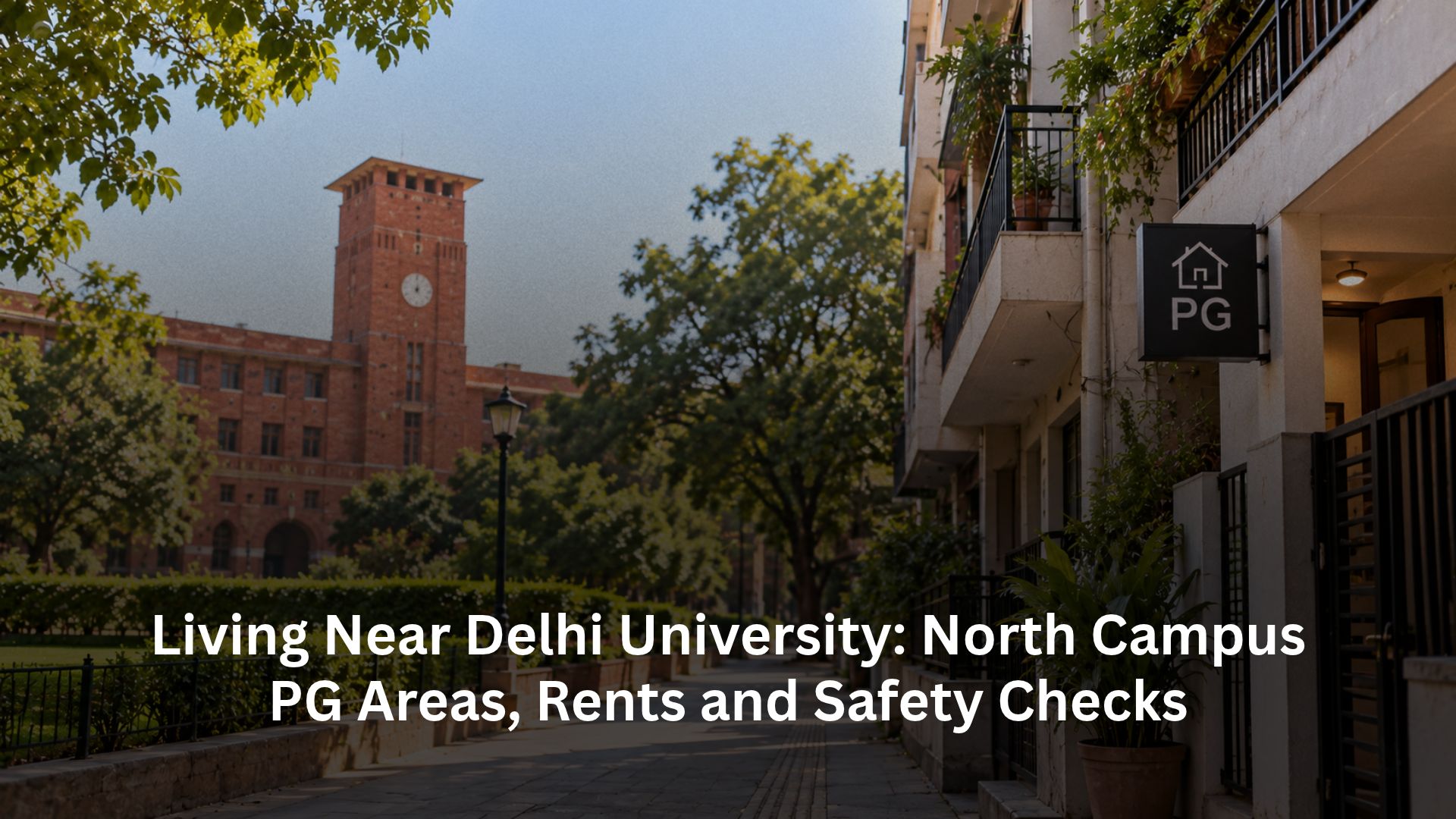
Living Near Delhi University: North Campus PG Areas, Rents and Safety Checks

Written by
Ishika Pannu
Read Time
12 min read
Posted on
October 23, 2026
Overview
Overview
Living Near Delhi University: North Campus PG Areas, Rents and Safety Checks
A college allotment gives you an address for classes. Finding somewhere to live takes a different kind of research. Two rooms advertised as a PG near North Campus can offer very different routines: one may put you close to your college gate, while another adds a daily ride, separate food bills and a difficult walk home after evening activities.
The useful comparison goes beyond locality names and attractive room photographs. You need to know which campus you will attend, what the quoted rent covers, how the property operates and what happens if your plans change. This guide compares the main DU student neighbourhoods, separates room rents from PG charges and explains the checks to complete before paying a token or deposit.
Where DU students actually live
For a North Campus search, start with Kamla Nagar, Hudson Lane, GTB Nagar, Vijay Nagar and Kingsway Camp. Include Mukherjee Nagar and Outram Lines if you are willing to trade immediate proximity for a potentially lower room budget. These neighbourhoods offer different combinations of PG beds, private rooms and shared flats; a locality name alone does not tell you which arrangement an advertisement offers.
Satya Niketan belongs to the South Campus housing search. DU places its South Campus on Benito Juarez Road near Dhaula Kuan, so treat a Satya Niketan PG as a separate location decision rather than another North Campus option. Check your exact college address before making a shortlist.
Next, choose the living arrangement. A private room in a shared flat usually means sharing household responsibilities and arranging services separately. A PG bed means sharing a room or taking a single room under an operator’s rules and service package. If you choose a flat, finding a compatible roommate also means discussing sleep schedules, guests and shared bills before you commit.
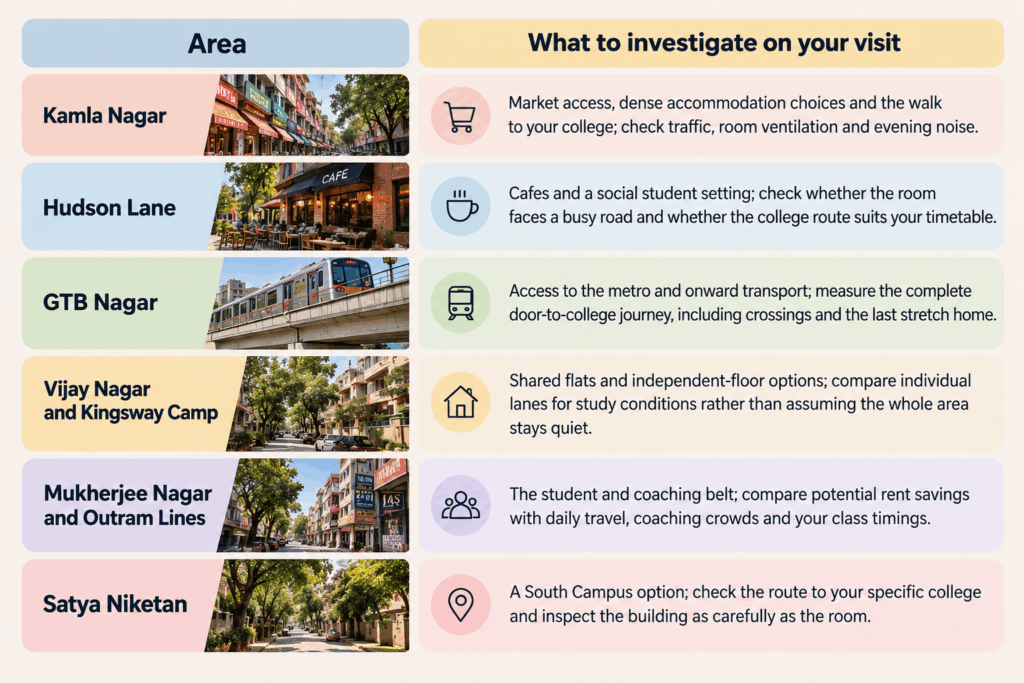
Kamla Nagar, Hudson Lane, GTB Nagar, Mukherjee Nagar and Satya Niketan compared
Match the neighbourhood to your daily routine
Use these differences to organise visits, then test the actual building and route. A quieter lane can sit just behind a busy market, and two properties in the same neighbourhood can have very different noise levels, access arrangements and walking conditions.
| Area | What to investigate on your visit |
|---|---|
| Kamla Nagar | Market access, dense accommodation choices and the walk to your college; check traffic, room ventilation and evening noise. |
| Hudson Lane | Cafes and a social student setting; check whether the room faces a busy road and whether the college route suits your timetable. |
| GTB Nagar | Access to the metro and onward transport; measure the complete door-to-college journey, including crossings and the last stretch home. |
| Vijay Nagar and Kingsway Camp | Shared flats and independent-floor options; compare individual lanes for study conditions rather than assuming the whole area stays quiet. |
| Mukherjee Nagar and Outram Lines | The student and coaching belt; compare potential rent savings with daily travel, coaching crowds and your class timings. |
| Satya Niketan | A South Campus option; check the route to your specific college and inspect the building as carefully as the room. |
Check proximity from the property door
Ask for the exact location pin, floor and room number before visiting. Walk the route to your college gate and check your likely return journey, not merely the distance to a neighbourhood landmark. For GTB Nagar or Mukherjee Nagar, include waiting time and the last-mile ride in your comparison.
Do not let a gate, a premium brand name or a busy market substitute for a property inspection. Likewise, assess a shared floor on its actual access and management arrangements rather than assuming that independent accommodation offers more freedom without extra responsibilities.
Rent ranges near DU: compare the same kind of accommodation
Private-room benchmarks around North Campus
The following published ranges refer to one private room in a shared flat, before the deposit. They do not represent an all-inclusive PG bed with food. Bunkd’s North Campus area guide lists these indicative figures; use them to frame enquiries, then obtain fresh written quotes.
| Area | Indicative private-room rent per month |
|---|---|
| Hudson Lane | ₹9,000–₹16,000 |
| Kamla Nagar | ₹8,000–₹15,000 |
| Vijay Nagar and Kingsway Camp | ₹7,500–₹14,000 |
| Mukherjee Nagar and Outram Lines | ₹5,500–₹11,000 |
These figures offer a starting point, not a promise of availability. Ask separately about furnishings, food, electricity, water, internet and maintenance. A lower Mukherjee Nagar rent may still suit your budget after travel costs, but you need the complete monthly calculation to know.
Single, double and triple sharing need separate quotes
For a single room, confirm exclusive occupancy and whether you share the bathroom. For twin or double sharing, confirm that the operator quotes per person rather than for the whole room. For triple or quadruple sharing, inspect usable floor space, storage and study seating; a lower bed price can mean a less workable daily routine.
Operator pages checked on 23 October 2026 show why one citywide range can mislead. Stanza Living’s Boston House advertises double occupancy from ₹22,499 a month, Sheffield House displays a starting price of ₹27,599, and San Diego House lists triple occupancy from ₹21,899. Final prices vary by occupancy and services. These are individual managed-property advertisements, not North Campus averages.
At the premium end, QueBec in Kamla Nagar lists standard triple sharing at ₹22,500 per bed and extra-spacious double sharing at ₹35,000 per bed. Its advertised package includes meals, laundry and housekeeping, with electricity through rechargeable meters.
For a Satya Niketan PG, Magicbricks’ Satya Niketan listings display examples of twin-sharing advertisements at ₹8,000, ₹9,000 and ₹11,000. Those are listing examples with different descriptions, not a verified all-inclusive neighbourhood range. Confirm the current per-person quote and inclusions directly.
Calculate monthly spending and move-in cash separately
Ask what meals, Wi-Fi, housekeeping and laundry actually include. A meal package might cover breakfast, lunch and dinner, or add snacks; check timings, holiday service and whether missed meals receive any adjustment. Ask about laundry limits and cleaning frequency rather than accepting “all facilities included”.
For electricity, request the billing method, unit rate, meter access and recharge charges, including how roommates split consumption. Boston House, for example, explicitly lists electricity separately by consumption. Before comparing packages, separate what rent includes from what costs extra so an attractive base price does not hide a larger monthly commitment.
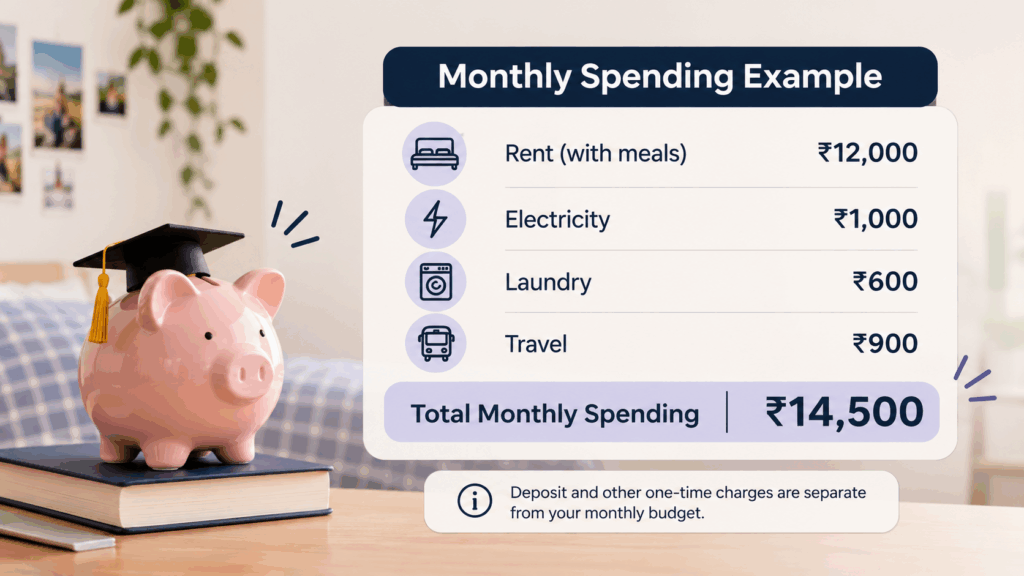
Keep two totals in your shortlist:
- Monthly spending: Rent, any separate food plan, electricity, laundry, internet and regular travel. Use realistic allowances for variable charges.
- Move-in cash: Security deposit, advance rent and any disclosed booking, brokerage or joining fee. Ask whether the token adjusts against another payment so you do not count it twice.
As an illustration, ₹12,000 for a bed with meals, ₹1,000 for electricity, ₹600 for laundry and ₹900 for travel totals ₹14,500 a month. A deposit sits outside that recurring budget. These amounts demonstrate the calculation; they are not market quotes.
Safety checks to do before you pay
Walk the route after dark and test the entry routine
Visit during daylight to inspect the room, then return with someone you trust around your likely evening arrival time. Check street lighting, open shops, foot traffic, crossings and the last stretch from public transport. A lively afternoon viewing cannot show you how the lane feels after shops close.
Inside the property, ask the operator to demonstrate the access arrangements:
- Working CCTV: Check entry and exit coverage, who monitors recordings and how staff handle failures. Cameras should respect private spaces; visible devices alone do not prove active monitoring.
- Visitor control: Ask how staff record and verify visitors, whether through a register or an electronic system, and who follows up on an unknown person.
- Gate and late-entry rules: Confirm locking times, access after an evening class or society event, and the person who answers when a resident needs help.
- Responsible staff: Meet the warden, owner or manager and confirm the actual night-time contact. Save that number before moving in.
Ask an existing resident how these arrangements work in practice. A demonstration and a consistent answer offer more useful evidence than a general “24/7 security” claim.
Inspect ventilation, corridors and escape routes
Look beyond fresh paint and coordinated furniture. Check windows, airflow, damp patches, exposed wiring, overcrowding and usable stairs. Pay particular attention to basement or poorly ventilated lower-level rooms, and ask how residents leave during an emergency.
Walk the escape route yourself. Check whether doors open, passages remain clear and any secondary escape arrangement actually works. Ask the operator for applicable building and fire-safety documentation; a student viewing cannot replace a professional assessment. The building and escape-route risks in Delhi PGs extend beyond room interiors, so a well-furnished bedroom should never end your inspection.
Test basic daily facilities too: water pressure, bathroom cleanliness, mobile reception and the study setup. If the operator promises repairs before joining, record the work and completion date in writing rather than paying on the strength of an informal assurance.
Read exit terms before a CSAS upgrade changes your plans
Do not assume a one-to-three-month lock-in. QueBec publishes an 11-month lock-in, and Sheffield House’s booking form specifies a minimum stay of 11 months. Read the exact conditions for the property you choose, including early-exit charges and any exceptions.
Understand the difference between notice periods and lock-in conditions: a lock-in concerns the minimum commitment, while notice concerns how far ahead you must communicate your departure. Serving notice may not remove the consequences of leaving during a lock-in.
If you may seek a college upgrade through DU’s CSAS rounds, ask the operator to record the cancellation deadline, refund amount, deductions and refund timeline before you pay. A college change does not itself establish that a private PG will return every payment. Review the agreement clauses before signing, and retain the operator’s written response with your receipt.
Verify the listing and the person collecting money
Use portals such as Magicbricks and operator websites to discover options, then verify the actual room through a physical visit. Local enquiries and To-Let boards in Kamla Nagar or Vijay Nagar can uncover additional leads, but they do not establish ownership or authority to collect payment.
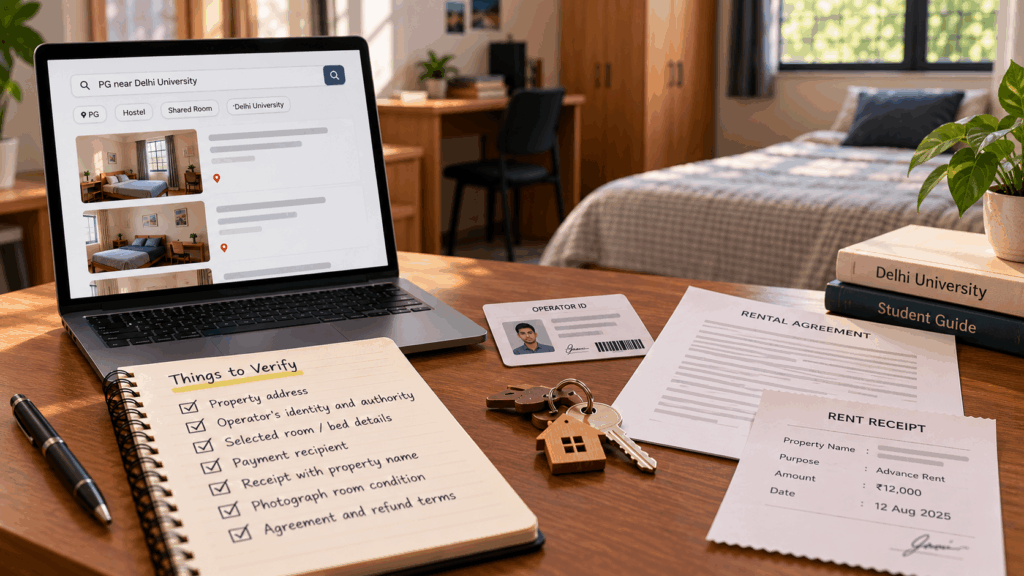
Confirm the property address, the operator’s identity and authority, the selected room or bed, and the payment recipient. Request a receipt that names the property and states the payment’s purpose. Avoid pressure to transfer money merely because someone says another student is waiting.
Before joining, photograph the room’s condition and record furniture, keys and meter readings. Keep the agreement, payment proof and refund terms together. Those records help you prepare for your security-deposit refund when you leave, especially if the operator later raises a damage or unpaid-bill deduction.
How RentOK helps student PG operators keep arrangements clear
Students need clarity about the room they booked, the money they paid and the person responsible for problems. For operators managing accommodation near DU, RentOK supports the records behind those conversations:
- Visits and bookings: Schedule visits, track enquiries and collect tokens through payment links or QR codes. Give students the written booking and cancellation terms before requesting payment.
- Room and bed information: Track sharing types, rent, facilities and availability so staff can refer to the selected accommodation when answering a student’s questions.
- Rent and payment records: Add monthly rent and bills, send reminders and maintain transaction histories. Separating rent from additional service charges helps residents understand their monthly dues and question differences early.
- Resident details and maintenance follow-up: Keep resident information together and manage complaints, attendance and notices. A clear process for handling PG maintenance requests helps staff follow up on issues such as a leaking tap or faulty room light.
These tools support consistent management and communication; they do not verify a building’s structural condition or replace an in-person safety check. Operators still need to explain their charges, honour agreed terms and address physical hazards.
Conclusion
The right PG near North Campus should fit your college route, monthly budget and everyday routine. Compare Kamla Nagar, Hudson Lane, GTB Nagar and the surrounding belts using the actual property address. Keep Satya Niketan in the South Campus comparison, and distinguish a private-room rent from a per-person PG package before deciding what looks affordable.
Before paying, walk the evening route, inspect the escape arrangements and get the complete charges and cancellation terms in writing. For operators, those same details make student bookings easier to explain and manage. Bring your booking, room and rent records together: Start your trial on RentOk now.
Frequently Asked Questions
Find answers to common questions about this topic
About the Author
Ishika Pannu
Ishika Pannu brings you the latest insights and easy-to-apply strategies in property management—helping you simplify renting and grow with RentOk.
You may also like these
Related Articles

1 min read
Co-living Brands Are Raising Big Money: What It Means for Independent PG Owners
Written by
Posted on
Ishika Pannu
Oct 17, 2026
1 min read
How to Find a Roommate: A Practical Guide to Finding the Right Flatmate
Written by
Posted on
Ishika Pannu
Oct 16, 2026

1 min read
Mumbai Has the Highest Rent, but Is It the Best City to Live In?
Written by
Posted on
Ishika Pannu
Oct 16, 2026

1 min read
Which City in India Has the Highest Rent?
Written by
Posted on
Ishika Pannu
Oct 12, 2026

1 min read
Renting vs. Buying a House in India in 2026: Which Makes More Financial Sense?
Written by
Posted on
Ishika Pannu
Oct 9, 2026
1 min read
Rent vs Commute in Gurgaon: How Much Is Convenience Worth?
Written by
Posted on
Ishika Pannu
Oct 9, 2026

1 min read
Delhi-NCR’s PG Boom: When Family Homes Turn into Hostels
Written by
Posted on
Ishika Pannu
Oct 8, 2026
1 min read
How to Avoid MDR on Rent Payments: A Guide for PG Owners
Written by
Posted on
Shivanshi Dheer
Oct 6, 2026

1 min read
RentOk AutoPay & e-NACH for Automatic Rent Collection
Written by
Posted on
Shivanshi Dheer
Oct 6, 2026

1 min read
What’s Included in My Rent and What Am I Paying Extra For?
Written by
Posted on
Ishika Pannu
Sep 30, 2026
Stay ahead in property management with expert insights
Join thousands of property managers receiving exclusive tips delivered straight to your inbox.
Browse posts by category
Case Study
Cost of Living
Growth
Legal
Market Trends
News
Pg owner app
Property Management
Property Tax
Tech
RentOk
The easiest way to rent and manage your PGs and hostels.
Grievance Officer
Get the app


Contact us
hello@eazyapp.tech
HQ Office
COGROW, BASEMENT F-12/8A
BESIDE HOUSE OF STYLE SALON, SECTOR 28, DLF PHASE 1
GURUGRAM, HARYANA - 122002
South India Office
LUMIODESK COWORKING, 2ND FLOOR, 40, 14TH MAIN RD
BESIDE MC DONALD, 7TH SECTOR, HSR LAYOUT
BENGALURU, KARNATAKA - 560102
©️ 2026 EazyApp Tech Pvt Ltd. All rights reserved


