
Market Trends
Semi-Furnished vs Fully Furnished: Which is Better for Renters?

Written by
Shivanshi Dheer
Read Time
17 min read
Posted on
August 20, 2026
Overview
Overview
Semi-Furnished vs Fully Furnished: Which is Better for Renters?
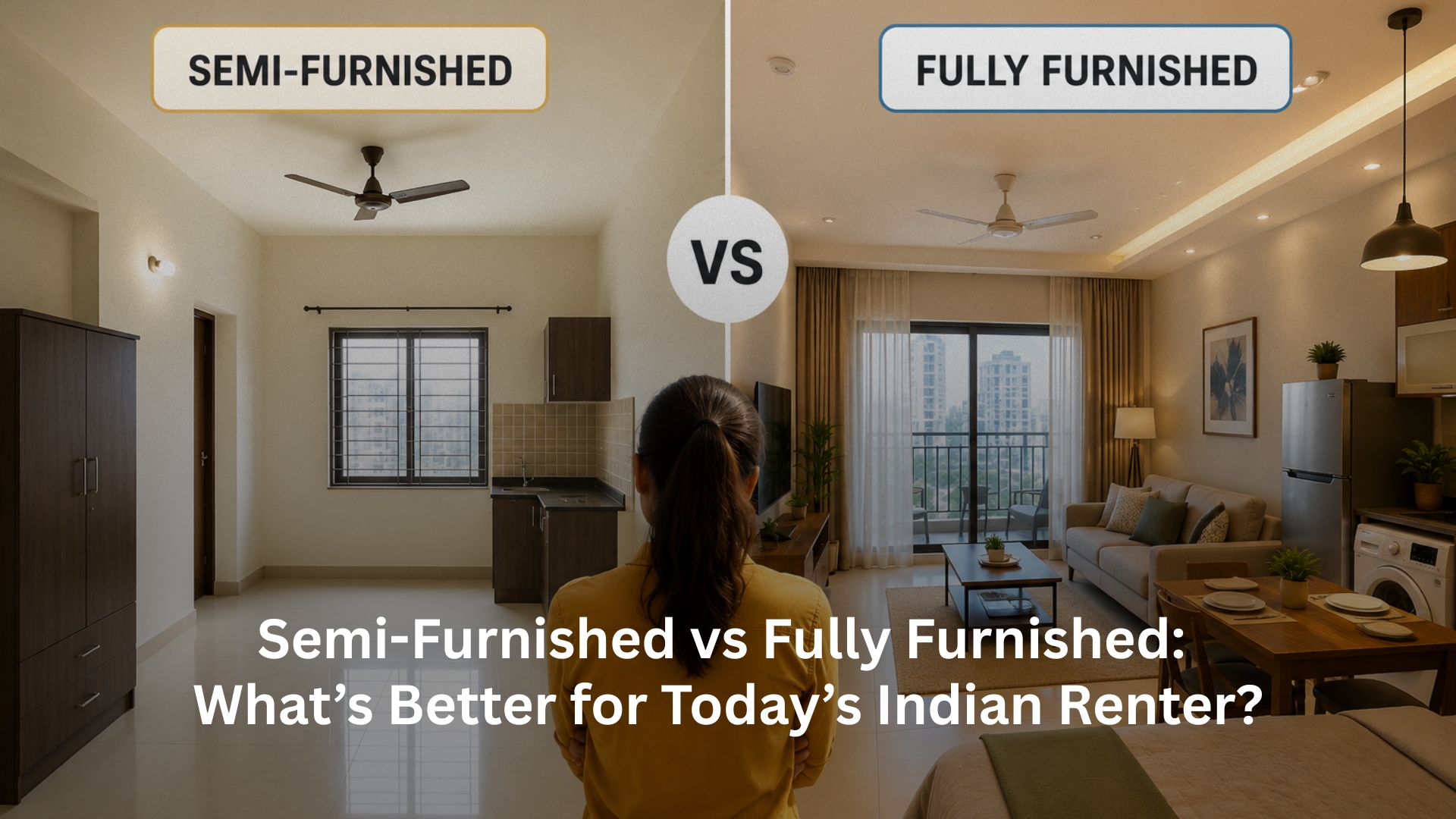
Finding a rental home in India often starts with a familiar question: should you choose a semi-furnished flat or a fully furnished house? At first glance, the answer seems simple. A fully furnished property comes with furniture and appliances, while a semi-furnished property comes with only some of them. However, once you start comparing monthly rent, moving costs, furniture expenses, maintenance responsibilities, and how long you plan to stay, the decision becomes much more complicated.
For today’s Indian renter, choosing between a semi-furnished and fully furnished rental is not only about convenience. It is also about lifestyle. Students, young professionals, families, people relocating for work, and tenants staying in a city for only a year all have very different requirements. A furnished home that makes perfect sense for someone moving to Bengaluru for an eighteen-month job may not be the best choice for a family planning to stay in the same apartment for five years.
The Indian rental market also does not follow a single standard for what “furnished” means. One landlord may advertise a property as semi-furnished because it has wardrobes, fans, lights, and a modular kitchen. Another may include a bed, refrigerator, and air conditioner in a semi-furnished home. Similarly, one fully furnished apartment may include everything from sofas and washing machines to kitchen appliances, while another may only provide the basic furniture needed to move in comfortably. This is why renters should always look beyond the listing title and check exactly what is included before making a decision.
So, which is better for today’s Indian renter: semi-furnished or fully furnished? The answer depends on your budget, how long you plan to stay, whether you already own furniture, and how much flexibility you want. This guide covers everything you need to know before deciding.
What Does Furnished Mean in a Rental Property?
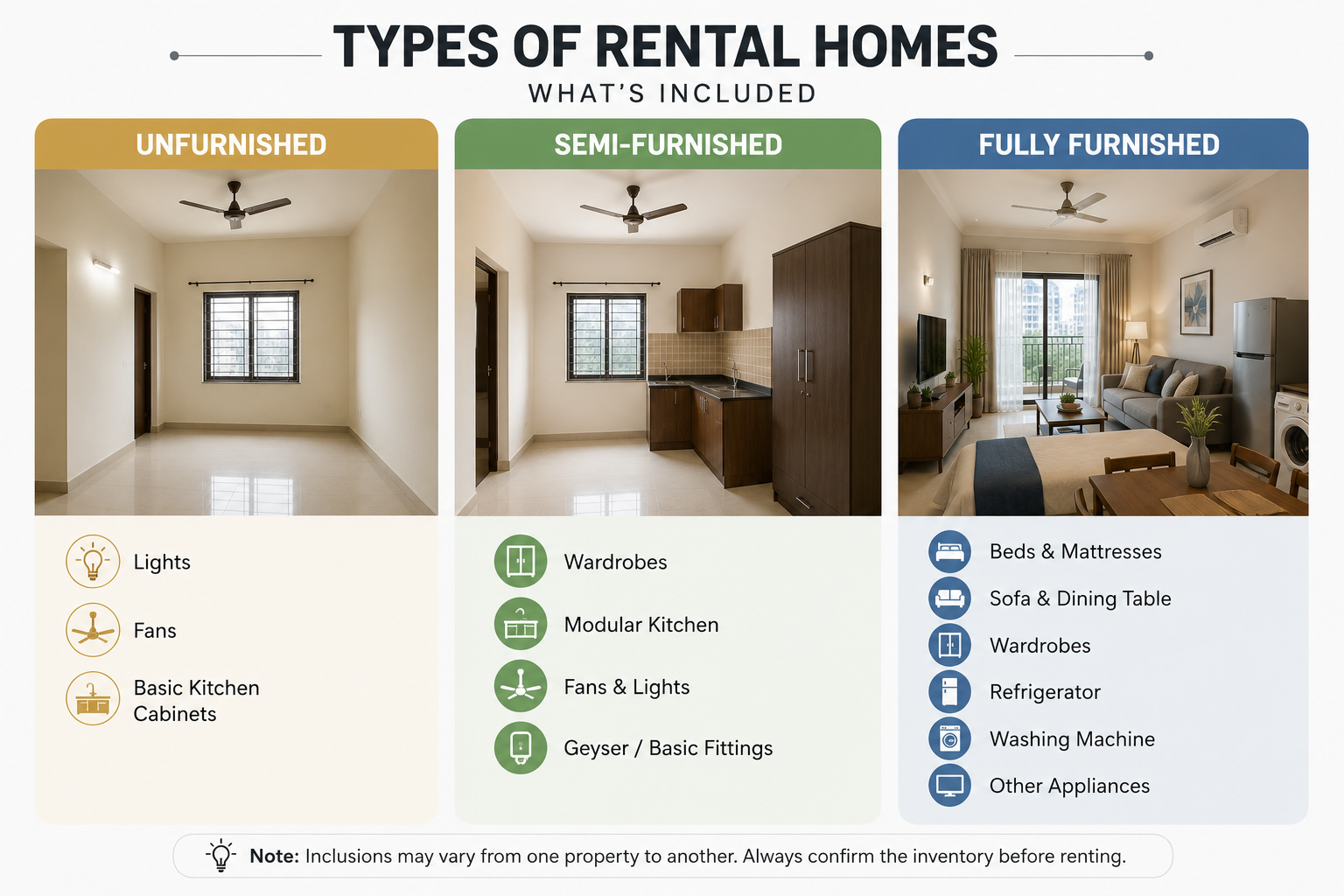
The word “furnished” simply means that the property comes with furniture. In the context of rental homes in India, however, there are generally three categories: unfurnished, semi-furnished, and fully furnished.
An unfurnished property usually has only the basic fixtures that are part of the house, such as electrical fittings, fans, lights, and sometimes kitchen cabinets or wardrobes. A semi-furnished property includes these basics along with some additional furniture or appliances. A fully furnished property is designed to be ready for someone to move into with minimal additional purchases. It usually includes beds, wardrobes, sofas, dining furniture, and important appliances such as a refrigerator and washing machine.
The important thing to remember is that these categories are not defined by one universal checklist. What one landlord calls semi-furnished may be different from another landlord’s version. That is why renters should always ask for a complete inventory before signing a rental agreement.
What Is a Semi-Furnished House?
A semi-furnished house is a rental property that provides the essential built-in infrastructure of a home but leaves some of the movable furniture to the tenant. In many Indian cities, a semi-furnished flat may include wardrobes in the bedrooms, kitchen cabinets, fans, lights, geysers, curtain rods, and sometimes an air conditioner or refrigerator.
The biggest advantage of a semi-furnished property is flexibility. You do not have to spend money on expensive fixed items such as wardrobes or kitchen fittings, but you are free to choose your own bed, sofa, dining table, and other furniture. This makes semi-furnished homes particularly attractive to families or tenants who already own furniture from a previous home.
Semi-furnished properties also tend to have lower monthly rents than fully furnished properties because the landlord has invested less in movable furniture and appliances. However, tenants should remember that a lower monthly rent may come with higher upfront costs if they need to buy furniture after moving in.
What Is a Fully Furnished House?
A fully furnished house is intended to be as close to move-in ready as possible. Depending on the property, it may include beds and mattresses, wardrobes, sofas, dining tables and chairs, curtains, refrigerators, washing machines, air conditioners, kitchen appliances, and sometimes televisions or microwaves.
The main benefit is convenience. A tenant can often move in with clothes and personal belongings without spending weeks shopping for furniture or arranging deliveries. This is particularly valuable for people who have relocated to a new city or are staying for a relatively short period.
The trade-off is cost. Because the landlord has purchased and maintains the furniture and appliances, the monthly rent is generally higher than a comparable semi-furnished property. Fully furnished homes may also require tenants to take greater care of items that do not belong to them, since damage beyond normal wear and tear can become a point of discussion at move-out.
Semi-Furnished vs Fully Furnished: The Main Difference
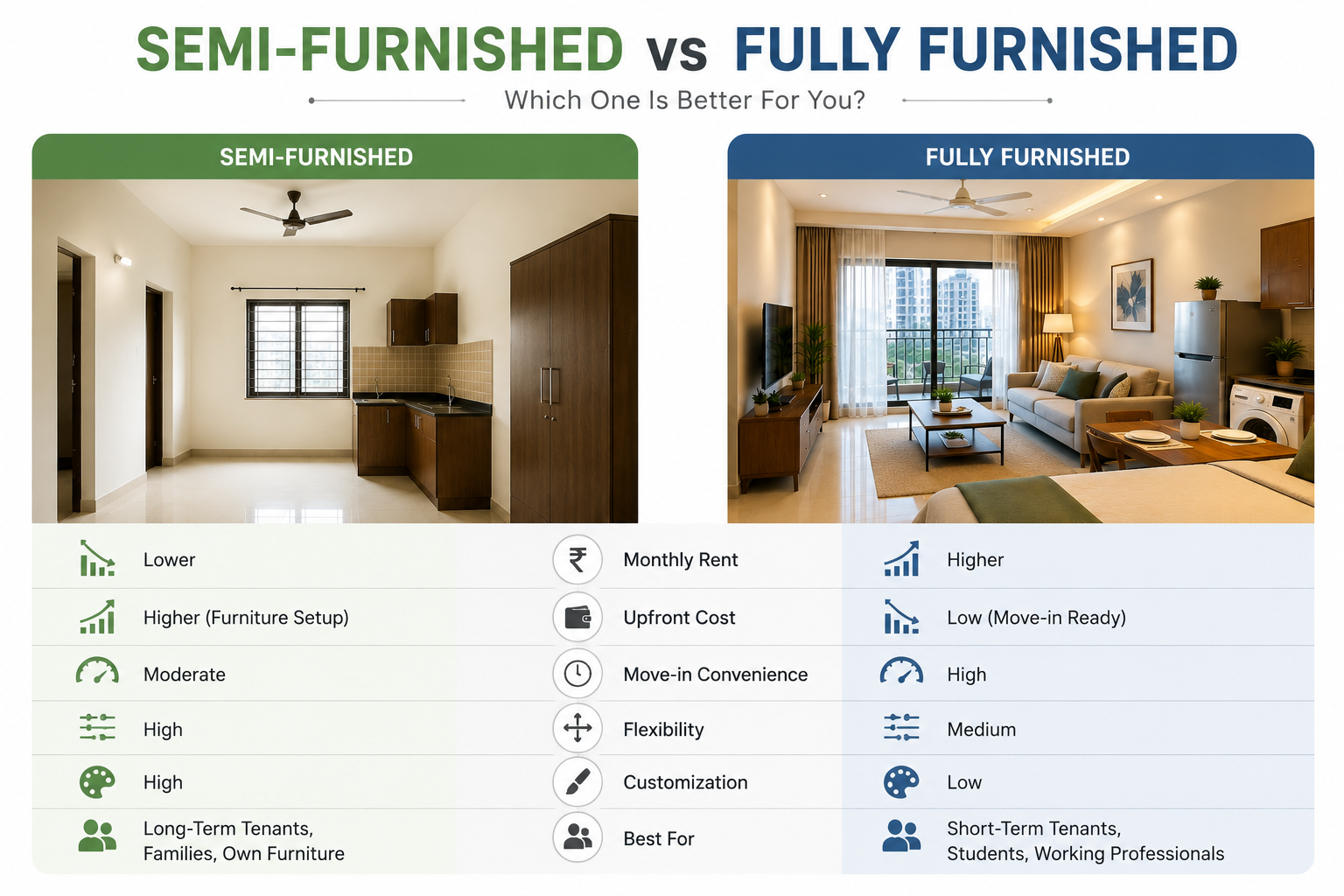
The biggest difference between semi-furnished and fully furnished rentals is not simply the number of items inside the house. It is the balance between convenience and flexibility.
A fully furnished property offers convenience because almost everything is already there. You save time, avoid large upfront purchases, and can settle in quickly. However, you pay for that convenience through higher rent and have less control over the furniture provided.
A semi-furnished property offers flexibility. The monthly rent is often lower, and you can choose furniture that suits your style and budget. The downside is that you may need to invest time and money in setting up the home.
For renters who value mobility, convenience may be worth paying for. For renters who expect to stay longer, flexibility often becomes more important.
Which Option Is Cheaper?
This is one of the most common questions renters ask, and the answer depends on how long you stay.
Suppose a semi-furnished apartment costs ₹25,000 per month and a fully furnished apartment in the same locality costs ₹32,000. The semi-furnished property saves ₹7,000 every month, but you may still need to arrange a bed, mattress, sofa, refrigerator, washing machine, dining table, and study desk.
If you purchase all of these items, your initial setup cost could easily run into tens of thousands of rupees, or if you stay for several years, that investment may make sense because you continue using the furniture. If you move after one year, however, you must either transport everything, sell it, or store it.
This is why renters should compare the total cost of living, not just the monthly rent. The cheapest rental is not always the one with the lowest rent. It is the one whose rent, setup costs, and moving expenses make the most sense for your expected stay.
Why Semi-Furnished Homes Are Popular in India
Semi-furnished homes have become the middle ground of India’s rental market because they offer enough convenience without locking tenants into a fully furnished setup.
Many tenants already own some furniture or prefer to choose their own. Families may have beds, dining tables, or appliances they want to bring with them. Others simply do not want to pay extra every month for furniture they would not have chosen themselves.
A semi-furnished home gives these tenants the essentials – wardrobes, kitchen cabinets, fans, lights, and often geysers – while allowing them to personalise the rest of the space.
It also tends to attract tenants planning to stay longer. Moving furniture is not something most people want to do every year, so renters who bring their own belongings often stay in the same property for longer periods.
Why Fully Furnished Homes Appeal to Young Renters
Fully furnished properties are especially popular with students, young professionals, corporate employees, and people relocating between cities.
Imagine accepting a job in Hyderabad while currently living in Delhi. You may not want to buy an entire set of furniture only to move again in eighteen months. A fully furnished apartment lets you arrive, unpack, and start living immediately.
For many renters, this convenience is worth the higher rent. They do not have to spend weekends visiting furniture stores, coordinating deliveries, or worrying about transporting heavy items when they leave.
This is why fully furnished rentals often perform well in areas close to IT parks, business districts, universities, and corporate hubs.
The Third Option: Semi-Furnished Home With Rented Furniture
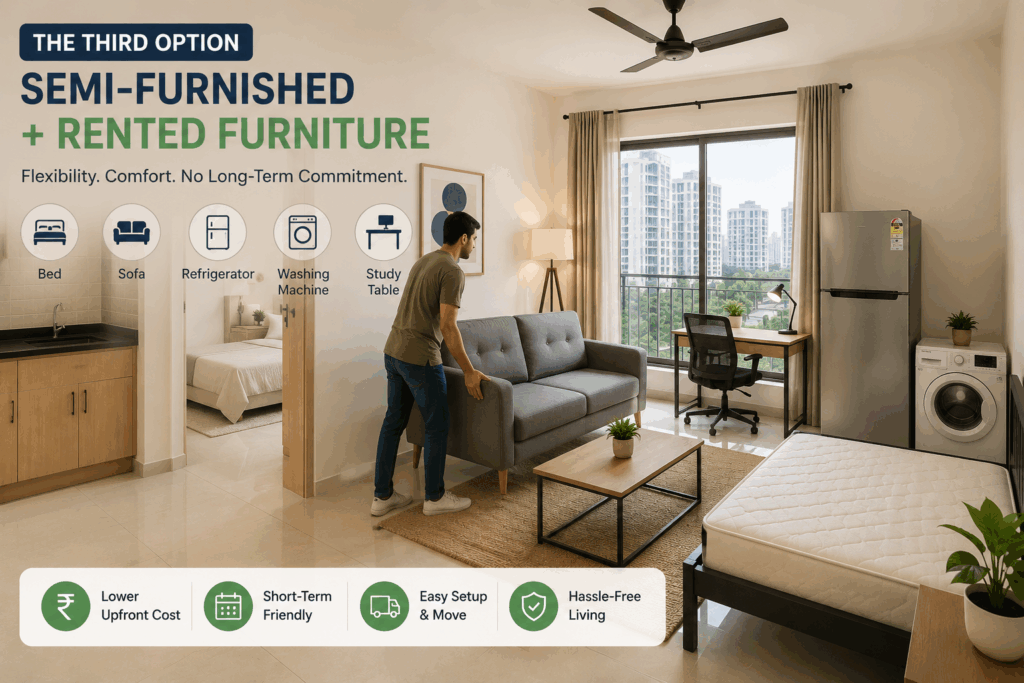
Today’s renters do not necessarily have to choose between buying furniture and renting a fully furnished home. There is now a middle option that combines the flexibility of a semi-furnished property with the convenience of a furnished one.
A tenant can rent a semi-furnished apartment and then rent only the furniture and appliances they actually need. For example, they may rent a bed, mattress, sofa, refrigerator, washing machine, or work desk instead of purchasing them outright.
This approach is particularly useful for tenants who are unsure how long they will stay. It avoids a large upfront investment while still allowing them to create a comfortable home.
For many mobile renters, this flexibility is becoming increasingly attractive because it matches the way they live: rent the home, rent the furniture they need, and avoid owning items that may become difficult to move later.
Who Should Choose a Semi-Furnished Property?
A semi-furnished property is usually a good choice for renters who expect to stay for two years or more, already own furniture, want to personalise their home, or are trying to keep monthly rent lower.
Families often prefer semi-furnished homes because they usually have furniture accumulated over time and want to arrange the house according to their needs. Long-term renters may also find that bringing their own furniture becomes more economical over several years.
Who Should Choose a Fully Furnished Property?
A fully furnished property is often better for tenants who are moving to a new city, staying for a short or medium period, do not own furniture, or want to move in immediately.
Students, professionals on temporary assignments, and people relocating for work often fall into this category. Their priority is usually convenience rather than ownership.
What Should Renters Check Before Moving Into a Furnished Home?
One of the biggest mistakes renters make is assuming that “fully furnished” means everything is in perfect condition.
Before accepting the keys, tenants should inspect every piece of furniture and every appliance included in the property. Check whether the bed is damaged, whether the washing machine works, whether the refrigerator cools properly, whether chairs are stable, and whether there are scratches or stains on furniture.
Photographs are extremely useful at this stage because they create a record of the property’s condition when you moved in. Without this documentation, it can become difficult to distinguish between pre-existing damage and damage that occurred during your tenancy.
This is where a proper move-in checklist becomes valuable. Instead of relying on memory or informal conversations, every asset in the property can be checked, photographed, and recorded before the tenant starts living there.
Why Move-In Checklists Matter for Furnished Rentals
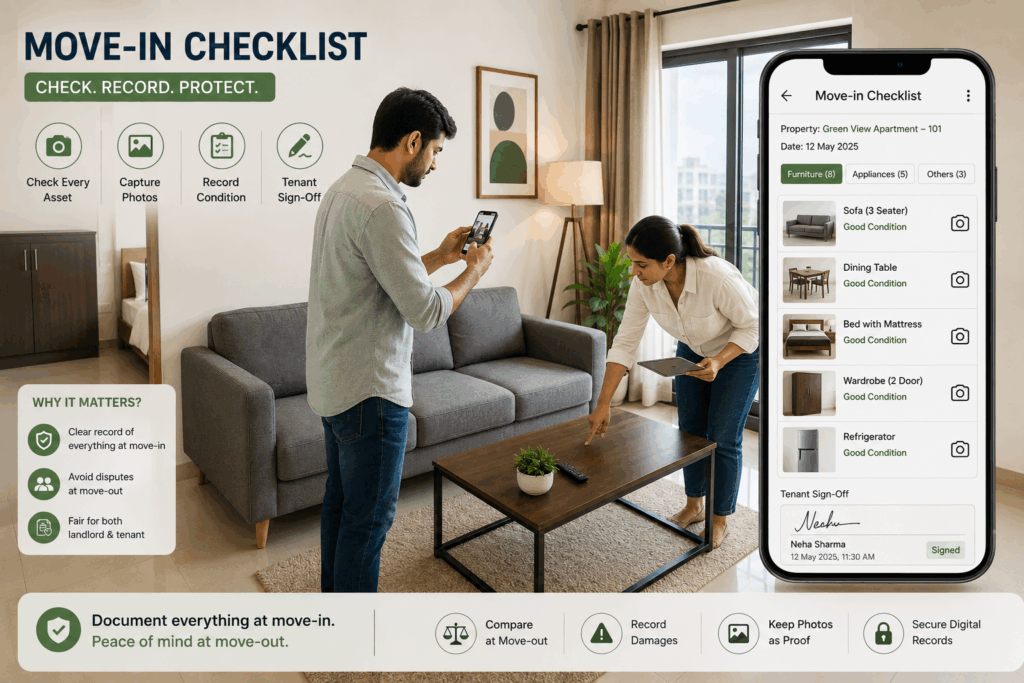
Furnished homes naturally contain more assets than semi-furnished homes. Every bed, table, chair, fan, refrigerator, washing machine, and other item becomes something that both the landlord and tenant need to keep track of.
A move-in checklist creates a clear record of what was provided and what condition each item was in. Ideally, it should include the name of each asset, its condition, photographs, and acknowledgement from the tenant.
RentOk’s Move-in Checklist helps owners and property managers do exactly this. During move-in, furniture and appliances can be checked item by item, their condition can be recorded with photographs, and any existing damage can be documented. The tenant can review and sign the checklist, creating a shared record for both parties.
This becomes especially useful at move-out. Instead of trying to remember whether a table already had a scratch or whether an appliance was working when the tenant moved in, the move-in record can be compared with the property’s condition at exit. Any new damage can then be identified based on documented evidence rather than memory or disagreement.
For tenants, this provides reassurance that they are not being held responsible for damage that existed before they moved in. For landlords, it helps protect the assets they have provided in the furnished property.
How Asset Management Helps Landlords Manage Furnished Properties
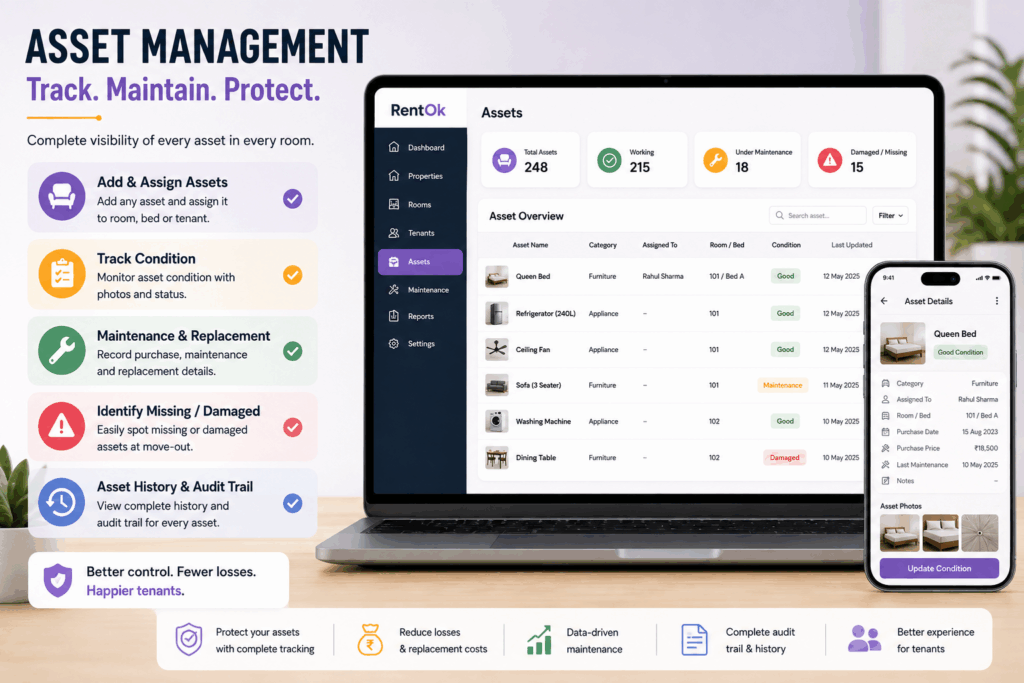
Managing a furnished rental property is not just about collecting rent. It also means keeping track of every physical item inside the property.
A landlord may own dozens or even hundreds of assets across multiple rooms or properties, including beds, tables, fans, chairs, refrigerators, washing machines, and other appliances. Without a structured system, it becomes difficult to know where each item is, what condition it is in, when it was purchased, or whether it has been repaired or replaced.
RentOk’s Asset Management feature helps owners and managers maintain this information in one place. Assets such as tables, fans, furniture, and appliances can be added to the system and assigned to specific rooms, beds, or tenants. Their condition can be tracked over time, and purchase, maintenance, and replacement details can be recorded.
The feature also maintains an asset history or audit trail, making it easier to understand what has happened to each item during its lifecycle. When a tenant moves out, owners can identify missing or damaged assets and compare the current condition with the records created earlier.
For landlords managing furnished or semi-furnished properties, this can reduce confusion, make inspections more organised, and provide a clearer picture of the assets they own.
What Are Landlords Responsible For?
In a furnished rental, landlords generally remain responsible for the furniture and appliances they provide, although the exact responsibilities should be clearly stated in the rental agreement.
If a refrigerator stops working because it has reached the end of its useful life, that is different from a tenant damaging it through misuse. Similarly, normal wear and tear on a sofa over time is different from a significant tear or break caused by negligence.
Both landlords and tenants benefit from agreeing on these responsibilities before the tenancy begins. A written inventory and documented condition report can make these conversations much easier if an issue arises later.
How Does Furnishing Affect Security Deposits?
Another common concern is whether furnished properties require larger security deposits.
This varies by landlord and local market. Some owners may ask for a higher deposit because the property contains more valuable items, while others may not.
What matters most is that both parties agree on the inventory and the condition of the furniture at move-in. A detailed checklist with photographs can help avoid disputes over deposit deductions when the tenant leaves.
Questions to Ask Before Renting a Furnished or Semi-Furnished Flat
Before signing a rental agreement, tenants should ask exactly what furniture and appliances are included. They should also ask who is responsible for repairs, whether replacements will be provided if an appliance fails, and whether any items will be removed before move-in.
It is also worth confirming the age and condition of major appliances such as air conditioners, refrigerators, and washing machines. Asking these questions before moving in is much easier than resolving misunderstandings later.
What Is Better for Families?
Families generally benefit from semi-furnished properties if they already own furniture or plan to stay for several years. They can arrange the home according to their needs and are not paying extra rent every month for furniture they may not want.
However, a family relocating to a new city for a temporary assignment may still prefer a fully furnished home because of the convenience.
What Is Better for Students?
Students often prefer fully furnished rentals because they usually do not own furniture and may only stay in a city for the duration of a course. The ability to move in quickly and leave without transporting furniture can make a furnished property worth the additional rent.
What Is Better for Working Professionals?
For working professionals, the decision often depends on how long they expect to stay.
Someone joining a company on a one-year project may value a fully furnished apartment. Someone who plans to settle in the city for several years may prefer a semi-furnished home and invest in their own furniture.
So, Which Is Better?
There is no single winner between semi-furnished and fully furnished rentals.
A fully furnished home is usually better when convenience and mobility matter most. A semi-furnished home is usually better when flexibility, lower monthly rent, and long-term living matter more.
The best choice is the one that fits your budget, lifestyle, and expected length of stay. Instead of asking which type of rental is universally better, renters should ask which one makes the most financial and practical sense for their current situation.
Final Thoughts
Choosing between a semi-furnished and fully furnished home is ultimately about balancing convenience with flexibility. A fully furnished property lets you move in quickly with minimal effort, making it ideal for tenants who are relocating or staying for a shorter period. A semi-furnished property offers lower monthly rent and greater freedom to personalise your home, making it a strong choice for long-term renters and families.
Whichever option you choose, the most important step is to know exactly what the property includes and to document the condition of every asset when you move in. For furnished and semi-furnished properties, a clear inventory, photographs, and a signed move-in checklist can prevent many of the misunderstandings that commonly arise when tenants move out.
For property owners and managers, keeping track of the furniture and appliances inside a rental property is just as important as finding the right tenant. Tools such as RentOk’s Move-in Checklist and Asset Management features help create a structured record of assets, their condition, and their history, making furnished property management more organised for both landlords and tenants.
The best rental is not necessarily the one with the most furniture. It is the one that matches your budget, your lifestyle, and how long you plan to call it home.
Frequently Asked Questions
Find answers to common questions about this topic
About the Author
Shivanshi Dheer
Shivanshi Dheer sharing actionable strategies and information on PG/hostel management to help simplify renting and scale with RentOk.
You may also like these
Related Articles

1 min read
Co-living Brands Are Raising Big Money: What It Means for Independent PG Owners
Written by
Posted on
Ishika Pannu
Oct 17, 2026
1 min read
How to Find a Roommate: A Practical Guide to Finding the Right Flatmate
Written by
Posted on
Ishika Pannu
Oct 16, 2026

1 min read
Mumbai Has the Highest Rent, but Is It the Best City to Live In?
Written by
Posted on
Ishika Pannu
Oct 16, 2026

1 min read
Which City in India Has the Highest Rent?
Written by
Posted on
Ishika Pannu
Oct 12, 2026

1 min read
Renting vs. Buying a House in India in 2026: Which Makes More Financial Sense?
Written by
Posted on
Ishika Pannu
Oct 9, 2026
1 min read
Rent vs Commute in Gurgaon: How Much Is Convenience Worth?
Written by
Posted on
Ishika Pannu
Oct 9, 2026
1 min read
Delhi-NCR’s PG Boom: When Family Homes Turn into Hostels
Written by
Posted on
Ishika Pannu
Oct 8, 2026
1 min read
How to Avoid MDR on Rent Payments: A Guide for PG Owners
Written by
Posted on
Shivanshi Dheer
Oct 6, 2026

1 min read
RentOk AutoPay & e-NACH for Automatic Rent Collection
Written by
Posted on
Shivanshi Dheer
Oct 6, 2026
1 min read
What’s Included in My Rent and What Am I Paying Extra For?
Written by
Posted on
Ishika Pannu
Sep 30, 2026
Stay ahead in property management with expert insights
Join thousands of property managers receiving exclusive tips delivered straight to your inbox.
Browse posts by category
Case Study
Cost of Living
Growth
Legal
Market Trends
News
Pg owner app
Property Management
Property Tax
Tech
RentOk
The easiest way to rent and manage your PGs and hostels.
Grievance Officer
Get the app


Contact us
hello@eazyapp.tech
HQ Office
COGROW, BASEMENT F-12/8A
BESIDE HOUSE OF STYLE SALON, SECTOR 28, DLF PHASE 1
GURUGRAM, HARYANA - 122002
South India Office
LUMIODESK COWORKING, 2ND FLOOR, 40, 14TH MAIN RD
BESIDE MC DONALD, 7TH SECTOR, HSR LAYOUT
BENGALURU, KARNATAKA - 560102
©️ 2026 EazyApp Tech Pvt Ltd. All rights reserved


