Market Trends
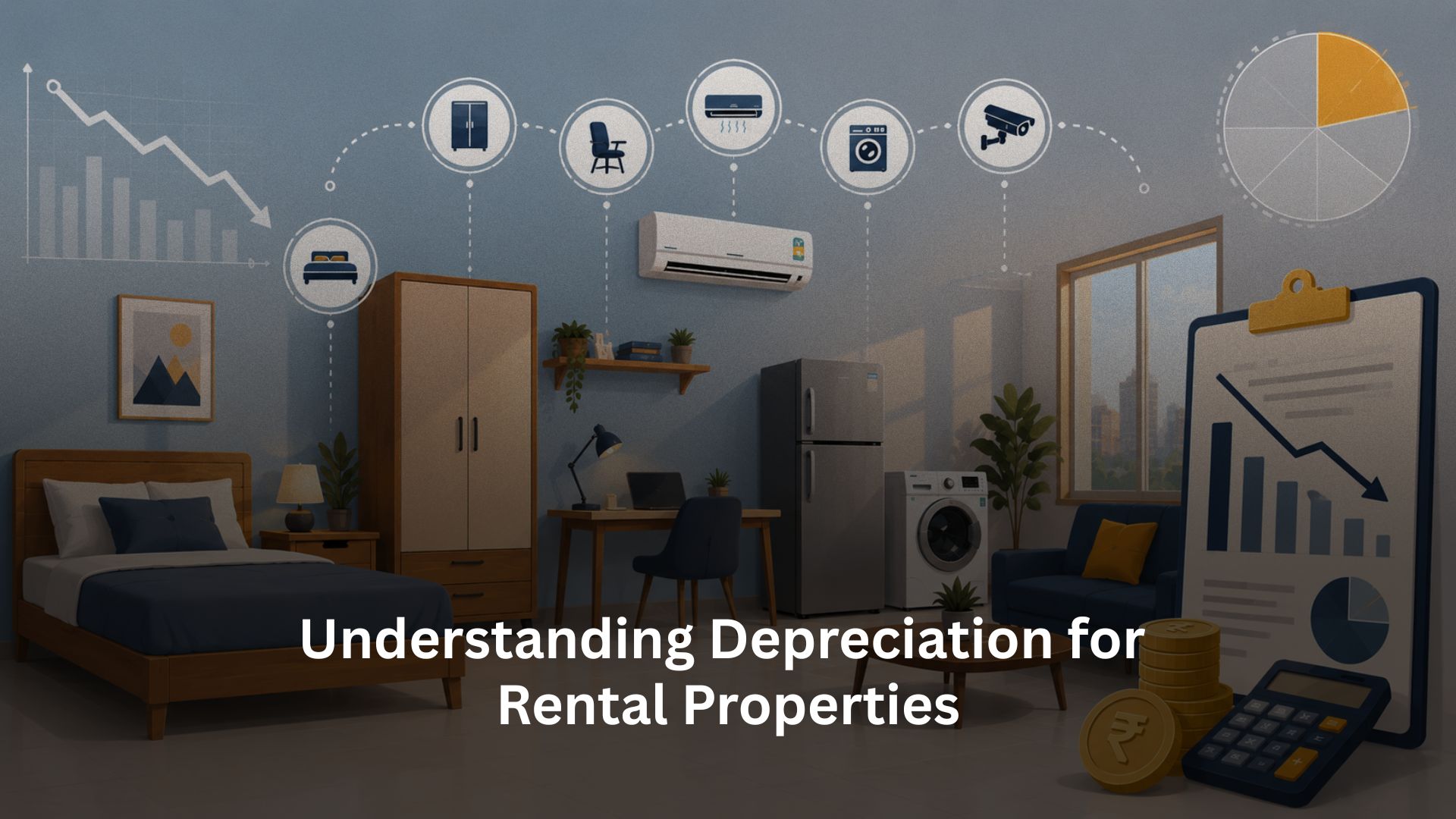
Understanding Depreciation for Rental Properties

Written by
Ishika Pannu
Read Time
9 min read
Posted on
May 7, 2026
Overview
Overview
Understanding Depreciation: Saving Taxes on Your Rental Property Assets
Most landlords measure the success of a rental property using visible numbers. Monthly rent collections, occupancy rates, maintenance costs, and yearly appreciation usually become the primary indicators of profitability. If the property remains occupied consistently and the cash flow looks stable, the business appears financially healthy.
But experienced rental operators understand that profitability is not determined by rental income alone. The real difference between a well-managed rental business and an average one often comes down to how efficiently assets, operational costs, and taxes are managed over time.
This is where depreciation becomes important.
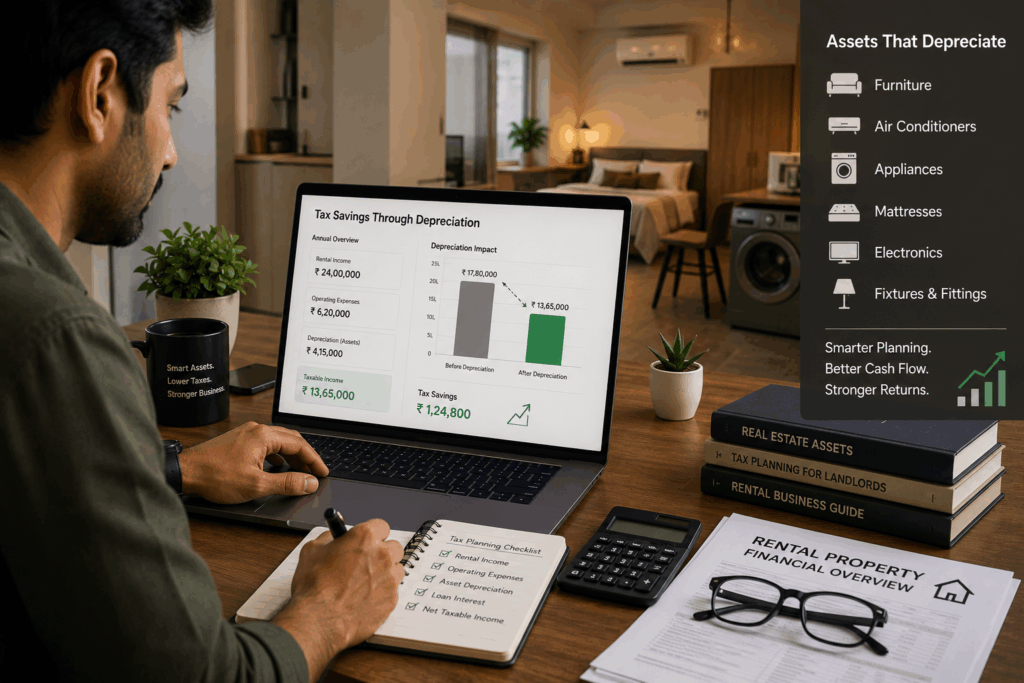
For many landlords, depreciation feels like a technical accounting term that only matters during tax filing season. In reality, it directly affects how rental businesses should be evaluated financially. Every furnished room, appliance, air conditioner, mattress, and operational asset inside a property gradually loses value because of continuous tenant usage. Depreciation is simply the financial recognition of that decline.
And when managed properly, it becomes one of the most effective ways to reduce taxable income legally while improving long-term financial planning.
This is especially relevant today because modern rental businesses are far more infrastructure-heavy than they were a few years ago. Furnished PGs, co-living spaces, student housing, and managed rentals now compete heavily on tenant experience, which means landlords invest continuously into operational assets that require maintenance, upgrades, and eventual replacement.
What Depreciation Actually Means in Rental Properties
Depreciation refers to the gradual reduction in the value of an asset over its useful life. In rental businesses, this applies to assets that continue supporting tenant experience and property operations for several years rather than being consumed immediately after purchase.
For example, when a landlord installs:
- modular furniture across rooms that will be used continuously by multiple tenants over several years,
- air conditioners and appliances that directly improve tenant comfort and rental pricing potential,
- shared infrastructure like washing machines, water purifiers, and internet systems that support daily operations,
- or CCTV and security systems that become part of the property’s long-term functionality,
those purchases continue generating operational value long after the initial investment.
This matters because furnished rental businesses do not operate purely through real estate anymore. They operate through infrastructure quality. A co-living property may structurally remain the same for years, but the tenant experience inside it depends heavily on how well operational assets are maintained.
Without depreciation, many landlords end up overestimating profitability because infrastructure deterioration remains financially invisible until large replacement costs suddenly appear.
Why Depreciation Matters More in Modern Rental Businesses
The rental market has changed significantly over the last few years. Earlier, many landlords operated unfurnished units where tenant expectations remained relatively basic. Beyond occasional maintenance and repairs, operational involvement was limited.
That model no longer defines most urban rental businesses.
Today’s tenants increasingly expect:
- furnished rooms that feel functional and comfortable from day one instead of empty spaces requiring additional setup,
- reliable appliances and internet infrastructure that support work, study, and everyday convenience,
- organized common areas and operational consistency that create a smoother living experience,
- and professionally managed properties where systems feel structured rather than manually handled.
As a result, rental businesses have become much more operationally intensive.
This shift has created two important realities:
- landlords now invest significantly more money into operational assets than before,
- and those assets experience much heavier wear because of continuous tenant usage and turnover.
The financial impact of this becomes especially visible in:
- PG accommodations with high occupancy density,
- co-living spaces with shared infrastructure,
- student housing with continuous yearly movement,
- and furnished apartments where appliances and furniture directly influence tenant satisfaction.
In these setups, infrastructure quality is no longer optional. It becomes part of the product itself.
Understanding the Difference Between Repairs and Depreciable Assets
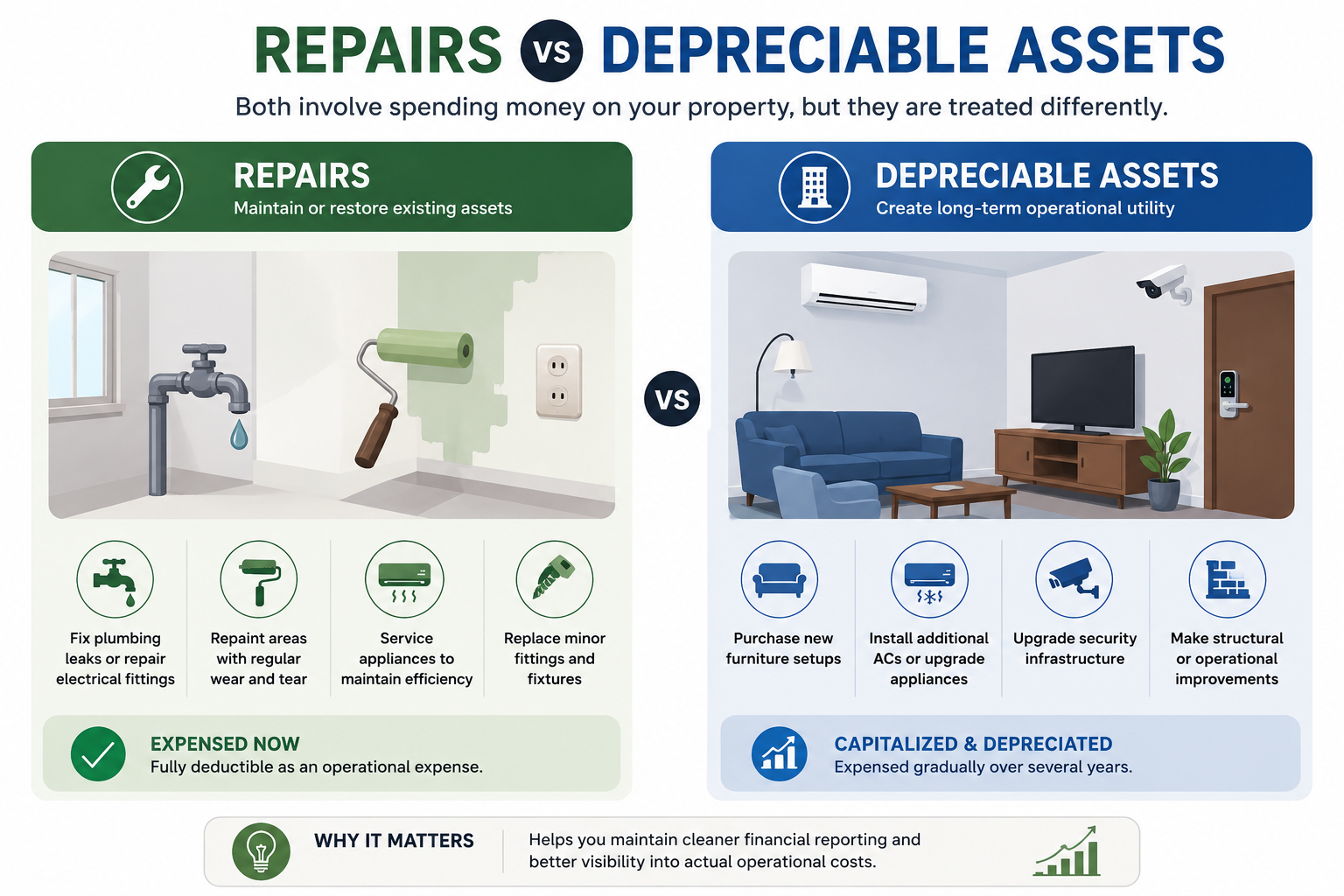
One of the most common mistakes landlords make is confusing repairs with depreciable assets. Both involve spending money on the property, but financially they are treated very differently.
Repairs are generally recurring operational expenses that maintain or restore an existing asset without significantly improving its long-term value.
Examples include:
- fixing plumbing leakages or repairing damaged electrical fittings that restore normal functionality,
- repainting sections of the property that have experienced regular wear and tear over time,
- servicing appliances like ACs or washing machines to maintain operational efficiency,
- or replacing minor fittings and fixtures that deteriorate through everyday usage.
Depreciation applies when the purchase or upgrade creates long-term operational utility for the property.
This usually includes:
- purchasing new furniture setups that improve the overall furnishing quality of the property,
- installing additional air conditioners or replacing outdated appliances with newer systems,
- upgrading security infrastructure such as CCTV systems or smart access systems,
- or making structural and operational improvements that continue delivering value for several years.
Understanding this distinction helps landlords maintain cleaner financial reporting while also improving visibility into actual operational costs.
Rental Asset Life: Why It Matters More Than Most Landlords Realize
Every depreciable asset has what accountants refer to as a useful life or rental asset life. This represents the estimated duration during which the asset continues delivering operational value before replacement becomes necessary.
Different assets naturally age at different speeds.
For example:
- mattresses and soft furnishings may deteriorate relatively quickly because of continuous tenant turnover and usage pressure,
- furniture like wardrobes and desks may remain usable longer but still experience gradual operational wear,
- appliances such as ACs and refrigerators often require increasing maintenance as they age,
- while structural components of the property itself may remain functional for decades.
Tracking asset life properly helps landlords shift from reactive management to planned management.
Instead of replacing infrastructure only after complaints begin increasing, operators can:
- anticipate replacement cycles before tenant experience starts getting affected,
- spread infrastructure investments more strategically across financial years,
- avoid sudden operational disruptions caused by large-scale breakdowns,
- and maintain better consistency in property quality across all rooms and properties.
This becomes particularly important in high-density rental environments where operational assets face significantly more stress than in owner-occupied residential homes.
Furniture and AC Depreciation: The Most Important Categories for PG Operators
For PG and co-living operators, furniture and air conditioners are among the most operationally significant depreciable assets because tenants interact with them every single day.
A poorly maintained mattress, damaged wardrobe, or inefficient AC affects tenant perception immediately. Unlike structural deterioration that may go unnoticed for years, furniture and appliances shape the daily living experience directly.
In high-occupancy rental properties:
- beds experience continuous usage with very limited vacancy gaps between tenant turnovers,
- furniture undergoes repeated movement and handling during shifting cycles,
- AC systems often operate heavily across long seasonal periods because cooling is now considered a basic expectation,
- and shared appliances experience much higher usage intensity compared to standard residential homes.
This accelerated operational wear shortens asset lifespan significantly.
A structured depreciation approach helps landlords:
- understand the true long-term cost of maintaining furnished rental properties,
- estimate replacement timelines more accurately instead of relying on reactive spending,
- maintain property quality consistently without sudden infrastructure decline,
- and improve financial planning around future upgrades and operational investments.
Without this visibility, many rental businesses appear profitable in the short term while gradually accumulating hidden infrastructure deterioration underneath.
| Asset Category | Common Examples | Operational Impact |
|---|---|---|
| Furniture | Beds, wardrobes, desks, chairs | Directly affects comfort, retention, and room quality perception |
| Appliances | ACs, refrigerators, washing machines | Influences tenant satisfaction and operational reliability |
| Electronics | Wi-Fi systems, CCTV, smart devices | Supports convenience, security, and modern tenant expectations |
| Shared Amenities | Kitchen equipment, laundry setups | Important for co-living and shared accommodation models |
How Depreciation Helps Reduce Tax Liability
One of the biggest financial advantages of depreciation is that it reduces taxable income legally. When landlords account for depreciation properly, the gradual reduction in asset value gets recognized as an operational expense from an accounting perspective.
This lowers reported profits and helps reduce tax liability.
But the real advantage goes beyond tax savings alone.
Depreciation also improves financial accuracy because it helps landlords understand:
- how much infrastructure is actually being consumed operationally every year,
- which properties create higher long-term maintenance pressure,
- where replacement cycles are becoming financially significant,
- and how much capital should realistically be reserved for future upgrades.
Experienced rental operators use depreciation not just as a tax-saving mechanism, but as a long-term operational planning tool.
It helps create a more realistic understanding of how rental businesses function beneath the surface.
Common Mistakes Landlords Make While Managing Depreciation
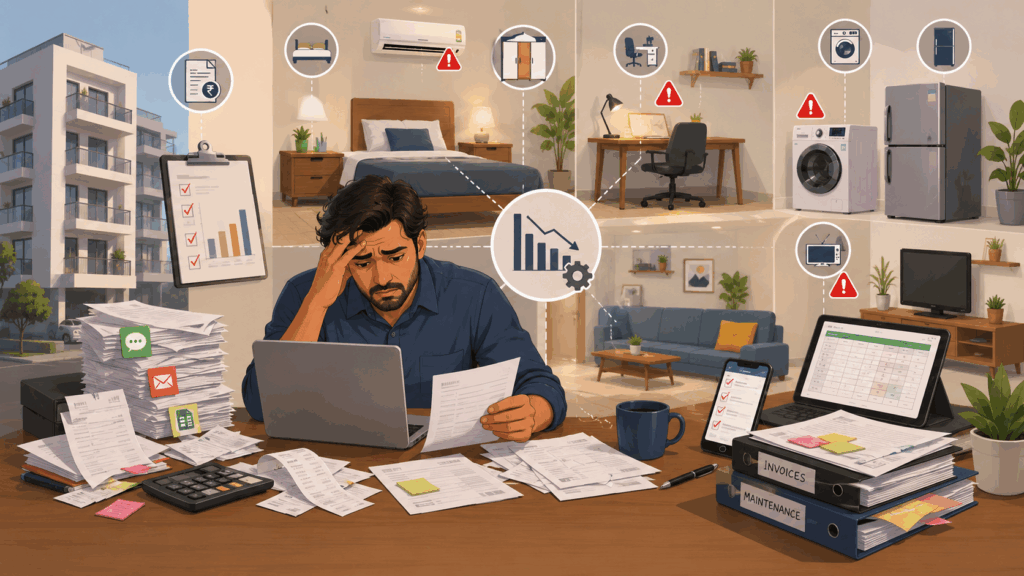
Even landlords who understand depreciation conceptually often struggle operationally because their records remain fragmented across multiple systems.
Some of the most common issues include:
- purchase invoices and maintenance records getting scattered across chats, emails, and spreadsheets, making long-term tracking difficult,
- operators focusing only on large purchases while ignoring smaller operational assets that collectively create significant infrastructure value,
- infrastructure replacements happening only after tenant complaints increase instead of through planned asset lifecycle management,
- and manual tracking systems becoming increasingly unreliable as rental portfolios expand across multiple properties.
These problems may appear manageable initially, but they compound rapidly as operations scale.
This is usually the stage where landlords realize that structured operational systems are no longer optional.
How RentOk Helps Property Owners Stay Operationally Organized
Managing depreciation effectively starts with managing operations efficiently.
As rental businesses grow, landlords need visibility not only into rent collections, but also into tenant records, occupancy tracking, maintenance coordination, operational infrastructure, and property-level activities. When this information remains fragmented across spreadsheets and disconnected tools, financial organization becomes difficult very quickly.
RentOk helps landlords centralize property operations into a more structured system.
With RentOk, operators can:
- maintain organized tenant and occupancy records across properties without relying on scattered manual workflows,
- improve visibility into operational activities through centralized management systems that simplify coordination,
- streamline maintenance and communication tracking so operational history remains properly documented,
- and create cleaner documentation systems that support better long-term financial planning and operational visibility.
For furnished rental businesses where infrastructure quality directly affects tenant experience, operational clarity becomes extremely important. Organized systems help landlords operate proactively instead of constantly reacting to operational gaps and infrastructure issues.
Conclusion
Depreciation is not just an accounting adjustment used during tax filing season. It is a practical reflection of how rental businesses actually function over time.
Every furnished room, appliance, air conditioner, and operational asset inside a property gradually loses value through continuous tenant usage. Understanding that decline properly helps landlords:
- reduce taxable income legally while maintaining cleaner financial reporting,
- evaluate profitability more accurately instead of relying only on visible cash flow,
- plan infrastructure upgrades strategically before operational quality declines,
- and build more sustainable rental businesses with stronger long-term financial visibility.
As modern rental businesses become increasingly service-driven and infrastructure-dependent, structured asset management will continue becoming a major competitive advantage.
If you want to simplify property operations, improve organizational visibility, and manage your rental business with better operational structure as it scales, explore RentOk and discover how organized property management systems can support smarter rental operations.
About the Author
Ishika Pannu
Ishika Pannu brings you the latest insights and easy-to-apply strategies in property management—helping you simplify renting and grow with RentOk.