
Market Trends
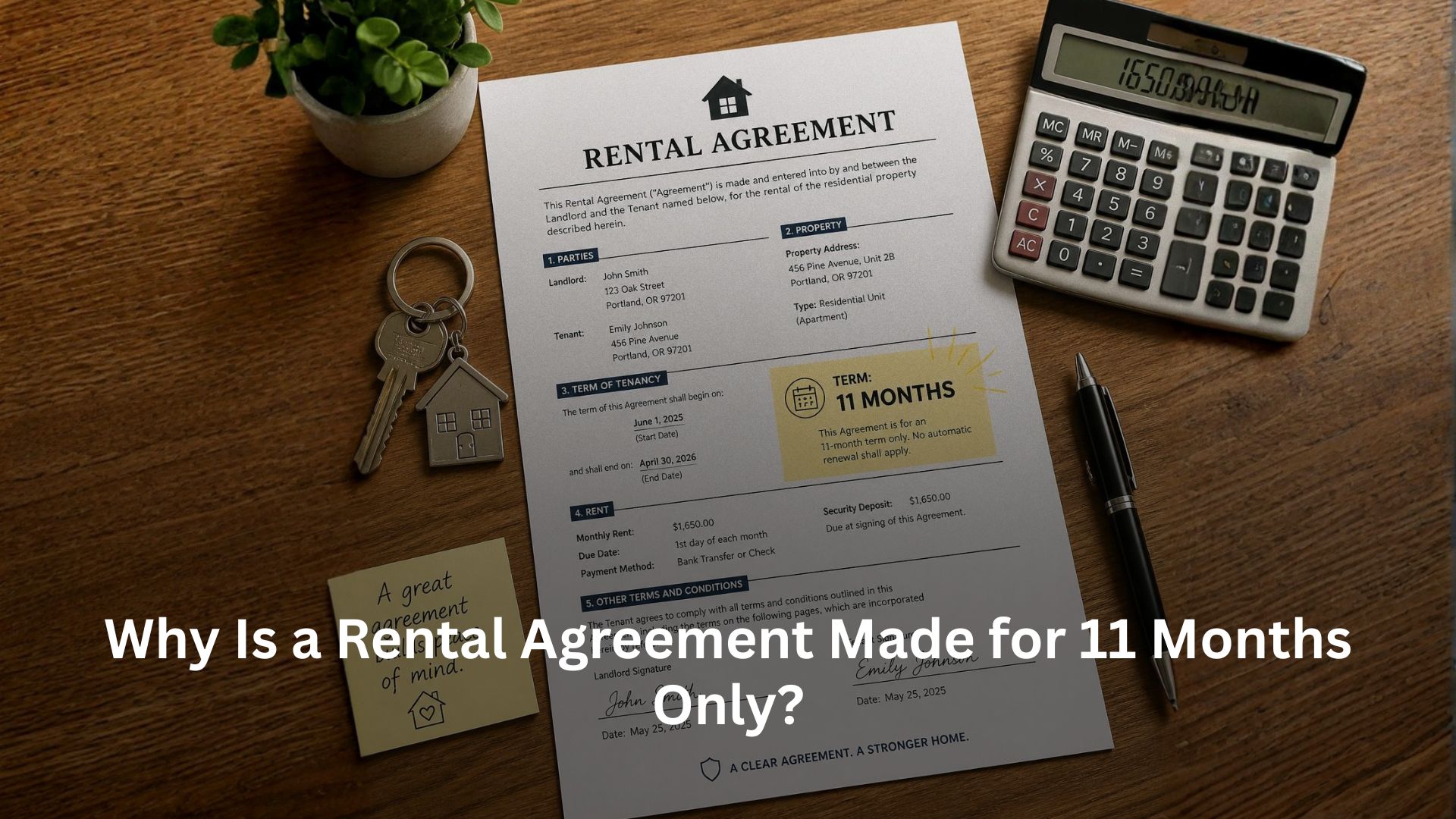
Why Is a Rental Agreement Made for 11 Months Only?

Written by
Shivanshi Dheer
Read Time
14 min read
Posted on
July 20, 2026
Overview
Overview
Why Is a Rental Agreement Made for 11 Months Only?
If you have ever rented a flat in India, or given your own flat on rent, you must have noticed something odd. The agreement almost never says 12 months. It says 11 months. Not 10, not 12, but exactly 11. And if you ask most people why, they will just say “that’s how it’s always done” without actually knowing the reason.
The truth is, this is not a random number. It is a very deliberate choice, and once you understand why, you will never be confused by it again. It comes down to Indian law, specifically how registration and stamp duty work, and how landlords protect themselves from losing control over their own property.
In this blog, we will break this down properly, the way people actually search it on Google. We will cover the legal reason, the money reason, the exceptions, and what you should actually do when you sign or renew an 11 month agreement.
Let’s get into it.
What Does an 11 Month Rent Agreement Actually Mean?
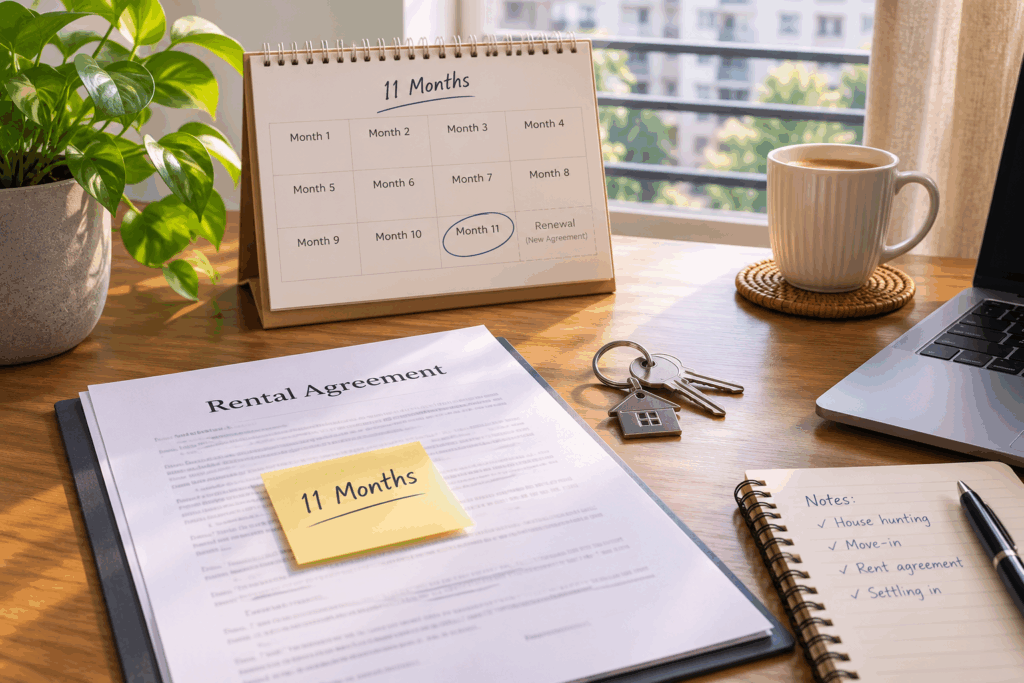
An 11 month rent agreement is simply a rental contract between a landlord and a tenant that runs for 11 months instead of a full year. At the end of 11 months, the agreement ends. If both sides want to continue, they sign a fresh 11 month agreement, often with updated rent. This is sometimes called a leave and license agreement rather than a lease, and that difference matters a lot legally, which we will get into shortly.
This is not a new trend. It has been the standard practice across most Indian cities for decades, especially in Delhi, Bangalore, Pune, Hyderabad, and most of North India. It is so common that many people assume 11 months is simply “the legal length” of a rent agreement, but that is not true either. You are allowed to sign an agreement for 12 months, 24 months, or even 5 years. Landlords just choose not to, and for good reason.
Why Do Landlords Prefer 11 Months Instead of 12?
There are two main reasons, and both are about avoiding complications, not creating them.
The first reason is registration. Under Indian law, any lease or rent agreement that runs for 12 months or more must be compulsorily registered with the local sub-registrar’s office. Registration means both parties, along with witnesses, have to physically show up, submit ID proofs, and pay government fees. It takes time, paperwork, and money. An 11 month agreement falls just below this 12 month line, so registration becomes optional instead of mandatory.
The second reason is tenant rights under Rent Control Acts. Several states have Rent Control Acts that give tenants stronger legal protection the longer they stay in a property. In some states, this protection kicks in after a tenant has lived somewhere for 12 months or more, making it harder for a landlord to increase rent, ask the tenant to leave, or take back the property when they want to. By keeping every agreement under 12 months and renewing it fresh each time, landlords avoid accidentally giving a tenant that stronger legal status.
So the 11 month number is really doing two jobs for landlords at once, avoiding registration costs, and avoiding long term tenant protection laws.
What Does the Registration Act 1908 Actually Say?
This is the actual law behind the whole practice, so it is worth understanding properly instead of just accepting it as a rule.
Under Section 17 of the Registration Act, 1908, any document that creates a lease of immovable property for a period of one year or more must be registered. This means the moment your rent agreement touches or crosses the 12 month mark, registration is not optional anymore. It becomes a legal requirement.
Registration involves visiting the sub-registrar’s office, paying stamp duty, paying a separate registration fee, and getting the document formally recorded by the government. Depending on the city, this can cost anywhere from a few thousand rupees to a percentage of your annual rent, and it also takes real time and effort from both the landlord and the tenant.
By keeping the agreement at 11 months, both sides stay just under this legal threshold. The agreement is still valid, it is still enforceable, but it skips the registration requirement completely.
How Much Money Does an 11 Month Agreement Actually Save?
This is one of the most practical reasons behind the whole practice, and the numbers actually add up.
If a rent agreement crosses 12 months and needs registration, the landlord and tenant usually have to pay stamp duty of somewhere between 1 to 5 percent of the annual rent, depending on the state, plus a separate registration fee, which is often between 1,000 and 2,000 rupees, sometimes more.
For an 11 month agreement, most states only require a much smaller stamp paper value, sometimes as low as 100 to 200 rupees, and there is no registration fee at all since registration itself is skipped.
So for a flat renting at say 25,000 rupees a month, a 12 month registered agreement could cost several thousand rupees in stamp duty and fees, while an 11 month agreement might cost just a few hundred rupees for the stamp paper. That difference is exactly why this practice has stuck around for so long. It is a completely legal way to avoid an unnecessary cost every single year.
Does Skipping Registration Make the Agreement Illegal?
No, and this is where a lot of people get confused. Skipping registration does not make the agreement illegal or invalid. It simply means the agreement was never legally required to be registered in the first place, because it stayed under the 12 month threshold set by the Registration Act.
An 11 month agreement, as long as it is properly written, signed by both parties, and stamped according to your state’s rules, is fully valid and can be used as evidence in court if there is ever a dispute. Notarising the agreement, which many people do as an extra step, adds a bit more credibility, but it is not compulsory either.
The important thing to understand is that “not registered” and “not legal” are two completely different things. An unregistered 11 month agreement is legal. What would actually be a problem is a 12 month or longer agreement that was never registered, since that would be going against a compulsory legal requirement.
Is There a State Where the 11 Month Rule Does Not Work?
Yes, and this is important if you own or rent property in Maharashtra.
In most of India, the 11 month rule works exactly as explained above. But Maharashtra is an exception. Under Section 55 of the Maharashtra Rent Control Act, 1999, every leave and license or rental agreement in the state must be registered, regardless of whether it is for 11 months, 12 months, or any other duration. This applies to cities like Mumbai, Pune, and Kolhapur.
In Maharashtra, the responsibility to register the agreement legally falls on the landlord, not the tenant. If a landlord fails to register the agreement, they can actually face penalties, including a fine or even imprisonment of up to three months in serious cases. So if you are a landlord in Maharashtra, keeping your agreement at 11 months does not save you from registration. You still have to register it, even though the process today can usually be done online without a physical visit to the sub-registrar’s office in many cases.
If your property is outside Maharashtra, the standard 11 month practice works fine. But this is exactly why it is worth checking your specific state’s rules before assuming the general practice applies to you.

Why Do Landlords Also Avoid the 12 Month Mark Because of Rent Control Laws?
Beyond registration costs, there is a second, quieter reason landlords stick to 11 months, and it is about control over their own property.
Many state rent control acts were originally written to protect tenants from unfair eviction, especially in cities with old rent laws. Over time, some of these laws started giving tenants stronger rights the longer they continuously stayed in a property, in some cases making it very difficult for landlords to increase rent to market rate or ask the tenant to vacate.
By resetting the agreement every 11 months instead of letting it run continuously past a year, landlords avoid the tenant ever crossing into that stronger legal protection zone. It also gives the landlord a natural, built-in point every year to revise the rent to match the current market, rather than being stuck with the same rent for years because there was never a clean renewal point.
This is one of the reasons rent in fast growing rental markets, like parts of Bangalore or Mumbai, tends to get revised almost every year. The 11 month cycle gives landlords a legitimate and simple opportunity to do that.
What Happens After 11 Months? Do You Have to Vacate?
Not necessarily. When an 11 month agreement ends, there are usually three things that can happen, and it depends entirely on what both sides want.
The agreement gets renewed. This is the most common outcome. The landlord and tenant sign a fresh 11 month agreement, often with a small rent increase built in, and the tenant continues staying in the property.
The tenant moves out. If either side does not want to continue, the tenant vacates at the end of the term, following whatever notice period was mentioned in the agreement, which is usually one month.
The agreement is extended informally. In some cases, both sides simply continue on the same terms without signing anything new for a short period, though this is not a good practice, since it removes the legal clarity that a proper agreement gives both sides. It is always better to sign a fresh agreement rather than let things continue on an expired one.
Is an 11 Month Agreement Legally Valid in Court?
Yes, completely. As long as the agreement is written clearly, signed by both the landlord and tenant, and stamped according to your state’s stamp duty rules, it can be produced and relied upon in court if a dispute ever comes up. This is true whether it is notarised or not, though notarising does add an extra layer of authenticity that can be helpful.
What actually weakens an agreement in court is not the fact that it is 11 months long. It is poor drafting, missing details, unclear terms, or no signatures from both parties. This is why the content of the agreement matters far more than its exact duration.
What Should Go Into an 11 Month Rent Agreement to Keep It Safe?
Since the agreement’s strength comes from how well it is written, here is what a proper 11 month rent agreement should always include.
Full details of both parties. Names, permanent addresses, and ID proof details of both the landlord and the tenant.
Property details. A clear description of the property, including address, area, and what is included, such as furniture or appliances.
Rent and payment terms. The exact monthly rent, the due date, the mode of payment, and what happens if payment is delayed.
Security deposit terms. How much deposit is being taken, and clearly under what conditions it will be refunded or deducted at the end of the tenancy.
Duration and renewal terms. The exact start and end date of the 11 month period, and what happens if either party wants to renew or exit early.
Notice period. How much advance notice either side needs to give before ending the agreement, usually 30 days.
Maintenance and repair responsibilities. Who pays for what, especially for larger repairs versus regular wear and tear.
If you want a ready structure to follow instead of building one from scratch, this is covered in detail in complete rent agreement format for landlords and tenants, which walks through every clause you should include.

Common Mistakes People Make With 11 Month Agreements
Even though the 11 month practice is simple, people still get it wrong in a few common ways.
Letting the agreement expire without renewing it. Many landlords and tenants simply let time pass after 11 months without signing anything new, which leaves both sides without a clear legal document if something goes wrong. This usually happens simply because nobody is tracking the renewal date, especially if a landlord manages more than one tenant or property. A renewal reminder, set well before the 11 months are up, avoids this completely.
Using a very low value stamp paper by mistake. Stamp duty rules vary by state, and using the wrong value stamp paper can weaken the agreement’s standing later. It is worth checking your state’s exact requirement rather than copying what a friend used in a different city.
Assuming 11 months is compulsory everywhere. As covered above, Maharashtra requires registration regardless of the term. Assuming the general rule applies everywhere can create real legal trouble for landlords in that state.
Not keeping a copy of the signed agreement. This sounds obvious, but a surprising number of disputes happen simply because one side cannot produce a signed copy when it matters most.
Verbal renewals instead of written ones. Continuing a tenancy based only on a verbal understanding after the agreement ends removes all the legal protection a proper agreement provides. This is one of the most common and most avoidable causes of rent and deposit disputes, something explained further in security deposits, the hidden cost of renting.
Conclusion
An 11 month rent agreement is a legal and widely used way to avoid mandatory registration in most Indian states (except Maharashtra, where registration is compulsory regardless of duration). What matters most is not the duration, but having a properly drafted, signed, and stamped agreement that protects both landlord and tenant.
Managing renewals manually can quickly become difficult, especially for multiple properties. RentOk helps you create digital rent agreements, track renewals, and sends automatic reminders before agreements expire, so you never miss a renewal or lose important records. Explore RentOk’s digital rent agreement tool to manage agreements and renewals from one place.
Frequently Asked Questions
Find answers to common questions about this topic
About the Author
Shivanshi Dheer
Shivanshi Dheer sharing actionable strategies and information on PG/hostel management to help simplify renting and scale with RentOk.
You may also like these
Related Articles
1 min read
How to Avoid MDR on Rent Payments: A Guide for PG Owners
Written by
Posted on
Shivanshi Dheer
Oct 6, 2026

1 min read
RentOk AutoPay & e-NACH for Automatic Rent Collection
Written by
Posted on
Shivanshi Dheer
Oct 6, 2026

1 min read
What’s Included in My Rent and What Am I Paying Extra For?
Written by
Posted on
Ishika Pannu
Sep 30, 2026

1 min read
Which Indian City Gives Landlords the Best Rental Yield Right Now?
Written by
Posted on
Ishika Pannu
Sep 28, 2026
1 min read
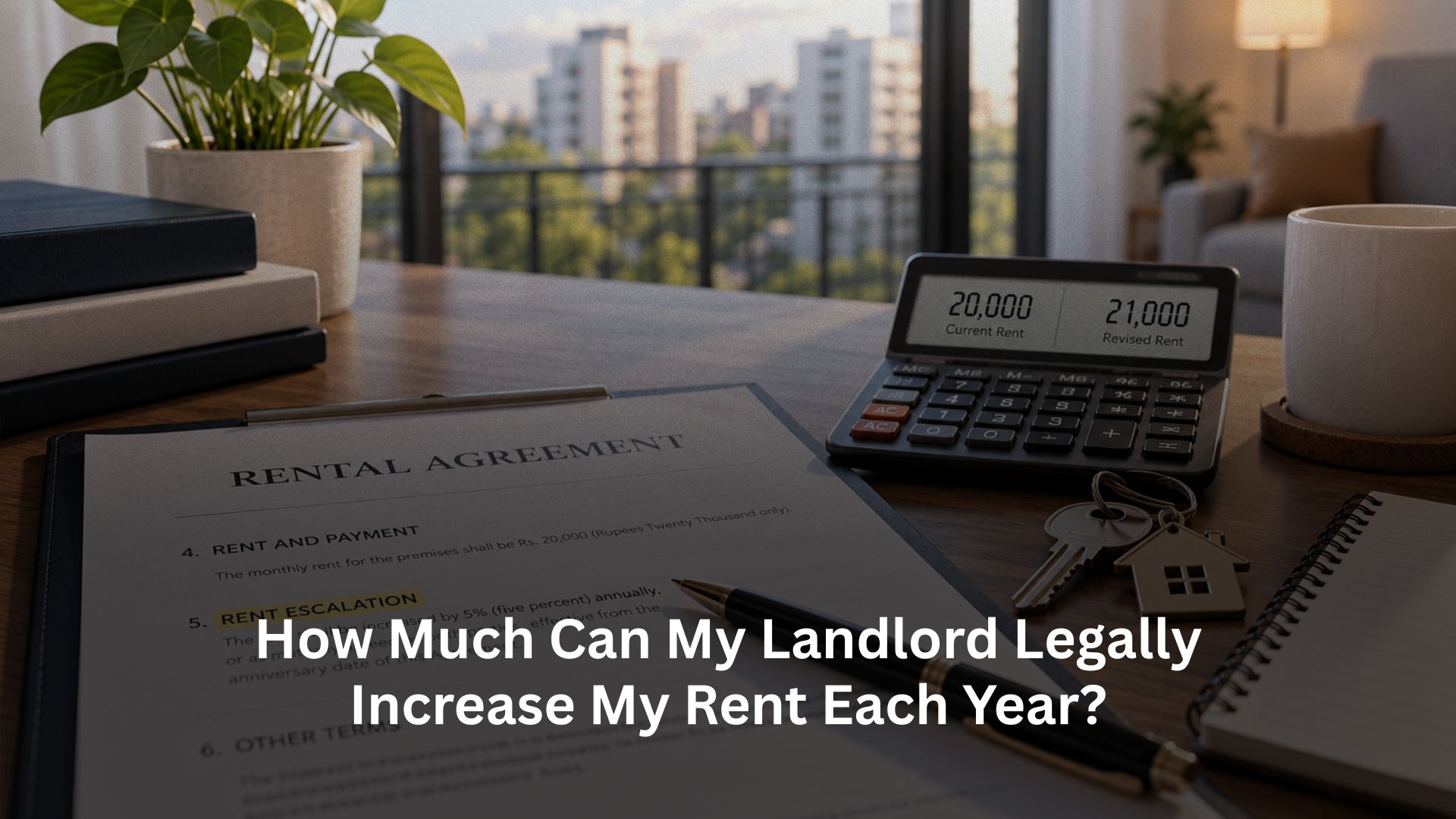
How Much Can My Landlord Legally Increase My Rent Each Year?
Written by
Posted on
Ishika Pannu
Sep 23, 2026

1 min read
India’s Rental Market Grows 16%: What Owners Should Know
Written by
Posted on
Ishika Pannu
Sep 22, 2026
1 min read
Why Landlords Check CIBIL Scores Before Renting
Written by
Posted on
Ishika Pannu
Sep 21, 2026
1 min read
Why Students Need Tenant Verification Done Before Moving Into a PG
Written by
Posted on
Ishika Pannu
Sep 14, 2026

1 min read
What to Do When Your Landlord Won’t Make Repairs
Written by
Posted on
Ishika Pannu
Sep 12, 2026
1 min read
Satya Niketan Building Collapse: What Happened in Detail?
Written by
Posted on
Shivanshi Dheer
Sep 9, 2026
Stay ahead in property management with expert insights
Join thousands of property managers receiving exclusive tips delivered straight to your inbox.
Browse posts by category
Case Study
Cost of Living
Growth
Legal
Market Trends
News
Pg owner app
Property Management
Property Tax
Tech
RentOk
The easiest way to rent and manage your PGs and hostels.
Grievance Officer
Get the app


Contact us
hello@eazyapp.tech
HQ Office
COGROW, BASEMENT F-12/8A
BESIDE HOUSE OF STYLE SALON, SECTOR 28, DLF PHASE 1
GURUGRAM, HARYANA - 122002
South India Office
LUMIODESK COWORKING, 2ND FLOOR, 40, 14TH MAIN RD
BESIDE MC DONALD, 7TH SECTOR, HSR LAYOUT
BENGALURU, KARNATAKA - 560102
©️ 2026 EazyApp Tech Pvt Ltd. All rights reserved


