Pg owner app
How Much Should Property Management Software Cost in India?

Written by
Ishika Pannu
Read Time
12 min read
Posted on
October 3, 2026
Overview
Overview
How Much Should Property Management Software Cost in India?
Property management software is becoming a regular investment for landlords, PG owners, hostel operators, and co-living businesses in India. But there is one question that usually comes before everything else: how much should property management software actually cost?
The answer is not as simple as comparing monthly subscription prices.
A landlord managing 15 tenants and a PG operator managing 500 beds may search for the same software. Their requirements, however, are very different. One may only need tenant records and rent tracking. The other may need automated collections, room allocation, complaints, accounting, staff access, reports, and multi-property management.
This is why software pricing should always be looked at alongside the scale of the business. A cheaper platform may become expensive if it creates more manual work. A slightly higher subscription may make more sense if it replaces several separate tools.
The real question is not just “How much does property management software cost?” It is “What am I getting for that cost, and how much work does it remove?”
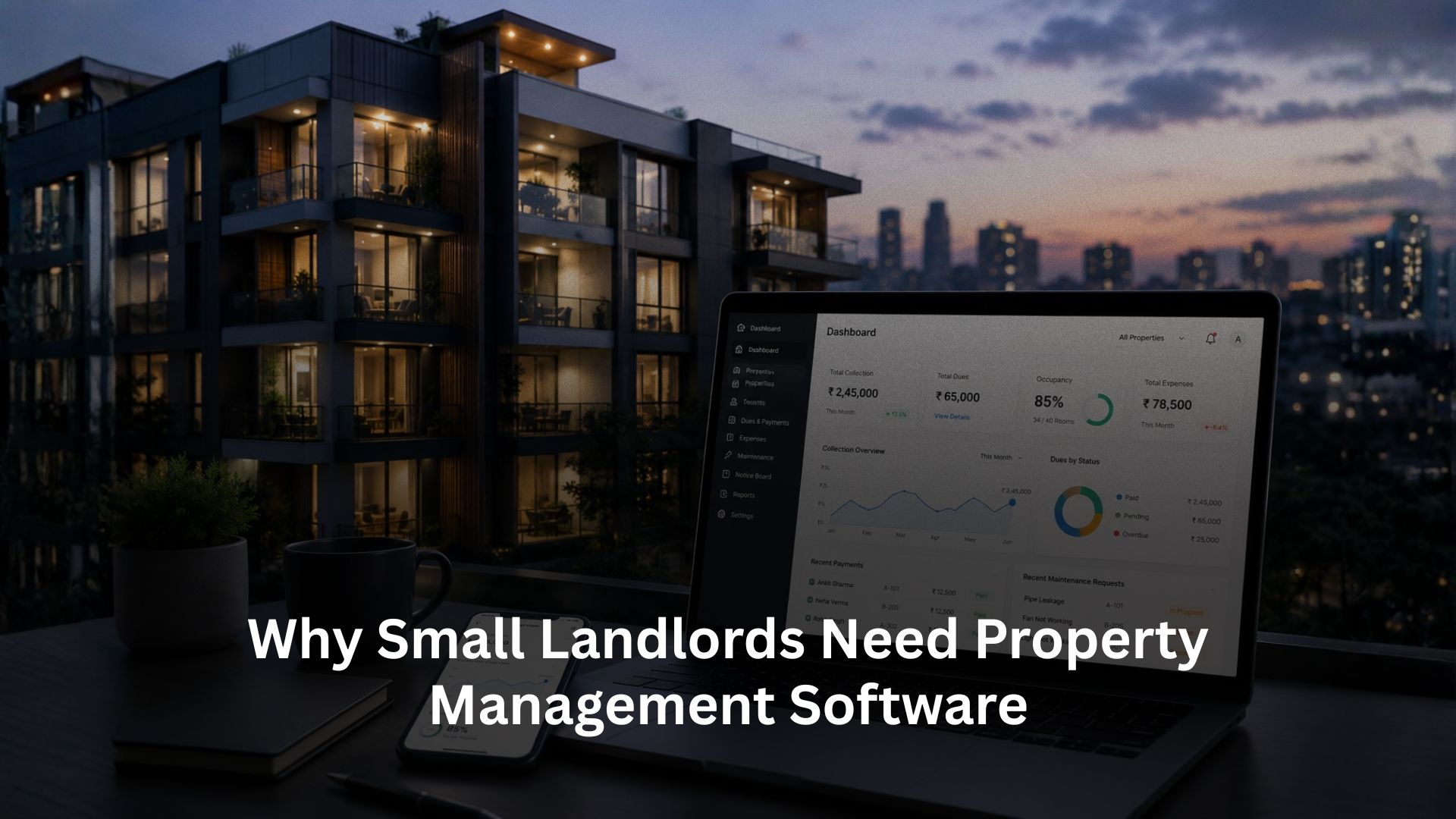
If you are still managing tenants through spreadsheets and WhatsApp, it is also worth understanding why small landlords need property management software. The value of software starts becoming clearer when you look at the work it replaces.
Typical Pricing Models for Property Management Software
Property management software in India usually follows a few common pricing models. Understanding these models is important because the advertised monthly fee does not always represent the final cost.
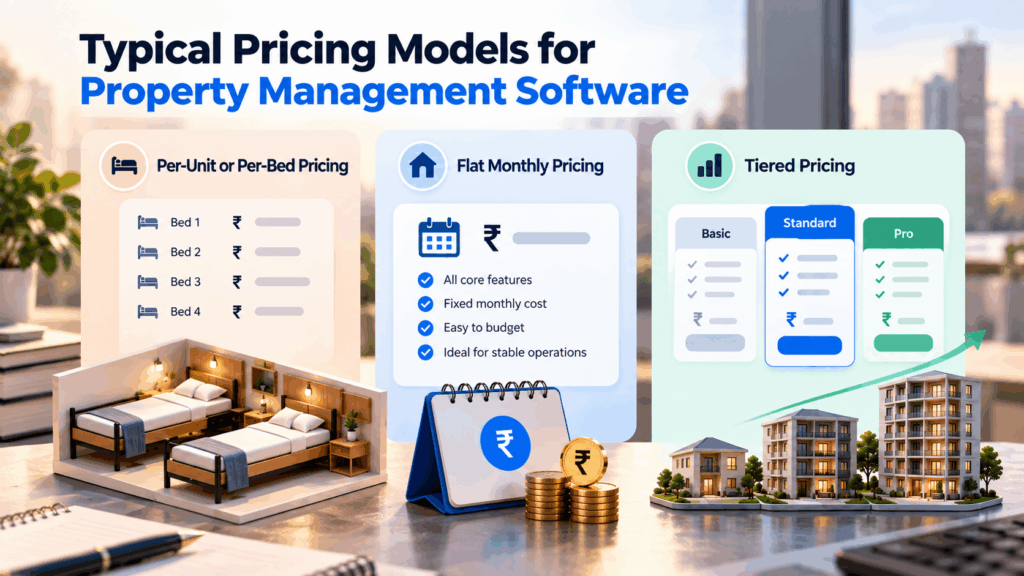
Per-Unit or Per-Bed Pricing
Per-unit pricing is common in PG and co-living businesses. The software cost is linked to the number of rooms, beds, or tenants being managed.
For example, a platform may charge according to the number of beds in a property. The cost can then increase as the operator adds more inventory.
This model can work well for growing businesses. The software cost increases with the size of the operation. However, operators should first understand what the platform considers a “unit”.
Some platforms may charge based on:
- Total beds or rooms: This can include vacant inventory and may affect the subscription even when some beds are unoccupied.
- Occupied units: This can make the cost more closely connected to active tenants and current revenue generation.
- Properties: Some platforms use the number of properties instead of tenant or bed count as the pricing basis.
- Users or staff accounts: Additional team members may sometimes require separate licenses or plan upgrades.
The important question is not simply “What is the price per bed?” It is “What exactly am I paying for as my property grows?”
Flat Monthly Pricing
Some platforms use a fixed monthly subscription. The operator pays a set amount for access to a specific group of features.
This makes budgeting easier. The software bill does not necessarily change every time another tenant joins.
However, fixed pricing does not automatically mean lower pricing. A basic subscription may have a low monthly fee but restrict important functions to higher plans.
That is why pricing should always be compared with the feature set.
Tiered Pricing
Tiered pricing divides software into different plans. Each plan usually offers a different level of functionality.
A basic plan may cover tenant management and payment tracking. Higher plans may add automation, analytics, accounting, staff access, or other advanced functions.
This structure can be useful for businesses at different stages. A small operator may not need every feature from day one.
The important part is understanding what you actually need. Do not choose a plan simply because it has the longest feature list.
What Actually Determines Property Management Software Cost?
The subscription price is only one part of the calculation.
The actual cost depends on the complexity of your property operations. A 20-bed PG may have a simple workflow. A 500-bed operation can involve hundreds of recurring payments, frequent move-ins, multiple staff members, complaints, deposits, and room changes.
As the property grows, small manual tasks also multiply.
A property manager may need to track:
- Tenant information: Details, documents, agreements, deposits, move-in dates, and move-out dates need to remain accessible and updated.
- Payments and dues: Monthly rent, utility charges, late fees, deposits, and payment confirmations can create a large amount of repetitive work.
- Occupancy: PG operators need clear visibility into available rooms, occupied beds, upcoming move-outs, and vacant inventory.
- Team activity: Larger properties often have managers, caretakers, accountants, and other staff members handling different responsibilities.
- Reports: Owners need to understand collections, expenses, occupancy, dues, and property performance without rebuilding the numbers manually.
This is where the difference between simple tracking software and a complete property management system becomes important.
A useful platform should reduce the number of manual steps involved in running the property. That is one of the key ideas behind How to Automate PG Management Completely. Automation is not just about using technology. It is about reducing dependency on repetitive manual work.
What’s Usually Included vs. Charged Extra?
A pricing comparison should never stop at the subscription amount.
You also need to know what the subscription actually gives you.
Most property management platforms include some combination of tenant records, rent tracking, payment management, occupancy, and basic reporting. More advanced platforms may include accounting, automation, complaints, lead management, communication, and analytics.
The difference becomes important when you start comparing the total cost of running your operations.
For example, an operator may use:
- One spreadsheet for tenant records.
- Another sheet for expenses.
- WhatsApp for payment reminders.
- A separate payment system for collections.
- Another tool for leads.
- Manual reports for monthly performance.
Each tool may appear affordable on its own. Together, however, they create a fragmented system.
This is one reason operators are increasingly looking at all-in-one property management software. Bringing connected workflows into one system can reduce repeated data entry and the need to move information between different tools.
Before choosing a plan, check whether these functions are included:
- Tenant and KYC management: Check whether tenant information, documents, agreements, and onboarding records can be managed from one place.
- Rent and dues management: Look for recurring dues, payment tracking, reminders, receipts, and clear payment history.
- Room and bed management: PG operators should check whether the system provides proper room, bed, and occupancy visibility.
- Accounting and reporting: Understand whether expenses, collections, financial reports, and property-level performance are part of the plan.
- Communication and complaints: Check whether tenant communication and complaint workflows are integrated instead of requiring separate tools.
- Advanced features: Analytics, integrations, verification, marketing tools, or other services may have different conditions or pricing.
The subscription becomes easier to evaluate once you know what is actually included.
How Much Does Software Cost at Different Scales?
There is no universal price that works for every rental business.
The right amount depends on the size of the operation and the work the software is expected to handle.
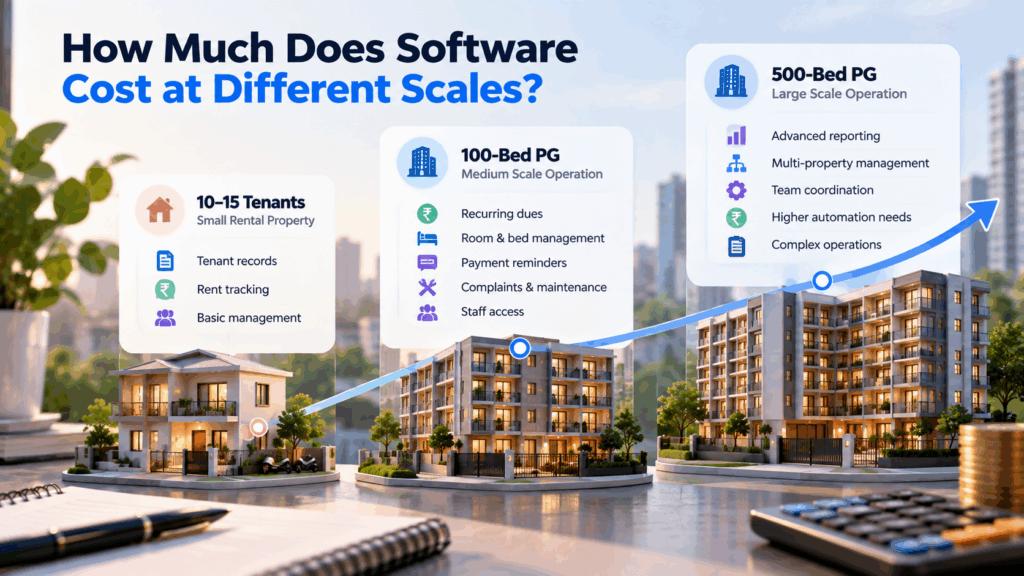
Consider a landlord with 10 or 15 tenants. If rent is collected on time and records are simple, manual management may still be manageable.
Now consider a 100-bed PG.
There may be recurring monthly dues, deposits, utility charges, payment reminders, room changes, complaints, new move-ins, and regular move-outs. The owner may also have staff members handling different parts of the property.
At 500 beds, these tasks become much harder to manage manually.
This is why cost per tenant or cost per bed can be a useful way to evaluate software. Instead of looking only at the monthly subscription, consider what the platform does for the business.
Ask yourself:
- How many hours of repetitive work can the system remove every month?
- Can it reduce the number of manual payment follow-ups?
- Can it improve visibility into vacant and occupied inventory?
- Can staff access the same information without maintaining separate records?
- Can reports be generated without spending hours reconciling spreadsheets?
These questions give you a better understanding of software ROI.
RentOk’s Best Tenant Management Software in India guide makes a similar point. Software should be evaluated by how well it handles Indian rental workflows, not simply by the number of features listed on a pricing page.
What Should You Look For Before Paying?
Before purchasing property management software, take a step back and look at your current workflow.
Where does your team spend the most time?
If rent collection requires constant follow-ups, payment automation may be more valuable than an advanced reporting dashboard. If occupancy is difficult to track, room and bed management may matter more.
The software should solve your biggest operational problems first.
A useful checklist includes:
- Ease of use: Your team should be able to understand the system without creating another layer of operational work.
- Scalability: The pricing and features should still make sense when you add more tenants or properties.
- Automation: Look for recurring tasks that can run without constant manual intervention.
- Visibility: Important information should be available through dashboards and reports instead of scattered across different files.
- Indian rental workflows: PGs and co-living businesses have different requirements from traditional long-term residential rentals.
This last point is especially important.
PGs often operate on bed-level occupancy. Tenants may have shorter stays. Payments can follow recurring cycles. UPI and digital payments are common. Food, attendance, complaints, and other services may also be part of the operation.
That makes generic property software less suitable in some cases.
RentOk’s How to Choose the Right PG Management Software covers these requirements in greater detail. It focuses on features that actually support PG operations instead of treating every rental property as the same.
Red Flags in Property Management Software Pricing
A low subscription does not always mean a low-cost solution.
The first red flag is unclear pricing. If you cannot understand whether the platform charges per bed, property, tenant, user, or feature, it becomes difficult to plan your expenses.
Another issue is a low entry price with several essential paid add-ons.
A platform may appear inexpensive at first. Later, you may discover that important functions require an upgrade.
Look out for:
- Unclear unit calculations: You should know exactly what counts toward your bill and when the price changes.
- Essential features behind upgrades: If basic operational functions are restricted to expensive plans, the advertised entry price may be misleading.
- Unexpected user charges: Check whether adding managers, accountants, or staff members changes your subscription.
- Expensive scaling: A pricing model that works for 30 tenants may become difficult to justify at 300 tenants.
- Unclear additional charges: Payment services, integrations, verification, or other add-ons should have clearly defined costs.
Pricing transparency matters because property management software is not usually a one-month decision. Once a business builds its workflows around a system, switching platforms can also take time.
What Is the Right Software Budget for Your Property?
There is no fixed percentage of revenue that every property should spend on software.
Instead, look at the operational value.
If software helps your team save hours every month, reduces payment follow-ups, improves occupancy visibility, and gives management better financial information, its value goes beyond the subscription amount.
This is especially relevant when comparing software with manual systems.
Excel may appear free. WhatsApp may already be installed on everyone’s phone. A notebook may cost almost nothing.
But these tools still require people to update information, check records, follow up with tenants, reconcile payments, and prepare reports.
That time has a cost.
The question, therefore, is not whether manual management is free. It is whether the total cost of manual management is lower than the cost of moving to a structured system.
For businesses that are growing, this calculation becomes even more important.
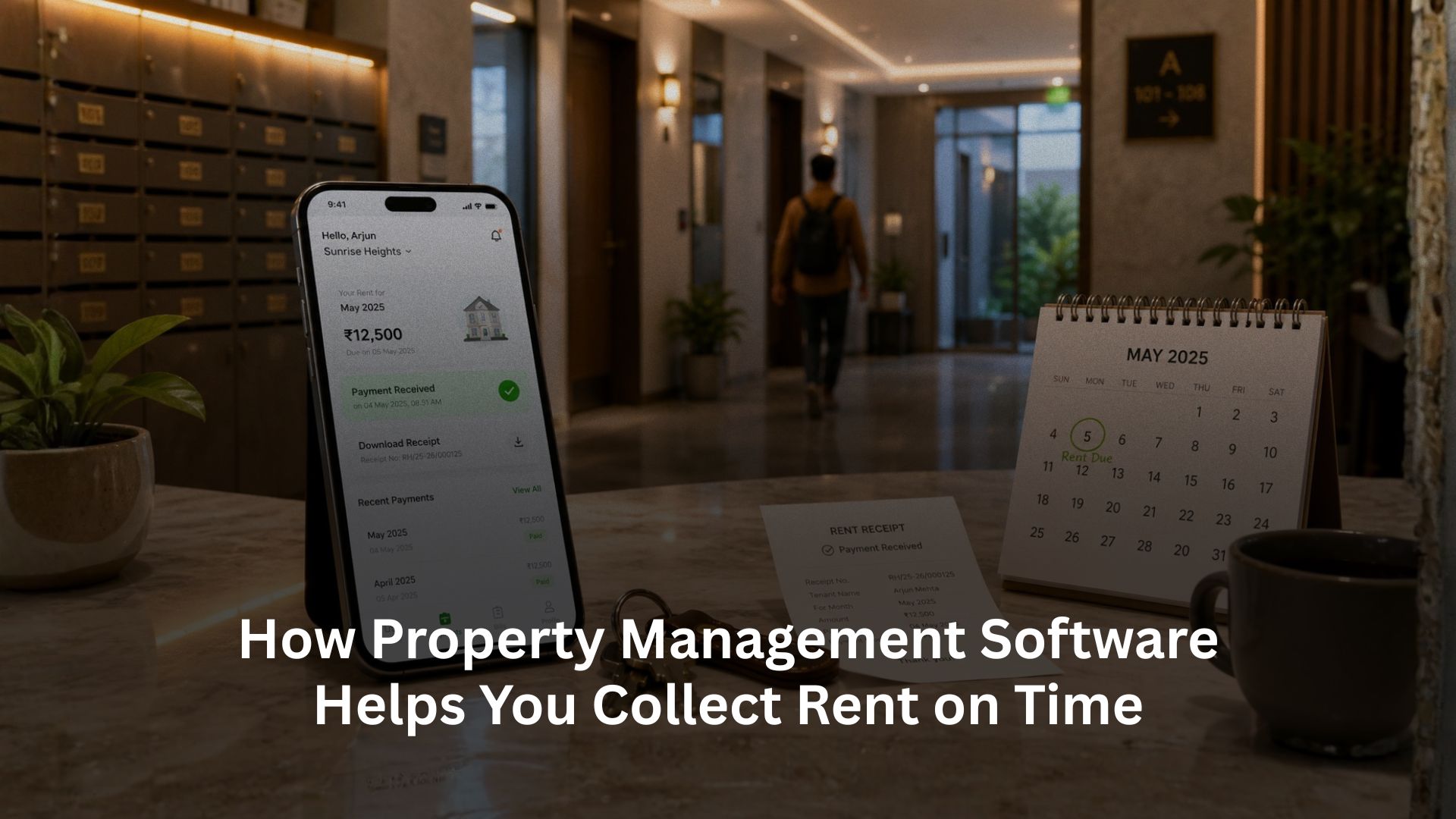
How Property Management Software Helps You Collect Rent on Time is a useful example of this principle. Rent collection is not simply about receiving money. It also involves reminders, payment visibility, ledgers, receipts, and follow-ups.

How RentOk Helps
RentOk is designed around the operational needs of PGs, hostels, co-living businesses, and rental operators. The platform brings multiple property workflows together instead of requiring owners to manage each process separately.
Operators can use RentOk for tenant management, rent and dues, payments, room and bed management, complaints, accounting, reporting, leads, and other day-to-day operations. The platform also provides tools for communication and automated reminders.
This matters when evaluating software cost because the comparison should be based on the complete workflow. If one system replaces several spreadsheets and disconnected tools, its value cannot be judged by the subscription alone.
RentOk also focuses on Indian rental workflows. That includes bed-level occupancy, recurring rent cycles, digital payments, tenant documentation, and the operational requirements that come with PG and co-living businesses.
For a growing operator, the objective is simple: spend less time coordinating routine tasks and more time managing the business.
Final Thoughts
Property management software does not have one standard price in India.
The cost depends on the pricing model, property size, number of tenants, features, automation, staff access, and additional services. More importantly, it depends on what the software replaces.
A good platform should make operations easier as your property grows. It should reduce repetitive work, improve visibility, and keep important information in one place.
So, when comparing property management software cost in India, do not ask only which platform is cheapest.
Ask which platform gives your business the right combination of features, automation, scalability, and operational value for the price you pay.
If you are evaluating property management software for your PG, hostel, co-living space, or rental portfolio, you can see RentOk Pricing and explore the plans available for your business. You can also explore more RentOk property management guides or watch RentOk’s official videos to understand how different workflows can be managed through the platform.
Frequently Asked Questions
Find answers to common questions about this topic
About the Author
Ishika Pannu
Ishika Pannu brings you the latest insights and easy-to-apply strategies in property management—helping you simplify renting and grow with RentOk.
You may also like these
Related Articles
1 min read
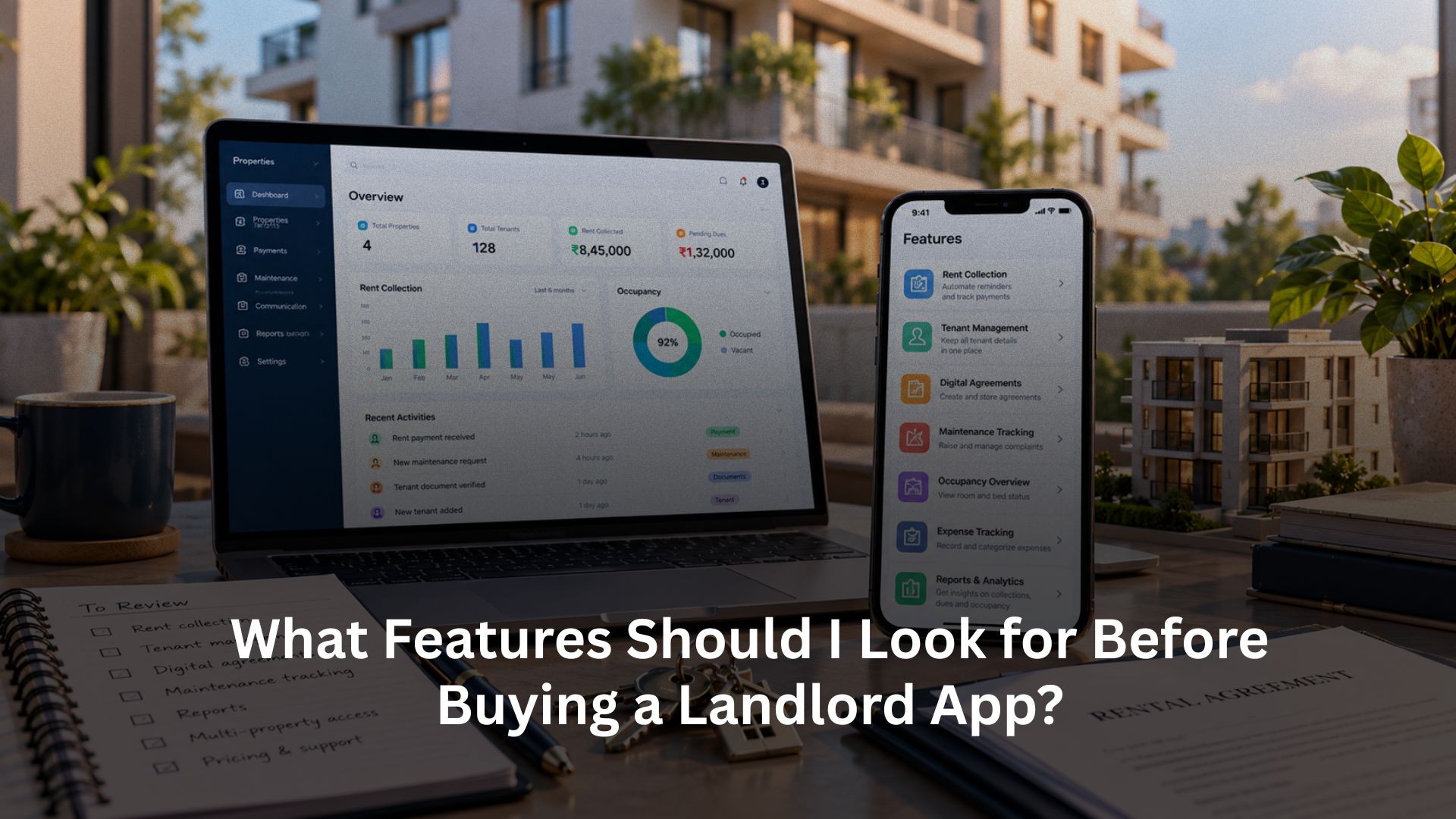
What Features Should I Look for Before Buying a Landlord App?
Written by
Posted on
Ishika Pannu
Oct 2, 2026
1 min read
RentOk vs Crib vs My PG Manager: Which PG Software Actually Fits My Business?
Written by
Posted on
Ishika Pannu
Sep 30, 2026
1 min read
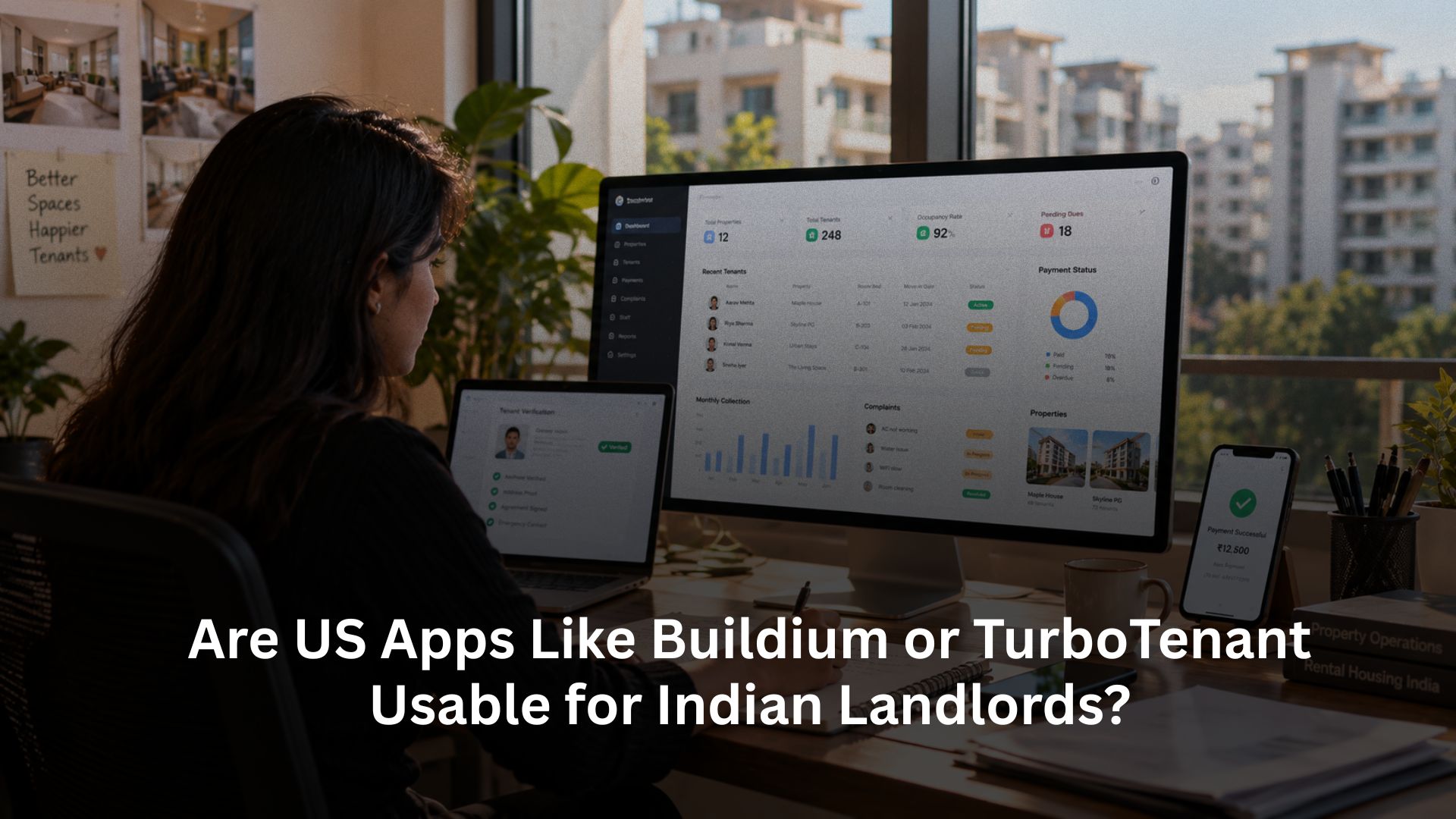
Are US Apps Like Buildium or TurboTenant Usable for Indian Landlords?
Written by
Posted on
Ishika Pannu
Sep 29, 2026
1 min read
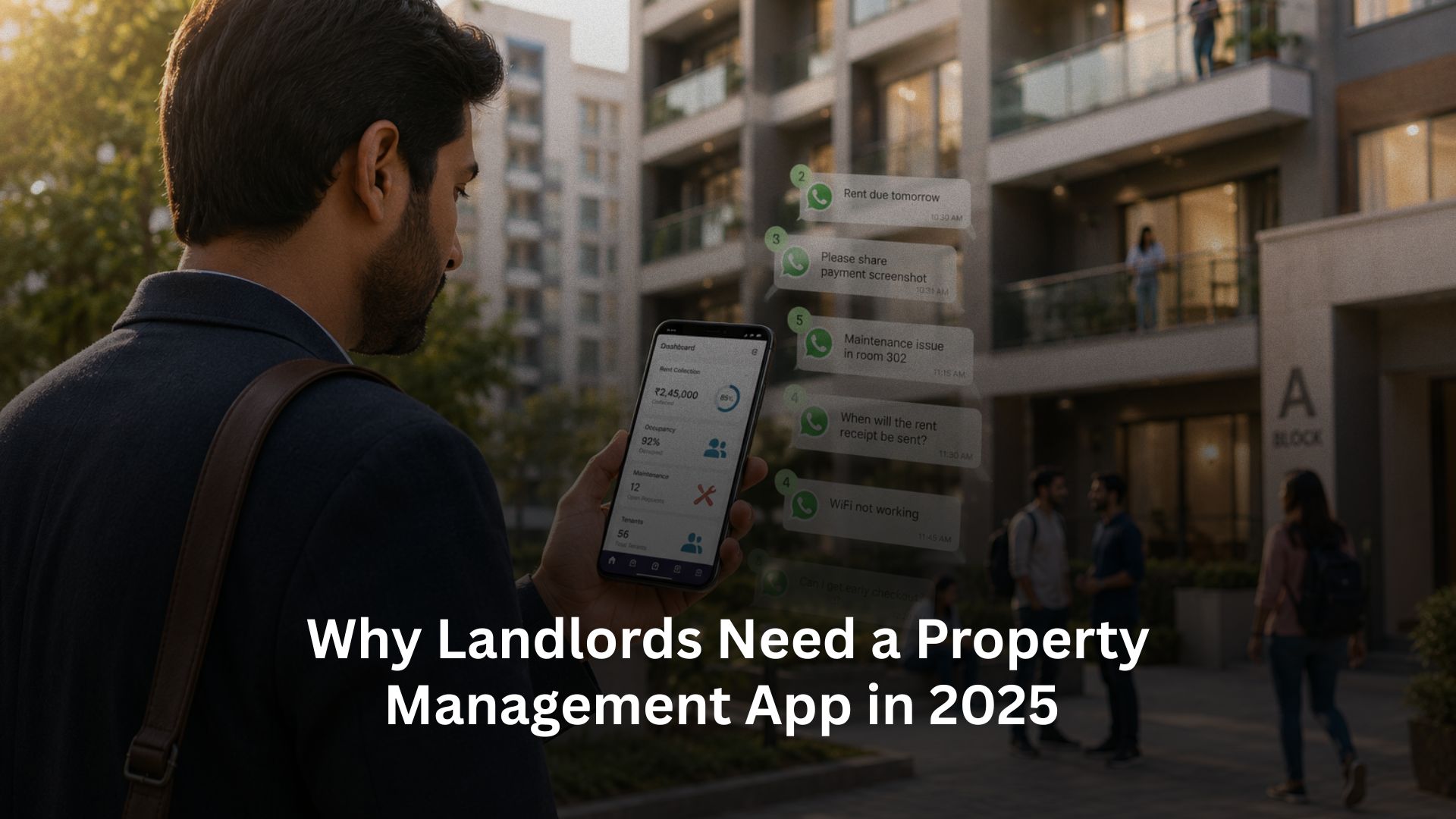
Why Landlords Need a Property Management App in 2025
Written by
Posted on
Ishika Pannu
Sep 2, 2026
1 min read
How Property Management Software Helps You Collect Rent on Time
Written by
Posted on
Ishika Pannu
Aug 26, 2026
1 min read
Why Small Landlords Need Property Management Software
Written by
Posted on
Ishika Pannu
Aug 26, 2026
1 min read
How High-Growth PGs Maintain Occupancy Year-Round
Written by
Posted on
Ishika Pannu
Aug 17, 2026
1 min read
How to Mark PG Attendance Without Biometric Devices
Written by
Posted on
Ishika Pannu
Jun 16, 2026
1 min read
Tracking Staff Performance: From Cleaning to Security
Written by
Posted on
Ishika Pannu
May 13, 2026
1 min read
Automating Complaint Management: Boosting Tenant Satisfaction
Written by
Posted on
Ishika Pannu
May 11, 2026
Stay ahead in property management with expert insights
Join thousands of property managers receiving exclusive tips delivered straight to your inbox.
Browse posts by category
Case Study
Cost of Living
Growth
Legal
Market Trends
News
Pg owner app
Property Management
Property Tax
Tech
RentOk
The easiest way to rent and manage your PGs and hostels.
Grievance Officer
Get the app


Contact us
hello@eazyapp.tech
HQ Office
COGROW, BASEMENT F-12/8A
BESIDE HOUSE OF STYLE SALON, SECTOR 28, DLF PHASE 1
GURUGRAM, HARYANA - 122002
South India Office
LUMIODESK COWORKING, 2ND FLOOR, 40, 14TH MAIN RD
BESIDE MC DONALD, 7TH SECTOR, HSR LAYOUT
BENGALURU, KARNATAKA - 560102
©️ 2026 EazyApp Tech Pvt Ltd. All rights reserved


