Pg owner app
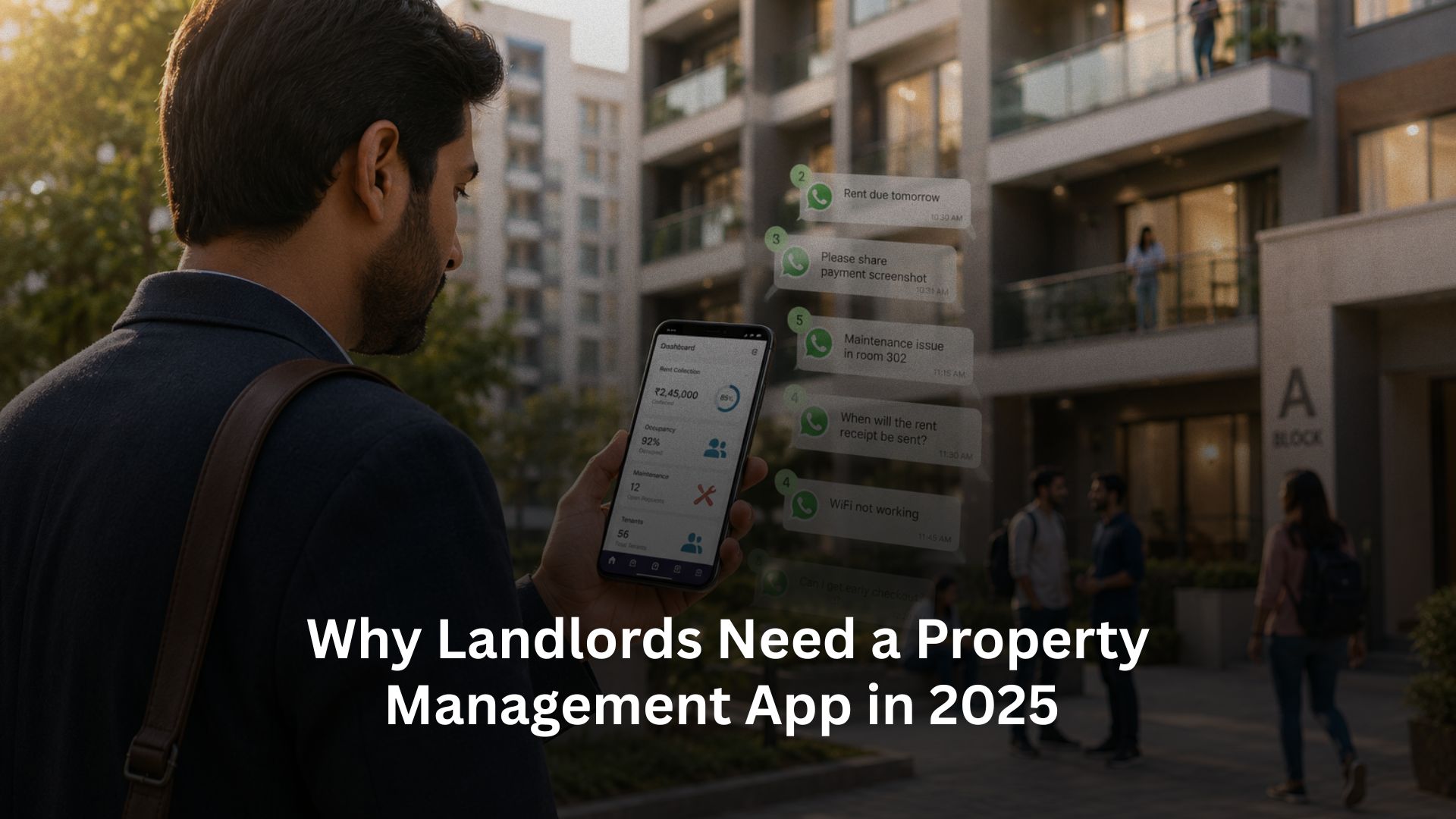
Why Landlords Need a Property Management App in 2025

Written by
Ishika Pannu
Read Time
15 min read
Posted on
September 2, 2026
Overview
Overview
Why Landlords Need a Property Management App in 2025
Managing a rental property may look straightforward when you are handling only a few tenants. But as the number of tenants, rooms, and properties grows, keeping track of rent, complaints, documents, and vacancies becomes increasingly difficult. This is where a Property Management App can give landlords a more structured way to manage everyday rental operations without relying entirely on notebooks, Excel sheets, or scattered WhatsApp conversations.
The difficulty begins when the property grows.
A landlord managing 20 tenants does not face the same operational complexity as someone managing 100 or 200 tenants across several properties. More tenants mean more payment schedules, more documentation, more maintenance requests, more conversations, and more opportunities for information to get missed. What initially feels like a convenient manual system can gradually become a source of operational confusion.
This is where property management software becomes more than a convenience. A good property management app gives landlords a structured way to manage the property instead of expecting WhatsApp conversations, payment screenshots, spreadsheets, and memory to work as a complete management system.
RentOk’s recent guide on why landlords need property management software explores the same shift: manual systems may work at a smaller scale, but they become increasingly difficult to maintain as the rental business grows.
The Problem With Managing Everything Through WhatsApp
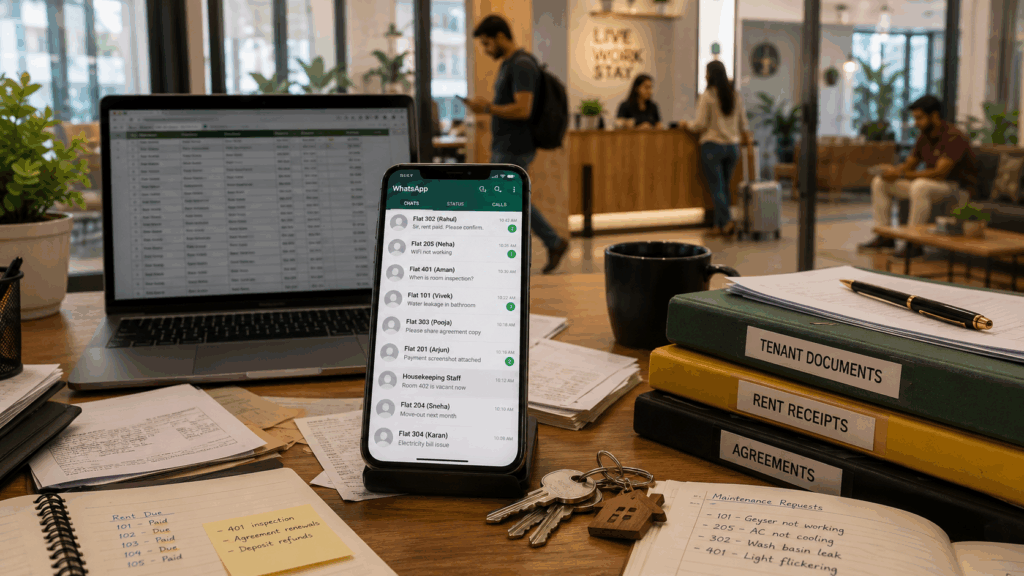
There is a reason WhatsApp is so popular with landlords. It is familiar, fast, and already part of everyday communication. Landlords can send rent reminders, receive payment screenshots, discuss maintenance issues, share documents, and update tenants within seconds.
The problem is not WhatsApp itself.
The problem begins when communication becomes the management system.
A WhatsApp message can report a leaking tap. It cannot show all open complaints across your properties. It also cannot show who is handling each issue or how long it has remained unresolved.
The same applies to rent collection. A tenant may send a payment screenshot. That screenshot is not a structured rent ledger. Someone still needs to verify the payment, match it to the right tenant and month, and update the records.
As the number of tenants grows, several problems can appear:
- Scattered payment information: Payment confirmations, dues, and receipts remain across different chats. This makes it harder to get a clear financial picture.
- Buried maintenance requests: Older complaints can quickly disappear under newer messages. This becomes harder when tenants and staff use separate chats.
- Limited occupancy visibility: WhatsApp does not provide a property-wide view of occupied, vacant, or soon-to-be-vacant rooms and beds.
- Repeated follow-ups: Landlords may spend hours answering questions about rent, receipts, complaints, agreements, and move-outs.
This highlights an important difference between communication and management. Information may exist somewhere in WhatsApp. But that does not mean landlords have clear operational visibility.
RentOk’s article on managing multiple rental properties without spreadsheets makes a similar point. Having information available is different from having it organised and actionable.
What Does a Landlord App Actually Do?
A landlord app is not simply a digital replacement for a WhatsApp group or a rent reminder tool. At its most useful, it acts as a central operating system for the property.
Instead of treating rent, tenants, complaints, documents, vacancies, and communication as separate activities, a property management app connects them into one workflow. This means the landlord can access the information required to make decisions without searching through multiple conversations or files first.
For example, consider a tenant who is approaching the end of their stay. In a manual system, the landlord may need to check the agreement, search for the original conversation, verify the notice period, calculate outstanding dues, and separately coordinate the room’s availability.
A structured landlord app can bring these operational details together.
That changes the landlord’s role from constantly chasing information to acting on information that is already organised.
A modern property management app can help with:
- Tenant management: Maintain tenant profiles, important records, occupancy details, and relevant documentation in a centralised system rather than separate files and conversations.
- Rent collection and tracking: Generate dues, send reminders, record payments, and maintain payment visibility so landlords can quickly identify what has been collected and what remains outstanding.
- Complaint and maintenance coordination: Record complaints, track their progress, and coordinate resolution without depending on a message thread to remember what still needs attention.
- Occupancy management: Understand room or bed availability more clearly, making it easier to identify vacancies and plan upcoming move-ins and move-outs.
- Documentation and onboarding: Organise tenant KYC, agreements, and onboarding information digitally, reducing the dependency on physical paperwork and scattered documents.
This is also why the concept of a property management app goes beyond rent collection. A proper system connects tenant management, payments, accounting, complaints, agreements, KYC, announcements, and other operational requirements in one place.
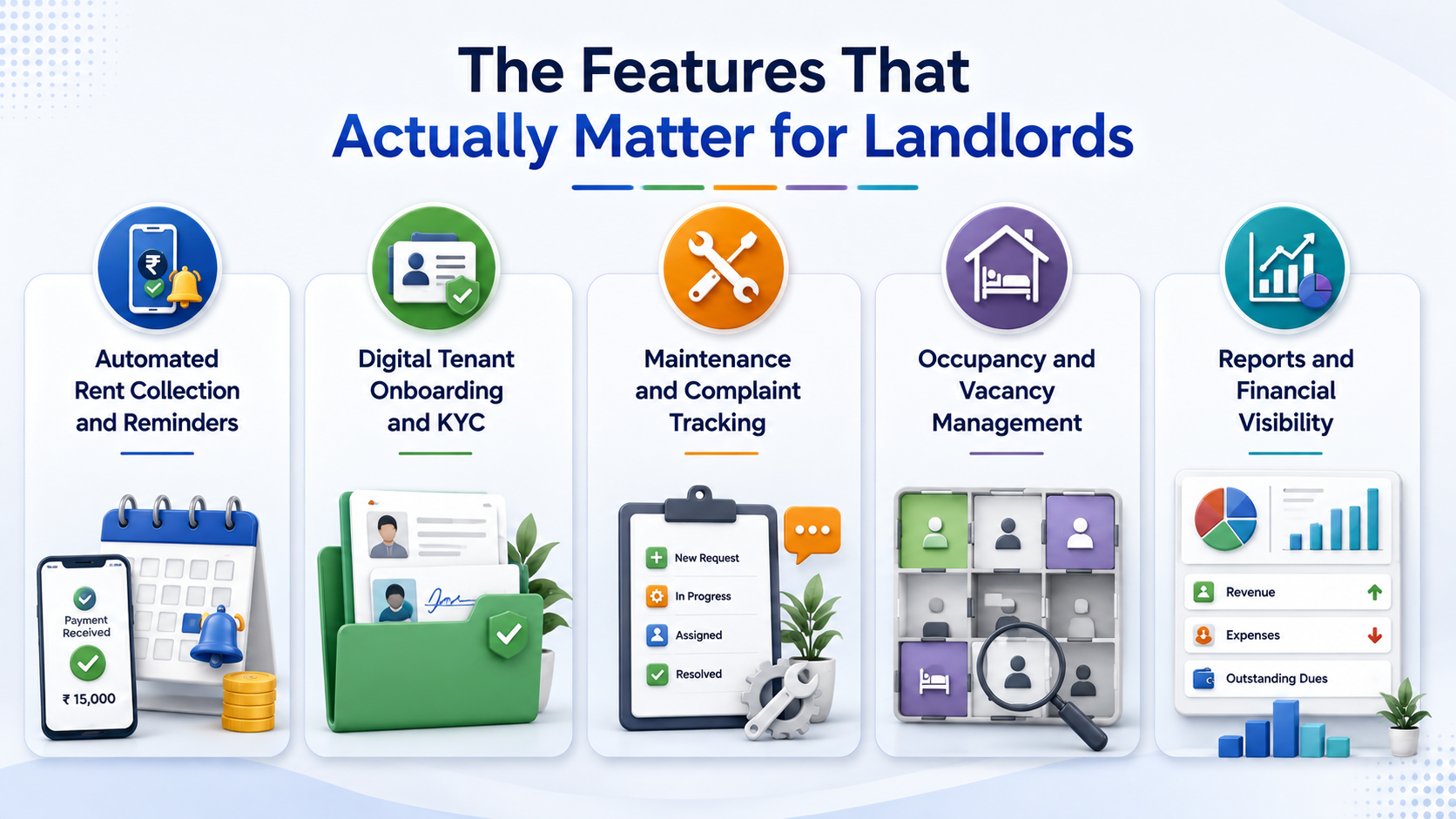
The Features That Actually Matter for Landlords
Not every landlord needs the same software, and choosing an app simply because it has a long feature list can be a mistake. The better question is whether the software addresses the operational problems that consume the most time and create the most risk.
For most landlords managing PGs, hostels, co-living spaces, or rental properties, certain capabilities are particularly valuable.
Automated Rent Collection and Reminders
Rent collection is one of the most repetitive responsibilities in property management. When handled manually, landlords may need to remember due dates, send individual reminders, check bank accounts, follow up with defaulters, and issue receipts.
Automation changes this process by reducing the amount of manual intervention required every month.
A useful system should allow landlords to:
- Automate payment reminders: Tenants can receive timely reminders without the landlord having to message every person individually before each due date.
- Enable digital payments: Online payment options make it easier for tenants to complete transactions while giving landlords better visibility over payment activity.
- Maintain payment records: Instead of relying on screenshots and conversations, payments can be associated with tenant records and rental periods for easier tracking.
- Provide receipts: Digital receipts give tenants confirmation while reducing repeated requests for proof of payment.
RentOk’s guide on automating rent reminders on WhatsApp also highlights why manual reminders become increasingly difficult as the number of tenants grows.
Digital Tenant Onboarding and KYC
Tenant onboarding is another area where manual processes can create unnecessary friction. Documents may be shared through WhatsApp, stored in phone galleries, printed, scanned, and eventually scattered across multiple folders, making them difficult to track and manage.
A landlord app can bring these steps into a single, organised workflow. Digital KYC, centralised tenant records, agreement management, and e-signing can simplify the onboarding process while giving landlords a clear and accessible record of who is occupying the property.
For a practical look at how this works, read How to Onboard a New Tenant in Under 10 Minutes. The guide shows how digital onboarding can reduce paperwork, minimise unnecessary back-and-forth, and make the tenant onboarding process faster and more structured.
For landlords, the benefit is not simply going paperless. It is about creating a consistent, standardised onboarding process that can be followed across properties and teams, regardless of which employee or property manager is handling the tenant.
Maintenance and Complaint Tracking
A tenant saying “The geyser isn’t working” on WhatsApp is only the beginning of a maintenance process.
The landlord still needs to know whether the complaint was acknowledged, who is responsible for fixing it, whether a technician has visited, whether the issue is resolved, and whether the tenant has been updated.
A property management app can turn an informal complaint into a trackable operational task.
This becomes especially important when landlords manage multiple properties. Instead of asking several staff members for updates, the owner can use a central system to understand what is pending and where attention is required.
Occupancy and Vacancy Management
Vacancy is not simply an empty room. It represents lost earning potential and often triggers another cycle of marketing, enquiries, visits, cleaning, repairs, and onboarding.
For this reason, landlords need more than a basic list of tenants. They need visibility into current occupancy and upcoming changes.
A good system should help identify:
- Which rooms or beds are currently occupied and which are vacant.
- Which tenants are approaching move-out or are under notice.
- Where upcoming vacancies may appear so that marketing and allocation can begin earlier.
- How occupancy is performing across different properties instead of looking at each building in isolation.
Reports and Financial Visibility
As a rental business grows, landlords need to look beyond simply knowing whether rent was received each month. They need a clear view of where revenue is coming from, what remains outstanding, where expenses are increasing, and how occupancy is affecting overall performance.
This financial visibility is also important when assessing whether a property is genuinely performing well. Occupancy, for example, is only one part of the picture. Why Occupancy Alone Doesn’t Explain Rental Success offers a useful perspective on why landlords should consider occupancy alongside revenue and other financial indicators.
This is where reports become valuable. Instead of manually piecing together information from bank statements, Excel sheets, and tenant conversations, a property management system can bring financial and operational data into one structured view.
A platform such as RentOk, for example, includes capabilities such as tenant ledgers, outstanding dues, expense tracking, vacancy reports, and accounting reports, helping landlords gain a clearer understanding of property-level and overall rental performance.
Ultimately, reporting is not just about maintaining records. It gives landlords the visibility needed to identify issues, monitor performance, and make more informed decisions as their rental portfolio grows.
Why WhatsApp Still Has a Place in Property Management
Moving to a landlord app does not mean abandoning WhatsApp.
In fact, WhatsApp can remain an extremely effective communication channel for rental businesses. The important distinction is that it should support the management system rather than replace it.
WhatsApp is particularly useful when landlords need quick, familiar communication with tenants. Payment links, reminders, announcements, onboarding instructions, and updates can all be communicated through a platform tenants already use.
The problem arises when the landlord expects WhatsApp to perform functions it was never designed to handle.
A message thread is not a rent ledger. A group chat is not a maintenance dashboard. A payment screenshot is not accounting software. And a collection of individual conversations is not a portfolio-level reporting system.
RentOk’s article on the best communication channels for property management explains why WhatsApp, SMS, and push notifications can each serve different operational purposes rather than being treated as interchangeable systems.
The most effective setup is therefore not “WhatsApp or an app.”
It is an organised property management system supported by the right communication channels.
RentOk vs. Manual Property Management
The difference between manual management and software-based management becomes most visible when something changes.
A tenant moves out unexpectedly. A payment is delayed. Three maintenance complaints arrive on the same day. A new tenant needs to complete KYC. Two rooms become vacant in different properties. The landlord suddenly needs a report of outstanding dues.
With a manual system, every one of these situations creates another round of searching, checking, calling, updating, and coordinating.
With a structured system, the information is already connected.
| Manual Management | Property Management App |
|---|---|
| Tenant details are often spread across files and conversations. | Tenant information can be maintained in a centralised digital record. |
| Rent follow-ups depend heavily on reminders and manual tracking. | Rent dues, reminders, payments, and receipts can be managed through structured workflows. |
| Maintenance complaints can get buried in WhatsApp conversations. | Complaints can be recorded and tracked through their resolution process. |
| Vacancy information may require checking several records. | Occupancy and vacancy information can be viewed more systematically. |
| Reports often require manual compilation from multiple sources. | Financial and operational information can be organised into accessible reports. |
The objective is not to make technology sound impressive. It is to remove unnecessary operational friction.
That distinction matters because all-in-one property management software only creates value when it actually reduces the number of disconnected tools and processes landlords have to manage.
What Results Can Landlords Actually Expect?
The biggest benefit of property management software is rarely one particular feature. It is the cumulative effect of having fewer tasks depend on memory, manual follow-ups, and scattered information.
When the right systems are in place, landlords can expect improvements across several areas of the business.
Better payment discipline comes from timely reminders, easier payment processes, and clearer visibility into outstanding dues. Instead of discovering a payment issue only after manually checking several conversations, the landlord can identify it through the system and act earlier.
Faster operational response becomes possible because complaints and tasks have clearer ownership. A maintenance issue does not need to remain inside a chat waiting for someone to remember it.
Greater visibility gives landlords the ability to understand what is happening across their properties without physically being present everywhere. This becomes particularly valuable for owners managing properties from another city or overseeing a growing portfolio.
Lower administrative workload is another major advantage. Automation can handle repetitive activities such as reminders, receipts, documentation workflows, and routine communication, allowing property teams to spend more time on tasks that actually require human attention.
And perhaps most importantly, software creates repeatable processes.
A rental business should not become more chaotic every time another property is added. The management system should be capable of supporting that growth.
When Should a Landlord Make the Switch?
There is no fixed tenant count at which every landlord suddenly needs software. The more useful indicator is operational complexity.
If you are managing a handful of tenants and everything is genuinely under control, a manual system may still be sufficient. But if you regularly find yourself searching through WhatsApp for payment confirmations, maintaining multiple Excel sheets, following up repeatedly for rent, or calling staff to understand what is happening at the property, the system is already showing its limitations.
Some common signs include:
- You spend a significant amount of time every month sending individual rent reminders and checking who has paid.
- You have started maintaining multiple spreadsheets because one file no longer contains everything you need.
- Tenants repeatedly ask for receipts, payment status, agreement copies, or updates that should already be accessible.
- You cannot quickly tell which rooms are vacant, which tenants are under notice, or where the next vacancy is likely to occur.
- You manage more than one property and have difficulty comparing occupancy, collections, expenses, or operational issues across them.
At that point, the question is no longer whether an app is convenient.
It becomes whether continuing without one is costing you more in time, missed information, delayed collections, and operational inefficiency.

How RentOk Helps Landlords Manage Properties More Efficiently
RentOk brings the core requirements of rental operations into one connected property management platform, helping landlords reduce their dependence on scattered WhatsApp conversations, spreadsheets, paperwork, and manual follow-ups.
Through RentOk, landlords can manage areas such as tenant records, rent collection, automated reminders, digital KYC, rental agreements, complaints, occupancy, utilities, reporting, and day-to-day property operations from a more structured system. RentOk’s current property-management material also highlights features such as automated WhatsApp rent reminders, digital agreements, accounting reports, vacancy visibility, tenant e-KYC, attendance, and onboarding workflows.
The larger advantage is the connection between these functions. Rent collection does not have to exist separately from tenant records. A vacancy does not have to be tracked independently from occupancy. A complaint does not have to disappear into a WhatsApp conversation. By bringing these operational activities together, RentOk helps landlords build a management process that is easier to monitor and more capable of scaling as the rental portfolio grows.
Conclusion
Property management has changed significantly as rental businesses have become more structured and tenants have come to expect faster communication, digital payments, transparent processes, and responsive service. WhatsApp remains useful, but it was never designed to function as the complete operating system for a growing rental business.
A property management app gives landlords something WhatsApp alone cannot: structured visibility across tenants, payments, documents, occupancy, complaints, and property performance.
If your rental business has reached the point where managing information takes almost as much time as managing the property itself, it may be time to move beyond manual systems.
Download the RentOk App Today and take a more organised approach to managing your rental property.
Frequently Asked Questions
Find answers to common questions about this topic
About the Author
Ishika Pannu
Ishika Pannu brings you the latest insights and easy-to-apply strategies in property management—helping you simplify renting and grow with RentOk.
You may also like these
Related Articles
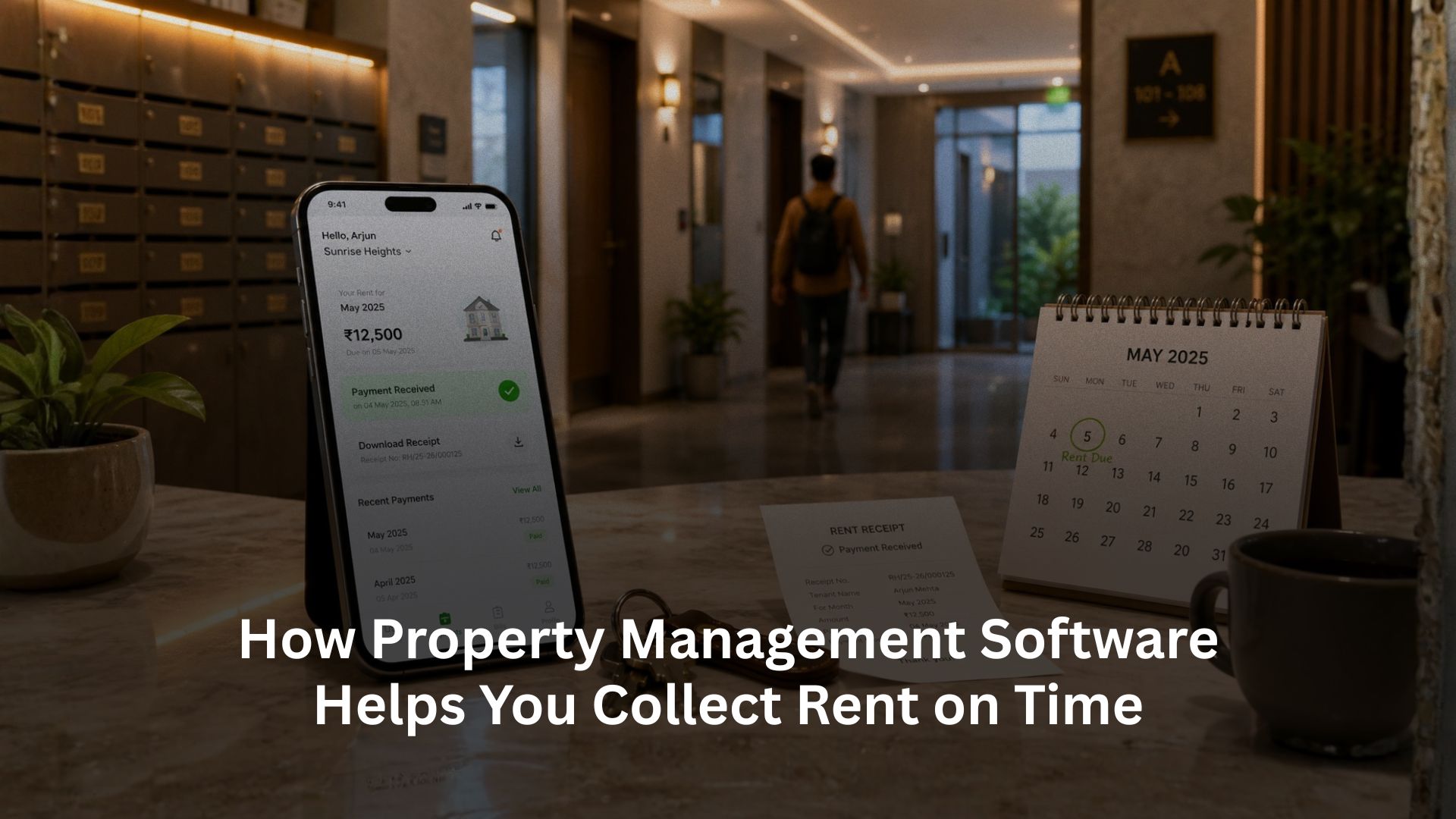
1 min read
How Property Management Software Helps You Collect Rent on Time
Written by
Posted on
Ishika Pannu
Aug 26, 2026
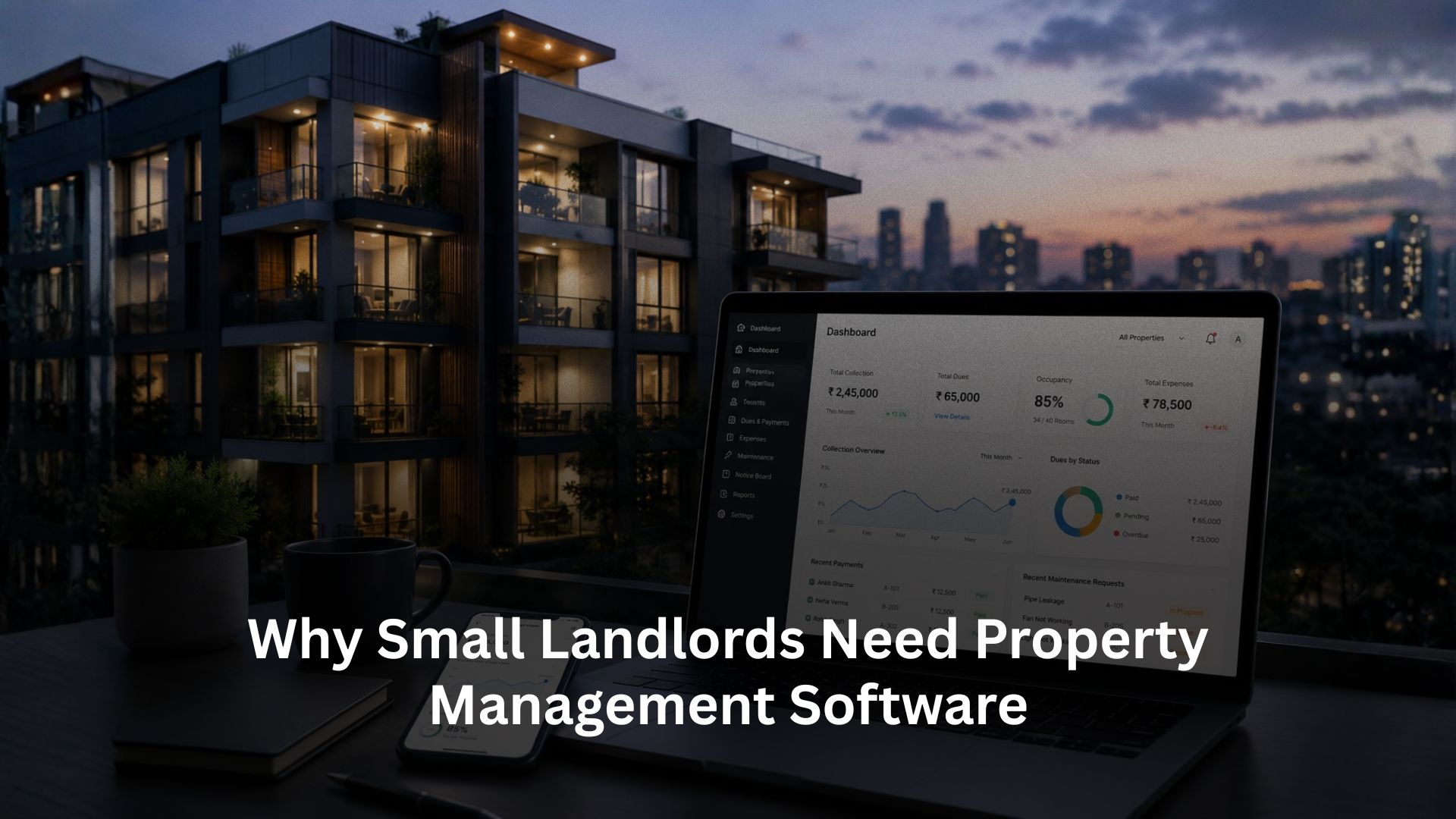
1 min read
Why Small Landlords Need Property Management Software
Written by
Posted on
Ishika Pannu
Aug 26, 2026
1 min read
How High-Growth PGs Maintain Occupancy Year-Round
Written by
Posted on
Ishika Pannu
Aug 17, 2026
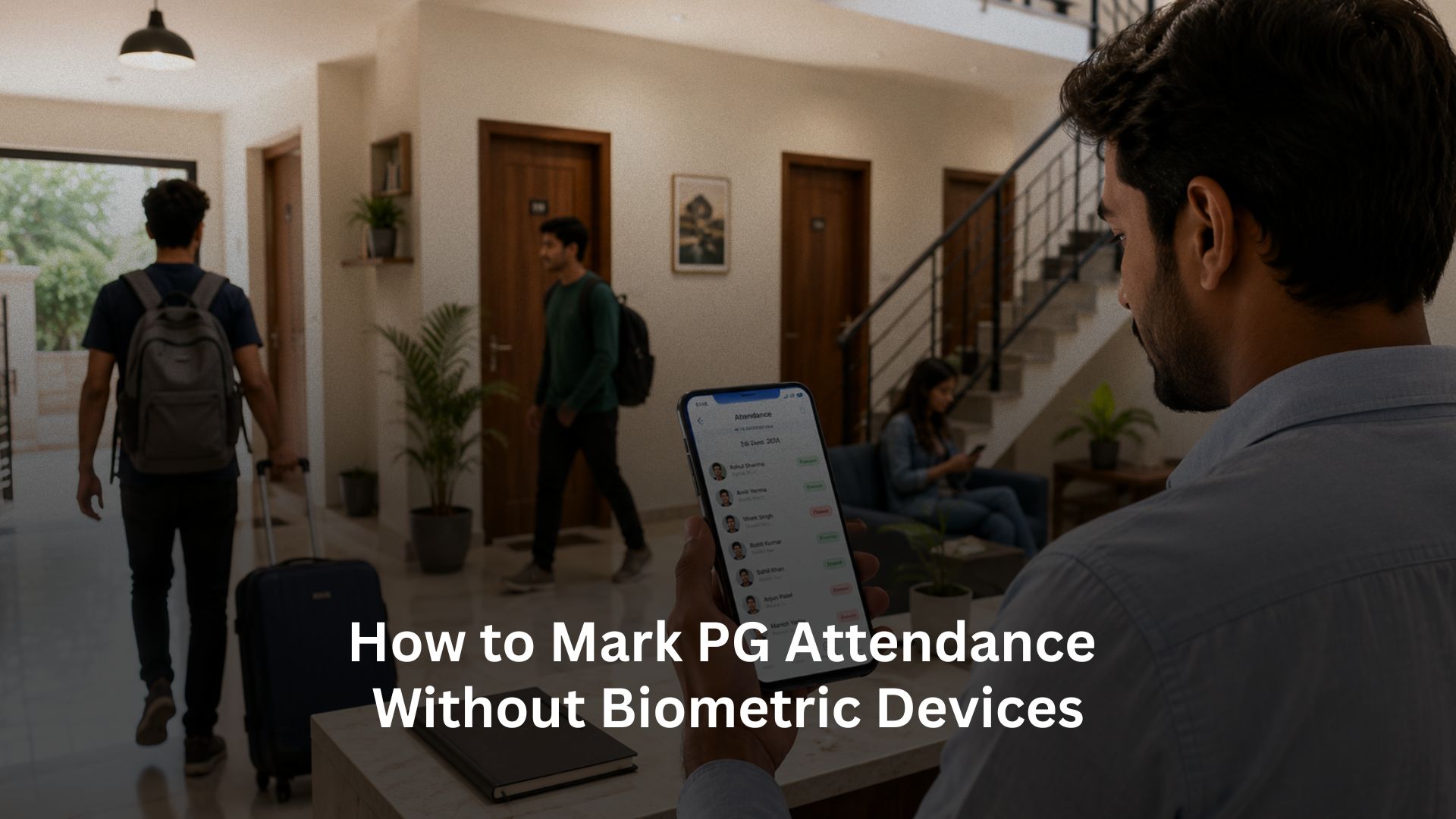
1 min read
How to Mark PG Attendance Without Biometric Devices
Written by
Posted on
Ishika Pannu
Jun 16, 2026
1 min read
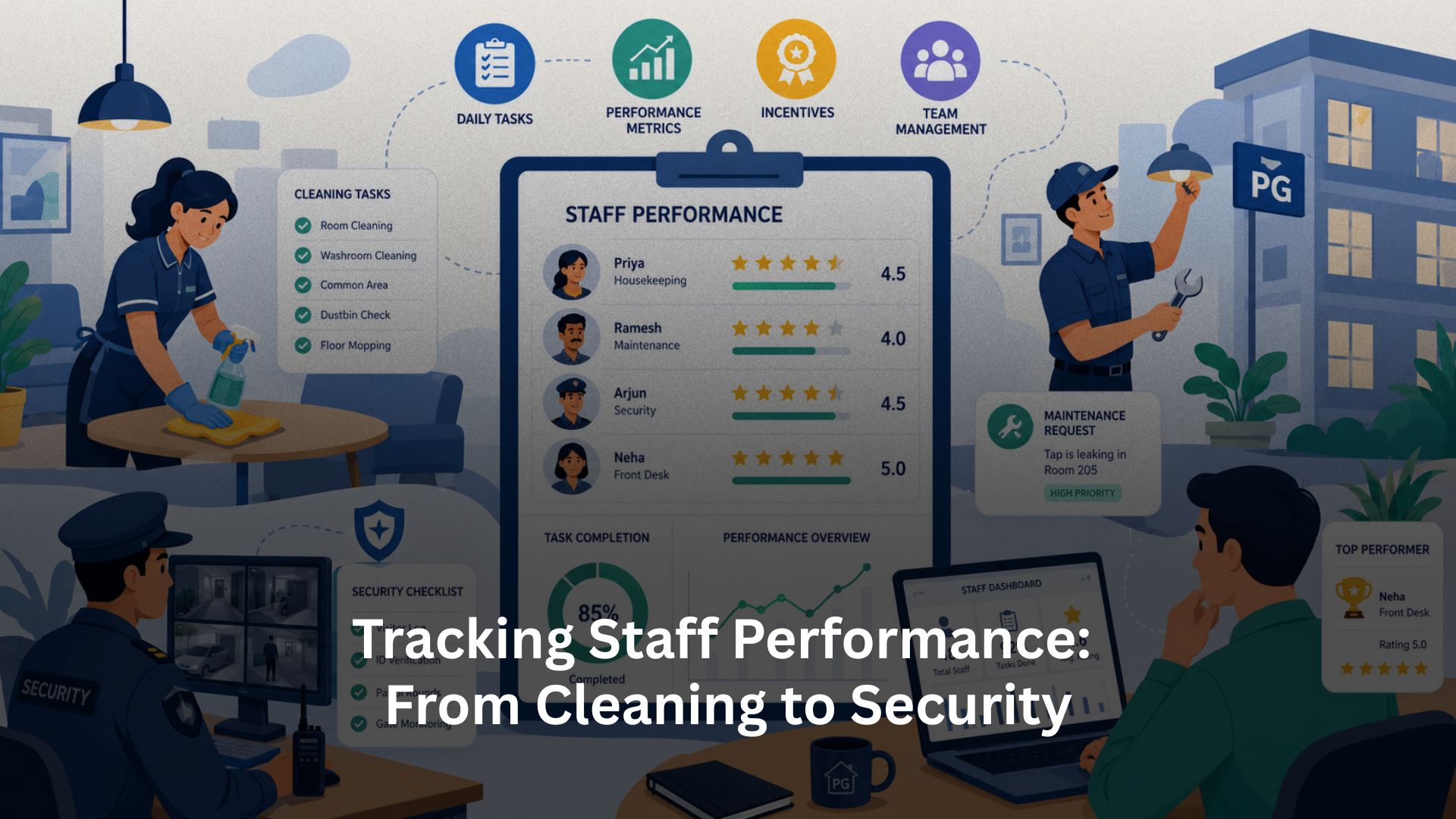
Tracking Staff Performance: From Cleaning to Security
Written by
Posted on
Ishika Pannu
May 13, 2026
1 min read
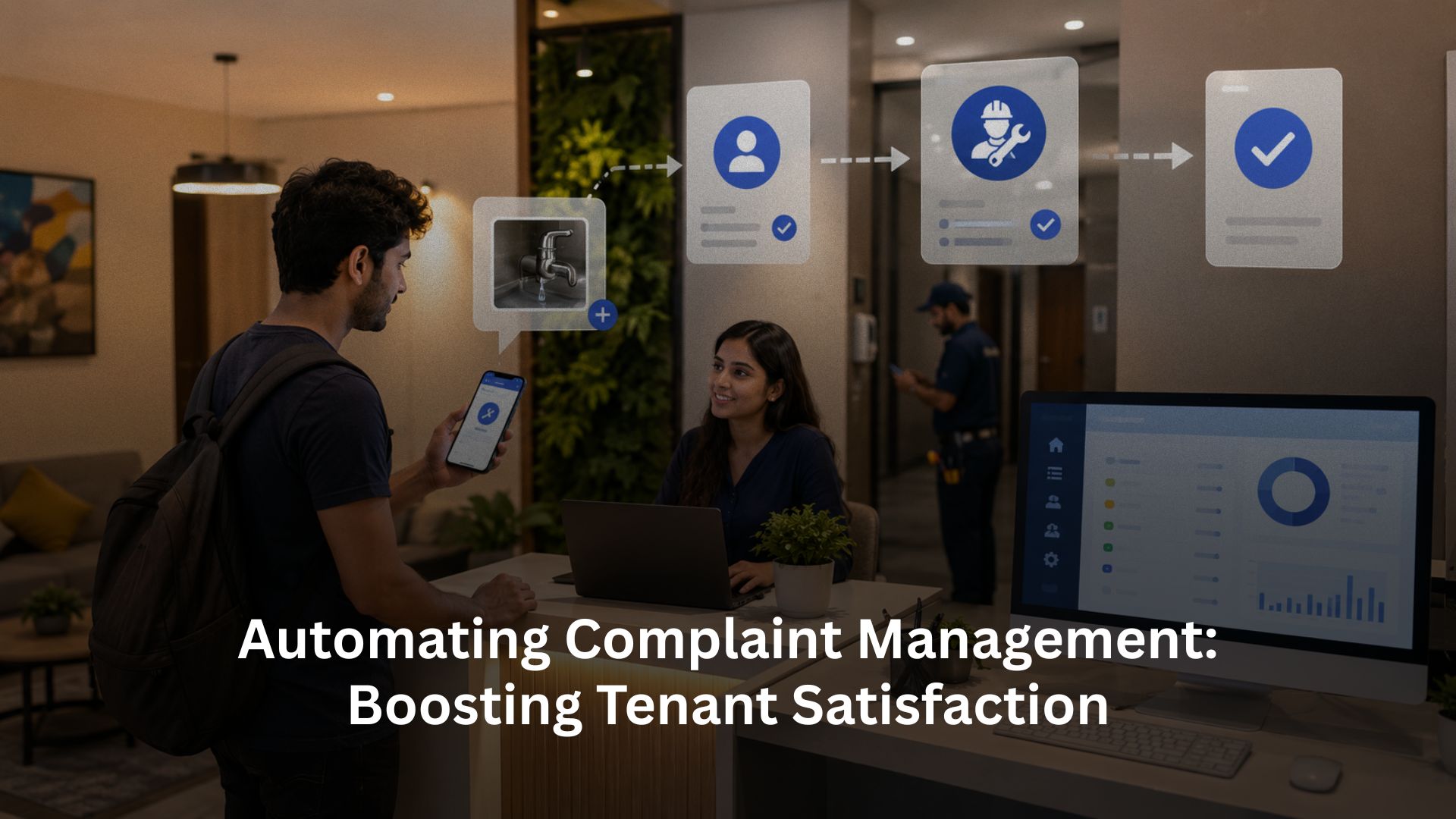
Automating Complaint Management: Boosting Tenant Satisfaction
Written by
Posted on
Ishika Pannu
May 11, 2026
1 min read
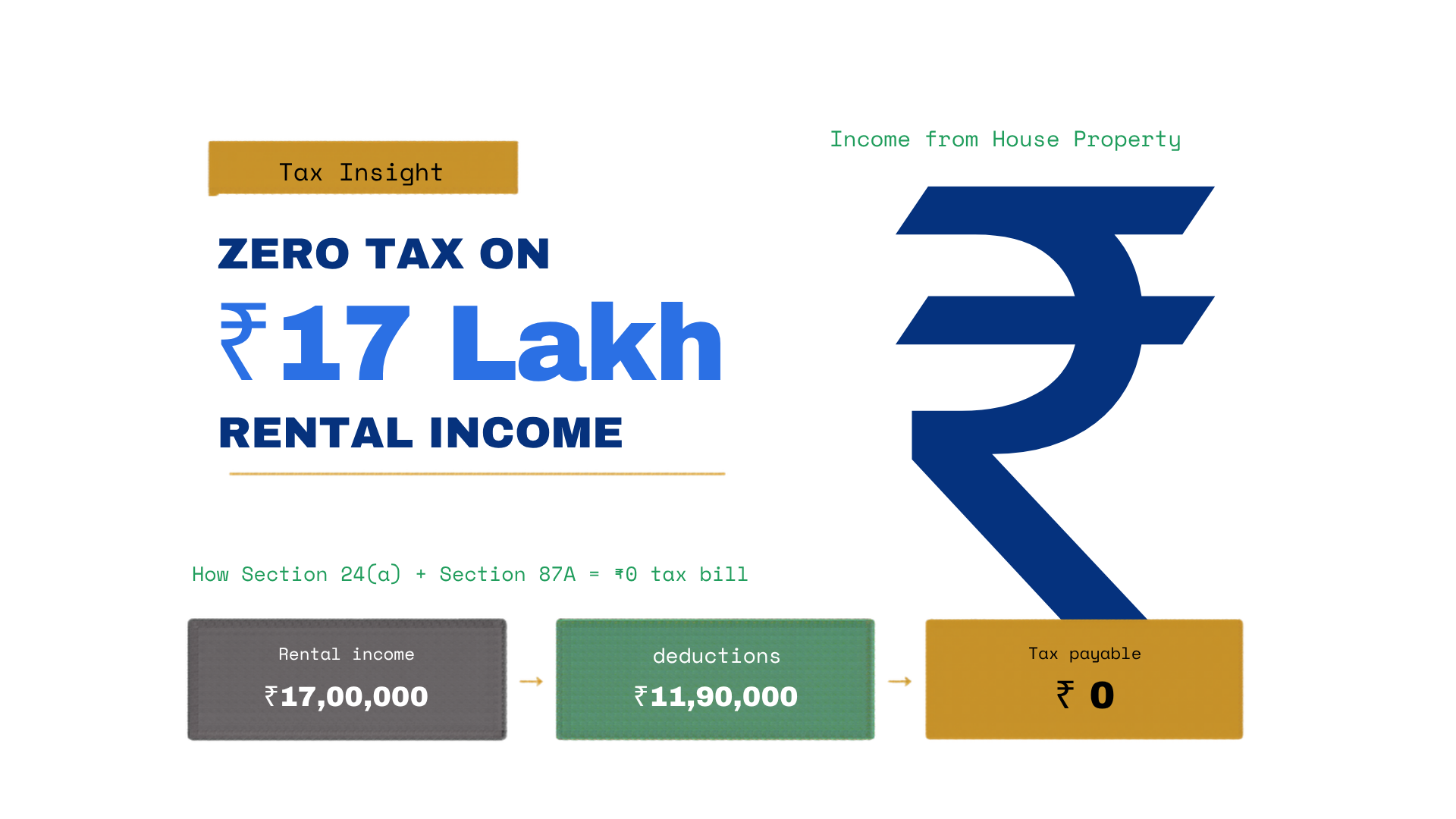
Zero Tax on ₹17 Lakh Rental Income? Here’s How It Works
Written by
Posted on
Shivanshi Dheer
Apr 29, 2026

1 min read
5 Ways PG Owners Lose Money Every Month (And How to Fix It)
Written by
Posted on
Shivanshi Dheer
Jan 13, 2026
1 min read
Best Property Management Software in 2026
Written by
Posted on
Shivanshi Dheer
Jan 5, 2026
1 min read
How to Share Rent Receipts with Your Employer – RentOk
Written by
Posted on
Shivanshi Dheer
Sep 6, 2025
Stay ahead in property management with expert insights
Join thousands of property managers receiving exclusive tips delivered straight to your inbox.
Browse posts by category
Case Study
Cost of Living
Growth
Legal
Market Trends
News
Pg owner app
Property Management
Property Tax
Tech
RentOk
The easiest way to rent and manage your PGs and hostels.
Get the app


Contact us
hello@eazyapp.tech
HQ Office
COGROW, BASEMENT F-12/8A
BESIDE HOUSE OF STYLE SALON, SECTOR 28, DLF PHASE 1
GURUGRAM, HARYANA - 122002
South India Office
LUMIODESK COWORKING, 2ND FLOOR, 40, 14TH MAIN RD
BESIDE MC DONALD, 7TH SECTOR, HSR LAYOUT
BENGALURU, KARNATAKA - 560102
©️ 2026 EazyApp Tech Pvt Ltd. All rights reserved


