
Tenancy Act
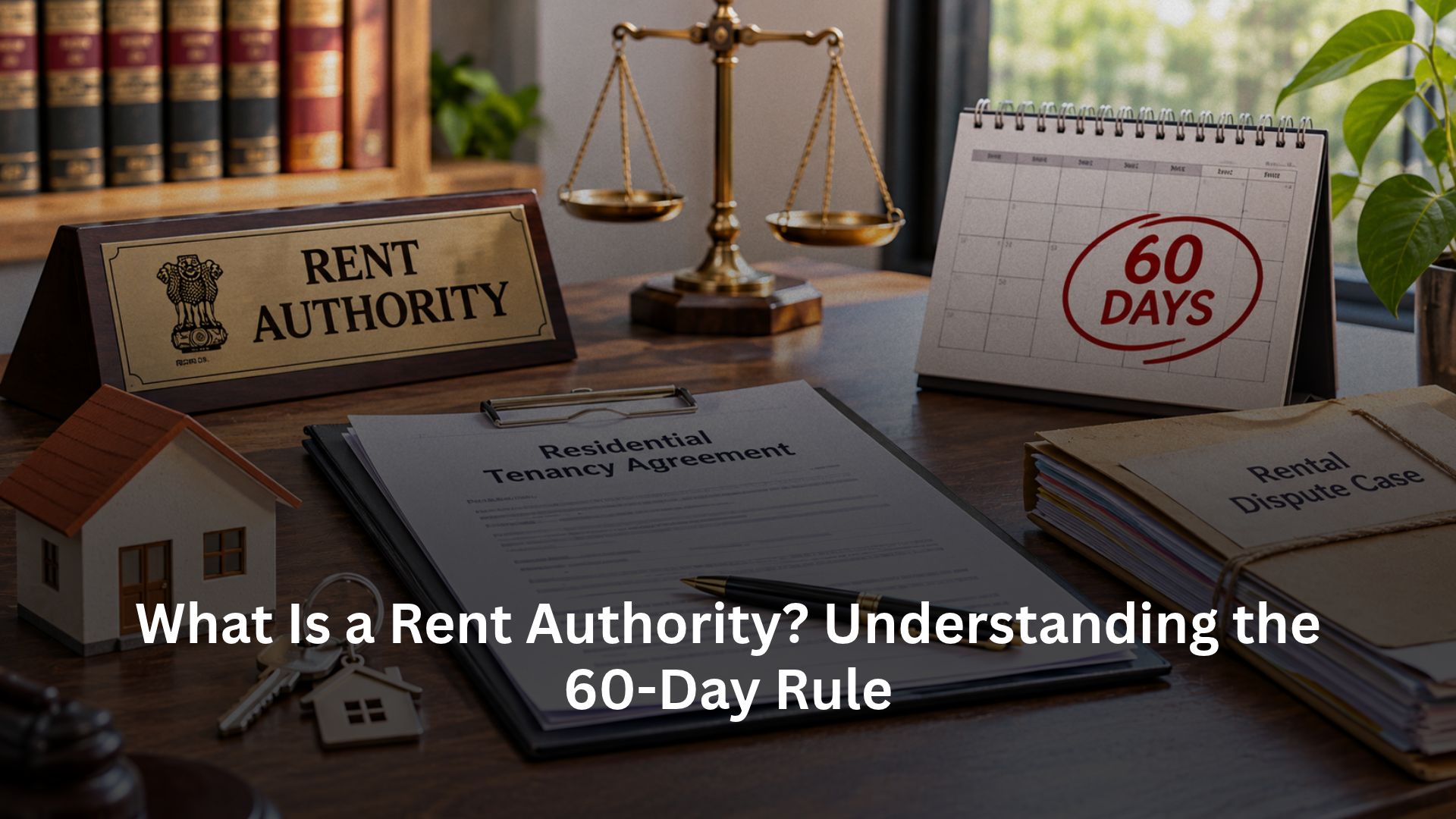
What Is a Rent Authority? Understanding the 60-Day Rule

Written by
Ishika Pannu
Read Time
11 min read
Posted on
November 15, 2026
Overview
Overview
What Is a Rent Authority? Understanding the 60-Day Rule
A tenant says the landlord has withheld a deposit. The landlord says rent remains unpaid. Both want an answer without spending years pursuing a case. The Rent Authority under the Model Tenancy Act, 2021, forms part of a proposed specialist system that aims to handle rental disagreements through clearer records, defined responsibilities and shorter procedures.
However, the 60-day timeline is not a nationwide guarantee. The MTA is a model for states and Union Territories to adopt through legislation; the applicable state law decides your remedy. This guide explains the three proposed forums, their deadlines, state examples and the records you should prepare before filing. The Union government’s explanation confirms both the model’s status and its qualified disposal target.
Why can an ordinary rental case take years?
A rental claim can involve much more than proving that someone missed a payment. Parties may dispute the agreement, the amount due, delivery of a notice, repairs or possession. Serving notices, hearing evidence, handling procedural applications and deciding appeals all take time. A successful claimant may also need separate enforcement proceedings.
There is no single duration for every civil case, and not every rental disagreement belongs in an ordinary civil court. Existing state laws may already assign cases to a Rent Controller or another specialist forum. The relevant question is which law covers your premises and claim.
The MTA’s approach combines dedicated forums with summary procedures and statutory timeframes. A summary procedure streamlines the hearing; it still gives the other party an opportunity to respond and contest evidence. Speed does not remove procedural fairness.
Before filing, compare both sides’ records and explore a written settlement where appropriate. If a tenant disputes ₹8,000 in alleged arrears, matching receipts against the claimed months may resolve the disagreement without litigation. RentOk’s overview of the Model Tenancy Act and landlord protections provides broader context for the framework.
Rent Authority, Rent Court and Rent Tribunal: different responsibilities
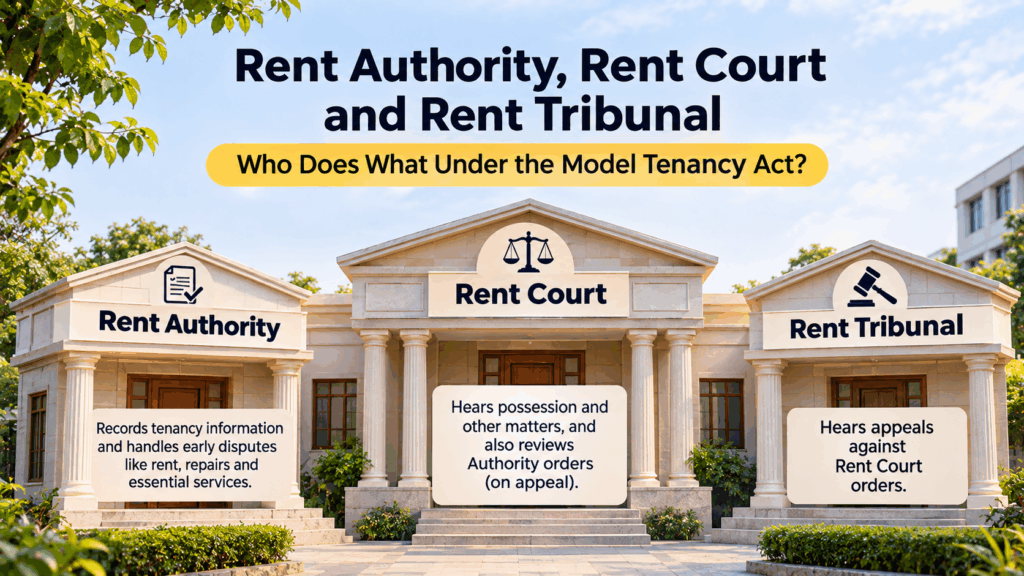
The model creates three specialist forums, but every case does not travel through all three. Original jurisdiction means the power to hear a case first; appellate jurisdiction means the power to review a lower forum’s order.
The Rent Authority’s administrative and dispute functions
Under the model, the District Collector or District Magistrate appoints an officer of at least Deputy Collector rank, with the government’s prior approval. The Authority receives tenancy information and handles specified matters involving rent, repairs, property managers and essential services.
The model requires the parties to submit information about a written tenancy agreement jointly within two months. This tenancy-record process differs from lease registration under the Registration Act, 1908; completing one does not necessarily fulfil the other. Tamil Nadu’s official explanation expressly distinguishes these processes in its state framework.
Which matters reach the Court and Tribunal?
The Rent Court handles possession and other matters within its jurisdiction, alongside appeals against the Authority’s orders. The model appoints an Additional Collector, Additional District Magistrate or equivalent officer to this role.
The Rent Tribunal hears appeals against Rent Court orders. Under the model, the government appoints a District Judge or Additional District Judge in consultation with the jurisdictional High Court. This differs from a universal three-member court structure.
Use these descriptions to understand the model, then check your state’s actual appointments and powers. PRS’s comparison of the three forums explains the allocation of responsibilities.
Does the Model Tenancy Act guarantee a decision in 60 days?
No. Section 35(2) says the Rent Court and Rent Tribunal should endeavour to dispose of applications or appeals within 60 days of receipt. If they exceed that period, they must record reasons. The model also sets specific deadlines for particular applications.
| Model provision | Timeline | What it means |
|---|---|---|
| General disposal provision | 60 days from receipt | A qualified disposal target, with written reasons for delay |
| Specified unauthorised subletting or misuse applications | 30 days from filing | Applies to the specified statutory grounds |
| Specified eviction and possession applications | 90 days from filing | Includes designated non-payment and other possession grounds |
| Tribunal appeal provision | 60 days from service of appeal notice | Section 37 specifies this separate starting point |
These periods do not create one guaranteed end-to-end deadline. Filing defects, service of notice, appeals and enforcement can affect the overall journey. The model generally limits party-requested adjournments to three and requires reasons and costs for justified adjournments. The model text, sections 35–37, contains these distinctions.
The model does not set a universal 120-day Tribunal appeal deadline. Also distinguish the time for filing an appeal from the time for deciding it: the model generally allows 30 days to appeal the relevant order. Check the applicable state provision immediately after receiving an order.
State laws determine whether these forums cover your tenancy
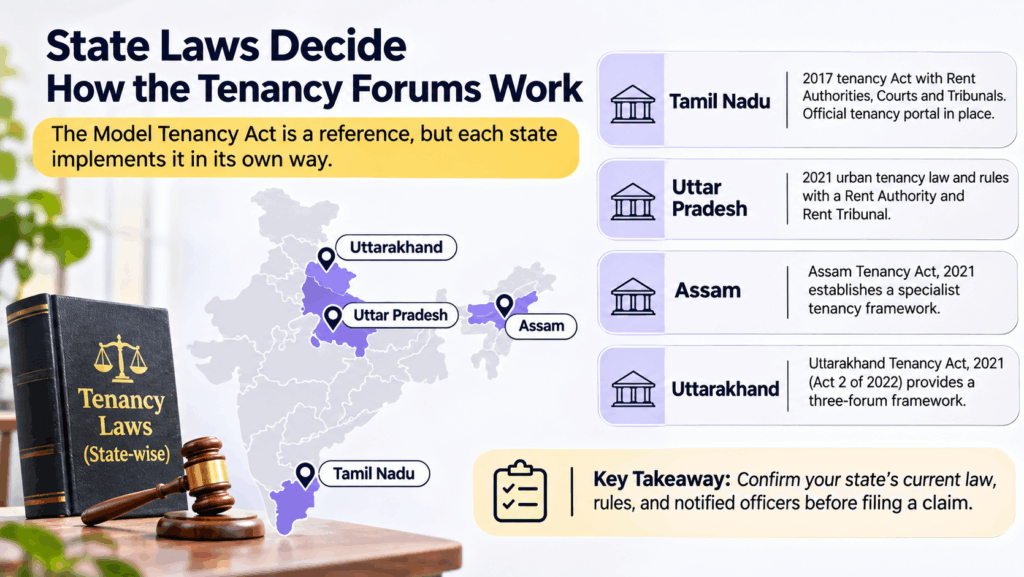
Searching for “Model Tenancy Act states” can produce misleading lists. A state may enact a related law, issue procedural rules or notify particular officers at different times. Enactment alone does not establish that every local forum accepts every claim.
| State | Verified legal framework | Practical check |
|---|---|---|
| Tamil Nadu | Its 2017 tenancy Act provides Rent Authorities, Courts and Tribunals; an official tenancy portal supports the framework | Use the state’s current forum lists, rules and forms; this law predates the final 2021 model |
| Uttar Pradesh | Its 2021 urban tenancy law and rules use a Rent Authority and Rent Tribunal structure | Do not add an intermediate Rent Court merely because the central model has one |
| Assam | The Assam Tenancy Act, 2021 establishes a specialist tenancy framework | Check commencement, current rules and the notified officer for the property’s location |
| Uttarakhand | The Uttarakhand Tenancy Act, 2021, published as Act 2 of 2022, provides a three-forum framework | Confirm commencement, coverage and local appointments before filing |
These are verified examples, not an exhaustive nationwide implementation register, checked on 14 November 2026. Sources include the Tamil Nadu tenancy portal, UP’s official rules, Assam’s legislative department and Uttarakhand’s statute.
Elsewhere, identify the applicable state tenancy or rent-control law before choosing a forum. RentOk’s explanation of why rent agreement rules differ across Indian states helps explain why an agreement or procedure from another city may not work locally.
Covered disputes and the limits of tenancy jurisdiction
The forum depends on the relief you seek, not simply whether you are a landlord or tenant. Under the model, the Authority handles specified rent-related, maintenance and essential-service matters; the Court handles possession claims and other covered proceedings.
For essential supplies, the Authority may order immediate interim restoration after examining the matter and must conduct an inquiry within one month. This urgent route differs from waiting for a final possession decision. Cutting water or electricity cannot substitute for lawful recovery proceedings. The government’s parliamentary response explains this protection.
For non-payment, establish the arrears and follow the applicable demand and cure requirements. Two months of unpaid rent does not authorise an immediate lockout. RentOk’s guide to legally evicting a non-paying tenant explains the importance of notices and lawful possession proceedings.
The model excludes title and ownership questions from Rent Court jurisdiction. Its civil-court bar covers matters within the Act; it does not transfer every property dispute to a tenancy officer. Section 40 of the model draws this boundary.
PG operators should also check the arrangement’s classification. The model excludes lodging houses from its definition of premises, so a PG label alone cannot establish coverage. For deposit disagreements, begin with the agreement, payment proof and deduction statement, as explained in challenging a withheld security deposit.
How do you file a rental dispute application?
Jurisdiction, documents and a precise request
First confirm the law, territorial jurisdiction and competent forum with the official state portal or local registry. Check whether your tenancy and premises fall within the law, which form applies and whether the registry accepts online applications. A tenancy-registration portal does not necessarily provide online dispute filing.
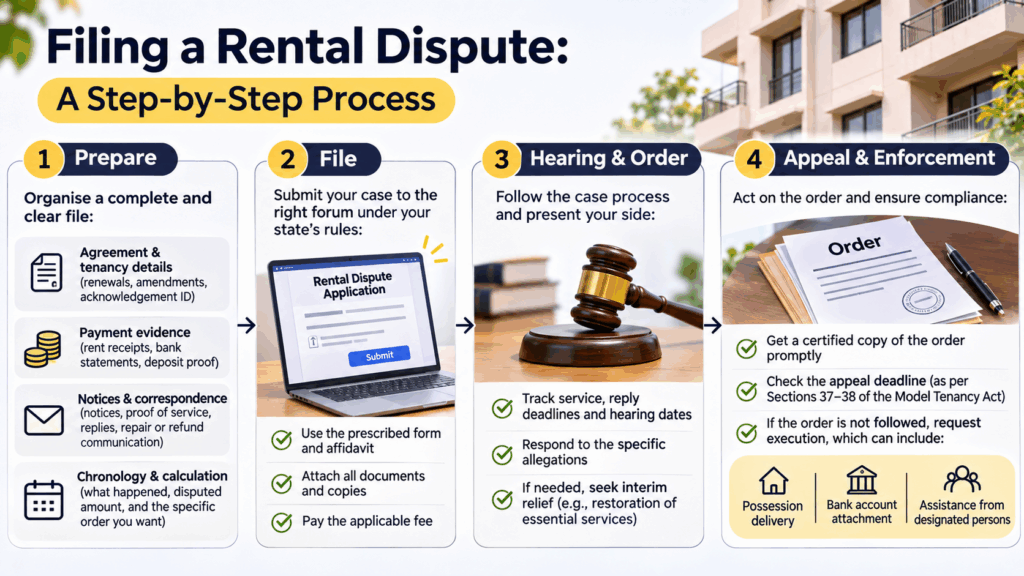
Prepare an indexed file containing:
- Agreement and tenancy details: Include renewals, amendments and the Authority’s acknowledgement or identification number, where applicable.
- Payment evidence: Match rent receipts, bank statements and transaction references to individual rental months; show deposits separately.
- Notices and correspondence: Preserve the notice, proof of service, replies and relevant repair or refund communications.
- A dated chronology and calculation: Explain what happened, identify the disputed amount and state the precise order you want.
Submit the prescribed application, supporting affidavit, documents, copies and fee under the state’s rules. Keep the filing acknowledgement and case number. RentOk’s step-by-step rental dispute complaint guide offers a practical companion for organising this material.
For example, a deposit claim should separate the amount originally paid, deductions you accept, deductions you contest and the balance you seek. An arrears claim should identify each unpaid month and credit every part-payment. This gives the forum a calculation it can examine rather than a single unexplained total.
The hearing, appeal and enforcement stage
Track service, reply deadlines and hearing dates. Respond to specific allegations and preserve original electronic records alongside printouts. If an essential service needs urgent restoration, seek the appropriate interim relief explicitly rather than relying only on the final claim.
After the order, obtain a certified copy promptly and check the appeal deadline. If the other party does not comply, ask about execution, the process for enforcing the order. The model permits possession delivery, bank-account attachment and assistance from designated persons through that process; it does not authorise private seizure. Sections 37–38 address appeals and execution.
How RentOk helps keep payment records ready
A payment dispute becomes harder when the owner’s notebook, the tenant’s transfer history and the final demand show different figures. RentOk helps organise routine rental payments and reports so owners can explain their accounts without reconstructing each month from scattered messages.
- Review dues and recorded payments: Compare outstanding amounts with the tenant’s payment history before issuing a demand, and investigate discrepancies before treating them as defaults.
- Keep receipts accessible: Tenants can open past payments and view receipt details through RentOk’s payment page, helping both sides identify the transaction under discussion.
- Download property reports: Owners can select the relevant property and download money reports, then reconcile those records with receipts and bank statements before seeking legal advice.
RentOk’s payment-page documentation and money-report guide describe these capabilities. RentOk does not file a legal case, decide jurisdiction or guarantee admissibility; retain original agreements, notices and banking evidence alongside your operational records.
Conclusion
The Rent Authority is one part of a specialist rental-dispute framework, with defined responsibilities alongside the Rent Court and Rent Tribunal. The model’s timelines encourage faster decisions, but a “60-day” headline cannot tell you which state law applies, where to file or how long an appeal and enforcement may take.
Start with the applicable law, identify the correct forum and organise the evidence around the remedy you need. Clear agreements, accurate rent calculations and documented notices give both parties a more useful starting point than competing recollections. Keep payment records on RentOk so you can explain payments and pending dues clearly, whether the disagreement ends through a written settlement or requires formal proceedings.
Frequently Asked Questions
Find answers to common questions about this topic
About the Author
Ishika Pannu
Ishika Pannu brings you the latest insights and easy-to-apply strategies in property management—helping you simplify renting and grow with RentOk.