
Legal
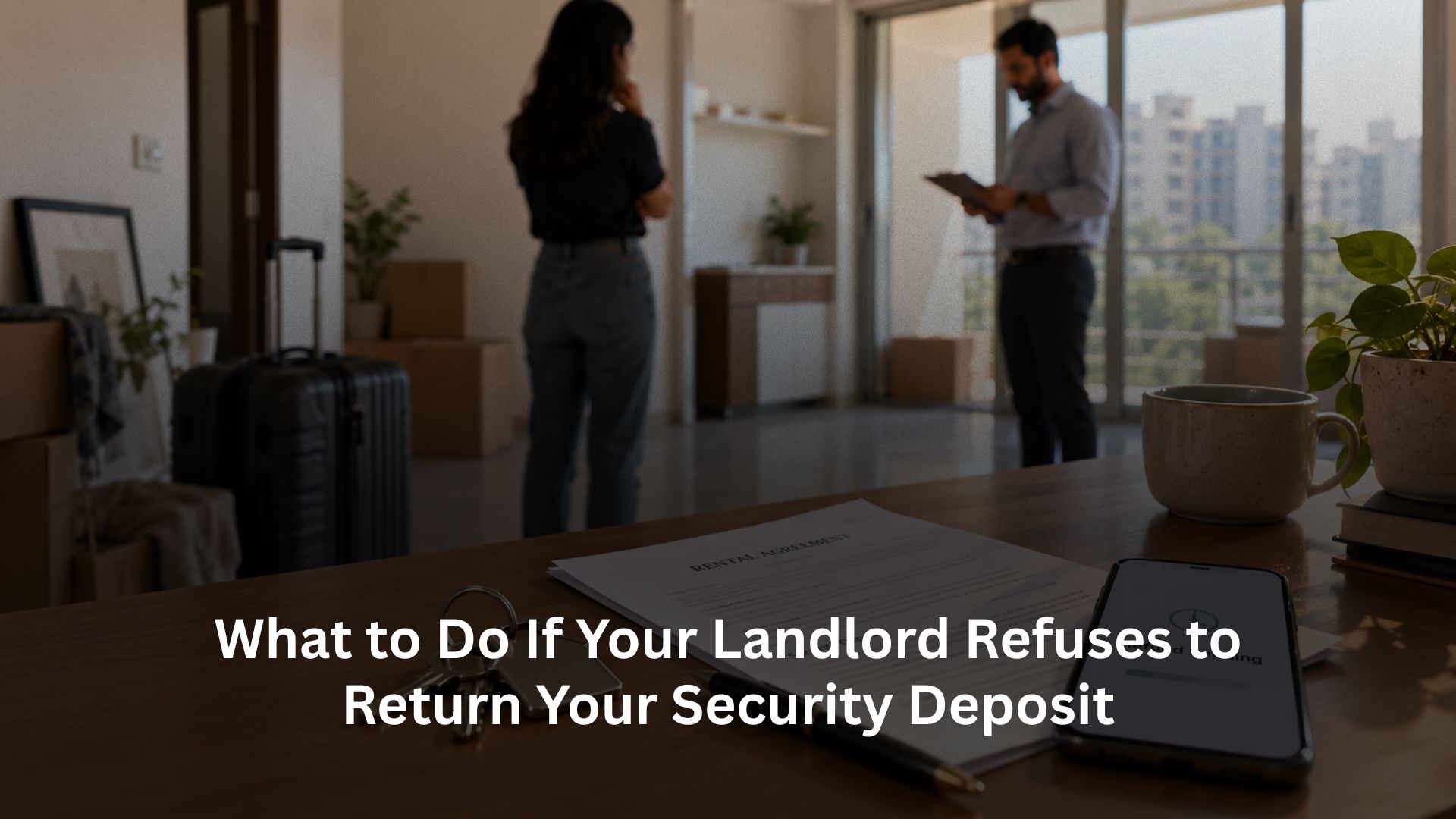
What to Do If Your Landlord Refuses to Return Your Security Deposit

Written by
Ishika Pannu
Read Time
14 min read
Posted on
September 5, 2026
Overview
Overview
What to Do If Your Landlord Refuses to Return Your Security Deposit
Moving out should ideally be simple. The tenant hands over the property and clears any outstanding dues. The landlord then returns the security deposit after valid deductions. In reality, this is often where disputes begin.
A tenant may follow the notice period, pay all rent, and return the keys. The property may also be left in good condition. Yet, the landlord may still delay the security deposit. Sometimes, no clear reason is given. In other cases, deductions are made without proper explanation.
For many tenants, this can be a serious issue. A security deposit may equal several months of rent. It can therefore represent a significant amount of money. The best response is not to immediately start an argument. Instead, take a clear and practical approach.
First, review the rental agreement and check the deposit terms. Then, collect records of rent payments, property condition, and key handover. Send the landlord a formal written request for the refund. If the landlord still refuses to pay, consider the appropriate legal or dispute-resolution channel. The right option will depend on the tenancy, location, agreement, and amount involved.
It is also important to remember that security deposit rules are not identical across India. The applicable law can depend on the state or Union Territory, the nature of the property, the tenancy arrangement, and the terms of the rental agreement. RentOk’s guide on Security Deposits in India: Everything You Need to Know provides a broader overview of how deposits work and why deductions can become a source of conflict.
First, Understand What Your Security Deposit Is Supposed to Cover
A security deposit protects the landlord against genuine liabilities during a tenancy. These may include unpaid rent, utility bills, or damage beyond normal wear and tear. The agreement and applicable law determine what deductions are allowed.
However, a landlord cannot automatically keep the full deposit after you move out.
The rental agreement should clearly state the deposit amount and refund terms. It should also explain when deductions can be made. These details can help prevent disputes when the tenancy ends.
The Model Tenancy Act, 2021 generally provides for a residential security deposit of up to two months’ rent. It also provides for refund after the landlord takes back possession, subject to permitted deductions.
However, the Model Tenancy Act is only a model framework. It does not automatically apply to every tenancy across India. The applicable state or UT rules must be checked. RentOk’s guide to security deposit limits across India explains this distinction.
Before challenging a deduction, review your rental agreement carefully.
Pay attention to these points:
- Deposit and refund terms: Check the amount paid and the stated refund timeline.
- Permitted deductions: Look for rules on rent, utilities, damage, cleaning, or missing items.
- Notice and lock-in: Early termination or insufficient notice may affect the final settlement.
- Move-out duties: Check requirements for inspection, key handover, and bill clearance.
Keep records of payments, property condition, and communications with the landlord.
The key distinction is simple: a valid deduction should have a clear contractual or legal basis. An unexplained withholding of the deposit may be open to challenge.

Start With a Written Demand Instead of an Argument
If the refund period has passed, your first formal step should usually be a written request.
A phone call may seem faster. However, an email, letter, or documented message creates a clearer record. This record can help if the dispute later becomes formal. Keep proof of your request and any response from the landlord.
Keep your message factual and polite. Mention when you vacated the property and the amount of the security deposit. Confirm that you handed over the property. Clearly state the amount you want refunded.
If the landlord claims deductions, ask for an itemised settlement. This should explain each deduction and its amount. Avoid simply demanding the full deposit without first understanding the reason for the deduction.
A useful written request should seek clarity on:
- The total deposit received: Refer to the payment record rather than relying on memory or an informal conversation about the amount.
- The deductions being claimed: Ask the landlord to identify each deduction separately instead of providing only one unexplained figure.
- The basis for those deductions: Where repairs or replacement costs are being claimed, request relevant bills, receipts, photographs, inspection records, or other supporting documentation.
- The balance payable to you: Ask the landlord to confirm the final refundable amount and when it will be transferred.
This approach keeps the conversation focused on settlement rather than personalities. It also gives the landlord an opportunity to explain a genuine issue before the disagreement needs to be escalated.
Documentation Can Make or Break a Deposit Dispute
Security deposit disputes often become difficult because the tenancy lasted for months or years, while the disagreement happens within a few days of moving out. By that point, neither party may have a perfect memory of the property’s original condition or every payment that was made.
Documentation fills that gap.
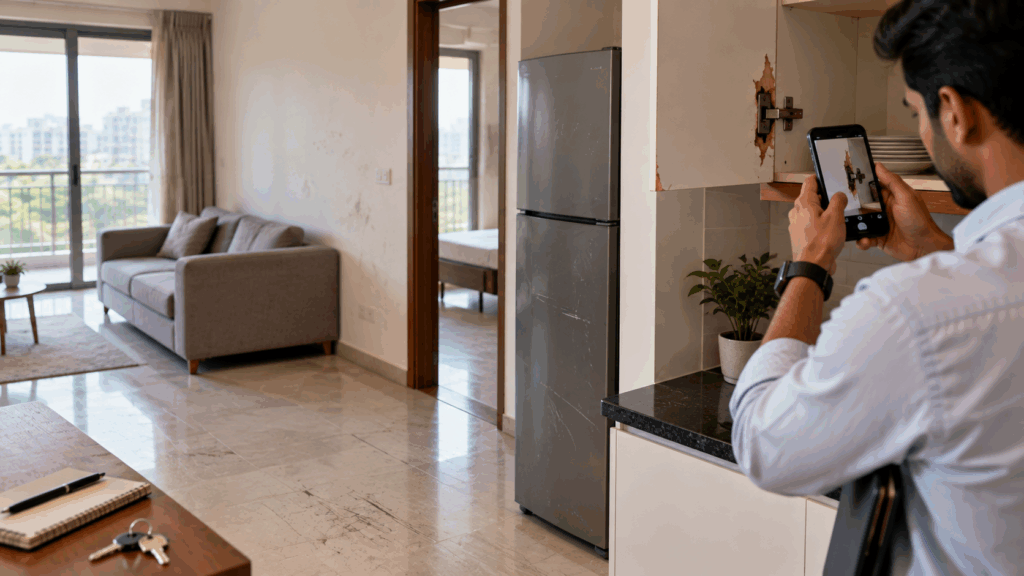
Photographs taken when you moved in can help establish the property’s original condition. Records of rent and utility payments may show whether any dues were actually outstanding. Written confirmation that the keys were returned and possession was handed over can also establish when the tenancy ended.
This is one reason RentOk’s guide to managing move-in and move-out smoothly places emphasis on structured documentation throughout the tenant lifecycle. A dispute is much easier to handle when the relevant information already exists rather than having to be reconstructed afterward.
Try to keep a single record containing:
- The signed rental agreement and any renewal documents.
- Proof of the original security deposit payment and subsequent financial transactions.
- Rent and utility payment records, particularly for the final months of the tenancy.
- Photographs or videos showing the property’s condition at move-in and move-out.
- Messages or emails concerning repairs, damages, notice, inspection, and handover.
- Any written settlement statement or acknowledgement provided by the landlord.
The objective is not to collect paperwork simply for the sake of it. The objective is to create a clear timeline that another person can understand without having to rely on either party’s memory.
What Counts as a Fair Deduction?
This is often the most contentious part of a security deposit dispute.
Tenants sometimes expect the entire deposit to be returned regardless of the condition in which they leave the property. Landlords, on the other hand, may view the deposit as protection against a much wider range of costs. Neither assumption should replace the actual agreement and applicable law.
A reasonable settlement should distinguish between normal wear and tear and actual damage or outstanding liability.
For example, ordinary ageing from normal use is not automatically the same thing as damage caused by a tenant. At the same time, a broken appliance, missing property item, unpaid electricity bill, or other demonstrable liability may be a legitimate basis for adjustment depending on the circumstances.
RentOk’s Handling Security Deposits: Legal Norms and Best Practices explores this distinction in greater detail, particularly the importance of documentation and transparent deduction practices.
When reviewing a deduction, ask:
- Was the issue actually the tenant’s responsibility? The agreement and applicable law should be considered before deciding who bears the cost.
- Was the issue documented? Photographs, inspection records, invoices, or written communication can make the basis for a deduction much clearer.
- Is the amount reasonable and explainable? A deduction should be capable of being connected to an actual liability rather than appearing as an arbitrary amount.
- Was the condition already present? Move-in records can be particularly useful where the tenant disputes responsibility for damage.
The more clearly a landlord can explain a deduction, the less likely the settlement is to become a prolonged disagreement.
What If the Landlord Keeps Ignoring You?
Sometimes a written request produces no response at all. The landlord may stop answering calls, leave messages unread, or repeatedly promise to make the payment without actually doing so.
At this stage, continuing to send increasingly frustrated messages usually does not improve your position. It is better to move from informal communication to a more formal process.
Before doing so, organise your evidence and establish exactly what you are claiming. You should know the amount of the original deposit, the amount already returned if any, the deductions being disputed, and the basis on which you believe the remaining amount is payable.
If the dispute is substantial, you may also want legal advice before taking the next step.
Sending a Legal Notice
A legal notice is one possible escalation route when a landlord continues to withhold money despite a formal request.
The notice can set out the tenancy details, the security deposit paid, the date of vacating, the amount claimed, previous requests for repayment, and the reason the tenant believes the amount remains due. It can also provide a reasonable period for the landlord to respond or make the payment.
A legal notice is different from filing a case in court. Its purpose is to put the demand on a formal footing and give the other party an opportunity to resolve the issue.
Because the appropriate wording and legal basis depend on the specific facts, consulting a qualified legal professional can be sensible, particularly where a large amount is involved or the landlord disputes the tenant’s contractual obligations.
Can You File a Complaint With a Rent Authority?
Potentially, but this is where tenants need to be careful about assuming that one process applies everywhere in India.
The Model Tenancy Act framework provides for dedicated tenancy dispute mechanisms involving a Rent Authority, Rent Court, and Rent Tribunal. However, the Model Tenancy Act is a model framework, and its provisions are not automatically applicable to every rental arrangement across the country.
The applicable authority depends on the state or UT and the law governing the tenancy.
This means a tenant should first establish which tenancy law applies and whether a specific rent authority or tenancy forum has jurisdiction over the dispute. Filing a complaint with an unrelated authority simply because it appears in a general online search can waste time and delay resolution.
The same principle applies to the terminology used for courts. India does not have one universal nationwide “small claims court” process for every security deposit dispute. Depending on the circumstances, a civil court or specialised tenancy forum may be relevant.
What About the Civil Court Option?
If the deposit remains unpaid and other appropriate avenues have not resolved the dispute, civil proceedings may be available depending on the facts, amount involved, contractual terms, and jurisdiction.
A tenant should not assume that going directly to court is always the best first move. Court proceedings can involve time, costs, documentation, and procedural requirements. In a straightforward dispute, a properly documented demand may be enough to encourage settlement.
However, where the landlord refuses to engage or disputes the tenant’s claim on substantive grounds, formal legal action may become necessary.
Before taking that step, it is worth having the complete record organised:
- The agreement: This establishes the contractual terms governing the tenancy and deposit.
- Payment evidence: Bank transfers, receipts, or digital payment records can establish the amount actually paid.
- Handover evidence: Proof of the move-out date and return of possession helps establish when the tenancy ended.
- Communication history: Written demands and the landlord’s responses can demonstrate attempts to resolve the matter.
- Settlement calculation: A clear calculation showing the deposit, legitimate deductions, amount refunded, and balance claimed makes the dispute easier to understand.
The objective is to present a coherent financial and contractual record rather than simply a collection of messages.
Don’t Ignore the Move-Out Process in the First Place
Many security deposit disputes become difficult long before the tenant actually asks for the refund.
If the move-in condition was never recorded, the deposit terms were vague, the notice was given informally, or the final utility bills were never documented, the parties are left trying to resolve several uncertainties at once.
A structured move-out process can prevent many of these problems.
Before leaving, tenants should review the agreement, provide the required notice, settle outstanding bills, remove personal belongings, document the final condition of the property, and complete the handover properly.
Landlords can similarly reduce disputes by conducting a documented inspection, recording legitimate deductions, communicating the settlement clearly, and maintaining a defined refund process.
For property managers handling multiple tenants, this becomes even more important. RentOk’s guide on tracking security deposits in PGs explains how structured records can reduce the confusion created when deposits, payments, damages, and final settlements are maintained separately.
A good deposit process is therefore not only about what happens when a tenant complains. It begins on the day the tenant moves in.

How RentOk Helps Make Security Deposit Management More Transparent
For rental businesses, security deposit management becomes difficult when tenant records, payment details, room condition, communication, and move-out information are scattered across notebooks, spreadsheets, payment apps, and chat conversations.
RentOk brings important parts of the tenant lifecycle into a more structured system, helping property operators manage tenant information, payment records, occupancy, communication, and move-in and move-out processes from one platform.
This can help operators maintain clearer records of what was collected, what happened during the tenancy, and what needs to be settled when the tenant leaves. Digital records can also make it easier to maintain consistency across properties as the number of tenants grows.
That matters because a professional deposit process benefits both sides. Tenants get greater clarity around payments and settlements, while operators have a better record of the information needed to explain deductions and close the tenancy properly.
In a rental environment where security deposits can become one of the most sensitive points of disagreement, better documentation and clearer workflows can go a long way toward preventing avoidable disputes in the first place.
Final Thoughts
A landlord refusing to return a security deposit does not mean that the only option is an immediate court battle. In many cases, the strongest approach begins with something much simpler: understand the agreement, establish what amount is actually due, communicate the demand in writing, and maintain clear evidence of the tenancy.
If the landlord still refuses to resolve the matter, the next step should be based on the law applicable to the specific tenancy and the appropriate dispute-resolution forum in that jurisdiction. Because tenancy rules vary across India, getting qualified legal advice can be particularly important when the amount involved is significant or the facts are disputed.
For tenants, the biggest lesson is to start documenting before there is a dispute. For landlords and property managers, the same principle applies from the other side: clear deposit terms, proper inspections, documented deductions, and timely communication make the final settlement far easier to manage.
Protect your rental rights with RentOk. Keep your tenancy records organised, make every payment and move-out detail easier to track, and bring greater transparency to the rental process with structured property management.
Frequently Asked Questions
Find answers to common questions about this topic
About the Author
Ishika Pannu
Ishika Pannu brings you the latest insights and easy-to-apply strategies in property management—helping you simplify renting and grow with RentOk.
You may also like these
Related Articles

1 min read
The Satya Niketan PG Collapse: What It Means for Safety in Delhi PG’s
Written by
Posted on
Ishika Pannu
Sep 7, 2026
1 min read
How to File a Rental Dispute Complaint in India (Step-by-Step Guide)
Written by
Posted on
Ishika Pannu
Sep 6, 2026
1 min read
Why Landlords Cannot Legally Refuse Unmarried Tenants in India
Written by
Posted on
Ishika Pannu
Sep 5, 2026
1 min read
How to Get Your Security Deposit Back When Vacating a Rental Property
Written by
Posted on
Ishika Pannu
Sep 5, 2026
1 min read
What Is Tenant Police Verification and Why Is It Mandatory in India?
Written by
Posted on
Ishika Pannu
Sep 4, 2026
1 min read
How to Read a Rent Agreement Before Signing: What to Watch Out For
Written by
Posted on
Ishika Pannu
Sep 4, 2026
1 min read
What Are Your Rights as a Tenant Under the Model Tenancy Act?
Written by
Posted on
Ishika Pannu
Sep 3, 2026

1 min read
How to Get FSSAI Licence for Your Hostel Mess or Canteen
Written by
Posted on
Ishika Pannu
Sep 3, 2026
1 min read
How to Use Digital Signatures on Rent Agreements Legally in India
Written by
Posted on
Ishika Pannu
Sep 1, 2026
1 min read
How to Get Society Permission Before Renting Out Your Flat
Written by
Posted on
Ishika Pannu
Aug 31, 2026
Stay ahead in property management with expert insights
Join thousands of property managers receiving exclusive tips delivered straight to your inbox.
Browse posts by category
Case Study
Cost of Living
Growth
Legal
Market Trends
News
Pg owner app
Property Management
Property Tax
Tech
RentOk
The easiest way to rent and manage your PGs and hostels.
Get the app


Contact us
hello@eazyapp.tech
HQ Office
COGROW, BASEMENT F-12/8A
BESIDE HOUSE OF STYLE SALON, SECTOR 28, DLF PHASE 1
GURUGRAM, HARYANA - 122002
South India Office
LUMIODESK COWORKING, 2ND FLOOR, 40, 14TH MAIN RD
BESIDE MC DONALD, 7TH SECTOR, HSR LAYOUT
BENGALURU, KARNATAKA - 560102
©️ 2026 EazyApp Tech Pvt Ltd. All rights reserved


