
Growth
How to Start a PG Business Legally in India: Step-by-Step Guide

Written by
Ishika Pannu
Read Time
21 min read
Posted on
August 27, 2026
Overview
Overview
How to Start a PG Business Legally in India: Step-by-Step Guide
Starting a PG business can look simple on paper. You find a suitable property, furnish the rooms, decide the rent, advertise vacancies, and begin accepting tenants. But once the property starts functioning as a business, there is a second side to the setup that cannot be overlooked: legal and regulatory compliance.
A PG is not simply a residential property with several people living in it. The moment accommodation is being provided commercially, the operator needs to consider the rules applicable to the property, the nature of the business, the number of occupants, and the services being offered. These requirements can cover everything from property use and local registrations to fire safety, tenant verification, agreements, taxation, and ongoing record-keeping.
The important part is that there is no single PG licence that makes every PG in India legal. Requirements can vary by state, city, local authority, building type, and the way the property is being operated. This is why a checklist that works for one city should not automatically be treated as a universal rule.
Before investing heavily in interiors or onboarding the first tenant, it is worth understanding the compliance journey from the beginning.
Is Running a PG a Business?
Yes. If you are regularly providing accommodation to paying occupants, the activity is being carried out commercially and should be approached as a business rather than an informal rental arrangement.
The business structure itself can vary. A person operating one property may choose an individual or proprietorship structure, while a larger operator with multiple owners or expansion plans may consider a partnership, LLP, private limited company, or another structure after taking appropriate professional advice.
However, registering the business does not automatically mean the property is permitted to operate as a PG.
This distinction is important. There are essentially two questions a new operator needs to answer:
- Is the business properly established? This involves understanding the appropriate business structure, PAN, banking, accounting, taxation, and registrations that may apply to the operation.
- Can this particular property be used for the intended PG activity? This may involve local authority requirements, building-use conditions, fire safety, police or tenant verification requirements, lease permissions, and society rules.
For example, an owner may have all the basic financial and business documentation in place but still face an operational problem if the property itself cannot be used for the proposed accommodation activity.
That is why the property should be checked before the business is built around it.

Step 1: Check the Property Before You Start the PG
One of the most expensive mistakes a new PG operator can make is choosing a property based entirely on location, rent, room capacity, and expected occupancy.
Those factors matter, but they are only part of the decision.
Before signing a lease or committing substantial money to renovation, check whether the property can actually support the kind of accommodation business you want to operate. If you are leasing the property, the agreement should clearly address the intended use. If the arrangement involves multiple occupants or any form of subletting, those rights should also be properly documented rather than assumed.
This is where due diligence can save a new operator from a much larger problem later.
What should you verify before signing?
- Permitted property use: Check whether the premises can be used for the intended PG, hostel, co-living, or accommodation activity under the applicable local rules and building permissions.
- Lease and ownership documents: If you are renting the property, make sure the owner permits the intended commercial use and that the agreement properly records the arrangement.
- Building and local authority requirements: Understand whether the building’s sanctioned use, layout, occupancy conditions, or local regulations create restrictions on the proposed PG.
- Society or association rules: If the property is located within a residential society, review the applicable bylaws and determine whether an NOC or written permission is required.
- Occupancy and safety considerations: The number of residents you plan to accommodate can affect the safety measures and permissions applicable to the premises.
This becomes especially important because local authorities can introduce requirements specifically for PGs, hostels, or similar accommodation businesses. The rules applicable to a particular city may therefore be more detailed than a generic “start a PG” checklist found online.
For a new operator, the safest approach is to identify the local authority responsible for the property and verify the current requirements before proceeding.
Step 2: Understand Which Licences and Permissions Apply
Once you know that the property can support your proposed business, the next step is to identify the registrations and permissions applicable to the operation.
This is where many new owners make another mistake: they search for a single “PG licence” and expect the entire compliance process to be covered by one application.
In reality, compliance is better understood as a set of requirements that may come from different authorities.
Depending on the state, city, property, and business model, several approvals may apply. These can include registration under the applicable Shops and Establishments law, municipal or trade permissions, and fire-safety approval. Tenant or police verification may also be required.
If meals are provided, food-related registration may apply. Other local approvals may also be necessary depending on the property and how the PG operates.
Shops and Establishments Registration
The Shops and Establishments framework is governed by state-specific legislation. This means the registration requirement, process, and documentation can vary. The differences depend on where your PG operates and how the establishment is structured.
Where applicable, registration helps formalize the establishment. It may also create obligations related to employees, working conditions, records, and other operations.
The key point is simple. Do not assume a requirement applies or does not apply just because another PG owner followed a particular process.
Check the law applicable to your state and the nature of your establishment.
Municipal or Trade Permissions
Local municipal authorities may also have their own licensing or registration requirements for businesses operating within their jurisdiction. The name of the permission and the process can vary from one city to another.
The authority may consider factors such as the nature of the activity, property documents, location, sanitation, building conditions, and other relevant requirements.
If your PG also provides meals, housekeeping, laundry, transportation, or other additional services, those services may introduce separate compliance considerations. The more services you add to the property, the more important it becomes to review the applicable rules instead of treating the business as accommodation alone.
Fire Safety Is Not a “Later” Requirement
Fire safety deserves separate attention because it directly concerns the people living and working inside the property.
A common mistake is to consider fire safety only when an inspection or approval becomes necessary. For a professionally operated PG, safety should be planned from the beginning, including property selection, layout, furnishing, and occupancy.
Requirements vary by building and local rules. They may cover escape routes, firefighting equipment, alarms, access, electrical safety, occupancy, and system maintenance.
For example, Delhi Fire Service documentation links fire-safety certification to the occupancy and premises. It also requires clear escape routes and properly maintained firefighting equipment. Renewal may also be required for certain building categories.
Simply placing a few fire extinguishers around the property should not be treated as complete fire-safety compliance.
Before opening the property, owners should understand:
- What fire-safety category applies to the premises: Requirements can depend on the building’s use, size, configuration, and other characteristics.
- What equipment and systems are required: The applicable authority may prescribe specific arrangements based on the property.
- Whether inspection or certification is required: Where a Fire Safety Certificate or NOC applies, owners should follow the prescribed process.
- How safety will be maintained after approval: Compliance does not end when a certificate is issued. Equipment, exits, alarms, and other safety systems need regular attention.
The Delhi Fire Service also states that an FSC can be subject to renewal. Changes to the approved building plan or premises can affect the validity of the fire-safety position.
For PG owners, the broader principle is simple: legal compliance and operational maintenance have to work together. Fire safety should be treated as an ongoing responsibility rather than a one-time approval or paperwork exercise.
Tenant and Police Verification Should Be Part of the Setup
Tenant verification is another area where PG operators need a structured and consistent process.
When a new resident moves in, the objective should not simply be to collect an Aadhaar card or another identity document and store a photograph somewhere. A proper onboarding process should connect the tenant’s identity and documentation with the agreement, room or bed allocation, contact details, and occupancy period.
It is also important to understand that identity verification and police verification serve different purposes. Aadhaar vs Police Verification: A Security Guide for Indian Landlords explains the distinction in greater detail.
Depending on the state or city, police or tenant verification requirements may also apply. The exact procedure should therefore be checked with the appropriate local authority rather than assuming that the same requirements apply everywhere.
This becomes increasingly important as a PG grows. When there are only a handful of tenants, an owner may remember where everything is. Once there are dozens or hundreds of residents, relying on memory, paper registers, and scattered WhatsApp conversations can create unnecessary risk.
A structured verification process ensures that every resident’s identity, documentation, agreement, allocation, and occupancy details remain properly connected and accessible when needed.
A structured onboarding system should make it easy to answer basic questions such as:
- Who is currently staying in the property?
- When did the tenant move in?
- Which room or bed has been assigned?
- Has the required documentation been collected?
- What agreement applies to the tenant?
- What is the tenant’s expected move-out or renewal date?
These are operational questions, but they also become extremely important when the property needs to demonstrate that its tenant records are being maintained properly.
What About GST and Other Tax Registrations?
Tax compliance should be considered separately from the local permissions required to operate the property.
For GST, registration depends on the applicable provisions, turnover, nature of supplies, and other circumstances. The threshold is not something a PG owner should apply blindly without checking the current rules and whether any exception or special condition applies. CBIC’s GST material provides the statutory framework for registration thresholds and circumstances in which registration can become mandatory.
For a PG operator, this becomes particularly important as the business grows or when accommodation is combined with other chargeable services.
For a broader understanding of how GST can affect rental income and accommodation-related transactions, see What is GST on Residential Rent and When Does It Apply to You?.
Instead of waiting until tax filings become complicated, it is better to maintain proper records from the start:
- Track rent and other collections separately: Keep a clear record of what tenants are paying and what each payment relates to.
- Record deposits and adjustments: Security deposits, refunds, deductions, and settlements should not get mixed into ordinary monthly collections.
- Maintain expense records: Utilities, repairs, maintenance, salaries, vendor payments, and other operating costs should be documented systematically.
- Review your tax position periodically: Turnover and business activities can change, so the tax position that applied when you started may not remain the same as the business expands.
A CA or qualified tax professional should confirm the position for your specific business rather than relying on a generic threshold or checklist.
If your rental income or property structure also brings TDS considerations into the picture, What is TDS on Rent Under Section 194-IB – Guide for Landlords is another useful resource to keep alongside your tax records.
Step 3: Complete the Registration Process
Once you have established that the property can be used for your intended PG operation, the next step is to formalize the business. You can then complete the registrations and approvals that apply.
The exact sequence can differ by city and property type. There is no single application order that works everywhere. However, working through the process in stages makes it easier to track what is complete and what is still pending.
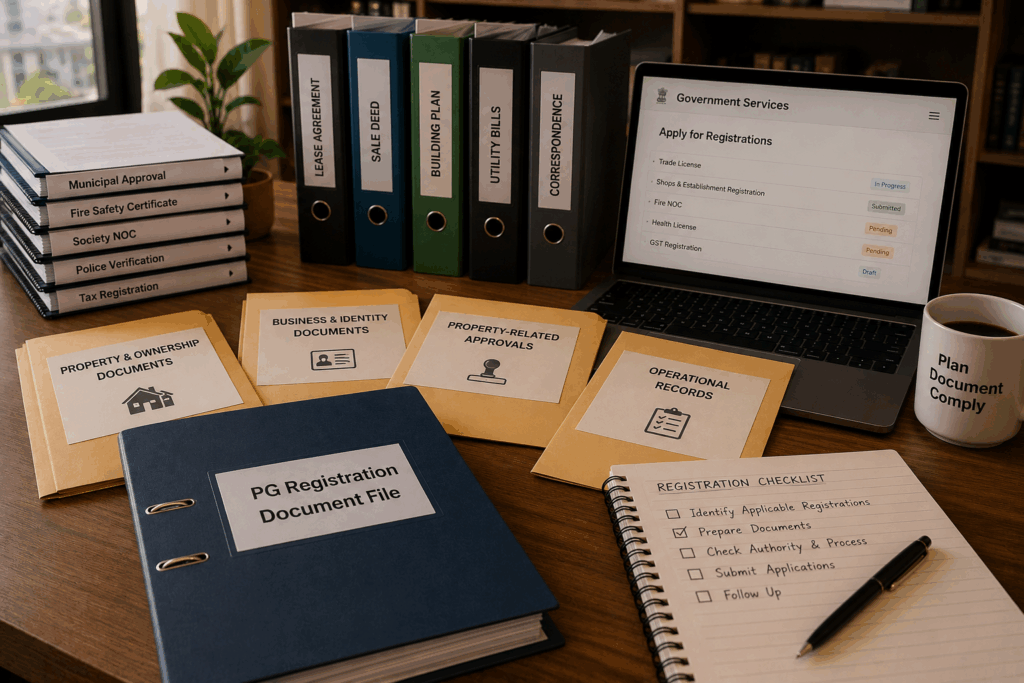
Start by keeping all core property and business documents together. These may include ownership or lease documents, identity and address proofs, property papers, photographs, business details, and other documents requested by the relevant authority.
A basic registration file should ideally contain:
- Property and ownership documents: Keep the sale deed, ownership proof, lease agreement, or other relevant documents available to establish your right to operate from the premises.
- Business and identity documents: Depending on the structure, this can include PAN, Aadhaar or other identity documents, business constitution documents, and address proofs.
- Property-related approvals: Keep copies of applicable municipal permissions, fire-safety documents, society NOCs, and other approvals rather than relying on verbal confirmation.
- Operational records: Maintain documents relating to employees, vendors, tenant onboarding, agreements, and other recurring activities as the PG becomes operational.
Once the applicable registrations have been identified, apply through the relevant government or local authority channels. Avoid paying an intermediary simply because they promise a “complete PG licence.” First, understand exactly which registrations they will handle. Also confirm which authority will issue each approval.
The objective is not to collect paperwork for its own sake. It is to create a clear compliance trail. This record can be useful when the property expands, changes ownership, renews an approval, or faces a regulatory query.
Step 4: Get Society Permissions Where Required
If the property is located inside a residential society, this step can become particularly important.
A PG operator may have a valid agreement with the property owner and still face objections from the housing society if the society’s applicable bylaws or resolutions restrict the intended use. This is why society compliance should be checked before tenants start moving in.
The process can differ from one society to another. Some may require a formal NOC, while others may have specific documentation or conditions for allowing paying guests or shared accommodation.
Do not rely solely on a conversation with a committee member or neighbour. If written permission is required, obtain and preserve the written document.
This becomes even more relevant in cities where local authorities have introduced additional requirements for PGs and hostels. RentOk’s coverage of the newer Ahmedabad rules, for example, notes the role of housing-society NOCs alongside other property and safety requirements. Explore more RentOk legal guides to understand how local requirements can affect PG operations.
A useful approach is to check three things before launching:
- Society bylaws: Understand whether the society has any restriction on PGs, hostels, paying guests, or commercial activity within residential premises.
- Required NOC or permission: If the society requires written approval, complete this before onboarding occupants instead of trying to obtain it after complaints arise.
- Documentation of the arrangement: Keep the permission, correspondence, and relevant property documents together so the operating position is easy to establish later.
The broader principle is simple: the owner, operator, society, and tenant should not be working with different assumptions about how the property can be used.
Step 5: Put Tenant Agreements and House Rules in Place
Legal compliance does not stop at licences and permissions. Your relationship with every tenant should also be documented clearly.
A PG agreement should clearly explain the commercial and operational terms of the stay in language the tenant can understand. Rent, deposit, notice period, lock-in conditions, utilities, house rules, maintenance responsibilities, and exit procedures should not be left to informal conversations.
This becomes particularly important because disagreements often arise when expectations were never clearly documented at the time of move-in.
If you’re unsure whether your agreement needs registration, Why Your Rent Agreement Must Be Registered – And How to Do It explains the registration process and the documentation that should be checked before execution.
For example, a tenant may believe that their deposit is fully refundable, while the operator expects deductions for unpaid dues, damages, or a notice-period violation. If the agreement does not clearly define these terms, the move-out process can quickly turn into a dispute.
Your agreement should therefore clearly establish:
- Financial terms: Mention the rent, security deposit, payment due date, applicable charges, and conditions around refunds or adjustments.
- Occupancy conditions: Specify the room or bed arrangement, permitted occupants, visitor rules, and other relevant conditions of residence.
- Exit terms: Clearly explain notice requirements, lock-in provisions, early-exit conditions, and the process for final settlement.
- Property rules: Include reasonable rules around cleanliness, visitors, noise, common areas, damage, prohibited activities, and use of facilities.
A strong agreement does not need to be unnecessarily complicated. Its real purpose is to remove ambiguity before a problem occurs.
Before using your agreement, it is also worth going through Rent Agreement Checklist: 15 Things Every Owner Should Include to make sure important clauses have not been overlooked.
Step 6: Make Tenant Verification Part of Your Onboarding Process
Once the property is ready to operate, tenant onboarding becomes one of the first recurring compliance activities.
Every new resident should go through a consistent process instead of being added informally whenever a room becomes available. This is particularly important when a PG is growing quickly and multiple staff members are involved in admissions.
The onboarding process should connect the tenant’s identity documents with their agreement, room allocation, contact information, payment records, and occupancy timeline.
That gives the operator a reliable answer to a basic question: who is staying in the property right now? It also shows what documentation supports that occupancy.
Depending on the location, police or tenant verification may also be required. The exact procedure should be confirmed with the appropriate local authority. Do not assume that the same process applies across every Indian city.
For a more comprehensive approach, The PG Owner’s Guide to Tenant Background Verification in 2026 explains how identity checks, police verification, references, and tenant screening can fit into a complete onboarding process.
The key is consistency. Whether the tenant is staying for three months or a year, the onboarding process should follow the same standards and documentation requirements, regardless of which employee handles the admission.
Step 7: Treat Compliance as an Ongoing Process
One of the biggest misconceptions about starting a PG legally is that compliance is completed once the property opens.
In reality, the business changes every month.
Tenants move out. New residents arrive. Agreements expire. Employees join or leave. Fire-safety equipment requires maintenance. Licences and certificates may need renewal. Local rules can also change.
This means compliance needs to become part of everyday property management rather than something reviewed once a year.
A practical compliance calendar can help you keep track of:
- Agreement and occupancy timelines: Monitor lease dates, tenant agreements, lock-in periods, notice periods, renewals, and planned move-outs so important dates are not missed.
- Licences and certificates: Record the issue and expiry dates of applicable registrations, fire-safety documents, municipal permissions, and other approvals requiring renewal.
- Tenant documentation: Ensure KYC, verification records, agreements, and other required documents remain organized and accessible throughout the tenant’s stay.
- Financial compliance: Keep collections, expenses, deposits, invoices, and tax-related records updated instead of attempting to reconstruct them at filing time.
- Safety and maintenance: Schedule regular checks for fire equipment, electrical systems, emergency routes, common areas, and other safety-related infrastructure relevant to the property.
This is where the difference between a small informal PG and a professionally managed rental operation becomes clear. As occupancy increases, compliance becomes a data-management problem as much as a legal one.
What Happens If a PG Ignores Its Compliance Requirements?
The consequences of non-compliance can go well beyond a fine.
Depending on the violation and applicable local law, an operator could face notices, penalties, disputes, or restrictions on operations. There may also be issues with authorities.
Financial consequences are another concern. A business may be forced to make sudden changes after tenants have already moved in.
Consider a PG that has invested heavily in furnishing a property and filling its rooms. It may later discover that a required approval for the premises was never obtained. Correcting that situation after operations have started can be considerably more disruptive than checking the requirement before launch.
There is also a reputation factor.
Tenants today do not evaluate a property only on rent and room size. They also notice how professionally management handles agreements, deposits, complaints, verification, maintenance, and move-outs. A business that appears disorganized internally can quickly create an equally disorganized tenant experience.
Compliance, therefore, should not be viewed only as protection from government action. It also supports business continuity, tenant trust, and operational credibility.
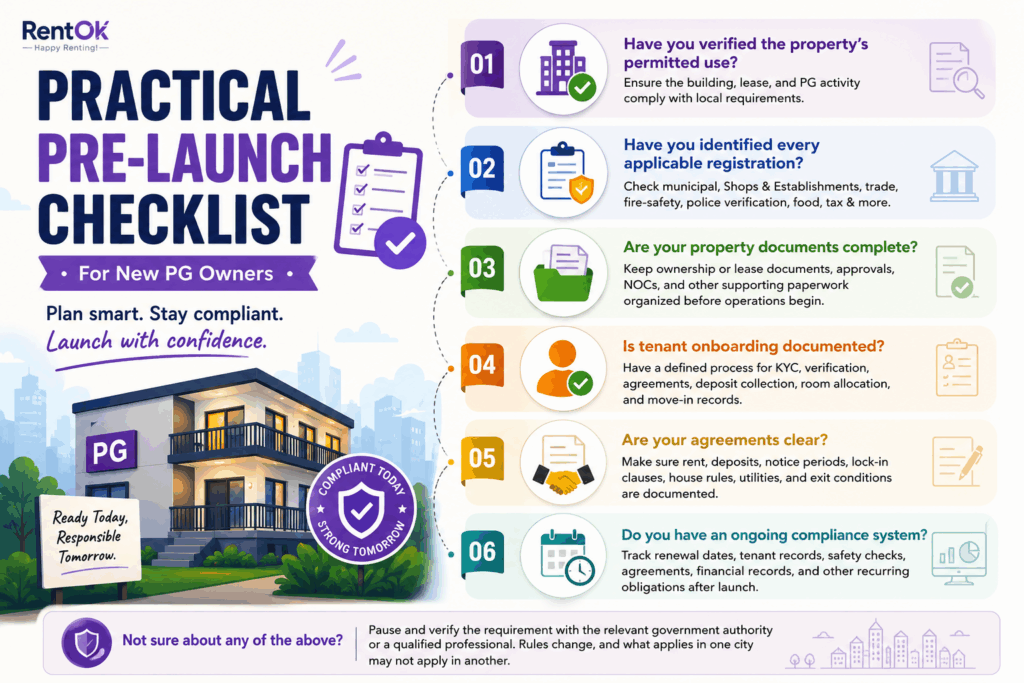
A Practical Pre-Launch Checklist for New PG Owners
Before opening the doors to your first tenants, review the property from both a legal and operational perspective.
You should be able to confidently answer the following:
- Have you verified the property’s permitted use? Make sure the building, lease arrangement, and intended PG activity are compatible with the applicable local requirements.
- Have you identified every applicable registration? Check municipal, Shops and Establishments, trade, fire-safety, police verification, food-related, tax, and other requirements based on your location and business model.
- Are your property documents complete? Keep ownership or lease documents, approvals, NOCs, and other supporting paperwork organized before operations begin.
- Is tenant onboarding documented? Have a defined process for KYC, verification, agreements, deposit collection, room allocation, and move-in records.
- Are your agreements clear? Make sure rent, deposits, notice periods, lock-in clauses, house rules, utilities, and exit conditions are documented.
- Do you have an ongoing compliance system? Track renewal dates, tenant records, safety checks, agreements, financial records, and other recurring obligations after launch.
If any answer is unclear, pause and verify the requirement with the relevant government authority or a qualified professional. Legal requirements can change, and the rules applicable to a PG in one city should not automatically be applied to another.
How RentOk Helps You Manage a PG More Systematically
Once the legal foundation is in place, the next challenge is keeping the property organized every day. RentOk helps PG and hostel operators bring tenant management, occupancy, payments, dues, agreements, communication, and daily property operations into one connected system.
Instead of maintaining tenant information across spreadsheets, property managers can keep it in one place. Payment records and operational updates can also be managed without relying on multiple files and chats.
As the PG grows, this becomes especially useful. Property managers can keep track of tenants, payments, agreements, move-ins, and move-outs more easily.
Recurring operational activities can also be tracked without depending entirely on manual coordination.
Final Thoughts
Starting a PG business legally in India is not about obtaining one universal licence. It is a process that begins with selecting the right property. It continues through registrations, local permissions, safety requirements, tenant verification, agreements, taxation, and ongoing record management.
The biggest advantage of getting this right early is predictability. When property documents are in order, permissions are understood, and tenant records are organized, management becomes easier. Recurring obligations can also be tracked more effectively.
This allows the owner to focus on what actually drives the business. That includes occupancy, tenant experience, service quality, and sustainable growth.
The exact requirements depend on the location and nature of the property. Local verification therefore remains essential.
The underlying principle, however, remains the same: build compliance into the PG from the beginning instead of trying to repair it after the business is already running.
Ready to bring your PG operations under control? Start your free RentOk trial and discover a more organized way to manage tenants, payments, property operations, and your growing PG business. Explore the RentOk platform or browse the RentOk blog for more practical resources on running and scaling a modern rental business.
Frequently Asked Questions
Find answers to common questions about this topic
About the Author
Ishika Pannu
Ishika Pannu brings you the latest insights and easy-to-apply strategies in property management—helping you simplify renting and grow with RentOk.
You may also like these
Related Articles

1 min read
How to Increase PG Occupancy During Off-Season Months
Written by
Posted on
Ishika Pannu
Aug 9, 2026

1 min read
How to Price Your PG for Maximum Occupancy
Written by
Posted on
Ishika Pannu
Jul 28, 2026
1 min read
How to List Your PG on Google for Free (Google Business Profile Guide)
Written by
Posted on
Ishika Pannu
Jul 10, 2026
1 min read
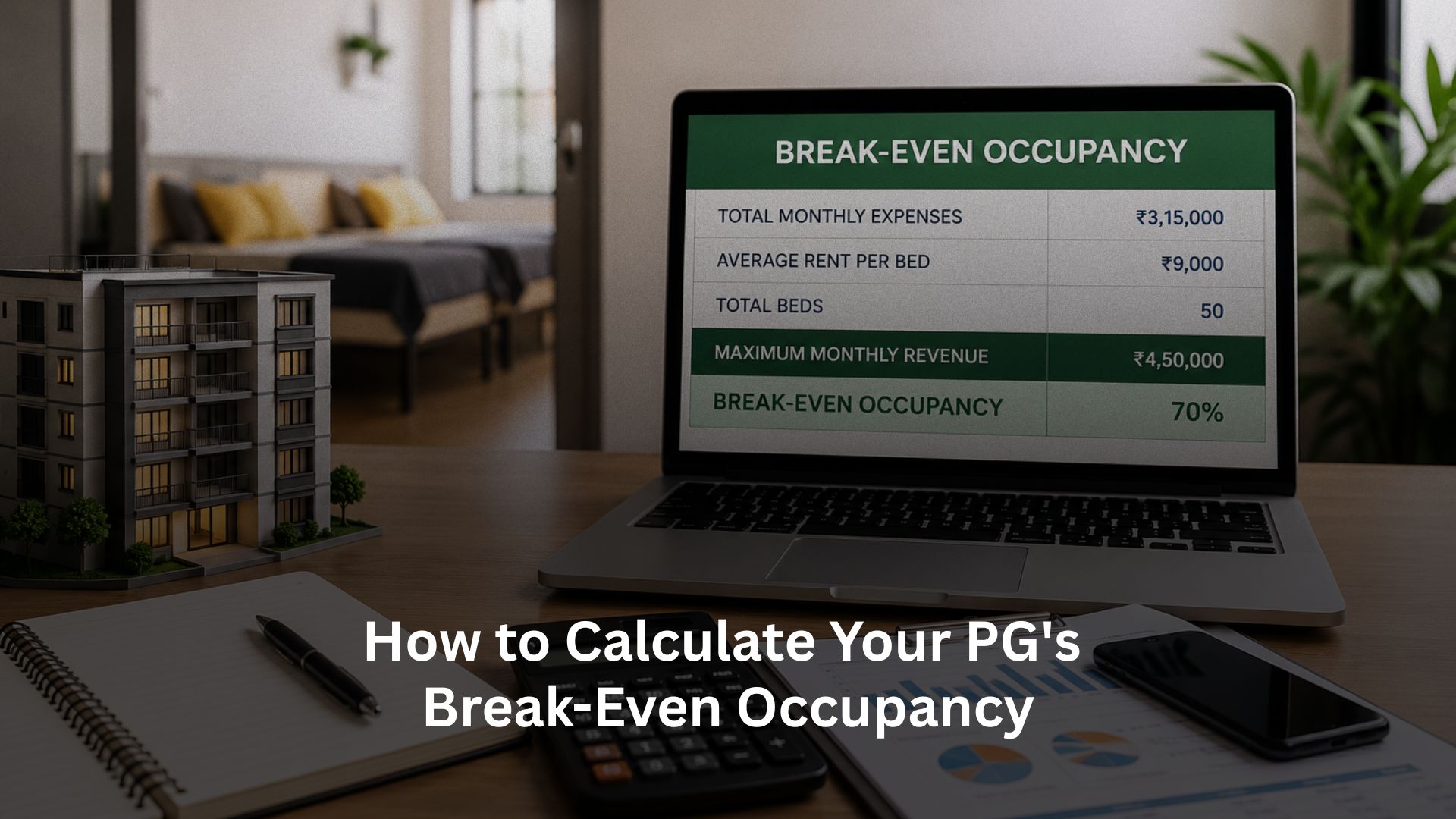
How to Calculate Your PG’s Break-Even Occupancy
Written by
Posted on
Ishika Pannu
Jun 29, 2026

1 min read
Top 5 Mistakes New PG Owners Make in Their First 3 Months
Written by
Posted on
Ishika Pannu
Jun 22, 2026

1 min read
How to Create a Free PG Logo in 5 Minutes
Written by
Posted on
Ishika Pannu
Jun 21, 2026
1 min read
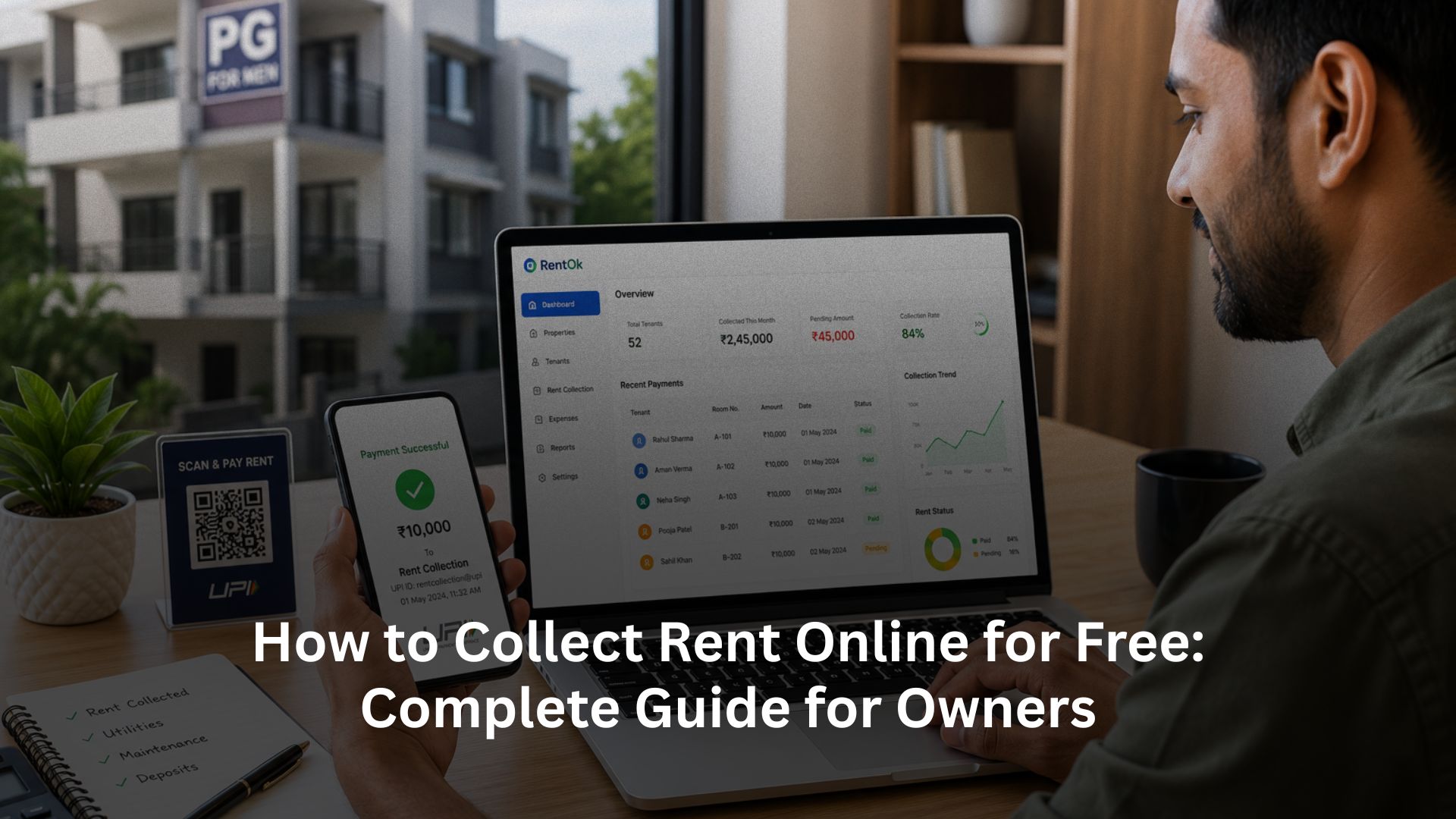
How to Collect Rent Online for Free: Complete Guide for Owners
Written by
Posted on
Ishika Pannu
Jun 5, 2026
1 min read
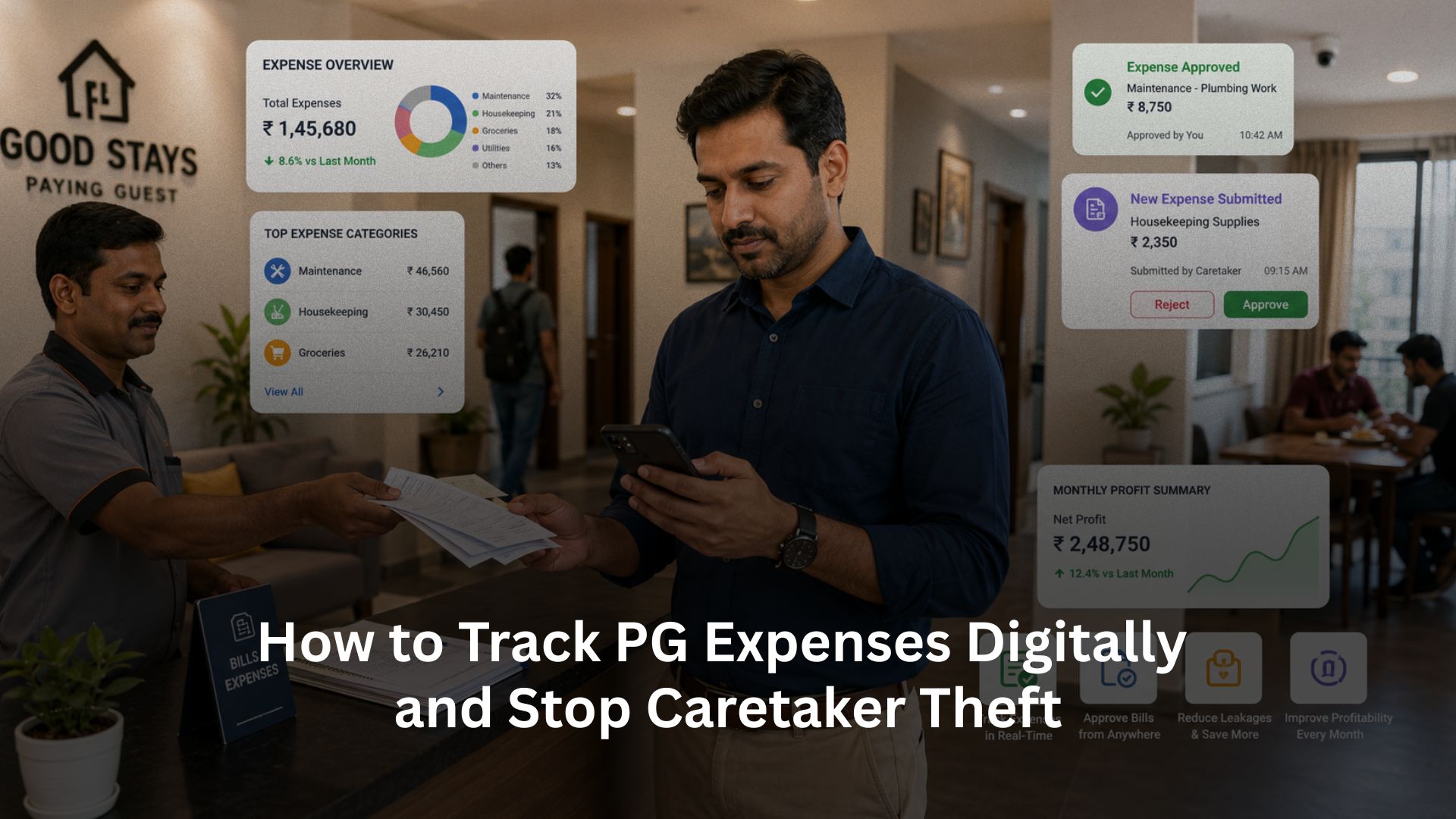
How to Track PG Expenses Digitally and Stop Caretaker Theft
Written by
Posted on
Ishika Pannu
Jun 4, 2026
1 min read
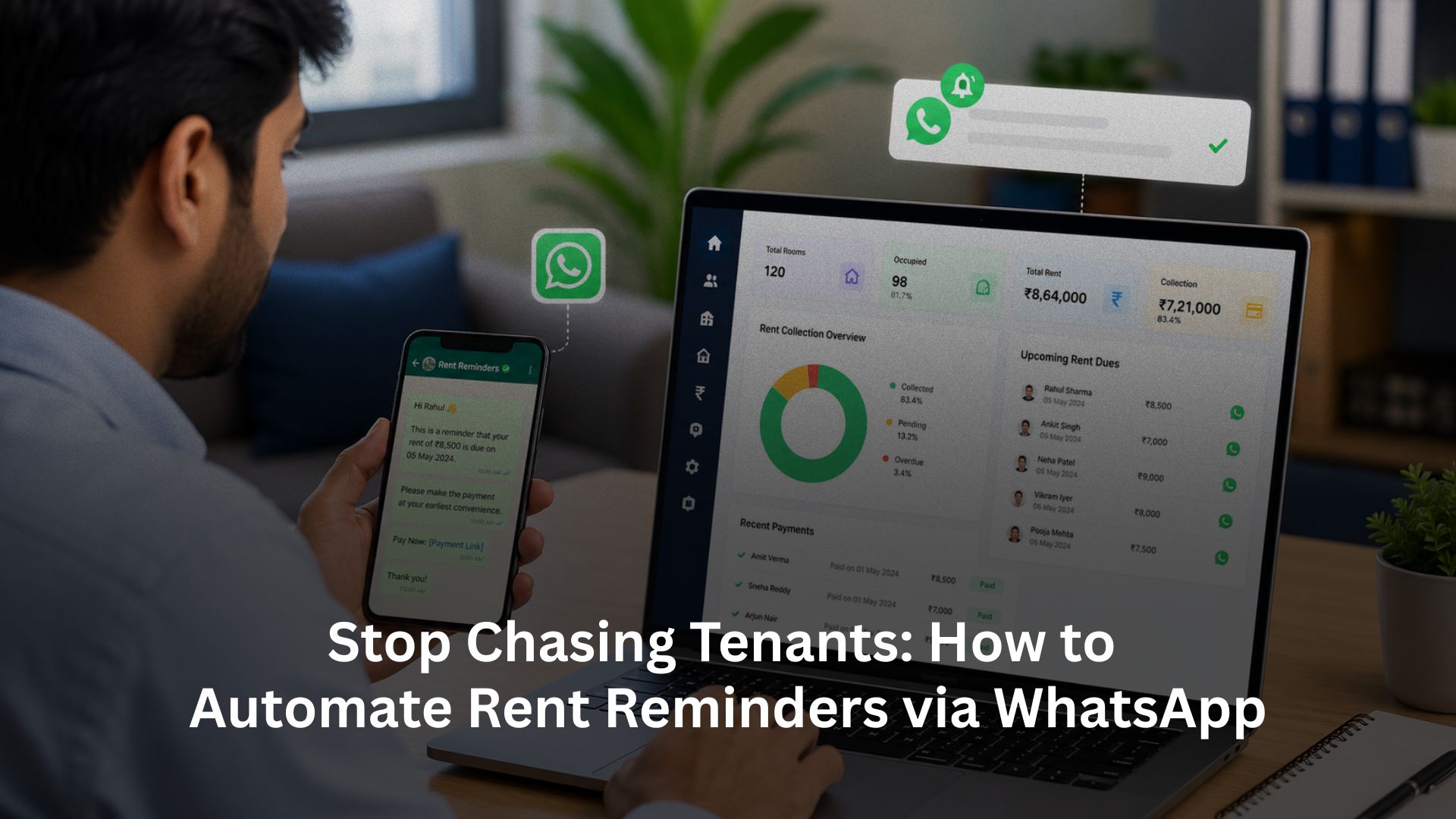
Stop Chasing Tenants with Automated Rent Reminders
Written by
Posted on
Ishika Pannu
Jun 4, 2026
1 min read
The Easiest Way to Manage 100+ Tenants Without Using Excel
Written by
Posted on
Ishika Pannu
Jun 1, 2026
Stay ahead in property management with expert insights
Join thousands of property managers receiving exclusive tips delivered straight to your inbox.
Browse posts by category
Case Study
Cost of Living
Growth
Legal
Market Trends
News
Pg owner app
Property Management
Property Tax
Tech
RentOk
The easiest way to rent and manage your PGs and hostels.
Get the app


Contact us
hello@eazyapp.tech
HQ Office
COGROW, BASEMENT F-12/8A
BESIDE HOUSE OF STYLE SALON, SECTOR 28, DLF PHASE 1
GURUGRAM, HARYANA - 122002
South India Office
LUMIODESK COWORKING, 2ND FLOOR, 40, 14TH MAIN RD
BESIDE MC DONALD, 7TH SECTOR, HSR LAYOUT
BENGALURU, KARNATAKA - 560102
©️ 2026 EazyApp Tech Pvt Ltd. All rights reserved


