Growth
How to Price Your PG for Maximum Occupancy

Written by
Ishika Pannu
Read Time
16 min read
Posted on
July 28, 2026
Overview
Overview
How to Price Your PG for Maximum Occupancy
Ask any PG owner what keeps them awake at night, and you’ll likely hear the same concerns: vacant rooms, inconsistent occupancy, rising operating costs, and increasing competition. In response, many operators make one quick decision, they lower their prices, hoping cheaper rent will fill empty rooms faster.
While that may seem like the easiest solution, it is rarely the smartest one.
A well-planned PG room pricing strategy isn’t about offering the lowest rent in your locality. It’s about understanding what your property offers, what tenants are willing to pay, and how market demand changes throughout the year. When pricing is based on strategy rather than assumptions, it helps maintain healthy occupancy without compromising profitability.
The challenge is that many property owners still rely on guesswork. They compare their prices with nearby PGs, copy competitors, or make decisions based on short-term vacancies. Over time, this creates a pricing model that reacts to the market instead of leading it.
Professional operators approach pricing differently. They evaluate occupancy trends, room demand, amenities, seasonal fluctuations, tenant preferences, and operating costs before deciding what a room is actually worth. This allows them to maximize occupancy while protecting long-term revenue.
Throughout this guide, we’ll explore how successful PG owners think about pricing, the common mistakes that quietly reduce profits, and practical strategies that help strike the right balance between occupancy and revenue.
Why Pricing Has a Bigger Impact Than Most Owners Realize
Most people assume room pricing only affects one thing, whether someone decides to book a room or not. In reality, pricing influences almost every part of a PG business.
The rent you charge shapes the type of tenants you attract, the speed at which rooms get occupied, your monthly cash flow, and even how tenants perceive your property’s quality. Price your rooms too high without offering enough value, and inquiries begin to slow down. Price them too low, and while occupancy may improve temporarily, your margins shrink, making it harder to maintain service quality over time.
This creates a cycle that many operators unknowingly fall into. Lower prices reduce profitability, which limits investment in maintenance, staff, amenities, and tenant experience. Eventually, the property loses its competitive advantage despite maintaining decent occupancy.
A strong pricing strategy considers multiple business objectives simultaneously. Instead of focusing only on filling rooms, it helps create a sustainable balance between occupancy, revenue, and operational efficiency.
Some of the areas directly influenced by pricing include:
- Occupancy consistency: Stable pricing reduces the need for frequent discounts and helps maintain predictable occupancy throughout the year instead of relying on last-minute offers to fill vacancies.
- Revenue per occupied room: Two properties with identical occupancy can generate completely different monthly revenue depending on how effectively their pricing is structured.
- Tenant expectations: Rent often sets the first impression. Tenants naturally associate higher prices with better cleanliness, management, amenities, and overall living experience.
- Business scalability: Consistent pricing provides predictable cash flow, making it easier to invest in marketing, staff, technology, and future expansion without putting pressure on margins.
The most successful PG businesses don’t compete solely on price. They compete on value, positioning, and operational excellence.
Pricing is only one part of building a profitable PG business. If you’re planning long-term growth instead of simply filling vacant rooms, our guide on How to Grow Your PG Business in 2026 explores the systems, metrics, and operational practices that help owners scale sustainably.

The Biggest Pricing Mistakes That Quietly Hurt Occupancy
Poor pricing decisions rarely create problems overnight. Instead, they slowly reduce profitability while making it harder to attract the right tenants.
One of the most common mistakes is treating pricing as a one-time decision. Markets change continuously. Student admission cycles, corporate hiring seasons, infrastructure developments, and local competition all influence demand. A pricing strategy that worked six months ago may no longer be suitable today.
Another major issue is relying entirely on competitor pricing.
Just because the PG next door charges ₹9,000 doesn’t automatically mean your rooms should cost the same. Their occupancy rate, amenities, room size, maintenance standards, target audience, and operating costs may be completely different from yours.
Professional operators avoid several common pricing mistakes, including:
- Reducing rent every time occupancy drops, without first identifying whether pricing is actually the problem. In many cases, vacancies are caused by poor visibility, weak marketing, or an inconsistent tenant experience rather than room rates.
- Charging identical prices for every room, regardless of floor, view, occupancy type, furnishing quality, or attached amenities. Different rooms naturally create different value perceptions.
- Ignoring seasonal demand patterns, which often leads to missed revenue opportunities during high-demand periods and unnecessary discounts during slower months.
- Focusing only on monthly rent, while overlooking deposits, included services, electricity policies, maintenance quality, and other factors that influence a tenant’s overall cost of living.
- Making emotional pricing decisions based on isolated vacancies instead of analyzing occupancy trends over several months.
These mistakes don’t just reduce revenue, they also make pricing inconsistent, which creates confusion among prospective tenants and weakens trust in the property.
If you’re also working on increasing occupancy through word-of-mouth instead of relying solely on discounts, our blog on Building a Referral Program: Turn Your Tenants into Your Sales Team explains how satisfied residents can become one of your strongest acquisition channels.
Every PG Doesn’t Need the Same Pricing Strategy
A common misconception among property owners is that there is a “correct” price for a room. In reality, pricing depends on far more than location.
Two PGs situated on the same street can charge noticeably different rents while maintaining healthy occupancy. The difference usually comes down to positioning.
A premium co-living space designed for working professionals requires a different pricing strategy than a student-focused PG because the value it offers is fundamentally different. Pricing should reflect the overall experience your property delivers. Features such as well-designed interiors, thoughtful lighting, and an appealing room presentation can significantly increase perceived value without affecting occupancy. As explained in The Role of Interior Lighting in Enhancing Room Value, even simple physical upgrades can justify premium pricing. Likewise, properties that provide housekeeping, meals, biometric access, high-speed Wi-Fi, and community events offer a more comprehensive living experience than basic accommodations with only essential facilities, making higher pricing both reasonable and sustainable.
Before deciding what to charge, evaluate the factors that genuinely influence tenant willingness to pay:
- Location advantage: Proximity to colleges, metro stations, business districts, hospitals, or corporate hubs often allows operators to command premium pricing.
- Room configuration: Single occupancy, double sharing, triple sharing, attached washrooms, balconies, and larger room sizes all contribute differently to perceived value.
- Amenities offered: High-speed internet, meals, laundry, housekeeping, power backup, parking, security, and recreational spaces significantly influence pricing potential.
- Target audience: Students, working professionals, interns, and corporate employees have different expectations, budgets, and decision-making patterns.
- Brand reputation: Properties with strong online reviews, organized management, and better tenant experiences often maintain higher prices because trust itself becomes a competitive advantage.
Instead of asking, “What are others charging?”, a more useful question is:
“What value does my property deliver, and what price fairly reflects that value?”
That’s where sustainable pricing begins.
How Demand-Based Pricing Helps You Earn More Without Losing Occupancy
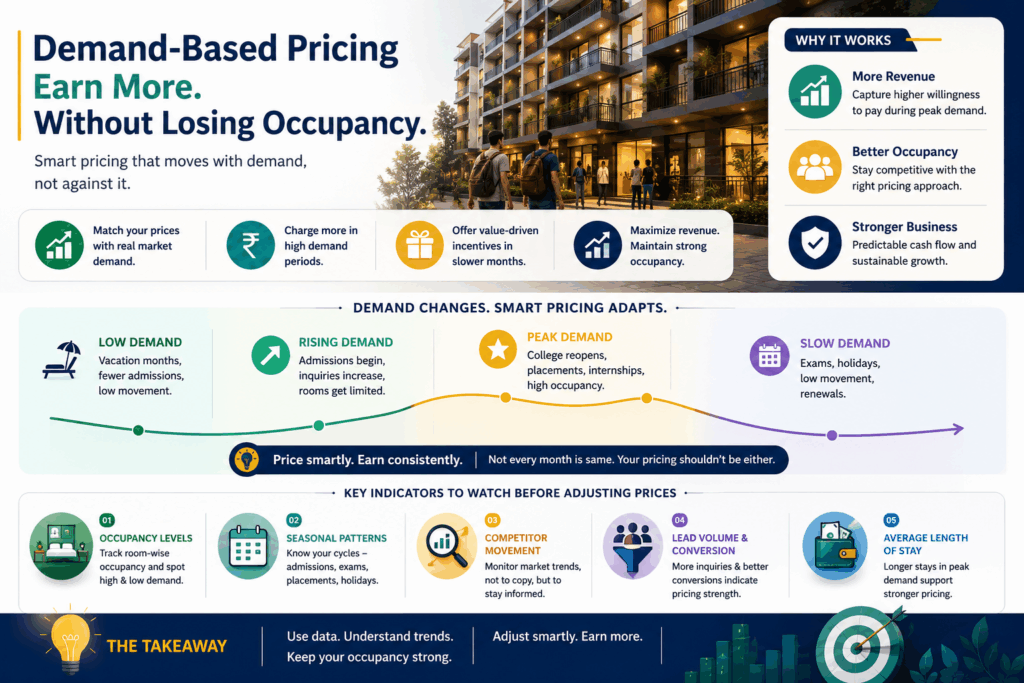
One of the biggest differences between average PG operators and professionally managed properties is how they respond to demand. While many owners keep the same room rates throughout the year, experienced operators understand that tenant demand is rarely constant.
Student admissions, college semesters, campus placements, corporate hiring, internships, and even local events can significantly influence occupancy. During these periods, rooms naturally become more desirable, allowing owners to command better prices without affecting demand. Similarly, slower months may require small pricing adjustments or added value rather than drastic discounts.
Demand-based pricing doesn’t mean changing rents every week. Instead, it means aligning your pricing strategy with market conditions instead of relying on fixed assumptions.
For example, if your property is located near a university, the months leading up to admissions usually experience a surge in inquiries. Reducing prices during this period simply means leaving revenue on the table. On the other hand, if occupancy slows during vacation months, offering bundled services or limited-time incentives may be more effective than cutting rent across every room.
Professional operators usually monitor several indicators before adjusting prices:
- Occupancy levels across different room types, helping identify which categories are in high demand and which may require promotional offers.
- Seasonal demand patterns, such as college admissions, internship cycles, examination periods, or corporate hiring seasons that consistently influence occupancy each year.
- Competitor movement, not to copy their pricing, but to understand how the local market is responding to changing demand.
- Lead volume and conversion rates, because a sudden increase in inquiries often indicates that the market can comfortably support current, or even slightly higher, pricing.
Rather than reacting emotionally to every vacant room, demand-based pricing encourages owners to make decisions backed by market behaviour and occupancy trends.
Why Lower Prices Don’t Always Lead to Higher Occupancy
Whenever occupancy starts dropping, the first instinct for many owners is to reduce rent. While this may generate additional inquiries, it doesn’t necessarily result in better occupancy or stronger profits.
Tenants don’t evaluate a PG based on price alone, they compare the overall living experience. Factors such as location, cleanliness, amenities, safety, management responsiveness, food quality, reviews, and overall value for money all influence their decision. If these expectations aren’t met, simply lowering the rent is unlikely to solve the underlying problem. In fact, many PG owners lose tenants because of operational friction rather than pricing. If you’re experiencing frequent move-outs despite offering competitive rents, The Psychology of Tenant Retention: Reducing Churn in High-Density Housing explains why tenant experience has a much greater impact on renewals than discounts.
In some cases, aggressive discounts can even work against you.
Extremely low pricing often creates the impression that something is lacking. Prospective tenants may begin questioning the property’s maintenance standards, security, or management quality. Ironically, charging slightly more while clearly communicating your value proposition can improve trust and attract tenants who are looking for reliability rather than the cheapest option.
Before reducing prices, ask yourself:
- Is occupancy falling because of pricing, or because fewer people know about the property?
- Have online reviews or ratings affected tenant confidence?
- Are nearby competitors offering better amenities or services?
- Is the issue poor marketing rather than poor pricing?
- Has the tenant experience deteriorated over time?
Finding the real cause helps you solve the right problem instead of treating every vacancy with another discount.
Create Different Price Points Instead of One Fixed Rate
Not every room inside your property offers the same experience, so there is little reason to charge every tenant the same amount.
Room size, natural lighting, attached washrooms, balconies, floor level, furnishing quality, and occupancy type all influence perceived value. By creating multiple pricing tiers, you give prospective tenants more flexibility while improving your revenue potential.
Instead of advertising a single rent across the property, consider categorizing your inventory based on the value each room provides.
For example:
- Premium Rooms: Single occupancy, attached washroom, balcony, better furnishings, or superior views can justify a higher price while appealing to professionals seeking greater privacy.
- Standard Rooms: Well-maintained double-sharing or twin-sharing rooms that balance affordability with comfort often become the highest-demand category in many PGs.
- Budget Options: Triple-sharing rooms or basic accommodation provide an entry point for price-sensitive tenants without affecting the perceived value of premium rooms.
This approach offers two important advantages.
First, it allows you to cater to different budgets without competing solely on the lowest price. Second, it increases the likelihood that a prospective tenant finds an option that fits their expectations instead of walking away because every room falls outside their budget.
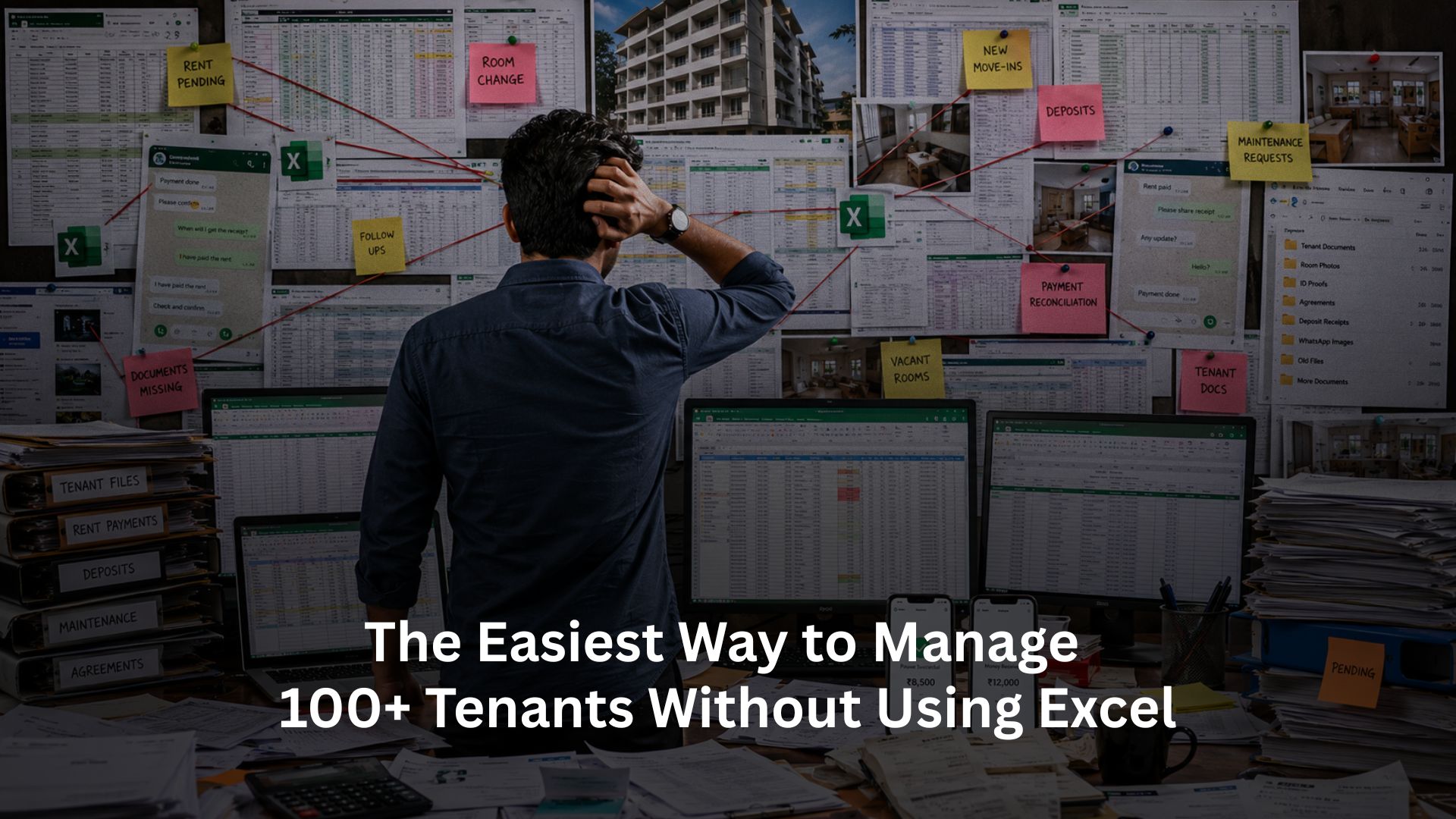
As your property grows, managing different room categories, pricing structures, and occupancy manually becomes increasingly difficult. The Easiest Way to Manage 100+ Tenants Without Using Excel explains why many growing operators eventually move beyond spreadsheets to manage their inventory more efficiently.
Small Pricing Experiments Can Produce Big Results
Many owners hesitate to change pricing because they fear losing inquiries. However, pricing doesn’t have to change dramatically to produce meaningful results.
Successful operators often test small adjustments before making permanent decisions.
For instance, instead of immediately increasing rent by a large amount, you might slightly raise prices for newly vacant premium rooms while keeping existing tenant agreements unchanged. If inquiries remain steady and conversion rates stay healthy, the market has effectively validated your new pricing.
Similarly, if a particular room category remains vacant longer than others, try adjusting the offer rather than the rent itself. Adding free Wi-Fi for the first month, complimentary laundry, or a limited housekeeping upgrade can often improve perceived value without reducing monthly income.
Some practical experiments include:
- Increasing prices slightly during periods of peak demand to understand the market’s willingness to pay while monitoring inquiry volume and booking rates.
- Offering bundled services instead of rent discounts, allowing tenants to perceive greater value without permanently reducing recurring revenue.
- Testing different pricing across room categories to identify which combinations maximize both occupancy and overall monthly earnings.
- Reviewing pricing every few months using occupancy reports, inquiry trends, and seasonal demand instead of waiting until vacancy becomes a problem.
The objective isn’t to constantly change prices. It’s to make informed adjustments based on performance rather than assumptions.
Pricing experiments are most effective when every inquiry, booking, and occupancy trend is measurable. If you’re still managing these records manually, read Why You Need Property Management Software for Landlords to understand how centralized reporting leads to better business decisions.
Pricing Should Be Reviewed, Not Forgotten
One of the biggest mistakes property owners make is treating pricing as something that only needs attention when occupancy declines.
In reality, pricing should be reviewed as regularly as any other business metric.
As your property evolves, so does its value. Improvements like better furnishings, renovated common areas, upgraded security, faster Wi-Fi, or stronger online reviews all increase the experience you offer tenants. If pricing never reflects these improvements, you’re effectively undervaluing your property.
Likewise, external factors continue changing. New PGs enter the market, infrastructure develops, nearby colleges expand, and tenant expectations evolve. A pricing strategy that remains unchanged for years rarely stays competitive.
Professional operators periodically evaluate:
- Occupancy trends over the previous few months.
- Average revenue generated per occupied room.
- Inquiry-to-booking conversion rates.
- Feedback received from existing and prospective tenants.
- Market demand and competitor positioning.
These reviews help owners identify opportunities before they become problems, allowing pricing to support long-term business growth instead of simply reacting to vacancies.
As your portfolio expands, reviewing these numbers manually becomes increasingly time-consuming. Our article What Nobody Tells You About Scaling a PG Business discusses why successful operators focus on building systems before adding more properties.

How RentOk Helps You Make Better Pricing Decisions
As your property grows, managing pricing manually becomes increasingly difficult. Tracking occupancy across multiple room types, monitoring vacancies, recording inquiries, following up with leads, and understanding which pricing strategies are actually working can quickly become overwhelming, especially when this information is scattered across spreadsheets, notebooks, WhatsApp chats, or multiple team members.
Without clear visibility, pricing decisions often become reactive rather than strategic. Owners end up lowering rents simply because a few rooms are vacant, without understanding whether the issue lies in pricing, lead generation, tenant experience, or operational inefficiencies.
This is where having a centralized property management system makes a measurable difference.
RentOk helps PG owners make smarter business decisions by bringing together the operational data that directly influences occupancy and revenue. Instead of relying on assumptions, operators gain access to real-time insights that help them evaluate property performance with confidence.
With RentOk, you can:
- Track occupancy across all rooms and properties through a centralized dashboard, making it easier to identify which room categories are consistently performing well and which require operational attention.
- Monitor inquiries, bookings, and tenant movement so you can understand demand patterns instead of making pricing decisions based solely on vacant rooms.
- Manage tenant information, agreements, payments, and renewals in one place, giving you complete visibility into occupancy cycles and future availability.
- Reduce administrative workload through automated reminders, payment tracking, complaint management, and other day-to-day workflows, allowing you to spend more time focusing on business growth rather than routine coordination.
- Access reports that support better decision-making, helping you evaluate occupancy trends, collections, and property performance before deciding whether pricing adjustments are actually necessary.
Pricing works best when it is supported by accurate operational data. By giving owners better visibility into how their properties perform, RentOk helps transform pricing from guesswork into a well-informed business strategy.
Ready to Price Smarter and Grow Occupancy?
Finding the right room price isn’t about being the cheapest option in your locality, it’s about creating a pricing strategy that reflects your property’s value while maintaining healthy occupancy and sustainable profits. When pricing decisions are backed by market demand, operational insights, and occupancy data, you can grow your business without sacrificing margins.
If you’re looking for a smarter way to manage your PG, streamline operations, and make data-driven decisions, book a free RentOk demo today and discover how one platform can help you improve occupancy, simplify property management, and scale your rental business with confidence.
Frequently Asked Questions
Find answers to common questions about this topic
About the Author
Ishika Pannu
Ishika Pannu brings you the latest insights and easy-to-apply strategies in property management—helping you simplify renting and grow with RentOk.
You may also like these
Related Articles

1 min read
How to Start a PG Business Legally in India: Step-by-Step Guide
Written by
Posted on
Ishika Pannu
Aug 27, 2026
1 min read
How to Increase PG Occupancy During Off-Season Months
Written by
Posted on
Ishika Pannu
Aug 9, 2026
1 min read
How to List Your PG on Google for Free (Google Business Profile Guide)
Written by
Posted on
Ishika Pannu
Jul 10, 2026
1 min read
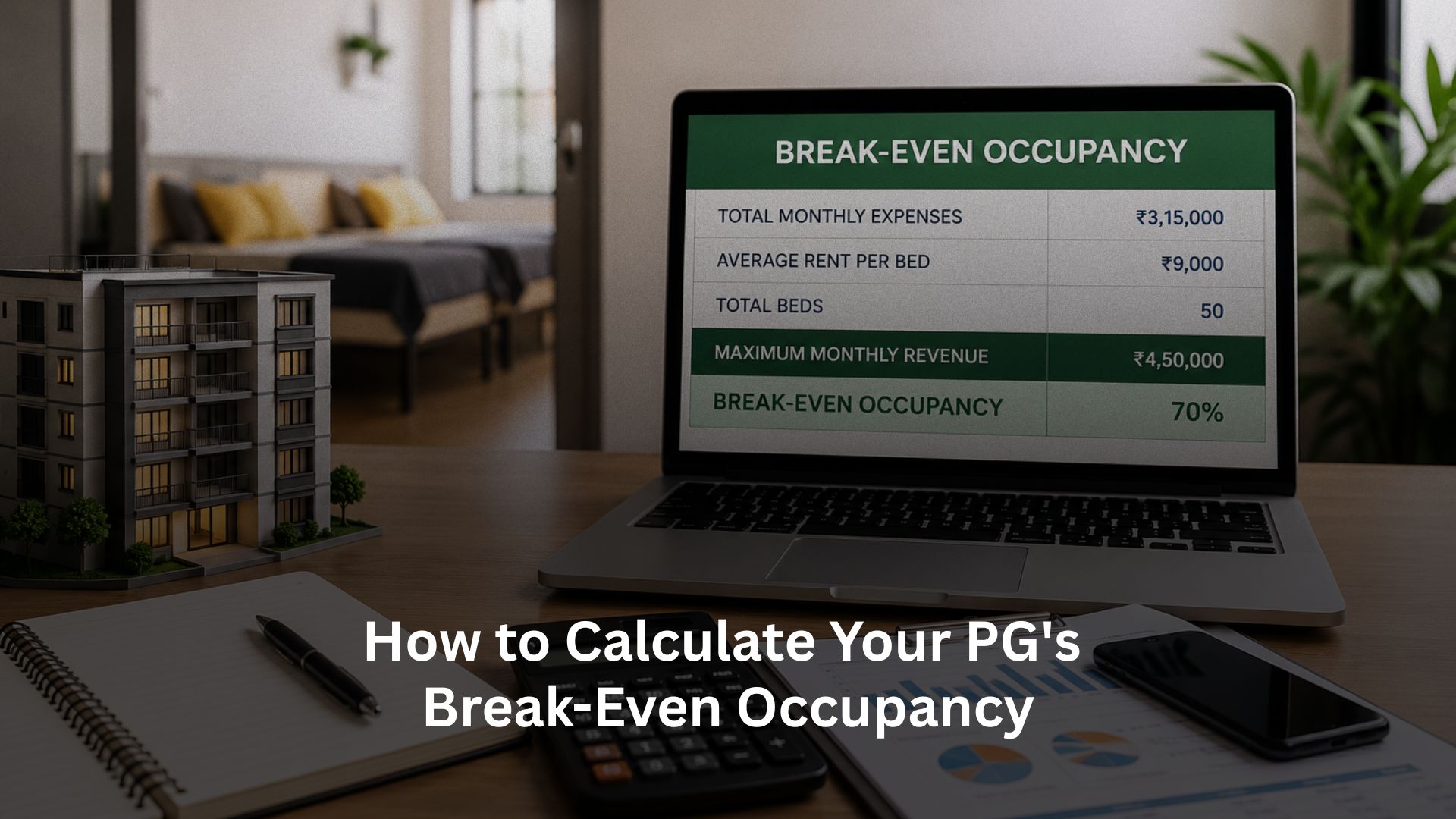
How to Calculate Your PG’s Break-Even Occupancy
Written by
Posted on
Ishika Pannu
Jun 29, 2026

1 min read
Top 5 Mistakes New PG Owners Make in Their First 3 Months
Written by
Posted on
Ishika Pannu
Jun 22, 2026
1 min read
How to Create a Free PG Logo in 5 Minutes
Written by
Posted on
Ishika Pannu
Jun 21, 2026
1 min read
How to Collect Rent Online for Free: Complete Guide for Owners
Written by
Posted on
Ishika Pannu
Jun 5, 2026
1 min read
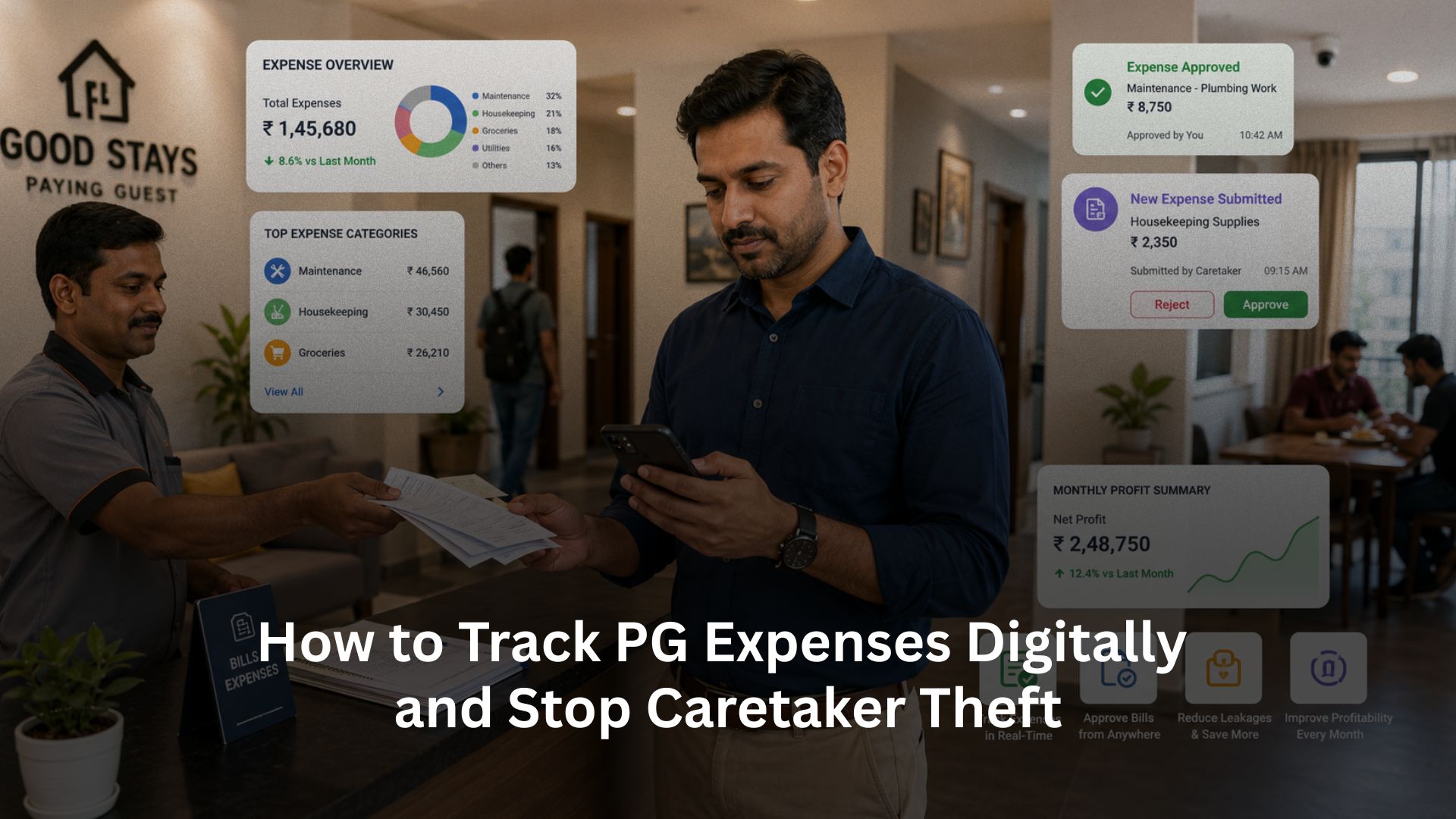
How to Track PG Expenses Digitally and Stop Caretaker Theft
Written by
Posted on
Ishika Pannu
Jun 4, 2026
1 min read
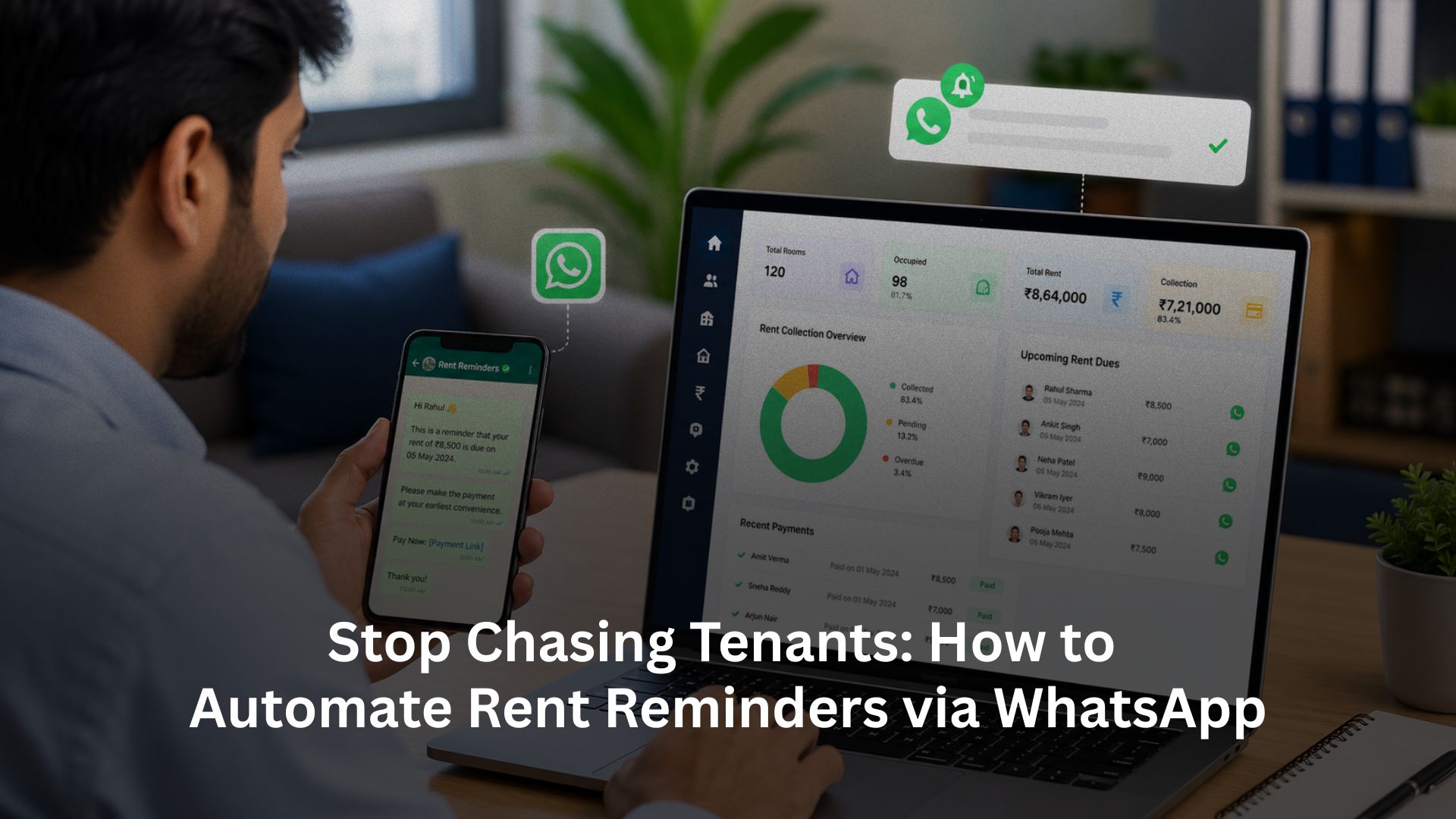
Stop Chasing Tenants with Automated Rent Reminders
Written by
Posted on
Ishika Pannu
Jun 4, 2026
1 min read
The Easiest Way to Manage 100+ Tenants Without Using Excel
Written by
Posted on
Ishika Pannu
Jun 1, 2026
Stay ahead in property management with expert insights
Join thousands of property managers receiving exclusive tips delivered straight to your inbox.
Browse posts by category
Case Study
Cost of Living
Growth
Legal
Market Trends
News
Pg owner app
Property Management
Property Tax
Tech
RentOk
The easiest way to rent and manage your PGs and hostels.
Grievance Officer
Get the app


Contact us
hello@eazyapp.tech
HQ Office
COGROW, BASEMENT F-12/8A
BESIDE HOUSE OF STYLE SALON, SECTOR 28, DLF PHASE 1
GURUGRAM, HARYANA - 122002
South India Office
LUMIODESK COWORKING, 2ND FLOOR, 40, 14TH MAIN RD
BESIDE MC DONALD, 7TH SECTOR, HSR LAYOUT
BENGALURU, KARNATAKA - 560102
©️ 2026 EazyApp Tech Pvt Ltd. All rights reserved


