Growth
The Future of Property Management: 5 Tech Trends for 2030

Written by
Ishika Pannu
Read Time
9 min read
Posted on
May 9, 2026
Overview
Overview
The Future of Property Management: 5 Tech Trends for 2030
Property management is no longer just about maintaining buildings, collecting rent, and filling vacant rooms. Over the last few years, the rental housing industry has started shifting toward something much larger: operational experience. Tenants today are evaluating not only the property itself, but also how smoothly the entire living system functions around them.
This shift is changing how PGs, co-living spaces, and rental portfolios operate.
Modern tenants expect:
- faster communication that does not require repeated follow-ups for simple updates
- smoother onboarding and payment systems that feel organized from the first interaction
- better visibility into complaints, billing, and operational processes instead of fragmented coordination
- digitally connected experiences that reduce friction in everyday living
At the same time, operators are dealing with increasing operational complexity. Managing occupancy, payments, maintenance, communication, and tenant expectations across multiple properties becomes difficult when systems remain manual or disconnected.
This is exactly why PropTech is evolving rapidly.
By 2030, the rental housing industry is expected to become significantly more automated, connected, and experience-driven. The biggest advantage will not necessarily belong to operators with the largest properties. It will belong to operators who can create the smoothest operational systems while maintaining a strong tenant experience.
AI Automation Will Reduce Operational Dependency
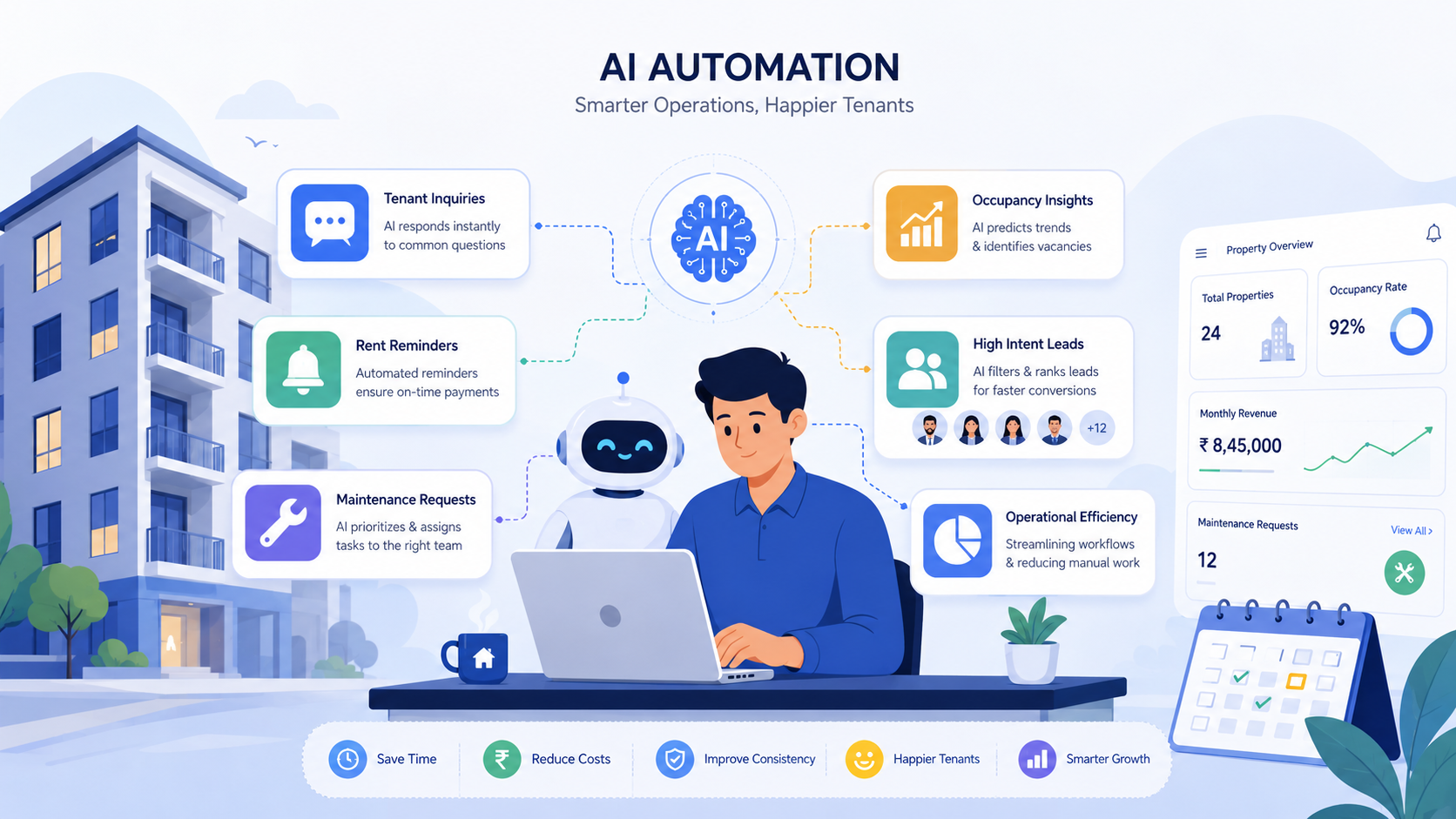
Artificial Intelligence is expected to become one of the most practical operational tools in property management over the next decade. Not because it sounds futuristic, but because rental businesses spend an enormous amount of time managing repetitive tasks manually.
Most operational teams already deal with recurring workflows every single day:
- responding to repetitive tenant inquiries around payments, move-ins, and property policies
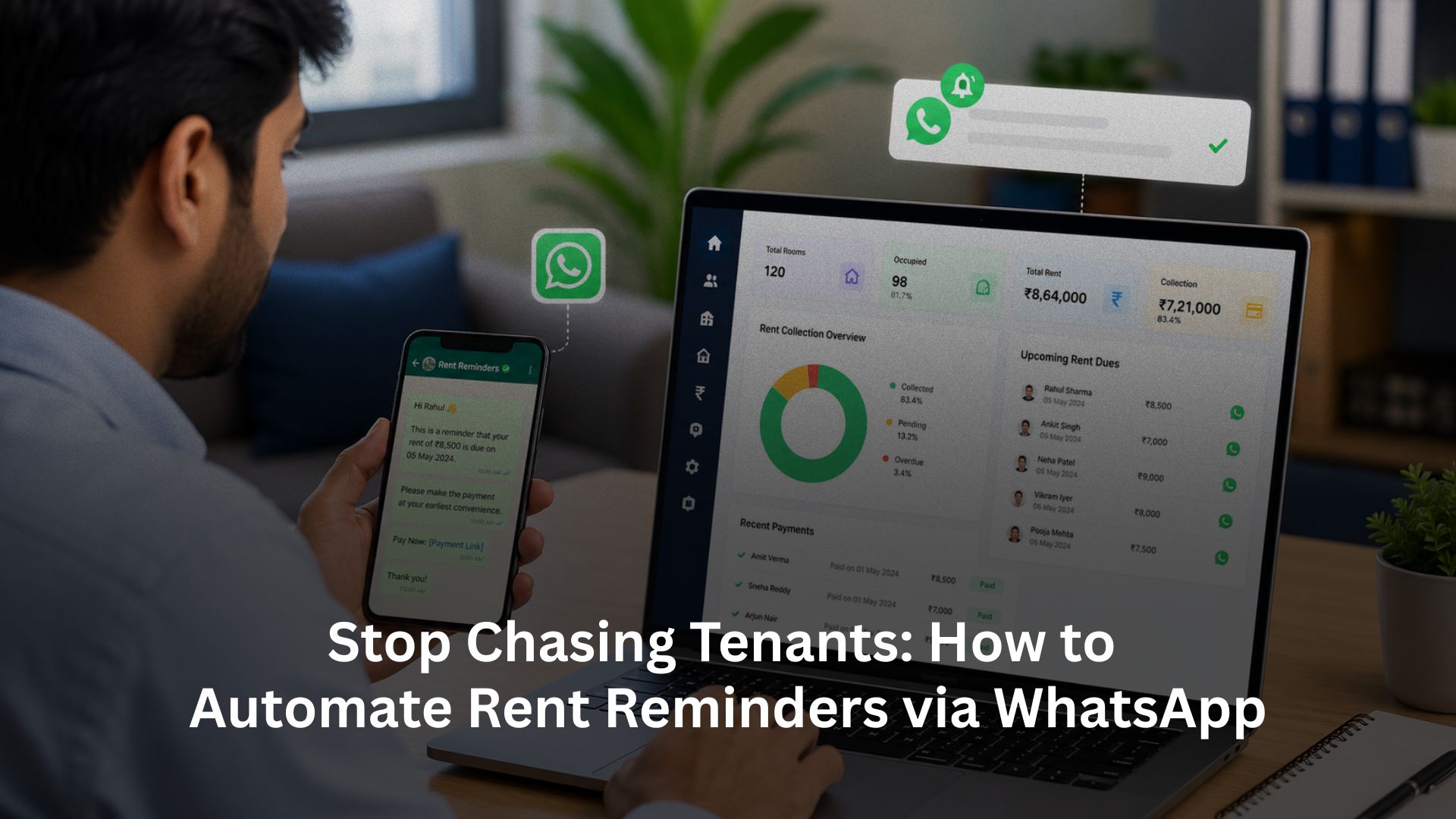
- sending manual rent reminders and following up repeatedly on pending dues
- coordinating maintenance requests between tenants and support staff
- updating occupancy records across fragmented spreadsheets or systems
- handling repetitive communication that slows down operational efficiency
As portfolios grow, these tasks start consuming a disproportionate amount of time. Small delays begin affecting tenant experience, and operational consistency becomes harder to maintain.
AI-supported systems can reduce a large part of this operational pressure by automating repetitive coordination while improving response consistency at the same time.
For example, AI-based systems may increasingly help operators:
- respond instantly to common inquiries without requiring staff intervention every time
- automate payment reminders and reduce manual follow-up dependency
- prioritize complaints based on urgency instead of simple reporting order
- identify occupancy trends and demand fluctuations through historical patterns
- improve inquiry management by filtering high-intent leads more effectively
The biggest advantage here is not just automation. It is predictability.
One of the biggest problems in traditional property management is inconsistency. A delayed response, missed follow-up, or poorly coordinated workflow may seem small individually, but over time, these operational gaps directly affect tenant trust.
AI helps reduce this inconsistency by creating more structured and repeatable systems.
Smart Buildings Will Become More Operationally Intelligent
The concept of smart buildings is no longer limited to luxury real estate projects. By 2030, connected infrastructure is expected to become increasingly common even in mid-sized PGs, co-living spaces, and managed rental properties.
This is where IoT (Internet of Things) becomes important.
Connected systems allow properties to monitor operations continuously instead of relying entirely on manual supervision. Rather than waiting for issues to escalate, systems can identify operational irregularities much earlier.
This becomes especially important in high-density rental setups where small inefficiencies quickly multiply across residents.
Some of the biggest changes are expected to happen in:
- electricity management systems that improve billing transparency and reduce disputes through smart metering and automated usage tracking
- app-based access control systems that simplify visitor management and improve security visibility
- preventive maintenance systems that detect appliance or infrastructure issues before complete breakdowns happen
- utility monitoring systems that improve operational efficiency while reducing wastage across larger properties
The operational advantage of connected infrastructure is visibility.
Instead of depending entirely on manual observation, operators gain real-time awareness of how the property is functioning. At the same time, tenants experience smoother day-to-day living because many operational issues are identified and resolved faster.
Virtual Property Tours Will Become Standard
Rental discovery has already become heavily digital-first. Most tenants now shortlist properties online before considering physical visits. But traditional listing formats still create major visibility gaps.
Static photos often fail to communicate:
- actual room layouts and usable space properly
- lighting conditions and room flow realistically
- common area functionality and overall property atmosphere
- how different spaces connect operationally inside the property
This is why virtual property tours are expected to become significantly more common by 2030.
Instead of browsing disconnected images, prospective tenants will increasingly expect immersive walkthroughs that allow them to understand the property experience before visiting physically.
This becomes especially valuable for:
- students relocating from different cities who cannot visit multiple properties personally
- working professionals moving for jobs and making faster accommodation decisions
- parents trying to evaluate safety and living conditions remotely
- international tenants searching for housing before arrival
For operators, the benefits are equally important.
Virtual tours improve lead quality because prospective tenants already understand the property much better before inquiry stages begin. This reduces:
- unnecessary site visits from low-intent leads
- repetitive explanations around layouts and facilities
- conversion delays caused by unclear property presentation
As competition increases across rental housing platforms, better digital presentation will become a major operational advantage.
Centralized Systems Will Become Essential Infrastructure
One of the biggest operational weaknesses in traditional property management is fragmented information. In many rental businesses today, different workflows exist separately:
- tenant records are maintained in spreadsheets
- payment tracking happens through manual follow-ups
- complaint management relies on chats and calls
- occupancy updates are difficult to monitor consistently
This fragmentation slows down operations as businesses scale.
A smaller property may still function manually. But once operators begin managing:
- multiple properties,
- larger occupancy volumes,
- or high tenant turnover,
manual coordination starts creating operational blind spots.
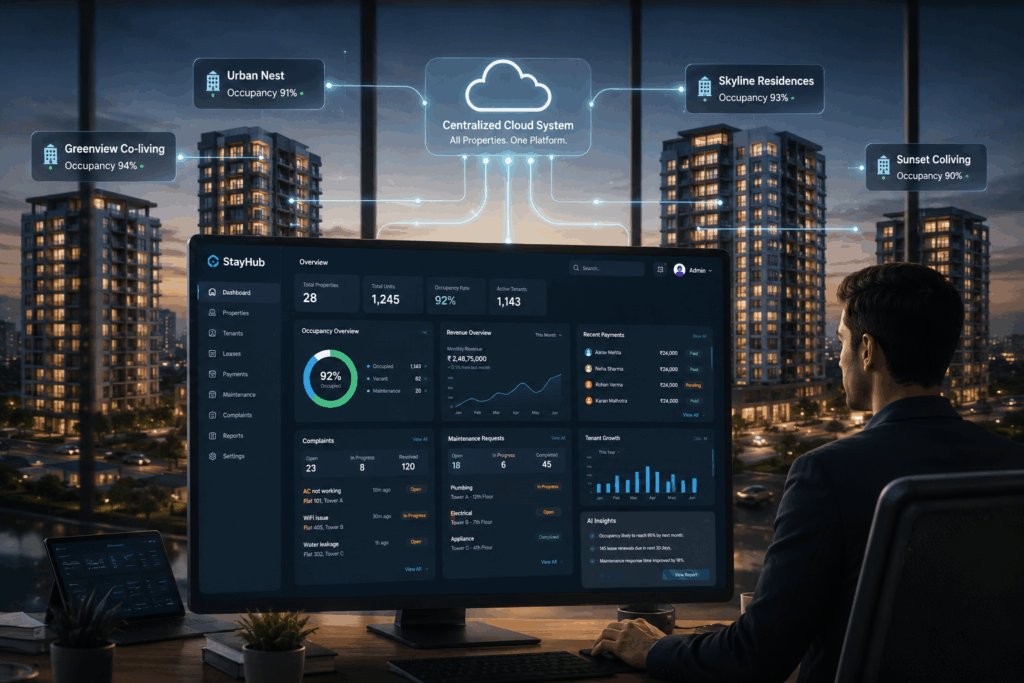
This is why centralized management systems are expected to become core operational infrastructure by 2030.
A connected system allows operators to:
- manage occupancy, payments, complaints, and tenant records from one centralized platform
- improve visibility across properties without depending on fragmented tracking methods
- streamline operational communication and reduce coordination delays
- create more structured workflows that improve accountability across teams
- scale operations more efficiently without increasing operational chaos proportionally
The biggest long-term advantage is consistency.
When systems are connected, operations become easier to manage, easier to monitor, and easier to scale.
Tenant Experience Will Become the Biggest Competitive Advantage
One of the most important long-term shifts happening in rental housing is that tenant experience is becoming central to retention and growth.
Earlier, tenants mainly evaluated properties on the basis of:
- pricing,
- location,
- and room quality.
Today, they also evaluate how the property functions operationally on a daily basis.
Modern residents increasingly care about:
- how quickly the management team responds to issues
- whether communication feels organized and predictable
- how transparent payment and billing systems are
- whether complaint resolution feels smooth or frustrating
- how convenient the overall experience feels after move-in
This changes how successful rental businesses are built.
The future of property management is becoming increasingly experience-driven rather than purely infrastructure-driven. Two properties may offer similar rooms and pricing, but the one with smoother operations usually creates stronger retention and better tenant satisfaction.
What makes this shift important is that operational friction often builds silently.
Small issues like:
- delayed updates,
- unclear billing,
- slow complaint handling,
- or inconsistent communication
may not create immediate move-outs individually. But together, they gradually reduce tenant trust and overall experience quality.
This is why future-ready rental businesses are focusing heavily on reducing friction across the tenant journey instead of only improving physical infrastructure.
Technology Will Improve Human Interactions, Not Replace Them
One common misconception about PropTech is that technology will reduce the human side of property management. In reality, the opposite is more likely to happen.
Better systems reduce operational chaos. And when teams spend less time:
- chasing payments manually,
- managing spreadsheets,
- resolving preventable communication confusion,
- or coordinating repetitive administrative tasks,
they gain more time to focus on:
- tenant support,
- service quality,
- community engagement,
- and operational improvement.
The future of property management is not about replacing people with software.
It is about using technology to remove unnecessary friction so operational teams can function more effectively.
The Biggest Challenge Will Be Operational Adaptation
While the future looks increasingly technology-driven, adoption will not always be smooth for every operator.
Many rental businesses may struggle with:
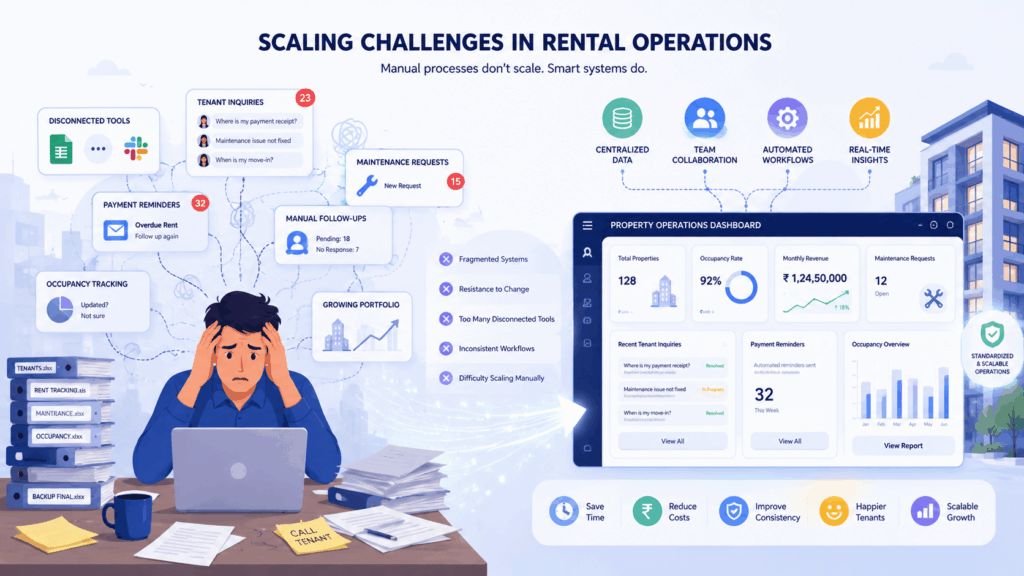
- fragmented legacy systems that are difficult to centralize
- resistance to operational change within existing teams
- confusion caused by using too many disconnected tools together
- inconsistent workflows that technology alone cannot solve
- difficulty scaling manual processes across growing portfolios
One of the biggest mistakes operators make is implementing software without improving operational structure underneath.
Technology alone cannot fix operational inefficiency if workflows themselves remain unclear. Future-ready property management depends on combining:
- structured systems,
- operational discipline,
- and technology adoption
together in a connected way.
How RentOk Helps Property Managers Build Future-Ready Operations
As rental businesses grow, managing operations manually becomes increasingly difficult. Handling tenant records, occupancy tracking, rent collection, communication, and maintenance through disconnected systems eventually creates operational gaps that affect both efficiency and tenant experience.
RentOk helps property operators centralize these workflows into one structured operational system.
With RentOk, operators can:
- manage tenant and property records more efficiently while improving operational visibility
- streamline payment tracking, occupancy management, and communication workflows in one place
- reduce manual coordination pressure by creating more organized systems across properties
- improve consistency in operational processes that directly affect tenant experience
- create more scalable management structures as rental portfolios expand
For growing PGs, co-living spaces, and managed rental businesses, this operational clarity becomes increasingly important as tenant expectations continue evolving toward smoother digital experiences.
Conclusion
The future of property management is moving toward smarter systems, connected operations, and experience-driven rental ecosystems. By 2030, trends like AI automation, smart infrastructure, virtual property tours, and centralized management platforms are expected to reshape how rental housing functions entirely.
But underneath all these technological shifts, the core objective remains the same: reducing operational friction while improving tenant experience.
The businesses that succeed in the coming decade will likely be those that understand property management is no longer just about infrastructure. It is about creating systems that make operations smoother, communication clearer, and tenant experiences more predictable.
If you want to build more organized, scalable, and future-ready rental operations, book your demo with RentOk and discover how structured property management systems can help modernize your day-to-day operations.
About the Author
Ishika Pannu
Ishika Pannu brings you the latest insights and easy-to-apply strategies in property management—helping you simplify renting and grow with RentOk.