Legal
How to Write a No-Dues Certificate for PG Tenants

Written by
Ishika Pannu
Read Time
11 min read
Posted on
July 2, 2026
Overview
Overview
How to Write a No-Dues Certificate for PG Tenants
Moving out of a PG or co-living space involves much more than packing bags and handing over the room keys. Before the tenancy officially comes to an end, both the tenant and the property owner need to ensure that all financial and operational obligations have been completed. Rent should be settled, utility bills should be cleared, security deposits should be processed, and any pending dues should be resolved.
This is where a No-Dues Certificate becomes an important part of the move-out process.
For tenants, it serves as proof that they have fulfilled all their financial responsibilities before vacating the property. For landlords and PG operators, it acts as an official record confirming that there are no outstanding payments or unresolved liabilities. A simple document like this can prevent future disputes, streamline security deposit settlements, and bring clarity to the entire exit process.
Despite its importance, many PG owners still rely on verbal confirmations or informal WhatsApp messages to communicate that a tenant has cleared all dues. While this may work for a small property, it becomes increasingly difficult to manage as occupancy grows. Without proper documentation, misunderstandings regarding rent, electricity charges, maintenance costs, or security deposit adjustments can arise even after a tenant has moved out.
In this guide, we’ll explain what a No-Dues Certificate is, when it should be issued, what information it should include, and provide a ready-to-use No Dues Certificate format that you can customize for your property.
What Is a No-Dues Certificate?
A No-Dues Certificate is an official document issued by a landlord, PG owner, hostel administrator, or property manager confirming that a tenant has paid all outstanding dues before vacating the property.
Once issued, the certificate indicates that there are no pending financial obligations related to the tenancy unless specifically mentioned in the document. It provides transparency for both parties and serves as a reference in case questions arise later regarding rent payments or security deposit settlements.
Typically, the certificate covers payments such as:
- Monthly rent, ensuring that all rental payments up to the move-out date have been received without any outstanding balance.
- Electricity, water, internet, or other utility charges, particularly when these are billed separately from the monthly rent.
- Maintenance charges or additional service fees that may have accumulated during the tenant’s stay.
- Damage recovery or deductions, if applicable, after the final room inspection has been completed.
Although the document itself is straightforward, issuing it reflects a well-managed exit process. It reassures tenants that their financial obligations have been fulfilled while providing landlords with documented evidence of the settlement.

Why Is a No-Dues Certificate Important?
Many landlords assume that once a tenant vacates the room, the relationship ends automatically. However, the move-out process often involves several financial calculations that extend beyond the final day of occupancy.
Questions such as these are surprisingly common:
- Was the last month’s electricity bill included in the final settlement?
- Has the security deposit already been adjusted?
- Were there any maintenance charges that remained unpaid?
- Has the tenant officially cleared every outstanding amount?
Without written confirmation, these discussions can quickly turn into disputes.
A properly prepared No-Dues Certificate eliminates this uncertainty by documenting the final settlement in a transparent manner.
It benefits both tenants and property managers in several ways.
For Tenants
A No-Dues Certificate gives tenants confidence that their tenancy has concluded without any pending liabilities. It also provides supporting documentation if questions arise regarding security deposit refunds or future rental references.
Some of the key benefits include:
- Acts as official proof that all rent, utility bills, and applicable charges have been cleared before moving out, reducing the chances of future payment-related disputes.
- Simplifies security deposit settlements because both parties already have written confirmation regarding outstanding dues and final adjustments.
- Provides documentation for future rentals, especially when new landlords request references or proof of responsible tenancy.
For PG Owners and Property Managers
For operators managing multiple tenants, documentation becomes even more important than verbal communication. Every completed move-out should leave behind a clear paper trail that protects the business from unnecessary conflicts.
Issuing a No-Dues Certificate helps property managers:
- Maintain accurate financial records by documenting that the tenant has completed all required payments before the tenancy officially ends.
- Reduce disputes after move-out, particularly those related to rent calculations, utility bills, or deposit adjustments that may otherwise remain open to interpretation.
- Standardize the exit process, ensuring every tenant follows the same documentation workflow instead of relying on informal communication.
Professional property management isn’t just about collecting rent, it’s also about closing every tenancy with proper documentation.
When Should a No-Dues Certificate Be Issued?
Timing plays an important role in the move-out process. Issuing the certificate too early may result in pending charges being overlooked, while delaying it unnecessarily can slow down security deposit settlements and create confusion.
Ideally, a No-Dues Certificate should be issued only after all exit formalities have been completed.
This usually includes:
- Completion of the tenant’s notice period, if applicable under the rental agreement or PG policy.
- Verification that all rent payments have been received up to the agreed move-out date.
- Settlement of pending electricity, water, maintenance, internet, or other shared expenses.
- Final room inspection to identify any damages or deductions that need to be adjusted against the security deposit.
- Completion of security deposit calculations, wherever applicable.
Only after these steps have been completed should the landlord issue the certificate.
For professionally managed PGs and co-living spaces, this document often becomes part of a structured move-out checklist, ensuring that every exit follows the same standardized process.
What Should a No-Dues Certificate Include?
Although the format may vary slightly from one property to another, certain details should always be included to make the certificate complete and legally useful.
A professionally drafted No-Dues Certificate generally contains the following information:
- Property details, including the name and address of the PG, hostel, or rental property issuing the certificate.
- Tenant information, such as the tenant’s full name, room number, and duration of stay, making it clear which tenancy the certificate refers to.
- Move-out details, including the official vacating date after which the tenancy is considered closed.
- Financial declaration, confirming that rent, utility charges, maintenance fees, and any other applicable dues have been settled in full.
- Additional remarks, if required, mentioning security deposit adjustments or any mutually agreed deductions.
- Authorized signature, along with the date and official seal (if applicable), to validate the document.
Including these details not only improves transparency but also ensures that the certificate serves as a reliable record for both parties.
No-Dues Certificate Format for PG Tenants
There is no single legally prescribed No Dues Certificate format for PGs or rental accommodations. However, a well-drafted certificate should clearly communicate that the tenant has settled all financial obligations and that the landlord has no outstanding claims against them.
The document should be concise, professional, and easy to verify. Avoid vague statements or missing financial details, as these can create confusion if the document needs to be referred to later.
Here’s a simple format that most PG owners and property managers can use.
Sample No-Dues Certificate Format
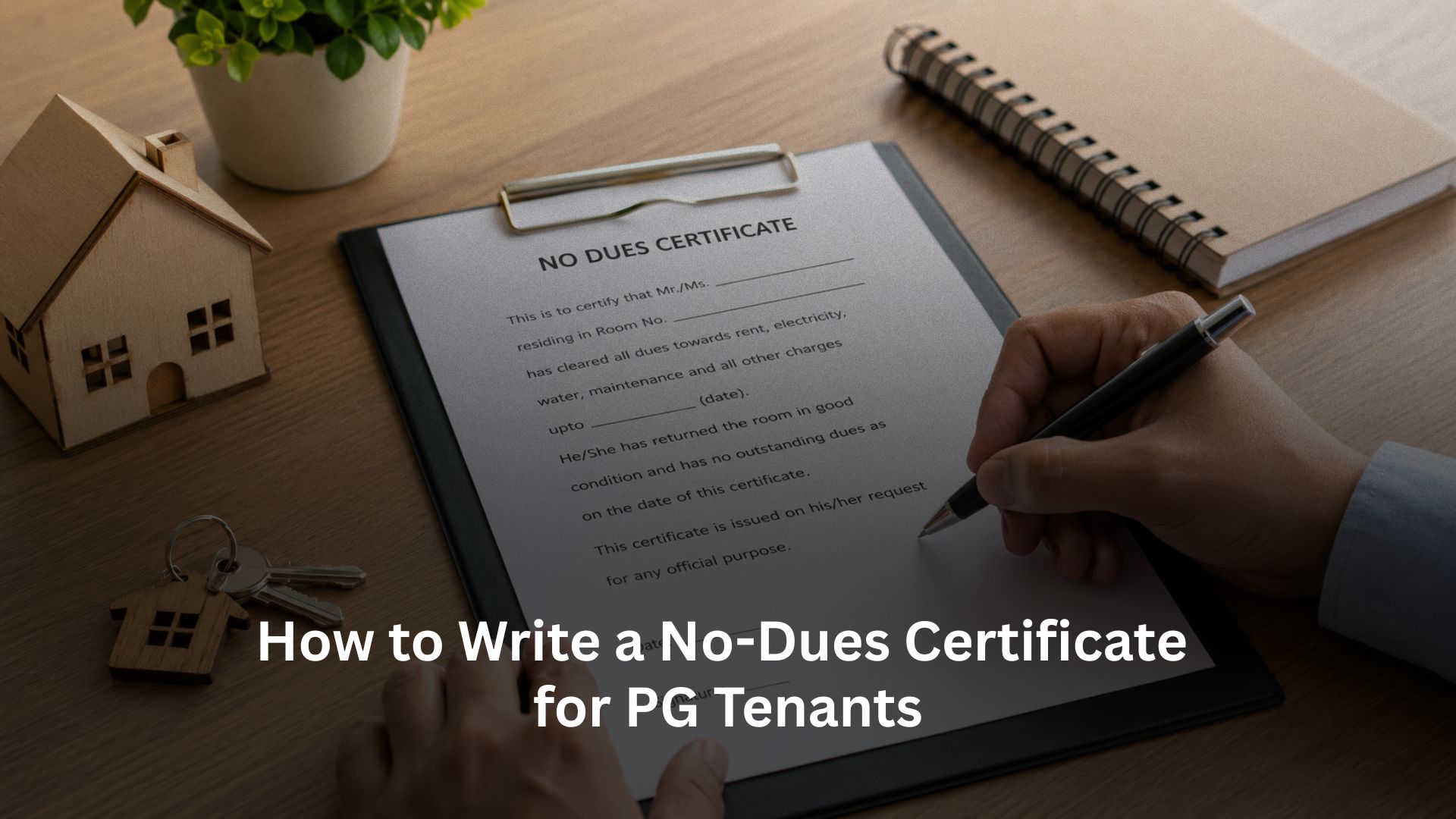
NO-DUES CERTIFICATE
Date: DD/MM/YYYY
To Whom It May Concern,
This is to certify that Mr./Ms. [Tenant’s Name], who was residing in Room No. [Room Number] at [PG/Property Name], located at [Property Address], has successfully completed their stay and vacated the premises on [Move-out Date].
We confirm that all outstanding dues related to the tenancy have been settled. This includes:
- Monthly rent up to the date of vacating.
- Electricity, water, internet, and other utility charges, wherever applicable.
- Maintenance or additional service charges.
- Any other agreed financial obligations under the tenancy.
After reviewing our records, we confirm that there are no pending dues against the tenant as of the date of issuance of this certificate.
This certificate is being issued upon the tenant’s request for future reference.
Property Owner / Authorized Signatory
Name:
Designation:
Contact Number:
Signature & Stamp

Should You Mention the Security Deposit?
This is one of the most common areas of confusion.
Many people assume that a No-Dues Certificate automatically confirms that the tenant’s security deposit has been refunded. In reality, these are two separate processes.
A No-Dues Certificate confirms that the tenant has cleared all outstanding financial liabilities. The security deposit, on the other hand, may still be under processing if the landlord is waiting for final utility bills or conducting the room inspection.
If the security deposit has already been refunded, you may include a short statement mentioning it.
For example:
“The security deposit has been settled and refunded to the tenant after adjusting applicable charges.”
If the refund is still pending, it’s better to mention that separately instead of leaving room for assumptions. Clear documentation prevents unnecessary disputes and ensures both parties understand the status of the settlement.
Common Mistakes to Avoid While Preparing a No-Dues Certificate
Although the document appears simple, overlooking a few details can create unnecessary confusion later. A professional exit process depends as much on accurate documentation as it does on timely financial settlements.
Some of the most common mistakes include:
- Issuing the certificate before completing the final settlement. Utility bills, maintenance charges, or damage assessments may still be pending. Issuing the certificate too early can create complications if additional dues are identified later.
- Leaving out important tenant or property details. Missing information such as the room number, move-out date, or property address can make the certificate difficult to verify, especially if the tenant needs it months later.
- Using vague language. Statements like “all payments are clear” may sound sufficient, but it’s better to specify the categories of dues that have been settled. This removes ambiguity and strengthens the document’s credibility.
- Not maintaining a copy for your records. Every issued certificate should be stored along with the tenant’s agreement, payment history, and move-out documentation. This helps resolve future queries quickly and maintains a clear audit trail.
Avoiding these mistakes not only improves documentation but also reflects a more organized and professional property management process.
Best Practices for PG Owners During the Move-Out Process
A No-Dues Certificate should never be treated as a standalone document. It works best when it is part of a structured tenant exit workflow.
Before issuing the certificate, experienced property managers usually complete a series of checks to ensure nothing has been overlooked.
A standardized move-out process generally includes:
- Conducting a final room inspection to verify that furniture, appliances, and other assets are in acceptable condition before calculating any deductions.
- Reconciling rent payments, utility bills, meal charges, and any additional services so that the final settlement accurately reflects the tenant’s financial obligations.
- Documenting every adjustment made against the security deposit and communicating those deductions transparently to the tenant before issuing the final documents.
- Collecting room keys, access cards, parking passes, or any property-owned assets to ensure the exit process is formally completed.
Following a consistent workflow reduces last-minute confusion and creates a better experience for both tenants and property managers.
Is a No-Dues Certificate Legally Mandatory?
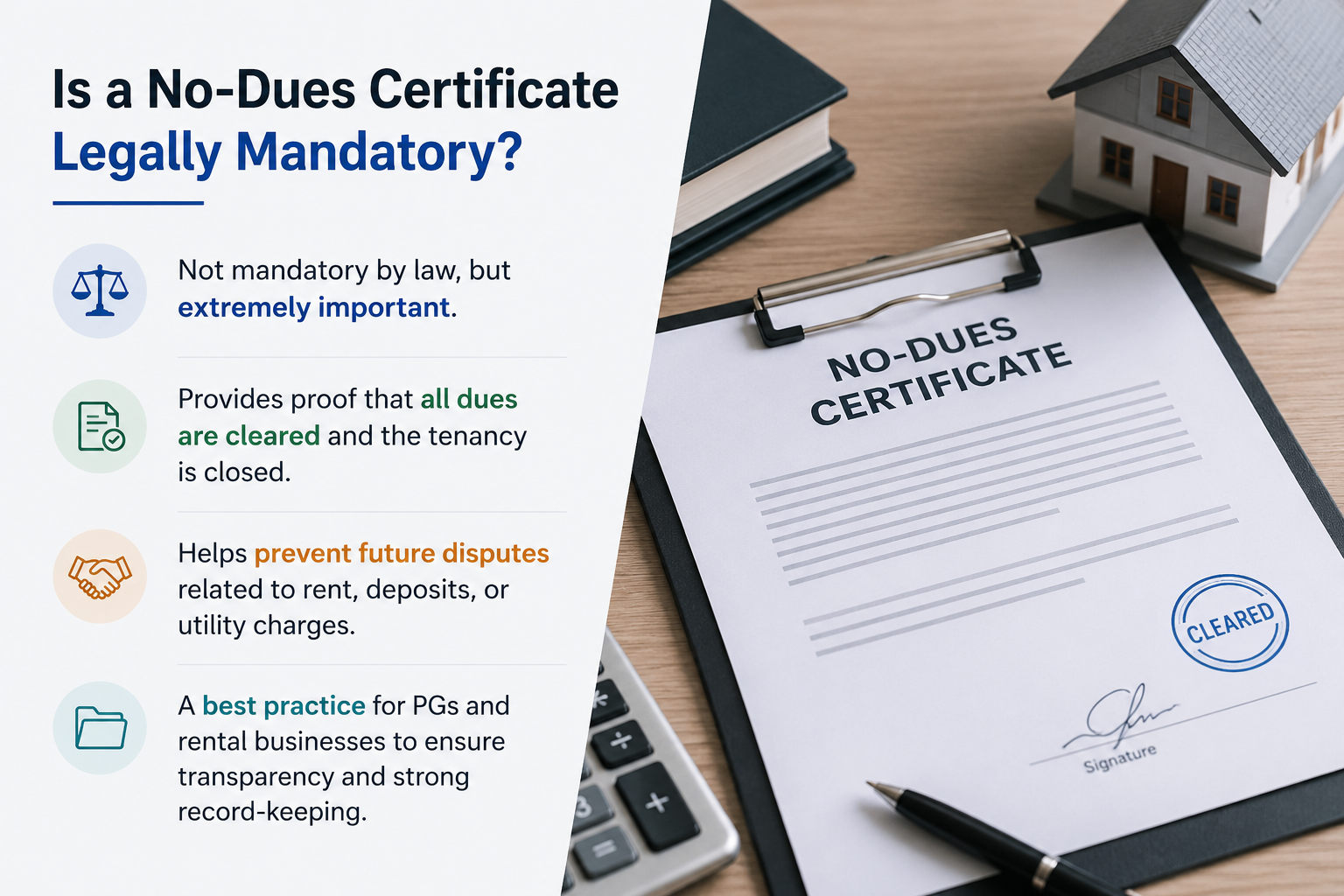
In most cases, a No-Dues Certificate is not a mandatory legal requirement for PGs or private rental accommodations. However, that doesn’t reduce its importance.
From an operational perspective, the certificate serves as documented evidence that both parties have completed the tenancy without unresolved financial obligations. If disagreements arise later regarding unpaid rent, deposit settlements, or utility charges, the document provides valuable clarity.
For professionally managed PGs, hostels, and co-living spaces, issuing a No-Dues Certificate has become a best practice rather than just an optional formality. It reflects transparency, strengthens record-keeping, and demonstrates a more structured approach to tenant management.
As rental businesses grow, standardized documentation like this becomes increasingly important for maintaining consistency across every move-in and move-out.
How RentOk Helps Simplify Tenant Move-Outs
Managing tenant exits manually often means switching between spreadsheets, payment records, WhatsApp conversations, handwritten registers, and paper agreements. As occupancy increases, keeping track of pending rent, utility charges, security deposits, and move-out documentation becomes more time-consuming and prone to errors.
RentOk helps property owners streamline the entire tenant lifecycle by centralizing rent tracking, payment records, occupancy management, agreement details, and tenant information within a single platform. This gives operators better visibility into outstanding dues before a tenant vacates, making it easier to complete final settlements accurately and maintain proper documentation.
Instead of chasing multiple records during every move-out, property managers can rely on organized data to process exits more efficiently, reduce disputes, and deliver a smoother experience for both tenants and staff.
Conclusion
A No-Dues Certificate may seem like a simple document, but it plays an important role in bringing a tenancy to a professional close. It confirms that financial obligations have been fulfilled, reduces the likelihood of future disputes, and creates a transparent record for both the tenant and the property owner.
Whether you manage a small PG or a large co-living portfolio, adopting standardized documentation during the move-out process helps build trust and improves operational consistency over time.
Need to generate professional rent-related documents for your property? Try RentOk’s Rent Receipt Generator to create accurate, ready-to-use rent receipts in just a few clicks and simplify your rental documentation workflow.
About the Author
Ishika Pannu
Ishika Pannu brings you the latest insights and easy-to-apply strategies in property management—helping you simplify renting and grow with RentOk.