Market Trends
How to Avoid Rent Disputes with Tenants


Written by
Ishika Pannu
Read Time
5 min read
Posted on
March 7, 2026
Overview
Overview
How to Avoid Rent Disputes with Tenants
Rent disputes are one of the most common challenges PG operators face. In most cases, these disagreements are not caused by tenants refusing to pay rent but by confusion around payments, unclear records, or missing communication.
A tenant may believe they already paid their rent, while the operator’s records may show it as pending. Sometimes the confusion is around electricity charges, deposit adjustments, or partial payments. When these details are not documented properly, small misunderstandings can quickly turn into lengthy discussions.
The good news is that most rent disputes can be avoided with clear agreements, transparent payment records, and structured tracking systems. When both the operator and the tenant can clearly see how payments are recorded, conflicts rarely escalate.
Let’s look at how PG operators can prevent these issues before they even begin.
Why Rent Disputes Happen in PGs
Many PG accommodations still rely on informal systems to track rent payments. Operators may maintain notebooks, spreadsheets, or WhatsApp confirmations for recording transactions.
While this approach may work when the number of tenants is small, it becomes increasingly difficult to manage as occupancy grows.
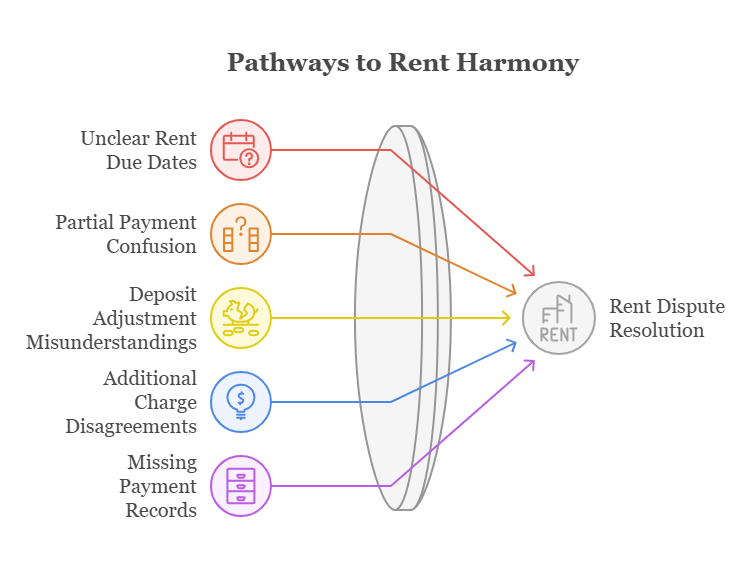
Some of the most common reasons rent disputes arise include:
- Unclear rent due dates
- Confusion about partial payments
- Misunderstandings around deposit adjustments
- Disagreements about electricity or additional charges
- Missing or incomplete payment records
These issues usually occur because financial information is scattered across different places. When operators and tenants cannot quickly verify payment details, misunderstandings become more likely.
A structured system helps remove this uncertainty.
Start With a Clear Rent Agreement
A strong agreement is the first step toward preventing disputes.
When tenants move into a PG, the agreement should clearly explain the financial terms of their stay. Many operators assume tenants will read the agreement thoroughly, but in reality, it’s helpful to explain the key terms during onboarding.
A good PG agreement usually includes:
- Monthly rent amount
- Rent due date
- Late payment policy
- Security deposit terms
- Notice period for leaving
When these terms are clearly written and explained at the start, both the tenant and the operator understand what to expect. This clarity helps prevent future disagreements about payments or penalties.
Payment Transparency Builds Tenant Confidence
Even with a proper agreement, disputes can still happen if payment records are not transparent.
Tenants often want simple confirmation that their payments have been recorded correctly. They may ask questions such as:
- Has my rent payment been updated?
- Do I have any pending dues?
- How much deposit is still with the PG?
If operators cannot answer these questions quickly, it can create doubt and frustration.
Maintaining a transparent tenant ledger helps solve this problem.
A tenant ledger is a record that shows all financial transactions related to a tenant’s stay. It usually includes:
- Monthly rent entries
- Payment dates
- Security deposit details
- Additional charges
- Outstanding balances
When tenants know that their financial records are clear and accessible, trust improves and disputes become much less common.
The Limitations of Manual Payment Records
Many PG operators initially maintain payment records manually. They may use notebooks or Excel sheets to record rent payments and deposits.
While this works in the early stages, it often becomes difficult to maintain accuracy as the property grows.
Manual systems can create problems such as:
- Missing payment entries
- Difficulty tracking partial payments
- Confusion between rent and deposit adjustments
- Time spent searching for old transactions
When records are scattered across different places, even a simple payment query can take time to resolve. This delay often creates unnecessary tension between operators and tenants.
Having organized financial records in one place makes rent management much easier.
Digital Tracking Simplifies Rent Management
Digital tracking systems allow operators to manage tenant payments more efficiently.
Instead of updating multiple records manually, operators can maintain a single centralized history of all financial transactions. This helps ensure that payment information remains consistent and easy to verify.
With digital systems, operators can quickly:
- Track rent payments for each tenant
- View pending dues instantly
- Maintain accurate deposit records
- Review the full payment history whenever required
For tenants, this transparency creates confidence that their payments are being handled properly. For operators, it saves time and reduces the chances of disputes.
Communication Still Plays an Important Role
Clear communication is another key factor in preventing rent disputes.
Tenants should always be informed about important financial updates. Regular communication helps ensure that everyone stays on the same page.
Operators can maintain clarity by sharing updates such as:
- Rent payment reminders
- Confirmation when payments are received
- Notifications about pending dues
- Information about deposit adjustments during move-out
When tenants receive timely updates, they are less likely to feel confused about their financial status.

How RentOk Helps Prevent Rent Disputes
Managing agreements, ledgers, and payment records manually can become difficult as the number of tenants increases. This is where a structured PG management system becomes extremely helpful.
With RentOk, PG operators can keep all tenant financial information organized in one place.
RentOk helps simplify rent management by allowing operators to:
- Maintain digital rent agreements for every tenant
- Track complete payment history through a transparent ledger
- Monitor pending dues and payment updates instantly
- Keep records of deposits and additional charges clearly
Because all records are stored within a single system, operators can quickly verify any financial detail whenever questions arise. This clarity helps prevent misunderstandings and keeps rent-related conversations smooth and professional.
Creating a Dispute-Free Payment System
Avoiding rent disputes is not about handling conflicts better, it’s about preventing them in the first place. When agreements are clear, payment records are transparent, and financial communication remains consistent, most misunderstandings simply do not occur.
Structured systems make it easier for operators to maintain accurate records while giving tenants confidence in how payments are managed.
If you want a simpler way to keep tenant agreements and payment ledgers organized, exploring how RentOk helps PG operators manage transparent financial records can make a real difference in avoiding rent disputes.
Maintain Clear Tenant Ledgers with RentOk
About the Author
Ishika Pannu
Ishika Pannu brings you the latest insights and easy-to-apply strategies in property management—helping you simplify renting and grow with RentOk.