
Market Trends
How to Track PG Bed Occupancy Effectively


Written by
Ishika Pannu
Read Time
6 min read
Posted on
March 5, 2026
Overview
Overview
How to Track PG Bed Occupancy Effectively
If you run a PG or hostel, occupancy is the one number that quietly determines how healthy your business is.
Every empty bed directly affects revenue. But the real challenge is not just filling beds, it’s knowing exactly which beds are available, which are occupied, and which rooms are partially filled at any given time.
Many PG owners rely on rough estimates when someone asks about availability.
“Two beds might be free.”
“I think one room is empty.”
This works when you manage a small property. But as the number of rooms and tenants grows, estimation starts creating problems. You lose track of actual availability, inquiries become harder to answer quickly, and vacancies stay unfilled longer than they should.
To track PG occupancy effectively, you need a clear and structured way to monitor beds, rooms, and vacancies. When visibility improves, decisions around admissions, pricing, and marketing become much easier.
Why Occupancy Tracking Matters More Than Most Owners Think
Occupancy is not just an operational detail. It directly impacts your revenue, planning, and growth.
When occupancy tracking is weak, several issues start appearing quietly. Beds remain vacant longer because no one notices them immediately. Partial vacancies inside shared rooms go unnoticed. Staff members give inconsistent information about availability, which leads to missed opportunities.
In contrast, when occupancy is tracked properly, you gain clarity. You can immediately see how many beds are available, where they are located, and how quickly rooms are filling up.
That visibility turns occupancy management from guesswork into a measurable process.
The Difference Between Tracking Rooms and Tracking Beds
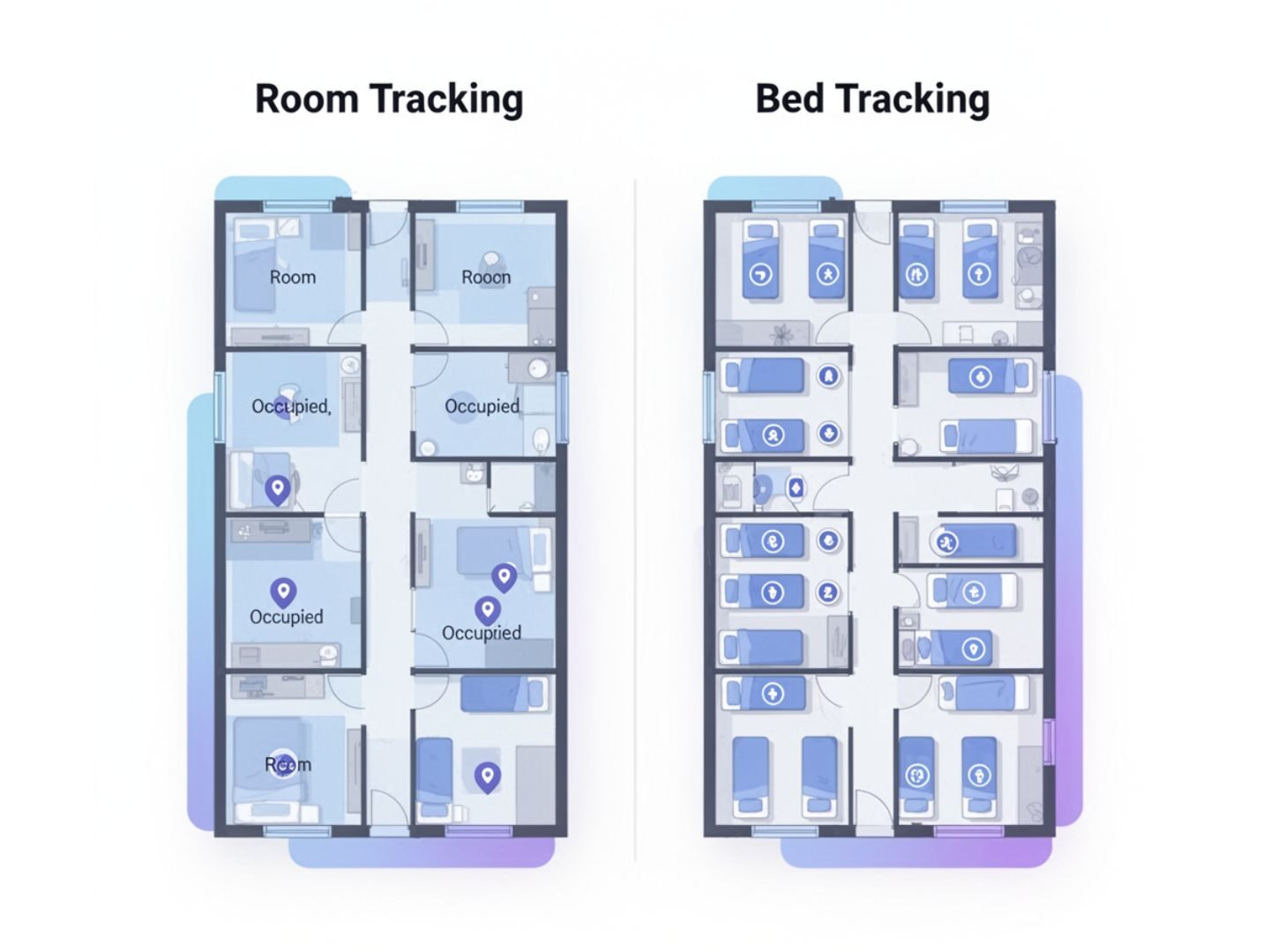
One of the most common mistakes in PG management is tracking rooms instead of beds.
In a traditional rental property, room-level tracking may be enough. But in PGs, rooms are usually shared by multiple tenants. This means a room can appear occupied even when beds are still available.
Imagine a three-bed room where two tenants are already staying. The room is technically occupied, but there is still one vacant bed that could generate revenue.
This is why bed-level tracking is important. It allows you to see the exact capacity of your property instead of relying on partial information.
With proper tracking, you can clearly identify:
- Fully occupied rooms
- Rooms that still have available beds
- The exact number of vacancies across your property
This level of detail ensures that no opportunity goes unnoticed.
Understanding Vacant, Occupied, and Semi-Vacant Rooms
For occupancy tracking to work properly, every bed needs a clear status.
A bed may be occupied, meaning a tenant is currently assigned to it. It may be vacant, meaning it is available for the next tenant. In shared rooms, there is also a third situation, a semi-vacant room, where some beds are filled but others remain empty.
Semi-vacant rooms are particularly important. They often represent the fastest way to improve occupancy because the room is already operational. You only need to fill the remaining beds.
Without a system that highlights these situations clearly, semi-vacancies often remain hidden.
Why Manual Tracking Stops Working as You Grow
In many PGs, occupancy is still tracked using notebooks or spreadsheets. Initially, this method feels manageable. Room numbers are listed, tenant names are written down, and staff update the records whenever someone moves in or out.
But as operations expand, the system starts showing cracks.
Updates are delayed. Bed transfers between rooms are not recorded immediately. Different staff members maintain different sheets. Over time, the records stop matching reality.
This becomes obvious when someone asks about availability. Instead of giving a confident answer, the owner checks multiple records or calls staff to confirm.
Manual tracking does not fail because it is incorrect. It fails because it cannot keep up with the pace of daily operations.
What Real-Time Occupancy Tracking Changes
When occupancy is tracked in real time, the difference is immediate.
Instead of relying on memory, you can simply check the system and see the exact status of your property. You know how many beds are filled, how many are vacant, and which rooms still have available space.
This clarity helps in two important ways.
First, it allows you to respond to inquiries quickly. Potential tenants receive accurate information without delay.
Second, it helps you manage admissions more efficiently. Semi-vacant rooms can be filled faster, which improves overall occupancy.
In fast-moving PG markets, this speed makes a real difference.

Why Structured Bed Management Is Essential for Scaling
A small PG can sometimes rely on personal oversight. Larger operations cannot.
Once you manage dozens or hundreds of beds, move-ins and move-outs become frequent. Tenants change rooms, leave unexpectedly, or extend their stay.
Without structured tracking, small mistakes accumulate. Beds may be allocated twice, or vacancies may remain unfilled simply because no one noticed them.
A clear system ensures that every room and bed has a defined status that updates whenever changes occur. This structure allows PG operators to scale their properties without losing operational clarity.
How RentOk Helps You Track PG Occupancy
RentOk’s Room Management Page provides this structure in a simple and organized way.
Inside the platform, your property is mapped with its rooms and beds. When a tenant is assigned to a bed, the system updates the occupancy automatically. When a tenant leaves, the bed becomes available again.
From one dashboard, you can easily see:
- Total beds in your property
- Beds currently occupied
- Beds available for new tenants
- Rooms that are partially filled
This visibility removes the need for multiple spreadsheets or manual records. Instead of asking staff for updates, you get a clear snapshot of occupancy whenever you need it.
For operators managing multiple properties, this centralized view becomes even more valuable.
Occupancy Visibility Leads to Better Decisions
When you begin tracking occupancy properly, you start noticing patterns.
You see which room types fill faster, which floors experience frequent vacancies, and how long beds usually stay empty between tenants. These insights help you improve pricing strategies, marketing efforts, and admission planning.
If you want to go deeper into strategies that help fill beds faster, you can also explore our guide on How to Improve Occupancy Rate in PG.
Better data leads to better decisions, and better decisions improve occupancy.
See How Real-Time Bed Tracking Works
If your current system still relies on registers or scattered spreadsheets, moving to a structured approach can make a significant difference.
With RentOk’s Room Management Page, you can track bed occupancy in real time, manage room allocations easily, and keep vacancy information updated automatically.
A quick walkthrough of the system can show how structured occupancy tracking works and how it simplifies daily management as your PG grows.
Because when you have clear visibility over your beds, managing occupancy stops feeling uncertain and starts becoming a controlled, predictable process.
About the Author
Ishika Pannu
Ishika Pannu brings you the latest insights and easy-to-apply strategies in property management—helping you simplify renting and grow with RentOk.