Market Trends
Tenant Communication Software: Keeping Residents Happy

Written by
Ishika Pannu
Read Time
5 min read
Posted on
March 31, 2026
Overview
Overview
Tenant Communication Software: Keeping Residents Happy
Managing tenants involves far more than collecting rent or maintaining rooms. A significant portion of daily operations revolves around communication, answering questions, resolving complaints, sharing updates, and coordinating services.
At first, communication feels manageable. A few tenants, a few conversations, and things move smoothly. But as occupancy increases, communication grows rapidly. Messages start coming at different times, complaints overlap, and announcements need repeating.
Soon, communication becomes one of the biggest operational challenges.
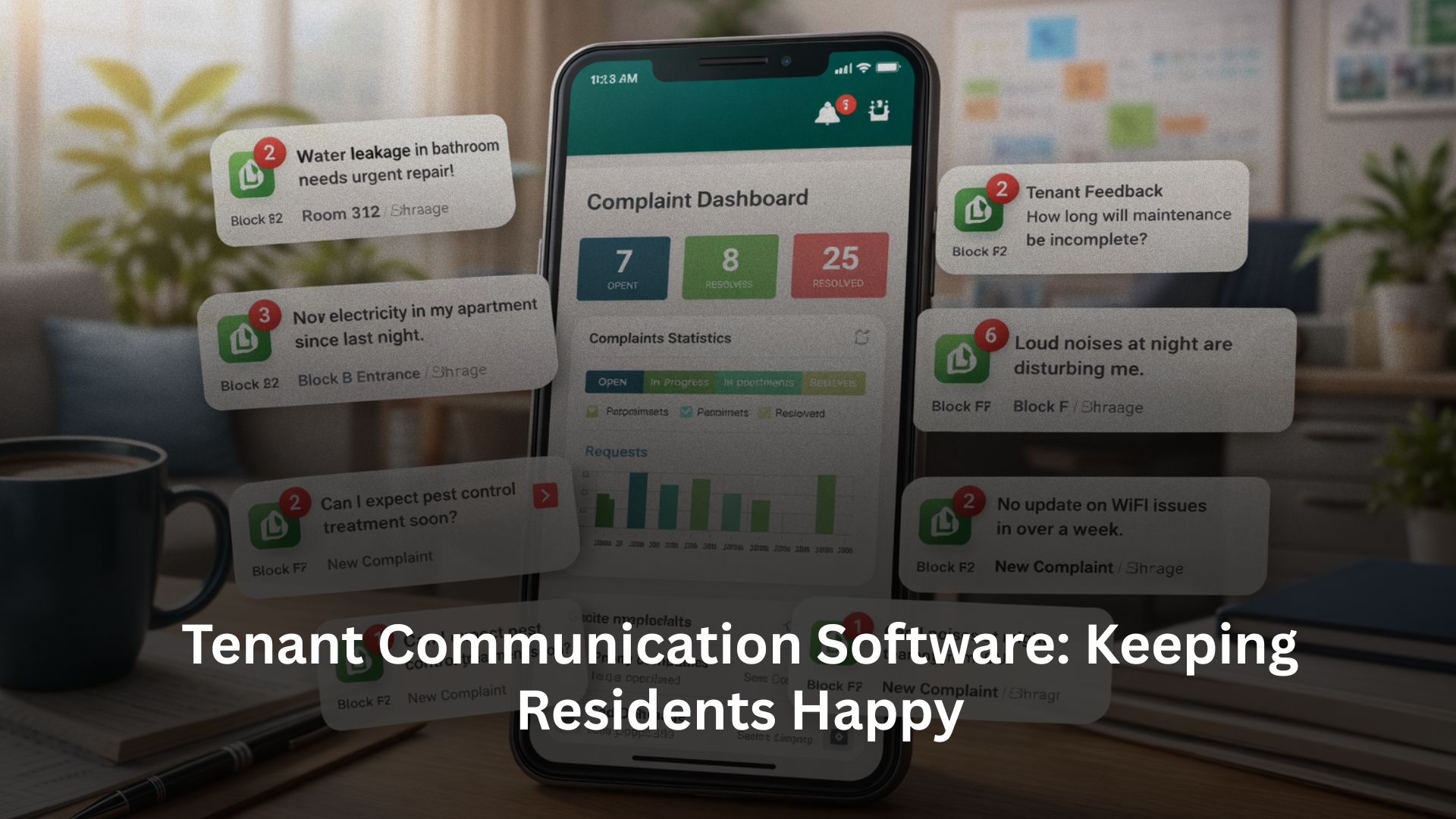
This is where tenant communication software starts making a real difference. Instead of handling scattered conversations, property managers create structured communication that improves efficiency and tenant satisfaction.
Because when communication improves, operations naturally become smoother.
Avoiding WhatsApp Chaos
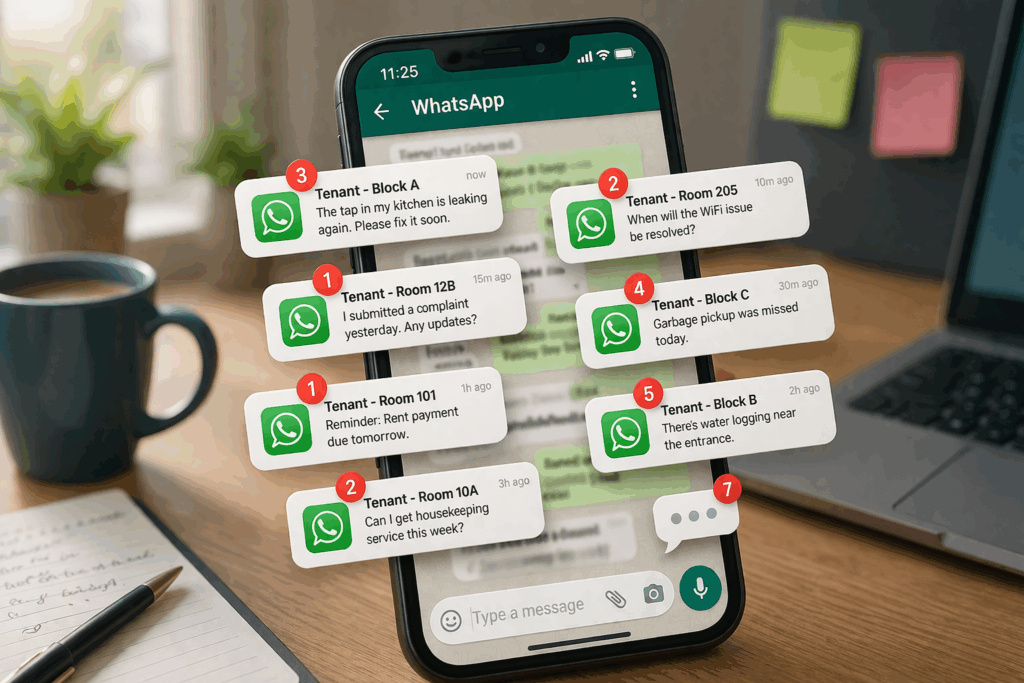
Most property managers rely on WhatsApp to communicate with tenants. It’s simple, quick, and familiar. But WhatsApp wasn’t designed for managing tenant operations.
As your tenant base grows, WhatsApp starts creating friction. Messages pile up quickly. Complaints get buried. Important updates disappear in long conversations. Tenants send repeated reminders, and operators struggle to track what they already handled.
This creates a pattern where communication becomes harder to manage.
You may find yourself:
- Searching through chat history to find complaints
- Forgetting whether an issue was resolved
- Receiving repeated messages for the same request
- Missing important updates from tenants
The problem isn’t communication itself. The problem is lack of structure.
Without structure, it becomes difficult to track:
- Pending complaints
- Resolved requests
- Urgent issues
This is where tenant portal software improves the workflow. Instead of scattered chats, tenants raise requests in a structured system. Operators track complaints, assign tasks, and monitor resolution.
Communication becomes organized instead of reactive.
Over time, this reduces interruptions and improves operational efficiency.
Centralized Announcements Without Repetition
Announcements form a large part of tenant communication. Property managers often need to inform tenants about maintenance schedules, house rules, or service updates.
Without a structured system, operators repeat the same message multiple times. Some tenants miss updates. Others ask again for clarification. Important announcements get buried in chat history.
This creates unnecessary back-and-forth communication.
Tenant communication software solves this by centralizing announcements. Instead of repeating messages individually, operators send updates once and notify everyone.
This creates a more professional communication process.
Tenants also benefit. They don’t need to scroll through chat history. They can simply access announcements whenever needed.
Over time, this reduces confusion and improves clarity.
Maintenance Requests Without Confusion
Maintenance issues generate the highest volume of tenant communication. When operators manage these requests manually, tracking becomes difficult.
Tenants report issues through calls, WhatsApp, or in-person conversations. Without a system, operators rely on memory or notes.
This leads to:
- Missed complaints
- Delayed responses
- Repeated follow-ups
- Lack of accountability
A tenant maintenance app introduces structure. Tenants raise complaints directly through the system. Operators track requests and manage resolution efficiently.
Instead of reacting to scattered complaints, operators manage requests through a clear workflow.
Tenants also benefit from transparency. They know their complaint has been registered and is being addressed.
This reduces repeated follow-ups and improves satisfaction.
Why Communication Directly Impacts Retention
Tenant satisfaction doesn’t depend only on facilities. Communication plays an equally important role.
Tenants expect quick responses and clear updates. When operators respond efficiently, tenants feel valued and supported.
Poor communication creates frustration. Tenants may feel ignored, even when operators work on their issues.
Over time, poor communication leads to:
- Frequent move-outs
- Negative feedback
- Higher vacancy rates
Structured communication improves response time and transparency. Tenants know where to raise issues and when to expect updates.
This builds trust and improves retention.
Better communication doesn’t just solve problems, it prevents them.
Scaling Communication as Your Property Grows
Manual communication works for small properties. But as occupancy grows, communication increases rapidly.
More tenants bring:
- More complaints
- More announcements
- More follow-ups
Without structure, communication becomes overwhelming.
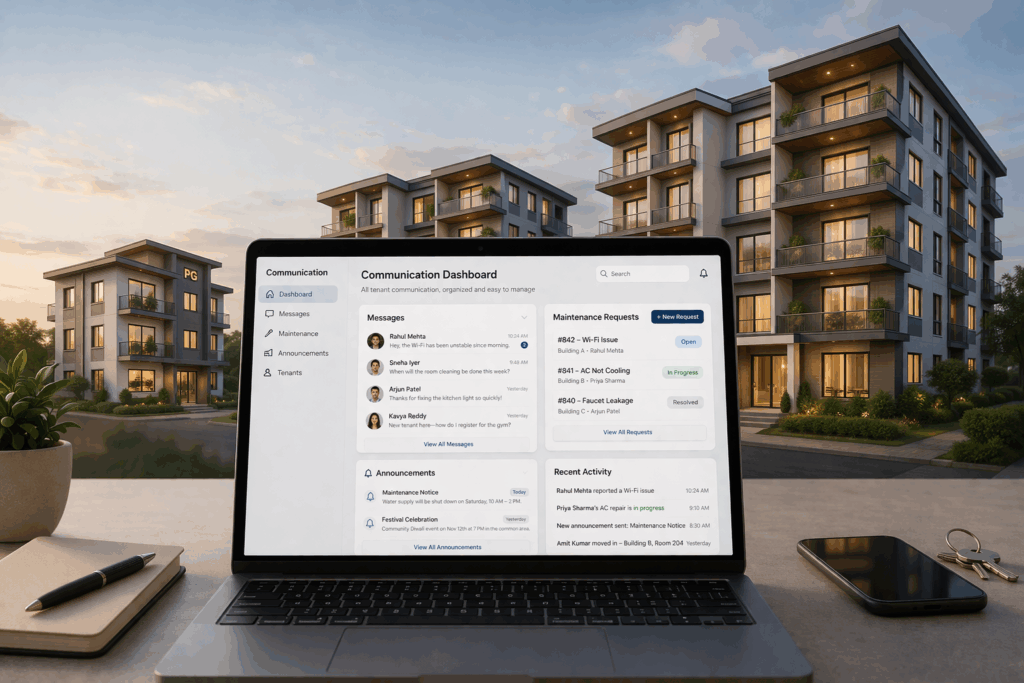
Tenant communication software helps operators scale communication efficiently. Instead of managing conversations individually, operators handle requests from a centralized dashboard.
This keeps communication organized even as the property grows.
Growth becomes manageable because communication stays structured.
What Makes Good Tenant Communication Software
Not every communication tool fits rental operations. The right software should simplify communication and improve efficiency.
Good tenant communication software focuses on:
- Centralized communication
- Complaint tracking
- Announcements
- Communication history
Ease of use also matters. Tenants should raise requests easily. Operators should manage communication without complexity.
Simple systems improve adoption and consistency.
How RentOk Improves Tenant Communication
RentOk addresses common communication challenges faced by PG operators and property managers. Instead of scattered messages, RentOk creates structured communication workflows.
Through the Complaints Page, tenants raise issues directly. The system logs each request and displays it in a centralized dashboard.
Operators can:
- View pending complaints
- Prioritize urgent issues
- Track resolution progress
- Maintain communication records
This eliminates confusion and improves response time.
RentOk also improves transparency. Tenants receive updates on their complaints, reducing repeated follow-ups.
Instead of handling communication manually, operators manage everything through a structured interface.
This reduces operational pressure and improves tenant satisfaction.
RentOk also supports announcements and updates. Operators share important information in one place, ensuring tenants stay informed.
Over time, this structured approach transforms communication from reactive to proactive.
Operators gain clarity, tenants feel heard, and operations become smoother.
When Communication Becomes Your Strength
Communication often feels like a routine task. But when structured properly, it becomes a competitive advantage.
Properties with better communication:
- Resolve issues faster
- Build stronger tenant relationships
- Improve retention
Structured communication allows operators to stay proactive. Instead of reacting to problems, they address them early.
This improves tenant satisfaction and operational efficiency.
When communication becomes organized, keeping residents happy becomes far easier, and property management becomes more efficient.
About the Author
Ishika Pannu
Ishika Pannu brings you the latest insights and easy-to-apply strategies in property management—helping you simplify renting and grow with RentOk.