Market Trends
The Complete Guide to Rental Property Software for 2026

Written by
Ishika Pannu
Read Time
5 min read
Posted on
March 20, 2026
Overview
Overview
The Complete Guide to Rental Property Software for 2026
Rental property management has changed significantly over the last few years. What used to be a straightforward process, collecting rent, maintaining records, and managing tenants, has now evolved into a much more structured and data-driven operation.
In 2026, even a small portfolio involves multiple moving parts: rent tracking, expense monitoring, tenant communication, compliance, and performance analysis. As properties scale, these operations don’t just increase, they become interconnected.
This is why rental property software is no longer just a convenience. It has become a core system that determines how efficiently a property business runs, and how well it scales.
What is Rental Property Software (and What It Actually Does)
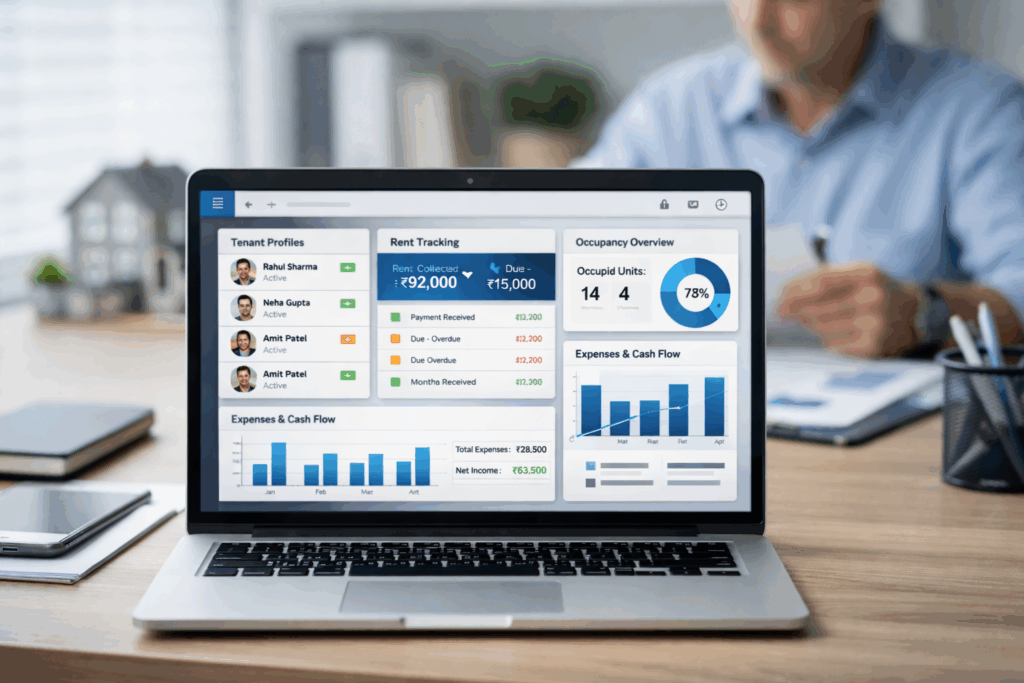
Rental property software acts as a centralized system that helps property owners manage their entire rental operation from one place.
Instead of using separate tools for rent collection, tenant records, and expense tracking, you can manage everything through a single platform.
It allows you to:
- Maintain tenant data, agreements, and communication
- Track rent payments, dues, and payment history
- Record expenses and monitor cash flow
- View occupancy and property performance
More importantly, it changes how you operate. You don’t just manage properties, you run your rental business through a structured system.
Why Manual Systems Break Down as You Scale
Most property owners start with simple systems, spreadsheets, notebooks, or messaging apps. At a smaller scale, this works.
But as your portfolio grows, these systems start creating gaps.
You may begin to notice:
- Difficulty tracking rent across multiple tenants
- Expenses getting recorded inconsistently
- Tenant communication becoming scattered
- Lack of clarity in overall financial performance
These issues don’t appear suddenly. They build gradually and reduce your efficiency over time.
The real problem is not effort, it’s the lack of a structured system that gives you clear visibility into your operations.
Core Benefits of Rental Property Software (That Actually Matter)
A good rental property system does more than organise your data—it improves how you manage your business every day.
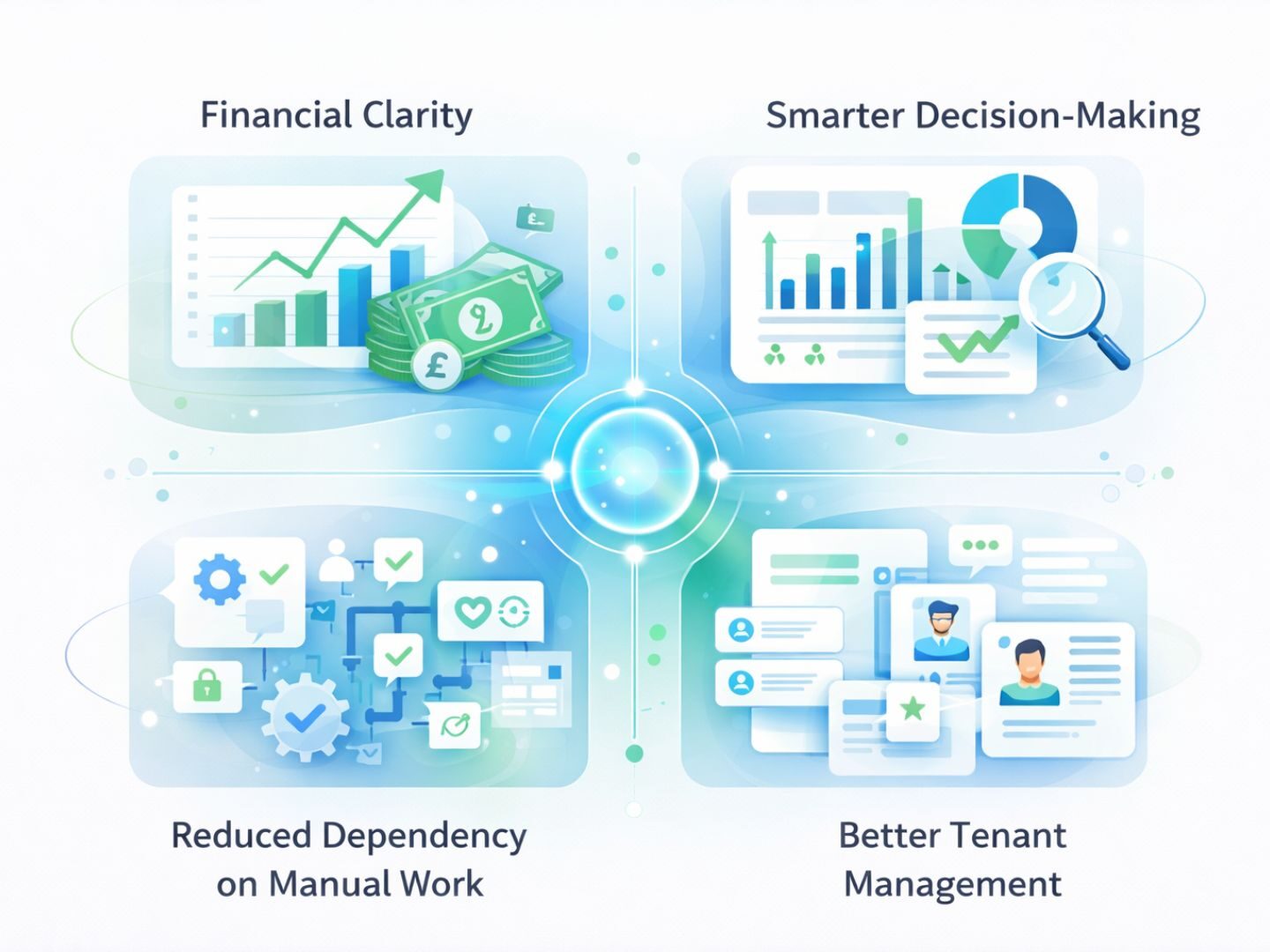
1. Financial Clarity Across Properties
One of the biggest advantages is gaining a clear understanding of your income and expenses.
Instead of checking multiple records, you can:
- Track rent payments in real time
- Monitor expenses under clear categories
- View monthly cash flow without manual calculations
This clarity helps you identify which properties perform well and where you need to optimise costs.
2. Reduced Dependency on Manual Work
Manual systems require constant follow-ups and repeated effort.
With rental software, the system handles routine tasks:
- It sends rent reminders automatically
- It updates payment records instantly
- It keeps your data consistent without manual intervention
This reduces workload and minimises errors.
3. Better Tenant Management
Managing tenants becomes much easier when all information stays in one place.
Instead of searching through chats or files:
- You can access tenant details instantly
- You can manage agreements and documents centrally
- You can handle communication in a more organised way
This creates a more professional experience for both you and your tenants.
4. Smarter Decision-Making
As your portfolio grows, decisions become more complex.
A structured system gives you access to:
- Occupancy trends
- Payment behaviour
- Expense patterns
- Property-level performance
With this data, you can make informed decisions instead of relying on assumptions.
Tracking Rent and Expenses Without Gaps
Financial tracking is where most rental operations lose control.
Many property owners track rent separately but don’t maintain structured expense records. This leads to an incomplete view of profitability.
Rental property software solves this by bringing both together.
With a proper system:
- You can track rent payments as they happen
- You can log and categorise expenses easily
- You can generate financial summaries without manual work
This helps you understand your actual returns and identify areas where you can improve efficiency.
Cloud-Based vs On-Premise Software: What Should You Choose?
Choosing the right type of software plays an important role in how efficiently you manage your properties.
Cloud-Based Software
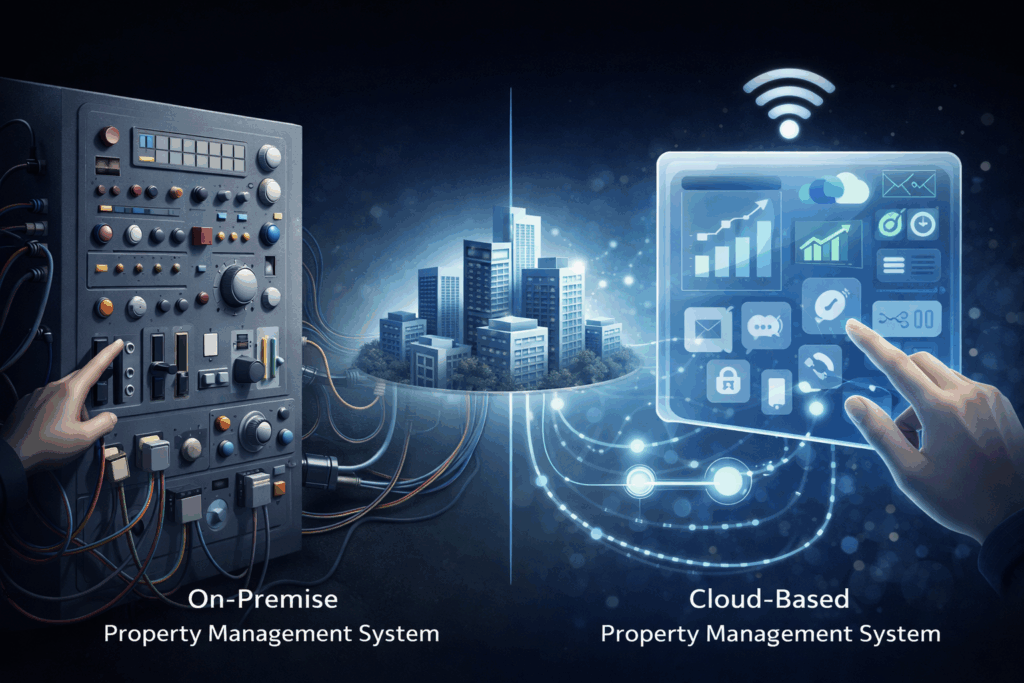
Cloud-based systems run online and allow you to access your data from any device.
They offer:
- Access from anywhere
- Automatic updates
- Lower setup effort
- Easy scalability
For most property owners, this flexibility makes cloud-based systems the preferred choice.
On-Premise Software
On-premise systems run on local servers and require manual setup.
They typically involve:
- Higher initial investment
- Ongoing maintenance
- Limited accessibility
While they offer more control, they often add unnecessary complexity for most rental operations.
What Works Better in 2026?
For most property owners, cloud-based systems provide a more practical and efficient solution.
They allow you to manage properties in real time, reduce technical overhead, and scale your operations without disruption.
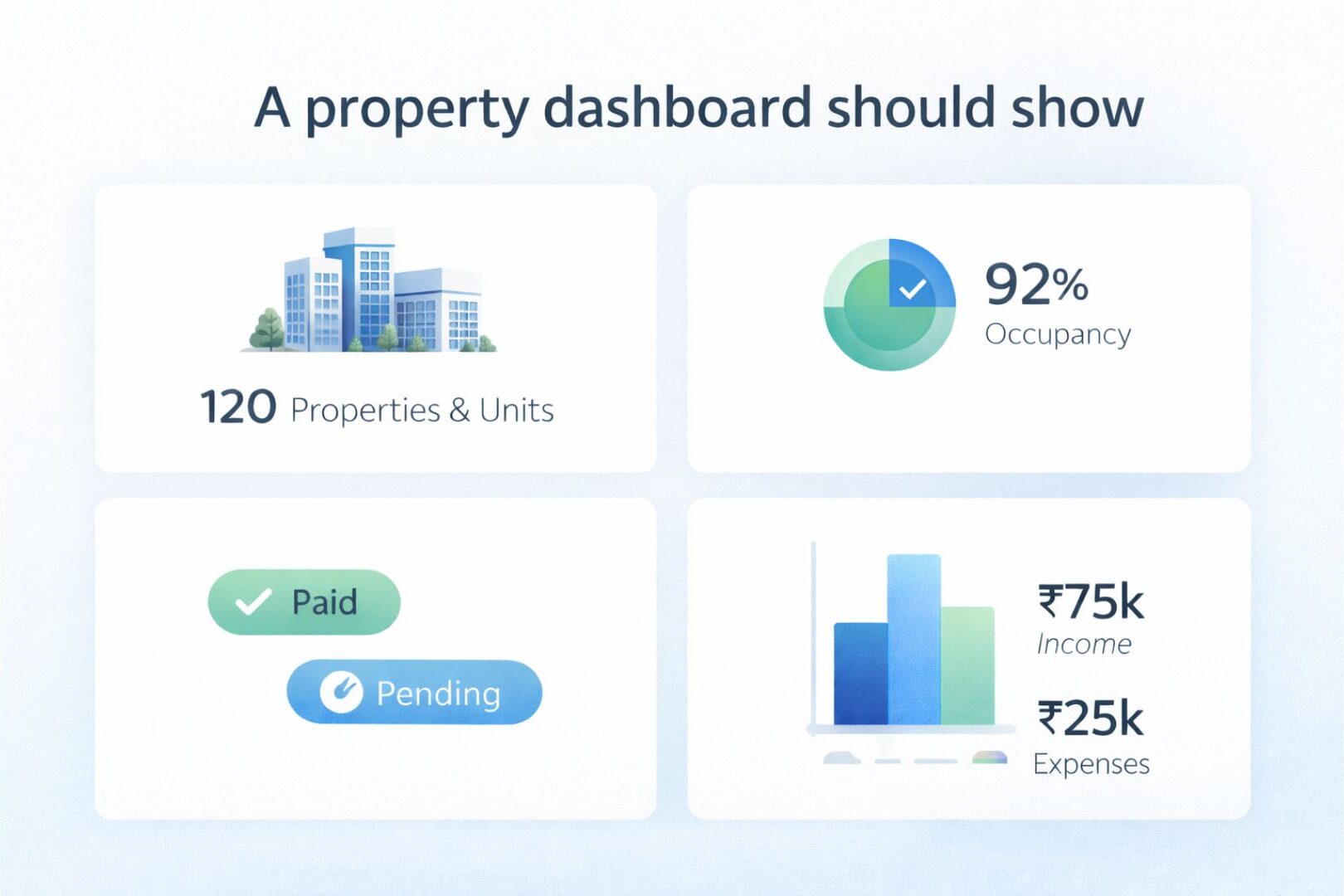
What a Good Rental Property Dashboard Should Show
A strong dashboard gives you a clear snapshot of your entire rental business.
Instead of searching for information, you should be able to see everything instantly.
A well-designed dashboard should show:
- Total properties and units
- Current occupancy levels
- Pending and completed rent payments
- Monthly income and expense overview
This level of visibility helps you stay in control and make faster decisions.
How RentOk Helps You Manage Rental Properties Efficiently
As your rental operations grow, managing everything manually becomes increasingly difficult. RentOk addresses this by providing a system that simplifies daily management while maintaining full visibility.
RentOk brings all essential operations into one platform, so you don’t need to rely on multiple tools.
With RentOk, you can:
- Track rent payments and send automated reminders
- Maintain tenant records, agreements, and KYC in one place
- Monitor expenses alongside income for better financial clarity
- View occupancy and property performance in real time
- Manage multiple properties through a single dashboard
The platform focuses on practicality. It helps property owners move from scattered processes to a structured system without adding complexity.
Final Thoughts
Rental property management in 2026 requires more than basic tracking, it requires a system that gives you clarity, consistency, and control.
As your portfolio grows, the limitations of manual methods become more visible. What works at a smaller scale often creates inefficiencies at a larger one.
Rental property software solves this by bringing your operations into a single, structured system. It allows you to track finances accurately, manage tenants efficiently, and make better decisions.
If you still rely on spreadsheets or disconnected tools, it’s worth considering whether your current setup can support your future growth.
Because at some point, growth doesn’t require more effort, it requires a better system.
And moving to a platform like RentOk helps you take that step by simplifying your operations, improving visibility, and giving you full control over your rental business.
Explore RentOk Now
About the Author
Ishika Pannu
Ishika Pannu brings you the latest insights and easy-to-apply strategies in property management—helping you simplify renting and grow with RentOk.