Market Trends
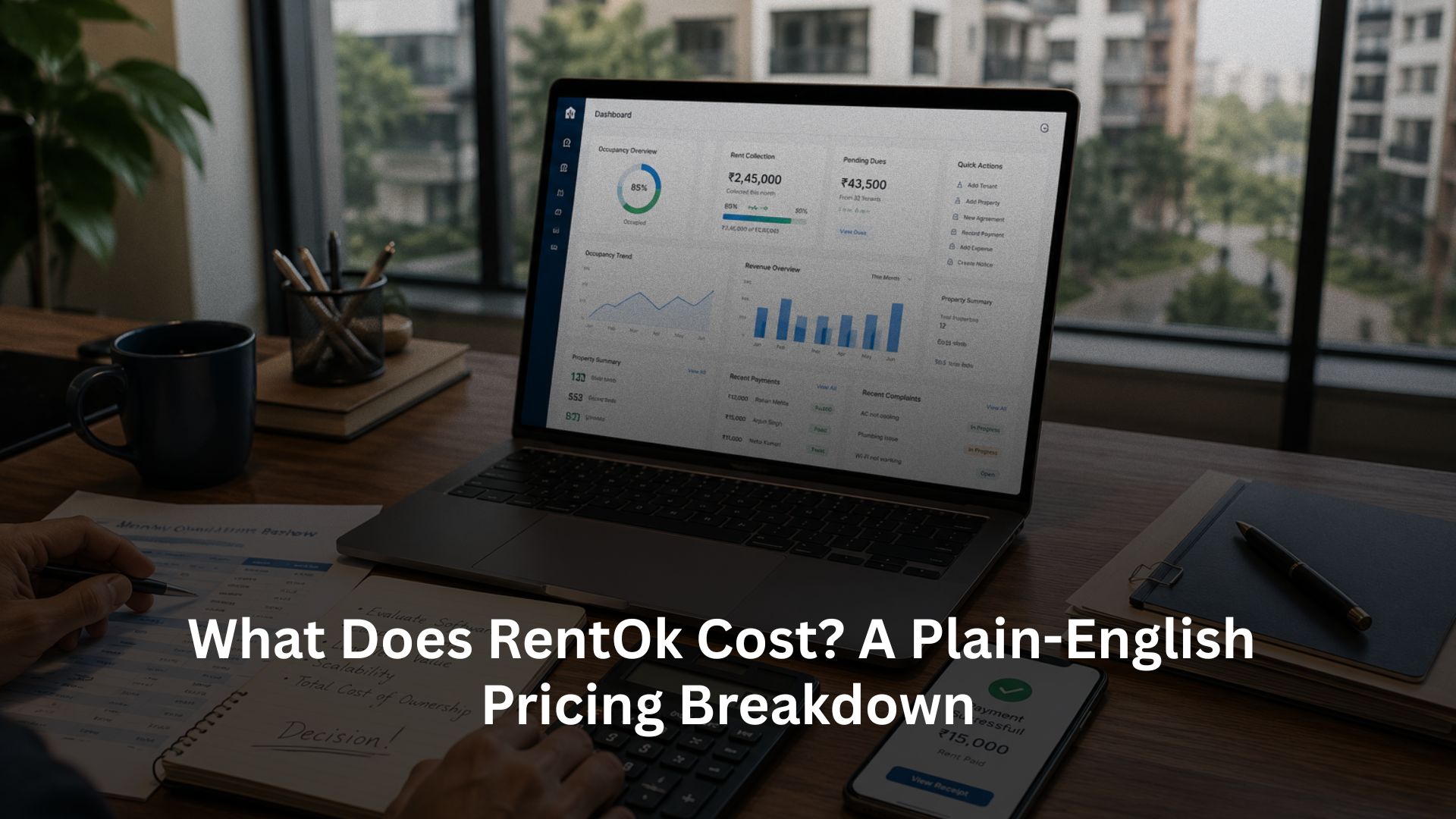
What Does RentOk Cost? A Plain-English Pricing Breakdown

Written by
Ishika Pannu
Read Time
12 min read
Posted on
July 29, 2026
Overview
Overview
What Does RentOk Cost? A Plain-English Pricing Breakdown
If you’ve been searching for “RentOk pricing plans”, “How much does RentOk cost?”, or “Is RentOk worth it for my property?”, you’re probably looking for a straightforward answer before making a decision.
That’s understandable. Property management software isn’t just another business expense, it’s an operational investment. The right platform can help you automate rent collection, manage tenants efficiently, reduce manual work, and scale your rental business. The wrong one can end up being an unnecessary cost that doesn’t deliver enough value.
Unfortunately, many software pricing pages leave users with more questions than answers. Some only display a starting price, while others require you to book a demo before you can understand which plan actually suits your business. What most property owners really want is clarity.
This guide is designed to do exactly that. We’ll break down RentOk’s pricing plans in plain English, explain what influences the cost, and help you understand which plan is likely to be the best fit based on your property’s size and operational needs.
Whether you’re managing a single PG, multiple hostels, co-living spaces, or rental apartments, this guide will help you make an informed decision before investing in a property management solution.
Why Pricing Shouldn’t Be the Only Factor You Compare
It’s natural to compare software based on monthly or yearly subscription costs. However, experienced property owners know that the real question isn’t “How much does the software cost?”, it’s “How much value does it create?”
Managing a rental property involves far more than collecting rent. As occupancy grows, so do the number of tenants, payments, maintenance requests, agreements, staff members, and day-to-day operational tasks. Without a structured system, these responsibilities often lead to inefficiencies that cost both time and money.
When evaluating any property management software, consider factors such as:
- Automation capabilities, including rent reminders, payment tracking, and tenant communication, which reduce repetitive manual work and improve operational consistency.
- Scalability, ensuring the software can support your business as you expand from one property to multiple locations without requiring a complete change in your management process.
- Visibility into operations, allowing you to monitor occupancy, collections, expenses, dues, and tenant information from a centralized dashboard instead of juggling spreadsheets and WhatsApp chats.
- Support and regular product improvements, since software should continue evolving alongside your business rather than becoming outdated after implementation.
Looking only at subscription fees often overlooks the operational savings that modern property management software can generate over time.
If you’re still evaluating whether a property management platform is the right investment, our guide on What is Rental Management? Tools to Manage Your Property Efficiently explains how modern software simplifies everything from rent collection and tenant management to day-to-day operations.

What Determines the Cost of RentOk?
Unlike fixed products that offer the same features to every customer, property management software needs to accommodate businesses of different sizes and operational requirements.
For example, a landlord managing 25 beds has very different needs from a company operating 2,000 beds across multiple cities. That’s why pricing is generally influenced by the scale and complexity of your operations rather than following a one-size-fits-all approach.
Some of the factors that typically influence your pricing plan include:
- Number of properties or beds being managed, as larger operations generally require additional automation, reporting, and user access.
- Features your business requires, such as payment management, digital agreements, complaint tracking, attendance management, expense monitoring, or team collaboration tools.
- Number of team members using the platform, especially if different managers, wardens, accountants, or operational staff require separate access.
- Business growth plans, because choosing a platform that scales with your operations helps avoid future migration challenges.
Rather than paying for features you don’t need, pricing is designed to align with the operational requirements of your business.
Still comparing different types of property management software? You may also find our article on All-in-One Property Management Software: Is It Worth It? useful, especially if you’re deciding whether a single integrated platform makes more sense than using multiple tools.
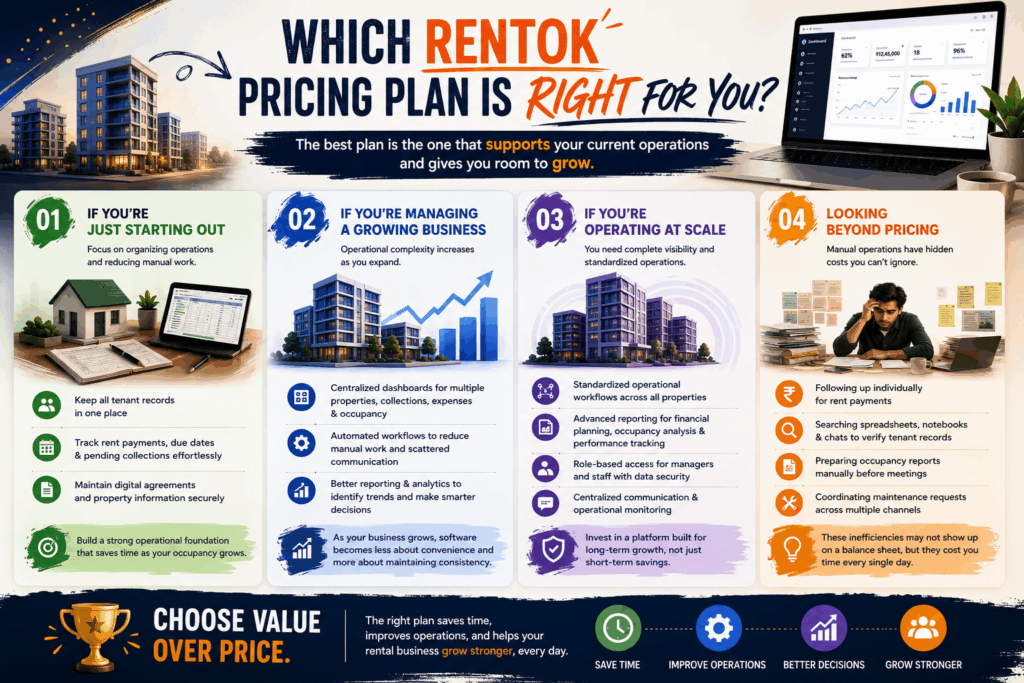
Which RentOk Pricing Plan Is Right for You?
Choosing a pricing plan isn’t just about selecting the cheapest option. The best plan is the one that supports your current operations while giving you room to grow.
Here’s a simple way to think about it.
If You’re Just Starting Out
If you’re managing a small PG or a single rental property, your primary focus is usually organizing operations and reducing manual work.
At this stage, you’ll likely benefit most from features that help you:
- Keep all tenant records in one place instead of maintaining separate registers or spreadsheets.
- Track rent payments, due dates, and pending collections without following up manually every month.
- Maintain digital agreements and property information that can be accessed whenever required.
The goal isn’t to automate everything immediately, it’s to build a structured operational foundation that saves time as your occupancy grows.
If You’re Managing a Growing Business
Once your property starts expanding, operational complexity increases much faster than most owners anticipate.
Instead of managing one property, you may now be handling multiple buildings, additional staff members, higher tenant turnover, and larger monthly collections. Processes that once took a few minutes can begin consuming several hours each day if they’re still handled manually.
Growing businesses generally look for capabilities such as:
- Centralized dashboards that provide visibility across multiple properties, collections, expenses, and occupancy without switching between different systems.
- Automated workflows that reduce dependency on manual reminders, repetitive data entry, and scattered communication across different platforms.
- Better reporting and analytics that help identify operational trends and support informed business decisions as the portfolio expands.
As your business grows, software becomes less about convenience and more about maintaining operational consistency.
Growing operators often discover that managing tenants becomes significantly more complex before they realize it. Our detailed guide on Landlord Tenant Management Software explores how centralized tenant management helps simplify operations as occupancy increases.
If You’re Operating at Scale
Enterprise-level operators have an entirely different set of priorities.
Managing hundreds or even thousands of tenants requires systems that provide complete operational visibility while ensuring every team member works from the same source of truth.
At this stage, businesses typically prioritize:
- Standardized operational workflows across all properties to maintain consistency regardless of location.
- Advanced reporting that supports financial planning, occupancy analysis, and business performance tracking.
- Role-based access for managers and staff so responsibilities remain clearly defined without compromising data security.
- Centralized communication and operational monitoring that helps leadership stay informed without depending on manual updates.
If you’re scaling your rental business, choosing software based solely on price can become far more expensive than investing in a platform built for long-term growth.
Looking Beyond Pricing
Many operators compare software subscriptions but overlook the hidden costs of continuing with manual operations.
Think about how much time is spent every month on:
- Following up individually for rent payments instead of using automated reminders.
- Searching through spreadsheets, notebooks, and WhatsApp conversations to verify tenant records or payment history.
- Preparing occupancy reports manually before meetings or business reviews.
- Coordinating maintenance requests and operational communication across multiple disconnected channels.
These operational inefficiencies rarely appear on a balance sheet, yet they consume valuable time every single day.
In fact, if you’re still evaluating whether software is the right investment, you may also find our blog on The Psychology of Tenant Retention useful, as it explores how organized operations contribute to better occupancy and long-term business growth.
Are There Any Hidden Charges?
One of the biggest concerns people have while evaluating any software is whether the advertised price is the final price or if additional charges appear later. It’s a valid question, especially when many SaaS platforms charge separately for onboarding, support, integrations, or premium features.
At RentOk, the objective is to help property owners choose a plan based on their operational needs rather than overwhelming them with unnecessary add-ons. During the pricing discussion, you’ll get clarity on what’s included in your plan, the features available, and whether there are any optional services that may benefit your business.
If you’re evaluating different software providers, don’t just compare the monthly subscription. Ask questions like:
- Does the quoted price include onboarding and implementation support, or will there be additional charges once you decide to get started?
- Will you receive product updates and new feature releases as part of your subscription, or are these treated as separate paid upgrades later on?
- Can you easily upgrade your plan as your business grows without disrupting your existing data and workflows?
- Is customer support included, and how accessible is the support team when you need assistance with day-to-day operations?
Having these conversations upfront helps you compare software based on long-term value rather than just the lowest upfront cost.
Is RentOk Worth the Investment?
For most property owners, the decision isn’t simply about paying for software. It’s about understanding whether the software can solve everyday operational challenges and deliver measurable business value.
If you’re managing a handful of tenants, manual processes may still feel manageable. But once your occupancy starts increasing, so does the administrative workload. Rent collection, agreement renewals, expense tracking, complaint management, staff coordination, and occupancy monitoring all become recurring tasks that demand both time and attention.
This is where property management software starts generating a return on investment.
Instead of asking whether the subscription cost is affordable, consider what your business gains in return.
A well-implemented property management platform can help you:
- Reduce time spent on repetitive administrative work, allowing you and your team to focus on improving tenant experience and growing the business rather than managing spreadsheets.
- Improve rent collection consistency through automated reminders, payment tracking, and better visibility into pending dues, reducing the need for constant follow-ups.
- Make better business decisions using real-time reports on occupancy, collections, expenses, and overall property performance instead of relying on manually prepared reports.
- Create standardized operational processes that remain consistent even as your business expands across multiple properties or locations.
These improvements don’t just save time, they create a stronger operational foundation that supports sustainable business growth.
If you’re exploring ways to improve operational efficiency, you may also enjoy reading our blog on Building a Referral Program: Turn Your Tenants into Your Sales Team, where we discuss how organized operations contribute to higher occupancy through better tenant experiences.
Questions to Ask Before Choosing Any Property Management Software
Before selecting a pricing plan, take a step back and evaluate your operational requirements. The cheapest plan isn’t always the best choice, and the most feature-rich option may include tools your business doesn’t currently need.
Consider asking yourself the following questions:
- How much time does my team currently spend on manual operational tasks every month, and which of those processes could realistically be automated?
- Am I choosing software for today’s business, or will it continue supporting my operations as I expand to multiple properties or increase occupancy?
- Will the platform provide meaningful insights into collections, occupancy, expenses, and overall business performance, or will I still rely on separate spreadsheets and manual reports?
- Does the software simplify communication with tenants and staff, helping reduce operational delays and repetitive follow-ups?
- Can the platform integrate multiple aspects of property management into one system instead of requiring different tools for different tasks?
The answers to these questions will often have a greater impact on your business than the subscription price itself.
Before making your final decision, it’s also worth understanding what a modern rental management system should include. Our comprehensive guide on What is Rental Management? covers the essential features every growing rental business should look for.

How RentOk Helps
Managing a rental business efficiently requires much more than collecting rent. As your occupancy grows, every aspect of your operations, from tenant onboarding and payment tracking to complaint management and reporting, needs to work together seamlessly.
RentOk is built to simplify these daily operations through one centralized platform. Depending on your chosen plan, you can manage:
- Tenant records, agreements, and occupancy from a single dashboard instead of scattered spreadsheets.
- Rent collection, payment reminders, dues tracking, and financial reporting with greater accuracy and visibility.
- Complaints, maintenance requests, announcements, and tenant communication without relying on multiple disconnected platforms.
- Team access, operational workflows, and property performance across one or multiple locations as your business grows.
Conclusion
Choosing property management software isn’t just about finding the lowest price, it’s about investing in a system that helps your business operate more efficiently today while preparing it for future growth.
The right pricing plan should align with your property’s size, operational complexity, and long-term goals. By focusing on value rather than just subscription costs, you’ll be better positioned to reduce manual work, improve operational visibility, and create a smoother experience for both your team and your tenants.
Ready to find the right RentOk pricing plan for your property? Visit our Pricing page, compare available plans, or schedule a personalized demo to discover which solution best fits your rental business.
Frequently Asked Questions
Find answers to common questions about this topic
About the Author
Ishika Pannu
Ishika Pannu brings you the latest insights and easy-to-apply strategies in property management—helping you simplify renting and grow with RentOk.
You may also like these
Related Articles
1 min read
What’s Included in My Rent and What Am I Paying Extra For?
Written by
Posted on
Ishika Pannu
Sep 30, 2026

1 min read
Which Indian City Gives Landlords the Best Rental Yield Right Now?
Written by
Posted on
Ishika Pannu
Sep 28, 2026
1 min read
How Much Can My Landlord Legally Increase My Rent Each Year?
Written by
Posted on
Ishika Pannu
Sep 23, 2026

1 min read
India’s Rental Market Grows 16%: What Owners Should Know
Written by
Posted on
Ishika Pannu
Sep 22, 2026
1 min read
Why Landlords Check CIBIL Scores Before Renting
Written by
Posted on
Ishika Pannu
Sep 21, 2026
1 min read
Why Students Need Tenant Verification Done Before Moving Into a PG
Written by
Posted on
Ishika Pannu
Sep 14, 2026

1 min read
What to Do When Your Landlord Won’t Make Repairs
Written by
Posted on
Ishika Pannu
Sep 12, 2026

1 min read
Satya Niketan Building Collapse: What Happened in Detail?
Written by
Posted on
Shivanshi Dheer
Sep 9, 2026
1 min read
Why Your Rent Agreement Must Be Registered – And How to Do It
Written by
Posted on
Shivanshi Dheer
Aug 21, 2026

1 min read
How to Invest in Property for Rental Income in India
Written by
Posted on
Shivanshi Dheer
Aug 20, 2026
Stay ahead in property management with expert insights
Join thousands of property managers receiving exclusive tips delivered straight to your inbox.
Browse posts by category
Case Study
Cost of Living
Growth
Legal
Market Trends
News
Pg owner app
Property Management
Property Tax
Tech
RentOk
The easiest way to rent and manage your PGs and hostels.
Grievance Officer
Get the app


Contact us
hello@eazyapp.tech
HQ Office
COGROW, BASEMENT F-12/8A
BESIDE HOUSE OF STYLE SALON, SECTOR 28, DLF PHASE 1
GURUGRAM, HARYANA - 122002
South India Office
LUMIODESK COWORKING, 2ND FLOOR, 40, 14TH MAIN RD
BESIDE MC DONALD, 7TH SECTOR, HSR LAYOUT
BENGALURU, KARNATAKA - 560102
©️ 2026 EazyApp Tech Pvt Ltd. All rights reserved


