Growth
Property Management Apps to Replace Manual Registers

Written by
Ishika Pannu
Read Time
9 min read
Posted on
May 31, 2026
Overview
Overview
Property Management Apps to Replace Manual Registers
For years, registers have been a standard part of rental operations. Every PG, hostel, and small rental property depended on notebooks to manage rent collection, tenant details, complaint tracking, electricity readings, and occupancy updates. And honestly, for a long time, this system worked because operations were still manageable manually. A property with limited occupancy can usually survive through handwritten coordination since most information remains within one person’s visibility.
The real problem starts when the property begins growing.
Once occupancy increases, operations become more dynamic. Move-ins and move-outs happen more frequently, payment tracking becomes more repetitive, complaints increase, and communication starts spreading across calls, WhatsApp chats, registers, and spreadsheets simultaneously. At this stage, the issue is no longer about maintaining records manually. The issue becomes operational visibility.
Most landlords eventually realize they are spending more time:
- searching for information across different notebooks and chats instead of managing the property efficiently,
- verifying payment records manually because updates are scattered across multiple systems,
- coordinating repetitive tenant follow-ups that could easily be automated through structured workflows,
- and solving avoidable confusion created by fragmented operational tracking.
This is exactly why more landlords and PG operators are now replacing registers with simple property management apps that centralize operations digitally. The shift is not happening because technology looks modern. It is happening because manual systems struggle to support growing rental businesses efficiently.
Why Registers Start Failing as Occupancy Grows
Manual systems usually do not collapse suddenly. They become inefficient gradually as operational complexity increases. In the beginning, one register for rent collection and another notebook for tenant records may still feel manageable. But once the property starts handling larger occupancy numbers, repeated calculations, and recurring coordination tasks, operations slowly become fragmented.
The biggest issue is that information stops existing inside one centralized workflow.
For example, something as simple as checking whether a tenant has paid electricity dues may require:
- searching through handwritten rent records maintained separately from utility calculations,
- checking screenshots or UPI confirmations shared on WhatsApp by the tenant,
- confirming updates manually with staff members who may or may not have updated the register properly,
- and then recalculating pending balances again because entries were incomplete or delayed.
Individually, these delays may appear small. But operationally, they create continuous friction throughout the day.
Over time, management teams spend more energy maintaining records than improving the actual tenant experience or operational efficiency of the property. This is one of the biggest reasons growing rental businesses start feeling operationally “heavy” even when occupancy is doing well financially.
Another major issue with registers is inconsistency. Manual systems depend heavily on discipline and memory. If one staff member forgets to update entries or someone delays calculations until later, the entire workflow starts becoming unreliable. That inconsistency eventually affects:
- payment visibility and pending dues tracking,
- complaint resolution timelines and maintenance coordination,
- occupancy planning and room allocation visibility,
- and even tenant trust because communication becomes inconsistent operationally.
This is where digital systems begin creating a major difference.

Why Property Management Apps Feel Faster Almost Immediately
One of the first things landlords notice after moving to digital systems is operational speed. Tasks that previously required manually checking registers or calling multiple people for updates suddenly become much easier because information becomes centralized and searchable.
Instead of depending on physical records, operators can instantly access:
- tenant history, move-in details, and occupancy information through one dashboard that stays continuously updated operationally,
- payment records and pending dues visibility without manually calculating entries across notebooks and screenshots,
- complaint history and maintenance updates that remain centralized instead of disappearing inside calls or chats,
- and room occupancy status that helps management coordinate onboarding and vacancy planning much more efficiently.
That operational clarity changes the management experience significantly because workflows stop feeling scattered.
Manual systems usually force teams into reactive coordination. Staff members spend most of their day handling repetitive tasks that could easily become system-driven instead. Managers repeatedly send rent reminders manually, answer payment-related questions individually, and follow up on complaints through scattered communication channels.
Digital property management apps reduce this pressure because workflows become structured.
For example, instead of manually coordinating everything every month:
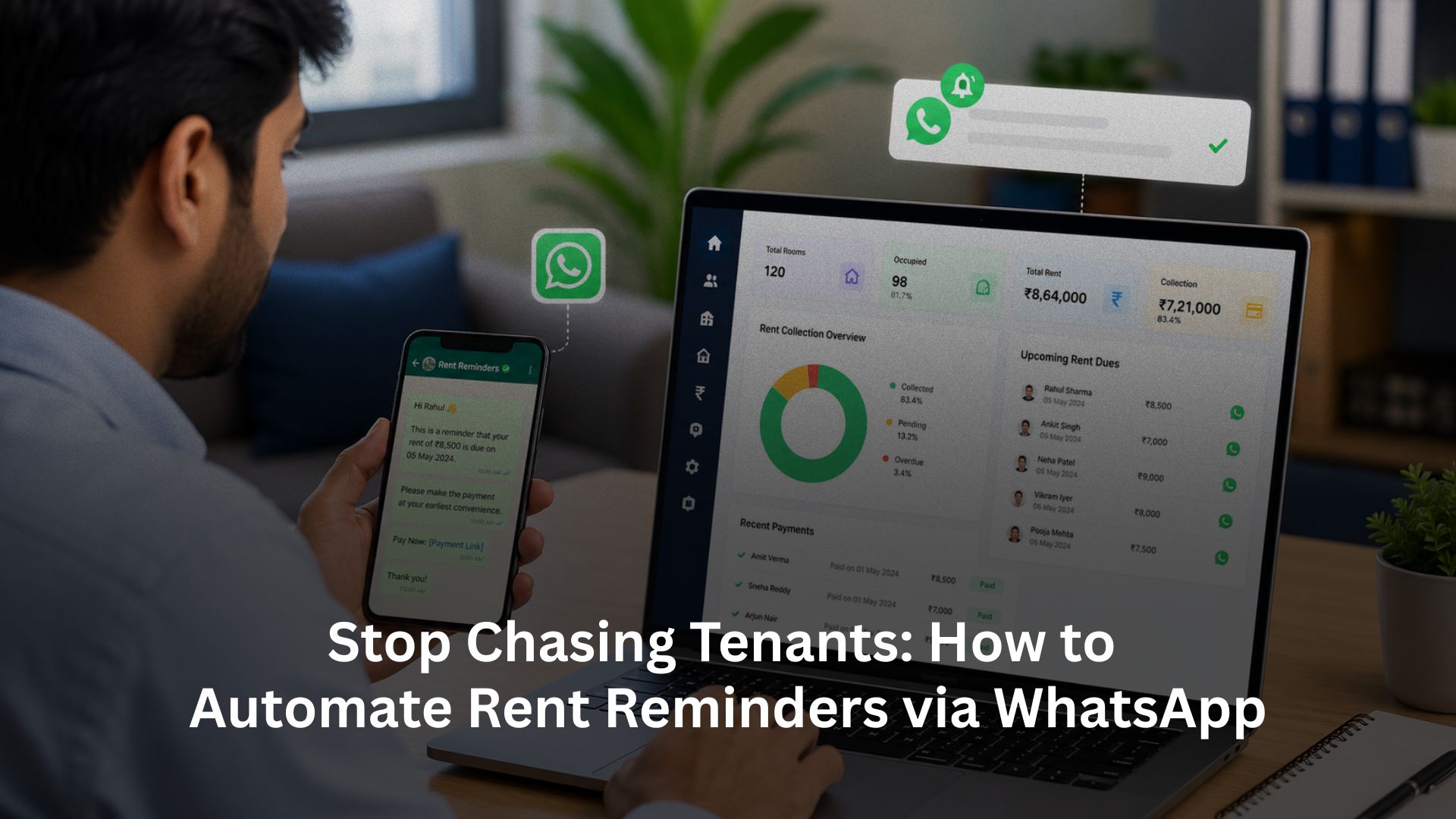
- rent reminders can be automated before due dates, improving payment consistency without increasing staff workload,
- payment confirmations become instantly visible, reducing repetitive tenant queries regarding whether transfers were received,
- complaint tracking stays centralized so both management and tenants have better visibility into maintenance progress,
- and occupancy updates remain synchronized, helping properties manage move-ins and move-outs more efficiently.
This creates smoother daily operations because the system itself supports coordination rather than depending entirely on memory and manual effort.
The Hidden Risks of Paper-Based Property Management
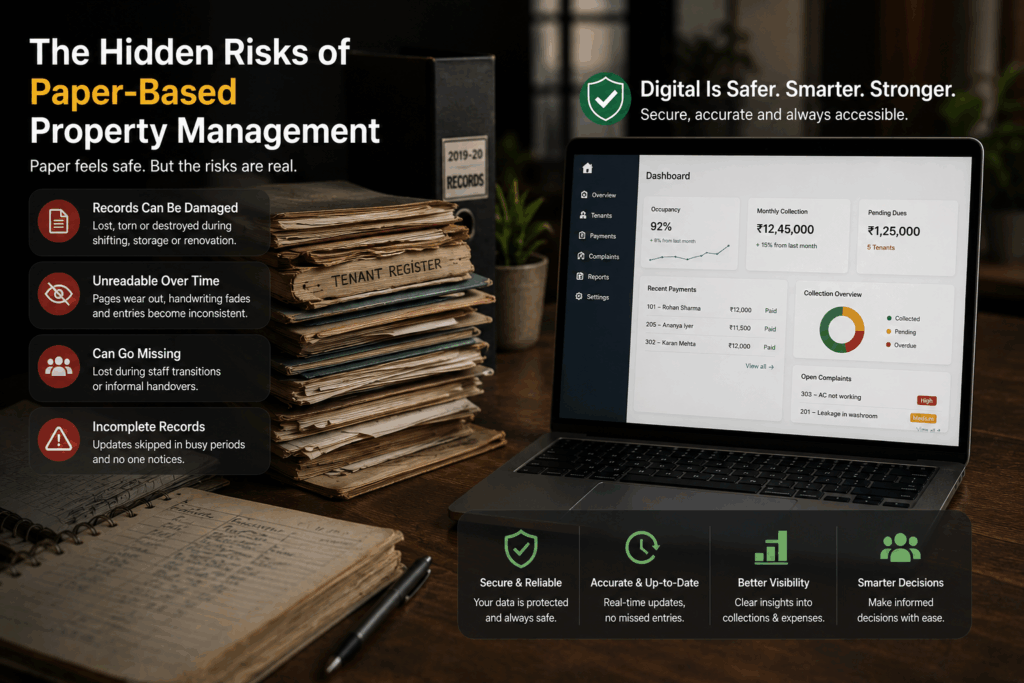
Most landlords still feel that physical registers are safer because the records exist physically inside the property office. But operationally, paper-based systems are far more vulnerable than most operators realize.
Registers can easily:
- get damaged during shifting, storage movement, or renovation work where older records are not maintained properly,
- become unreadable over time because pages wear out, handwriting fades, or entries become inconsistent,
- go missing during staff transitions where operational handovers happen informally,
- or remain incomplete because updates were skipped during busy periods and nobody noticed immediately.
The biggest challenge is that once records disappear, recovery becomes extremely difficult.
This creates major operational risks while dealing with:
- security deposit calculations where historical payment clarity becomes extremely important during move-outs,
- tenant payment records and pending dues that may later create disputes between residents and management,
- occupancy history and onboarding timelines that affect room planning and vacancy management,
- and complaint tracking where unresolved maintenance issues may later create confusion regarding accountability.
At the same time, manual systems also weaken financial visibility.
As occupancy grows, landlords often struggle to maintain clarity around rent collection, utility charges, operational expenses, and cash flow consistency because calculations remain spread across multiple disconnected systems. Eventually, management teams start depending on rough spreadsheets, screenshots, handwritten notes, and verbal updates just to understand the financial position of the property properly.
And operationally, that uncertainty becomes exhausting over time.
Why Younger PG Operators Are Moving Digital Faster
One major shift happening across the rental industry is that newer operators are adopting digital systems much earlier compared to traditional landlords. The reason is simple: they are building scalable operational structures from the beginning instead of trying to fix fragmented systems later.
Modern rental businesses increasingly want:
- centralized dashboards that provide real-time operational visibility across occupancy, payments, complaints, and tenant coordination,
- automated communication systems that reduce repetitive follow-ups while improving tenant experience consistency,
- digital payment workflows that simplify collections and reduce manual calculation pressure,
- and structured operational tracking that helps properties scale without creating coordination chaos.
They do not want operations spread across registers, Excel sheets, WhatsApp groups, payment screenshots, and verbal updates simultaneously because fragmented systems eventually slow down growth.
This shift is becoming especially visible across:
- co-living businesses handling high occupancy movement and frequent tenant coordination,
- student housing operations where seasonal movement creates continuous onboarding pressure,
- managed rental businesses operating across multiple properties that require centralized operational visibility,
- and modern PG setups where tenants increasingly expect organized digital experiences instead of fully manual coordination.
For these businesses, digital systems are no longer viewed as optional upgrades. They are becoming part of basic operational infrastructure itself.
Can You Really Shift From Registers to Apps Within 24 Hours?
One of the biggest misconceptions landlords have is that shifting to property management software is highly technical and time-consuming. In reality, most small and mid-sized properties can begin transitioning surprisingly quickly because the operational data already exists.
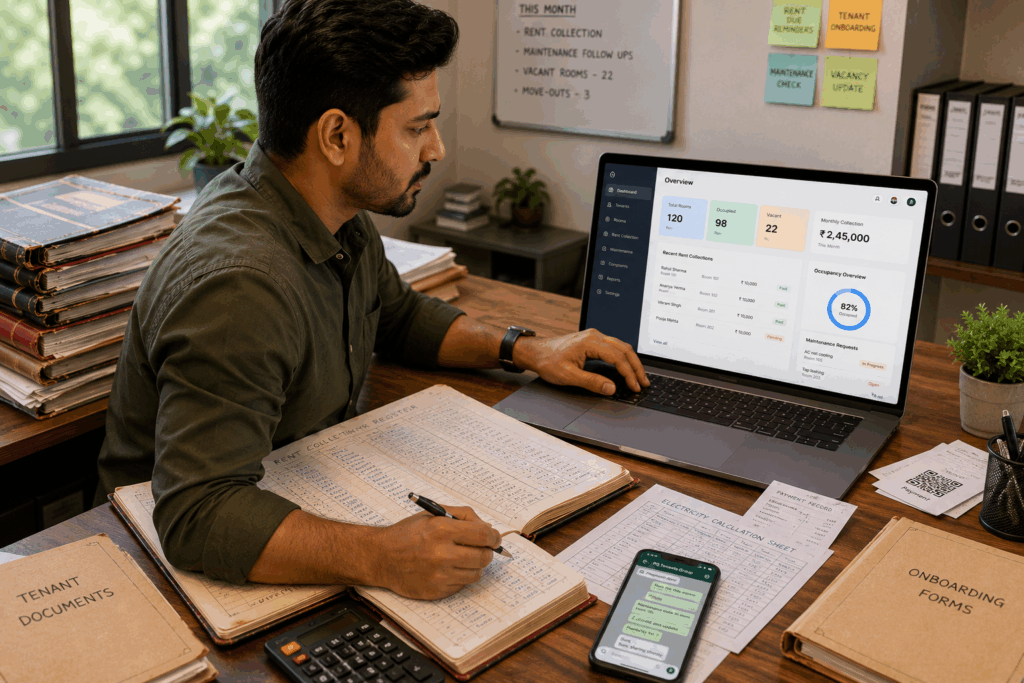
The information is usually already available inside:
- rent collection registers and handwritten payment records maintained monthly,
- spreadsheets used informally for electricity calculations or occupancy tracking,
- WhatsApp chats containing payment confirmations, complaints, and operational updates,
- and onboarding forms or tenant documentation files already maintained by the property.
The objective is not to rebuild operations completely from scratch. The goal is simply to centralize existing workflows into one structured system.
A practical transition usually begins with organizing tenant details, room allocations, and payment tracking digitally. Once that visibility improves, complaint management and operational coordination gradually move away from scattered notebooks and chats into centralized workflows.
This is usually where operators begin experiencing the biggest operational improvement because management stops depending entirely on manual follow-ups and fragmented coordination systems.
How RentOk Helps Replace Manual Registers Completely
As rental operations grow, managing everything through physical registers becomes increasingly difficult. Payment tracking slows down, occupancy visibility weakens, complaint coordination becomes fragmented, and operational updates start depending heavily on staff memory instead of centralized systems.
RentOk helps landlords and PG operators centralize their property management workflows within one connected platform designed specifically for rental operations.
Instead of maintaining separate notebooks and disconnected records, operators can manage:
- tenant onboarding, room allocation, and occupancy visibility through one centralized operational dashboard,
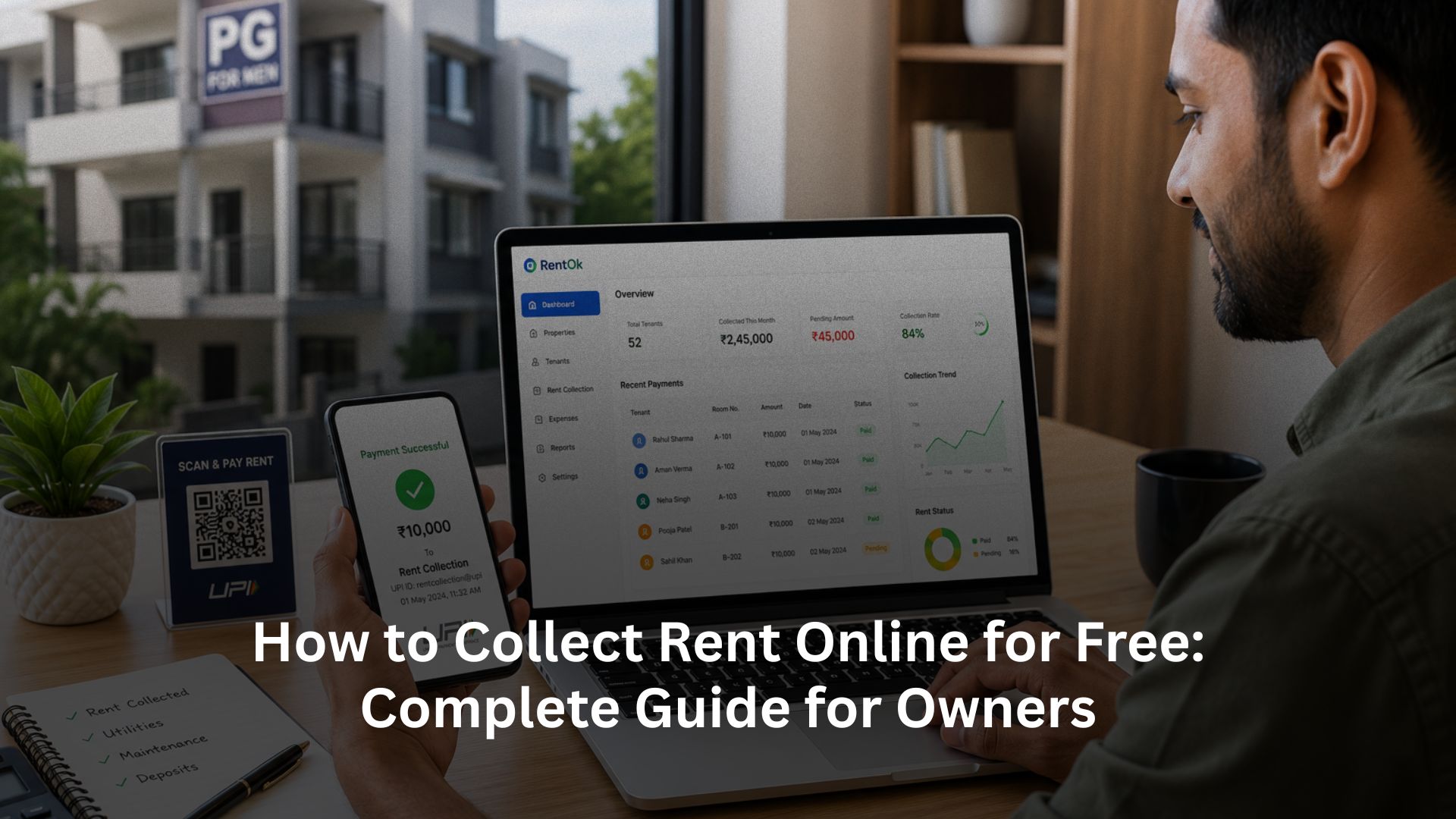
- rent collection tracking and payment history without depending on manual calculations or scattered screenshots,
- complaint coordination and maintenance workflows through structured tracking systems that improve operational visibility,
- and communication, reminders, and operational updates through workflows that reduce repetitive coordination pressure significantly.
This helps properties reduce:
- manual errors and missing entries created by fragmented record-keeping systems,
- operational confusion caused by scattered communication and inconsistent updates,
- repetitive follow-ups that consume unnecessary staff bandwidth daily,
- and visibility gaps that make scaling rental operations much harder over time.
For growing rental businesses, this operational clarity becomes extremely valuable because smoother systems directly improve efficiency, coordination, and management stability.
Conclusion
Registers may still feel familiar, but operationally they become increasingly difficult to manage as rental businesses grow. Modern property management requires faster coordination, centralized visibility, structured workflows, and systems that can support scaling without creating operational confusion.
This is exactly why more landlords, PG operators, and co-living businesses are shifting toward property management apps that simplify operations while improving overall control and efficiency.
The goal is not simply to replace notebooks with software. The real objective is to reduce operational friction, improve visibility across the property, and build systems that make rental management smoother and more scalable over time.
If you want to simplify property operations, improve coordination, and move beyond scattered registers and manual tracking systems, explore RentOk and discover how modern property management can become faster, clearer, and significantly easier to scale.
About the Author
Ishika Pannu
Ishika Pannu brings you the latest insights and easy-to-apply strategies in property management—helping you simplify renting and grow with RentOk.