Growth
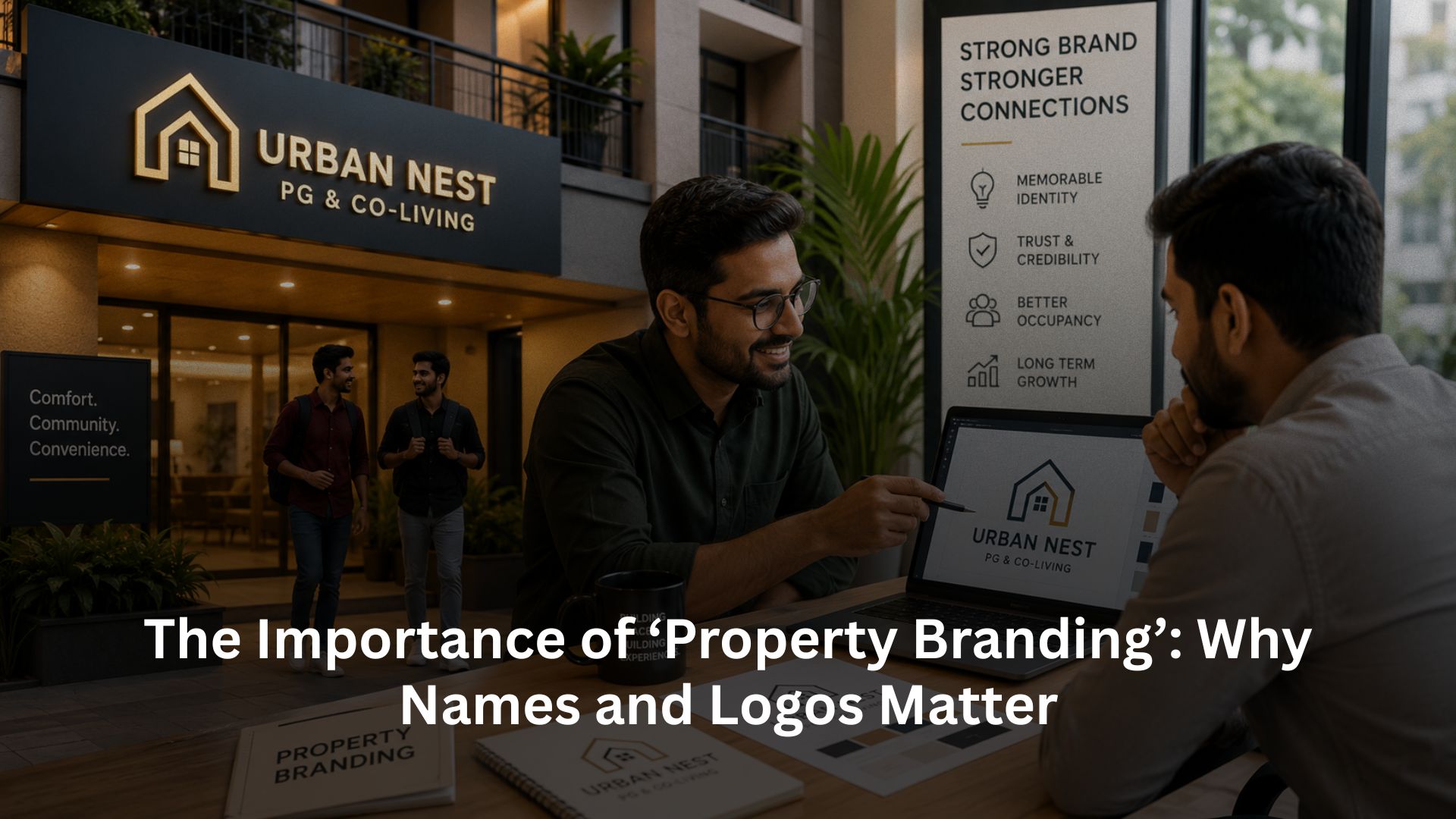
The Importance of ‘Property Branding’: Why Names and Logos Matter

Written by
Ishika Pannu
Read Time
11 min read
Posted on
May 15, 2026
Overview
Overview
The Importance of ‘Property Branding’: Why Names and Logos Matter
In the rental housing industry, most operators spend years improving the property itself but very little time improving how the property is perceived. Rooms get renovated, furniture gets upgraded, Wi-Fi improves, and amenities become better, yet occupancy still fluctuates and referrals remain inconsistent.
The reason is simple.
In today’s market, tenants are not just choosing a room. They are choosing a living experience that feels trustworthy, professional, and aligned with their lifestyle. And that decision often begins online long before they physically visit the property.
This is where branding starts becoming important.
For many PG and co-living operators, branding still feels like an “extra” effort meant only for large companies. But modern rental markets have changed significantly. Whether someone is running:
- a student PG,
- a premium co-living setup,
- or a managed hostel,
the way the property looks, sounds, and presents itself now directly affects how tenants perceive quality.
A strong property brand helps tenants remember you, trust your management faster, and differentiate your property from dozens of similar listings online. More importantly, it helps create perceived value beyond just pricing and amenities.
Why Branding Is Becoming a Competitive Advantage
A few years ago, rental decisions were driven mostly by location, affordability, and room availability. Those factors still matter, but tenant behavior has changed significantly over the last few years. Today, the first impression is no longer created during the site visit. It is created digitally through listing platforms, social media, Google searches, and online reviews.
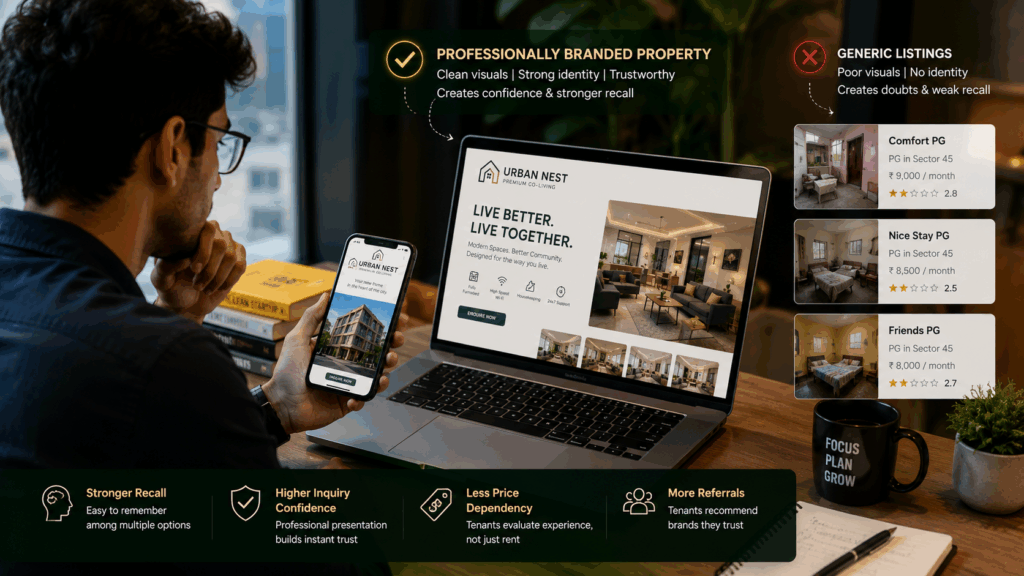
Properties that appear visually inconsistent or poorly presented online often create subconscious doubts about management quality itself. On the other hand, professionally branded properties immediately feel more trustworthy and operationally reliable before the first conversation even happens.
In highly competitive rental markets, strong branding helps properties:
- create stronger recall when tenants compare multiple listings offering nearly identical amenities and pricing structures,
- improve inquiry confidence because organized presentation naturally signals operational professionalism and reliability,
- reduce dependency on heavy discounting since tenants begin evaluating overall experience instead of only comparing rental pricing,
- and generate stronger referrals because tenants are more comfortable recommending properties that already feel established and professionally managed.
This psychological advantage becomes extremely important in modern co-living and PG markets where perception now directly influences occupancy performance.
What Property Branding Actually Means
One of the biggest misconceptions in the rental industry is that branding simply means designing a logo or choosing a stylish property name. In reality, branding is the complete identity associated with the property and the experience tenants attach to it over time.
Brand perception is built through multiple touchpoints including:
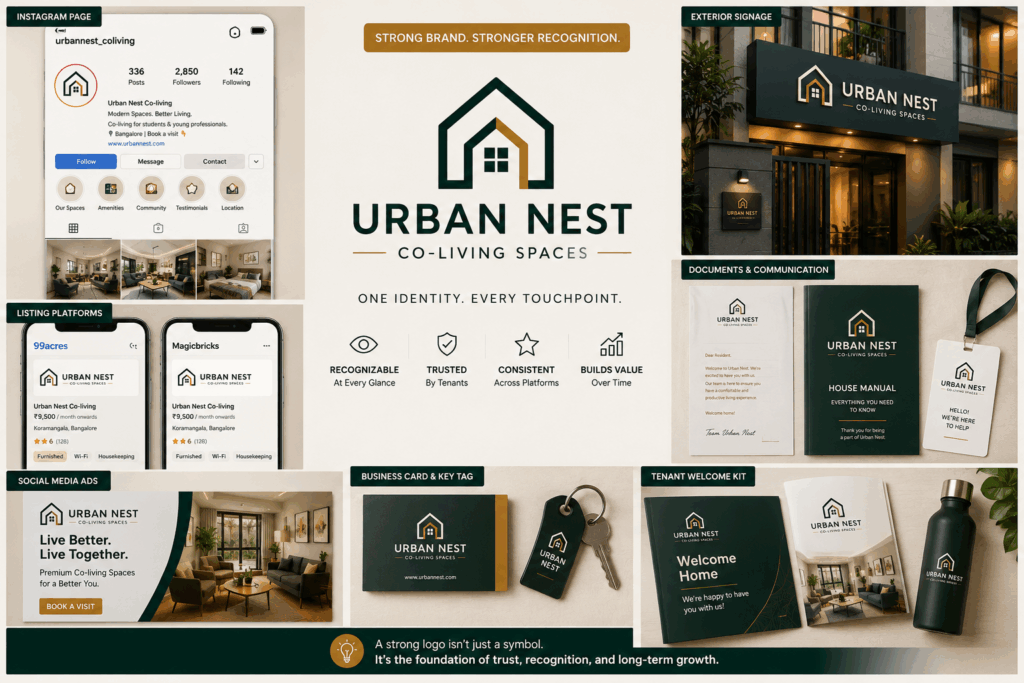
- listing photographs, social media pages, inquiry handling, and onboarding systems that collectively shape how professional the property feels,
- communication quality, operational organization, and responsiveness which strongly influence how reliable management appears,
- and the consistency of presentation across signboards, WhatsApp communication, Instagram creatives, and rental platforms.
Good branding answers one important question clearly:
“What kind of living experience does this property represent?”
The strongest rental brands usually position themselves very clearly. Some properties naturally align around:
- affordability and student convenience for budget-conscious tenants looking for practical living solutions,
- premium co-living experiences designed around comfort, flexibility, and professionally managed urban living,
- or socially engaging communities where networking, convenience, and lifestyle become part of the tenant experience itself.
Without clear positioning, properties start feeling generic. And once that happens, tenants compare only pricing because nothing else meaningfully stands out.
Why Property Names Matter More Than Most Operators Think
The property name is often the very first branding element tenants encounter, and surprisingly, it influences memorability far more than most operators realize. In highly competitive markets where tenants browse dozens of listings within a short period, forgettable or generic names immediately weaken recall value.
Many rental properties still use names that feel:
- overly generic and difficult to differentiate from nearby PGs operating within the same locality and tenant segment,
- unnecessarily complicated or difficult to pronounce which weakens referrals and online search discoverability,
- or disconnected from the actual tenant audience the property is trying to attract and position itself toward.
Strong property names work because they create clarity and emotional alignment. A modern co-living space targeting young professionals should feel contemporary, approachable, and easy to remember. Similarly, student-focused properties usually benefit from names that sound friendly, practical, and digitally searchable.
The strongest property names are usually the ones tenants can:
- remember easily after browsing multiple competing listings within crowded marketplaces,
- confidently recommend to friends or colleagues without confusion or hesitation,
- and quickly search online later without struggling to recall the exact wording.
That simplicity directly improves referral-driven growth and long-term brand recall.
The Role of Logos in Building Trust
Many independent operators underestimate the value of logos because they associate branding primarily with large companies and corporate businesses. But in modern rental ecosystems, logos function less like decorative graphics and more like recognition systems that repeatedly reinforce familiarity.
Tenants repeatedly interact with property logos across:
- listing platforms, Instagram pages, WhatsApp profile images, and promotional creatives where visual repetition gradually builds recognition,
- onboarding documents, rental agreements, and communication systems that shape how organized and professional the property feels,
- and physical signboards or offline branding materials that influence how established the property appears externally.
Over time, this repeated exposure builds familiarity. And familiarity naturally builds trust.
A professionally designed logo immediately makes a property feel:
- more organized and operationally serious compared to properties with inconsistent or outdated branding,
- more modern and professionally positioned within competitive urban rental markets,
- and more trustworthy during the inquiry stage before tenants even physically inspect the property.
This psychological perception matters heavily when multiple PGs offer similar facilities at similar price points.
What Makes a Strong Property Logo?
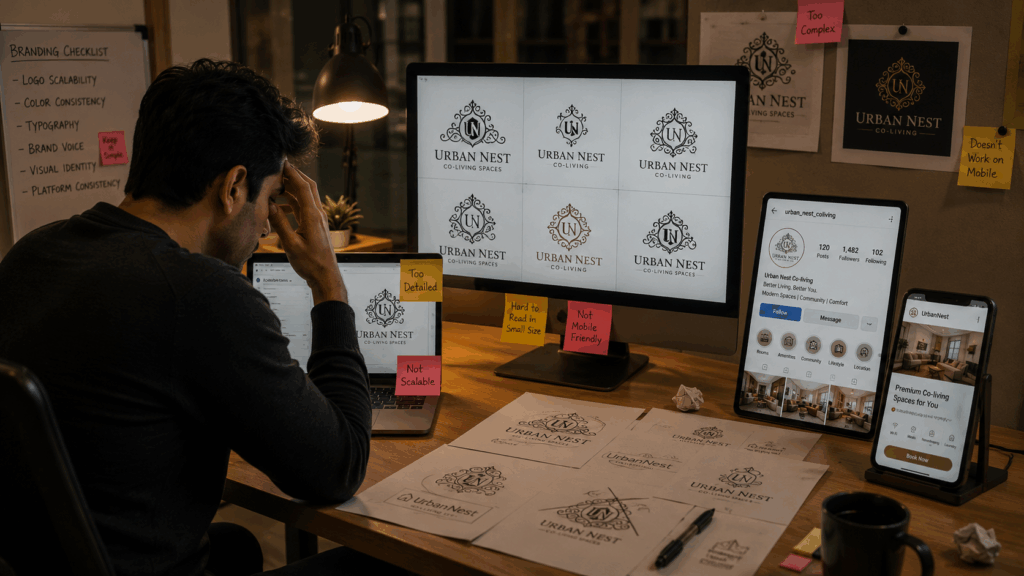
The strongest logos are usually not the most complicated ones. In fact, overly complex logos often reduce professionalism because they fail to work properly across digital platforms where most tenant discovery now happens.
A strong property logo should:
- remain visually clean and readable across Instagram pages, listing platforms, signboards, and small mobile interfaces,
- align naturally with the property’s positioning whether the brand targets students, executives, or premium urban co-living tenants,
- and create recognition through simplicity instead of depending on excessive graphics, complicated fonts, or unnecessary styling elements.
Many operators make the mistake of overdesigning logos in an attempt to appear premium. But premium branding is usually built through consistency and clarity, not visual clutter.
The purpose of a logo is not to look flashy.
The purpose is to create recognition, consistency, and long-term familiarity.
Why Visual Consistency Matters So Much
Strong branding is built through consistency across every tenant touchpoint. Unfortunately, many properties unintentionally weaken their branding because their presentation feels disconnected across different platforms.
For example:
- the Instagram page may look modern while listing photos appear outdated and inconsistent with the brand identity,
- the signboard may use completely different colors, fonts, or styling compared to the property’s online presentation,
- or communication tone may feel unstructured and inconsistent across WhatsApp, calls, and inquiry handling.
This inconsistency creates subconscious distrust because tenants naturally associate organized branding with organized management.
Strong rental brands usually maintain consistency across:
- listing visuals, social media creatives, and typography systems that collectively shape digital perception,
- communication templates, onboarding experiences, and inquiry handling workflows that influence professionalism,
- and offline branding elements like signage and property presentation which reinforce overall identity.
When everything feels aligned, the property naturally appears more premium and professionally managed even before the physical visit happens.
Why Branding Is Not Just About Design
One of the biggest realities experienced operators eventually understand is that branding cannot survive through visuals alone. Branding is sustained operationally. A property may look attractive online, but if the actual tenant experience feels disorganized, the branding weakens very quickly.
Modern tenants evaluate the complete experience including:
- maintenance responsiveness, complaint handling quality, and how efficiently operational issues are resolved,
- communication professionalism and whether management systems feel reliable and structured,
- and onboarding coordination which strongly influences early tenant perception after move-in.
This is why some smaller PGs with average infrastructure still maintain strong occupancy and referrals. Their systems feel reliable, organized, and professionally managed.
Meanwhile, some visually attractive properties struggle because the operational experience does not match the branding promise being marketed online.
Strong branding happens when:
- visual identity,
- tenant experience,
- communication quality,
- and operational consistency
all support each other together.
How Branding Improves Occupancy Indirectly
Branding does not magically fill rooms overnight. But over time, it improves several factors that directly influence occupancy performance and tenant retention quality.
Professionally branded properties usually benefit from:
- stronger inquiry trust because clean presentation subconsciously signals better management quality and smoother tenant experience,
- improved referral potential since tenants naturally feel more comfortable recommending organized and professionally managed properties,
- stronger digital recall when tenants revisit listings later after browsing multiple competing properties online,
- and reduced dependence on pricing competition because tenants begin evaluating overall living experience instead of comparing rent alone.
These advantages compound gradually and create stronger long-term positioning within highly competitive rental markets.
Why Storytelling Is Becoming Important in Co-living Brands
Modern co-living brands are no longer just marketing infrastructure. They are increasingly marketing experiences, lifestyles, and emotional positioning that tenants connect with personally.
Successful rental brands often position themselves around:
- hassle-free living environments where convenience and operational smoothness reduce everyday tenant stress,
- productive and professionally managed spaces that align with working professionals balancing comfort and routine,
- or socially engaging communities where networking, interaction, and belonging become part of the overall living experience.
This emotional positioning matters because rental decisions are deeply personal. Tenants are not simply choosing beds, Wi-Fi, or furniture. They are choosing environments where they expect comfort, convenience, reliability, and emotional alignment with their lifestyle.
And properties that understand this consistently build stronger tenant loyalty over time.
Common Branding Mistakes Rental Operators Make
Many operators attempt branding at a surface level without building consistency underneath. As a result, the branding may look attractive initially but fails to create long-term trust or differentiation.
Some of the most common mistakes include:
- using generic property names that sound identical to nearby PGs and fail to create memorability,
- creating visually complicated logos that do not work properly across digital platforms and mobile interfaces,
- maintaining inconsistent presentation across Instagram pages, listing platforms, signboards, and communication systems,
- and overpromising through branding while underdelivering operationally once tenants actually move into the property.
Another major mistake is trying to appeal to everyone instead of positioning clearly for a specific audience like:
- students looking for affordability and convenience,
- working professionals prioritizing organization and comfort,
- interns seeking flexibility and accessibility,
- or premium urban tenants expecting higher operational standards.
Strong branding requires clarity. The more clearly a property communicates its identity, the easier it becomes for the right tenants to connect with it.
How RentOk Helps Build More Professional Rental Operations
Building a strong rental brand is not just about managing operations smoothly. It is also about creating a professional identity that tenants recognize, trust, and remember. Along with simplifying property management, RentOk also helps PG and co-living operators strengthen the branding side of their business so their property stands out better in competitive rental markets.
RentOk helps operators create a more professional brand presence by supporting things like:
- professionally designed logos and cleaner visual branding that align with the identity of the property and help it look more modern and trustworthy online.
- stronger presentation across listing platforms and social media pages, which improves how potential tenants perceive the property before they even schedule a visit.
- a more organized and polished tenant experience through smoother communication, better operational workflows, and centralized management systems that make the property feel professionally managed overall.
In today’s rental market, tenants often discover properties through Google searches, Instagram pages, listing platforms, and online referrals before they ever visit the property physically. Because of this, presentation matters a lot more than it used to. A professionally branded property naturally feels more trustworthy, organized, and modern compared to properties with inconsistent or generic presentation.
At the same time, RentOk also helps operators streamline:
- tenant management,
- occupancy tracking,
- complaint handling,
- and day-to-day communication workflows,
making it easier to maintain both strong operations and a strong property brand together.
Final Thoughts
Property branding is no longer optional in modern rental markets. As competition increases across PGs and co-living spaces, tenants are evaluating far more than just rooms and pricing.
They are evaluating:
- professionalism,
- presentation,
- trust,
- consistency,
- and overall experience.
A strong property name, clean visual identity, consistent communication, and reliable operational systems together create a brand tenants actually remember and recommend.
And in crowded rental marketplaces, that memorability becomes extremely valuable.
Explore RentOk to streamline your rental operations, improve tenant experience, and build a stronger, more professional property brand that stands out in today’s competitive rental housing market.
About the Author
Ishika Pannu
Ishika Pannu brings you the latest insights and easy-to-apply strategies in property management—helping you simplify renting and grow with RentOk.