Market Trends
Commercial Lease Management Software vs. Residential

Written by
Ishika Pannu
Read Time
6 min read
Posted on
April 7, 2026
Overview
Overview
Commercial Lease Management Software vs. Residential
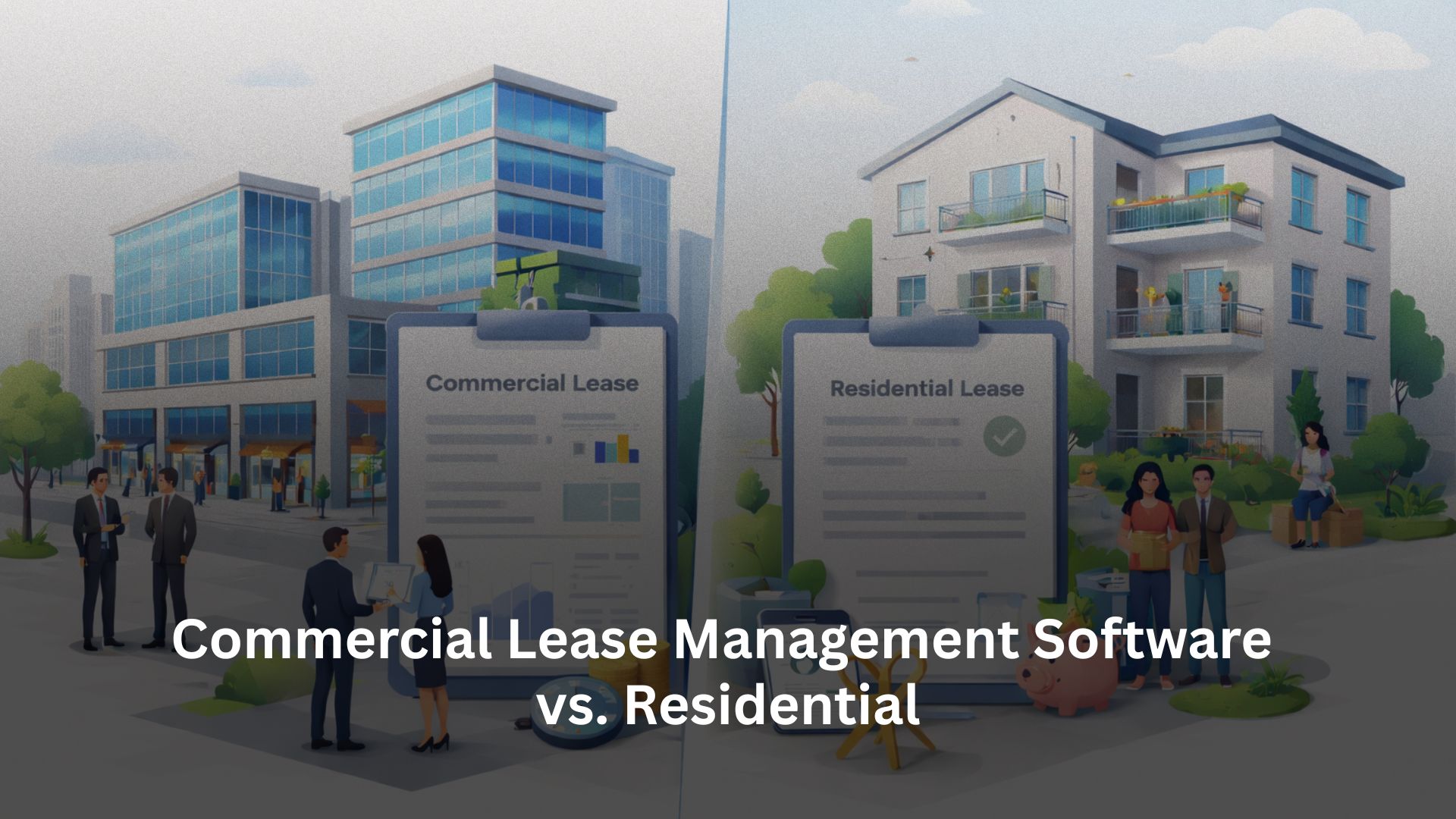
Managing leases is one of the most important parts of property management. But not all leases are created equal. Commercial leases and residential leases operate very differently, and these differences directly impact how property managers track agreements, handle payments, and manage tenant relationships.
While residential lease management tends to be more standardized and predictable, commercial lease management often involves complex agreements, multiple cost components, and long-term financial planning. This is why many property managers begin looking for commercial lease management software as their portfolio expands.
However, the question remains, do you need separate systems for commercial and residential properties, or can one property lease management software handle both?
Let’s break this down by understanding the key differences, challenges, and what to look for in lease management software.
Understanding the Core Difference Between Commercial and Residential Leases
At a basic level, both commercial and residential leases serve the same purpose, defining the agreement between property owners and tenants. But the structure, complexity, and management requirements differ significantly.
Residential leases are typically designed for simplicity. They usually involve fixed rent, shorter lease terms, and fewer financial variables. This makes them easier to track and manage.
Commercial leases, on the other hand, are more flexible and customized. They often include multiple financial components, longer durations, and complex clauses that require careful monitoring.
Residential Lease Characteristics
Residential leases are usually straightforward and predictable. Most landlords deal with similar lease structures across multiple tenants.
Common features include:
- Fixed monthly rent
- Shorter lease durations (6–12 months)
- Standardized agreements
- Limited additional charges
- Simple renewal process
- Basic maintenance responsibilities
Because of this simplicity, residential lease management is often easier to handle, especially for landlords managing a smaller number of properties.
However, as the number of tenants increases, even residential lease management can become difficult without proper software.
Commercial Lease Characteristics
Commercial leases are more complex and often customized for each tenant. This creates additional tracking requirements and operational challenges.
Commercial leases often include:
- Long-term agreements (3–10 years)
- Negotiated rent structures
- Annual rent escalations
- CAM charges
- Revenue-sharing models
- Utility allocations
- Custom payment schedules
Because every lease may be different, manual tracking becomes difficult. Property managers must track multiple variables, deadlines, and financial components.
This is where commercial lease management software becomes essential.
CAM Charges vs Flat Rent: Why It Changes Everything
One of the biggest differences between commercial and residential lease management is the rent structure.
Residential leases usually involve flat rent. Tenants pay a fixed amount each month, making payments predictable and easy to track.
Commercial leases, however, often include CAM charges (Common Area Maintenance), which add complexity to billing and tracking.
What Are CAM Charges?
CAM charges refer to shared expenses for maintaining common areas in commercial properties. These charges are typically divided among tenants.
CAM charges may include:
- Security services
- Cleaning and maintenance
- Parking area maintenance
- Landscaping
- Elevator maintenance
- Building repairs
Unlike residential rent, these charges can vary over time. This means property managers must track and update them regularly.
Why CAM Charges Make Management Complex
When dealing with commercial properties, you’re not just collecting rent. You’re managing multiple cost components.
For example, a commercial tenant may pay:
- Base rent
- CAM charges
- Property tax share
- Utility charges
- Maintenance costs
Each of these may change periodically. Tracking them manually increases the chances of errors and missed billing.
Commercial lease management software helps manage these variable components and ensures accurate billing.

Why Commercial Lease Management Requires More Structure
Commercial leases involve long-term planning and ongoing monitoring. Unlike residential leases, they often include clauses that change over time.
For example:
- Rent escalation every year
- Lease renewal clauses
- Revenue-based rent agreements
- Custom payment schedules
- Maintenance responsibilities
Managing these manually becomes increasingly difficult, especially when handling multiple tenants.
This is why commercial property managers typically need:
- Lease expiration tracking
- Automated reminders
- Variable rent tracking
- Multi-component billing
- Financial reporting
Without a structured system, these processes become time-consuming and error-prone.
Residential Lease Management Still Has Its Challenges
While residential leases are simpler, they still require organization, especially when managing multiple tenants.
Common residential challenges include:
- Tracking rent payments
- Monitoring move-ins and move-outs
- Managing security deposits
- Handling renewals
- Tracking occupancy
These tasks become difficult when handled manually or through spreadsheets.
Property lease management software helps simplify residential lease management by centralizing everything in one place.
Can You Use One Software for Both Commercial and Residential?
Many property managers handle mixed portfolios that include both commercial and residential properties. Managing them using separate systems creates unnecessary complexity.
Ideally, your software should support both.
A flexible property lease management software should allow you to:
- Track fixed rent for residential tenants
- Handle variable rent for commercial tenants
- Monitor lease durations
- Track renewals and expirations
- Manage tenant records
- Generate financial reports
Using one system helps reduce operational friction and improves visibility across all properties.
Instead of switching between systems, you can manage everything from one platform.
What to Look for in Property Lease Management Software
Choosing the right lease management software depends on flexibility and scalability. Your software should adapt to your portfolio, not limit your operations.
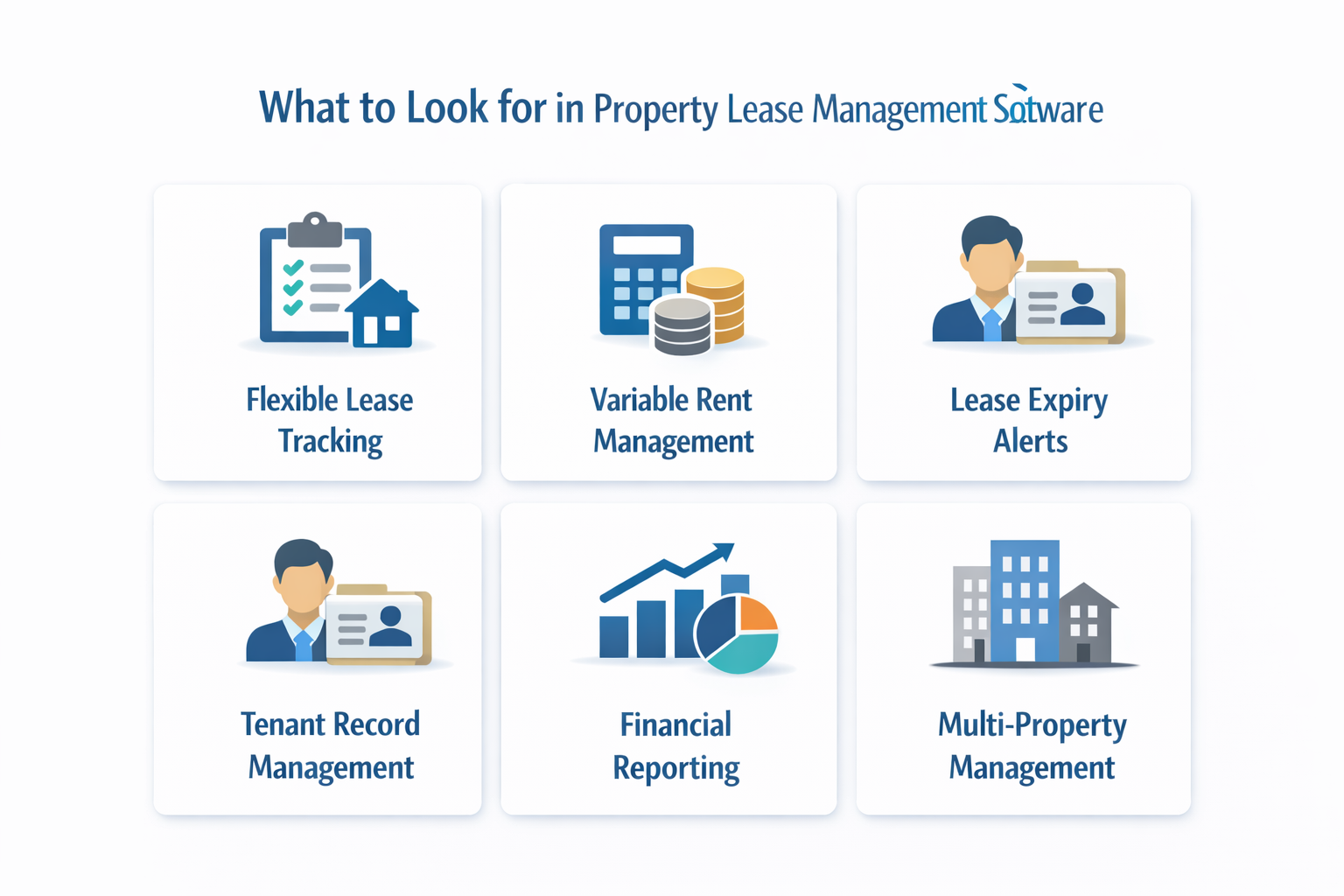
Here are some important features to consider:
Flexible Lease Tracking
Your software should allow you to manage different lease structures, including both residential and commercial agreements.
Variable Rent Management
Commercial leases often involve multiple charges. Your software should allow tracking of variable rent components.
Lease Expiry Alerts
Tracking lease expirations manually is risky. Automated alerts help you stay proactive.
Tenant Record Management
Centralized tenant records help simplify communication and tracking.
Financial Reporting
Reports help property managers understand performance and track revenue.
Multi-Property Management
If you’re managing multiple properties, your software should provide visibility across locations.
These features help create a structured lease management workflow.
Why Many Property Managers Move to Unified Lease Management Systems
As property portfolios grow, managing leases manually becomes difficult. Property managers often shift to unified systems to maintain operational clarity.
Unified lease management systems help:
- Reduce manual errors
- Improve financial visibility
- Track lease timelines
- Manage multiple properties
- Simplify billing
This is especially useful for property managers handling mixed portfolios.
Instead of building separate workflows, everything stays organized in one place.
How RentOk Helps Manage Commercial and Residential Leases
Managing different lease types becomes easier when you have a structured platform designed for flexibility.
RentOk helps property managers manage both commercial and residential leases without switching between systems.
With RentOk, you can:
- Track lease agreements and durations
- Manage tenant records centrally
- Monitor rent payments and charges
- Track renewals and notice periods
- View financial summaries
- Manage multiple properties
Because RentOk is cloud-based, you can access lease information anytime, from anywhere. This makes it easier to stay updated and avoid missing important deadlines.
Whether you’re managing commercial spaces, residential units, or a mixed portfolio, RentOk helps bring structure to lease management.
When Should You Upgrade to Lease Management Software?
If you’re currently managing leases manually, you may start noticing challenges such as:
- Missed renewals
- Manual rent tracking
- Difficulty managing multiple properties
- Limited financial visibility
These signs indicate it’s time to move to structured lease management software.
Upgrading early helps avoid operational challenges as your portfolio grows.
Choosing the Right Approach for Your Portfolio
Residential leases are typically straightforward, but commercial leases demand greater flexibility, structure, and oversight. As your property portfolio grows, your lease management system should evolve to keep pace.
With flexible property lease management software, you can:
- Manage multiple lease types with ease
- Track financial components accurately
- Reduce manual work and errors
- Improve operational visibility across properties
As your portfolio expands, lease complexity increases. A structured system helps you stay ahead of renewals, escalations, and tenant changes, without the chaos.
About the Author
Ishika Pannu
Ishika Pannu brings you the latest insights and easy-to-apply strategies in property management—helping you simplify renting and grow with RentOk.