Market Trends
Managing Mid-Term Stays: The Gap Between PG and Airbnb

Written by
Ishika Pannu
Read Time
9 min read
Posted on
May 19, 2026
Overview
Overview
Managing Mid-Term Stays: The Gap Between PG and Airbnb
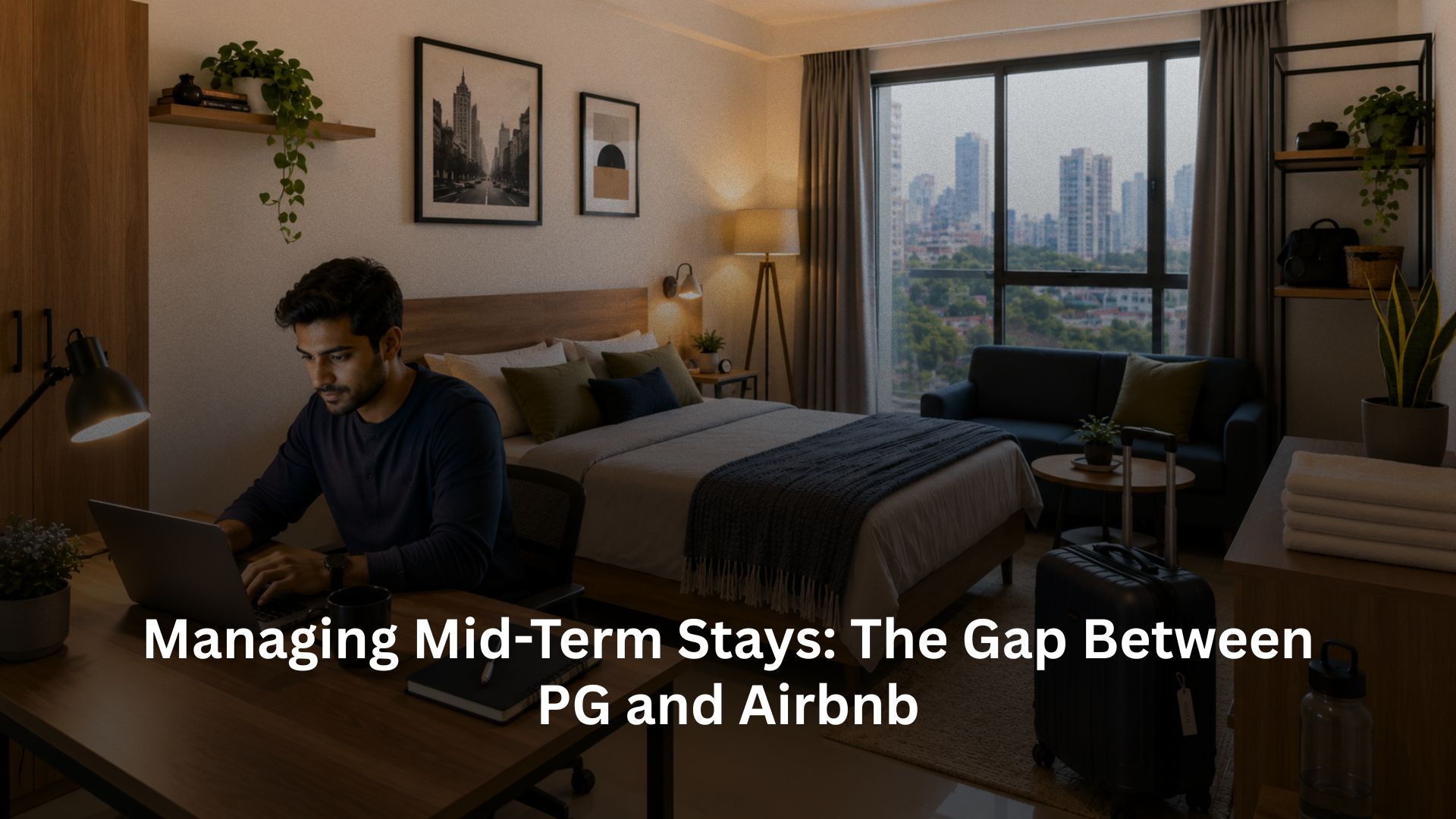
The rental market has evolved far beyond the traditional “monthly PG” model. Over the last few years, one category has quietly started growing faster than most operators expected: mid-term stays.
These are tenants who usually stay anywhere between 2 to 6 months. They are not looking for a permanent rental setup, but they also do not want the instability or pricing structure of short-term platforms like Airbnb.
This category includes:
- students relocating temporarily for internships, semester programs, or coaching preparation in another city where signing a yearly agreement feels unnecessary and financially impractical,
- working professionals moving for probation periods, project-based roles, or temporary office assignments who need flexibility without sacrificing comfort and operational reliability,
- remote workers and freelancers searching for furnished accommodation that feels stable enough for daily living but flexible enough to avoid long contractual commitments.
This is exactly where the operational gap between PGs and Airbnb begins.
Traditional PGs are usually built around long-term occupancy models where tenants stay for 10–12 months, operational systems remain relatively fixed, and onboarding frequency is lower. Airbnb-style properties, on the other hand, optimize for rapid guest turnover, hospitality-driven experiences, and short-duration stays.
Mid-term rentals require an entirely different operational structure.
Operators need to balance:
- flexibility without operational chaos,
- hospitality standards without hotel-level costs,
- and short-term convenience without sacrificing occupancy stability.
This category may look simple externally, but operationally it is one of the most demanding segments in modern rental management.

Why Mid-Term Rentals Are Growing So Quickly
One of the biggest reasons mid-term stays are growing rapidly is because modern mobility patterns have changed significantly. People relocate far more frequently now compared to a few years ago.
Students increasingly move cities for:
- internships, exchange semesters, and entrance preparation programs where staying for only a few months makes traditional leases feel unnecessarily restrictive,
- short-term certifications or coaching programs where convenience and flexibility matter more than long-term rental commitments.
Similarly, professionals today relocate regularly for:
- startup roles, project assignments, corporate training periods, and hybrid work arrangements that may only last for a limited duration initially,
- temporary office transfers where tenants want a furnished, operationally stable living environment without dealing with furniture setup, brokerage, or yearly agreements.
This shift has created a major market gap.
Hotels and Airbnb properties often become financially expensive for stays extending beyond a few weeks. At the same time, traditional rentals feel too rigid because they usually involve:
- long notice periods,
- security deposit complications,
- furniture setup,
- and operational responsibilities that temporary residents simply do not want.
Mid-term accommodation solves this problem because it offers a middle ground between hospitality and rental stability.
And this is exactly why operators who understand this category early are building a very strong competitive advantage.
Why Traditional PG Systems Often Fail for Mid-Term Stays
One of the biggest operational mistakes landlords make is managing mid-term rentals exactly like traditional PGs.
The tenant mindset is completely different.
Long-term PG residents usually adapt gradually to operational imperfections because they psychologically settle into the property over time. Mid-term residents behave differently because they already know their stay is temporary from the beginning.
As a result, they evaluate the experience much more critically during the first few weeks itself.
For example, mid-term tenants usually expect:
- smoother onboarding experiences where documentation, room readiness, and move-in coordination feel fast, organized, and professionally managed instead of informal or delayed,
- cleaner and more hospitality-oriented room conditions because many tenants compare the experience directly with serviced apartments and Airbnb listings during their decision-making process,
- transparent pricing structures where utility charges, deposits, and service inclusions are explained clearly upfront without confusion later during the stay.
This operational difference is extremely important.
A traditional PG setup may survive occasional operational inconsistencies because long-term tenants gradually adjust their expectations. Mid-term tenants usually do not.
Since they are already paying for flexibility and convenience, they expect stronger operational reliability from the beginning.
That changes:
- onboarding expectations,
- communication standards,
- housekeeping quality,
- and overall service responsiveness significantly.
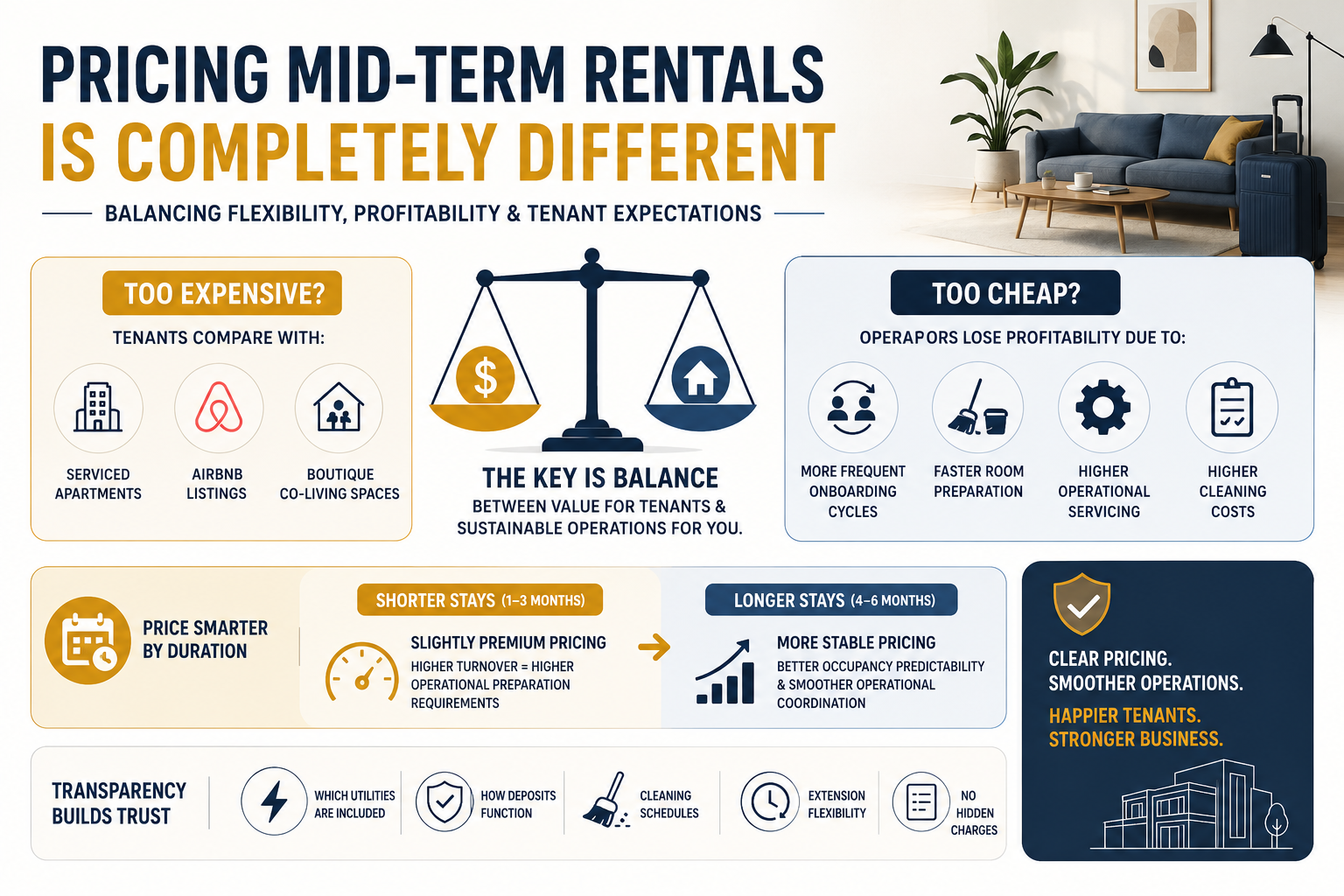
The Pricing Strategy for Mid-Term Rentals Is Completely Different
Pricing mid-term rentals is much more complex than standard PG pricing because operators sit directly between hospitality and long-term accommodation markets.
If pricing becomes too expensive, tenants immediately start comparing the property with:
- serviced apartments,
- Airbnb listings,
- or boutique co-living spaces.
But if pricing becomes too low, operators start losing profitability because mid-term stays involve:
- more frequent onboarding cycles,
- faster room preparation requirements,
- repeated cleaning costs,
- and higher operational servicing expectations overall.
This is why successful mid-term rental pricing usually focuses on balancing:
- flexibility,
- operational convenience,
- duration,
- and included services.
For example, many operators structure pricing differently depending on stay duration:
- shorter mid-term stays often carry slightly premium pricing because turnover frequency remains higher and operational preparation cycles become more demanding,
- while 4–6 month stays may receive more stable pricing because occupancy predictability improves and operational coordination becomes smoother long term.
Transparency matters enormously here.
Mid-term tenants dislike hidden operational charges because they are already choosing flexible accommodation models specifically to avoid unnecessary friction.
Professional operators usually communicate clearly:
- which utilities are included,
- how deposits function,
- what cleaning schedules look like,
- and whether extension flexibility exists later.
This operational clarity improves both:
- conversion rates,
- and tenant trust significantly.
Cleaning and Maintenance Expectations Are Much Higher
One of the biggest shifts operators notice in mid-term rentals is that tenants evaluate cleanliness very differently compared to traditional PG residents.
Many mid-term tenants are:
- working professionals,
- remote employees,
- consultants,
- startup workers,
- or relocating corporate staff
who are used to hospitality-driven environments.
As a result, room condition becomes extremely important operationally.
Mid-term residents expect:
- cleaner room preparation before move-in,
- more predictable housekeeping schedules,
- quicker maintenance resolution timelines,
- and better upkeep consistency across common areas.
This is where many operators struggle initially.
Traditional PG operations often rely on reactive maintenance systems where complaints are handled only after escalation happens. Mid-term rentals perform much better when maintenance becomes proactive instead.
For example:
- internet issues affecting remote workers cannot remain unresolved for multiple days because the room often functions as both accommodation and workspace simultaneously,
- housekeeping delays immediately affect tenant perception because residents compare the experience against professionally serviced accommodations.
The strongest operators usually implement structured operational systems such as:
- fixed cleaning schedules for occupied rooms,
- standardized room inspection processes before onboarding,
- maintenance escalation timelines,
- and move-in readiness checklists to maintain operational consistency.
These systems may appear operationally small initially.
But collectively, they define tenant experience quality in mid-term rentals.
Lease Structures Need More Flexibility
Traditional yearly rental agreements often feel too rigid for mid-term residents. At the same time, purely short-term hospitality bookings create operational uncertainty for operators managing multi-month occupancy.
This is why mid-term rentals require hybrid lease systems.
Operators usually need agreements that:
- maintain operational clarity while still allowing flexibility around extensions and move-out timelines,
- define utility structures, deposit adjustments, and notice periods clearly so temporary tenants understand expectations from the beginning,
- simplify renewals and duration modifications because many residents eventually extend their stay after onboarding.
Without structured lease systems, operational confusion increases quickly.
For example, temporary residents often:
- change timelines unexpectedly,
- extend occupancy,
- relocate due to project changes,
- or adjust their departure dates based on work schedules.
Operators who prepare for this flexibility operationally perform far better than those reacting to changes manually every time.
Why Mid-Term Tenants Prioritize Convenience More Than Luxury
Many landlords assume mid-term residents are searching mainly for luxury accommodation.
In reality, most are prioritizing operational convenience.
Tenants usually care more about:
- reliable Wi-Fi and uninterrupted connectivity because remote work, office calls, and online workflows often remain part of their daily routine,
- clean, professionally maintained rooms that reduce friction during temporary living periods where convenience becomes more valuable than decorative luxury,
- predictable communication and faster issue resolution because temporary residents typically have lower tolerance for operational inconsistency.
This is especially true for:
- interns,
- remote professionals,
- relocation employees,
- startup workers,
- and students preparing for exams or certifications.
For these residents, operational simplicity matters more than excessive amenities.
A moderately priced property with:
- strong maintenance systems,
- cleaner onboarding,
- reliable housekeeping,
- and structured communication
often performs better than “premium-looking” properties operating with weak systems underneath.
Why Mid-Term Rentals Are Operationally More Complex
One of the biggest misconceptions in the rental industry is assuming mid-term stays are easier because tenants stay longer than Airbnb guests.
Operationally, this category often becomes more demanding.
Operators need to manage:
- hospitality-level expectations,
- flexible durations,
- faster onboarding cycles,
- higher cleaning standards,
- and occupancy coordination simultaneously.
At the same time, tenants still expect:
- rental stability,
- predictable pricing,
- and smoother living experiences over multiple months.
Without structured operational systems, this balance becomes extremely difficult to maintain consistently.
This is why successful mid-term operators rely heavily on:
- centralized occupancy visibility,
- standardized workflows,
- operational tracking systems,
- and cleaner communication structures.
The category scales operationally only when visibility improves underneath.

How RentOk Helps Operators Manage Mid-Term Rentals More Efficiently
Mid-term rental operations become difficult very quickly when bookings, occupancy tracking, payments, and tenant coordination remain scattered across multiple systems. Since this category involves higher onboarding frequency and more flexible stay structures, manual workflows often create operational confusion as portfolios grow.
RentOK helps operators simplify mid-term rental management by centralizing:
- occupancy tracking and tenant onboarding workflows that help landlords maintain better visibility across room availability, move-ins, and temporary stay coordination,
- payment tracking systems that improve financial clarity across varying rental durations, deposits, and billing structures without relying heavily on fragmented spreadsheets,
- complaint and maintenance coordination workflows that help operators maintain faster operational responsiveness for tenants expecting hospitality-level consistency during their stay,
- and structured property management visibility that reduces repetitive coordination tasks while improving overall operational efficiency across growing rental portfolios.
As mid-term rentals continue growing across:
- startup hubs,
- educational cities,
- metro-connected areas,
- and corporate districts,
structured systems become increasingly important because operational consistency directly affects: - occupancy stability,
- tenant satisfaction,
- reviews,
- and long-term scalability.
Conclusion
Mid-term rentals are becoming one of the most important segments in modern property management because they solve a growing market need between traditional PGs and short-term hospitality stays.
But this category cannot be managed casually.
The operators succeeding in this space are the ones building systems around:
- operational consistency,
- flexible lease structures,
- transparent pricing,
- stronger maintenance workflows,
- and professionally managed tenant experiences.
Because ultimately, mid-term residents are not just paying for accommodation.
They are paying for flexibility, convenience, operational reliability, and a smoother living experience during transitional phases of life.
Explore RentOk to discover how smarter property management systems can help simplify mid-term rental operations, improve occupancy visibility, and create more structured tenant management workflows.
About the Author
Ishika Pannu
Ishika Pannu brings you the latest insights and easy-to-apply strategies in property management—helping you simplify renting and grow with RentOk.