Market Trends
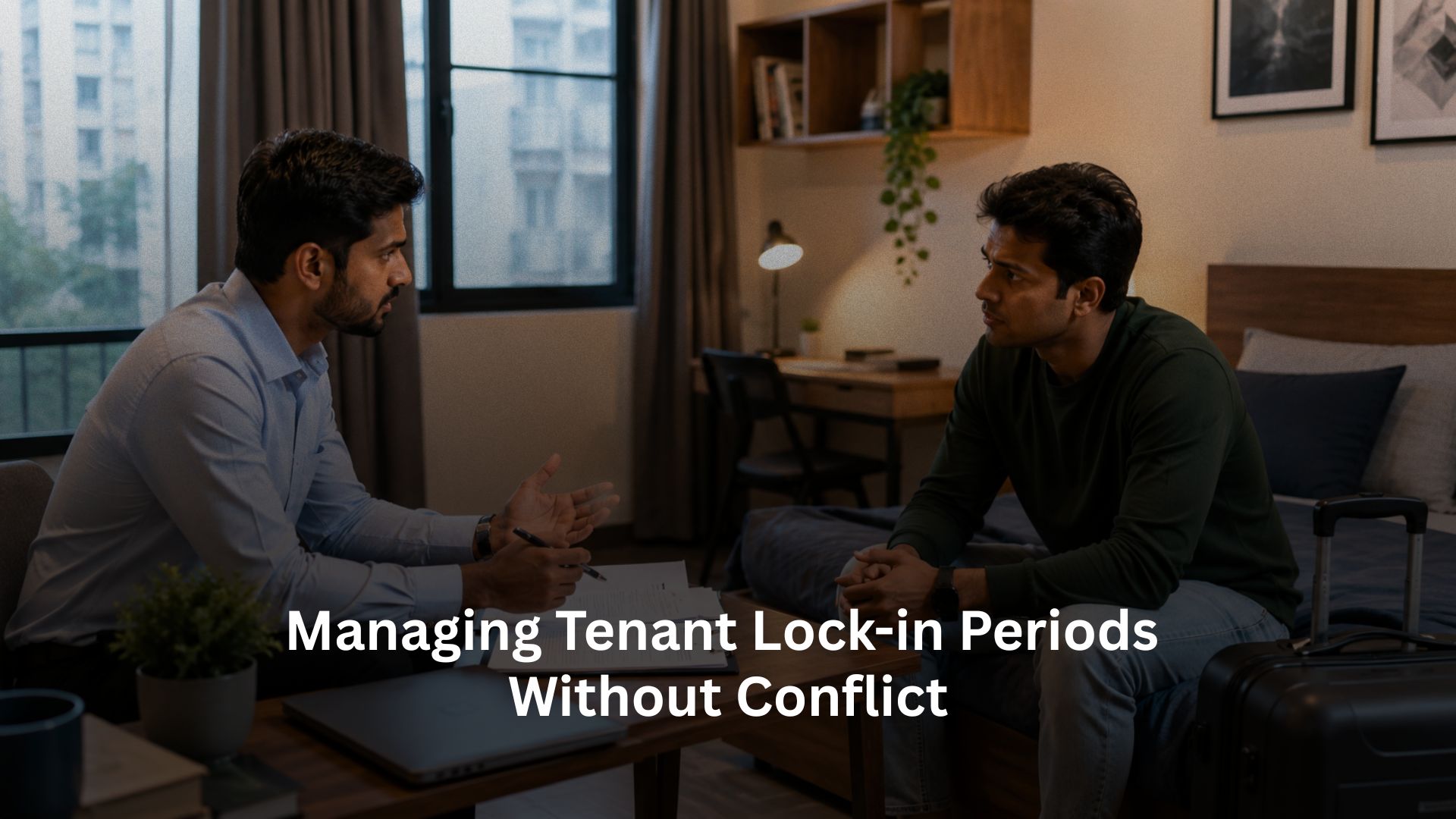
Managing Tenant Lock-in Periods Without Conflict

Written by
Ishika Pannu
Read Time
8 min read
Posted on
May 21, 2026
Overview
Overview
Managing Tenant Lock-in Periods Without Conflict
Tenant turnover is one of the biggest operational challenges in the PG and co-living business. A property may have good occupancy, stable demand, and strong lead generation, but if move-outs become unpredictable, the entire operational rhythm of the business starts getting affected. This is exactly why lock-in periods exist. They are designed to create a minimum level of occupancy stability so that landlords and operators are not constantly dealing with sudden vacancies, repeated onboarding cycles, and avoidable revenue gaps.
But despite being extremely common across the industry, lock-in periods are still one of the most poorly managed parts of rental operations. In many properties, the clause exists only inside agreements and is never actually explained properly to tenants. Everything appears smooth during move-in because residents are focused on shifting, documentation, room setup, and payments. The real problem begins when someone suddenly wants to leave before the agreed timeline.
At that point, most landlords react emotionally instead of operationally. Some immediately threaten full deposit deductions, while others become too flexible and end up creating occupancy instability repeatedly. Neither approach works well long-term.
Professional rental businesses treat lock-in periods differently. They understand that lock-in clauses are not just legal safeguards. They are occupancy management tools that need:
- proper communication during onboarding so tenants understand why the structure exists instead of viewing it as an unfair restriction later,
- operational clarity around notice periods, deposit adjustments, and early exit procedures to avoid confusion once emotions enter the discussion,
- enough flexibility to handle genuine relocation or emergency situations without damaging tenant relationships completely,
- and strong documentation systems that help both operators and residents track timelines, dues, and agreed conditions transparently.
Because ultimately, good lock-in management is less about penalties and more about predictability.

Why Lock-in Periods Exist in the First Place
One of the biggest misunderstandings in the rental market is that lock-in periods exist purely to financially protect landlords. In reality, they are mostly designed to protect operational stability.
Every new move-in creates a chain of expenses and coordination work that tenants usually never see directly. Before occupancy even begins, the property owner may already have invested money into preparing the room and coordinating the onboarding process properly. This includes:
- deep cleaning, room preparation, and maintenance fixes that are completed before handover so the property is occupancy-ready,
- brokerage fees or marketing expenses that may already have been spent to acquire that tenant in the first place,
- administrative coordination involving agreement preparation, KYC verification, inventory checks, and onboarding support,
- utility setup, furnishing adjustments, mattress replacements, or appliance servicing required to maintain room quality standards.
Now imagine a tenant leaving within:
- two weeks,
- one month,
- or even two months.
The operator suddenly has to restart the entire acquisition and preparation cycle again while also dealing with vacancy loss in between. In high-turnover properties, this creates serious operational instability because onboarding costs keep repeating faster than occupancy stabilizes.
This becomes especially difficult in:
- premium co-living spaces where setup standards are higher and operational servicing costs are significantly more expensive,
- fully furnished PGs where furniture maintenance, appliance wear-and-tear, and room readiness require continuous investment,
- student housing operations where seasonal movement already creates heavy occupancy pressure during admissions and exams,
- or managed rental properties where staffing, housekeeping, and operational planning depend heavily on occupancy consistency.
This is why lock-in periods became standard across modern managed rentals. They help businesses reduce occupancy unpredictability and create better planning visibility.
The Real Reason Most Early Exit Conflicts Happen
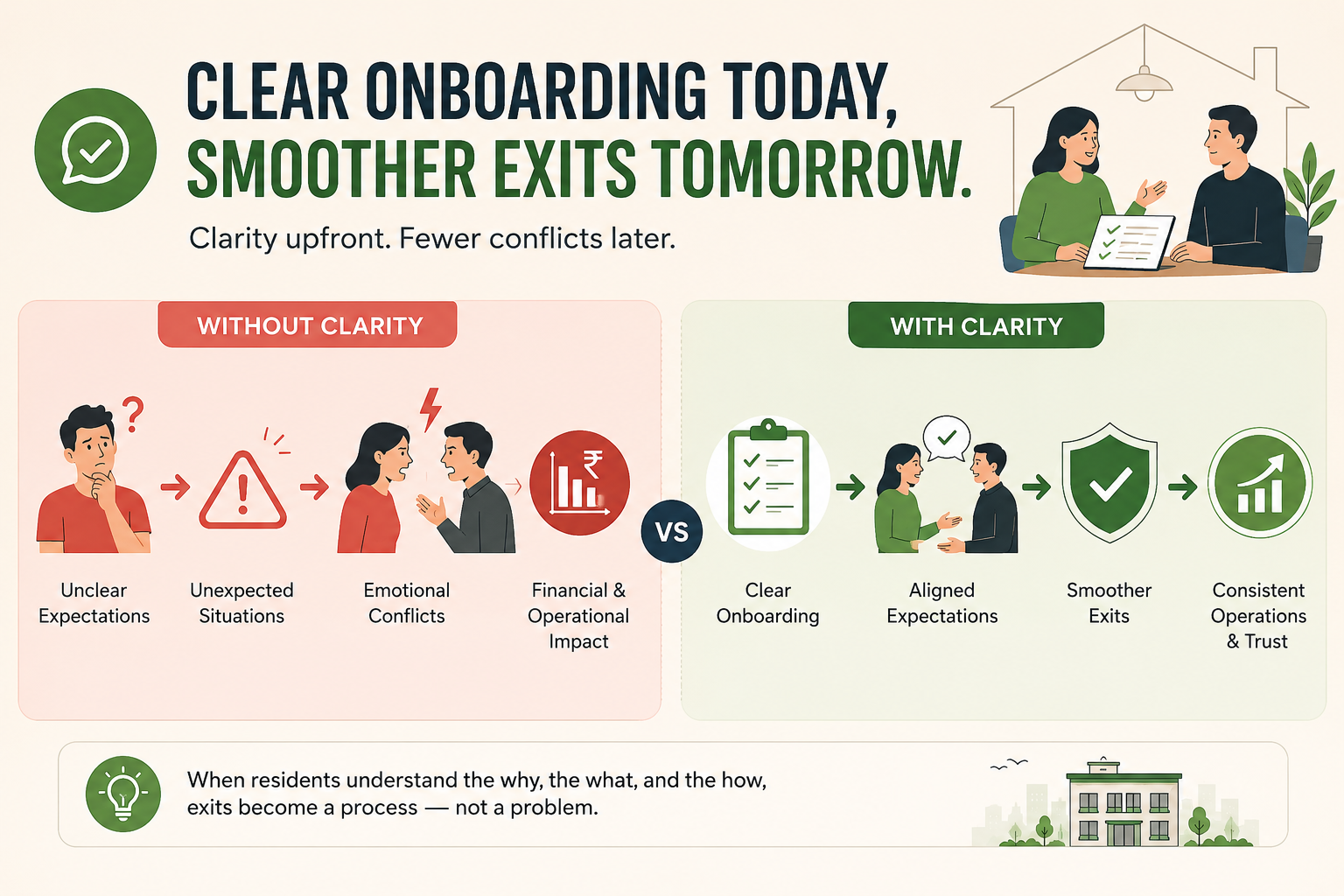
Interestingly, most disputes are not caused by the lock-in itself. They happen because expectations were never explained properly during onboarding.
In many PGs, move-in conversations happen extremely casually. A tenant is simply told:
“There’s a six-month lock-in.”
“Deposit is two months.”
“Notice period is one month.”
And that’s the end of the explanation.
Nobody properly discusses:
- what happens if the tenant gets transferred unexpectedly and needs to relocate before the lock-in ends,
- whether notice periods still apply during lock-in duration or whether penalties replace the notice structure entirely,
- how security deposit adjustments are calculated and whether deductions happen automatically,
- whether replacement tenants can reduce financial penalties if occupancy loss is minimized,
- or how mutual negotiation works in situations involving genuine emergencies or unavoidable movement.
Everything feels manageable until the resident suddenly says:
“I need to leave next month.”
Now the conversation becomes emotional because both sides are operating with different assumptions.
The tenant feels:
- trapped by a clause they never fully understood operationally,
- frustrated about losing deposits or facing unexpected charges,
- or disappointed because the flexibility promised during onboarding suddenly disappears.
The landlord feels:
- financially exposed because occupancy planning gets disrupted unexpectedly,
- operationally inconvenienced because room turnover now needs urgent coordination,
- and frustrated because move-outs affect revenue consistency and staffing workflows.
Professional operators avoid this problem early. They treat onboarding as an operational clarity process rather than a formality. Instead of simply mentioning the lock-in duration, they clearly explain:
- why the policy exists from a business standpoint,
- how notice periods help reduce vacancy gaps operationally,
- what flexibility may exist in genuine relocation scenarios,
- and what the exit process actually looks like step-by-step.
This dramatically reduces disputes later because the tenant already understands the reasoning behind the structure.
Why Extremely Strict Penalties Usually Damage the Business
Many landlords believe strong penalties automatically create stronger occupancy control. Operationally, that is not always true.
Some operators immediately impose:
- full security deposit forfeiture regardless of occupancy duration or exit circumstances,
- rigid non-negotiable penalties that leave no room for discussion or replacement occupancy solutions,
- multiple months of rent deductions that feel excessive compared to the actual vacancy impact,
- or hostile communication during exits that makes tenants feel punished rather than professionally managed.
This may recover short-term money, but it often damages long-term reputation.
Today’s tenants actively discuss rental experiences online through:
- Google reviews,
- Reddit communities,
- student WhatsApp groups,
- relocation forums,
- and social media conversations.
Move-out experiences influence reputation almost as strongly as move-in experiences now.
Potential residents increasingly evaluate:
- how management handles refunds,
- whether deposits are returned fairly,
- how professionally exits are coordinated,
- and whether the property feels transparent operationally.
This means an aggressively handled exit may indirectly cost future occupancy opportunities.
Professional operators understand something important:
good enforcement should still feel reasonable.
A tenant may not always agree with penalties, but they cooperate far more when:
- the logic behind deductions is clearly explained instead of vaguely imposed,
- communication remains respectful even during disagreement,
- calculations are documented properly instead of verbally changing repeatedly,
- and the process appears operationally structured rather than emotionally reactive.
Because in modern rental businesses, reputation compounds operationally over time.
Why Notice Periods Matter More Than Most Penalties
One thing experienced property managers eventually realize is that operational predictability matters more than aggressive financial recovery.
Most landlords are not actually worried about “punishing” tenants for leaving. The real issue is sudden vacancy.
Unexpected move-outs create operational pressure because the property suddenly has to:
- arrange room marketing and lead generation again within a short period,
- coordinate cleaning, maintenance, and room preparation for the next occupancy cycle,
- schedule broker visits or online inquiries quickly to reduce downtime,
- and manage occupancy forecasting disruptions that affect cash flow consistency.
This is why notice periods are often more valuable than penalties themselves.
A tenant who:
- communicates clearly,
- gives proper advance notice,
- cooperates during room visits,
- and supports smooth transition coordination
is operationally much easier to manage than someone disappearing overnight regardless of penalties collected later.
This is also why professionally managed co-living brands increasingly focus on:
- structured notice systems that create occupancy visibility ahead of time,
- smoother turnover coordination instead of highly aggressive exit handling,
- and operational planning systems that reduce vacancy gaps more efficiently.
Because predictable operations matter more long-term than short-term penalty recovery.
Why Security Deposit Disputes Escalate So Quickly
In most PGs and co-living properties, the biggest argument eventually revolves around the security deposit.
This happens because tenants and landlords usually enter move-out discussions with completely different expectations.
Tenants often assume:
“The deposit is refundable unless I damage something.”
Landlords often assume:
“The deposit also protects vacancy loss and operational costs.”
Without proper clarification, both sides feel justified later.
Professional operators avoid this confusion by defining:
- which deductions are operationally acceptable during early exits,
- how unpaid dues, damages, or lock-in violations affect settlement calculations,
- whether notice period violations create additional adjustments,
- and how long final settlement processing takes after move-out.
This transparency changes the tone of the conversation completely because tenants no longer feel blindsided during exit.
Even when deductions happen, structured explanation reduces escalation significantly.

How RentOk Helps Operators Manage Tenant Exits More Professionally
Managing lock-in periods, notice timelines, early exits, deposit adjustments, and occupancy tracking becomes difficult when everything is spread across:
- spreadsheets,
- WhatsApp chats,
- verbal communication,
- handwritten registers,
- and fragmented payment records.
RentOk helps landlords and property managers centralize:
- tenant agreements,
- occupancy timelines,
- payment tracking,
- notice period visibility,
- move-in and move-out coordination,
- and operational communication
within one connected platform.
This helps operators maintain much better visibility across:
- tenant history and occupancy duration,
- pending dues and payment records,
- notice timelines and exit coordination,
- security deposit adjustments and settlement tracking,
- and overall operational workflows that affect occupancy management daily.
As rental businesses scale across multiple rooms or properties, structured systems become increasingly important for reducing disputes, improving communication clarity, and maintaining more professional tenant coordination overall.
Final Thoughts
Lock-in periods are not just legal clauses designed to restrict tenant movement. They are operational tools created to help rental businesses maintain occupancy stability and reduce unpredictable turnover pressure.
But successful lock-in management depends heavily on:
- clear onboarding communication,
- professionally written agreements,
- transparent financial handling,
- operational flexibility where genuinely required,
- and respectful move-out coordination that protects both occupancy and reputation.
The strongest rental businesses understand that protecting operations does not require creating hostile tenant experiences. Long-term growth usually comes from balancing:
- occupancy discipline,
- operational consistency,
- and professional tenant relationship management.
Because in modern PG and co-living businesses, reputation and trust influence occupancy just as strongly as pricing or amenities.
If you want to streamline tenant management, improve operational visibility, and manage rental workflows more professionally, explore RentOk and discover how centralized property management systems can simplify modern rental operations at scale.
About the Author
Ishika Pannu
Ishika Pannu brings you the latest insights and easy-to-apply strategies in property management—helping you simplify renting and grow with RentOk.