Market Trends
How to Maintain Tenant KYC Records Digitally

Written by
Ishika Pannu
Read Time
4 min read
Posted on
March 5, 2026
Overview
Overview
How to Maintain Tenant KYC Records Digitally: A Practical Guide for PG Owners
If you run a PG or hostel, you must maintain tenant KYC records digitally to stay compliant, secure, and operationally organized. Tenant documentation is no longer just a formality, it is a legal and managerial responsibility.
In India, authorities expect landlords and PG operators to maintain verified identity records. In many cities, police verification is mandatory. Even where enforcement feels relaxed, you must produce accurate records if requested.
Yet many operators still collect ID proofs and store them in physical files or scattered folders.
That approach creates risk.
Tenant KYC management in India demands structure, security, and accessibility. When you handle KYC digitally, you protect your property, your tenants, and your long-term credibility.
Why Tenant KYC Matters More Than You Think
Some owners treat KYC as a simple onboarding formality.
Collect Aadhaar.
Take a photo.
Keep a copy somewhere.
But proper KYC serves three major purposes.
First, it confirms identity. In shared accommodations, safety depends on knowing exactly who stays in your property.
Second, it supports police compliance. Many local authorities require landlords and PG operators to submit tenant information. If you cannot provide accurate records, you expose yourself to penalties.
Third, it protects you during disputes. If a tenant defaults on rent or causes damage, verified documentation strengthens your legal position.
KYC isn’t paperwork. It’s operational security.
The Risk of Storing Documents Manually
Physical storage feels simple, but it creates problems quickly.
Files get misplaced. Papers get damaged. Staff may store copies in personal devices. Sometimes documents sit in WhatsApp chats without proper backup.
This fragmentation creates real exposure.
When authorities ask for tenant records, you shouldn’t search through drawers or scroll through months of chat history. You should access everything instantly.
Manual storage slows response time, increases human error, and weakens data security.
As occupancy grows, those risks multiply.

What Police Verification Actually Requires
Police verification rules differ across cities, but the expectations remain consistent.
Authorities may ask for:
- Government-issued ID proof
- Permanent address
- Contact details
- Photograph
- Duration of stay
If you manage multiple tenants, gathering this information manually every time becomes inefficient.
Instead of reacting when authorities request data, you should maintain updated records at all times.
A structured digital KYC process ensures you stay prepared rather than scrambling under pressure.
How to Build a Proper Digital KYC Workflow
Digital KYC for PG operations should follow a clear onboarding process.
When a new tenant moves in:
- Collect documents before confirming occupancy.
- Upload ID proofs directly into their profile.
- Verify mandatory details immediately.
- Link documentation to room and stay duration.
This workflow prevents incomplete records.
It also ensures that no tenant stays without verified documentation. When you standardize this process, compliance becomes automatic rather than reactive.
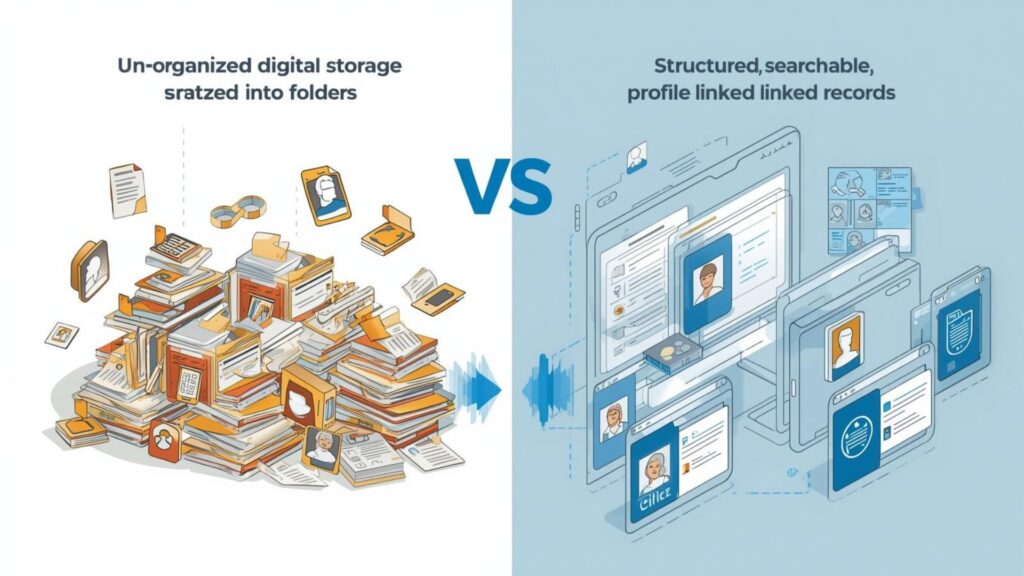
Digital storage should not mean dumping scanned files into folders. It should mean structured, searchable, profile-linked records.
Why Digital KYC Reduces Legal and Operational Stress
When you centralize tenant documentation, you eliminate guesswork.
You can retrieve any tenant’s ID within seconds. You can identify missing records immediately. You can review historical documentation without digging through storage.
This visibility strengthens control.
Parents increasingly prefer PGs that operate professionally. Corporate tenants expect structured documentation. Authorities expect traceability.
When you manage KYC digitally, you demonstrate seriousness and credibility.
That professionalism influences reputation more than you may realize.
How RentOk Simplifies Tenant KYC Management
This is where structure matters.
Inside RentOk’s KYC Page, you can collect and upload tenant documents directly during onboarding. Each document attaches to the tenant’s digital profile, so you never lose track of it.
You don’t maintain separate files. You don’t rely on scattered folders.
The system allows you to:
- Store documents securely
- Access records instantly
- Maintain organized tenant profiles
- Track compliance across all occupants
Because the KYC process integrates into your onboarding flow, you remove dependency on manual follow-ups.
Instead of asking later for missing documents, you complete verification upfront.
For PGs handling high turnover, this consistency makes a measurable difference.
Responsible PG Management Starts With Documentation
As the PG industry becomes more organized, compliance standards rise.
Tenants expect safety. Parents expect transparency. Authorities expect accountability.
If you treat KYC casually, you invite unnecessary risk. If you structure it digitally, you protect your business long-term.
Proper tenant KYC management is not about avoiding fines. It reflects how seriously you run your operations.
When documentation stays organized, accessible, and secure, you operate with confidence.
See How Digital KYC Can Work in Your PG
If you currently manage tenant documents through physical files or scattered storage, it may be time to modernize your process.
Book a demo with RentOk and explore how a structured digital KYC workflow can help you manage compliance confidently, reduce administrative stress, and keep every tenant record organized from day one.
Because strong operations begin with strong documentation.
About the Author
Ishika Pannu
Ishika Pannu brings you the latest insights and easy-to-apply strategies in property management—helping you simplify renting and grow with RentOk.