Market Trends
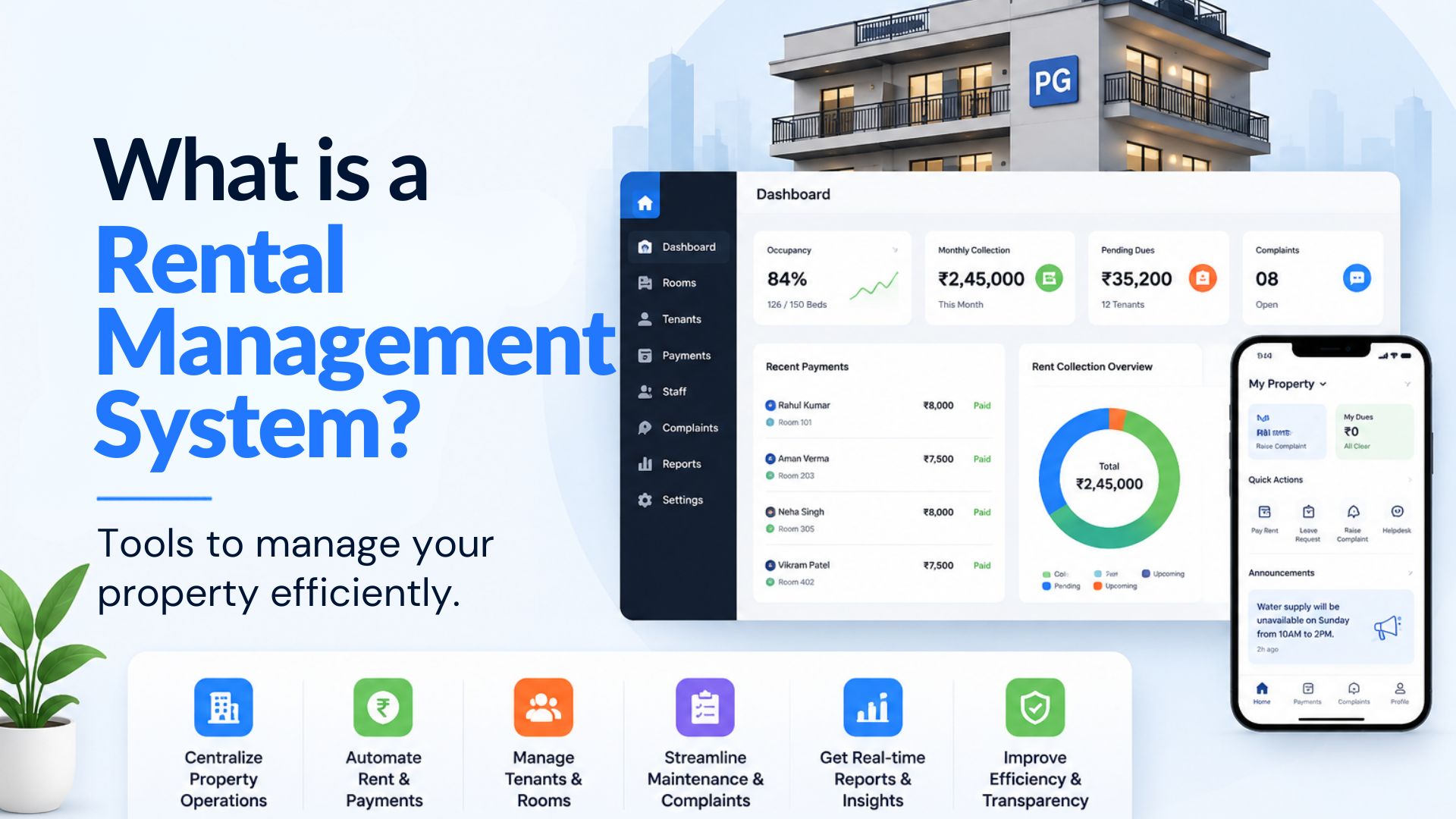
What is rental management? Tools to manage your property efficiently.

Written by
Shivanshi Dheer
Read Time
18 min read
Posted on
July 9, 2026
Overview
Overview
If you own even one rental property, a PG, or a hostel, you already know the daily headache. Rent doesn’t come on time. A tenant calls at 11 PM about a leaking tap. You write an entry in the register, and then you can’t find it later when your CA asks for it during tax time. And if you have more than one property, this headache multiplies.
This is exactly the problem a rental management system solves. In this blog, we will go through what it actually is, why so many landlords and PG owners in India are moving to it, what features you should look for, and which tools are worth trying. No heavy words, no fluff. Just straight talk, the way you’d explain it to a friend who just bought his first rental property.
Let’s get into it.
What is Rental Management?
Rental management simply means everything involved in running a rental property from day to day. It starts the moment you decide to put up a property for rent – finding the right tenant, verifying their details, and signing an agreement – and continues through the entire time they stay with you. It includes collecting rent every month, handling deposits and notice periods, fixing complaints like a broken tap or a WiFi issue, sending reminders, keeping records, and knowing your income and expenses at any given time. You can do this yourself, hire a property manager to do it for you, or use a rental management system to handle most of this work automatically. In short, rental management is the work, and a rental management system is the tool that makes that work easier.
What is a Rental Management System?
A rental management system is software (usually an app or a website) that helps a landlord, PG owner, or property manager handle all the day-to-day work of renting out a property. Think of it as a digital version of your rent register, your WhatsApp group, your Excel sheet, and your file of tenant documents – all put together in one place.
In simple words, it helps you with:
- Collecting rent on time (and reminding tenants who forget)
- Keeping tenant details, ID proofs, and agreements safe
- Tracking which rooms or flats are vacant
- Handling complaints like water leakage or WiFi issues
- Sending notices, reminders, and receipts
- Getting reports of who paid, who didn’t, and how much you earned this month
Earlier, all this used to happen through registers, phone calls, and a lot of running around. Now, a rental management system does most of this automatically. You just open the app, and everything is right there.
This is different from just a “listing website” like 99acres or MagicBricks, where you only post your property for people to see. A rental management system works after the tenant has moved in too – it manages the entire relationship, not just the search.
Why Do Landlords and PG Owners Actually Need This?
Let’s be honest. When you have one tenant, you can manage everything in your head. But the moment you cross 5-10 tenants, or you start managing more than one property, things start slipping through the cracks. Here is what usually goes wrong without a system:
1. Rent collection becomes messy Some tenants pay on the 1st, some on the 15th, and some just “forget”. Without a proper system, you end up calling and texting every single person, every single month. It’s tiring, and honestly, a bit awkward too.
2. No proof when disputes happen: The tenant says, “I already paid the rent,” and you say, “I never received it.” Without receipts or digital records, this becomes a “he said, she said” situation. This is one of the biggest reasons small disputes turn into big fights, or even legal cases.
3. Lost paperwork: agreements, ID proofs, police verification forms – all on paper, sitting in some file. When you need them urgently (say, police ask for verification records, or a tenant disputes the notice period), you can’t find them fast enough.
4. Vacant rooms stay vacant longer If you don’t have a clear, updated record of which rooms are empty, you either lose bookings because you said “no rooms” when there actually was one, or you double-book by mistake.
5. No real visibility into your business Most landlords don’t actually know their numbers. How much did I earn this month? Which property is doing better? How many tenants are about to leave? Without reports, you’re just guessing.
A rental management system fixes all five of these problems, and that’s exactly why it’s becoming so common among landlords, PG operators, and co-living businesses across India.
What People Actually Search and Ask About Rental Management Systems
Before writing this, we looked at what people commonly ask online about this topic. Here are the real questions, answered simply.
Is a rental management system only for big property owners?
No. Even if you own just 2-3 rooms in a PG or one rental flat, a system saves you time. The value is not in the size of your portfolio – it’s in how much manual work you’re currently doing. If you’re tired of typing the same rent reminder message every month, you need this, whether you have 3 tenants or 300.
What is the difference between property management software and a rental management system?
These terms are mostly used interchangeably in India, but there’s a small difference. Property management software is a broader term – it can include things like maintenance of the building, vendor management, insurance, etc. A rental management system usually focuses more directly on the renting part – tenants, rent, agreements, and communication. Most tools today, like RentOk, actually do both.
Can a rental management system replace a broker?
Not fully. Brokers help you find tenants, especially in areas with heavy footfall. But a good system can reduce how much you depend on brokers by helping you list your property online, manage leads, and follow up faster. Many PG owners use both together – brokers for finding leads, and the system for managing everything after that.
Is it safe to store tenant data digitally?
Yes, if you’re using a proper platform. Good rental management systems use encryption and secure servers, which is actually safer than a paper register that anyone can pick up or that can get lost, torn, or damaged in monsoon season (a very real problem for many PG owners).
How much does a rental management system cost?
This varies a lot. Some tools are free for basic features and charge for advanced ones. Others charge a flat monthly fee or a small percentage based on the number of rooms or tenants you manage. It’s always worth comparing 2-3 options and checking what’s actually included before committing.
Do tenants also need to use the app?
In most modern systems, yes – but it’s simple for them too. Tenants get a login where they can pay rent, raise complaints, download receipts, and check their agreement. This actually improves the tenant experience because they don’t need to keep calling you for small things.
Key Features to Look For in a Good Rental Management System
Not all tools are built the same. Some only focus on rent collection, others try to do everything. Here’s what actually matters:
1. Automated Rent Collection and Reminders
This is the number one reason most landlords switch to a system. The software should automatically generate dues every month, send reminders on WhatsApp or SMS, and let tenants pay online through UPI, cards, or net banking. No more manually texting each person.
If you want to understand this in more depth, it is explained really well in this guide on property management rent collection software.
2. Tenant Verification and Digital KYC
Especially important for PGs and hostels in metro cities where police verification is mandatory. A good system should let you collect ID proofs, run verification, and store everything digitally so you’re never caught off guard by legal requirements.
3. Digital Agreements
No more printing, signing, and scanning. Digital rental agreements that are stored online reduce disputes massively because everything – rent amount, deposit, notice period – is written down clearly and can’t be denied later.
4. Complaint and Maintenance Tracking
Tenants should be able to raise a complaint (broken tap, no WiFi, electricity issue) directly from the app, and you should be able to assign it to staff and track when it’s resolved. This one feature alone reduces a huge amount of daily phone calls.
5. Vacancy and Occupancy Tracking
You should always know, at a glance, which rooms are occupied and which are empty. This helps you fill vacancies faster and avoid the mistake of turning away a tenant when a room was actually free.
6. Reports and Financial Summaries
Monthly income reports, pending dues, yearly statements – these should be one click away, not something you calculate manually every time your CA asks for numbers.
7. Mobile Access
You’re not always sitting at a desk. A good rental management system should work well on your phone because most of your day happens while walking around the property, not sitting in an office. This shift toward phone-first management is explained in detail in why mobile property management is the future.
8. Multi-Property Dashboard
If you manage more than one building or PG, you shouldn’t need to switch between different logins. Everything should show up on one dashboard.
Cloud-Based vs Local Systems
Some older property management tools are “local,” meaning they run on one computer and you need to be at that specific desk to access anything. This creates problems the moment you’re out of office or managing multiple locations.
Cloud-based systems, on the other hand, work from anywhere – your phone, your laptop, even a cyber café if needed. Your data is stored safely online and updates in real time. This becomes very important when you have staff working in different properties and everyone needs the same updated information at the same time.
We’ve written a full comparison on this if you want to go deeper: cloud based rental property management software vs local.
There’s also a growing trend of landlords considering free or open-source tools to save money. It sounds attractive at first, but it comes with its own set of technical headaches – hosting, updates, security patches – that most landlords don’t have time for. We’ve broken this down here: open source rental property management software guide.
All-in-One vs Single-Purpose Tools
Some tools only do one thing well – maybe just rent collection, or just tenant screening. Others try to be a complete solution covering tenants, payments, occupancy, complaints, and reports, all in one place.
If you’re using five different tools right now – one for rent, one for WhatsApp reminders, one Excel sheet for records, one for listings – you already know how tiring it is to keep switching between them. An all-in-one system removes this problem completely.
We’ve discussed this shift in more detail here: all-in-one property management software: is it worth it.
Best Tools to Manage Your Rental Property
Now let’s talk about actual tools. Depending on what kind of property you manage, different tools work better.
For PGs, hostels, and co-living spaces in India – RentOk is built specifically for this segment. It handles rent collection, tenant verification, digital agreements, complaint tracking, and even sends automated reminders over WhatsApp through its Genie bot. It’s used by over 15,000 property owners already, mostly because it’s built around the exact daily problems PG and hostel operators face – not adapted from some international apartment-management tool.
Larger residential portfolios – tools like Buildium and AppFolio are popular internationally, though they can feel a bit complex if you’re managing a smaller set of properties.
Independent landlords who want something simple – tools like TenantCloud offer basic cloud-based tracking without too many extra features.
Vacation rentals and short-term stays – the requirements are actually quite different, since you’re dealing with daily bookings instead of monthly rent. If that’s your business, this guide covers it well: 10 best vacation rental management software tools.
We’ve also put together a detailed, honest comparison of the top landlord apps here: 10 best apps for landlords to manage properties, and a shorter list focused purely on rental property management here: top 5 best rental property management software options.
If tenant management specifically is your biggest pain point right now, this one is worth a read too: best tenant management software for property managers.
How a Rental Management System Actually Helps You Grow, Not Just Save Time
A lot of landlords think of these tools as just “convenience” – something nice to have but not necessary. But the real impact shows up in your occupancy and your revenue.
When rooms are updated in real time, more inquiries convert into actual bookings because you’re not giving out wrong information. When rent reminders go out automatically, fewer payments get delayed, which means better cash flow every single month. So when complaints get logged and tracked, tenants stay longer because they feel heard, and happy tenants mean fewer vacancies to fill.
There’s a real example of this working in practice here: how landlords improved occupancy with RentOk.
Legal Safety is a bigger deal than most people realise.
This is something a lot of landlords ignore until it’s too late. Rent disputes, deposit disagreements, and eviction issues almost always come down to one thing – missing or incomplete records. If you don’t have written proof of what was agreed, you’re in a weak position, no matter how right you are.
Digital agreements, timestamped payment logs, and stored notices become extremely useful here. Many disputes that would have gone to court have actually been resolved just by pulling up the payment history or the signed agreement in the app. We’ve shared some real examples of this here: RentOk legal cases: tenant disputes solved without legal action, and more on the legal side here: how RentOk sets legal standards for property management.
How to Choose the Right Rental Management System
With so many options available, here’s a simple checklist to help you decide:
- Does it match your property type? A tool built for apartment complexes in the US may not work well for a PG in Bangalore. Choose something built for your exact use case.
- Is it mobile-friendly? You’ll be using this on the move, not just at a desk.
- Does it support Indian payment methods? UPI should be a basic requirement, not a premium feature.
- Is customer support responsive? When rent collection breaks on the 1st of the month, you need help fast.
- Can it grow with you? If you plan to add more properties later, make sure the tool supports multi-property management from day one.
- Is there a free trial or demo? Never commit long-term without actually testing the tool on your real data first.
Common Mistakes Landlords Make While Switching to a System
- Waiting too long to switch. Most landlords adopt a system only after facing a big dispute or losing a lot of time. It’s better to set it up early, even with just a few tenants.
- Not migrating old records. If you’re moving from registers to an app, take the time to enter old tenant history properly. It helps a lot during future disputes.
- Ignoring the tenant side of the app. A system works best when tenants use it too – for payments and complaints. Don’t just use it as a backend tool for yourself.
- Choosing based on price alone. The cheapest tool isn’t always the best if it’s missing features you actually need, like verification or digital agreements.
Where Things Are Headed in 2026
Rental management is moving fast toward being fully digital, especially in India. Tenant expectations have changed – people expect to pay rent online, raise complaints through an app, and get instant receipts, the same way they use any other app in their daily life. Landlords who are still stuck with registers and cash are slowly falling behind, both in occupancy and in tenant trust.
We’ve covered where the broader rental market is heading here: property rental market: trends to watch in 2026, and how technology specifically is reshaping day-to-day operations here: how tech is changing property management.
A Simple Example: Before and After
Let’s take a small, real-feeling example. Suppose you run a PG with 40 tenants across two floors.
Before a system: You keep a register at the reception. Every month, you or your staff call each tenant individually to remind them about rent. Some pay cash, some pay through UPI directly to your personal number, and you note it down later – if you remember. When a tenant complains about a broken geyser, they call you directly, and if you’re out, the complaint sits there until you’re back. At the end of the month, if your CA asks how much you earned, you spend an evening adding up numbers from the register and your bank statement.
After a system: Dues get generated automatically on the 1st of every month. Tenants get a reminder on WhatsApp two days before the due date. They pay through the app using UPI, and you get an instant notification along with an auto-generated receipt. If the geyser breaks, the tenant logs a complaint in the app, it gets assigned to your staff, and you can see when it’s marked resolved. At month-end, you open the reports section and your income summary is already there.
Same PG, same 40 tenants – but a completely different amount of stress. This is the real, everyday difference a rental management system makes. It’s not about fancy technology; it’s about removing the small, repetitive tasks that eat up your time every single day.
Working with Brokers Alongside a System
Even with a good rental management system in place, many PG owners and landlords still rely on brokers for finding new tenants, especially in cities where broker networks are strong. A system doesn’t remove the need for brokers, but it does make working with them easier – you can track which leads came from which broker, calculate commissions accurately, and avoid confusion over who gets paid what. If broker management is something you deal with regularly, it’s worth setting up a clear process around it rather than tracking commissions on paper, since that’s another common source of disputes in the rental business.
Communication Is Where Most Rental Businesses Lose Time
If you sit down and actually track where your time goes as a landlord or PG owner, a huge chunk of it goes into communication – answering the same questions again and again, following up on payments, explaining rules to new tenants, coordinating with staff. A rental management system helps by moving most of this communication into one place, with templates, automated messages, and a proper record of what was said and when. This alone reduces a lot of the daily back-and-forth that makes property management feel exhausting.
Conclusion
Managing a rental property doesn’t have to feel like a second full-time job. The daily running around, the missed rent, the lost paperwork – none of this is necessary anymore. A good rental management system takes over the repetitive work, so you can actually focus on growing your rental business instead of just surviving the month-to-month chaos.
If you’re still managing your properties through registers, spreadsheets, and WhatsApp messages, it might be time to see how a proper system changes things. You can explore RentOk’s property management app and see how it handles rent collection, tenant verification, and complaints, all from one dashboard – built specifically for landlords and PG owners in India.
Frequently Asked Questions
Find answers to common questions about this topic
About the Author
Shivanshi Dheer
Shivanshi Dheer sharing actionable strategies and information on PG/hostel management to help simplify renting and scale with RentOk.
You may also like these
Related Articles
1 min read
How Much Can My Landlord Legally Increase My Rent Each Year?
Written by
Posted on
Ishika Pannu
Sep 23, 2026

1 min read
India’s Rental Market Grows 16%: What Owners Should Know
Written by
Posted on
Ishika Pannu
Sep 22, 2026
1 min read
Why Landlords Check CIBIL Scores Before Renting
Written by
Posted on
Ishika Pannu
Sep 21, 2026
1 min read
Why Students Need Tenant Verification Done Before Moving Into a PG
Written by
Posted on
Ishika Pannu
Sep 14, 2026
1 min read
What to Do When Your Landlord Won’t Make Repairs
Written by
Posted on
Ishika Pannu
Sep 12, 2026

1 min read
Satya Niketan Building Collapse: What Happened in Detail?
Written by
Posted on
Shivanshi Dheer
Sep 9, 2026
1 min read
Why Your Rent Agreement Must Be Registered – And How to Do It
Written by
Posted on
Shivanshi Dheer
Aug 21, 2026

1 min read
How to Invest in Property for Rental Income in India
Written by
Posted on
Shivanshi Dheer
Aug 20, 2026
1 min read
Semi-Furnished vs Fully Furnished: Which is Better for Renters?
Written by
Posted on
Shivanshi Dheer
Aug 20, 2026

1 min read
What is the Model Tenancy Act and How Does It Protect Landlords?
Written by
Posted on
Ishika Pannu
Aug 19, 2026
Stay ahead in property management with expert insights
Join thousands of property managers receiving exclusive tips delivered straight to your inbox.
Browse posts by category
Case Study
Cost of Living
Growth
Legal
Market Trends
News
Pg owner app
Property Management
Property Tax
Tech
RentOk
The easiest way to rent and manage your PGs and hostels.
Get the app


Contact us
hello@eazyapp.tech
HQ Office
COGROW, BASEMENT F-12/8A
BESIDE HOUSE OF STYLE SALON, SECTOR 28, DLF PHASE 1
GURUGRAM, HARYANA - 122002
South India Office
LUMIODESK COWORKING, 2ND FLOOR, 40, 14TH MAIN RD
BESIDE MC DONALD, 7TH SECTOR, HSR LAYOUT
BENGALURU, KARNATAKA - 560102
©️ 2026 EazyApp Tech Pvt Ltd. All rights reserved


