Market Trends
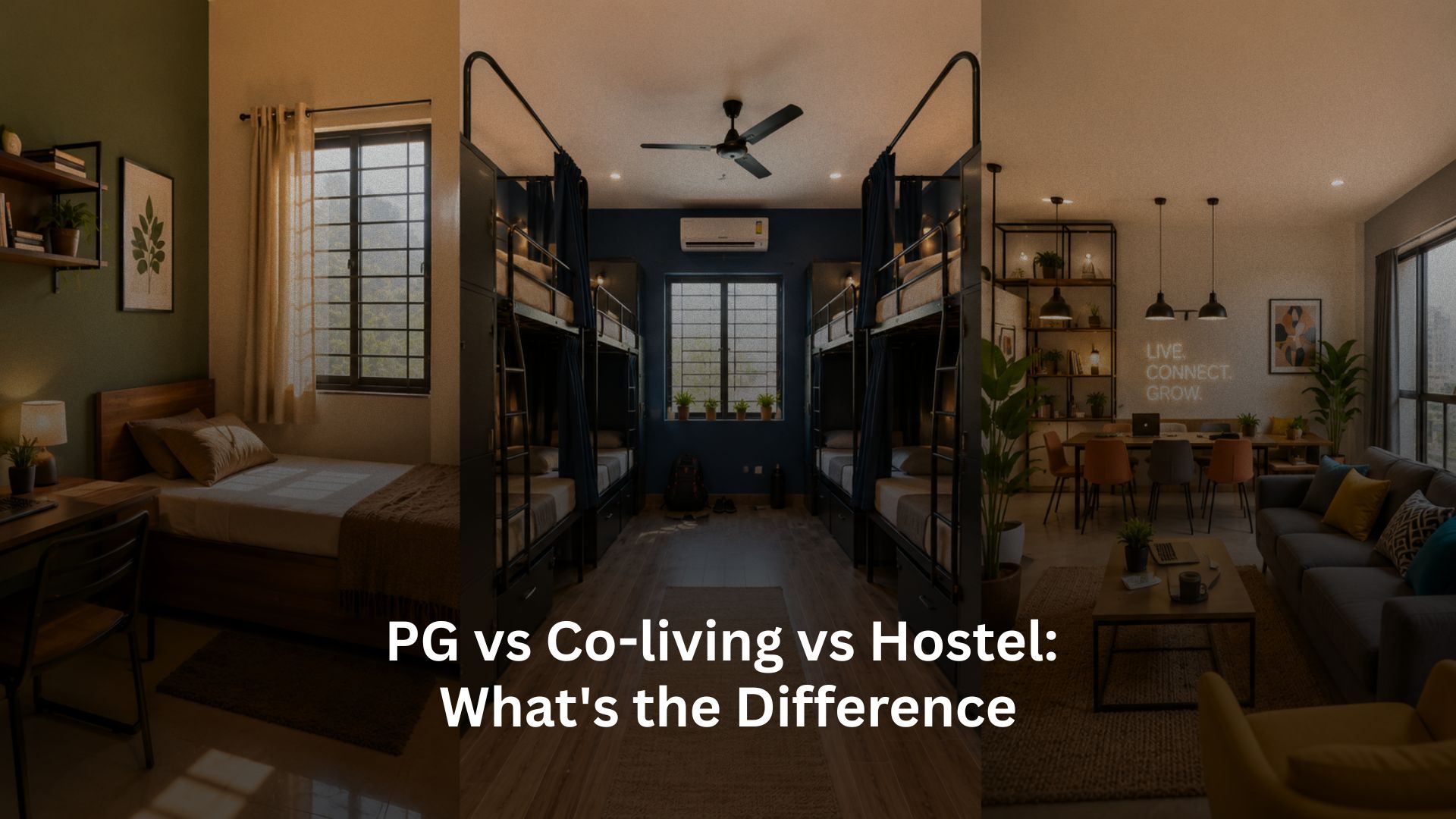
PG vs Co-living vs Hostel: What’s the Difference

Written by
Ishika Pannu
Read Time
13 min read
Posted on
July 5, 2026
Overview
Overview
PG vs Co-living vs Hostel: What’s the Difference?
You’ve probably heard people say, “I’m staying in a PG,” only to discover it’s actually a hostel. Others call their fully furnished, community-driven apartment a “PG” simply because meals are included. The lines between PGs, hostels, and co-living spaces have become increasingly blurred, and choosing the wrong one can mean sacrificing comfort, privacy, or even your budget.
Whether you’re a student moving to a new city, a young professional starting your first job, or someone looking for a short-term stay, your accommodation plays a huge role in your daily life. Do you want meals and affordability? More privacy? A ready-made social circle? Flexible rental terms? The right choice depends on what matters most to you.
For property owners and rental operators, the differences matter just as much. Each housing model attracts a different audience, comes with unique operational requirements, and creates different opportunities for occupancy, revenue, and tenant satisfaction. Positioning a property correctly can be the difference between vacant rooms and a waiting list.
So, what actually separates a PG from a hostel? And where does co-living fit into the picture?
In this guide, we’ll break down each accommodation type, compare them across key factors like cost, privacy, amenities, flexibility, and community, and help you decide which option is the best fit, for both tenants and property owners.
Understanding the Three Accommodation Models
Although they all provide shared accommodation, PGs, hostels, and co-living spaces were created to solve different housing needs. Their pricing, facilities, operational structure, and target audience vary significantly.
Paying Guest (PG)
A Paying Guest accommodation is one of the most common rental models in India. Traditionally operated by homeowners or independent landlords, PGs provide furnished rooms along with essential facilities such as meals, housekeeping, and utilities. They are primarily designed for students and working professionals looking for affordable long-term accommodation.
Most PGs focus on practicality rather than luxury. Residents typically pay a fixed monthly amount that covers rent along with basic services, making budgeting easier and reducing the hassle of managing multiple household expenses.
Hostel
Hostels were originally designed for students and backpackers who needed economical accommodation for shorter durations. Unlike PGs, hostels emphasize shared living, with dormitory-style rooms being a common feature.
Modern hostels have evolved beyond student housing. Today, they also cater to interns, solo travellers, digital nomads, and professionals who require temporary accommodation without committing to long-term leases.
Because affordability remains the primary objective, hostels generally offer fewer personalized services compared to PGs or co-living spaces.
Co-living
Co-living is a relatively new accommodation model that combines professionally managed housing with community-focused living. Instead of simply renting a room, residents gain access to furnished spaces, managed services, digital conveniences, and shared community areas.
This model has gained popularity among young professionals, remote workers, entrepreneurs, and people relocating to metropolitan cities who value convenience as much as affordability.
Unlike traditional PGs, co-living operators often invest heavily in technology, tenant experience, and operational efficiency to create a more organized and premium living environment.

PG vs Co-living vs Hostel: A Quick Comparison
While all three models provide accommodation, they differ across multiple operational and lifestyle factors.
| Feature | PG | Hostel | Co-living |
|---|---|---|---|
| Primary audience | Students and working professionals | Students, travellers, interns | Young professionals, remote workers, entrepreneurs |
| Privacy | Moderate | Usually low due to shared rooms | High, with private and shared room options |
| Lease flexibility | Moderate | High | High |
| Meals | Usually included | Sometimes available | Often optional or provided through managed services |
| Community activities | Limited | Minimal | Regular community engagement and events |
| Amenities | Basic | Essential | Premium and technology-enabled |
| Management style | Individual landlord or local operator | Institution or hostel operator | Professionally managed companies |
While this comparison provides a quick overview, choosing the right accommodation depends on much more than amenities or pricing. Lifestyle preferences, duration of stay, and operational expectations all play an important role.
What Makes a PG Different?
Despite the emergence of modern housing alternatives, Paying Guest accommodations continue to dominate India’s rental market. Their popularity lies in offering a practical balance between affordability and convenience without requiring tenants to manage an entire household independently.
Unlike renting an apartment, residents don’t have to worry about setting up utilities, hiring housekeeping staff, or purchasing furniture. Everything is generally bundled into a single monthly payment, making the experience straightforward and predictable.
A PG is particularly suitable for people who value essential services over premium lifestyle offerings.
Some of the biggest advantages include:
- Affordable monthly living costs make PGs an attractive choice for students and early-career professionals who want comfortable accommodation without stretching their budget.
- Meals and housekeeping are commonly included, reducing the need for residents to spend additional time and money managing daily household responsibilities.
- Long-term stability makes PGs ideal for tenants planning to stay in one city for several months or even years, such as university students or employees working from a fixed office location.
- Simple move-in process allows residents to settle quickly without arranging furniture, internet connections, or utility registrations independently.
However, traditional PGs also come with certain limitations. Facilities often vary significantly from one property to another, and the overall experience depends largely on how professionally the property is managed. As tenant expectations continue to evolve, many operators are gradually adopting digital systems and standardized processes to remain competitive.
How Are Hostels Different?
Hostels are designed around one fundamental objective: maximizing affordability through shared living.
Unlike PGs, where residents often expect a quieter and more residential atmosphere, hostels typically encourage interaction among occupants. Shared dormitories, common recreational spaces, and communal facilities make them especially popular among students, backpackers, and short-term visitors.
For many residents, a hostel isn’t simply a place to sleep, it becomes a temporary community where people from different backgrounds share experiences while keeping accommodation costs low.
Hostels generally appeal to people who:
- Need short-term accommodation while travelling, attending internships, or participating in academic programs.
- Prioritize affordability over privacy, making shared dormitories a practical option for reducing monthly expenses.
- Enjoy social environments, where interacting with fellow residents becomes part of the living experience rather than an occasional activity.
- Require flexible stay durations, allowing them to move in or out without long contractual commitments.
That said, hostels may not suit everyone. Professionals working from home, individuals seeking private workspaces, or residents who value personal privacy often find hostel environments less compatible with their daily routines.
Why Co-living Is Growing Rapidly
The rapid growth of co-living isn’t simply a result of better amenities, it’s a reflection of changing tenant expectations.
Today’s urban workforce values convenience, flexibility, and professionally managed experiences. Many young professionals relocate frequently for career opportunities and prefer accommodation that allows them to settle in immediately without worrying about furniture, maintenance, internet installation, or administrative paperwork.
Co-living addresses these challenges by offering a more structured and service-oriented living experience.
Rather than focusing solely on accommodation, modern co-living operators emphasize lifestyle and operational efficiency.
Residents often benefit from:
- Fully furnished living spaces that eliminate the upfront cost and effort of setting up a home after relocating.
- Professional property management, ensuring maintenance requests, housekeeping, and operational issues are handled through organized systems instead of informal communication.
- Community-focused environments where networking events, recreational activities, and shared spaces encourage interaction among residents.
- Technology-driven convenience, including digital rent payments, visitor management, maintenance requests, and tenant communication through dedicated platforms.
This combination of flexibility, convenience, and managed services has positioned co-living as one of the fastest-growing accommodation segments in India’s urban rental market.

Does One Option Cost More Than the Others?
One of the biggest misconceptions is that co-living is always expensive while hostels are always the cheapest. In reality, accommodation costs depend on several operational and market factors rather than the category itself.
Pricing is influenced by variables such as:
- Location and city dynamics, where accommodation in metropolitan areas naturally commands higher prices regardless of the housing model.
- Room configuration, as private rooms generally cost more than twin-sharing or dormitory options across all accommodation types.
- Included services, such as meals, housekeeping, Wi-Fi, laundry, security, and recreational facilities, which directly impact the overall monthly expense.
- Management standards, because professionally managed properties often invest more in maintenance, technology, and tenant experience, resulting in higher, but more value-driven, pricing.
For this reason, tenants should evaluate accommodation based on the overall value they receive rather than comparing rental prices alone. A slightly higher monthly cost may translate into greater convenience, reduced hidden expenses, and a significantly better living experience.
Which Accommodation Model Is Right for You?
There isn’t a single accommodation model that suits everyone. The right choice depends on your lifestyle, budget, work schedule, and the kind of living experience you expect. While pricing often becomes the deciding factor, it’s equally important to consider convenience, privacy, flexibility, and the services included in your monthly rent.
A tenant who spends most of the day at college will have very different priorities from someone working remotely or relocating frequently for professional assignments. Understanding these differences helps avoid unnecessary compromises after moving in.
A PG is the right choice if you:
- Prefer an affordable and structured living arrangement where meals, housekeeping, and utilities are generally included, making it easier to manage monthly expenses.
- Plan to stay in the same city for an extended period, such as completing a degree or working in a permanent role, where stability matters more than flexibility.
- Don’t require premium lifestyle amenities, and are comfortable with a practical accommodation setup focused on essential services.
A Hostel is ideal if you:
- Need accommodation for a shorter duration, whether you’re travelling, completing an internship, attending coaching classes, or staying in a city temporarily.
- Want to minimise accommodation costs, even if that means sharing rooms and common facilities with multiple residents.
- Enjoy social environments, where interacting with people from different backgrounds becomes a part of everyday life.
Co-living is a better fit if you:
- Value convenience alongside comfort, preferring professionally managed accommodation that requires minimal effort to settle into.
- Need greater flexibility, especially if your work involves frequent relocation or shorter rental commitments.
- Appreciate community-driven living, with access to shared workspaces, recreational areas, organised events, and digital services that simplify everyday living.
Ultimately, the decision should be based on the value each option offers rather than simply comparing monthly rent. The best accommodation is one that aligns with your daily routine, professional commitments, and long-term plans.
What Should Property Owners Consider Before Choosing a Business Model?
For property owners, the conversation goes far beyond deciding whether to operate a PG, hostel, or co-living space. Each model comes with different operational requirements, investment levels, tenant expectations, and revenue opportunities.
As the rental market continues to evolve, success depends less on the type of accommodation and more on how efficiently it is managed.
Before deciding on a business model, property owners should evaluate several factors.
- Understand your target audience before designing your property. Students, corporate employees, digital nomads, and long-term professionals all look for different amenities and experiences. Aligning your offering with the right audience improves occupancy and tenant satisfaction.
- Evaluate your operational capabilities. A traditional PG may require simpler day-to-day management, while a co-living space often involves structured maintenance, digital communication, event management, and higher service standards.
- Plan for scalability from the beginning. What works for a single property with 30 beds may become difficult to manage across multiple locations without organised systems for rent collection, complaints, occupancy tracking, and tenant communication.
- Focus on the overall tenant experience rather than amenities alone. Clean rooms and modern furniture attract tenants, but responsive management, transparent communication, and efficient operations are what encourage longer stays and positive referrals.
The most successful rental businesses today understand that accommodation is no longer just about providing rooms. It is about delivering a consistent living experience that encourages tenant retention and sustainable growth.
How the Indian Rental Market Is Evolving
The rental housing industry has changed significantly over the past decade. Urbanisation, changing work patterns, and increasing mobility have transformed what tenants expect from accommodation.
Students continue to drive demand for affordable PGs and hostels, but the growing workforce has accelerated the popularity of professionally managed co-living spaces. At the same time, traditional PG operators are modernising their properties by introducing digital payments, better amenities, improved security, and technology-enabled management systems.
Several trends are shaping the future of shared accommodation:
- Technology is becoming an operational necessity rather than a competitive advantage. Digital rent collection, maintenance tracking, visitor management, and automated communication are quickly replacing manual processes.
- Tenant expectations continue to rise. Residents increasingly expect transparency, faster complaint resolution, flexible payment options, and professional management regardless of whether they live in a PG, hostel, or co-living property.
- Experience is becoming as important as infrastructure. Comfortable common areas, organised communication, reliable services, and responsive management now influence tenant decisions almost as much as room quality.
- Operational efficiency directly impacts profitability. Property owners who streamline everyday processes spend less time on administrative tasks and more time improving occupancy, marketing, and business growth.
As these trends continue, the distinction between different accommodation models may become less pronounced. What will increasingly differentiate successful properties is not what they are called, but how effectively they are managed.

How RentOk Helps Manage Every Accommodation Model
Whether you operate a traditional PG, a student hostel, or a modern co-living space, the day-to-day operational challenges remain remarkably similar. Managing tenants, collecting rent, tracking occupancy, resolving complaints, maintaining records, and ensuring smooth communication become increasingly complex as your property grows.
Handling these processes manually through spreadsheets, WhatsApp groups, or paper registers may work for a small property, but it quickly becomes inefficient as occupancy increases.
RentOk helps property owners streamline their operations through a single, connected platform that simplifies everyday management. From tenant onboarding and digital rent collection to occupancy tracking, maintenance management, complaint resolution, reporting, and automated communication, RentOk brings every essential workflow together in one place.
By reducing manual work and improving operational visibility, property owners can spend less time managing routine administrative tasks and more time focusing on occupancy, tenant satisfaction, and business growth. Regardless of the accommodation model you choose, structured property management creates a stronger foundation for long-term success.
Conclusion
PGs, hostels, and co-living spaces all play an important role in India’s growing rental housing ecosystem, but they are designed for different lifestyles, budgets, and expectations. While PGs continue to provide affordable long-term accommodation, hostels remain a practical choice for short-term and shared living. Co-living, meanwhile, reflects the changing needs of modern urban residents who value flexibility, convenience, and professionally managed experiences.
For tenants, understanding these differences makes it easier to choose accommodation that aligns with their lifestyle rather than simply comparing prices. For property owners, recognising the strengths of each model helps in building a business that attracts the right audience and delivers a better living experience.
As the rental industry continues to evolve, operational excellence will become an even greater differentiator than amenities alone. Properties that embrace organised management, technology, and tenant-focused operations will be better positioned to grow in an increasingly competitive market.
If you’re exploring more ways to improve your rental business, continue reading our guides on property management, tenant management, running a profitable PG, and co-living business strategies to discover practical insights that help you manage smarter and scale with confidence.
About the Author
Ishika Pannu
Ishika Pannu brings you the latest insights and easy-to-apply strategies in property management—helping you simplify renting and grow with RentOk.