
Market Trends
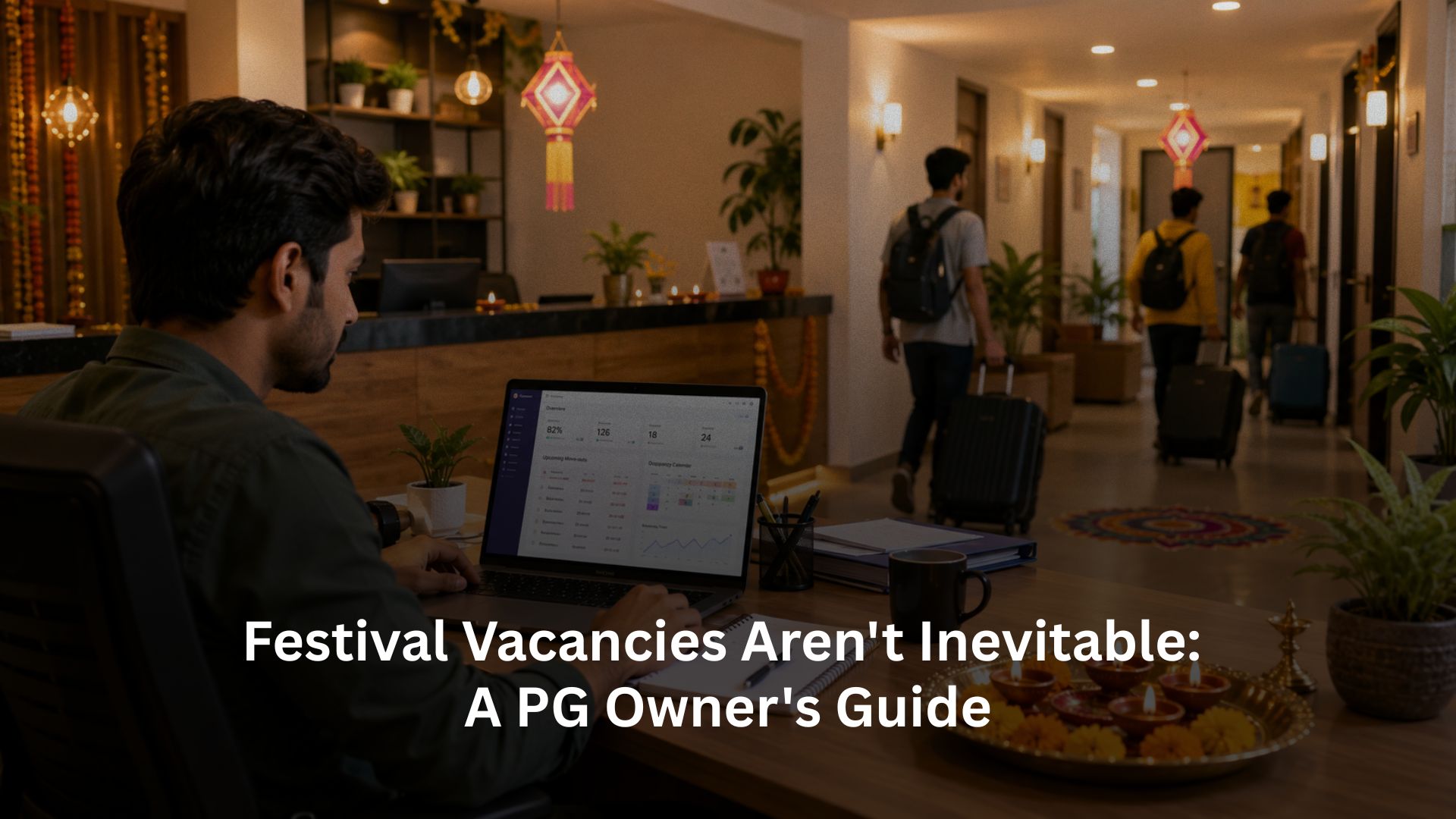
Festival Vacancies Aren’t Inevitable: A PG Owner’s Guide

Written by
Ishika Pannu
Read Time
14 min read
Posted on
July 13, 2026
Overview
Overview
Festival Vacancies Aren’t Inevitable: A PG Owner’s Guide
For PG owners, festivals don’t just bring lights and celebrations, they also bring one familiar challenge: empty rooms.
Every Diwali and Holi, students head home for semester breaks, while working professionals often use the holiday to relocate, switch jobs, or move to a new city. The result? A spike in move-outs that can quickly impact occupancy and revenue.
The good news is that this isn’t an unexpected problem, it’s a predictable business cycle. The owners who maintain high occupancy aren’t reacting to vacancies; they’re preparing for them weeks in advance.
Instead of waiting for last-minute notices, successful PG operators track lease end dates, monitor notice periods, identify tenants likely to leave, and start promoting upcoming vacancies before rooms become available. This gives them enough time to schedule viewings, line up prospective tenants, and reduce the gap between move-outs and move-ins.
Festival season also offers an opportunity to refresh rooms, update listings, and reconnect with potential tenants who are planning to relocate after the holidays.
The takeaway is simple: festival-related tenant churn is inevitable, but revenue loss isn’t. With a little planning and proactive marketing, Diwali and Holi can become seasons of smooth transitions instead of stressful vacancies.
Why Do Festival Seasons Trigger Higher Tenant Movement?
Every property experiences tenant turnover, but festivals create a unique combination of personal, academic, and professional reasons that accelerate move-outs.
Students often leave after completing exams or before starting a new academic session. Working professionals may relocate after receiving transfers, changing jobs, or moving into shared apartments with friends. Some tenants decide to shift closer to their workplace after returning from their hometown, while others simply choose the festive break as the most convenient time to move.
These decisions may seem individual, but when hundreds of tenants across a city follow similar timelines, the impact on occupancy becomes significant.
Rather than viewing this as an unpredictable challenge, successful PG operators recognise it as a seasonal pattern and build their operational planning around it.
Some of the most common reasons behind festival-season vacancies include:
- Students returning home for long vacations and deciding not to renew their accommodation. This is especially common in university hubs where admissions, examinations, and holidays follow a fixed academic calendar.
- Working professionals using holiday breaks to relocate. Since festive holidays reduce work pressure, many tenants prefer completing their move during this period instead of taking additional leave later.
- Companies announcing transfers or project changes towards the end of the financial quarter. Employees who relocate often vacate their existing accommodation with relatively short notice.
- Families encouraging children to return permanently after completing internships, courses, or temporary work assignments. These planned exits contribute to seasonal occupancy fluctuations across student-focused PGs.
Understanding these behavioural patterns allows operators to prepare for vacancies weeks before they appear on the occupancy report.

The Biggest Mistake PG Owners Make During Festival Season
One of the most common operational mistakes is assuming that vacancies become a problem only after tenants move out.
In reality, the challenge starts much earlier.
Many property owners continue assuming that existing tenants will renew simply because they haven’t communicated otherwise. Marketing efforts don’t begin until the room is vacant, inspections are delayed, maintenance is postponed, and lead generation starts only after revenue has already stopped.
This reactive approach often creates a chain reaction.
A room remains empty for two weeks because maintenance wasn’t scheduled in advance. Fresh enquiries are missed because listings haven’t been updated. Staff members rush to prepare rooms after tenants leave, resulting in unnecessary delays and higher operational pressure.
Professional operators take a very different approach.
Instead of reacting to vacancies, they focus on forecasting them.
Their planning typically includes:
- Tracking notice periods and expected move-out dates. This creates visibility into which rooms are likely to become available over the next few weeks instead of waiting until keys are handed over.
- Identifying tenants whose agreements are approaching renewal. Early conversations often reveal whether a resident intends to extend their stay, giving the management valuable time to prepare.
- Scheduling room inspections before the tenant vacates. Minor maintenance, repainting, or furniture repairs can be planned immediately, reducing turnaround time between occupants.
- Starting marketing campaigns while the current tenant is still serving the notice period. This significantly improves the chances of securing the next resident without long vacancy gaps.
This shift from reactive management to proactive planning is what separates high-performing properties from those that experience recurring seasonal revenue losses.
Planning Ahead: What Should You Do 30-45 Days Before Major Festivals?
Festival occupancy planning should begin well before the celebrations start.
Waiting until October to prepare for Diwali or until the week before Holi often leaves operators with very little room to respond effectively. By starting early, property owners can spread operational work across several weeks instead of handling everything simultaneously.
A structured pre-festival review helps identify both risks and opportunities before tenant movement begins.
Consider reviewing the following areas:
- Renewal status of existing tenants. Reach out to residents whose agreements are ending soon and understand whether they plan to continue or relocate after the festival season.
- Upcoming notice periods. Maintain a clear list of tenants who have already informed the management about their expected move-out dates.
- Property maintenance schedule. Complete painting, plumbing, electrical repairs, and deep cleaning before rooms become available so that new tenants can move in immediately.
- Online listings and marketing material. Refresh room photographs, pricing information, amenities, and availability across all platforms to improve enquiry quality during the festive season.
- Lead pipeline review. Follow up with prospects who had previously shown interest but postponed their move. Many of them may now be actively looking for accommodation again.
When these activities are planned systematically, the festive season becomes an opportunity to optimise occupancy instead of simply managing vacancies.
Don’t Let Vacant Rooms Stay Invisible
One of the most overlooked aspects of seasonal occupancy management is visibility.
Many operators update listings only after a room becomes vacant. By the time the information reaches prospective tenants, valuable marketing days have already been lost.
Instead, consider promoting “Upcoming Availability” wherever possible.
A room that will become available in two weeks can still generate enquiries today. Prospective tenants planning to relocate after Diwali or Holi are often searching in advance, comparing options, and shortlisting properties before making a final decision.
This gives property owners enough time to schedule visits, answer queries, and complete documentation before the existing tenant moves out.
The result is shorter vacancy periods and a much smoother transition between occupants.
In fact, operators who consistently maintain strong occupancy rates rarely depend on last-minute marketing. They build a continuous enquiry pipeline that keeps future vacancies visible well before they occur.
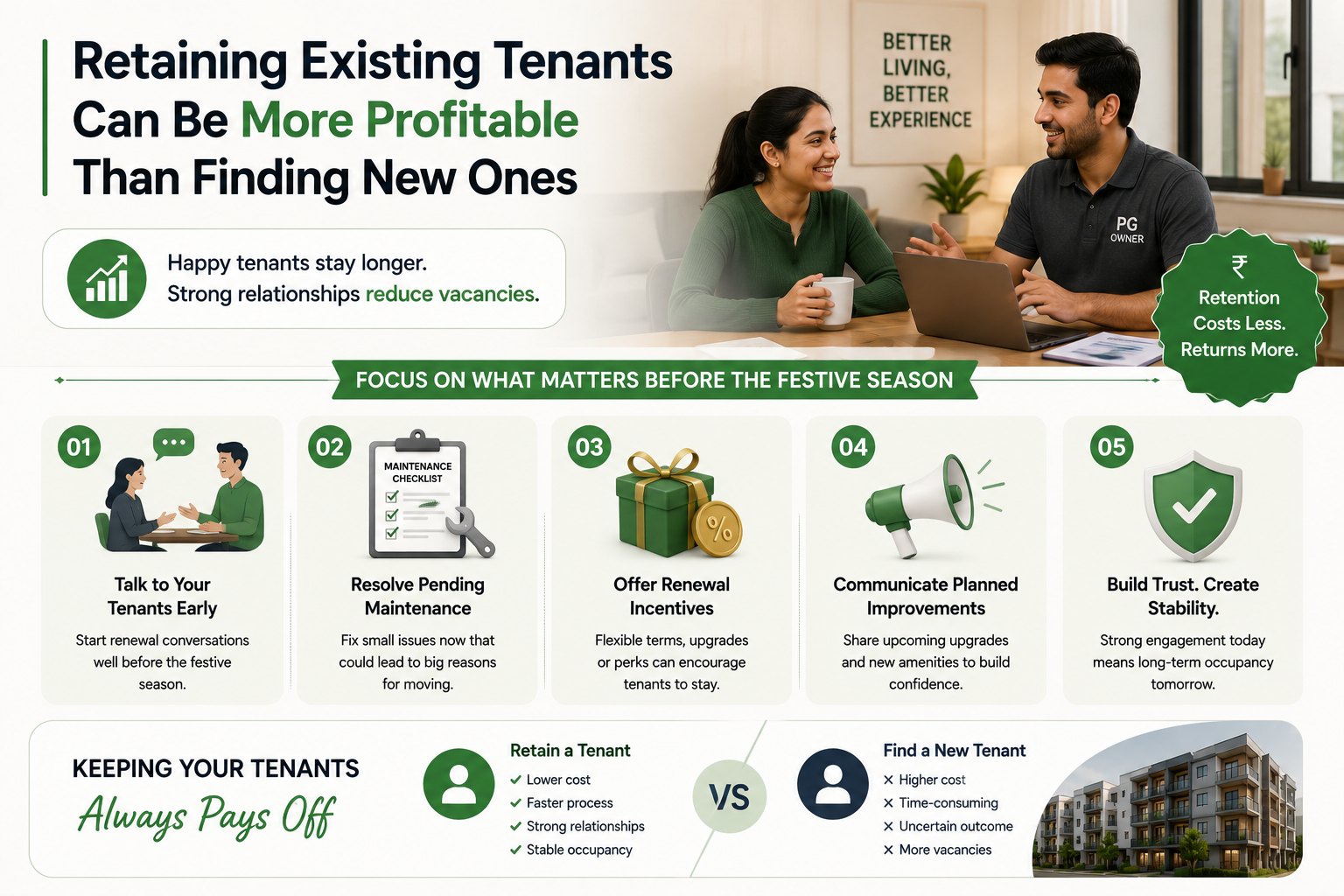
Retaining Existing Tenants Can Be More Profitable Than Finding New Ones
Preparing for expected move-outs is an important part of festival-season planning, but reducing vacancies often starts with retaining the tenants you already have. During the festive season, many residents reassess their living arrangements. However, not everyone who considers moving has made a final decision. Many are simply looking for better value, greater flexibility, or reassurance that their living experience will continue to meet their expectations.
This is where proactive tenant engagement can make a meaningful difference.
Rather than waiting for residents to submit their notice, begin renewal conversations several weeks before the festive season. A simple discussion about their future plans can provide valuable insight into their intentions while giving you enough time to address genuine concerns.
In many cases, tenants consider moving because of unresolved maintenance requests, changing budgets, room-sharing preferences, or evolving personal circumstances, not because they are dissatisfied with the property itself. Identifying these concerns early creates opportunities to retain residents before they begin actively searching for alternatives.
Before the festive season begins, consider focusing on the following:
- Speak with long-term tenants individually instead of relying solely on automated renewal reminders. Personal conversations often uncover concerns that would otherwise result in avoidable move-outs.
- Review and resolve pending maintenance requests. Even minor unresolved issues can influence a tenant’s decision when they are evaluating whether to renew their stay.
- Offer renewal incentives where they make business sense. Flexible lease terms, room upgrades, or service improvements may cost significantly less than acquiring and onboarding a new tenant.
- Communicate planned property improvements. Informing residents about upcoming renovations, security enhancements, or new amenities can strengthen their confidence in staying.
Retaining an existing resident is typically faster, more cost-effective, and operationally simpler than preparing a vacant room, marketing it, screening applicants, and completing another onboarding process. A strong retention strategy not only reduces vacancy rates but also helps create a more stable and predictable occupancy cycle during peak moving seasons.
Successful retention, however, depends on clear and timely communication. Whether you’re sending renewal reminders, discussing notice periods, or informing tenants about upcoming property improvements, using the right communication channels helps build trust while reducing operational confusion. If you’re looking to improve tenant engagement, our guide on Best Communication Channels for Property Management explains how SMS, WhatsApp, email, and in-app notifications can help streamline communication and improve the resident experience.
Use Festival Season to Strengthen Your Referral Network
Festival seasons also create an opportunity that many operators overlook.
When current tenants return to their hometowns or reconnect with friends, classmates, and colleagues, they naturally discuss accommodation options with people planning to relocate after the holidays. If your residents have had a positive experience, they can become one of your strongest marketing channels.
Instead of increasing advertising budgets immediately, consider activating your existing tenant community.
A well-planned referral programme can generate enquiries from people who already trust the recommendation, making conversions much smoother than completely cold leads.
Some effective ways to encourage referrals include:
- Announce your referral programme before the festive season rather than after vacancies appear. This gives tenants enough time to recommend your property while they are meeting friends and family during the holidays.
- Keep the reward structure simple and transparent. Residents should immediately understand who qualifies, how referrals are tracked, and when rewards will be processed.
- Recognise successful referrals publicly within your community. This not only rewards existing participants but also increases awareness among other tenants.
- Ensure the move-in experience matches the expectations created by the referral. Positive experiences create a cycle where new residents are more likely to recommend the property themselves.
If you’re planning to build a structured referral programme, you may also find our guide on Building a Referral Program: Turn Your Tenants into Your Sales Team helpful, where we explore how referral-driven occupancy can reduce customer acquisition costs while improving lead quality.
Should You Reduce Prices During Festival Vacancies?
One of the first reactions many PG owners have when occupancy begins to decline is reducing rent.
Although discounts can generate immediate enquiries, they are not always the most effective solution.
Frequent price reductions can unintentionally reposition your property in the market and make it difficult to return to regular pricing once demand improves. They may also encourage existing tenants to renegotiate their rent, affecting overall revenue.
Instead of competing only on price, consider increasing the perceived value of your offering.
This could include:
- Flexible move-in dates for tenants planning to relocate after the festival season. This helps convert enquiries that might otherwise be postponed.
- Highlighting services that differentiate your property, such as housekeeping, meals, Wi-Fi, security, or community events, rather than focusing solely on monthly rent.
- Offering limited-time value additions instead of permanent discounts. Complimentary deep cleaning, reduced joining charges, or short-term service upgrades often preserve pricing while improving conversions.
- Analysing occupancy data before making pricing decisions. A few vacant rooms do not necessarily indicate weak market demand. Understanding seasonal patterns prevents unnecessary discounting.
The objective should be to protect occupancy without compromising long-term profitability.
Common Mistakes That Increase Festival-Season Vacancies
Even experienced operators can see occupancy drop during the festival season, not because of weak demand, but because of avoidable operational gaps.
Some of the most common mistakes include:
- Waiting for written notice before planning vacancies. Early conversations with tenants often provide enough signals to begin preparing marketing and maintenance activities well before a room becomes vacant.
- Ignoring digital listings until rooms become vacant. Most prospective tenants begin their search weeks before relocating, so publishing listings early helps capture demand before competitors do.
- Delaying maintenance until after move-out. Conducting inspections and scheduling repairs during the notice period shortens turnaround time and allows rooms to be re-listed sooner.
- Relying only on new enquiries instead of focusing on retention and referrals. Existing residents are often the most dependable source of future occupancy through renewals and word-of-mouth recommendations.
- Managing occupancy through spreadsheets and scattered conversations. As a property grows, fragmented information makes it difficult to track notice periods, upcoming vacancies, and leasing activities effectively.
Avoiding these operational mistakes often has a greater impact on occupancy than simply increasing marketing spend.
In many cases, festival-season vacancies begin long before a tenant actually moves out. Early exit requests, delayed communication, and poorly managed notice periods can all reduce the time available to prepare a room for its next occupant. Managing these situations professionally not only minimizes disputes but also creates a smoother transition between tenants. If notice-period management is a recurring challenge for your property, our blog on Managing Tenant Lock-in Periods Without Conflict explores practical strategies for handling tenant exits, security deposits, and move-out processes while maintaining high occupancy throughout the year.

How RentOk Helps You Prepare for Festival Season
Managing seasonal vacancies becomes increasingly challenging when tenant notices, agreement renewals, room availability, payments, and communication are spread across multiple spreadsheets, WhatsApp chats, and handwritten records.
RentOk brings these operational workflows together in one platform, helping property owners stay ahead of predictable occupancy changes instead of reacting after rooms become vacant.
With RentOk, operators can:
- Track upcoming agreement expiries and tenant renewals from a centralised dashboard.
- Monitor occupancy trends and identify expected vacancies well before move-out dates.
- Maintain complete tenant records, payment history, and agreement details in one place.
- Streamline communication with residents regarding renewals, notices, and operational updates.
- Improve visibility across multiple properties, making seasonal planning easier as the business grows.
If you’re planning to improve your property operations beyond just festival occupancy planning, don’t forget to explore the RentOk YouTube Channel. We regularly share practical tips, product walkthroughs, and operational best practices for PG owners, hostel operators, and co-living businesses. Whether you’re looking to improve tenant management, automate rent collection, or streamline day-to-day operations, our videos are designed to help you run your property more efficiently.
Conclusion
Festival-related vacancies are not unexpected disruptions, they are recurring business cycles that every PG owner can prepare for. Operators who begin planning weeks in advance, engage with existing tenants, activate referral networks, and keep upcoming vacancies visible are far better positioned to maintain healthy occupancy throughout the season.
Rather than reacting to empty rooms after they appear, focus on building operational systems that help you forecast tenant movement, reduce turnaround time, and make every occupancy decision with confidence.
Want to stay ahead of seasonal vacancies instead of chasing them? Book a personalised RentOk demo today and discover how smarter occupancy planning can help you manage festival-season tenant movement with greater efficiency.
Frequently Asked Questions
Find answers to common questions about this topic
About the Author
Ishika Pannu
Ishika Pannu brings you the latest insights and easy-to-apply strategies in property management—helping you simplify renting and grow with RentOk.
You may also like these
Related Articles

1 min read
Which Indian City Gives Landlords the Best Rental Yield Right Now?
Written by
Posted on
Ishika Pannu
Sep 28, 2026

1 min read
How Much Can My Landlord Legally Increase My Rent Each Year?
Written by
Posted on
Ishika Pannu
Sep 23, 2026

1 min read
India’s Rental Market Grows 16%: What Owners Should Know
Written by
Posted on
Ishika Pannu
Sep 22, 2026
1 min read
Why Landlords Check CIBIL Scores Before Renting
Written by
Posted on
Ishika Pannu
Sep 21, 2026
1 min read
Why Students Need Tenant Verification Done Before Moving Into a PG
Written by
Posted on
Ishika Pannu
Sep 14, 2026

1 min read
What to Do When Your Landlord Won’t Make Repairs
Written by
Posted on
Ishika Pannu
Sep 12, 2026

1 min read
Satya Niketan Building Collapse: What Happened in Detail?
Written by
Posted on
Shivanshi Dheer
Sep 9, 2026

1 min read
Why Your Rent Agreement Must Be Registered – And How to Do It
Written by
Posted on
Shivanshi Dheer
Aug 21, 2026

1 min read
How to Invest in Property for Rental Income in India
Written by
Posted on
Shivanshi Dheer
Aug 20, 2026
1 min read
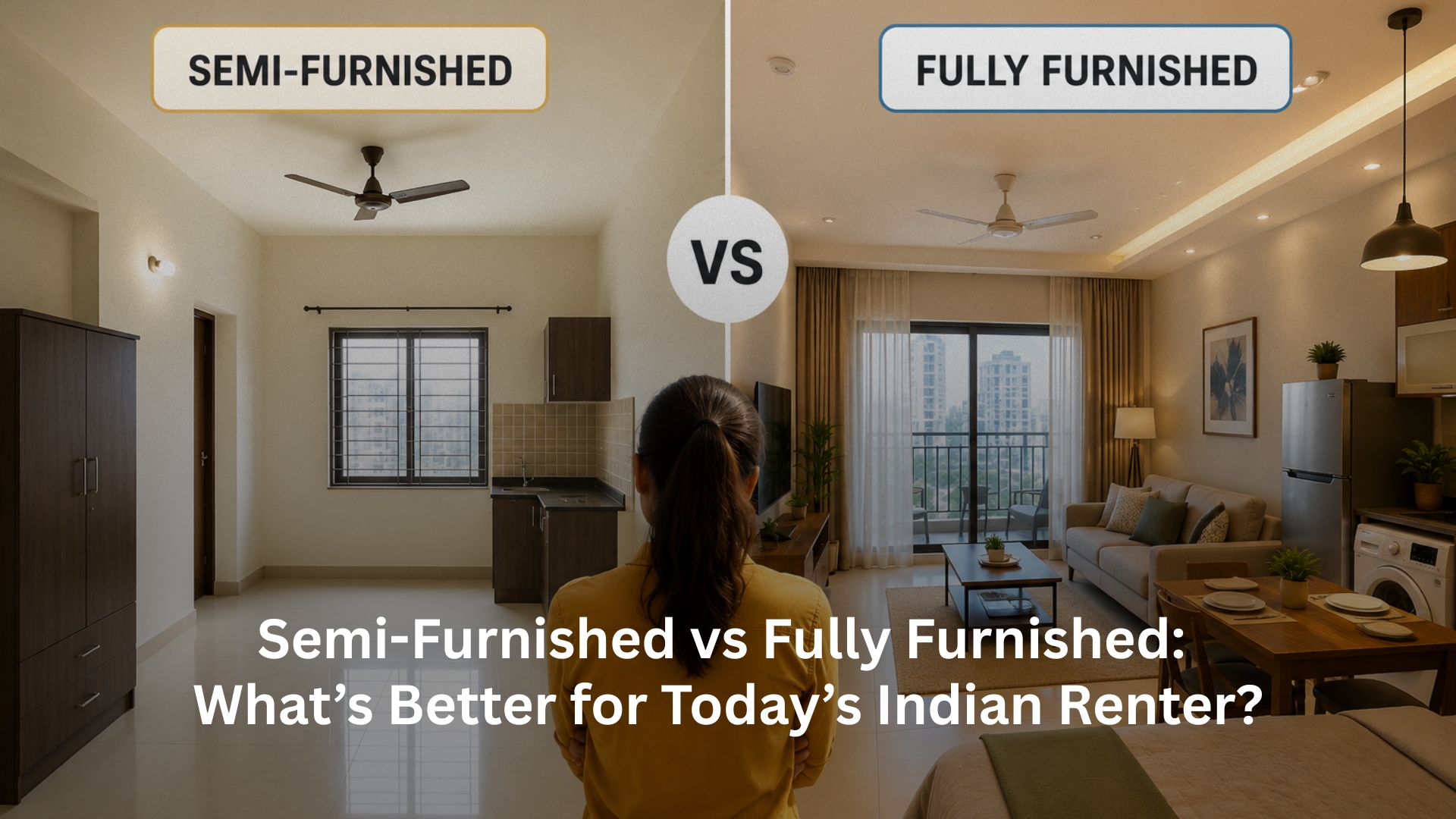
Semi-Furnished vs Fully Furnished: Which is Better for Renters?
Written by
Posted on
Shivanshi Dheer
Aug 20, 2026
Stay ahead in property management with expert insights
Join thousands of property managers receiving exclusive tips delivered straight to your inbox.
Browse posts by category
Case Study
Cost of Living
Growth
Legal
Market Trends
News
Pg owner app
Property Management
Property Tax
Tech
RentOk
The easiest way to rent and manage your PGs and hostels.
Grievance Officer
Get the app


Contact us
hello@eazyapp.tech
HQ Office
COGROW, BASEMENT F-12/8A
BESIDE HOUSE OF STYLE SALON, SECTOR 28, DLF PHASE 1
GURUGRAM, HARYANA - 122002
South India Office
LUMIODESK COWORKING, 2ND FLOOR, 40, 14TH MAIN RD
BESIDE MC DONALD, 7TH SECTOR, HSR LAYOUT
BENGALURU, KARNATAKA - 560102
©️ 2026 EazyApp Tech Pvt Ltd. All rights reserved


