Market Trends
Open Source Rental Property Management Software Guide

Written by
Ishika Pannu
Read Time
8 min read
Posted on
April 9, 2026
Overview
Overview
Open Source Rental Property Management Software Guide
As rental operations grow, many landlords begin looking for flexible systems that can adapt to their workflows. This is often when open source rental property management software becomes part of the conversation.
On the surface, open source tools seem like a strong option. They offer flexibility, customization, and often eliminate upfront licensing costs. For landlords who want more control over their systems, this can be appealing.
However, open source software also comes with responsibilities. From technical setup to ongoing maintenance, there are several factors to consider before making a decision.
This guide explores what open source property management software is, when it works well, its limitations, and whether SaaS platforms may be a better long-term solution.
What is Open Source Property Management Software?
Open source software is software where the source code is publicly available. This allows users to modify, customize, and host the platform based on their own requirements.
Unlike traditional property management software, which offers fixed features, open source systems allow landlords and property managers to adjust workflows, add features, and create custom integrations.
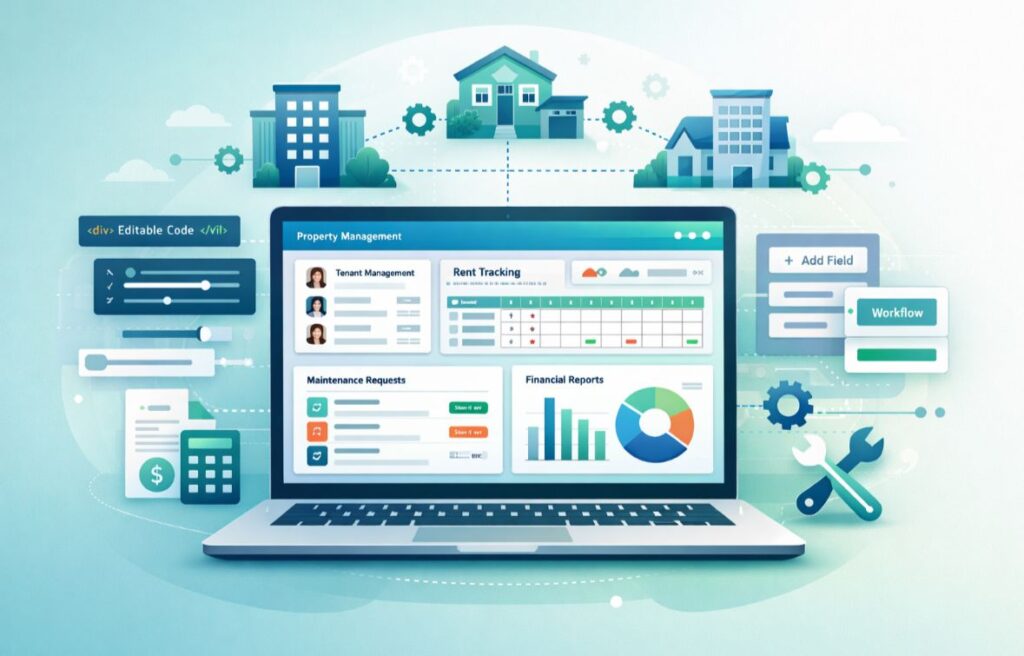
In property management, open source software is typically used to handle:
- Tenant and lease management with customizable fields and workflows
- Rent collection tracking with flexible billing structures
- Expense tracking and financial reporting tailored to your operations
- Maintenance request tracking and service coordination
- Multi-property dashboards and operational visibility
This flexibility is the main reason many landlords consider open source solutions. Instead of adapting your operations to software limitations, you can tailor the system to your business.
However, open source platforms usually require technical setup and management. This is where practical considerations begin to matter.
Why Some Property Managers Choose Open Source Software
The appeal of open source software comes down to control and flexibility. Property managers who have unique workflows often find open source systems more adaptable than traditional software.
This becomes particularly useful for:
- Managing mixed portfolios that include commercial and residential properties
- Handling custom rent structures like variable rent or shared expenses
- Managing multi-location operations with different workflows
- Integrating with internal systems or external tools
Open source platforms allow you to design workflows that match your operational needs. For growing businesses, this flexibility can be valuable.
Some common reasons landlords explore open source property management software include:
- No licensing fees, which reduces initial investment for growing operations
- Full customization capabilities to match your property management workflows
- Control over data hosting and infrastructure for better flexibility
- Ability to integrate with third-party tools or internal systems
- No dependency on a specific vendor or subscription model
While these benefits are attractive, they also introduce additional responsibilities. Customization often requires technical expertise and ongoing management.
Customization vs Maintenance Costs
Open source software is often considered cost-effective because there are no licensing fees. However, the total cost of ownership includes more than just software access.
Customization typically involves technical work such as:
- Setting up hosting environments and configuring servers
- Customizing features based on operational requirements
- Building integrations with other tools or platforms
- Testing workflows and fixing compatibility issues
If you don’t have a technical team, you may need to hire developers or external support. This adds ongoing costs that many landlords don’t initially consider.
Maintenance is another factor that often gets overlooked. Open source software requires continuous updates and monitoring to remain stable and secure.
Ongoing maintenance may include:
- Applying software updates and security patches regularly
- Managing backups to prevent data loss
- Monitoring performance and system reliability
- Fixing bugs and resolving technical issues
Over time, these responsibilities can add up. What initially appears to be a free solution may require consistent investment in technical support.
The Hidden Time Investment
Beyond financial costs, open source software also requires time and ongoing effort. Property managers often underestimate the operational work involved in managing and maintaining software, especially as their rental business grows.
Instead of focusing solely on tenants and properties, you may spend time handling:
- Troubleshooting technical issues that interrupt daily operations
- Adjusting workflows as your rental business evolves
- Monitoring system performance and reliability
- Coordinating with developers for updates or improvements
These responsibilities can gradually add up, particularly for smaller teams without dedicated technical support. Even minor issues can slow down operations and create unexpected delays.
Instead of simplifying management, software maintenance may start consuming valuable time and resources. This is why many landlords eventually look for solutions that reduce technical involvement and allow them to focus on core business activities.
Security Risks and Considerations
Security is a critical factor when choosing property management software. Since open source systems are often self-hosted, security responsibilities typically fall on the user.
This means you need to ensure your system is properly configured, monitored, and regularly updated to protect sensitive tenant and financial data.
Some key security considerations include:
- Configuring secure servers to protect tenant and financial data
- Setting up role-based access controls for different team members
- Applying regular updates to prevent security vulnerabilities
- Maintaining data backups to avoid information loss
These responsibilities require proactive management and ongoing attention. Without proper setup and monitoring, security risks may increase over time.
Open source software can be secure, but it requires technical expertise and consistent maintenance.

Scalability for Growing Rental Businesses
As your portfolio grows, your software needs to scale with your operations. This includes handling more tenants, properties, and financial transactions without affecting performance.
Open source platforms can scale, but they often require additional configuration and infrastructure management. As your usage increases, you may need to make technical adjustments to maintain reliability.
Scaling may involve:
- Upgrading servers to handle increased system usage
- Optimizing databases for faster performance and reporting
- Managing system load during peak activity periods
- Monitoring infrastructure reliability and uptime
These technical requirements can become more complex over time. For growing rental businesses, this can create additional operational overhead and require ongoing technical attention.
This is why scalability becomes an important consideration when choosing between open source and SaaS platforms.n when choosing between open source and SaaS platforms.
When Open Source Works Best
Open source rental property management software can be a strong fit in specific situations, particularly when flexibility and customization are important. It works best when you have the technical resources to manage and adapt the software to your needs.
Open source solutions are ideal if:
- You have technical expertise or access to development resources
- Your operations require custom workflows and integrations
- You manage large or complex property portfolios
- You prefer full control over your infrastructure and data
In these cases, open source software can offer flexibility and long-term customization. You can tailor features, build integrations, and adapt the system as your business evolves.
However, for many landlords, the technical overhead can outweigh these benefits, especially without dedicated technical support.landlords, the technical overhead can outweigh these benefits.
Is SaaS Property Management Software a Better Option?
SaaS (Software-as-a-Service) platforms have become increasingly popular because they remove technical complexity. Instead of managing infrastructure, you simply use a ready-to-deploy platform hosted in the cloud.
SaaS property management software typically offers:
- Cloud-based access to manage properties from anywhere
- Automatic updates that keep your system secure and up-to-date
- Built-in security features that reduce risk and data exposure
- Faster setup without technical configuration or installation
- Ongoing support for operational assistance
These advantages make SaaS platforms easier to adopt, especially for growing rental businesses. Instead of managing software, landlords can focus on improving occupancy, streamlining rent collection, and enhancing the tenant experience.improving occupancy, rent collection, and tenant experience.e.
Open Source vs SaaS: A Practical Comparison
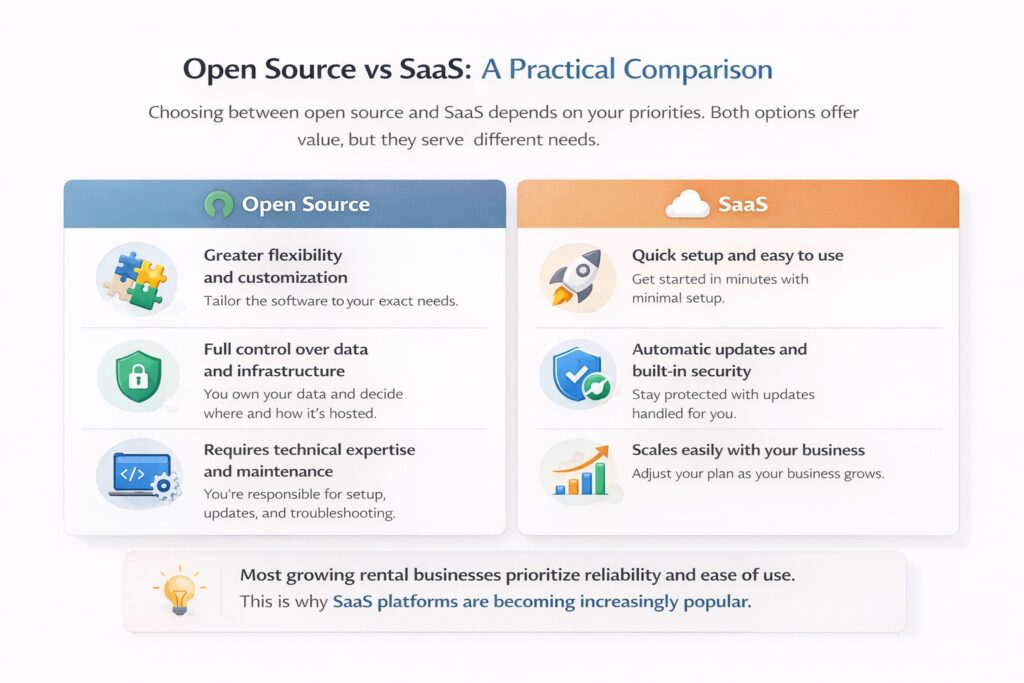
Choosing between open source and SaaS depends on your priorities. Both options offer value, but they serve different needs.
Open source software provides flexibility and customization, but it also requires technical management and ongoing maintenance. SaaS platforms, on the other hand, focus on convenience, offering ready-to-use solutions with minimal setup.
Open Source
- Greater flexibility and customization
- Full control over data and infrastructure
- Requires technical expertise and maintenance
SaaS
- Quick setup and easy to use
- Automatic updates and built-in security
- Scales easily with your business
Most growing rental businesses prioritize reliability and ease of use. This is why SaaS platforms are becoming increasingly popular.
How RentOk Simplifies Property Management
If you’re considering open source rental property management software for flexibility, it’s also important to think about the effort required to maintain and manage it. Most landlords don’t want to handle technical setup, updates, or security — they want a system that helps them manage properties efficiently.
RentOk offers a cloud-based property management platform designed to simplify rental operations without technical complexity. Instead of building and maintaining your own system, you can manage everything from one centralized dashboard.
With RentOk, you can:
- Track rent payments and outstanding dues with real-time visibility across properties
- Manage tenant details, agreements, and occupancy without relying on spreadsheets
- Send automated reminders to improve rent collection and reduce manual follow-ups
- Access reports and financial summaries to understand property performance
Because everything is cloud-based, you don’t need to worry about hosting, updates, or maintenance. This makes RentOk easier to implement and scale as your rental operations grow. to focus on operations rather than technical maintenance.
Choosing the Right Approach
Open source rental property management software offers flexibility and control, but it also requires ongoing technical management.
SaaS platforms, on the other hand, provide structured systems that are easier to implement and scale.
Your decision should depend on:
- Technical expertise available within your team
- Complexity of your rental operations
- Growth plans and scalability requirements
- Budget and long-term maintenance considerations
Understanding these factors will help you choose the right solution for your property management needs.
The Bottom Line
Open source property management software can be powerful, but it’s not always the simplest choice. While customization offers flexibility, it also introduces maintenance, security, and scalability considerations.
For many landlords, SaaS platforms provide a more practical approach. They simplify operations, reduce technical complexity, and support long-term growth.
Discover RentOk’s property management software to manage tenants, automate rent collection, track leases, and streamline your rental operations with a secure, cloud-based platform built for modern landlords.
About the Author
Ishika Pannu
Ishika Pannu brings you the latest insights and easy-to-apply strategies in property management—helping you simplify renting and grow with RentOk.