
Property Management
How to Deal with Tenants Who Pay Late Every Single Month

Written by
Ishika Pannu
Read Time
14 min read
Posted on
August 3, 2026
Overview
Overview
How to Deal with Tenants Who Pay Late Every Single Month
Paying rent a few days late once in a while is understandable. Emergencies happen, salary dates shift, and unexpected expenses can disrupt even the most disciplined tenants. But when the same tenants delay their rent month after month, the issue is no longer about an occasional oversight, it becomes a recurring operational challenge.
For PG owners and property managers, chronic late rent payment is one of the most exhausting problems to deal with. It rarely results in complete defaults, yet it demands constant follow-ups, repeated reminders, awkward conversations, and unnecessary administrative effort. Over time, these seemingly small delays begin affecting cash flow, staff productivity, vendor payments, and even relationships with tenants.
Many landlords try to solve this problem by sending more reminders or becoming stricter with payment deadlines. While these approaches may work temporarily, they often fail to address the real issue. If the same tenants continue paying late every month despite repeated follow-ups, the problem lies in the collection process itself, not just in tenant behaviour.
This is why professionally managed PGs and co-living businesses treat chronic late payments differently. Instead of relying entirely on manual intervention every month, they focus on building payment systems that encourage consistency, reduce dependency on follow-ups, and make rent collection far more predictable.
If you’re still relying on manual follow-ups, our guide on How to Collect Rent Online from Tenants in India explains how structured digital payment systems simplify rent collection and reduce administrative effort as your property grows.
When Does a Tenant Become a Chronic Late Payer?
There is an important difference between a tenant who occasionally pays late and one who consistently misses the due date.
An occasional delay usually has a clear reason behind it, a banking issue, a salary delay, or an unexpected personal expense. These situations are often temporary and can usually be resolved through simple communication.
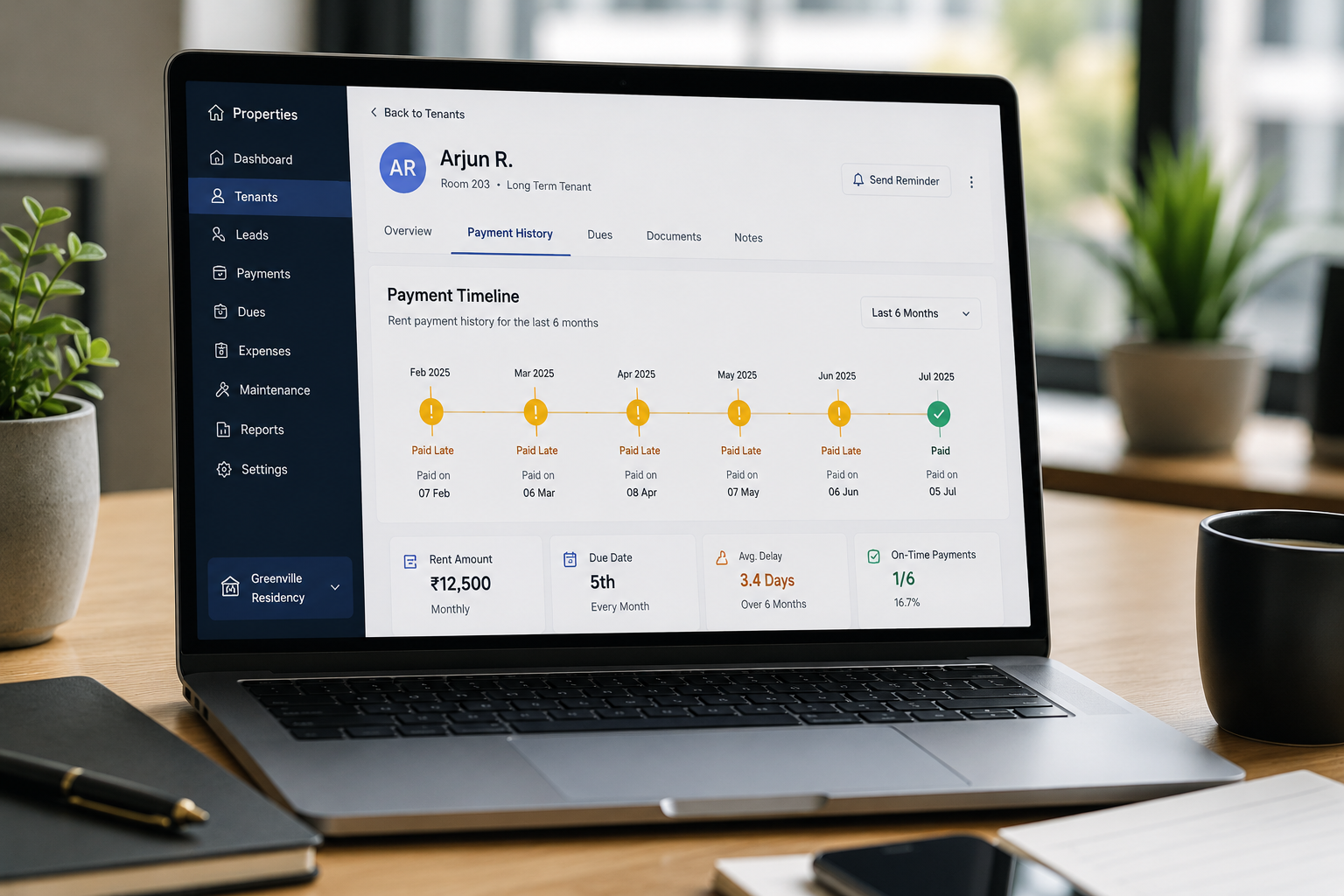
A chronic late payer, however, develops a predictable pattern. The rent eventually arrives, but only after multiple reminders, repeated follow-ups, or last-minute calls from the property manager. After a few months, the management team almost starts expecting that tenant to pay late.
This creates a different kind of operational burden because the collection process becomes dependent on human effort instead of a structured payment system.
Some common signs of chronic late payment include:
- The tenant pays after the due date almost every month, regardless of reminders, despite having maintained regular occupancy and showing no long-term financial distress.
- Your staff spends a disproportionate amount of time following up with the same tenants, making calls, sending WhatsApp messages, and reminding them until they finally make their payments.
- Rent collection becomes unpredictable, forcing management to wait for payments before settling utility bills, vendor invoices, housekeeping expenses, or other recurring operational costs.
- Tenants eventually make the payment, but only after repeated follow-ups, forcing your team to spend valuable management time on the same process month after month.
These tenants are not necessarily bad tenants. In many cases, they are simply comfortable delaying payments because there are no meaningful consequences or because the existing payment process allows procrastination to become a habit.
Recognising this distinction is important because the solution for chronic late payers is very different from the solution for rent defaulters.
Why Repeated Late Payments Hurt More Than You Think
Most property owners see late rent as a cash flow issue. But as your portfolio grows, the bigger cost is operational.
Managing a property with 20 tenants is one thing. Managing 200 or 500 is another.
If just 15–20% of residents consistently pay late, your team can spend hours every week tracking payments, sending reminders, responding to excuses, and updating records. That’s valuable time that could be spent improving occupancy, resolving maintenance requests, onboarding new tenants, or enhancing the resident experience.
Over time, repeated late payments become more than a financial inconvenience, they become an operational bottleneck that drains productivity and slows business growth.
The impact usually extends across multiple areas of the business:
- Cash flow becomes inconsistent, making it difficult to plan recurring operational expenses such as salaries, maintenance contracts, electricity bills, internet services, housekeeping payments, and vendor settlements with confidence.
- Administrative workload increases significantly because property managers repeatedly monitor the same pending payments instead of focusing on activities that directly contribute to business growth and tenant satisfaction.
- Payment discipline gradually weakens across the property, as other tenants notice that due dates are flexible and delayed payments rarely have immediate consequences.
- Owner involvement increases unnecessarily, with senior management stepping into routine collection activities that should ideally be handled through structured operational processes.
For growing rental businesses, these hidden operational costs are often much larger than the delayed payment itself.
Delayed payments are often accompanied by poor payment visibility. If you’re struggling to identify recurring dues or unpaid balances, you may also want to read Why You Need Rent Tracking Software to Stop Revenue Leaks, where we explain how better visibility helps prevent recurring collection gaps.
Why Do Some Tenants Keep Paying Late?
It is easy to assume that repeated late payments are caused by irresponsible tenants. In reality, the reasons are often far more practical, and understanding them helps you build better solutions.
In many cases, tenants fully intend to pay on time but continue postponing the payment because there is no structured trigger that encourages immediate action.
Some of the most common reasons include:
- Salary and rent dates do not always align. Working professionals whose salaries are credited a few days after the rent due date may gradually develop a habit of delaying payments every month instead of adjusting their budgeting cycle.
- Manual payment systems depend heavily on memory. When tenants have to remember due dates, open a payment app, enter account details, and complete the transaction manually every month, procrastination becomes surprisingly common.
- Multiple financial commitments compete for attention. Credit card bills, EMIs, subscriptions, education expenses, and day-to-day spending often get prioritised before rent simply because they generate stronger reminders or automatic deductions.
- Delayed payments become normalised. If tenants consistently pay late without facing any structured consequence or reminder system, the behaviour gradually becomes routine rather than exceptional.
Notice that very few of these reasons involve an inability to pay.
Instead, they highlight a lack of payment discipline supported by the existing process.
That is why sending increasingly aggressive reminders often delivers diminishing results. The tenant may respond for that particular month, but the same cycle repeats again because nothing has fundamentally changed.
We explored this challenge in greater detail in Stop Chasing Tenants with Automated Rent Reminders, where we discuss why reminder-based collection eventually reaches its limits and why automation creates more consistent payment behaviour.
Why Manual Follow-Ups Stop Working as You Scale
Many landlords believe that regular reminders are enough to maintain healthy rent collection. This approach may work for a smaller property where the owner knows every tenant personally.
As occupancy grows, however, manual follow-ups quickly become unsustainable.
Every month follows the same pattern.
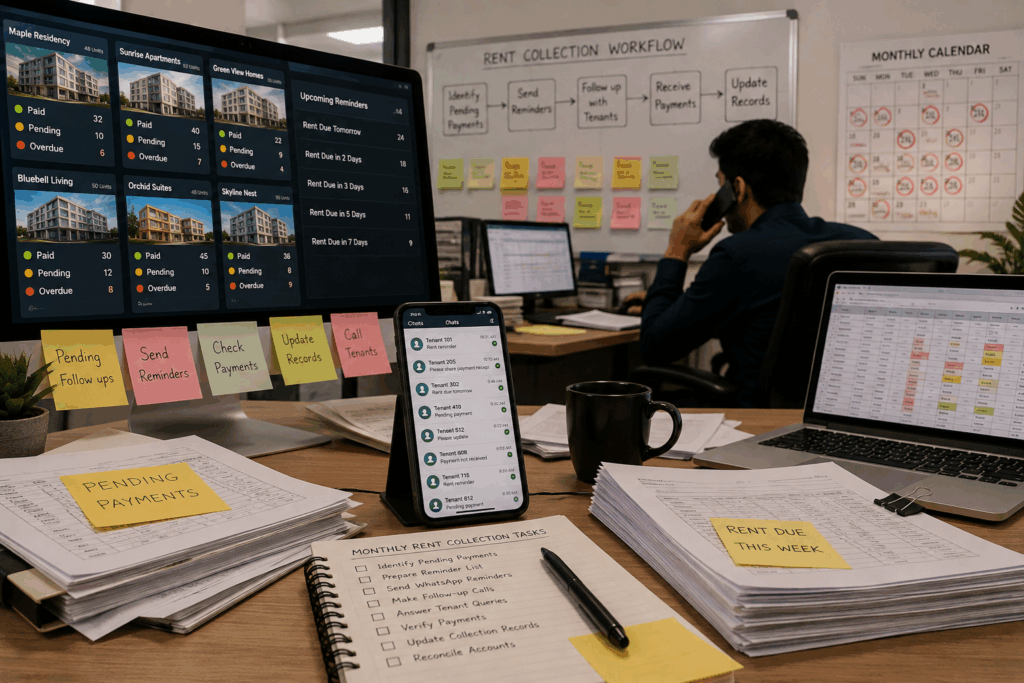
Someone has to identify pending payments, prepare reminder lists, message tenants individually, answer payment-related questions, update collection records, and repeat the process until everyone has paid.
The larger the property portfolio becomes, the more management time gets consumed by repetitive coordination rather than meaningful operational work.
This is one of the biggest differences between traditionally managed PGs and professionally managed rental businesses.
Modern operators understand that payment collection should function as a system, not as a monthly task that depends on someone remembering to send reminders.
As rental businesses grow, system-driven operations become essential. Our article, How to Build a Rental Business That Runs on Auto-Pilot, explores how automation streamlines not only rent collection but also day-to-day property management.
This shift is why more rental businesses are adopting automated payment workflows. Instead of relying on manual follow-ups every month, automated systems bring consistency, reduce administrative effort, and help ensure payments are collected on time.
How to Improve Payment Discipline Without Damaging Tenant Relationships
The biggest mistake landlords make is assuming that stricter follow-ups automatically create better payment behaviour. In reality, constantly calling or messaging tenants often strains relationships without permanently solving the issue. After a few months, both the property manager and the tenant begin treating the interaction as a routine monthly ritual.
Professional operators take a different approach. Instead of making rent collection dependent on repeated intervention, they focus on making timely payments the easiest option for tenants.
This doesn’t mean eliminating communication altogether. It means creating a payment process where reminders, visibility, and convenience work together to encourage consistency before delays happen.
Some practical strategies include:
- Set clear payment expectations during onboarding. Instead of simply mentioning the due date in the agreement, explain how rent collection works, what reminders tenants will receive, and why timely payments help maintain smooth property operations. This creates clarity from day one rather than leaving expectations open to interpretation.
- Communicate before the due date instead of after it. A reminder sent two or three days before rent is due is often more effective than chasing tenants after the payment has already become overdue. Preventive communication creates better payment habits than reactive follow-ups.
- Maintain consistency across all tenants. If some residents regularly receive extensions while others are expected to pay on time, payment discipline gradually weakens across the property. A structured policy builds fairness and predictability.
- Make paying rent as frictionless as possible. Every additional step in the payment process increases the likelihood of procrastination. Simplifying how tenants pay can often improve collection timelines without making the communication more aggressive.
The objective should never be to pressure tenants every month. It should be to create an operational system where paying rent on time becomes the default behaviour.
Why Penalties Alone Rarely Solve the Problem
Many property owners respond to recurring delays by introducing late payment charges. While penalties have their place, they should never become the primary strategy for improving collections.
A penalty may encourage a tenant to pay sooner once or twice, but if the underlying payment process remains unchanged, the same cycle usually returns. In some cases, repeated penalties even create unnecessary friction between management and residents.
More importantly, penalties are reactive. They come into effect after the payment has already been delayed.
Professional rental businesses focus more on preventing delays than recovering penalties.
For example, properties that consistently achieve healthier collection rates usually combine multiple operational practices:
- Automated reminders ensure that tenants receive timely notifications before the due date instead of depending on manual follow-ups.
- Transparent payment visibility allows residents to clearly understand their pending rent, due dates, and payment status without repeatedly contacting management.
- Convenient payment options reduce friction by making it easy for tenants to complete transactions immediately instead of postponing them.
When these systems work together, payment discipline improves naturally because tenants encounter fewer reasons to delay.
Why UPI Autopay Is Becoming the Preferred Solution
Over the last few years, digital payments have changed how people manage everyday expenses. Most tenants already use UPI for food, shopping, and utility bills.
Rent, however, is still one of the few recurring payments that often relies on manual action. Every month, tenants must remember the due date, make the payment, and sometimes share confirmation. Even responsible tenants can delay payments simply because they forget.
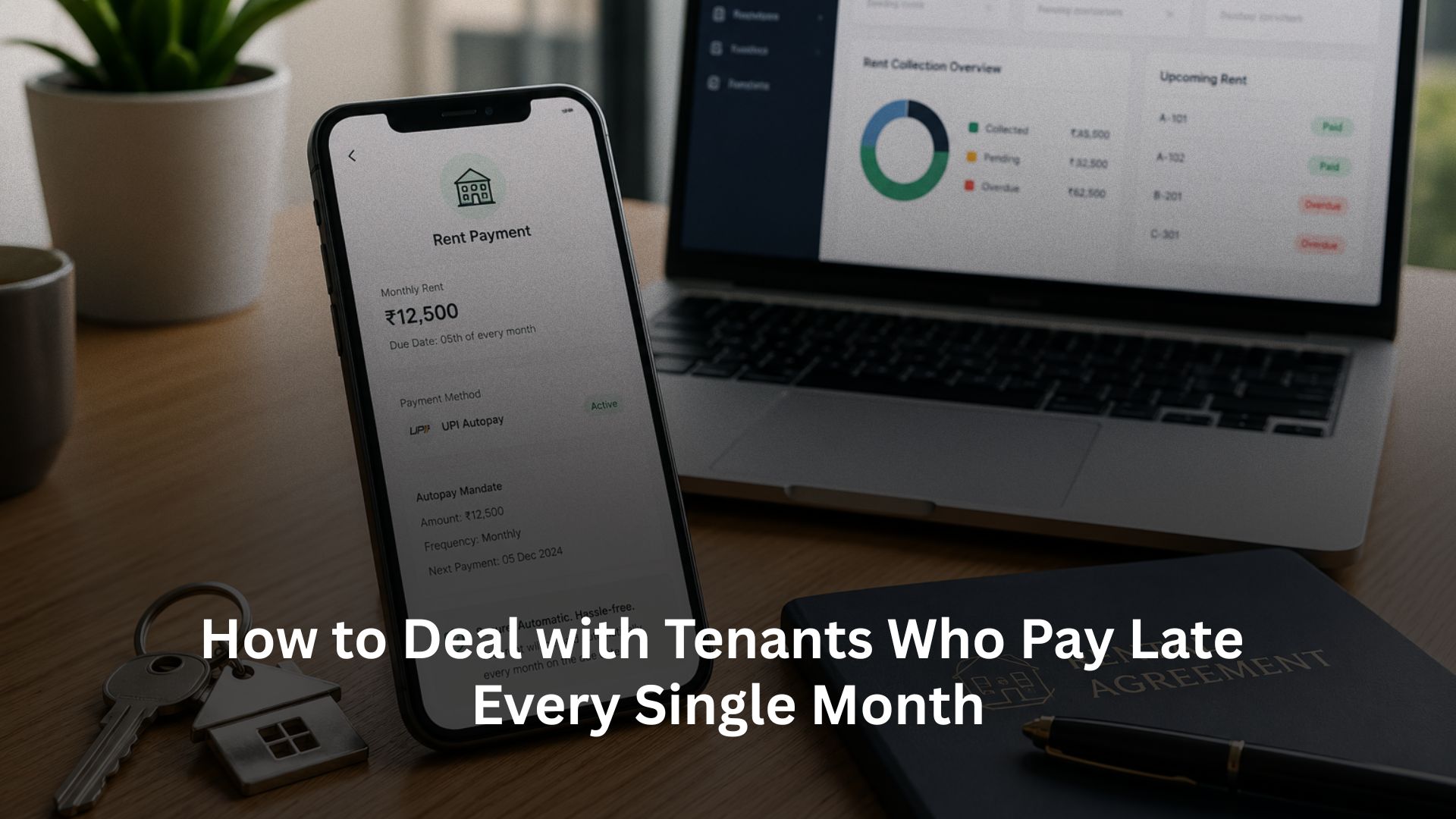
UPI Autopay solves this by allowing tenants to authorize recurring rent payments in advance. Once the mandate is active, rent is automatically paid on the scheduled date, reducing delays caused by forgetfulness and minimizing the need for repeated reminders.
The operational benefits extend beyond faster collections:
- Property managers spend significantly less time chasing recurring payments, allowing them to focus on occupancy management, tenant experience, and day-to-day operations instead of repetitive follow-up tasks.
- Cash flow becomes more predictable, helping operators plan salaries, vendor payments, maintenance expenses, and other recurring commitments with greater confidence.
- Tenants enjoy a smoother payment experience, as they no longer need to manually remember the same transaction every month.
This is one of the reasons many professionally managed PGs and co-living businesses are gradually shifting towards automated rent collection systems instead of relying entirely on manual payment reminders.
If you’re exploring ways to modernise your collection process, you may also find our article on UPI Autopay for Rent Collection useful. It explains how recurring payment mandates work and why more rental businesses are adopting them as occupancy grows.
You can also explore practical property management tips and product walkthroughs on the RentOk YouTube channel, where we regularly share operational insights for PG owners and property managers.
Common Mistakes Property Owners Should Avoid
Even experienced operators sometimes unintentionally encourage delayed payments through inconsistent collection practices.
Some of the most common mistakes include:
- Waiting several days before sending the first reminder, allowing delayed payments to become the norm instead of addressing them proactively.
- Making exceptions too frequently, which gradually weakens payment discipline as tenants begin expecting additional flexibility every month.
- Tracking collections across multiple spreadsheets, notebooks, and chat conversations, making it difficult to monitor payment history and identify recurring patterns.
- Treating every delayed payment as an isolated incident, instead of recognising when a tenant has become a chronic late payer requiring a more structured payment approach.
Avoiding these operational gaps is often more effective than introducing increasingly strict collection policies.
If late payments are starting to become complete non-payments, you may also find our guide on How to Handle a Tenant Who Refuses to Pay Rent useful, where we discuss structured approaches to dealing with rent defaults while maintaining professional communication.

How RentOk Helps Simplify Recurring Rent Collection
Managing recurring rent collection manually becomes increasingly difficult as occupancy grows. Repeated reminders, payment tracking, follow-ups, and reconciliation quickly consume valuable management time while still leaving room for delays and inconsistencies.
RentOk helps property owners streamline the entire collection process by bringing tenant management, payment tracking, automated reminders, and UPI Autopay into one connected platform.
Instead of relying on manual follow-ups every month, operators can build structured payment workflows that improve collection consistency while reducing administrative effort. At the same time, managers gain better visibility into pending payments, tenant payment history, and overall collection performance, making it easier to maintain healthy cash flow without adding extra operational pressure.
Conclusion
Chronic late payments are rarely just a tenant problem, they’re usually a sign that the rent collection process relies too heavily on manual effort. As rental businesses grow, repeatedly chasing the same tenants every month becomes unsustainable, consuming valuable time that could be spent improving occupancy, tenant experience, and overall operations.
If you’re looking to make rent collection more predictable and reduce the burden of monthly follow-ups, explore RentOk’s UPI Autopay feature. By automating recurring rent payments, you can improve payment discipline, simplify collections, and build a more efficient property management workflow.
Frequently Asked Questions
Find answers to common questions about this topic
About the Author
Ishika Pannu
Ishika Pannu brings you the latest insights and easy-to-apply strategies in property management—helping you simplify renting and grow with RentOk.
You may also like these
Related Articles
1 min read
RentOk vs Crib vs My PG Manager: Which PG Software Actually Fits My Business?
Written by
Posted on
Ishika Pannu
Sep 30, 2026

1 min read
Women’s Safety in PGs: What Owners Should Know
Written by
Posted on
Ishika Pannu
Sep 28, 2026

1 min read
What’s the Best Free Rent Collection App in India?
Written by
Posted on
Ishika Pannu
Sep 24, 2026

1 min read
What to Do When Your Landlord Won’t Make Repairs
Written by
Posted on
Ishika Pannu
Sep 12, 2026

1 min read
Can Landlords Ban Pets in Rental Properties? What Indian Law Says
Written by
Posted on
Ishika Pannu
Sep 11, 2026
1 min read
Why You Should Always Insist on a Registered Rent Agreement
Written by
Posted on
Ishika Pannu
Sep 10, 2026

1 min read
How Landlords Must Legally Handle Your Personal Data During Verification
Written by
Posted on
Ishika Pannu
Sep 10, 2026

1 min read
What Fire Safety Rules Must PG Owners Follow in India?
Written by
Posted on
Ishika Pannu
Sep 2, 2026
1 min read
Why Landlords Need a Property Management App in 2025
Written by
Posted on
Ishika Pannu
Sep 2, 2026

1 min read
How to Manage Multiple Rental Properties Without Spreadsheets
Written by
Posted on
Ishika Pannu
Aug 31, 2026
Stay ahead in property management with expert insights
Join thousands of property managers receiving exclusive tips delivered straight to your inbox.
Browse posts by category
Case Study
Cost of Living
Growth
Legal
Market Trends
News
Pg owner app
Property Management
Property Tax
Tech
RentOk
The easiest way to rent and manage your PGs and hostels.
Grievance Officer
Get the app


Contact us
hello@eazyapp.tech
HQ Office
COGROW, BASEMENT F-12/8A
BESIDE HOUSE OF STYLE SALON, SECTOR 28, DLF PHASE 1
GURUGRAM, HARYANA - 122002
South India Office
LUMIODESK COWORKING, 2ND FLOOR, 40, 14TH MAIN RD
BESIDE MC DONALD, 7TH SECTOR, HSR LAYOUT
BENGALURU, KARNATAKA - 560102
©️ 2026 EazyApp Tech Pvt Ltd. All rights reserved


