
Property Management
What Fire Safety Rules Must PG Owners Follow in India?

Written by
Ishika Pannu
Read Time
19 min read
Posted on
September 2, 2026
Overview
Overview
What Fire Safety Rules Must PG Owners Follow in India?
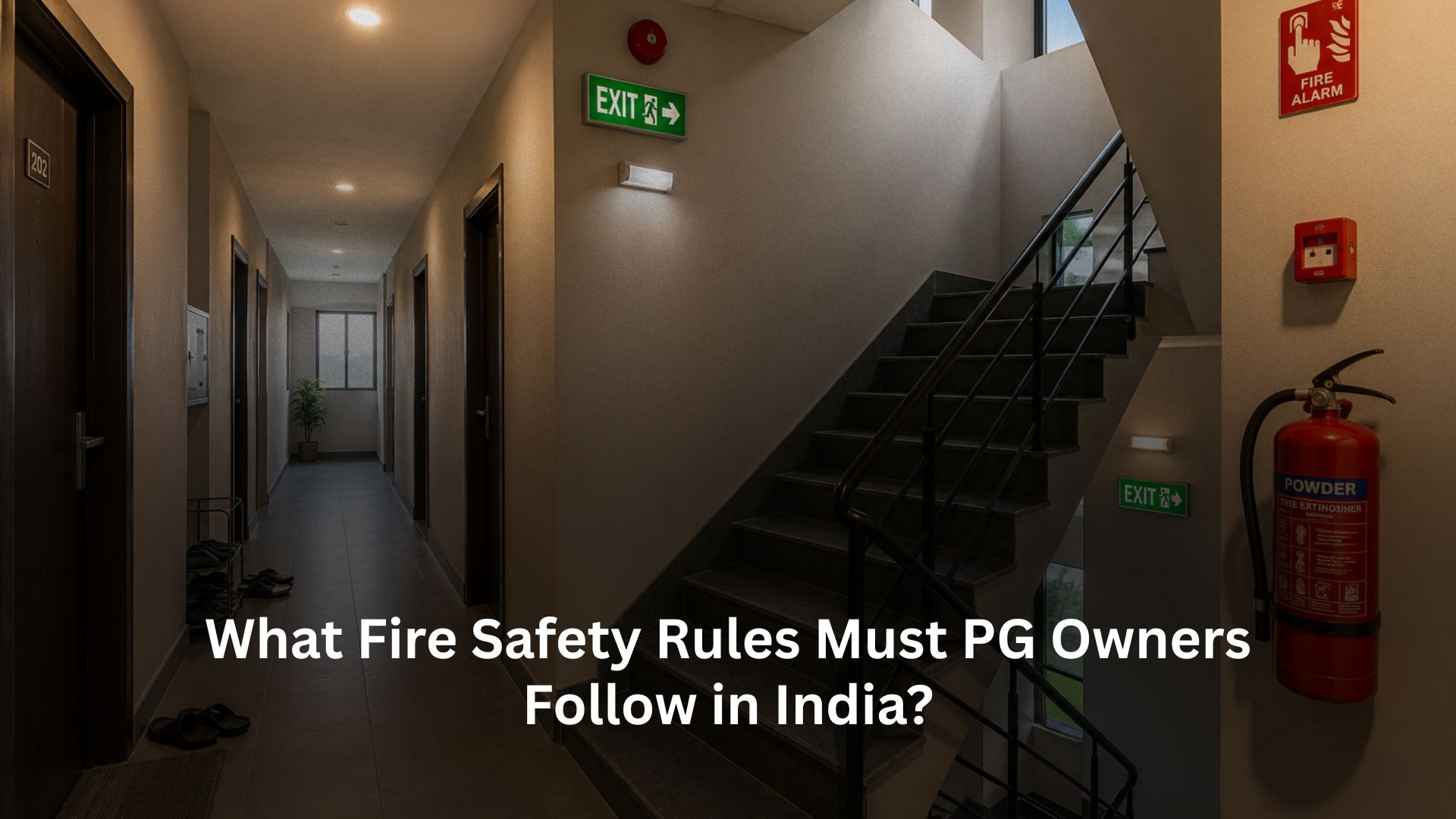
Running a PG is not just about filling rooms, collecting rent, and maintaining basic amenities. Once multiple people are living under one roof, the owner also takes responsibility for maintaining a property where safety systems, emergency arrangements, and day-to-day operations are properly managed.
Fire safety is one of the most important parts of that responsibility.
A property may appear completely safe during normal operations, but that does not necessarily mean it is prepared for a fire emergency. A fire extinguisher may be installed but not maintained. An emergency staircase may exist but be blocked by stored items. Electrical systems may appear to work normally while still creating risks because of overloading or poor maintenance. These gaps are easy to overlook precisely because they do not usually create problems during everyday operations.
For PG owners, this makes fire safety more than a one-time compliance exercise. It is an ongoing responsibility involving the building, firefighting equipment, evacuation arrangements, staff preparedness, occupancy, and the requirements applicable to the property.
The National Building Code of India provides an important framework for fire and life safety, including requirements relating to fire prevention, life safety, construction, egress, and fire protection. However, the Code is implemented through state and local building regulations, which means the exact compliance requirements can differ depending on the location and characteristics of the property.
This distinction matters because there is no single checklist that every PG owner in India can follow regardless of where the property is located.
Before opening a PG, expanding an existing one, or changing the way a property is being used, owners need to understand what fire-safety requirements apply specifically to that premises.
Why Fire Safety Matters So Much for PGs
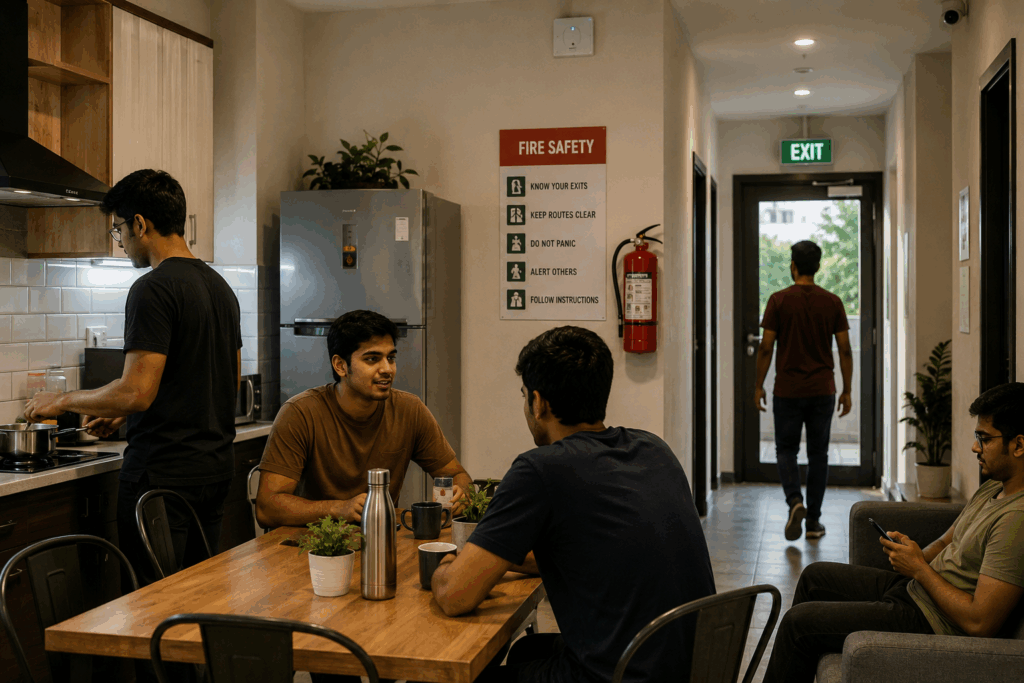
Fire safety is especially important in PGs. The operating environment differs from that of a typical family home. Multiple tenants may occupy separate rooms and share kitchens and common areas. They may also use electrical appliances throughout the day.
Tenant turnover adds another challenge.
A new resident may not know the property’s layout when they move in. They may not know which staircase leads outside or where an emergency exit is located. They may also be unsure about what to do if an alarm sounds at night. Staff members must also understand their responsibilities during an emergency.
This is why responsible PG operators should focus on preparedness, not just equipment installation.
A strong fire-safety setup should consider:
- Safe evacuation: Escape routes, staircases, corridors, and exits must remain clear and usable.
- Maintained firefighting systems: Fire-safety equipment must be suitable, accessible, and properly maintained.
- Staff readiness: Managers, caretakers, and security staff should know their roles during an emergency.
- Approved property conditions: Changes to layout, occupancy, or building use may require a fire-safety review.
Having fire-safety equipment is not the same as having a fire-ready property.
RentOk’s article on Top 10 Landlord Risks: Identifying Hidden Risks in Your PG highlights this important distinction. Fire-safety measures can exist but still be ineffective if equipment is poorly maintained, exits are unclear, or tenants do not know what to do.
Fire NOC – What Is It and Who Needs It?
One of the first questions PG owners ask is whether they need a Fire NOC.
There is no single rule for every PG in India. Fire-safety requirements can vary by state, local authority, building height, area, occupancy, and property use.
A Fire NOC or Fire Safety Certificate generally confirms that a property meets applicable fire-safety requirements. However, the terminology and process can differ between jurisdictions. Application, inspection, validity, and renewal requirements may also vary.
Owners should therefore identify the competent fire authority for their property. A generic PG checklist may not cover local requirements.
RentOk’s guide, What Licenses Do You Need to Run a PG in India?, explains that Fire NOC requirements can depend on state rules, local bye-laws, building characteristics, and occupancy.
Before claiming compliance, clarify four key points:
- What category applies? Property use, size, height, layout, and occupancy can affect the requirements.
- Which authority is responsible? Identify the relevant fire service, municipal body, or designated authority.
- Is an inspection required? Installing firefighting equipment does not automatically complete the approval process.
- What happens after approval? Check renewal, inspection, maintenance, and reporting requirements.
This is especially important when converting a residential property into a PG.
A house designed for one family may have been suitable for residential use. Operating it as multi-occupant accommodation can create different safety and regulatory considerations.
The property should therefore be assessed based on its actual intended use. Its previous residential status should not be treated as automatic proof of PG compliance.
What Fire Safety Equipment Should a PG Have?
The safest approach is not to copy an equipment list from another PG.
Fire-safety requirements depend on the building and applicable regulations. The National Building Code covers fire prevention, life safety, means of egress, and fire-protection features. State and local authorities apply these requirements through their own regulations.
Depending on the property, fire-safety arrangements may include extinguishers, alarms, emergency lighting, safety signage, and other fire-protection systems.
However, having the equipment is only part of the job. It must also remain functional and accessible.
For example, a fire extinguisher behind furniture may be technically present. Yet it could be difficult to reach during an emergency.
The same applies to escape routes. Staircases, corridors, and exits must remain clear. Boxes, furniture, or cleaning supplies can quickly create hazards.
PG operators should therefore monitor both installation and operational condition.
Regular checks should confirm that:
- Firefighting equipment is accessible and properly maintained.
- Required alarm and detection systems remain functional.
- Corridors, staircases, exits, and escape routes remain clear.
- Safety signs and emergency information remain visible.
- Changes to rooms, occupancy, or layouts are reviewed for fire-safety impact.
These checks should become part of routine property management. Fire safety is not only a compliance responsibility. It is also an ongoing operational responsibility.
Technology can help operators manage these tasks more consistently. For a broader look at integrating PG operations, read All-in-One Property Management Software: Is It Worth It?.
Why Emergency Exits Cannot Become “Extra Storage Space”
One of the most common operational problems in shared accommodation is that common areas slowly become places to keep things.
A few cartons may be placed near a staircase. Cleaning equipment may be left in a corridor. Furniture may be moved temporarily into an area that appears unused. None of these decisions may seem significant when made individually.
The problem is that emergency routes exist for the moment when normal movement through the property is no longer possible.
The Delhi Fire Service, for example, includes conditions requiring means of escape to remain unobstructed and unlocked for unhindered evacuation in relevant Fire Safety Certificate arrangements.
For PG owners, this means escape routes should be treated as protected operational space. They should not become available storage simply because the property needs more room.
A routine property inspection should therefore include more than room cleanliness and maintenance. Staff should also check whether designated escape paths remain clear and whether emergency access has been compromised by changes made after the original inspection.
The larger lesson is simple: fire safety can deteriorate gradually even when nobody intentionally ignores it.
That is why professional PG management requires recurring checks rather than relying entirely on the condition of the property on the day an approval was obtained.
State-Specific Fire Rules: Why One Checklist Does Not Fit Every PG
Perhaps the most important thing PG owners need to understand about fire safety rules in India is that location matters.
The National Building Code provides a national framework, but the Ministry of Home Affairs’ Directorate General of Fire Services notes that states were advised to incorporate the latest NBC 2016 Part IV Fire and Life Safety provisions into their local building bye-laws.
As a result, the fire-safety process for a PG in Delhi should not automatically be assumed to be identical to the process for a PG in Haryana, Maharashtra, Karnataka, Gujarat, or another state.
Even within a state, building characteristics and local authority requirements can influence what applies.
For example, RentOk has covered specific local requirements in its article on New AMC Rules for PGs & Hostels in Gujarat, where the Ahmedabad Municipal Corporation’s rules included fire-safety, zoning, infrastructure, and other requirements for PGs and hostels.
The practical approach is therefore to evaluate:
Location + building characteristics + occupancy/use + applicable local regulations.
This becomes especially important for PG operators expanding into multiple cities. A compliance process developed for one property should be reviewed before being replicated elsewhere.
For an owner, the objective is not to memorize every fire rule in India. It is to establish a property-specific compliance process and verify the requirements with the authority responsible for that property.
And that process should begin before tenants move in, not after an issue arises.
What Should PG Owners Do Beyond Installing Fire Safety Equipment?
Fire safety becomes effective only when it is integrated into everyday property operations. Installing extinguishers, displaying emergency numbers, or obtaining the required certificate does not automatically mean that a PG is prepared for an emergency. The condition of the property can change every day as tenants move in and out, furniture is rearranged, electrical appliances are added, and common areas are used differently.
This is why owners should build fire-safety checks into their regular property-management routine. A simple inspection can identify issues that may otherwise remain unnoticed for months.
For example, management teams can periodically review whether emergency routes remain accessible, whether firefighting equipment is in its designated position, whether electrical points are being overloaded, and whether common areas are being used in ways that could interfere with evacuation.
The most effective approach is to make these checks part of normal operations rather than waiting for an external inspection to identify a problem.
This proactive approach is similar to how professional PG operators handle maintenance. Read How to Handle Maintenance Requests in Your PG to understand why preventive checks and structured workflows can reduce operational problems before they escalate.
Electrical Safety Is a Major Part of PG Fire Prevention
Fire safety does not begin with a fire extinguisher. It begins with preventing conditions that could cause a fire.
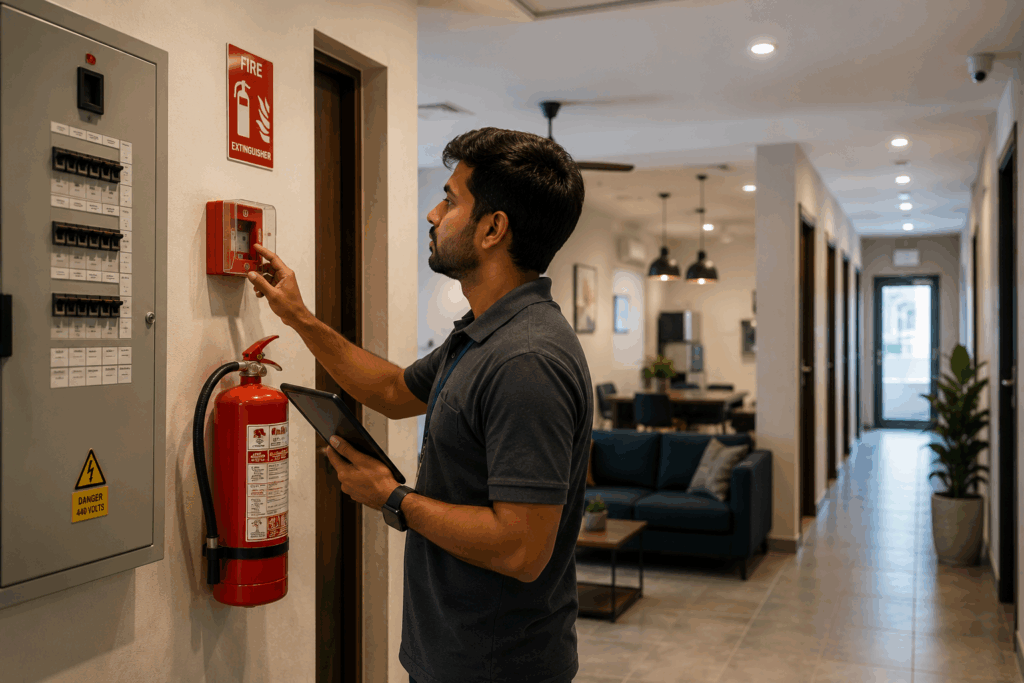
Electrical systems deserve special attention in PGs. Residents may use several appliances throughout the day. Chargers, induction cookers, heaters, kettles, irons, refrigerators, and computers can increase electrical demand. The risk can rise further when extensions, temporary connections, damaged wires, or overloaded sockets are common.
PG owners should ensure that electrical systems are inspected and maintained by qualified professionals. Residents should also receive clear guidance on safe appliance use.
Key areas to monitor include:
- Overloaded electrical points: Avoid connecting several high-power appliances to one socket or extension.
- Damaged wiring and equipment: Repair frayed wires, broken plugs, loose connections, and damaged equipment promptly.
- Unapproved modifications: Review informal electrical additions before they compromise the property’s safety arrangements.
- High-risk areas: Pay special attention to kitchens, utility rooms, electrical panels, and other areas with heavy electrical use.
Electrical maintenance should therefore be treated as fire prevention, not just routine property maintenance. Regular inspections can identify risks before they become incidents.
This preventive approach should also apply to other maintenance tasks. How to Handle Maintenance Requests in Your PG explains how structured maintenance can help identify recurring issues early.
A professionally managed PG does not wait for a circuit to fail. It identifies potential risks, addresses them promptly, and uses regular maintenance to improve safety.
Do PG Tenants Need Fire Safety Awareness Too?
Even good safety infrastructure cannot replace occupant awareness during an emergency.
PG residents are often new to the property. Some may stay for only a few months. Others may move between rooms or properties. This makes clear and consistent fire-safety communication especially important.
New tenants do not need extensive technical training. They do need to understand the property’s basic emergency arrangements. This includes evacuation procedures, fire exits, alarm systems, and where to seek help.
This is where onboarding becomes important. It should go beyond collecting documents and completing formalities. Every new resident should receive essential safety information when they move in. How to Onboard a New Tenant in Under 10 Minutes explains how a structured onboarding process can make this easier.
During onboarding, owners can explain:
- Emergency exits and staircases: Show residents where they are located, especially in multi-floor buildings.
- Assembly areas: Explain where residents should gather after an evacuation, if a designated area exists.
- Alarm procedures: Tell residents what to do when an alarm or emergency alert is raised.
- Emergency contacts: Provide clear details for contacting property staff or emergency services.
This becomes even more useful in larger PGs. Management may not be able to guide every resident during an emergency.
Safety information should therefore be part of the tenant experience, not something kept only in compliance documents. Regular communication can help ensure that new and existing residents understand what to do when it matters.
How Often Should PG Fire Safety Be Checked?
There is no single inspection frequency that can responsibly be applied to every PG because maintenance, inspection, testing, and certification requirements depend on the applicable regulations and the systems installed at the property.
However, owners should distinguish between formal compliance inspections and routine operational checks.
A certificate or professional inspection may be required at a particular interval under the applicable rules. Routine internal checks, on the other hand, can help management identify everyday problems such as blocked exits, missing equipment, damaged signage, or changes in the property that require attention.
This creates a layered approach to safety:
Formal compliance → professional inspection → routine property checks → prompt corrective action.
Keeping these activities separate is important. A monthly walkthrough by a property manager does not replace a legally required inspection or servicing procedure, just as a professional inspection does not mean the owner can ignore problems that appear between inspections.
A useful property-management system should make it easier to know what was checked, when it was checked, what issue was identified, who was responsible for addressing it, and whether the issue was actually resolved.
That level of visibility becomes increasingly important when owners are managing more than one property. How to Manage a PG Without Being On-Site Every Day explores how owners can build systems that keep payments, tenant information, complaints, and staff activity visible even when they are not physically present.
That level of visibility becomes increasingly valuable as the number of rooms and properties increases.
What If the PG Building Changes After Approval?
This is another area where owners can unintentionally create compliance problems.
PG businesses rarely remain completely static. An owner may renovate a room, change a common area, add furniture, alter the layout, increase occupancy, convert another portion of the building into accommodation, or introduce new facilities.
While some changes may appear minor from a business perspective, they can still affect the property’s safety arrangements.
This is why owners should not assume that an earlier approval automatically covers every future modification.
Before making significant changes, it is sensible to determine whether the change affects:
- The approved occupancy or use of the premises.
- The number of residents accommodated within the building.
- Escape routes, staircases, corridors, or exits.
- Firefighting systems or equipment.
- Electrical load and infrastructure.
- Any conditions attached to an existing fire-safety approval.
The exact legal implications depend on the applicable local regulations, so significant changes should be checked with the relevant authority or a qualified professional.
For multi-property operators, maintaining this level of discipline becomes even more important. As the number of properties grows, having centralized visibility can help operators maintain consistency while accounting for the differences between individual buildings. What Is Rental Management? Tools to Manage Your Property Efficiently explores how rental management systems can bring tenant records, payments, complaints, occupancy, and communication into a single operational framework.
However, centralized management does not mean that every property can be treated in the same way. A change that appears routine at one property may create a very different compliance situation at another, particularly when buildings have different layouts, heights, approvals, occupancy levels, or local regulatory requirements. Operators therefore need both centralized oversight and property-specific checks to ensure that safety and compliance requirements remain appropriate at each location.
What Are the Penalties for Fire-Safety Non-Compliance?
The consequences of ignoring fire-safety requirements depend on the applicable state and local laws and the nature of the violation. There is therefore no single penalty amount that can accurately be presented as the standard “PG fire safety fine” across India.
Depending on the circumstances and applicable framework, non-compliance can result in notices, directions to rectify deficiencies, regulatory action, or other consequences prescribed by the relevant authority.
The bigger concern for PG owners, however, is that compliance failure can create operational consequences even before a serious emergency occurs.
A property may face disruption, additional expenditure to correct deficiencies, reputational damage, or difficulty maintaining tenant confidence. If residents or prospective tenants perceive the property as poorly managed, the effect can extend into occupancy and business reputation.
For this reason, owners should avoid treating penalties as the main reason to comply.
The stronger reason is that a fire-safety system is ultimately designed to protect people.
Compliance creates the framework. Proper maintenance and responsible property management make that framework useful in everyday operations.
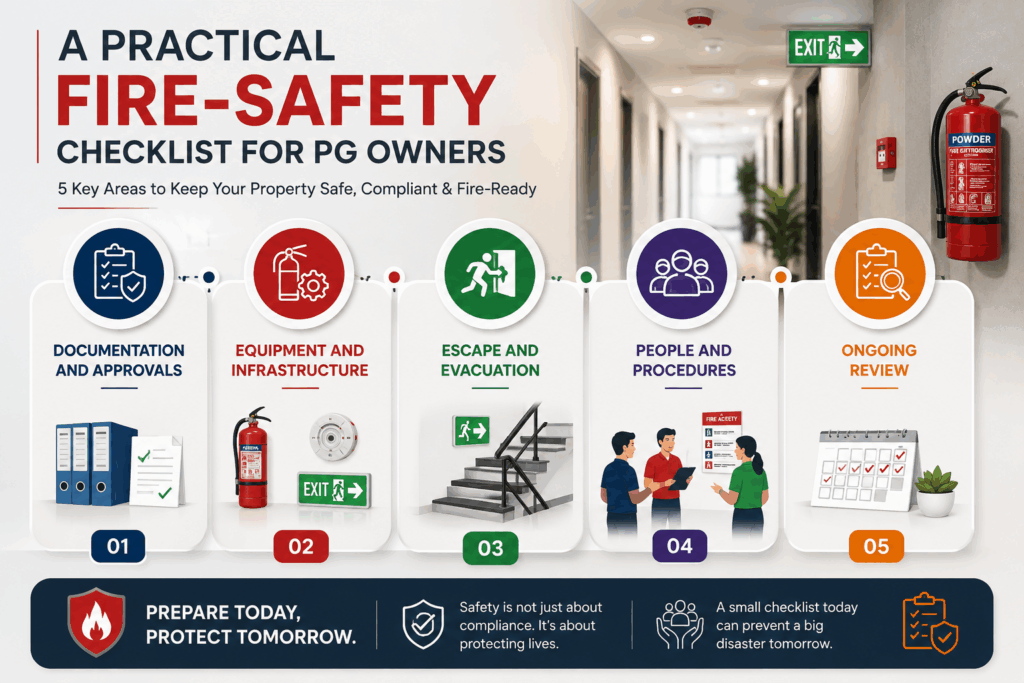
A Practical Fire-Safety Checklist for PG Owners
Once the regulatory requirements applicable to the property have been established, owners can use a practical internal checklist to maintain day-to-day visibility.
The checklist should complement—not replace—the formal requirements of the competent authority.
Documentation and approvals
- Keep applicable Fire NOCs, Fire Safety Certificates, inspection reports, and related documents organized and accessible.
- Track renewal or inspection dates so that important compliance actions are not missed.
- Record significant property changes and determine whether they require reassessment or approval.
Equipment and infrastructure
- Ensure applicable firefighting systems are accessible and maintained according to their required schedules.
- Check that alarms, emergency lighting, signage, and other systems remain functional where installed or required.
- Avoid moving safety equipment simply to make rooms or common areas look cleaner.
Escape and evacuation
- Keep corridors, staircases, exits, and designated escape routes clear.
- Make sure emergency access is not compromised by storage, furniture, or other operational activities.
- Ensure tenants can identify important emergency routes and instructions.
People and procedures
- Make sure responsible staff understand the property’s emergency procedures.
- Include basic fire-safety information in tenant onboarding where appropriate.
- Keep emergency contacts and relevant instructions easy for staff and residents to access.
Ongoing review
- Conduct routine property-level checks rather than waiting for formal inspections.
- Document issues and assign responsibility for corrective action.
- Reassess safety arrangements when occupancy, layout, building use, or infrastructure changes.
This approach turns fire safety from a one-time compliance task into an operating discipline.
How RentOk Helps PG Owners Manage Operations More Systematically
Fire-safety certification and technical compliance must be handled according to the requirements of the relevant authorities and qualified professionals. But once a PG has multiple residents, rooms, staff members, payments, complaints, and operational responsibilities, maintaining visibility across the property becomes a management challenge of its own.
This is where structured property management can make a difference.
RentOk helps PG owners centralize important operational workflows such as tenant management, occupancy tracking, rent and payment visibility, communication, complaints, and day-to-day property coordination. Instead of relying entirely on scattered spreadsheets, messages, registers, and manual follow-ups, owners can bring key information into a more organized system.
That structure can also support better operational discipline around compliance. Owners have greater visibility into their properties, tenant records, occupancy information, and recurring management activities, making it easier to build consistent processes as the business grows.
For operators managing multiple PGs, this becomes particularly valuable. The challenge is no longer simply keeping one property organized; it is maintaining consistent management standards across several locations without allowing important operational details to disappear between different teams and systems.
RentOk helps create that centralized layer, allowing owners to manage the wider property operation more systematically while keeping fire-safety compliance aligned with the requirements established by the relevant authorities.
Conclusion
Fire safety in a PG should never be reduced to installing a few extinguishers or obtaining a certificate and considering the job complete. A genuinely responsible approach combines the right approvals, appropriate fire-protection systems, accessible escape routes, electrical safety, trained staff, tenant awareness, regular maintenance, and ongoing attention to changes within the property.
The exact PG fire safety rules in India can differ according to the state, local authority, building characteristics, occupancy, and applicable regulations. That is why owners should verify the requirements for their specific premises instead of relying on a generic national checklist.
For PG operators, the goal should be simple: build safety into the way the property is managed every day.
Frequently Asked Questions
Find answers to common questions about this topic
About the Author
Ishika Pannu
Ishika Pannu brings you the latest insights and easy-to-apply strategies in property management—helping you simplify renting and grow with RentOk.
You may also like these
Related Articles
1 min read
Why Landlords Need a Property Management App in 2025
Written by
Posted on
Ishika Pannu
Sep 2, 2026
1 min read
How to Manage Multiple Rental Properties Without Spreadsheets
Written by
Posted on
Ishika Pannu
Aug 31, 2026

1 min read
What Licenses Do You Need to Run a PG in India?
Written by
Posted on
Ishika Pannu
Aug 27, 2026

1 min read
How to Start a PG Business Legally in India: Step-by-Step Guide
Written by
Posted on
Ishika Pannu
Aug 27, 2026

1 min read
What Revenue Leaks Look Like in Rental Businesses
Written by
Posted on
Ishika Pannu
Aug 17, 2026

1 min read
Free PG Food Menu Template: Weekly Planner for Mess Owners
Written by
Posted on
Ishika Pannu
Aug 10, 2026
1 min read
How to Deal with Tenants Who Pay Late Every Single Month
Written by
Posted on
Ishika Pannu
Aug 3, 2026
1 min read
PG Management Annual Planner: Month-by-Month Guide
Written by
Posted on
Ishika Pannu
Jul 31, 2026
1 min read
Move-Out Checklist for PG Owners: What to Do When a Tenant Leaves
Written by
Posted on
Ishika Pannu
Jul 30, 2026
1 min read
How to Handle Maintenance Requests in Your PG
Written by
Posted on
Ishika Pannu
Jul 9, 2026
Stay ahead in property management with expert insights
Join thousands of property managers receiving exclusive tips delivered straight to your inbox.
Browse posts by category
Case Study
Cost of Living
Growth
Legal
Market Trends
News
Pg owner app
Property Management
Property Tax
Tech
RentOk
The easiest way to rent and manage your PGs and hostels.
Get the app


Contact us
hello@eazyapp.tech
HQ Office
COGROW, BASEMENT F-12/8A
BESIDE HOUSE OF STYLE SALON, SECTOR 28, DLF PHASE 1
GURUGRAM, HARYANA - 122002
South India Office
LUMIODESK COWORKING, 2ND FLOOR, 40, 14TH MAIN RD
BESIDE MC DONALD, 7TH SECTOR, HSR LAYOUT
BENGALURU, KARNATAKA - 560102
©️ 2026 EazyApp Tech Pvt Ltd. All rights reserved


