
Property Management
Women’s Safety in PGs: What Owners Should Know

Written by
Ishika Pannu
Read Time
15 min read
Posted on
September 28, 2026
Overview
Overview
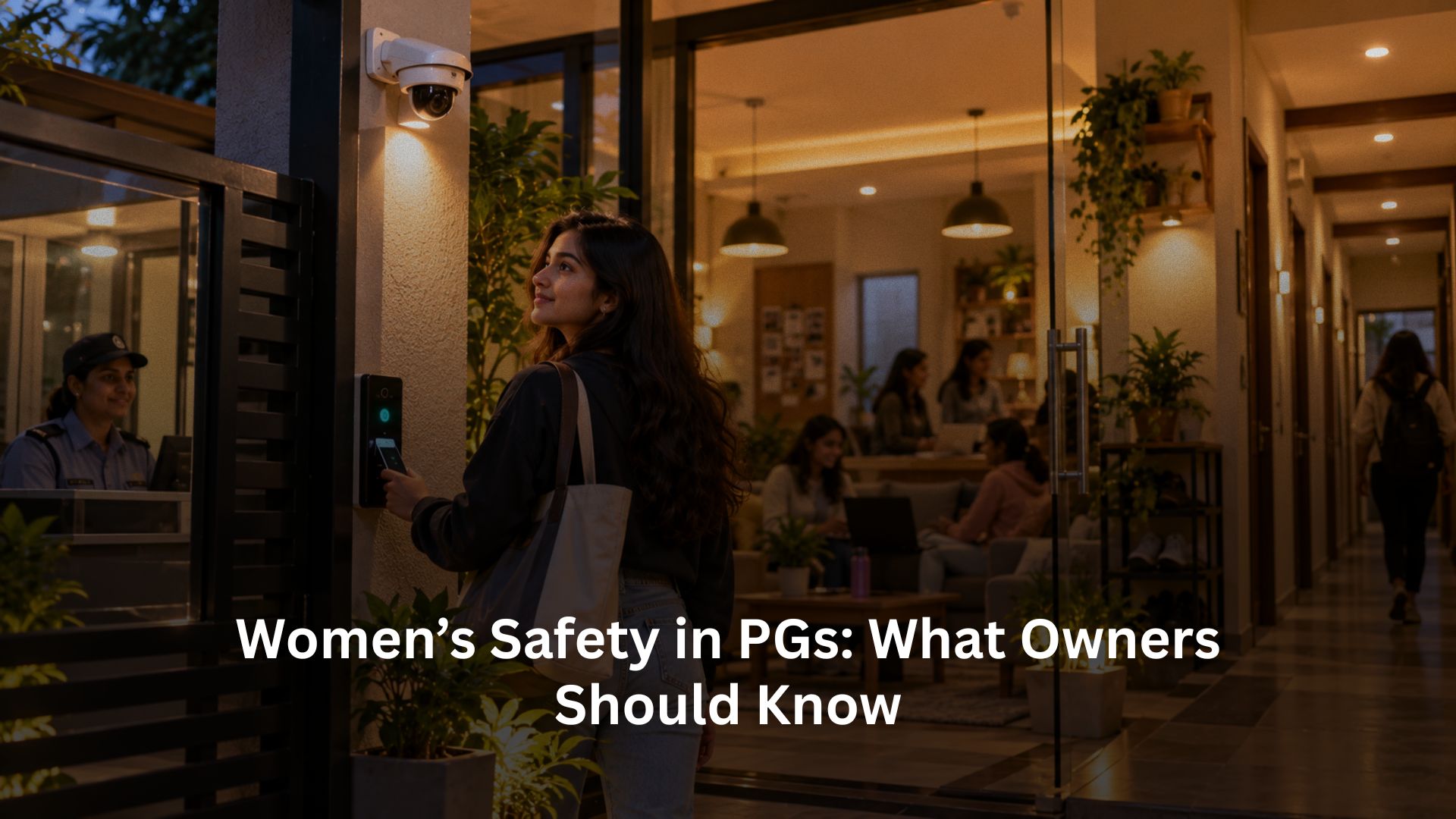
Women’s Safety in PGs: What Owners Should Know
For many young women, moving into a PG is much more than finding a room near college or work. It can mean moving hundreds of kilometres away from home, adjusting to a new city, and learning to live independently. For families, choosing a PG is rarely only about rent, food, location, or amenities. Safety is often one of the first things they consider.
This becomes even more important in cities where thousands of students and working professionals move in every year. A PG becomes their home away from home. It should be a place where they can study, work, rest, and return at the end of the day without constantly worrying about their surroundings.
Recent conversations around women’s safety in educational institutions and accommodation have once again brought this issue into focus. But for PG owners, the discussion should go beyond reacting to a particular incident. The more important question is simple: what can a property do every day to create a safer living environment for its residents?
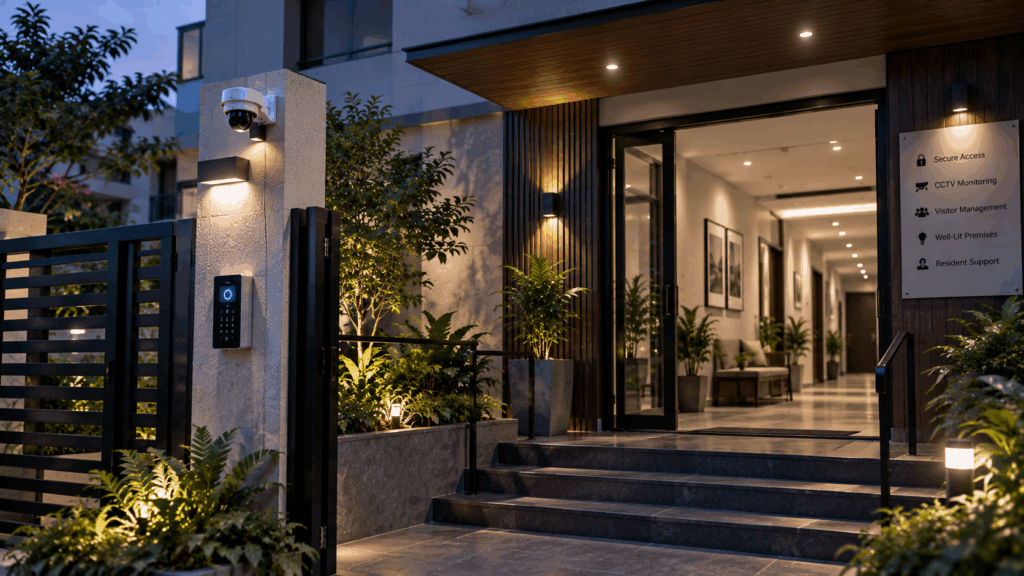
Safety in a PG is not created by one security guard or one CCTV camera. It comes from several operational systems working together. Tenant verification, controlled access, staff accountability, emergency preparedness, complaint management, and clear communication all play a role.
Why Women’s Safety in PGs Needs More Than a Security Guard
A security guard at the entrance is an important part of property security. However, physical presence alone does not create a complete safety system.
A PG is a shared living environment. Residents, visitors, delivery personnel, maintenance workers, housekeeping staff, brokers, and property employees may all interact with the premises. As occupancy grows, keeping track of these interactions through informal methods becomes difficult.
The same applies to tenant verification. A property needs reliable information about who is living there and which room or bed is assigned to them. RentOk’s The PG Owner’s Guide to Tenant Background Verification in 2026 provides a deeper look at why verification should be treated as part of responsible property management, rather than just another document to collect.
A safer PG should therefore think about the entire resident journey:
- Before move-in: The property should have a clear process for identity verification, documentation, agreements, and other applicable onboarding requirements.
- During the stay: Management should have defined rules for visitors, staff access, complaints, and communication with residents.
- During an emergency: Residents should know who to contact and where to find important emergency information without searching through old messages.
- After a complaint: A concern should be recorded, assigned, followed up, and closed properly instead of disappearing inside a personal WhatsApp conversation.
These may look like separate activities. In reality, they form one larger safety and management system.
Safety Starts Before a Tenant Gets the Keys
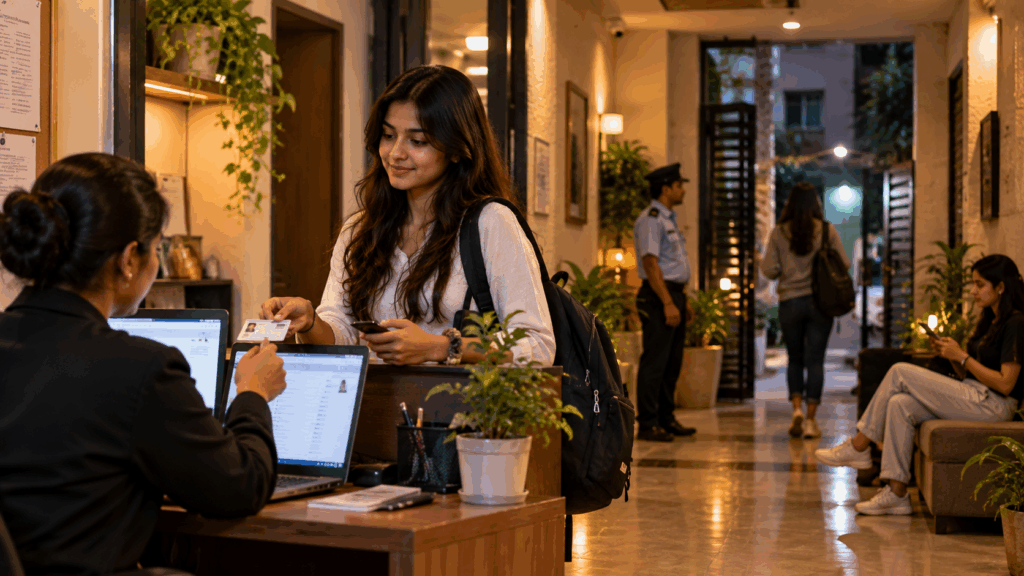
One of the simplest ways for a PG to improve safety is to take onboarding seriously.
When a tenant moves into a property, management should maintain a clear record of who is occupying the room or bed. This becomes particularly important in PGs because several residents may share common spaces with people they have never met before.
Tenant verification is not about treating every new resident with suspicion. It is about creating a consistent process that establishes identity and maintains relevant records. Depending on the location and applicable requirements, this may include identity verification, KYC, police verification, rental documentation, and other information.
RentOk’s Digital KYC and Police Verification: State-wise Compliance in India also explains how verification connects with safety, accountability, traceability, and organized property operations.
A professional onboarding process should make it clear:
- What information is required: Residents should know which documents and details are needed instead of being asked for different information by different employees.
- Why the information is being collected: Clear communication makes verification feel like part of a professional process rather than an unnecessary hurdle.
- Where the information is maintained: Important tenant records should not depend on one employee’s phone, personal email, or physical folder.
- What happens next: Residents should know whether their verification is pending, completed, or requires additional information.
The objective is simple. Every tenant should enter the property through a process that creates clarity for both the resident and the management team.
Who Is Entering the Property?
A resident may know the people who live on her floor. She may recognize the security guard and regular housekeeping staff. But PGs also receive visitors, delivery agents, technicians, vendors, brokers, and other people who may not be familiar to residents.
This makes access management an important part of women’s safety.
A property should have clear rules around who can enter, when visitors are permitted, which areas they can access, and how visitor movement is handled. The exact system can differ from one property to another. The underlying principle remains the same: access should be intentional, not invisible.
This becomes even more important in larger PGs. Management may not personally know everyone entering the premises throughout the day.
A professional property can establish simple operational practices such as:
- Clear visitor protocols: Visitors should follow defined rules instead of entering residential areas without any record or supervision.
- Defined staff access: Maintenance and housekeeping employees should have clear responsibilities and appropriate access to resident spaces.
- Resident awareness: Tenants should understand visitor policies from the beginning, so there is less confusion when situations arise.
- Regular review: Access procedures should be checked periodically rather than assuming an old process is still working effectively.
These measures cannot eliminate every possible risk. They can, however, create better visibility and stronger control over daily property operations.
CCTV Is Useful Only When It Actually Works
CCTV is one of the first things families ask about when they visit a PG. But saying “we have CCTV” should not be the end of the conversation.
A camera that is poorly positioned, not functioning, blocked by an obstruction, or not maintained properly does little for practical security. Cameras should also be placed thoughtfully in appropriate common and access areas while respecting resident privacy.
The purpose is not to monitor residents constantly. It is to improve visibility in areas where access, movement, or security incidents may need to be reviewed.
Operators should regularly check whether:
- Important cameras are functioning: Entrances, access points, and relevant common areas should have usable coverage where appropriate.
- Recording systems are maintained: Footage should be handled by authorized personnel and maintained according to the property’s policies and applicable requirements.
- Blind spots are understood: Management should know where visibility is limited and assess whether additional measures are needed.
- Residents understand the system: Security measures should be communicated clearly without making residents feel that their privacy is being ignored.
This creates an important distinction between having a security feature and having a functioning security system.
The same principle applies to other property risks. RentOk’s Top 10 Landlord Risks: Identifying Hidden Risks in Your PG discusses how safety systems can create a false sense of security when equipment exists but processes around it are weak or poorly maintained.
The Area Around the PG Matters Too
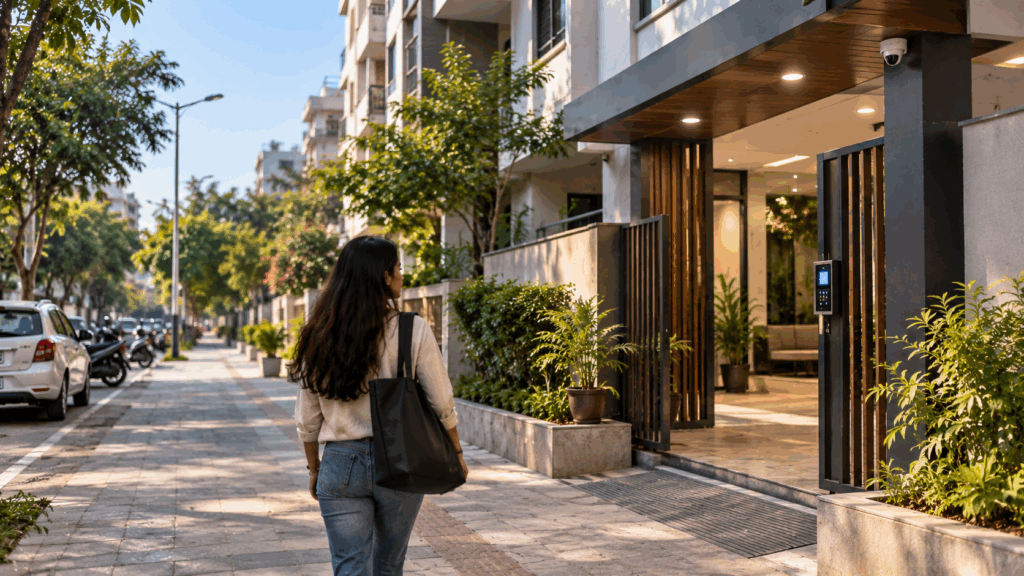
A property can have controlled entry, CCTV, and security staff and still leave residents uncomfortable if the area immediately outside is poorly lit or difficult to navigate after dark.
For a student returning from college or a professional coming back from work, the journey does not begin at the PG gate. The street outside, parking area, entrance pathway, lift lobby, and surrounding access points are all part of the resident’s everyday experience.
This is why safety assessments should look beyond the building itself.
Operators can periodically examine practical issues such as lighting around entrances, visibility near parking areas, access from the main road, and whether residents have a clear contact for property-related emergencies.
A PG cannot control everything that happens outside its premises. It can, however, understand the environment around the property and help residents navigate the property itself more safely.
Small improvements can matter. Better lighting, a clearly visible entrance, functioning access systems, and staff presence can make a property feel significantly more organized.
What Happens When a Resident Raises a Concern?
This may be one of the most important questions a PG owner can ask.
A resident may feel uncomfortable about a visitor, report inappropriate behaviour, raise a concern about an unknown person, or simply tell management that something does not feel right. The first response can influence whether that resident feels heard and supported.
A complaint system therefore needs more than a phone number.
There should be a defined process for receiving, recording, assigning, and following up on complaints. Staff should know who owns the issue. Residents should not have to explain the same concern repeatedly to different people.
RentOk’s How to Handle Maintenance Requests in Your PG shows why structured complaint workflows matter as properties grow. The same operational principle applies to safety-related concerns: visibility and accountability matter.
A professional complaint process should provide:
- Acknowledgement: The resident should know that the concern has been received and is being looked into.
- Responsibility: Someone from the management team should own the issue rather than passing it between employees.
- Follow-up: Residents should receive appropriate updates when a concern requires investigation or further action.
- Documentation: Important incidents should have a reliable record so management can identify recurring problems and improve processes.
A structured complaint system does not mean every concern will have an immediate solution. It means residents know that their concerns are not being ignored.
Emergency Information Should Be Easy to Find
Most properties have emergency numbers somewhere. The real question is whether a resident can find them when she actually needs them.
Emergency information should be easy to access and understood by both residents and staff. New tenants should know whom to contact for urgent property-related issues and where security assistance is available.
This becomes especially important for residents who are new to the city. Someone who has arrived from another state may not know the neighbourhood, nearby services, or even the internal layout of the property.
A practical onboarding process can include:
- Property emergency contacts: Residents should know who handles urgent property-related issues and how to reach them.
- Basic emergency procedures: Important evacuation or building-specific procedures should be explained rather than assumed.
- Security contacts: Residents should know where to reach the security desk, manager, warden, or other responsible team member.
- Important property information: Key rules and emergency instructions should be available without requiring residents to search through old conversations.
The goal is not to overwhelm a new tenant with a long list of rules. It is to make important information available before it becomes urgent.
Train the People Who Manage the Property
Technology can improve visibility, but people still determine how a safety concern is handled.
A guard may be the first person a resident approaches. A property manager may receive the first complaint. A housekeeping employee may notice an unusual situation. A warden or floor manager may be the person a resident trusts enough to speak to.
That makes staff training an important part of the safety framework.
Employees should understand the property’s access rules, escalation procedures, complaint-handling expectations, and boundaries around resident privacy. They should also know when an issue needs to be escalated rather than handled casually.
This becomes particularly important when employees work in shifts. A resident should not receive completely different responses depending on which person happens to be at the property that evening.
RentOk’s Tracking Staff Performance: From Cleaning to Security] explores this wider operational issue. Staff performance affects the resident experience far beyond housekeeping. Security, responsiveness, and consistency all influence how professionally a property is perceived.
Consistency builds trust.
Safety Should Be Visible Without Becoming Intrusive
There is also a balance that PG owners need to maintain.
A property should be structured enough to protect residents. At the same time, residents should still feel that they have privacy and independence. Excessive monitoring, unnecessary data collection, or intrusive rules can create a different kind of uncomfortable living environment.
The objective should be responsible property management.
That means collecting information that is genuinely relevant, restricting access to sensitive tenant records, communicating policies clearly, and using security measures appropriately.
It also means understanding that women living independently are residents, not people whose everyday lives need to be controlled.
The strongest safety systems are not necessarily the most restrictive ones. They are the ones where residents understand the rules, management understands its responsibilities, and everyone knows what happens when something goes wrong.
What Should Parents and Students Check Before Choosing a PG?
Safety is not only the responsibility of the property owner. Prospective tenants and their families can also ask practical questions before signing an agreement.
Instead of only asking about rent, food, Wi-Fi, and room size, students can ask management how the property handles verification, visitors, emergencies, complaints, and security.
Some useful questions include:
- How are tenants and staff verified? This helps students understand whether the property has a structured onboarding process or simply collects documents informally.
- Who can enter the property? Ask about visitor policies, staff access, and how movement into residential areas is managed.
- What happens if I have a concern? A clear answer can reveal more about management than simply being told that the property is “secure.”
- Is the CCTV functional? If security monitoring is advertised, it is reasonable to ask whether the system is maintained.
- Who do I contact during an emergency? Residents should know whether there is an on-site manager, security desk, warden, or other support contact.
These questions cannot guarantee a completely risk-free living environment. Nothing can. They can, however, help students understand whether a property has thought seriously about safety.
Small Operational Changes Can Make a Big Difference
Women’s safety in PGs does not always require a complete transformation overnight. Meaningful improvements can begin with small operational changes that are implemented consistently.
A property can start by reviewing its existing processes. This is better than assuming everything is working simply because no major incident has occurred.
That review can include tenant verification, visitor management, staff access, CCTV maintenance, lighting, emergency information, complaint handling, and communication. The important part is not creating another checklist. It is identifying where the current process depends too heavily on memory, verbal instructions, or individual employees.
This is where organized property management becomes important.
When information is scattered across registers, spreadsheets, WhatsApp chats, and separate documents, even responsible teams can struggle to respond quickly. As occupancy increases, these gaps become harder to manage.
Safety should therefore be treated as an ongoing operational responsibility rather than a one-time investment.
A property that regularly reviews its systems, listens to residents, maintains security infrastructure, and responds professionally to concerns is better positioned to create a supportive living environment.
How RentOk Helps PGs Build More Structured Operations
RentOk helps PG and co-living operators bring important property workflows into a more organized digital system. Tenant information, communication, complaints, payments, and property operations can be managed with greater visibility instead of depending entirely on scattered spreadsheets, paper records, and individual conversations.
This becomes particularly useful when a property has many residents or operates across multiple locations. Management can maintain better visibility over tenant records, occupancy, complaints, and day-to-day workflows from a connected system.
RentOk’s tenant verification and KYC workflows can also help operators create a more structured onboarding process. This does not replace physical security, emergency services, or responsible staff practices. Instead, it provides the operational layer that helps management teams keep important information and workflows organized.
For a PG owner, the real benefit is not simply adding another software tool. It is creating repeatable processes that work for the next tenant, the next room, and eventually the next property.
Conclusion: A Safer PG Starts With Better Management
For a woman moving to a new city for college or work, a PG is not simply a commercial property. It is where she returns after a long day, keeps her belongings, builds a routine, and often experiences independent living for the first time. That makes safety an essential part of the property experience.
A safer PG is built through many small decisions. Proper tenant verification, responsible access management, maintained security systems, emergency preparedness, staff training, clear communication, and responsive complaint handling all contribute to that environment.
None of these measures can guarantee complete safety. They can, however, create a more organized property where management is prepared to respond rather than simply react.
For PG owners, improving these systems is about more than compliance or reputation. It is about creating a property where residents and their families can place greater trust in the management behind their home away from home.
Ready to make your PG operations more organized and resident-focused? Explore RentOk and start your free trial today.
Frequently Asked Questions
Find answers to common questions about this topic
About the Author
Ishika Pannu
Ishika Pannu brings you the latest insights and easy-to-apply strategies in property management—helping you simplify renting and grow with RentOk.
You may also like these
Related Articles
1 min read
What to Do When Your Landlord Won’t Make Repairs
Written by
Posted on
Ishika Pannu
Sep 12, 2026
1 min read
Can Landlords Ban Pets in Rental Properties? What Indian Law Says
Written by
Posted on
Ishika Pannu
Sep 11, 2026
1 min read
Why You Should Always Insist on a Registered Rent Agreement
Written by
Posted on
Ishika Pannu
Sep 10, 2026
1 min read
How Landlords Must Legally Handle Your Personal Data During Verification
Written by
Posted on
Ishika Pannu
Sep 10, 2026
1 min read
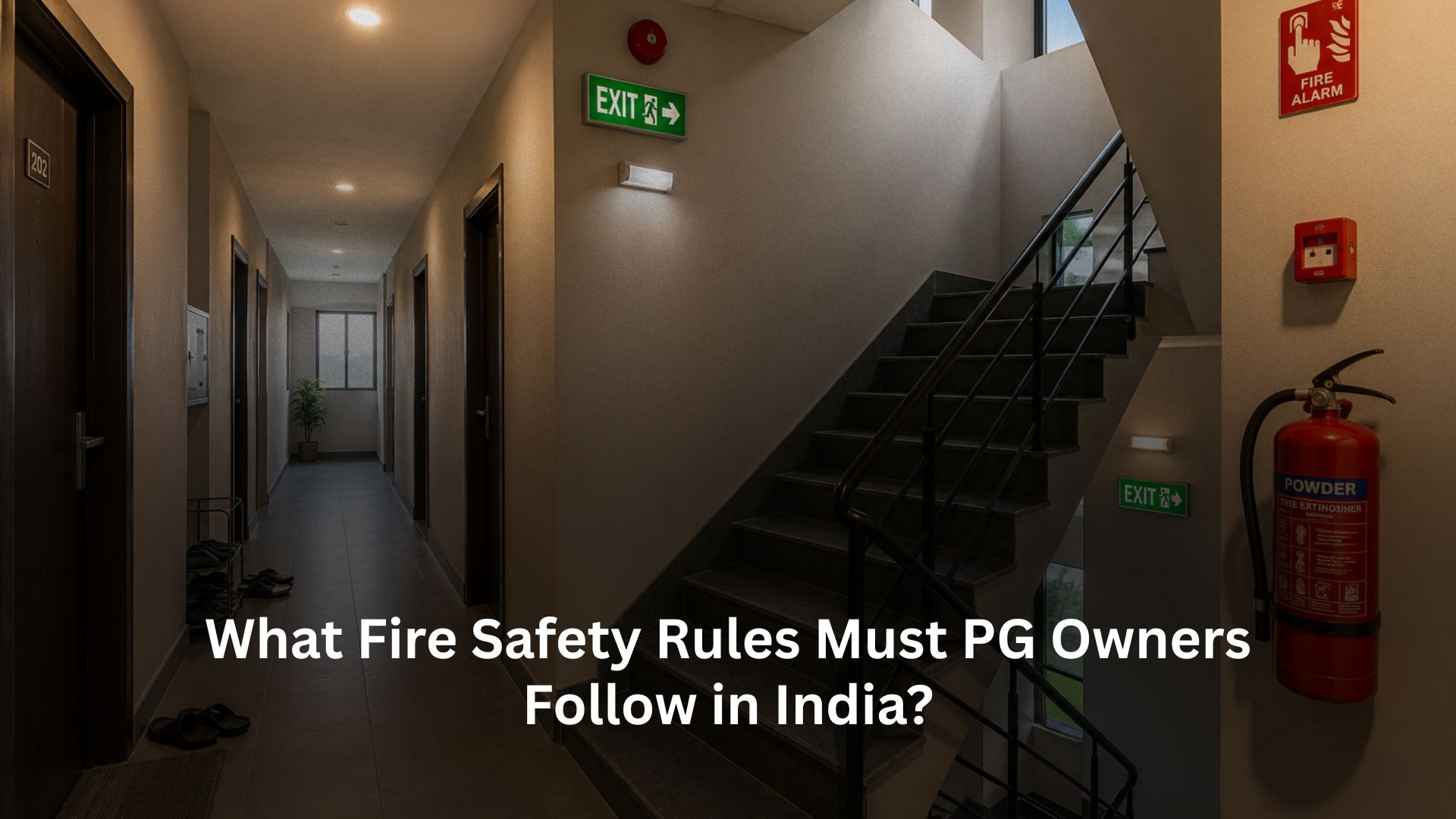
What Fire Safety Rules Must PG Owners Follow in India?
Written by
Posted on
Ishika Pannu
Sep 2, 2026
1 min read
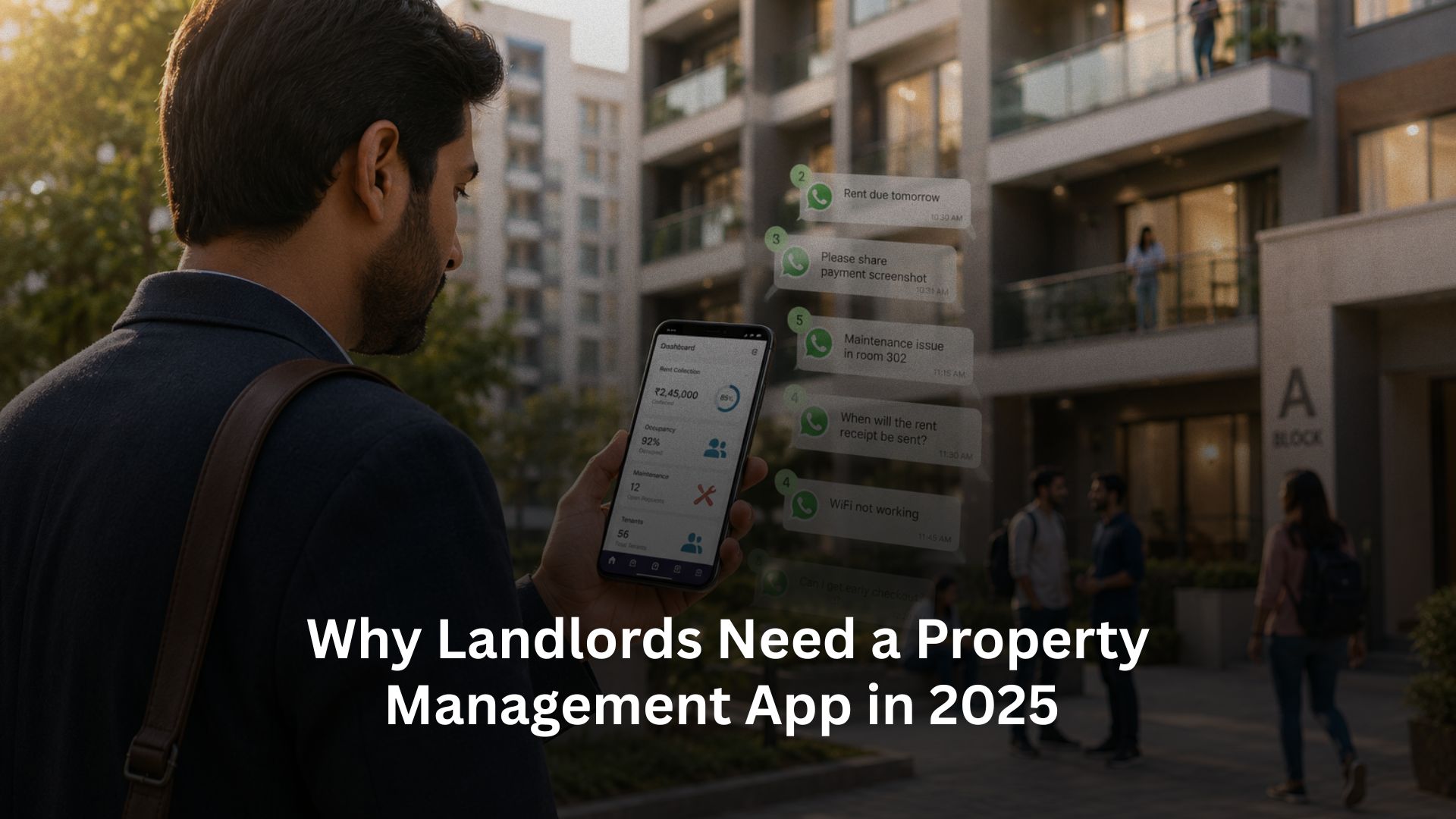
Why Landlords Need a Property Management App in 2025
Written by
Posted on
Ishika Pannu
Sep 2, 2026
1 min read
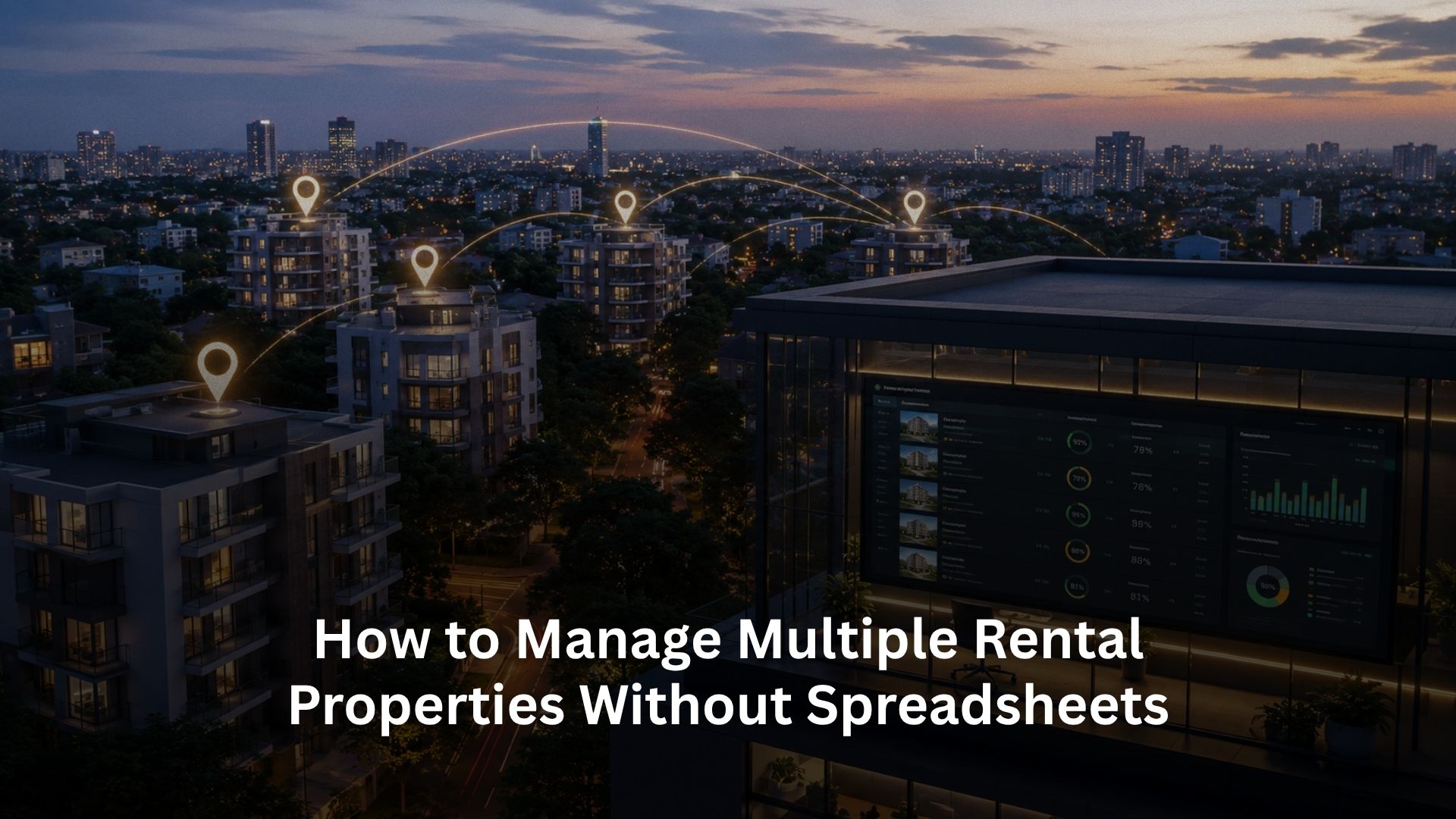
How to Manage Multiple Rental Properties Without Spreadsheets
Written by
Posted on
Ishika Pannu
Aug 31, 2026
1 min read
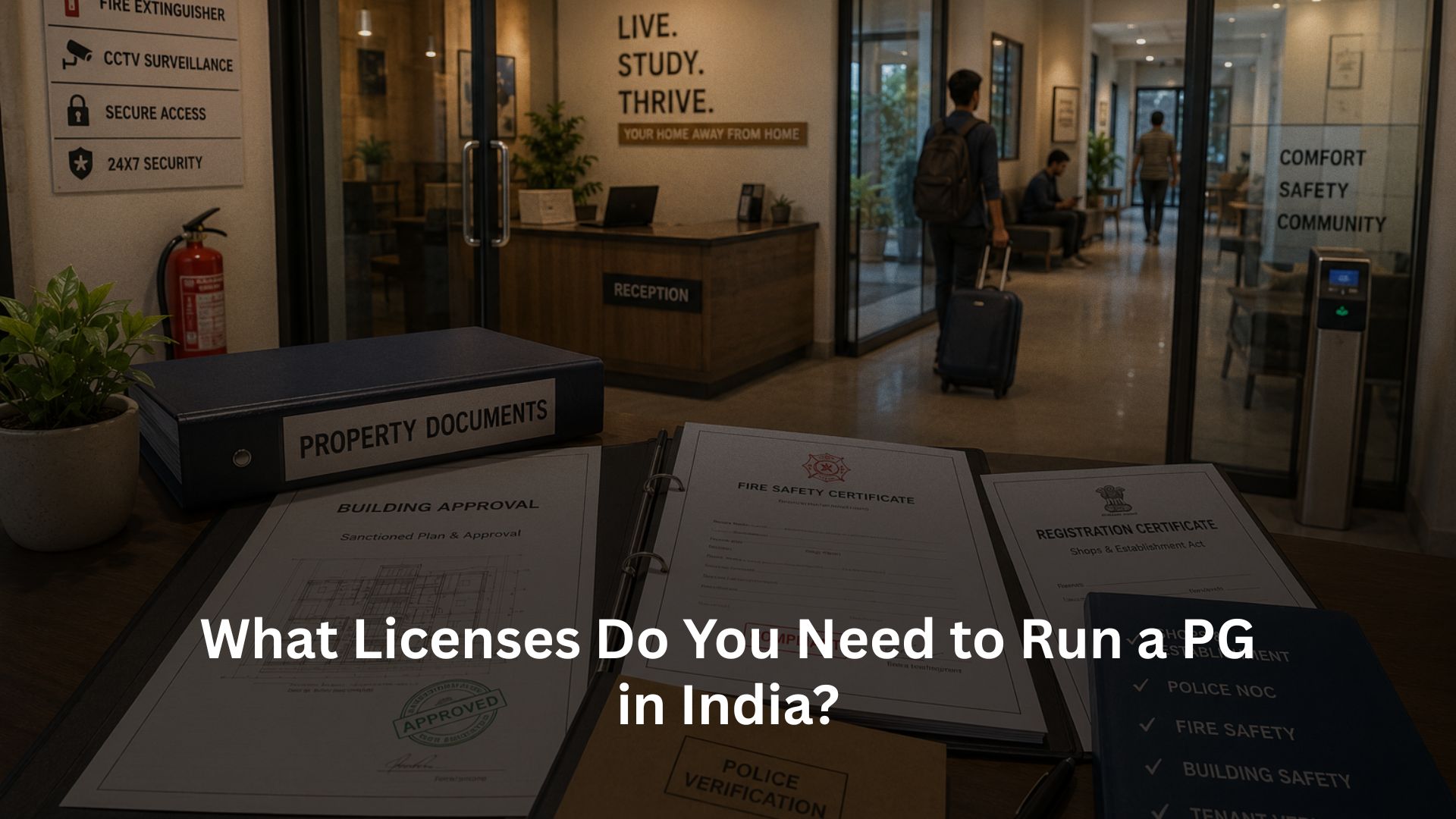
What Licenses Do You Need to Run a PG in India?
Written by
Posted on
Ishika Pannu
Aug 27, 2026
1 min read
How to Start a PG Business Legally in India: Step-by-Step Guide
Written by
Posted on
Ishika Pannu
Aug 27, 2026
1 min read
What Revenue Leaks Look Like in Rental Businesses
Written by
Posted on
Ishika Pannu
Aug 17, 2026
Stay ahead in property management with expert insights
Join thousands of property managers receiving exclusive tips delivered straight to your inbox.
Browse posts by category
Case Study
Cost of Living
Growth
Legal
Market Trends
News
Pg owner app
Property Management
Property Tax
Tech
RentOk
The easiest way to rent and manage your PGs and hostels.
Grievance Officer
Get the app


Contact us
hello@eazyapp.tech
HQ Office
COGROW, BASEMENT F-12/8A
BESIDE HOUSE OF STYLE SALON, SECTOR 28, DLF PHASE 1
GURUGRAM, HARYANA - 122002
South India Office
LUMIODESK COWORKING, 2ND FLOOR, 40, 14TH MAIN RD
BESIDE MC DONALD, 7TH SECTOR, HSR LAYOUT
BENGALURU, KARNATAKA - 560102
©️ 2026 EazyApp Tech Pvt Ltd. All rights reserved


