Tech
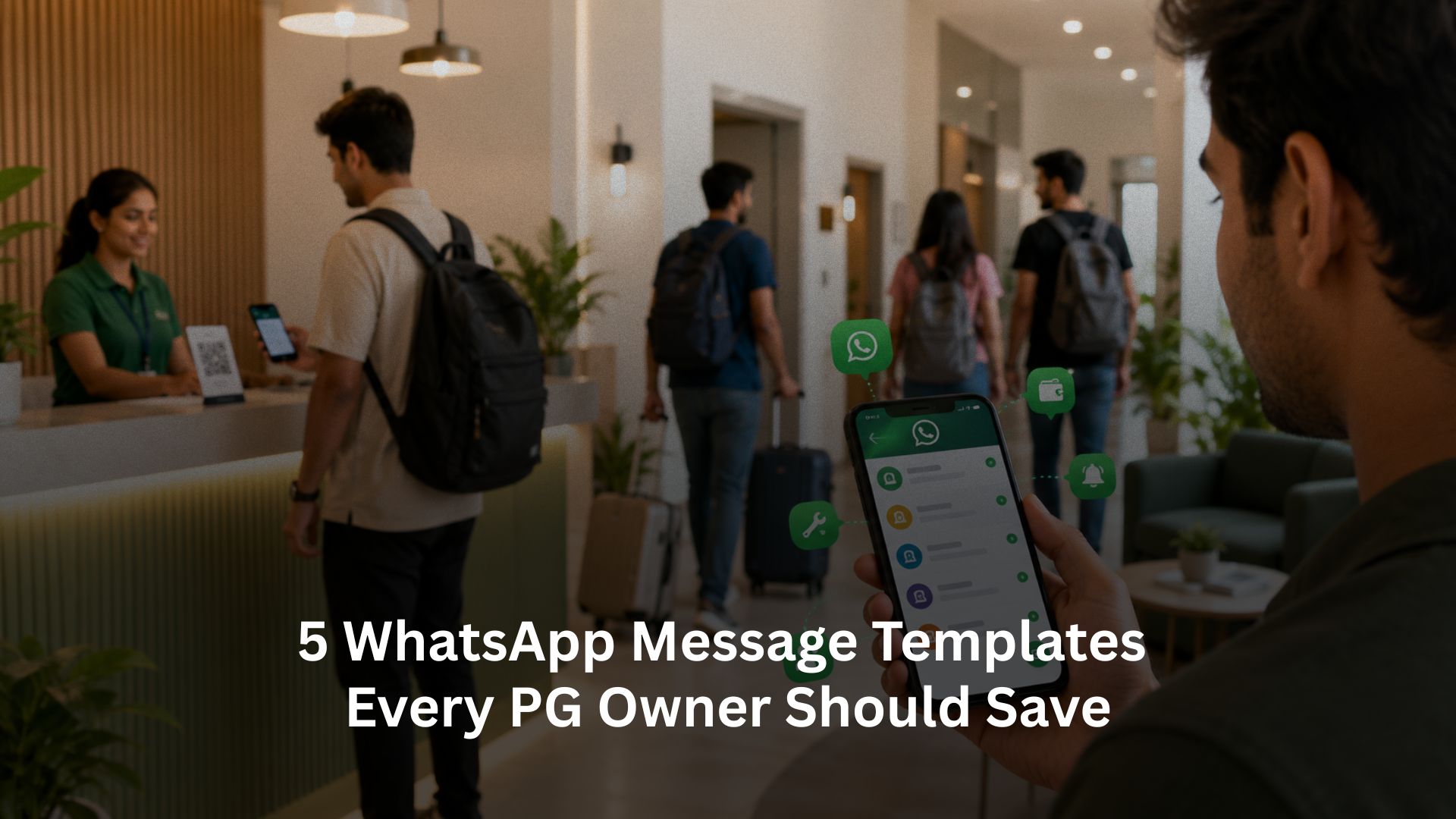
5 WhatsApp Message Templates Every PG Owner Should Save

Written by
Ishika Pannu
Read Time
11 min read
Posted on
July 7, 2026
Overview
Overview
5 WhatsApp Message Templates Every PG Owner Should Save
Running a PG or co-living space isn’t just about filling rooms, it’s about managing hundreds of conversations every month.
“Has my rent been received?”
“The Wi-Fi isn’t working.”
“Can my friend stay overnight?”
“What documents do I need before moving in?”
If you’re replying to the same questions every day, you’re not managing a property, you’re managing your WhatsApp.
As your occupancy grows, so does your inbox. What starts as a handful of daily chats quickly turns into dozens of payment reminders, maintenance updates, move-in instructions, visitor approvals, and policy clarifications. Before long, communication becomes one of the biggest operational bottlenecks.
The real problem isn’t the number of messages, it’s the lack of consistency. Different team members reply in different ways, important details get missed, and tenants end up asking the same questions repeatedly. A simple rent reminder becomes three follow-up messages. A maintenance request gets lost in a busy group chat. Small communication gaps slowly turn into delayed payments, unnecessary calls, and frustrated residents.
The most successful PG operators have solved this with a surprisingly simple habit: they don’t write the same message twice.
Instead, they maintain a library of ready-to-use WhatsApp templates for the conversations they have every single day. With a few taps, they can send clear, professional, and consistent messages that save time, reduce errors, and create a smoother tenant experience.
Whether you manage one PG or multiple properties, these five WhatsApp message templates will help you communicate faster, stay organized, and spend less time typing, and more time growing your business.
Why Standardized WhatsApp Messages Matter More Than You Think
Many operators assume communication is simply about replying to tenants whenever required. In reality, communication is an operational system that directly influences rent collection, complaint resolution, onboarding, and tenant satisfaction.
For example, a poorly written rent reminder may get ignored because it lacks urgency or clarity. Similarly, an incomplete move-in message can lead to repeated questions from new tenants throughout their first week. While each conversation may seem minor, these small inefficiencies add up quickly across dozens or even hundreds of residents.
Standardized communication helps eliminate this inconsistency by ensuring that every important interaction follows the same professional format.
Some of the biggest operational advantages include:
- Reduced manual effort across the team: Instead of drafting the same messages every day, staff members can quickly send pre-approved templates that maintain consistency while saving valuable time.
- Better tenant experience: Clear and well-structured communication reduces confusion, sets expectations early, and helps tenants feel that the property is professionally managed.
- Faster response times: When commonly used messages are readily available, managers can respond almost instantly without compromising the quality of communication.
- Consistent brand image: Whether a tenant speaks with the owner, receptionist, or property manager, the communication style remains uniform and reflects the professionalism of the property.
Rather than viewing WhatsApp as just another messaging app, successful operators use it as an extension of their property management process.

Template 1: Rent Reminder Message
Rent reminders are among the most frequently sent messages in any PG. However, many reminders are either too casual to create urgency or too aggressive, which can negatively impact tenant relationships.
A well-written reminder should be polite, direct, and easy to understand. It should clearly mention the payment due date, pending amount, and the next step without sounding confrontational.
Template
Hello [Tenant Name], this is a reminder that your rent for [Month] is due on [Due Date].
We request you to complete the payment on or before the due date to avoid any late charges or inconvenience.
If you’ve already made the payment, please ignore this message.
This type of reminder works because it balances professionalism with courtesy. It informs the tenant without creating unnecessary pressure and reduces follow-up conversations that often occur when reminders are vague.
When should you send rent reminders?
Instead of sending a single message on the due date, consider creating a simple communication schedule.
- Send the first reminder two to three days before the due date so tenants have enough time to plan their payment.
- Send a second reminder on the due date itself, keeping the tone friendly while reinforcing the payment timeline.
- If payment is still pending, send a follow-up reminder after the due date that politely mentions any applicable late payment policy.
This structured approach generally improves payment discipline while reducing the number of individual follow-up calls made by the management team.
Template 2: Welcome Message for New Tenants
The onboarding experience shapes a tenant’s first impression of your property. A thoughtful welcome message not only makes new residents feel comfortable but also answers common questions before they even need to ask them.
Instead of sharing information across multiple chats, provide everything in one organized message that tenants can easily refer back to whenever required.
Template
Welcome to [Property Name], [Tenant Name]!
We’re delighted to have you with us. Your room is ready!🥳
If you need any assistance, feel free to reach out to our management team.
Please remember to complete any pending documentation and save this number for future updates.
We hope you have a comfortable stay.
Along with the welcome message, it’s helpful to share important operational details that tenants usually ask about during their first few days.
You can include information such as:
- Wi-Fi credentials and common facility timings so residents can settle in without repeatedly contacting the management team.
- Emergency contact numbers and support timings to ensure tenants know exactly whom to reach out to whenever they require assistance.
- House rules, visitor policies, and meal schedules so expectations are communicated clearly from the very beginning, reducing future misunderstandings.
Providing these details proactively creates a smoother onboarding experience while significantly reducing repetitive queries for your staff.
Template 3: Maintenance Request Acknowledgement
One of the biggest reasons tenants become frustrated isn’t because a maintenance issue takes time to resolve. It’s because they don’t know what’s happening after they’ve reported it. A simple acknowledgement message can make a significant difference by assuring tenants that their concern has been recorded and is being addressed.
Rather than waiting until the issue is resolved to communicate, acknowledge the complaint immediately and provide a realistic expectation for the next steps.
Template
Hello [Tenant Name], thank you for informing us. We have successfully received your maintenance request regarding [Issue].
Our team is reviewing it, and we’ll update you once the work has been scheduled.
Thank you for your patience, and we’ll try to resolve it as quickly as possible.
Sending this message immediately after receiving a complaint helps create transparency and reduces repeated follow-up messages like “Has anyone checked my complaint?” or “When will this be fixed?”
To make maintenance communication even more effective, remember to:
- Set realistic timelines instead of making unrealistic promises. If a repair is expected to take a day or two, communicate that honestly rather than promising immediate resolution and missing expectations.
- Keep tenants informed if there are delays. A short update explaining why the work is taking longer often prevents frustration more effectively than staying silent.
- Confirm once the issue has been resolved. Closing the communication loop assures tenants that their concerns are taken seriously and also helps management verify that the work has been completed satisfactorily.
Structured maintenance communication builds trust because tenants feel informed throughout the process rather than being left guessing.
Template 4: Property Announcement or Notice
Every property needs to communicate operational updates from time to time. Whether it’s scheduled maintenance, housekeeping changes, water supply interruptions, or festival celebrations, announcements should be concise, informative, and easy to understand.
Instead of sending multiple fragmented messages, prepare one structured update that includes all the necessary details.
Template
Dear Residents, please note that [Announcement] on [Date] between [Timings].
We request your cooperation and apologize for any inconvenience caused.
Thank you.
Announcements like these help reduce confusion because every tenant receives the same information at the same time.
Some of the most common updates that can be communicated using this template include:
- Scheduled maintenance activities such as lift servicing, electrical repairs, plumbing work, or internet maintenance that may temporarily affect residents.
- Housekeeping or operational schedule changes so tenants know in advance if cleaning, laundry, or meal timings are being adjusted.
- Safety guidelines and emergency notices whenever there are weather alerts, security updates, or situations that require residents to take precautionary measures.
A structured announcement also minimizes repetitive questions since most tenants receive the information before they need to ask for it.
Template 5: Friendly Payment Confirmation
Payment confirmation messages are often overlooked, but they play an important role in building tenant confidence. Once a tenant completes their payment, acknowledging it promptly reassures them that the transaction has been successfully recorded.
It also reduces unnecessary calls or messages asking whether the payment has been received.
Template
Hello [Tenant Name], we’ve successfully received your rent payment for [Month]. Your transaction has been updated in our records.
If you need a payment receipt or have any questions, please don’t hesitate to reach out.
This simple message creates a positive post-payment experience while improving financial transparency between management and tenants.
As part of your payment communication process, it’s also useful to:
- Share digital payment receipts whenever possible. This gives tenants documented proof of payment while reducing future disputes regarding transaction history.
- Mention the billing period clearly. Including the relevant month or payment cycle prevents confusion, especially for tenants who make advance or partial payments.
- Encourage tenants to reach out if they notice discrepancies. Addressing payment concerns early is far easier than resolving them weeks later during account reconciliation.
These small communication practices contribute to a more professional payment experience and help strengthen tenant trust over time.
Common WhatsApp Communication Mistakes PG Owners Should Avoid
Having templates is only one part of effective communication. The way those templates are used matters just as much. Even well-written messages can lose their impact if they’re sent inconsistently or without considering the tenant’s experience.
Some common mistakes that reduce communication effectiveness include:
- Sending messages at inappropriate times. Frequent late-night notifications or repeated reminders within short intervals can irritate tenants instead of encouraging action.
- Using different communication styles across staff members. Inconsistent messaging often creates confusion because tenants receive varying instructions depending on whom they speak with.
- Sharing too much information in a single message. Long, unstructured texts are more likely to be ignored than well-organized messages that highlight only the most relevant information.
- Not maintaining communication records. Without proper tracking, managers may unknowingly send duplicate reminders, miss important follow-ups, or struggle to resolve disputes later.
As your property grows, these seemingly minor communication issues begin affecting operational efficiency, staff productivity, and overall tenant satisfaction. Establishing a standardized communication process early helps prevent these challenges from becoming larger operational problems.

How RentOk Helps Simplify Tenant Communication
As occupancy increases, managing tenant communication manually becomes increasingly difficult. Rent reminders, onboarding messages, maintenance updates, payment confirmations, and operational announcements often get scattered across personal chats, WhatsApp groups, spreadsheets, and handwritten notes. This not only consumes valuable time but also increases the chances of missed follow-ups and inconsistent communication.
RentOk helps PG owners and property managers bring these conversations into a more structured workflow. Instead of depending on manual coordination every day, operators can manage tenant communication alongside their daily property operations through a centralized platform.
With RentOk, property managers can streamline:
- Rent reminders and payment tracking so tenants receive timely communication while managers get better visibility into pending dues and completed payments without maintaining separate records.
- Tenant onboarding and move-in coordination by keeping resident information, documentation, and communication organized from the very first day of occupancy.
- Complaint management and maintenance updates by maintaining better visibility into reported issues, their progress, and resolution timelines, reducing unnecessary follow-up conversations.
- Operational announcements and tenant notifications so important updates reach residents consistently without relying on multiple disconnected communication channels.
As your property expands, communication should become more organized, not more complicated. By integrating communication with tenant management, rent collection, complaint tracking, and occupancy management, RentOk helps operators reduce manual work while delivering a more professional experience to every resident.
If you’re looking to strengthen other areas of your operations, you can also explore our guides on tenant onboarding, rent collection best practices, complaint management, and property management software to build more efficient workflows across your PG or co-living business.
Conclusion
Strong communication isn’t about sending more WhatsApp messages, it’s about sending the right message at the right time. Simple, well-crafted templates can reduce repetitive work, improve payment discipline, streamline onboarding, and build stronger relationships with tenants throughout their stay.
As your property grows, having a standardized communication process becomes just as important as managing occupancy or collecting rent. The more consistent your communication is, the easier it becomes to deliver a professional tenant experience while keeping day-to-day operations under control.
Looking to streamline tenant communication and automate everyday operational workflows? Explore RentOk’s WhatsApp Communication features to simplify rent reminders, tenant updates, and property notifications, all from one centralized property management platform.
About the Author
Ishika Pannu
Ishika Pannu brings you the latest insights and easy-to-apply strategies in property management—helping you simplify renting and grow with RentOk.