
Legal
What Can I Ask a Prospective Tenant Before Renting My Property?

Written by
Ishika Pannu
Read Time
12 min read
Posted on
October 14, 2026
Overview
Overview
What Can I Ask a Prospective Tenant Before Renting My Property?
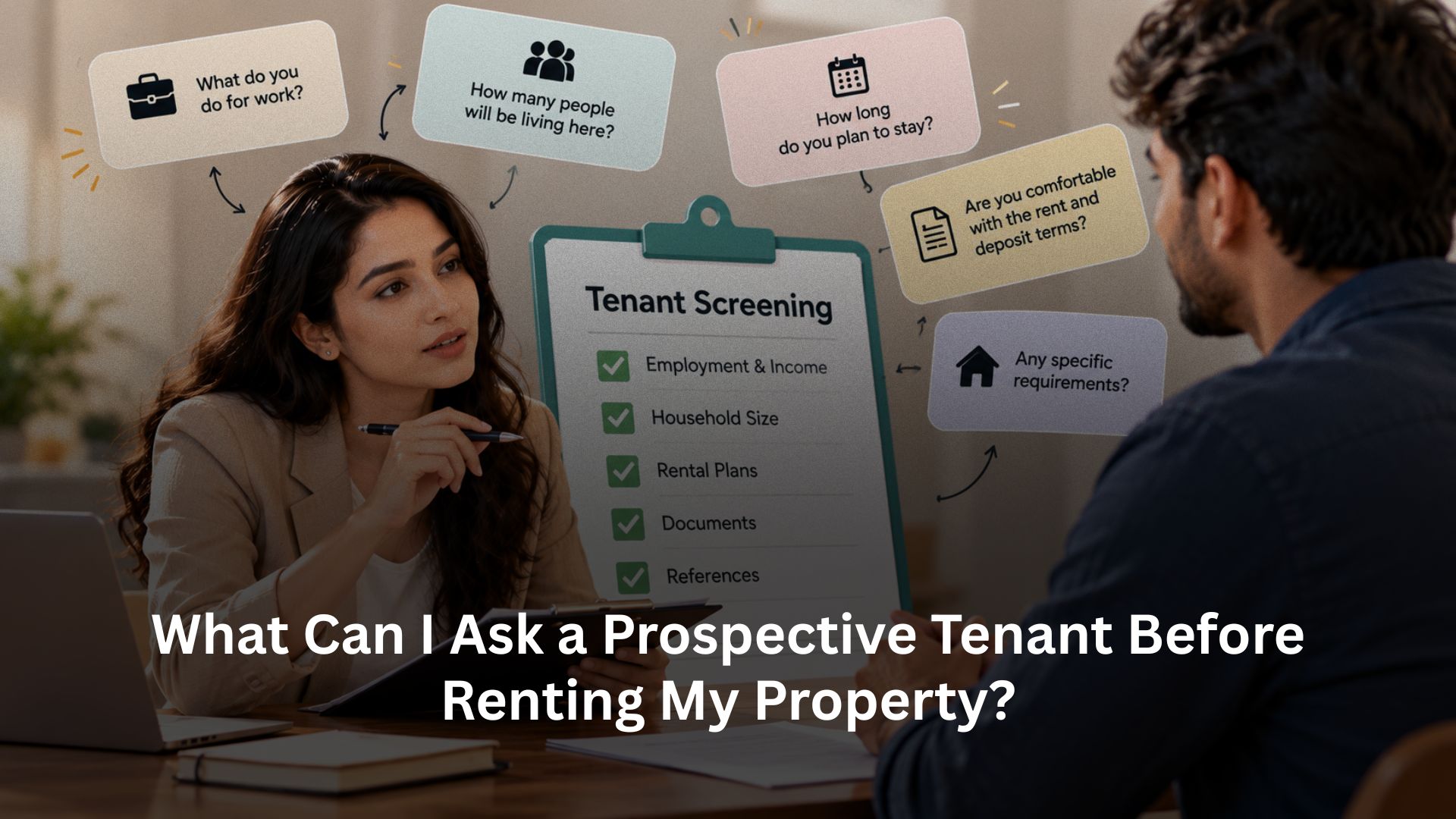
Finding a tenant is about more than filling a vacant property. Landlords need to consider rent payment reliability, occupancy requirements, documentation, and the terms of the tenancy before handing over the keys. Asking the right questions helps establish expectations early and reduces the chances of avoidable disputes later.
However, effective tenant screening is not about asking as many questions as possible. It involves collecting relevant information, checking important details, and evaluating applicants consistently. For landlords in India, this process should work alongside appropriate identity verification, a clear rental agreement, and any applicable local verification requirements.
What Questions Should You Ask About a Tenant’s Financial Stability?
A tenant’s financial circumstances can influence their ability to meet rental obligations, but employment status alone does not determine whether someone will be a reliable tenant. Salaried professionals, self-employed individuals, students, and people working on contracts may all have different financial arrangements.
The objective is to establish whether the prospective tenant understands the rental terms and has a reasonable plan for meeting their obligations. Begin by explaining the rent, security deposit, payment schedule, utility charges, and other applicable costs.
Questions worth asking include:
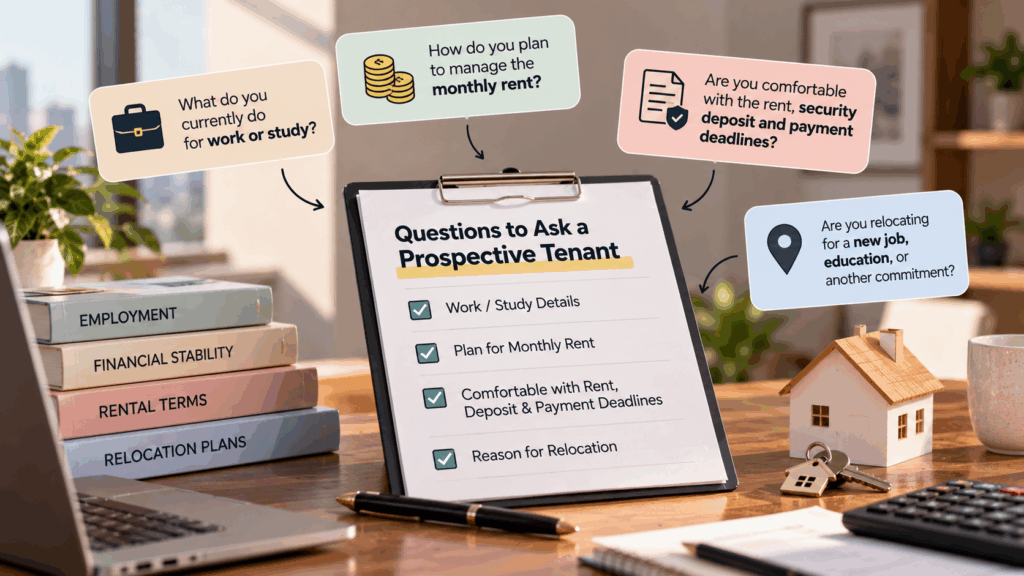
- What do you currently do for work or study? This provides context about the applicant’s circumstances and helps establish whether the property’s location suits their daily commute or educational requirements.
- How do you plan to manage the monthly rent? This opens a practical discussion about payment arrangements without requiring unnecessary financial disclosures. If rent will be shared or supported by a family member, clarify how the arrangement will work.
- Are you comfortable with the rent, security deposit, and payment deadlines? Confirming these terms before signing helps prevent disagreements caused by different assumptions about payment dates or additional charges.
- Are you relocating for a new job, education, or another commitment? Understanding the reason for the move can help clarify the expected move-in date and whether the applicant anticipates any changes to their accommodation requirements.
How Should You Evaluate a Tenant’s Financial Answers?
Look for consistency rather than a particular job title or income level. A professional who has recently joined a company may not have several months of salary slips, while a student may depend on family support. Neither situation automatically makes the applicant unsuitable.
Where appropriate, request reasonable supporting information to clarify the proposed payment arrangement. Apply the same criteria to every applicant, and avoid making decisions based solely on assumptions about their profession or financial background.
Questions About Household Size and Long-Term Rental Plans
The number of occupants and the expected duration of stay can affect room allocation, maintenance planning, and the overall rental arrangement. These details are particularly important for furnished apartments, shared accommodation, PGs, and properties with specific occupancy conditions.
A landlord should establish who will occupy the property, whether the arrangement complies with applicable requirements, and what the tenant expects from the accommodation. The aim is to clarify the tenancy, not to investigate the applicant’s private life.
Consider asking these questions during the interview:
- How many people will be living in the property? Establishing the expected occupancy helps determine whether the arrangement fits the property’s capacity, safety requirements, and agreement conditions.
- How long do you expect to stay? This helps you understand whether the applicant is looking for short-term accommodation or a longer arrangement. Treat the answer as an estimate rather than a guarantee.
- Do you anticipate any changes in your accommodation requirements? Someone relocating for a temporary assignment may have different needs from a professional moving to the city for a long-term position.
- Do you have specific requirements regarding parking, furniture, or shared facilities? Clarifying these needs beforehand helps establish whether the property is suitable and reduces the likelihood of disagreements after move-in.
Why Should You Discuss Notice Periods Before Signing?
Consider a landlord renting a furnished flat to a professional who expects to stay for a year. Three months later, the tenant receives a transfer and wants to leave. The change may be genuine, but it can still create a vacancy and require the landlord to find another occupant.
This is why expected duration, notice periods, and early-exit conditions should be discussed before signing. Both parties should understand the agreed terms instead of relying on informal assurances.
RentOk’s guide on Managing Tenant Lock-in Periods Without Conflict explains how clear communication about lock-in clauses, notice periods, and deposit adjustments can help prevent disagreements during move-out.
What Can Landlords Legally Ask a Prospective Tenant in India?
Tenant screening should be based on legitimate rental requirements, applicable laws, and reasonable privacy practices. There is no single checklist that makes every question automatically permissible or impermissible across all rental arrangements in India. The legal position can depend on the relevant law, state, local requirements, and circumstances.
As a practical rule, ask questions that help establish the applicant’s identity, intended occupancy, ability to meet the agreed terms, or compliance with relevant verification requirements. Avoid collecting personal information simply because it is available.
What Information Is Relevant to Tenant Screening?
Depending on the property and applicable requirements, landlords may need to establish the following:
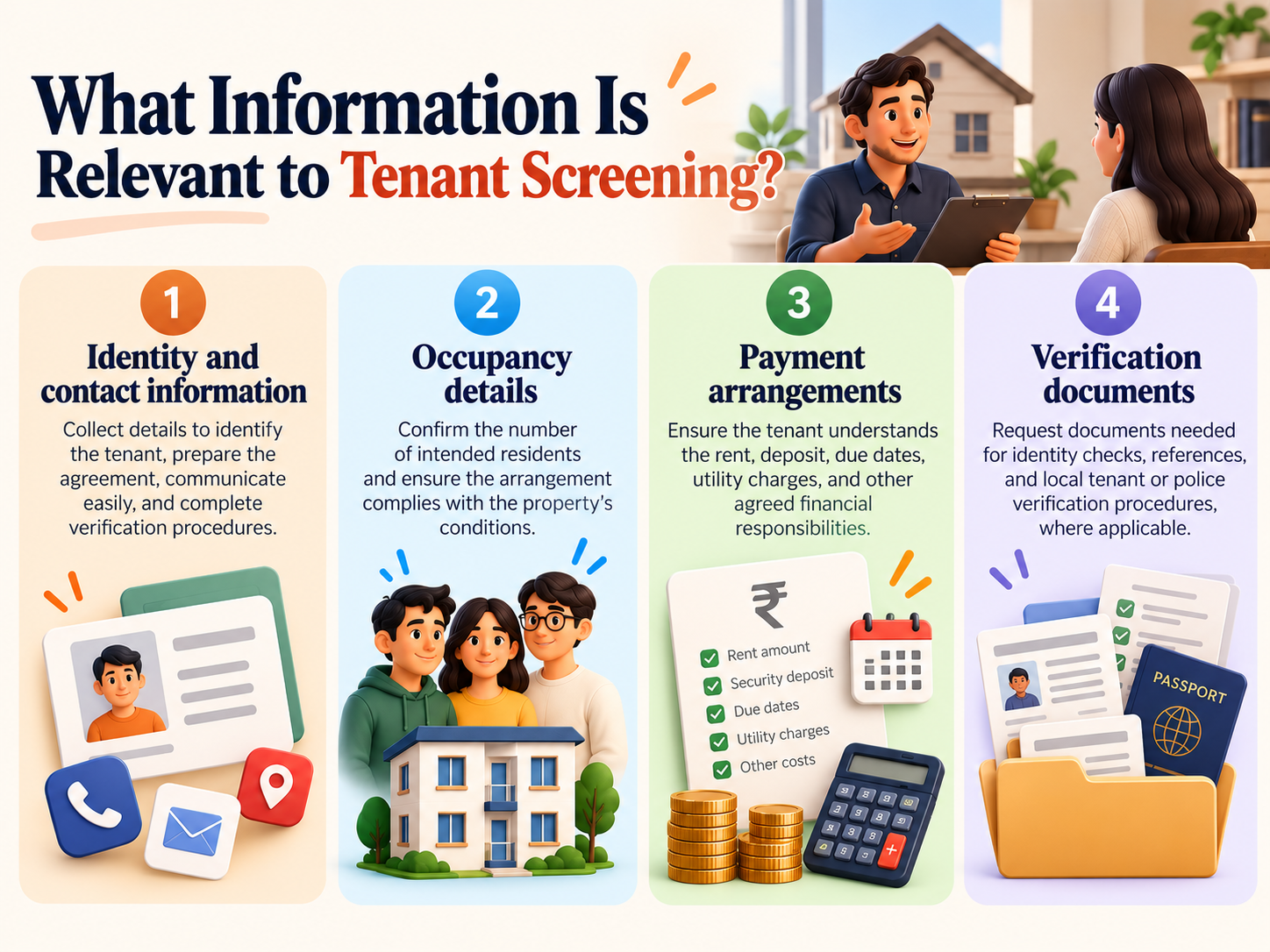
- Identity and contact information: Collect the details necessary to identify the contracting party, prepare the rental agreement, communicate about the tenancy, and complete relevant verification procedures.
- Occupancy details: Confirm the number of intended residents and whether the proposed arrangement complies with the property’s conditions and applicable requirements.
- Payment arrangements: Ensure that the tenant understands the rent, deposit, due dates, utility charges, and other agreed financial responsibilities.
- Verification documents: Request documents needed for relevant identity checks, references, and local tenant or police verification procedures, where applicable.
Identity verification is an important part of this process, but collecting a document and checking the information are not the same thing. Landlords should follow an appropriate verification procedure and handle personal information responsibly.
For a closer look at the process, read RentOk’s guide on How to Spot a Fake ID During Tenant Verification. It explains why relying on the appearance of an identity document alone can leave gaps in the screening process.
Which Questions Should Landlords Avoid?
Questions about religion, caste, private relationships, or unrelated medical history can be intrusive and may create discrimination risks. Unless a specific legal requirement makes particular information relevant, these details should not be used as substitutes for assessing whether an applicant can meet the tenancy’s actual requirements.
Instead, focus on information directly related to the rental arrangement. You can ask who will occupy the property without probing into private relationships. Similarly, you can request relevant identity documentation without demanding access to personal social media accounts or unrelated financial records.
Every question should have a clear purpose. Collect only the information you genuinely need, explain why it is required, and restrict access to the resulting records. A structured process makes screening more consistent while helping protect prospective tenants’ privacy.
Tenant Screening Red Flags to Watch For
A tenant interview can reveal potential concerns, but one unclear answer should not automatically determine the outcome. Applicants may be unfamiliar with rental procedures or may need time to arrange documentation. What matters is whether relevant concerns can be clarified through reasonable follow-up and appropriate verification.
Pay particular attention to inconsistencies involving identity, occupancy, payment arrangements, and the proposed agreement. These are more useful indicators than vague impressions about someone’s personality or background.
Some situations warrant closer attention:
- Repeated inconsistencies in information: If an applicant provides conflicting details about their identity, intended occupants, or proposed move-in date, ask for clarification and verify the relevant information before proceeding.
- Unwillingness to complete reasonable verification: Refusing to provide documentation genuinely required for the tenancy or an applicable verification process may leave important questions unresolved. Explain the requirement clearly and allow the applicant to respond.
- Pressure to skip essential documentation: Requests to move in immediately without completing necessary contractual or verification steps can create avoidable risks. Establish which steps must be completed before possession is handed over.
- Unclear payment arrangements: If the proposed method of paying rent keeps changing, clarify the terms and any supporting information needed before finalising the tenancy.
- Disagreement over fundamental conditions: An applicant who expects exceptions to occupancy limits, refuses to acknowledge the notice period, or disagrees with essential agreement terms may not be suitable for the arrangement being offered.
How Should You Respond to a Potential Red Flag?
Distinguish an unexplained discrepancy from a confirmed problem. A missing document may simply need to be submitted later, while a material contradiction may require additional verification. Document the concern, the clarification received, and any decision made.
Where references are appropriate, keep enquiries focused on relevant tenancy matters rather than unrelated personal information. Consistent screening criteria also make it easier to evaluate several applicants fairly without allowing rumours, stereotypes, or unverified claims to influence the decision.
A Tenant Screening Checklist Before Finalising a Rental
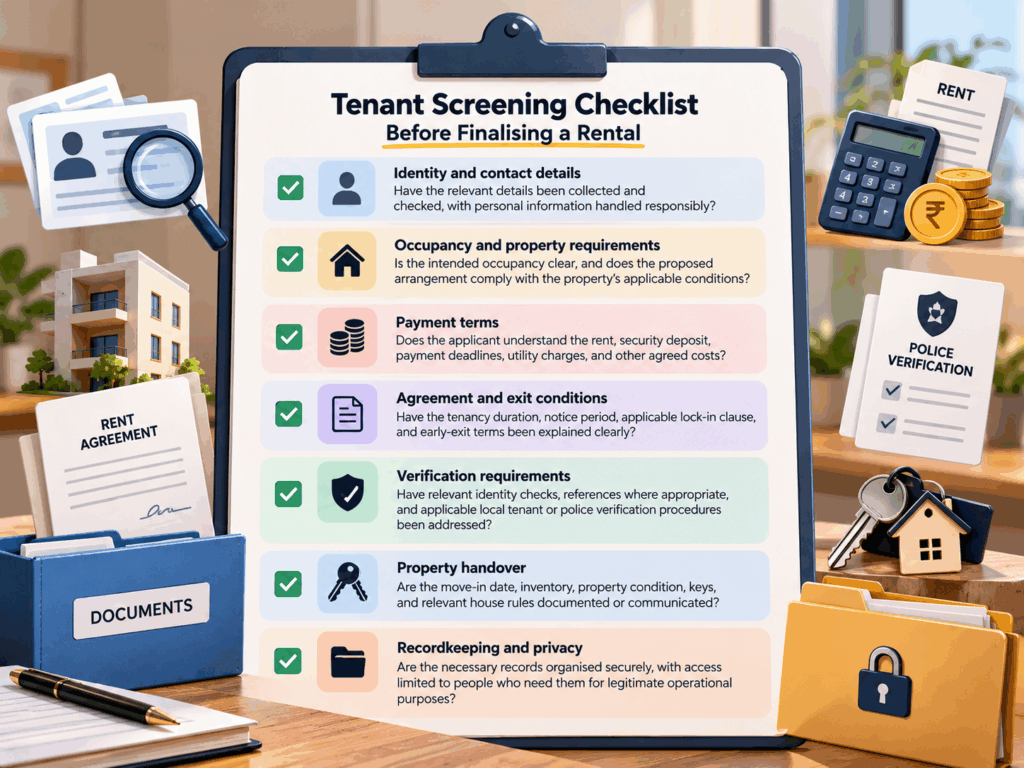
Once the interview is complete, use a checklist to confirm that essential information has been covered. This is particularly useful when several applicants are interested in the same property or when multiple team members are involved in onboarding.
Before finalising a tenant, confirm the following:
- Identity and contact details: Have the relevant details been collected and checked for the purposes of the tenancy, with personal information handled responsibly?
- Occupancy and property requirements: Is the intended occupancy clear, and does the proposed arrangement comply with the property’s applicable conditions?
- Payment terms: Does the applicant understand the rent, security deposit, payment deadlines, utility charges, and other agreed costs?
- Agreement and exit conditions: Have the tenancy duration, notice period, applicable lock-in clause, and early-exit terms been explained clearly?
- Verification requirements: Have relevant identity checks, references where appropriate, and applicable local tenant or police verification procedures been addressed?
- Property handover: Are the move-in date, inventory, property condition, keys, and relevant house rules documented or communicated?
- Recordkeeping and privacy: Are the necessary records organised securely, with access limited to people who need them for legitimate operational purposes?
Police verification deserves particular attention because requirements and procedures can differ by location. Collecting an identity document does not automatically complete every local verification obligation.
RentOk’s article on What Is Tenant Police Verification and Why Is It Mandatory in India? explains the purpose of the process and why landlords should understand the requirements applicable to their property.
Why Is Proper Documentation Important After Screening?
Screening does not end when a landlord decides to accept an applicant. The relevant information must be recorded, the agreement prepared, and the required verification steps completed according to the applicable process.
RentOk’s guide on What Documents Do You Need for Tenant Police Verification? provides further information on verification documentation and why requirements may differ between jurisdictions.
The checklist should support your decision, not replace it. If an essential step remains incomplete, identify what is missing and whether it needs to be resolved before move-in. Keeping the process documented also reduces repeated follow-ups and helps ensure that every applicant is assessed against the same requirements.
How RentOk Helps Landlords Organise Tenant Screening
As the number of tenants and properties grows, managing screening through scattered documents, spreadsheets, and messaging conversations becomes increasingly difficult. RentOk helps landlords and property managers organise tenant-related workflows, maintain better visibility over tenant information, and streamline digital onboarding and verification processes.
A structured system can help keep relevant records connected, track onboarding progress, and reduce the administrative effort involved in managing multiple tenants. Digital tools do not replace the landlord’s responsibility to ask appropriate questions, follow applicable verification requirements, or make fair decisions. Instead, they support a more organised process in which tenant information, documentation, and onboarding activities can be managed with greater consistency.
Conclusion: Make Tenant Screening More Organised and Reliable
Choosing a tenant should involve more than a brief conversation or a quick impression during a property visit. Asking relevant questions about payment arrangements, occupancy, expected duration of stay, and agreement terms helps establish clearer expectations before the tenancy begins. Combining these discussions with appropriate verification, consistent screening criteria, and responsible recordkeeping gives landlords a more dependable basis for rental decisions.
The objective is not to find someone who fits every personal preference. It is to establish whether the proposed tenancy is suitable, properly documented, and understood by both parties. Screen Tenants Digitally on RentOk to organise tenant onboarding, streamline verification workflows, and manage your rental property more efficiently.
Frequently Asked Questions
Find answers to common questions about this topic
About the Author
Ishika Pannu
Ishika Pannu brings you the latest insights and easy-to-apply strategies in property management—helping you simplify renting and grow with RentOk.
You may also like these
Related Articles
1 min read
Is a Notarised Rent Agreement Enough, or Do I Need to Register It?
Written by
Posted on
Ishika Pannu
Oct 5, 2026

1 min read
Which Indian Cities Still Fall Under Old Rent Control Laws?
Written by
Posted on
Ishika Pannu
Oct 3, 2026

1 min read
Managing Rental Property in India as an NRI Landlord
Written by
Posted on
Ishika Pannu
Oct 1, 2026
1 min read
What Documents Do I Actually Need Before Handing Over My Rental Property?
Written by
Posted on
Ishika Pannu
Sep 30, 2026
1 min read
Is a Verbal Rental Agreement Legally Valid in India?
Written by
Posted on
Ishika Pannu
Sep 24, 2026
1 min read
What Can I Do If My Tenant Stops Paying Rent?
Written by
Posted on
Ishika Pannu
Sep 23, 2026

1 min read
How to Check If Your PG or Hostel is Legally Registered in India
Written by
Posted on
Ishika Pannu
Sep 20, 2026
1 min read
How to Negotiate Rent and Maintenance Terms Before Signing
Written by
Posted on
Ishika Pannu
Sep 19, 2026
1 min read
What Your Landlord Can and Cannot Store From Your KYC Documents
Written by
Posted on
Ishika Pannu
Sep 19, 2026
1 min read
Why a Digital Rent Agreement Is Just as Legally Valid as a Paper One
Written by
Posted on
Ishika Pannu
Sep 18, 2026
Stay ahead in property management with expert insights
Join thousands of property managers receiving exclusive tips delivered straight to your inbox.
Browse posts by category
Case Study
Cost of Living
Growth
Legal
Market Trends
News
Pg owner app
Property Management
Property Tax
Tech
RentOk
The easiest way to rent and manage your PGs and hostels.
Grievance Officer
Get the app


Contact us
hello@eazyapp.tech
HQ Office
COGROW, BASEMENT F-12/8A
BESIDE HOUSE OF STYLE SALON, SECTOR 28, DLF PHASE 1
GURUGRAM, HARYANA - 122002
South India Office
LUMIODESK COWORKING, 2ND FLOOR, 40, 14TH MAIN RD
BESIDE MC DONALD, 7TH SECTOR, HSR LAYOUT
BENGALURU, KARNATAKA - 560102
©️ 2026 EazyApp Tech Pvt Ltd. All rights reserved


