
Legal
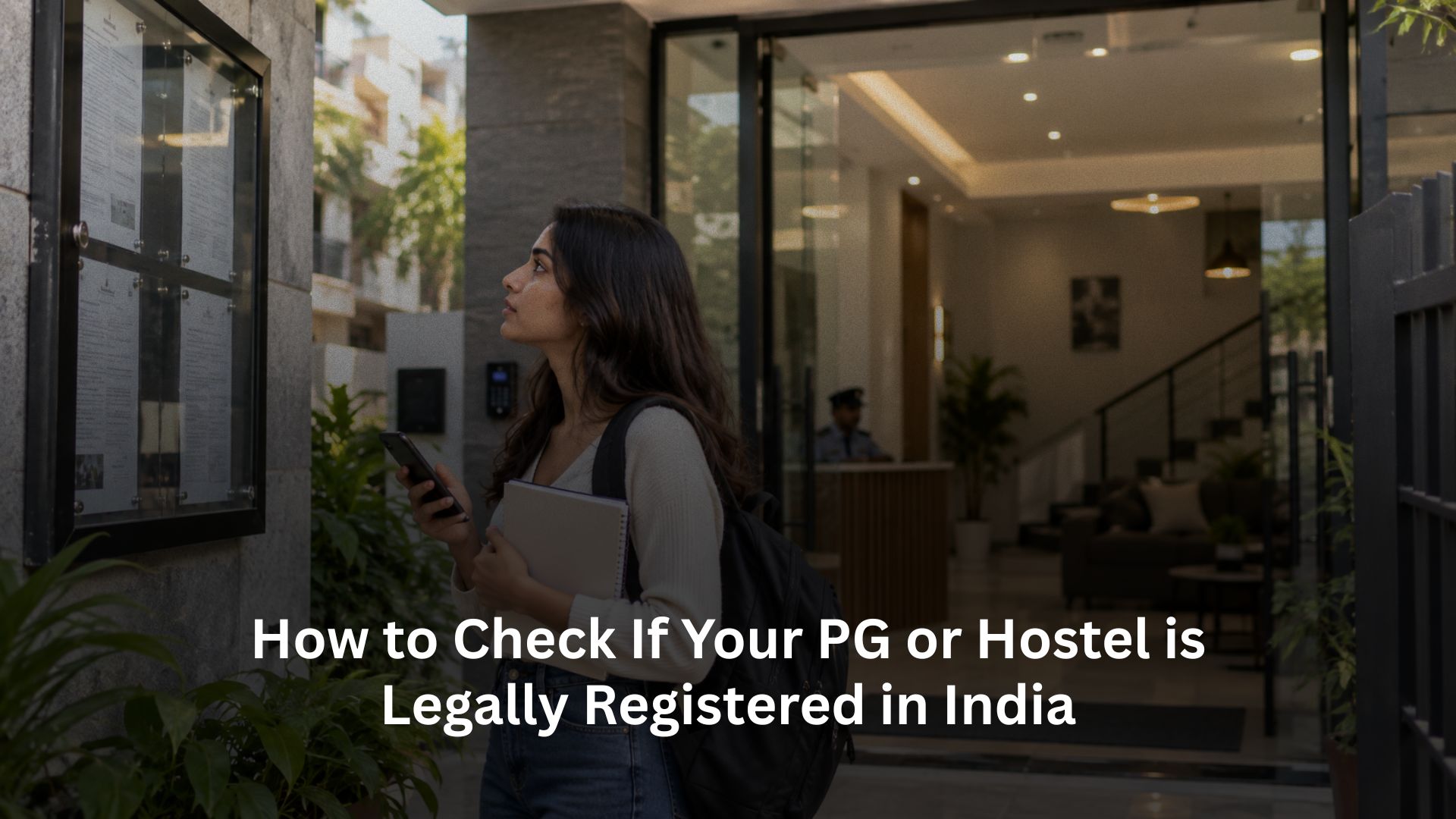
How to Check If Your PG or Hostel is Legally Registered in India

Written by
Ishika Pannu
Read Time
12 min read
Posted on
September 20, 2026
Overview
Overview
How to Check If Your PG or Hostel is Legally Registered in India
Finding a paying guest accommodation or hostel is an important decision for students, working professionals, and people moving to a new city. While rent, location, food, and facilities often influence the final choice, the legal status of the property deserves equal attention. A comfortable room does not automatically mean that the accommodation is properly authorised or safely managed.
Many people assume that every PG in India follows the same registration process. However, the applicable rules can vary depending on the state, city, municipal authority, building type, and services offered. A property may need specific local permissions, fire safety clearances, police-related compliance, or other approvals. There is no single registration certificate that automatically applies to every PG across the country.
This makes verification an essential step before paying a deposit or moving into a property. Tenants should understand which permissions apply, whether the operator can provide relevant documentation, and whether the accommodation meets basic safety and operational requirements.
In this guide, we explain how to check PG registration in India, identify possible compliance issues, recognise red flags, and take appropriate action if a property appears to be unregistered.
Why Legal Registration Matters for Tenants
Legal compliance is not merely a responsibility for property owners. It can influence a tenant’s safety, privacy, financial security, and overall living experience. A PG operating without the required permissions may create concerns involving overcrowding, building safety, unclear management responsibilities, and sudden operational disruptions.
The exact requirements differ across jurisdictions. A PG in Delhi may not follow the same process as one in Bengaluru, Pune, Hyderabad, or another city. Similarly, a property offering food and housekeeping services may have different obligations from one providing accommodation alone.
Tenants should therefore avoid treating registration as a single checkbox. Instead, they should assess whether the property has the permissions and systems relevant to its specific location and business model.
Verification can help tenants in several ways:
- Improved safety and accountability: Applicable approvals and inspections may help establish whether the property follows relevant building, occupancy, and fire safety requirements. They can also help identify the person responsible for managing the premises.
- Better financial protection: Written agreements, payment receipts, and clearly defined deposit policies reduce confusion about rent, deductions, refunds, and notice periods.
- Greater documentation clarity: A responsible operator should have a clear process for collecting identity documents, maintaining occupant records, and handling tenant information.
For additional guidance, tenants can read RentOk’s article on how to read a rent agreement before signing.

What Should a Legally Compliant PG Have?
There is no universal checklist that applies identically to every PG or hostel in India. The required documents depend on the local authority, property classification, building structure, number of occupants, and services offered.
For this reason, tenants should not assume that every property must possess one specific certificate called a “PG registration certificate.” Instead, they should ask the operator which permissions apply to the property and which authority issued them.
Depending on the location and operating model, relevant compliance areas may include the following:
- Municipal or local permissions: Some cities may require licences, registrations, or permissions for properties operating as PGs, hostels, or lodging establishments.
- Building and occupancy compliance: The property should be suitable for its intended use, and the number of occupants should not create unsafe or unauthorised conditions.
- Fire safety requirements: Depending on the building’s size, height, occupancy, and classification, a fire safety clearance or NOC may be applicable.
- Police or occupant verification: Local authorities may require tenant verification, occupant records, or specific reporting procedures.
- Food-related permissions: If meals are prepared or served commercially, additional food safety requirements may apply.
The relevant documents should always be verified according to the property’s location rather than relying on assumptions or generic online checklists.
How to Verify a PG’s Registration in India
The verification process should begin before making a major financial commitment. A professional advertisement, attractive room, or positive online review cannot independently establish that a PG has all the necessary permissions.
Start by identifying the complete property address and the authority responsible for that location. This may include the municipal corporation, local development authority, fire department, or another government department.
Once the jurisdiction is clear, ask the operator to explain the permissions applicable to the property. The request should be specific instead of relying on a general question such as, “Is your PG legal?”
Ask for details such as:
- The name of the applicable licence, registration, or permission.
- The issuing authority and document number.
- The validity period and renewal status.
- The name of the owner or operating entity.
- The complete property address mentioned in the document.
- Any restrictions or conditions connected to the approval.
The operator may not be required to disclose every internal document to a prospective tenant. However, refusing to explain the property’s legal and safety status without a reasonable explanation should encourage further investigation.
Verify the Documents Independently
A photograph or screenshot of a certificate should not be treated as final proof. Documents may be outdated, incomplete, altered, or associated with a different property.
Where online verification is available, use the official website of the relevant municipal or government authority. If there is no online facility, contact the issuing department or visit the appropriate office for clarification.
When checking the documents, compare the following information:
- Property address: Ensure that the address on the document matches the building you are planning to occupy. A mismatch should be clarified before any payment is made.
- Operator details: Check whether the name on the document matches the owner, company, or person managing the accommodation.
- Validity period: Some permissions may need periodic renewal. An expired document should not automatically be considered current.
- Permitted activity: Confirm whether the approval relates to the type of accommodation being offered, where such information is relevant.
Tenants should avoid relying entirely on documents supplied through messaging apps. Independent verification provides greater clarity and helps identify inconsistencies before the agreement is signed.
Inspect the Building and Safety Conditions
Legal documentation and physical safety should be assessed together. A property may display certificates while still having practical safety concerns that require attention.
During a property visit, observe the condition of common areas, staircases, corridors, electrical wiring, ventilation, and emergency exits. Ask the manager what residents should do during a fire, medical emergency, security incident, or power failure.
Some warning signs deserve immediate attention:
- Blocked or locked exits that may prevent residents from leaving quickly.
- Exposed electrical wiring, damaged switches, or unsafe electrical connections.
- Severe overcrowding or room divisions that appear unsuitable for occupancy.
- Poor ventilation, inadequate lighting, or unsafe stairways.
- No clear emergency contact or process for reporting urgent problems.
Tenants should not attempt to repair dangerous infrastructure themselves. Concerns should be raised with the operator and, where necessary, the relevant authorities.
For broader information about property-related responsibilities, readers can explore RentOk’s legal and compliance blog section.

Review the Agreement Before Paying
A PG arrangement may be structured as a licence, accommodation agreement, rental arrangement, or another form of contract. Its legal classification depends on the circumstances and applicable law.
Regardless of the format, the written agreement should clearly explain the terms of occupancy. It should cover rent, security deposit, payment dates, notice period, lock-in conditions, maintenance responsibilities, house rules, and the refund process.
The agreement should also identify the responsible owner or operator. If food, laundry, housekeeping, electricity, or other services are included, the related charges and conditions should be clearly stated.
Before signing, check whether the agreement explains:
- The total monthly rent and payment deadline.
- The security deposit amount and deduction conditions.
- The notice period and early-exit requirements.
- Responsibility for repairs, utilities, and maintenance.
- Rules related to guests, visitors, and shared facilities.
- The procedure for complaints, termination, and deposit refunds.
RentOk’s guide on creating a legally valid rent agreement in India can help tenants understand why clear documentation matters.
Check Police Verification and Occupant Records
Police verification is often discussed as though it follows one identical process throughout India. In reality, police-related requirements may differ depending on the city, accommodation type, and local procedures.
Some jurisdictions may require tenant verification, occupant reporting, or specific permissions for accommodation operators. Therefore, tenants should ask how the PG handles resident records and whether the operator follows the applicable local process.
A responsible operator should be able to explain:
- What identity documents are collected during onboarding.
- Why the information is required and how it will be stored.
- Whether occupant details are submitted to the relevant authority.
- How changes in occupancy are recorded.
- Who is responsible for responding to police or emergency enquiries.
Tenants should avoid handing over original identity documents for indefinite retention. Copies or digital records should be provided only through a clear and appropriate process.
For more information, read RentOk’s article on tenant police verification in India.
Red Flags of an Illegal or Non-Compliant PG
Not every missing document automatically proves that a PG is illegal. The applicable requirements must be checked with the relevant authority. However, certain behaviours and property conditions should encourage tenants to pause the process.
Common warning signs include:
- Refusal to disclose operator details: If the manager will not share the operating entity’s name, contact information, or responsible person’s details, resolving future disputes may become difficult.
- Claims that registration is never required: Regulations vary across cities and states. An absolute claim that no permission is required should be independently verified.
- No written agreement or payment receipt: Verbal promises can create problems when tenants need to prove rent, deposit terms, notice periods, or promised facilities.
- Visible overcrowding or unsafe conditions: Blocked exits, poor electrical wiring, unsafe room divisions, and inadequate ventilation should not be ignored.
- Pressure to pay immediately: Tenants should not be rushed into paying a large deposit before checking the property, documents, and agreement.
- Mismatch in property details: If the address or operator name differs across advertisements, agreements, and documents, ask for clarification before proceeding.
These warning signs do not always establish illegality on their own. They indicate that further verification may be necessary.
What Should You Do If Your PG Is Unregistered?
The first step is to understand what “unregistered” means in the specific situation. A property may not possess the document a tenant expects while following another applicable legal process. Alternatively, it may be operating without a permission that is actually required.
Begin by identifying the relevant municipal or government authority. Ask whether the property needs a particular licence, registration, clearance, or approval based on its location and accommodation model.
If the operator has not provided sufficient information, request clarification in writing. Keep copies of advertisements, agreements, payment receipts, messages, and documents shared by the management.
Depending on the issue, tenants may consider the following steps:
- Contact the municipal authority: This may be suitable for questions about local permissions, building use, or accommodation-related regulations.
- Approach the fire department: Serious concerns involving blocked exits or fire safety should be raised through the appropriate authority.
- Contact the police: Police assistance may be relevant in cases involving threats, criminal conduct, harassment, or immediate safety concerns.
- Seek legal or consumer assistance: Financial disputes involving deposits, misleading claims, or service failures may require professional advice.
Tenants should prioritise their safety and avoid confrontations that could escalate. If there is an immediate danger, move to a safe location and contact a trusted person or emergency services.
Why Documentation and Compliance Should Be Ongoing
Verification should not end when a tenant moves into the property. Permissions may require renewal, the number of occupants may change, and the operator may introduce additional services or modify the premises.
A responsible PG management process should include regular reviews of relevant documents, safety arrangements, tenant records, and operational policies.
Tenants can also protect themselves by maintaining copies of important documents throughout their stay. These may include the signed agreement, payment receipts, deposit details, maintenance complaints, and communication with the operator.
If a problem develops, written records can help establish what was promised, what was paid, and when the issue was reported. This is particularly useful when dealing with disputes involving maintenance, refunds, deductions, or early termination.
For property owners and managers, compliance becomes easier to manage when records are organised systematically instead of being spread across notebooks, spreadsheets, and messaging applications.

How RentOk Helps You Find Suitable PG Accommodation
Finding a PG should involve more than comparing rent and photographs. Tenants also need access to useful property information, clear communication, and a structured way to evaluate their accommodation options.
RentOk helps users explore rental and PG options while considering factors such as location, facilities, pricing, and suitability. Its platform supports a more organised rental discovery experience, but tenants should still independently verify the property’s applicable permissions, safety conditions, and agreement terms before making a final decision.
For owners and operators, RentOk also supports the organisation of everyday property operations. Its features can help manage tenant information, payments, dues, complaints, and other administrative activities through a connected system.
Find Only Verified PGs on RentOk
Choosing a PG requires more than finding an affordable room in a convenient location. Tenants should verify the applicable legal requirements, review the written agreement, inspect safety conditions, and maintain records of payments and communication.
For more rental guidance, explore the RentOk blog and visit the RentOk YouTube channel for practical content related to renting and property management.
Find Only Verified PGs on RentOk and make your next accommodation decision with greater confidence.
Frequently Asked Questions
Find answers to common questions about this topic
About the Author
Ishika Pannu
Ishika Pannu brings you the latest insights and easy-to-apply strategies in property management—helping you simplify renting and grow with RentOk.
You may also like these
Related Articles
1 min read
How to Negotiate Rent and Maintenance Terms Before Signing
Written by
Posted on
Ishika Pannu
Sep 19, 2026
1 min read
What Your Landlord Can and Cannot Store From Your KYC Documents
Written by
Posted on
Ishika Pannu
Sep 19, 2026
1 min read
Why a Digital Rent Agreement Is Just as Legally Valid as a Paper One
Written by
Posted on
Ishika Pannu
Sep 18, 2026
1 min read
What Is Rent Control Law in India, and Which Cities Are Still Covered?
Written by
Posted on
Ishika Pannu
Sep 18, 2026

1 min read
Why Rent Agreement Rules Are Different in Every Indian State
Written by
Posted on
Ishika Pannu
Sep 17, 2026
1 min read
How Working Professionals Can Complete Tenant Verification Quickly
Written by
Posted on
Ishika Pannu
Sep 17, 2026
1 min read
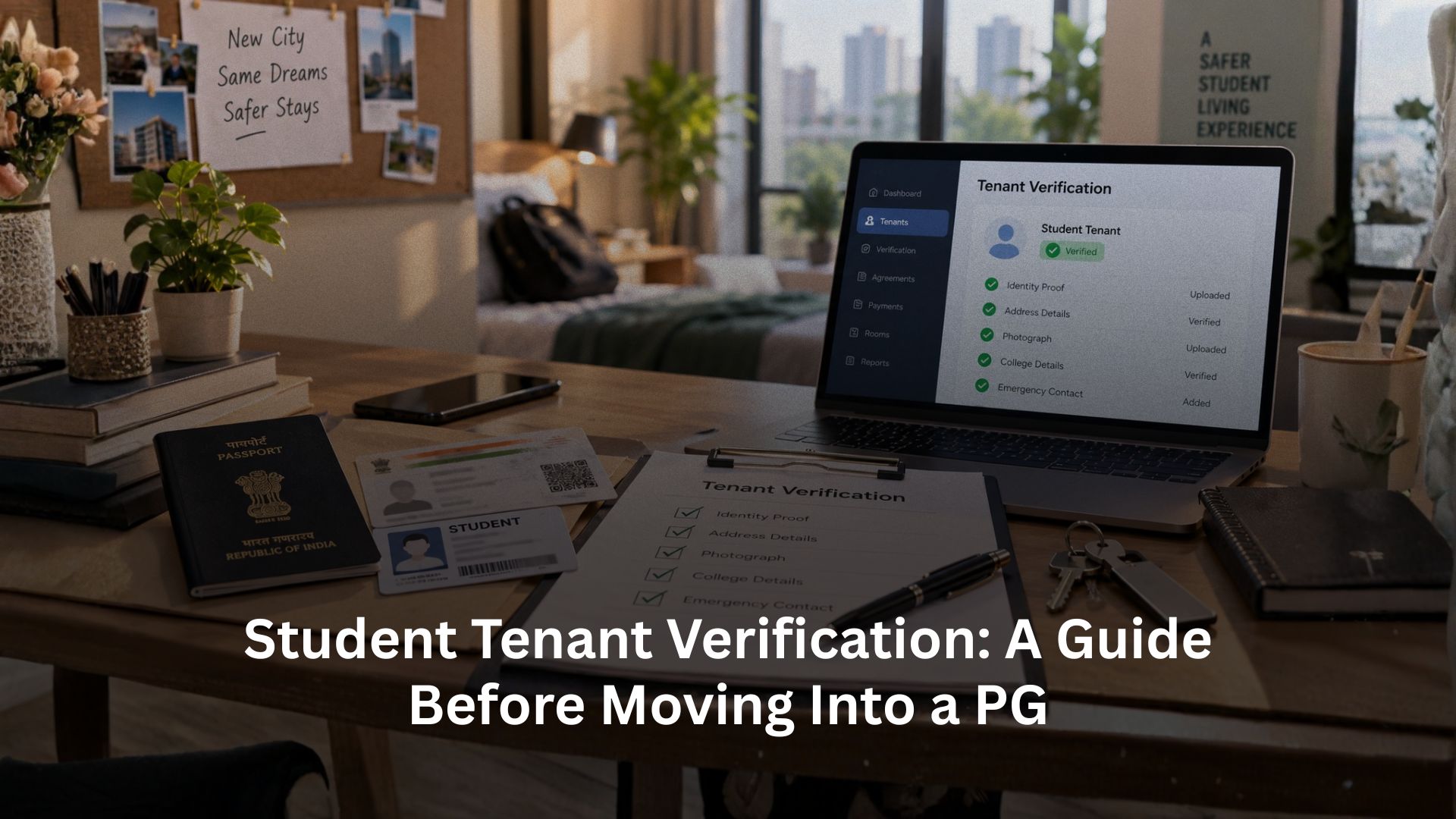
Student Tenant Verification: A Guide Before Moving Into a PG
Written by
Posted on
Ishika Pannu
Sep 16, 2026

1 min read
New UPI MDR Rule: What It Means for Rent Payments
Written by
Posted on
Ishika Pannu
Sep 16, 2026
1 min read
What Happens If You Break Your Rent Agreement Before the Lock-In Period?
Written by
Posted on
Ishika Pannu
Sep 14, 2026
1 min read
How Foreign Nationals Can Rent Property in India (Verification Guide)
Written by
Posted on
Ishika Pannu
Sep 14, 2026
Stay ahead in property management with expert insights
Join thousands of property managers receiving exclusive tips delivered straight to your inbox.
Browse posts by category
Case Study
Cost of Living
Growth
Legal
Market Trends
News
Pg owner app
Property Management
Property Tax
Tech
RentOk
The easiest way to rent and manage your PGs and hostels.
Get the app


Contact us
hello@eazyapp.tech
HQ Office
COGROW, BASEMENT F-12/8A
BESIDE HOUSE OF STYLE SALON, SECTOR 28, DLF PHASE 1
GURUGRAM, HARYANA - 122002
South India Office
LUMIODESK COWORKING, 2ND FLOOR, 40, 14TH MAIN RD
BESIDE MC DONALD, 7TH SECTOR, HSR LAYOUT
BENGALURU, KARNATAKA - 560102
©️ 2026 EazyApp Tech Pvt Ltd. All rights reserved


