Market Trends
Best Software for Tracking Rental Properties and Expenses

Written by
Ishika Pannu
Read Time
5 min read
Posted on
March 25, 2026
Overview
Overview
Best Software for Tracking Rental Properties and Expenses
Most landlords focus heavily on rent collection.
But the real profitability of your rental business depends just as much on how well you track expenses.
Maintenance costs, repairs, utilities, vendor payments, these don’t follow a fixed pattern. And when they aren’t tracked properly, they quietly reduce your returns without you even realizing it.
That’s why choosing the best software for tracking rental properties isn’t just about managing tenants, it’s about understanding your actual financial performance.
Because when expenses aren’t tracked properly, profit becomes an estimate, not a fact.
The Importance of Expense Tracking
At first, tracking expenses seems simple. You pay for something, note it down, and move on.
But in reality, most landlords don’t track expenses consistently. Over time, this creates small gaps that turn into larger financial blind spots.
Common issues include:
- Small repair costs not being recorded
- Cash payments getting forgotten
- Bills scattered across emails or WhatsApp
- Expenses mixed across multiple properties
Individually, these seem minor. But together, they create confusion.
You might think your rental business is performing well, but without tracking expenses properly, you don’t actually know your true profit.
Proper software for rental property expenses helps you maintain clarity by keeping everything structured and visible.
When expenses are tracked properly, you can:
- Understand your actual monthly earnings
- Compare performance across properties
- Identify unnecessary spending
- Plan future investments confidently
Expense tracking is not just about record-keeping. It’s about control.

Why Manual Tracking Stops Working
Most landlords begin with manual tracking methods:
- Excel sheets
- Notebooks
- Notes apps
- Bank statements
These methods work when you’re managing a few tenants. But as your portfolio grows, they start creating friction.
You may find yourself:
- Searching for past entries
- Trying to remember vendor payments
- Recalculating totals
- Unsure about your profitability
Manual systems don’t break immediately, they become inefficient over time.
This is when dedicated software for rental property expenses becomes essential.
Instead of scattered data, everything stays organized in one place.
Receipt Scanning Features: Making Expense Tracking Easier
One of the biggest reasons expenses go unrecorded is friction.
You intend to track everything, but:
- Receipts get misplaced
- Entries are delayed
- Small expenses feel easy to ignore
Receipt scanning features reduce this friction.
With receipt scanning, you can:
- Capture receipts instantly
- Store documents digitally
- Attach receipts to expense entries
- Maintain organized records
This makes tracking faster and more consistent.
It also helps during:
- Tax filing
- Vendor disputes
- Financial reviews
When documentation is organized, managing finances becomes much easier.

Monthly P&L Reports: Turning Data Into Insight
Tracking expenses is useful, but understanding them is where the real value lies.
This is where monthly profit and loss reports become important.
A strong system should show:
- Total income
- Total expenses
- Net profit
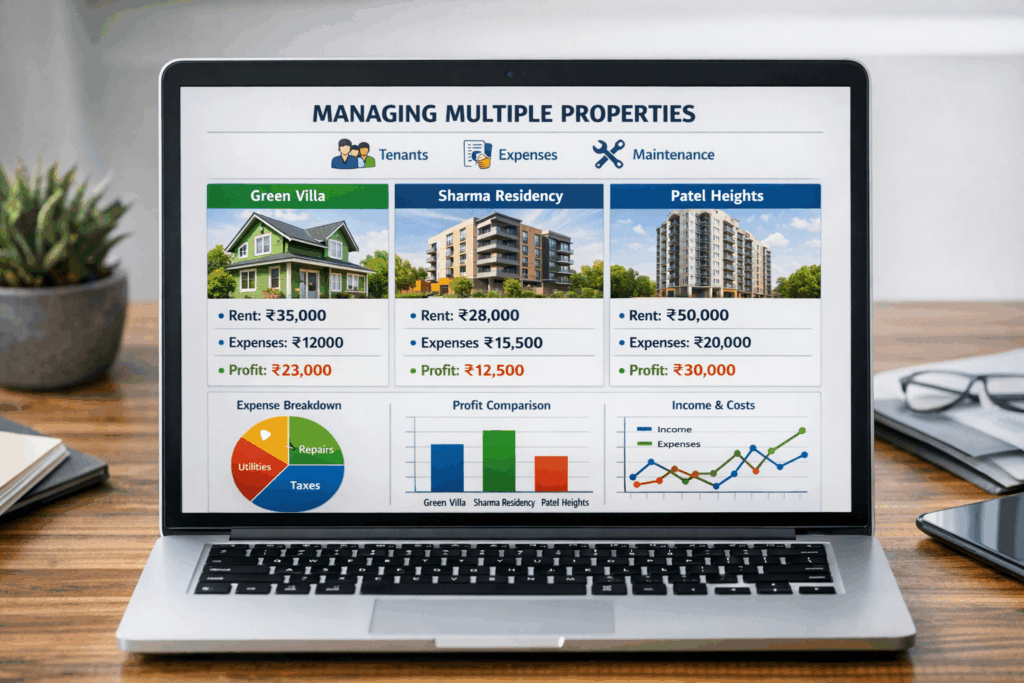
- Property-wise performance
Instead of calculating manually, you get a clear snapshot of your finances.
This helps answer key questions:
- Which property is most profitable?
- Where are costs increasing?
- Are profits improving month to month?
Without structured reports, you’re collecting data, but not using it effectively.
Tracking Multiple Properties Without Confusion
Managing one property is simple. Managing multiple properties introduces complexity.
You’re dealing with:
- Multiple tenants
- Different expense patterns
- Varying rent cycles
- Separate maintenance requirements
Without structured tracking, expenses get mixed.
You may struggle to identify:
- Which property is costing the most
- Which one is performing best
- Where your money is going
The best software for tracking rental properties keeps everything separated and organized.
This ensures:
- Property-wise expense tracking
- Clear profitability comparison
- Better decision-making
What Should the Best Software Actually Offer?
When choosing software, focus on functionality that improves your daily workflow.
A good system should provide:
Clear Expense Categorization
So you understand where your money is going.
Property-Wise Tracking
So each property’s performance remains visible.
Real-Time Financial Visibility
So you always know your financial position.
Easy Expense Recording
So tracking doesn’t feel like extra work.
The goal is simple, reduce effort while improving clarity.
Top Software Comparison: What Really Matters
Most tools fall into three broad categories:
Generic Accounting Software
These tools are powerful but often too complex for rental workflows.
Common challenges:
- Complicated setup
- Not built for tenant tracking
- No rent collection integration
Spreadsheet-Based Systems
These are flexible but require manual effort.
Limitations include:
- Time-consuming updates
- Risk of errors
- No automation
Dedicated Rental Management Software
These tools are designed specifically for landlords.
Benefits include:
- Automated tracking
- Integrated workflows
- Real-time insights
Choosing the right category often matters more than choosing a specific tool.
Why Integrated Tracking Matters
Many landlords track rent and expenses separately.
This creates:
- Data inconsistencies
- Extra manual work
- Delayed insights
Integrated systems connect everything.
When rent and expenses are tracked together:
- Reports become more accurate
- Financial clarity improves
- Decisions become easier
This is why integrated software is more effective long term.

How RentOk Helps You Track Rental Properties and Expenses
RentOk is built specifically for rental workflows, not just accounting.
Instead of using multiple tools, RentOk connects rent tracking, expense tracking, and reporting into one system.
With RentOk, you can:
Track Expenses Alongside Rent
Expenses and rent collection stay connected, giving you complete financial clarity.
Property-Wise Financial Tracking
Each property has its own financial overview, making comparisons easier.
Real-Time Financial Insights
Through the Reports Page, you can instantly view:
- Total income
- Total expenses
- Net earnings
- Property-wise performance
Simplified Expense Recording
Adding expenses is quick and structured, reducing manual work.
Better Decision-Making
With everything in one place, you can:
- Identify high-cost properties
- Control unnecessary spending
- Plan investments confidently
Instead of guessing your finances, RentOk helps you see them clearly.
Why This Matters as You Scale
As your portfolio grows, tracking finances becomes more complex.
You’ll deal with:
- More transactions
- More expenses
- More tenants
- More properties
Without structured software, managing this becomes difficult.
But with the right system, growth becomes easier because your finances stay organized.
Bringing It All Together
Tracking rental properties effectively means understanding both income and expenses.
Without expense tracking, profitability remains unclear. And without clarity, managing your rental business becomes harder.
The best software for tracking rental properties helps you:
- Stay organized
- Track expenses consistently
- Understand profitability
- Make smarter decisions
With structured tracking, you move from:
- Guessing → Knowing
- Recording → Understanding
- Managing → Optimizing
Because when your finances are clearly visible, managing your rental business becomes easier, and far more predictable.
About the Author
Ishika Pannu
Ishika Pannu brings you the latest insights and easy-to-apply strategies in property management—helping you simplify renting and grow with RentOk.