Property Management
How to Handle Maintenance Requests in Your PG

Written by
Ishika Pannu
Read Time
12 min read
Posted on
July 9, 2026
Overview
Overview
How to Handle Maintenance Requests in Your PG
Running a PG involves much more than collecting rent and filling rooms. Once tenants move in, their day-to-day experience depends on how efficiently the property is managed, and maintenance plays a central role in that experience. Whether it’s a leaking tap, a faulty air conditioner, flickering lights, or a Wi-Fi issue, every maintenance request shapes how tenants perceive the property and the management behind it.
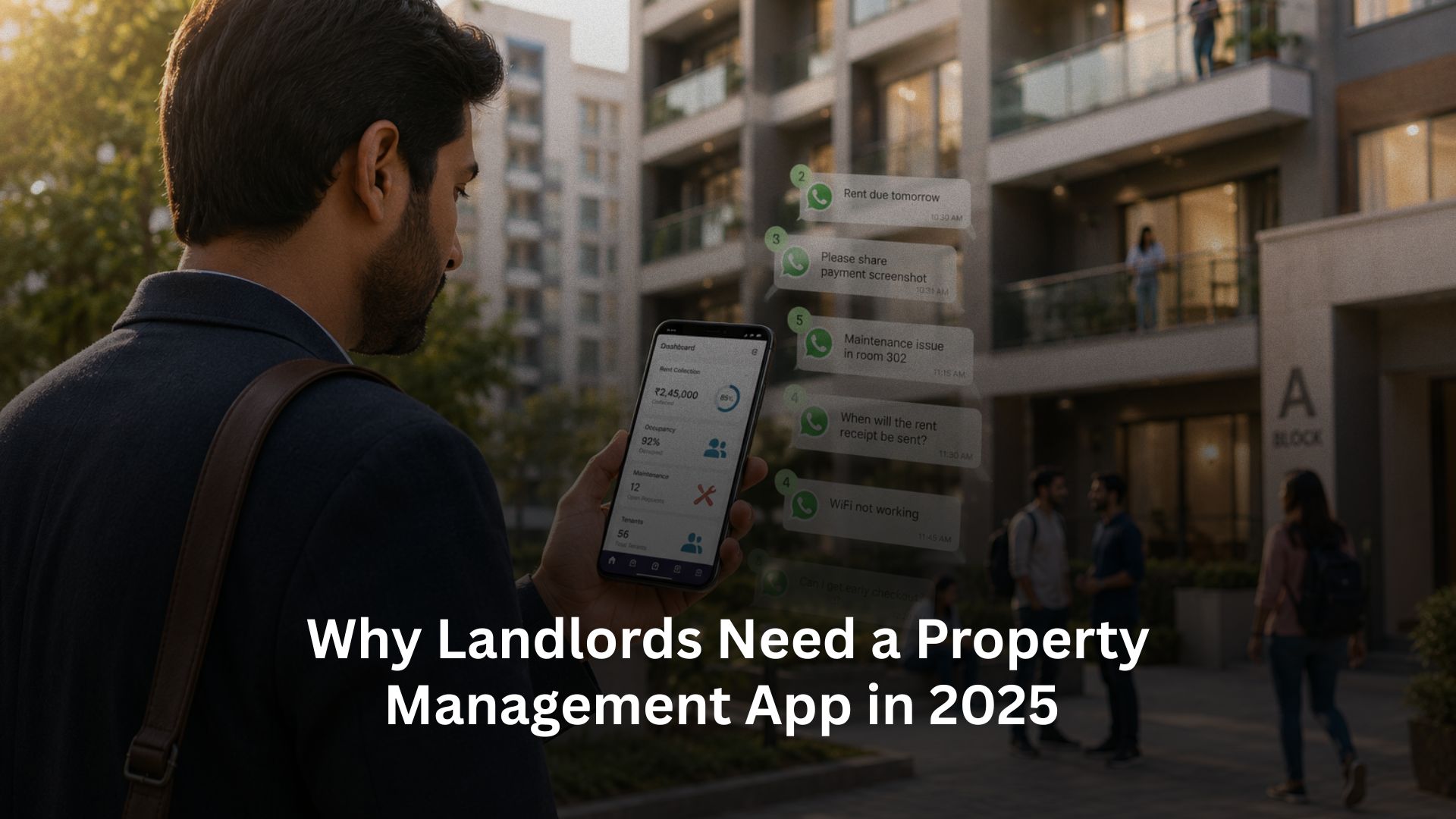
Many PG owners assume maintenance becomes a challenge only when properties expand. In reality, even a 30-bed PG can struggle with complaint management if requests are handled informally through phone calls, WhatsApp messages, or verbal conversations. As occupancy grows, these scattered processes often lead to delayed resolutions, missed complaints, repeated follow-ups, and frustrated tenants.
The most successful PG operators don’t necessarily spend more on maintenance, they manage it better. They build systems that make every complaint visible, assign accountability, track progress, and keep tenants informed until the issue is resolved.
This guide explores how PG owners can create an efficient maintenance request management process that reduces operational chaos, improves tenant satisfaction, and helps properties run more professionally.
Why Maintenance Management Is More Than Just Fixing Problems
Maintenance is often viewed as a repair function, but operationally, it is much more than that. Every complaint that enters your property is also a communication event, a coordination task, and a measure of your management efficiency.
For example, a broken fan may only take twenty minutes to repair. However, if no one acknowledges the complaint, assigns it to the right staff member, or updates the tenant about its status, the experience feels far worse than the repair itself. Over time, these small moments influence tenant trust, online reviews, referrals, and even renewals.
A structured maintenance process helps operators move from reacting to problems to managing them systematically. Instead of depending on memory or scattered conversations, every request follows a clear workflow from reporting to resolution.
An efficient system benefits the property in multiple ways:
- Complaints are less likely to be overlooked because every request is recorded and tracked from the moment it is raised until it is marked as resolved.
- Maintenance staff can prioritise work based on urgency, ensuring critical repairs are addressed first without delaying routine maintenance unnecessarily.
- Property managers gain complete visibility into pending tasks, completed work, and recurring issues instead of constantly following up with different team members.
- Tenants feel more confident in the management because they receive timely responses and can see that their concerns are being handled professionally.
When maintenance becomes a structured process rather than a reactive activity, it strengthens the overall operational quality of the property.
What Slows Down Maintenance Requests in Most PGs?
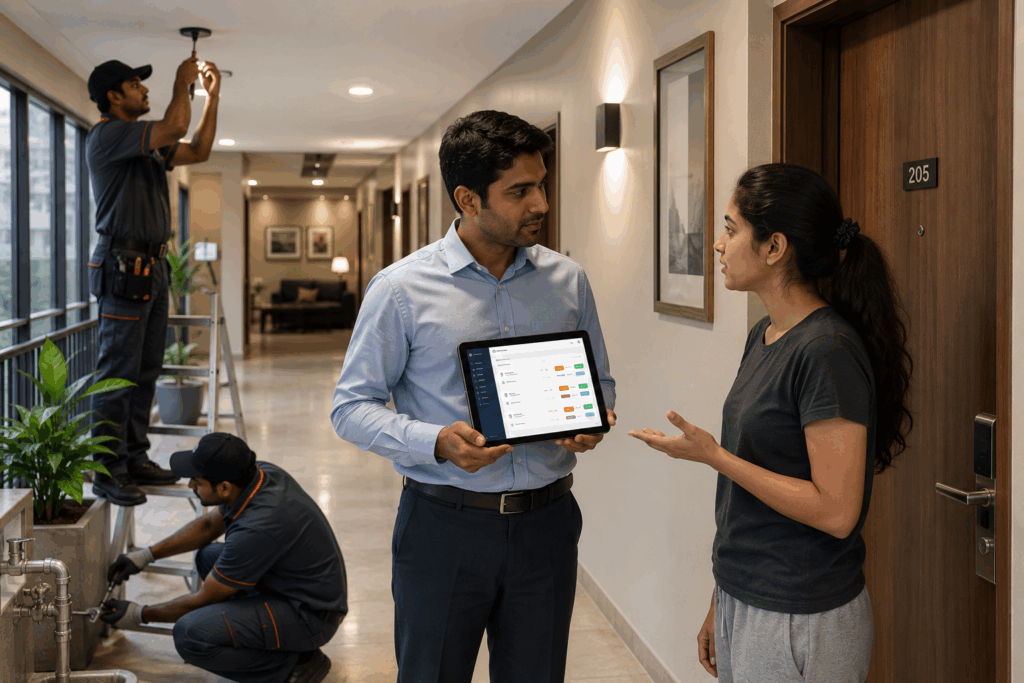
Maintenance delays are rarely caused by the repair work itself. In many cases, the real bottleneck lies in how complaints are received, communicated, and managed internally.
Many PG owners still rely on informal methods because they work well during the early stages of the business. A tenant calls the manager, sends a WhatsApp message, or mentions an issue during dinner. While this may seem manageable initially, the same process quickly becomes unreliable as occupancy increases.
Imagine receiving maintenance requests from dozens of tenants every day across multiple floors. Without a structured workflow, it becomes difficult to remember who reported what, whether the issue has already been assigned, or if the repair has actually been completed.
Some of the most common operational challenges include:
- Complaint details remain scattered across phone calls, WhatsApp chats, handwritten notes, and verbal conversations, making it difficult to maintain a single source of truth.
- Maintenance requests often depend on one individual remembering to follow up, creating delays whenever that person is unavailable or occupied with other responsibilities.
- Tenants repeatedly ask for updates because there is no visibility into whether the complaint has been assigned, is currently being worked on, or has already been resolved.
- Recurring issues are difficult to identify because historical complaint records are either missing or spread across multiple communication channels.
These challenges may appear small individually, but together they create an operational environment where maintenance feels disorganised despite everyone’s best efforts.
Build a Maintenance Workflow Instead of Handling Individual Complaints
One of the biggest shifts professional PG operators make is moving away from handling complaints one at a time. Instead, they create a repeatable workflow that every maintenance request follows.
This standardisation improves consistency and reduces dependency on manual coordination. Whether the complaint is reported on Monday morning or Saturday evening, the process remains the same.
A practical maintenance workflow generally includes the following stages:
- Complaint Registration: Every maintenance request should be logged with complete details, including the tenant’s room number, the nature of the issue, supporting images if available, and the time the complaint was raised.
- Categorisation: Classifying complaints based on urgency helps maintenance teams allocate resources more effectively. For example, water leakage or electrical faults require immediate attention, while cosmetic repairs can be scheduled later.
- Task Assignment: Every complaint should have a clearly assigned owner, whether it is an in-house maintenance staff member or an external vendor. Clear ownership reduces confusion and improves accountability.
- Status Tracking: Maintenance requests should move through defined stages such as Open, In Progress, Waiting for Vendor, and Resolved. This provides visibility to both staff and management.
- Closure and Verification: Once the work is completed, the complaint should be closed only after confirming that the issue has been resolved satisfactorily.
Rather than constantly reacting to incoming complaints, this structured workflow allows property managers to stay in control of maintenance operations.
Prioritising Complaints Makes Operations More Efficient
Not every maintenance issue carries the same level of urgency. Treating all complaints as equally important often leads to poor resource allocation, delayed critical repairs, and unnecessary operational pressure.
Successful PG operators classify maintenance requests based on both urgency and impact.
For instance, an electrical short circuit requires immediate intervention because it directly affects tenant safety. On the other hand, replacing a curtain rod or repainting a wall can be scheduled without disrupting daily operations.
A simple prioritisation framework can significantly improve response times:
- Emergency issues such as electrical faults, gas leaks, water pipeline bursts, or security concerns should always receive immediate attention due to their impact on safety and property operations.
- High-priority complaints like internet outages, malfunctioning air conditioners during summer, or plumbing issues affecting multiple rooms should be addressed as quickly as possible to minimise tenant inconvenience.
- Routine maintenance tasks including minor furniture repairs, loose fittings, or cosmetic improvements can be grouped and completed during scheduled maintenance rounds, improving overall efficiency.
This approach allows maintenance teams to focus their efforts where they are needed most while ensuring routine tasks are not forgotten.
Communication Matters as Much as the Repair
One of the biggest misconceptions in property management is that tenants become dissatisfied because repairs take time. In reality, frustration usually arises because tenants don’t know what is happening after they report an issue.
A complaint that takes two days to resolve can still result in a positive experience if the tenant receives timely updates throughout the process. On the other hand, even a repair completed within a few hours can leave a negative impression if there is no communication.
Good maintenance communication should always include:
- An acknowledgement confirming that the complaint has been received and recorded by the management.
- An estimated resolution timeline so tenants know what to expect instead of repeatedly following up.
- Updates whenever there are delays due to vendor availability, spare parts, or scheduling constraints.
- Confirmation once the issue has been resolved, allowing tenants to verify that the repair has been completed satisfactorily.
This level of transparency builds trust because tenants feel informed throughout the process rather than being left uncertain.

Common Maintenance Management Mistakes That Slow Down Operations
Even PG owners who invest in good infrastructure often struggle with maintenance because the underlying process isn’t organised. Repairs get completed eventually, but the journey from complaint to resolution is filled with unnecessary delays, repeated follow-ups, and avoidable confusion.
The difference between a well-managed property and a reactive one usually comes down to a few operational practices. Identifying these gaps early can significantly improve both tenant satisfaction and team productivity.
Some of the most common mistakes include:
- Treating every complaint as an isolated task instead of maintaining a centralised complaint log. Without historical records, managers lose visibility into recurring issues, making it difficult to identify whether a problem is genuinely resolved or keeps resurfacing.
- Assigning complaints verbally without recording ownership. When responsibilities are communicated informally, accountability often disappears. Staff members may assume someone else is handling the issue, leading to delays and dissatisfied tenants.
- Ignoring response time benchmarks. Without predefined timelines, urgent complaints and routine maintenance requests often compete for the same attention, creating inconsistent service levels across the property.
- Closing complaints without tenant confirmation. Marking a task as completed before verifying the repair can result in repeated complaints, additional work, and reduced confidence in the management process.
Avoiding these operational mistakes doesn’t necessarily require additional staff or larger maintenance budgets. More often, it requires a structured system that creates visibility and accountability throughout the complaint lifecycle.
Preventive Maintenance Reduces Future Complaints
Most maintenance requests are handled only after something breaks. While reactive maintenance is unavoidable, relying on it entirely can increase operational costs and create unnecessary inconvenience for tenants.
Professional PG operators gradually shift towards preventive maintenance because it reduces emergency repairs and improves the overall living experience. Instead of waiting for equipment to fail, they schedule regular inspections to identify potential issues before they become larger problems.
Preventive maintenance is particularly useful for assets that experience frequent usage, such as plumbing fixtures, electrical systems, appliances, and common-area facilities.
A preventive maintenance schedule can include:
- Monthly inspections of plumbing systems to identify leaks, loose fittings, or drainage issues before they lead to larger repair work.
- Routine electrical checks for switchboards, wiring, and common-area lighting to minimise safety risks and unexpected outages.
- Periodic servicing of air conditioners, water purifiers, washing machines, and other shared appliances to improve their lifespan and reduce breakdowns during peak usage.
- Regular inspections of furniture, doors, windows, and room fittings so minor wear and tear can be addressed before it affects tenant comfort.
While preventive maintenance requires planning, it significantly reduces the number of urgent complaints that disrupt daily operations. Over time, this proactive approach also helps lower maintenance expenses by preventing costly repairs.
Use Maintenance Data to Make Better Decisions
Every maintenance request generates valuable operational data. Unfortunately, many PG owners lose this information because complaints are managed through informal conversations or scattered records.
When maintenance data is organised properly, it helps operators understand patterns that are difficult to notice otherwise. Instead of solving the same problems repeatedly, managers can identify root causes and make informed decisions about long-term improvements.
For example, if multiple complaints originate from the same floor or involve the same equipment, it may indicate a larger infrastructure issue rather than isolated repairs.
Tracking maintenance data can help answer important operational questions such as:
- Which types of complaints occur most frequently across the property, allowing management to prioritise long-term upgrades instead of repeatedly handling temporary fixes?
- How quickly are maintenance requests being resolved, and are response times meeting the standards expected by tenants?
- Which vendors or maintenance staff consistently deliver work on time, helping property managers make better outsourcing decisions in the future?
- Are recurring complaints increasing in specific rooms or facilities, indicating the need for preventive maintenance or equipment replacement?
Data-driven maintenance management transforms complaint handling from a reactive activity into a continuous improvement process. Rather than simply responding to issues, property managers begin optimising operations based on measurable insights.
Technology Makes Maintenance Management Scalable
Managing maintenance manually may seem practical for smaller properties, but the same approach becomes increasingly difficult as occupancy grows or multiple PGs are managed under one brand.
Registers, spreadsheets, and WhatsApp groups may record complaints, but they rarely provide complete operational visibility. Managers still spend valuable time searching for updates, coordinating with staff, and responding to repeated tenant queries.
Technology simplifies this process by bringing every maintenance activity into a single structured workflow.
Instead of relying on fragmented communication, a digital complaint management system allows property managers to:
- Capture every maintenance request in one place, ensuring complaints are never lost across calls, chats, or handwritten notes.
- Assign tasks to the appropriate staff member or vendor while maintaining complete visibility into ownership and progress.
- Monitor complaint status in real time, making it easier to identify pending work and reduce unnecessary follow-ups from tenants.
- Maintain a complete maintenance history for every room or property, helping operators identify recurring issues and improve future planning.
As properties scale, these operational efficiencies become essential for maintaining consistent service quality across all locations.
How RentOk Helps Simplify Complaint Management
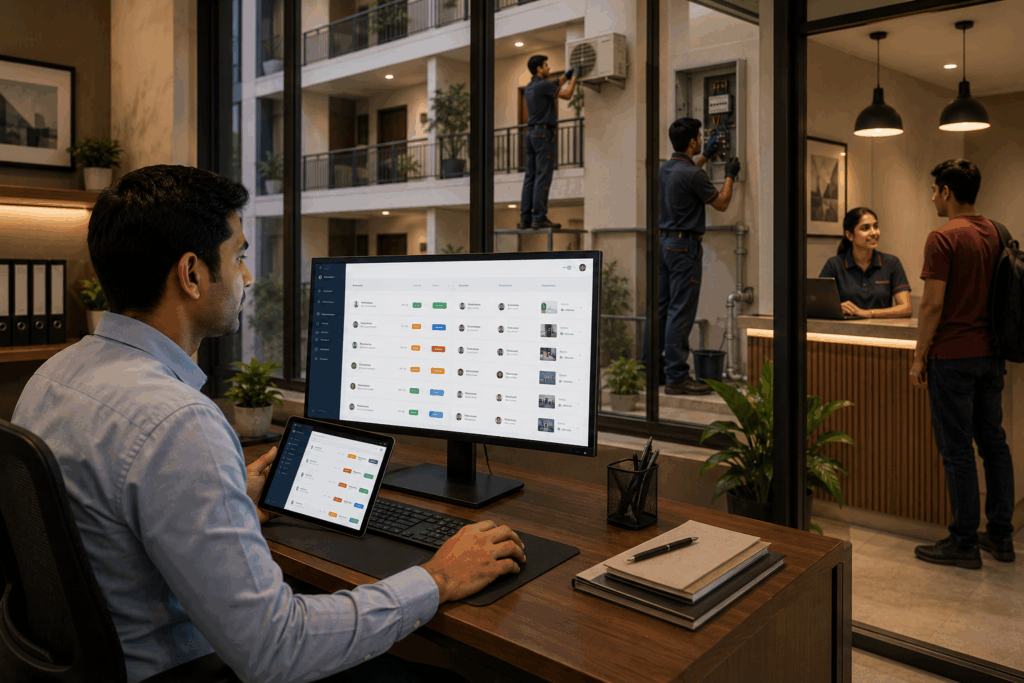
As the number of tenants increases, managing maintenance requests through phone calls, registers, spreadsheets, or WhatsApp becomes difficult. Without a centralised system, complaints can be missed. Responsibilities become unclear, and managers spend more time coordinating than resolving issues.
RentOk’s Complaint Management feature streamlines the entire maintenance workflow from one platform. Every complaint is logged, assigned, tracked, and updated through a structured process. This removes the need to manage requests across multiple channels.
With RentOk, property managers can:
- Allow tenants to raise maintenance requests digitally. This ensures every complaint is recorded with complete details from the start.
- Assign complaints to staff members or maintenance vendors. Clear ownership and accountability are maintained throughout the resolution process.
- Track the status of every request in real time. This reduces manual follow-ups and gives managers full visibility into pending and completed tasks.
- Maintain a searchable complaint history. Managers can identify recurring issues, monitor response performance, and improve long-term maintenance planning.
By centralising complaint management, RentOk helps PG operators reduce delays and improve tenant communication. It also creates a more organised maintenance process as their properties grow.
This version reduces the number of sentences over 20 words while keeping the tone professional and SEO-friendly.
Conclusion
As PG businesses grow, maintenance management becomes less about fixing individual issues and more about running operations efficiently. A well-defined complaint handling process reduces response times and improves staff accountability. It also gives tenants confidence that their concerns are addressed promptly. Over time, these improvements lead to higher tenant satisfaction, better retention, and a stronger reputation for the property.
Instead of relying on scattered communication or manual follow-ups, property owners benefit from a structured maintenance workflow. It helps them stay organised, identify recurring issues, and scale operations without compromising the tenant experience.
Looking to simplify complaint management and improve maintenance response across your properties? Explore RentOk’s Complaint Management feature to centralise maintenance requests, assign tasks efficiently, track every complaint from start to resolution, and deliver a more professional property management experience..
About the Author
Ishika Pannu
Ishika Pannu brings you the latest insights and easy-to-apply strategies in property management—helping you simplify renting and grow with RentOk.