Market Trends
How to Choose Rental Property Accounting Software

Written by
Ishika Pannu
Read Time
6 min read
Posted on
March 23, 2026
Overview
Overview
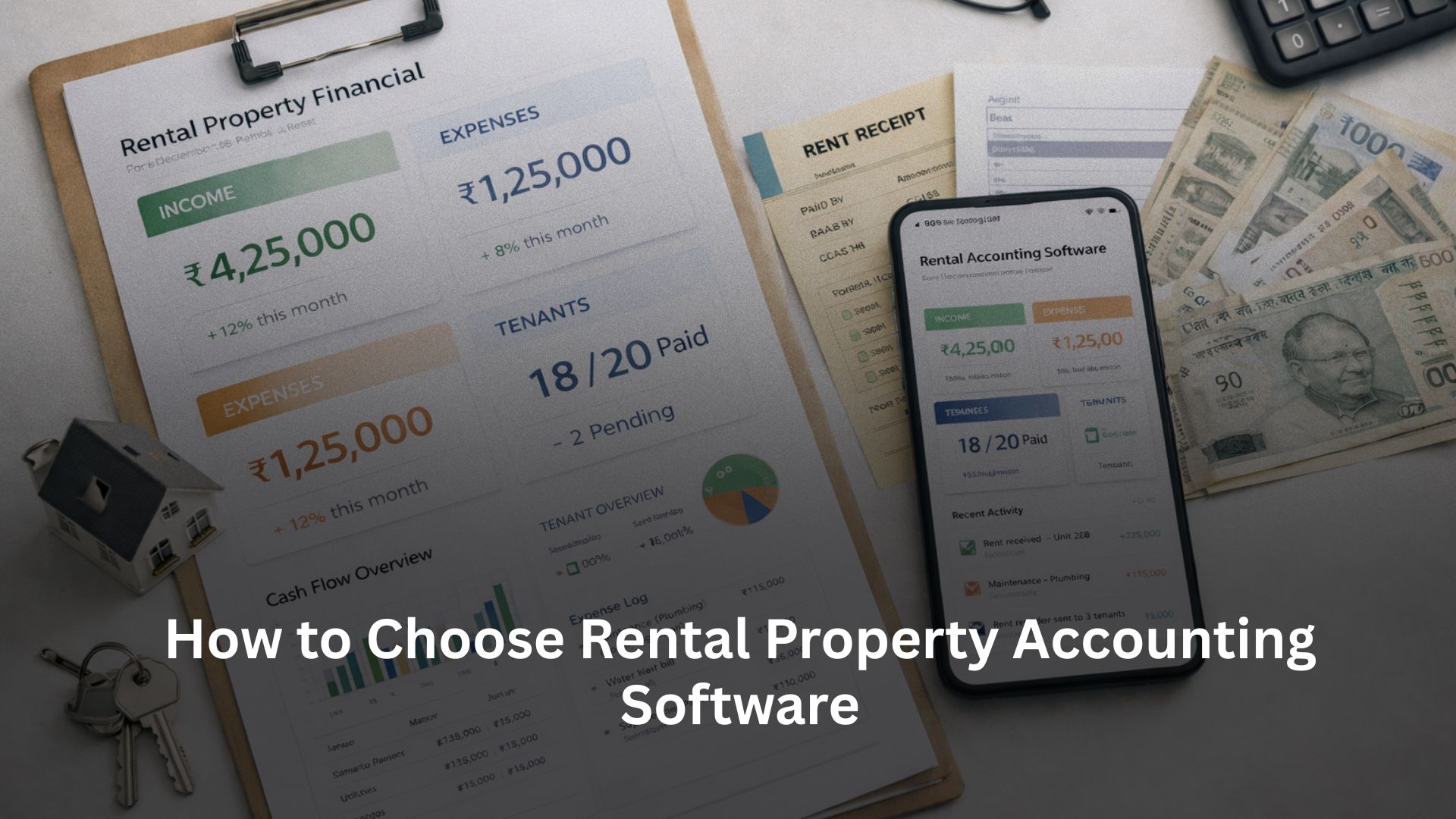
How to Choose Rental Property Accounting Software
Managing rental finances often looks simple, until you try to answer one basic question:
“How much did I actually earn last month?”
Not rent collected. Not rough estimates.
Actual profit, after expenses, delays, and adjustments.
For most landlords, this answer isn’t immediately clear.
And that’s the real problem.
Because when your financial system lacks structure, you’re not managing your rentals, you’re just keeping them running.
This is where choosing the right rental property accounting software becomes critical. Not as a tool, but as the foundation of how your rental business operates.
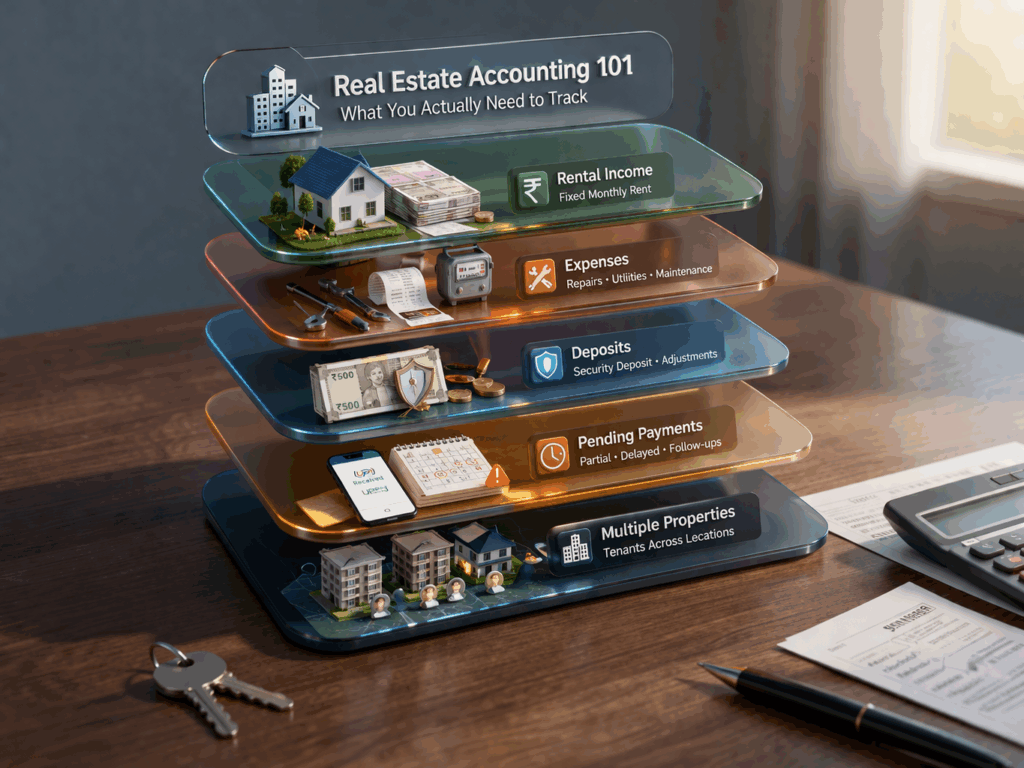
Real Estate Accounting 101: What You Actually Need to Track
Rental accounting is not about complexity, it’s about consistency across multiple moving parts.
At any point, your system should clearly reflect three things:
- What’s coming in
- What’s going out
- What’s still pending
But in real-world scenarios, this gets layered quickly.
You’re dealing with:
- Fixed monthly rent
- Variable expenses like repairs or utilities
- Security deposits and adjustments
- Partial payments or delayed transactions
- Multiple tenants across different properties
Individually, none of this is difficult.
But without a structured system, these start overlapping, and that’s where clarity breaks.
A proper system ensures everything stays connected, so your finances don’t depend on memory or manual tracking.
Tracking Expenses vs Income: Where Most Systems Fail
Most landlords don’t have a tracking problem, they have a visibility problem.
On paper, everything looks recorded. But when you dig deeper, the gaps start showing.
For instance:
- Rent is recorded, but not matched with actual payment timelines
- Expenses are noted, but not categorized
- Partial payments are treated as full entries
- Smaller costs are skipped entirely
These are not big errors, but they compound over time.
The result?
You see numbers, but not reality.
A structured landlord accounting software solves this by aligning your data properly. It doesn’t just record transactions, it gives them context.
So instead of scattered entries, you get:
- Tenant-wise payment clarity
- Categorized expense tracking
- Real-time profit visibility
That’s the difference between tracking finances and understanding them.
Why Excel Feels Sufficient, Until It Starts Slowing You Down
Excel works well in the beginning because it gives you control.
You can customize it, edit it, and track things your way.
But over time, that flexibility turns into dependency.
You’ll start noticing:
- You’re spending more time updating than analyzing
- Every new tenant adds complexity
- You need to double-check entries frequently
- There’s no instant view of dues or performance
At that point, Excel is no longer a system, it’s just a record.
And records don’t help you make decisions. Systems do.
This is where a property management budget software shifts your workflow.
Instead of maintaining data manually, your system starts working alongside your operations, updating, organizing, and reflecting changes automatically.
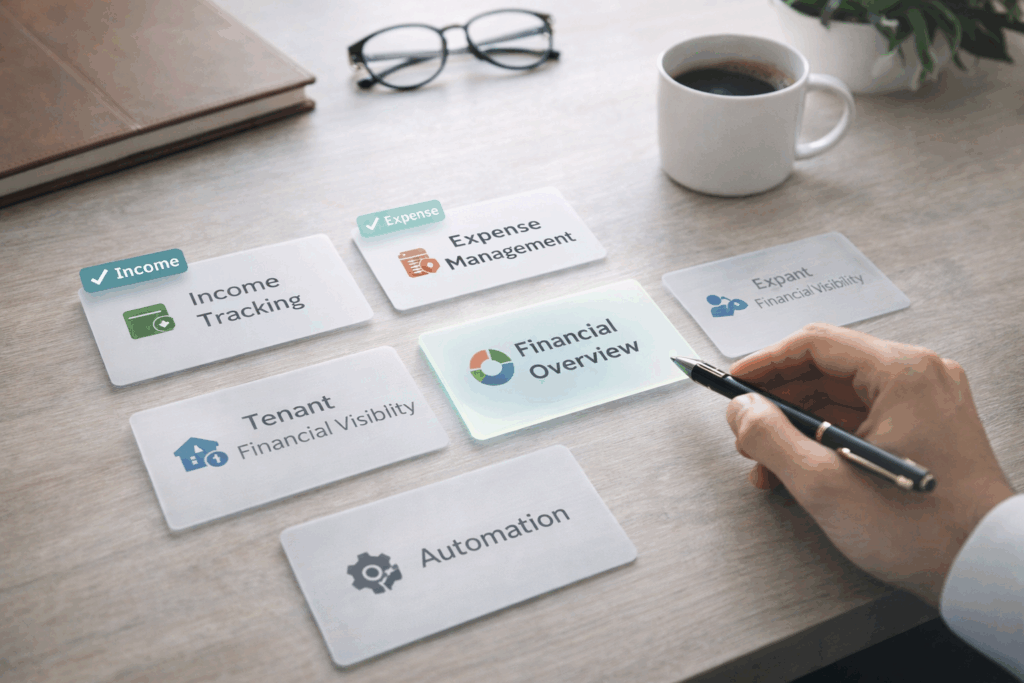
What Should You Look for in Rental Accounting Software?
Choosing the right software is not about features, it’s about how easily it fits into your daily workflow.
Here’s what actually makes a difference:
1. Clear and Automatic Income Tracking
Your rent tracking should not depend on manual entry every time.
A good system ensures:
- Payments are recorded as they happen
- Pending dues are automatically updated
- Tenant payment history stays organized
This removes the need to constantly “check” your records.
2. Structured Expense Management
Expenses are often where the biggest leaks happen, not because they’re large, but because they’re untracked.
Your system should help you:
- Log expenses quickly
- Categorize them properly (maintenance, utilities, etc.)
- Understand how they impact your overall earnings
When expenses are structured, profitability becomes clear.
3. Tenant-Level Financial Visibility
Instead of looking at overall numbers, you should be able to drill down instantly.
At any time, you should know:
- Which tenants have paid
- Which ones are delayed
- What amount is still outstanding
This reduces confusion and makes follow-ups more precise.
4. Built-In Financial Overview (Not Just Raw Data)
Good software doesn’t just store information, it presents it meaningfully.
You should have access to a clear snapshot that shows:
- Total income vs expenses
- Net earnings
- Outstanding dues
- Property-wise performance
All of this should be visible without manual calculations.
5. Automation That Reduces Daily Effort
The goal is not to digitize your work, it’s to reduce it.
Look for features that:
- Send rent reminders automatically
- Update records in real time
- Reduce repetitive manual tasks
Consistency should come from the system, not from constant effort.
Generating Tax Reports Without the Last-Minute Rush
Tax season is where most unstructured systems fail.
If your data isn’t organized throughout the year, you end up rebuilding everything from scratch.
That usually involves:
- Searching for past transactions
- Rechecking expense records
- Matching payments manually
A reliable rental property accounting software ensures this never happens.
Because your data is already structured, you can:
- Access complete financial summaries
- Track expenses accurately
- Generate reports when needed
It turns tax preparation into a process, not a problem.
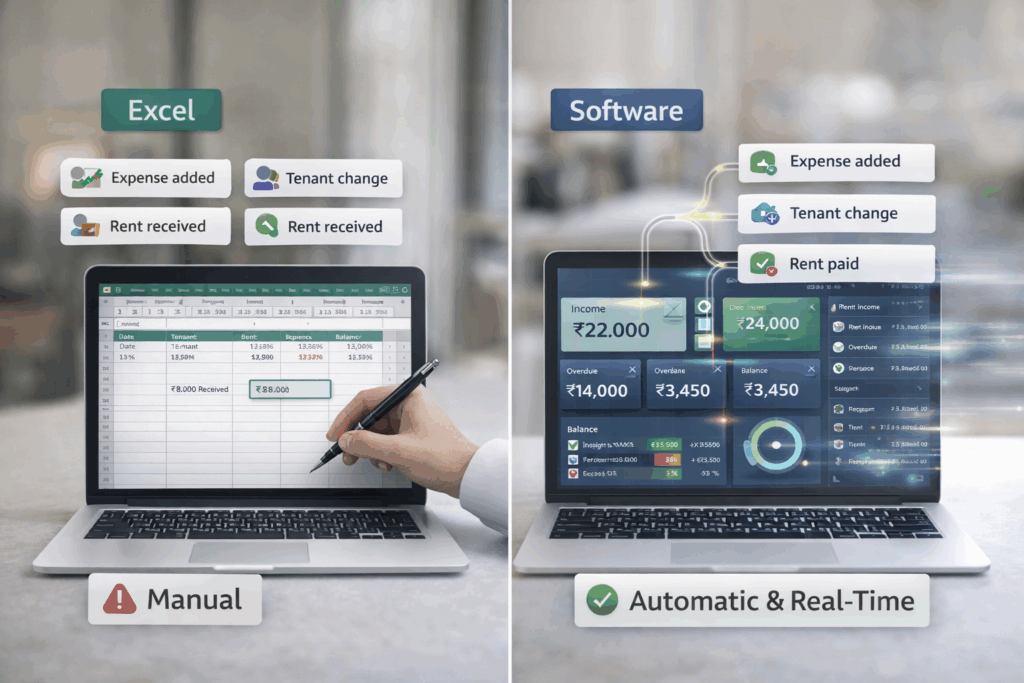
Software vs Excel: What Actually Changes
The difference between Excel and accounting software isn’t technical, it’s operational.
Excel helps you store information.
Software helps you manage it.
Here’s how that shows up in real usage:
- With Excel, you update data manually
- With software, data updates with activity
- With Excel, you review after the fact
- With software, you monitor in real time
- With Excel, clarity depends on effort
- With software, clarity is built-in
Over time, this directly impacts how confidently you manage your rental business.
How RentOk Simplifies Rental Accounting
Most tools either overcomplicate accounting or fail to address real landlord needs.
RentOk is designed to focus on what actually matters in day-to-day rental management, clarity, consistency, and ease of use.
Instead of juggling multiple systems, RentOk brings your entire financial workflow into one place.
With RentOk, you can:
- Track rent, dues, and payment status without manual tracking
- Record expenses in a structured and categorized way
- View a complete financial overview through the Reports Page
- Monitor tenant-wise and property-wise performance
- Stay updated with real-time financial data
What this changes is not just your records, but your decision-making.
You don’t have to calculate or cross-check constantly.
You simply open your dashboard and know where things stand.
That shift, from effort to visibility, is what makes the difference.
Bringing Structure to Your Rental Finances
Rental accounting becomes difficult only when the system behind it is unstructured.
Once your income, expenses, and tenant data are connected, everything becomes easier to manage and far more predictable.
You spend less time fixing records and more time making decisions.
That’s the real value of choosing the right system.
Because once your numbers are clear, managing rentals stops feeling reactive, and starts feeling controlled.
About the Author
Ishika Pannu
Ishika Pannu brings you the latest insights and easy-to-apply strategies in property management—helping you simplify renting and grow with RentOk.