Tech
How to Manage a PG Without Being On-Site Every Day

Written by
Ishika Pannu
Read Time
14 min read
Posted on
August 7, 2026
Overview
Overview
How to Manage a PG Without Being On-Site Every Day
Running a PG is relatively straightforward when the owner is physically present. A quick walk through the property can reveal whether rooms are being maintained, a conversation with the caretaker can clarify pending issues, and tenants can approach management directly whenever they need help. But once the owner starts managing the property remotely, those informal checks disappear.
This becomes a very real challenge for owners who manage multiple properties, have a full-time job alongside their PG business, or live in another city. The property still needs to function every day, even when the owner is not there to oversee it. Rent has to be collected, complaints need to be resolved, staff have to remain accountable, vacancies need attention, and expenses have to be monitored.
That is why remote PG management in India is becoming less about simply staying connected from a distance and more about building a property that can operate independently. The objective is not to replace the owner’s involvement. It is to make sure the owner is involved where their decision-making is actually required, instead of becoming the person every routine task depends on.
The Real Challenge of Managing a PG Remotely
When owners are on-site, they often manage through presence rather than process. They know which tenant has an issue, which room needs attention, whether the caretaker completed a task, and which payments are pending simply because they see and hear these things throughout the day.
Once the owner is away, information can become scattered across calls, WhatsApp, spreadsheets, registers, and staff conversations. The issue is not an incapable team, but the lack of a single system that keeps operations connected.
As tenant volume grows, managing tenant details, collections, occupancy, and expenses across multiple spreadsheets becomes increasingly difficult. RentOk’s The Easiest Way to Manage 100+ Tenants Without Using Excel highlights this challenge.
For a remote PG, owners need clear visibility without constant calls or manual updates. Key operational information should stay in sync, including:
- Occupancy and vacancies: Owners should know which beds are occupied, which are vacant, which tenants are expected to move out, and where upcoming vacancies may affect revenue.
- Payments and dues: Collection status should be visible without depending on a staff member to manually prepare a monthly update or reconcile several different records.
- Tenant information: Important details such as check-in, check-out, agreements, payments, and other tenant records should remain accessible even when the owner is away.
- Complaints and maintenance: Open issues need to be tracked from the moment they are reported until they are actually resolved, rather than disappearing inside individual conversations.
- Team activity: Owners need enough visibility to understand what staff members are responsible for and whether important operational tasks are being completed.
This visibility becomes even more important when one owner is managing multiple properties. What works through personal supervision at one location becomes difficult to replicate across three, five, or ten properties.
Start by Separating What Needs Your Attention
One of the first steps towards effective remote PG management is understanding that not every decision should reach the owner.
If a caretaker needs to arrange a routine plumbing repair, the owner should not necessarily have to coordinate with the plumber personally. When a tenant asks about a standard property policy, the property manager should be able to provide an answer. For routine housekeeping tasks, there should already be someone responsible for following up and ensuring completion.
The owner’s involvement should increase when the decision involves money, risk, policy, or an operational exception.
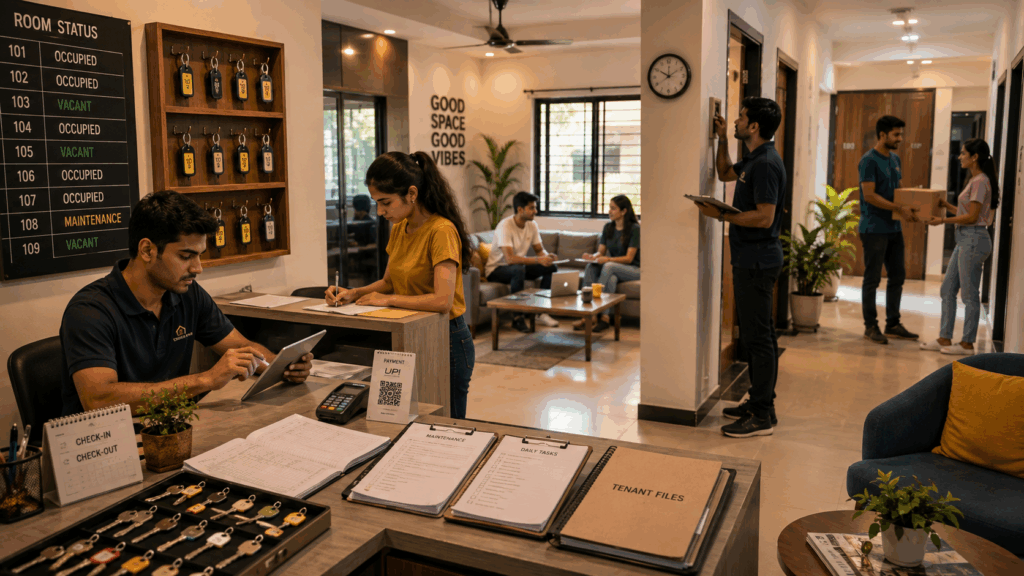
A simple responsibility structure can make this much easier:
- On-site staff can handle recurring daily activities such as housekeeping coordination, routine tenant assistance, basic inspections, and minor operational issues within approved limits.
- Property managers can take responsibility for tenant coordination, staff supervision, maintenance follow-ups, occupancy updates, and issues that require more judgment.
- Owners can focus on financial decisions, major expenses, business performance, policy changes, expansion, and situations that genuinely require escalation.
This does more than save time. It creates accountability.
When everyone knows what they are responsible for, the owner no longer becomes the default solution to every problem. At the same time, staff members know exactly when they are expected to resolve something themselves and when they need to escalate it.
That distinction is essential for anyone trying to manage a PG remotely without losing control of the business.
As your portfolio grows, the challenge changes from managing one property efficiently to maintaining control across several locations. RentOk explores this in What Nobody Tells You About Scaling a PG Business, which looks at the operational challenges that appear when a PG business starts expanding.
Build Visibility Before You Step Away
Remote management works when information reaches the owner before action is delayed. A vacancy discovered days later, overdue rent identified at month-end, or an unresolved maintenance issue can quickly become a bigger problem.
The solution is a system that makes important updates visible as part of the daily workflow. Instead of asking, “What happened at the property today?”, owners should be able to quickly see what needs their attention.
For example, a useful remote management routine can focus on:
- Financial exceptions: Look for unusually high pending dues, delayed collections, unexpected expenses, or changes that fall outside the normal pattern instead of checking every individual transaction manually.
- Occupancy movement: Track upcoming move-outs, newly available rooms, bookings, and vacancies that have remained open long enough to affect the property’s performance.
- Operational delays: Pay attention to maintenance complaints or assigned tasks that have remained open beyond the expected timeline.
- Team accountability: Review completed and pending activities so that staff performance is based on recorded work and outcomes rather than only verbal updates.
- Property-level performance: If you operate more than one PG, compare locations to understand where occupancy, collections, expenses, or operational issues are moving differently.
The idea is simple: remote management should reduce information overload, not create more of it.
You should not need twenty updates to understand whether your property is healthy. You need the right five.
This is also where reporting becomes important. Good reporting is not about receiving more information; it is about receiving the information that helps you make decisions quickly. RentOk’s Generating Owner Reports: For Property Managers and Franchisees explores how structured reporting can improve visibility into occupancy, revenue and expenses.
Make Rent Collection Less Dependent on Manual Follow-Ups
Rent collection is one of the areas where remote management can become particularly difficult. When the owner is at the property, pending payments can be followed up immediately. But when payment information is spread across spreadsheets, bank statements, messages, or handwritten records, it becomes harder to know exactly what has been collected and what is still outstanding.
This is where a structured rent and dues process becomes important. Tenants should have a clear understanding of payment deadlines, while management should have a consistent process for reminders and follow-ups. At the same time, the owner should be able to view the current collection status without waiting for manual reports.
For owners looking to reduce manual collection follow-ups, How to Collect Rent Online for Free: Complete Guide for Owners explores how digital rent collection can make payment management more organized and accessible.
Automation can make this process even more reliable by keeping rent dues, payment tracking, reminders, and collection updates in sync. This reduces dependence on staff remembering to send messages or manually update records, while giving owners a clearer view of collections, even when they are managing the property remotely.
This is particularly useful when the owner is managing several properties. A manual collection process may be manageable for a small PG, but as the number of tenants increases, the amount of follow-up required increases with it.
RentOk’s existing content on automating PG management also explores how recurring property operations can be shifted from manual processes towards more structured, technology-driven workflows.
Give Your Team Responsibility, Not Just Instructions
A common mistake in remote management is assuming that giving staff more instructions automatically creates better control.
It usually does the opposite.
If an owner is constantly calling staff members with instructions, checking whether they were completed, and asking for updates, the owner remains deeply involved in the operation. The team may technically be working independently, but the business is still dependent on the owner’s constant supervision.
The better approach is to give people defined responsibilities and measurable visibility.
A property manager should know what they own. A caretaker should know which daily activities fall under their responsibility. Maintenance staff should know which issues they are expected to close. Owners should be able to see activity without repeatedly asking for confirmation.
This is especially important when there are multiple properties and multiple team members involved. Without a structured system, it becomes difficult to understand who is handling what, whether a task was completed, and where a delay actually occurred.
A strong remote operation therefore needs two things at the same time:
delegation and visibility.
Delegation allows the owner to step away. Visibility ensures that stepping away does not mean losing control.
Communication Needs to Move Beyond WhatsApp Chats
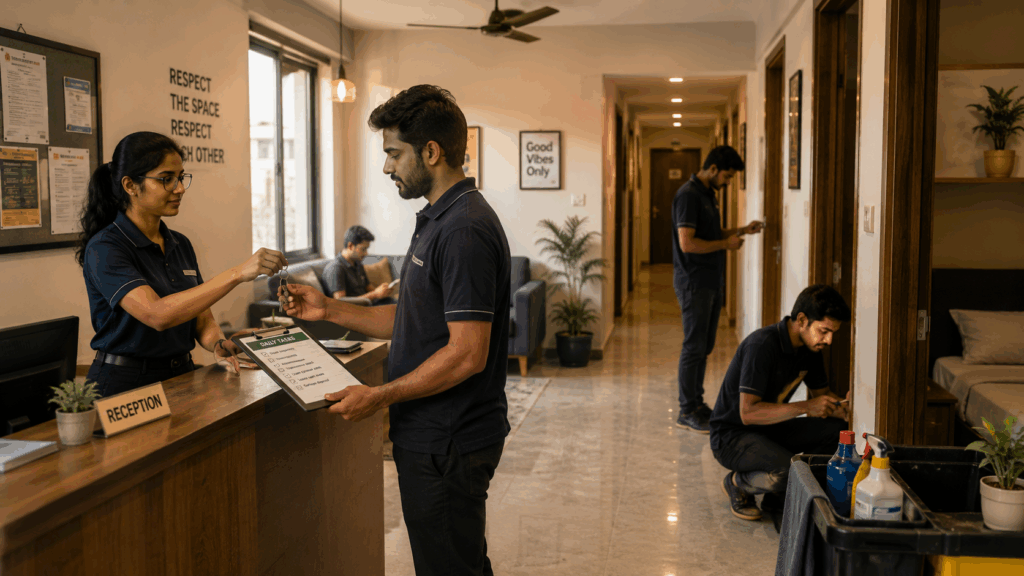
WhatsApp can be extremely useful for quick tenant and staff communication. The problem begins when the entire property operation exists inside WhatsApp.
A tenant may report a maintenance issue in one conversation. A staff member may mention it in another. The owner may receive a separate update later. After a few days, finding the complete history can become difficult.
For remote owners, this creates an additional problem: they are no longer physically present to fill in the missing context.
Important operational information should therefore be connected to the process it belongs to. A complaint should be traceable. A payment should be recorded. A task should have an owner. An important tenant update should not disappear simply because the relevant WhatsApp conversation became buried under newer messages.
RentOk’s article on communication channels for property management looks at this issue in greater detail, including how different channels can support tenant communication, reminders, and operational updates.
The objective is not to stop using communication tools. It is to make sure that communication does not become the only place where the operation is recorded.
Maintenance Should Follow a Process
Maintenance is another area where being physically present can hide weaknesses in the system.
When an owner is on-site, they may notice a problem themselves or hear about it during a conversation. They can immediately ask someone to fix it. But when they are away, every issue needs to move through a defined process.
A tenant reports a problem. Someone receives it. The issue is assigned to the appropriate person. The repair is carried out. The task is closed. If it remains unresolved, it should be escalated.
This creates accountability at every stage.
More importantly, it gives the owner a better understanding of recurring problems. If one property repeatedly requires plumbing repairs or a particular appliance keeps failing, the information can eventually point towards a larger maintenance decision rather than another temporary fix.
This is the difference between reactive maintenance and managed maintenance. Remote owners need the latter because they cannot depend on physically noticing problems themselves.
How Do You Handle Problems When You Are Not There?
Remote management does not mean every problem can or should be solved remotely.
There will always be situations where someone needs to be physically present. The key is to make sure the team knows what to do before the situation occurs.
For routine problems, staff should have enough authority to act. For larger issues, there should be clear escalation rules. Trusted vendors should already be identified. Important property and tenant information should be accessible to the people who need it.
For example, a minor repair should not require the owner to search for a vendor from another city. At the same time, a major electrical, security, or financial issue should not be handled casually without escalation.
The strongest remote operations are not those where the owner never receives a call. They are the ones where the owner receives the right call at the right time.
That is a much more sustainable way to run a PG.
Remote Management Becomes Critical as the Business Grows
Managing one property remotely can be challenging. Managing multiple properties without a structured system can quickly become overwhelming.
Every new property adds another set of tenants, payments, expenses, maintenance requirements, staff members, and vacancies. If each location is managed through a different spreadsheet or communication process, the owner’s workload grows along with the business.
This is why remote PG management is closely connected to scalability.
A growing owner should gradually move from asking:
“What is happening at my property?”
to asking:
“Which property actually needs my attention?”
That shift is a sign that the business is becoming less dependent on the owner’s physical presence.
Technology plays an important role here because a centralized system can bring multiple operational areas together. Instead of collecting information from different people and different sources, the owner can work from a common view of the business.
For owners who are serious about scaling beyond a single PG, this is not simply a convenience. It becomes part of the operating model.
The Goal Is an Owner-Independent Operation
The best remote PGs are not owner-free. They are owner-independent for routine operations.
The owner should still be involved in decisions that affect profitability, expansion, property strategy, major expenses, and long-term business direction. But everyday activities should continue without waiting for the owner to respond to every call.
That means the owner should not have to repeatedly ask:
“Has the rent been collected?”
“Which rooms are vacant?”
“Was that complaint resolved?”
“Who is handling the issue?”
“Why did expenses increase this month?”
The information should already be available.
That is ultimately what successful remote PG management in India looks like: creating enough structure that physical absence does not create operational uncertainty.
When responsibilities are clear, information is centralized, financial workflows are organized, and staff activity remains visible, owners can step away from the property without stepping away from the business.
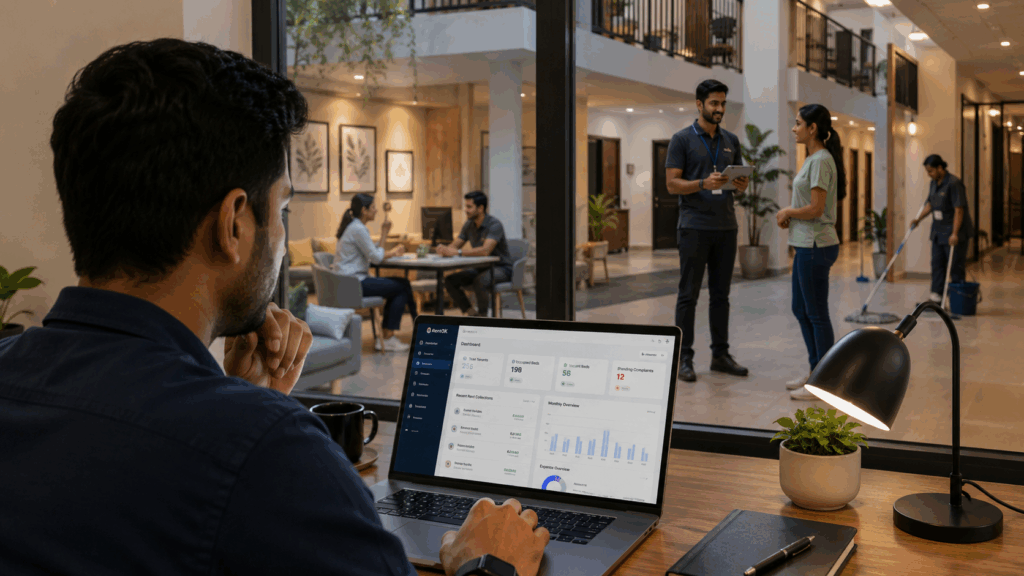
How RentOk Helps You Manage a PG Without Being On-Site
RentOk brings key PG management activities into one centralized platform, helping owners maintain visibility across their properties without depending entirely on physical supervision. Tenant information, occupancy, collections, dues, expenses, team management, complaints, and other operational activities can be organized within a connected property management system.
For an owner managing multiple properties, this can make a significant difference. Instead of collecting separate updates from different staff members, owners can get a clearer view of property-wise performance and identify where their attention is actually needed. Team members can also work within defined responsibilities, reducing the need for owners to personally coordinate every routine task.
The larger benefit is not simply digitizing existing work. It is creating an operating system that allows the property to function consistently even when the owner is somewhere else. That makes remote management more practical, reduces unnecessary manual coordination, and gives owners greater control over the business without requiring them to be physically present every day.
Final Thoughts
Managing a PG remotely is not about being available from your phone 24/7. It is about building systems that make constant availability unnecessary.
Clear team responsibilities, centralized tenant and financial information, automated rent and dues workflows, structured maintenance processes, and reliable operational visibility can collectively change how an owner manages a property from a distance. Instead of spending the day collecting updates, the owner can focus on the decisions that actually move the business forward.
If you are looking to make your PG less dependent on daily physical supervision, explore RentOk and book a personalized demo to see how a centralized property management system can help you manage your operations with greater visibility, wherever you are.
Frequently Asked Questions
Find answers to common questions about this topic
About the Author
Ishika Pannu
Ishika Pannu brings you the latest insights and easy-to-apply strategies in property management—helping you simplify renting and grow with RentOk.
You may also like these
Related Articles
1 min read
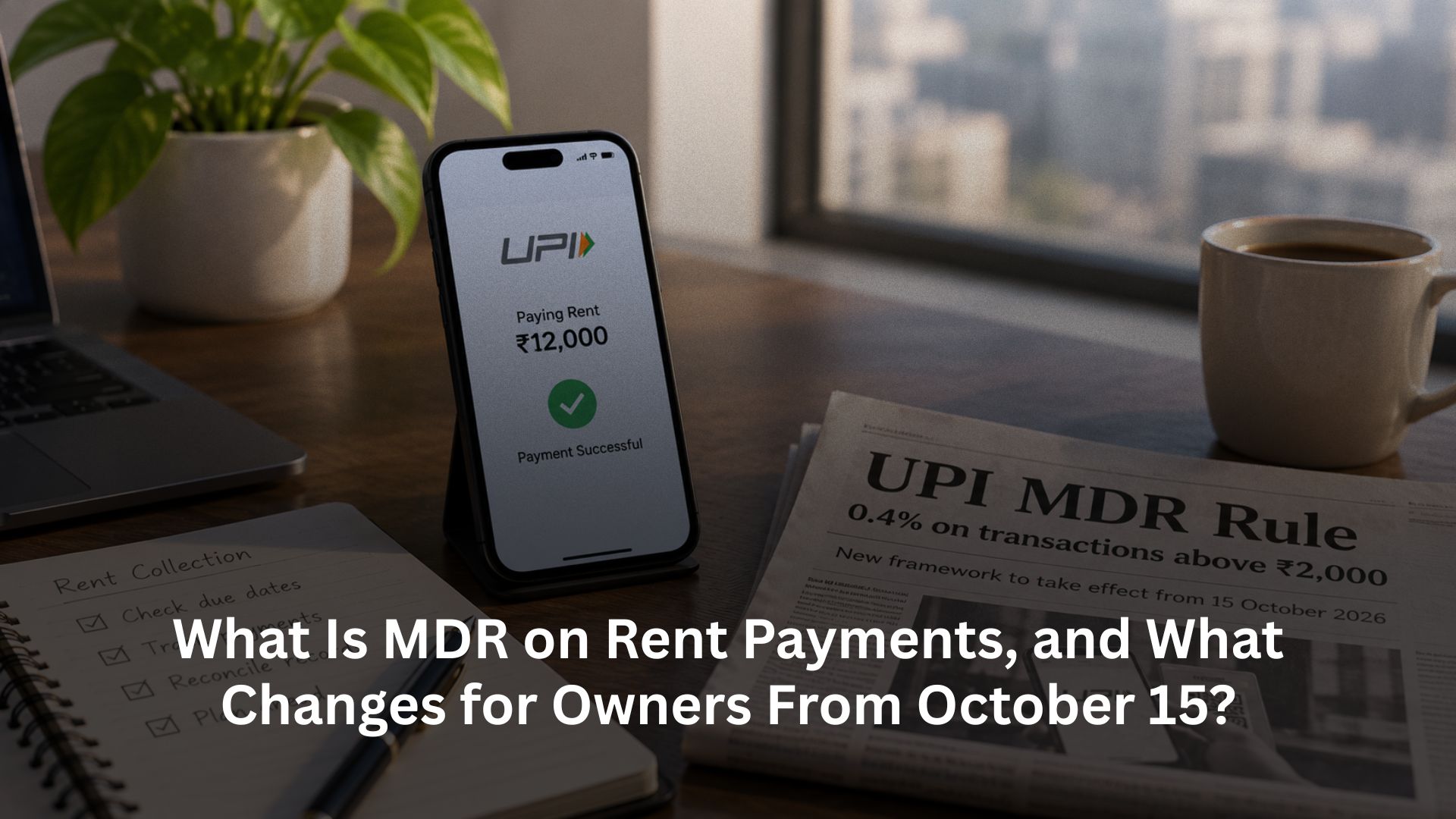
What Is MDR on Rent Payments, and What Changes for Owners From October 15?
Written by
Posted on
Ishika Pannu
Sep 21, 2026
1 min read
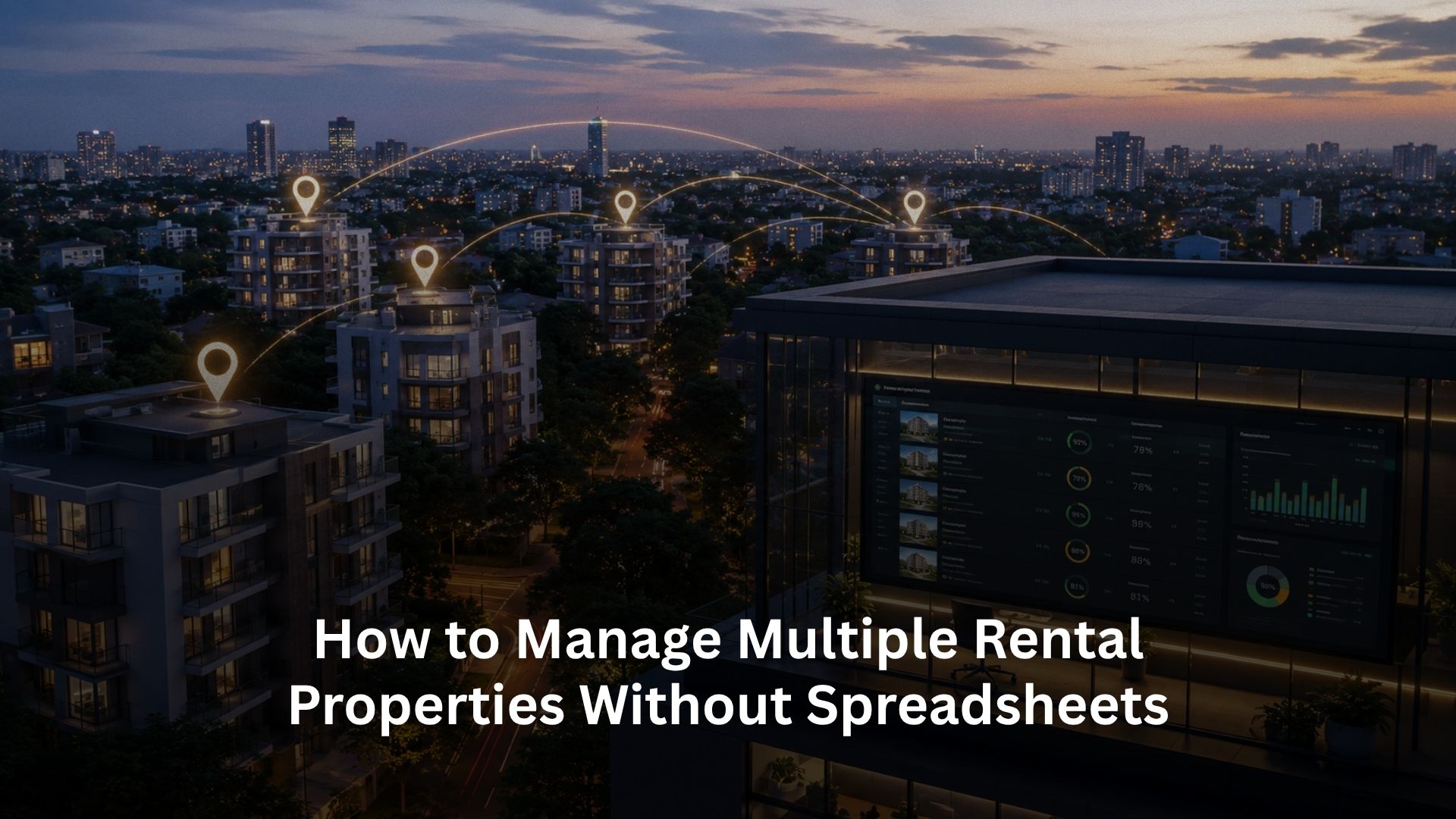
How to Manage Multiple Rental Properties Without Spreadsheets
Written by
Posted on
Ishika Pannu
Aug 31, 2026
1 min read
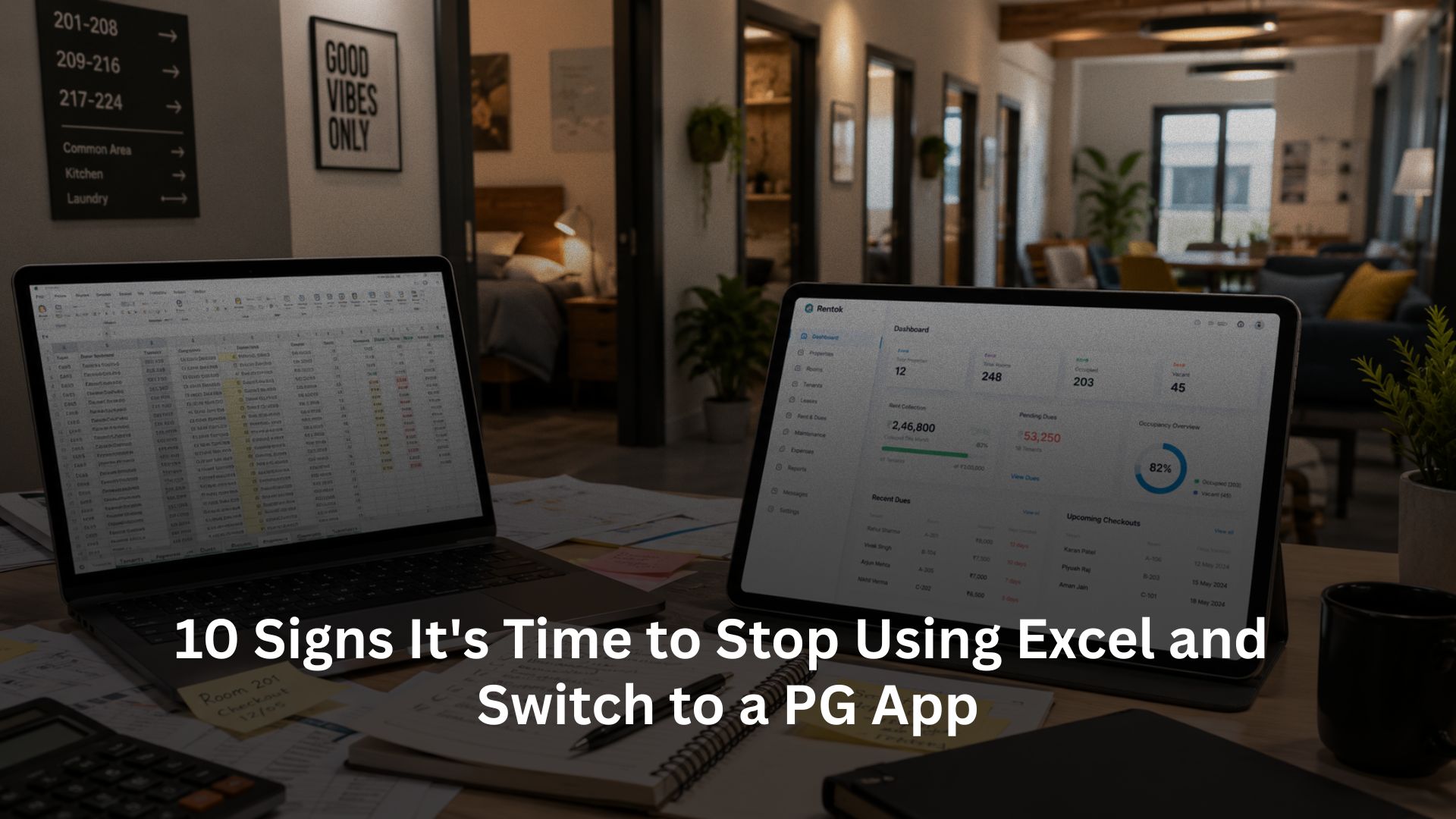
10 Signs It’s Time to Stop Using Excel and Switch to a PG App
Written by
Posted on
Ishika Pannu
Aug 14, 2026
1 min read
What AI Can Actually Do for Your PG Business Today
Written by
Posted on
Ishika Pannu
Aug 13, 2026
1 min read
5 WhatsApp Message Templates Every PG Owner Should Save
Written by
Posted on
Ishika Pannu
Jul 7, 2026
1 min read
WhatsApp Business vs Dedicated PG App: Which Should You Use?
Written by
Posted on
Ishika Pannu
Jun 23, 2026
1 min read
UPI Autopay for PG Rent: Setup Guide for Owners
Written by
Posted on
Ishika Pannu
Jun 20, 2026
1 min read
AI Property Management Software vs Traditional Software
Written by
Posted on
Ishika Pannu
Jun 12, 2026
1 min read
7 AI Property Management Tasks That No Longer Need Manual Work
Written by
Posted on
Ishika Pannu
Jun 11, 2026
1 min read
Why AI-Powered Property Management Software Is the Future
Written by
Posted on
Ishika Pannu
Jun 10, 2026
Stay ahead in property management with expert insights
Join thousands of property managers receiving exclusive tips delivered straight to your inbox.
Browse posts by category
Case Study
Cost of Living
Growth
Legal
Market Trends
News
Pg owner app
Property Management
Property Tax
Tech
RentOk
The easiest way to rent and manage your PGs and hostels.
Grievance Officer
Get the app


Contact us
hello@eazyapp.tech
HQ Office
COGROW, BASEMENT F-12/8A
BESIDE HOUSE OF STYLE SALON, SECTOR 28, DLF PHASE 1
GURUGRAM, HARYANA - 122002
South India Office
LUMIODESK COWORKING, 2ND FLOOR, 40, 14TH MAIN RD
BESIDE MC DONALD, 7TH SECTOR, HSR LAYOUT
BENGALURU, KARNATAKA - 560102
©️ 2026 EazyApp Tech Pvt Ltd. All rights reserved


