Tenant Rights
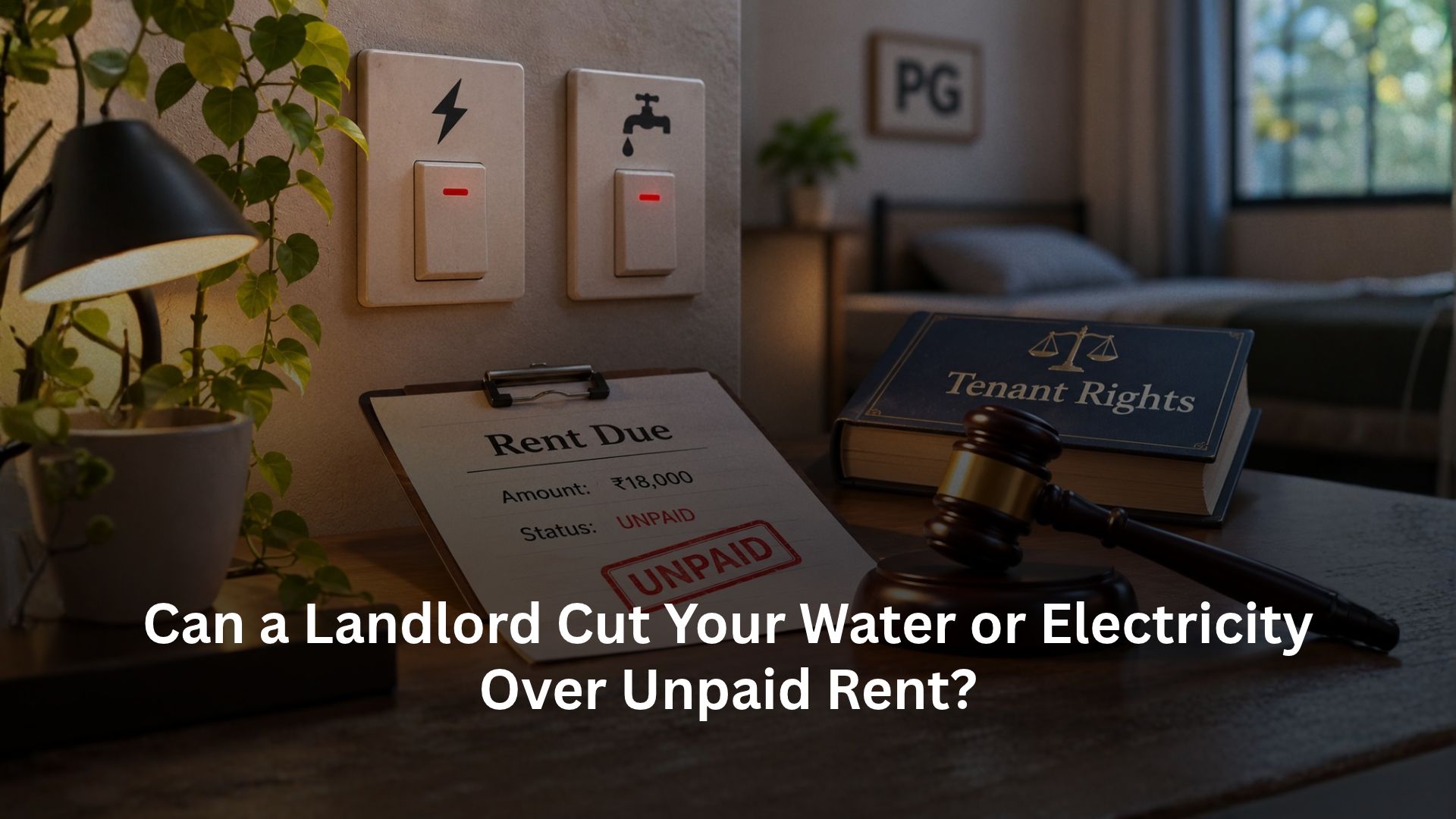
Can a Landlord Cut Your Water or Electricity Over Unpaid Rent?

Written by
Ishika Pannu
Read Time
12 min read
Posted on
November 5, 2026
Overview
Overview
Can a Landlord Cut Your Water or Electricity Over Unpaid Rent?
Generally, no, a landlord cannot use a water or electricity cutoff as a shortcut to recover unpaid rent or force you to leave. Rent arrears can justify a demand for payment and, where the law permits, recovery or eviction proceedings. They do not give an owner the same disconnection powers as an electricity distribution company.
For tenants and PG residents, the next step depends on who interrupted the supply and why. An owner switching off your room’s power, a genuine electrical fault and a DISCOM disconnecting an unpaid connection require different responses. This guide explains the legal protections, the records to keep and the complaint routes to consider, with the position checked on 5 November 2026.
Essential services are part of lawful occupation
Water and electricity support basic living conditions. A landlord should address a rent default through the applicable legal process rather than making the premises unliveable. Courts also distinguish access to essential amenities from the final decision about possession or rent liability.
In Shri Maiki Jain v. BSES Rajdhani Power Ltd., decided on 15 December 2025, the Delhi High Court addressed a tenant’s electricity restoration request during a landlord–tenant dispute. The tenant had cleared the outstanding electricity dues, but the landlords opposed reconnection. The court ordered restoration without insisting on their NOC and linked electricity access to Article 21. It also required payment of future consumption bills and preserved the supplier’s right to disconnect for non-payment. Read the court’s order.
Local rent laws determine the restoration route
For covered tenancies, Section 45 of the Delhi Rent Control Act, 1958 prohibits withholding essential services without just and sufficient cause and provides a complaint route before the Controller. Its scope has exclusions, including premises with monthly rent above ₹3,500; a PG resident should not assume automatic coverage. See the Act.
Section 29 of the Maharashtra Rent Control Act, 1999 similarly protects covered tenants and allows a court to direct restoration, including interim relief in appropriate cases. Its definition includes water and electricity. See the Maharashtra Act.
The Model Tenancy Act, 2021 is a framework for states and Union Territories to adopt or adapt. Its provisions do not automatically govern every rental arrangement across India, as the government’s explanation makes clear.
Can a PG owner switch off your room’s power?
An owner should not turn essential services into a rent-collection tool simply because the property operates as a PG or hostel. If the message is “pay the pending rent or your room stays dark,” preserve that communication and seek restoration separately from the payment discussion.
However, your legal route may differ from that of a tenant renting an independent flat. A PG arrangement can involve a tenancy, licence or lodging service. Some rent-control laws exclude licensees or hotel and lodging-house rooms, so the name “PG” alone does not establish which authority can hear the dispute.
Check the agreement, actual occupation and service terms with a local lawyer. RentOK’s guide to documenting rent, utilities and other agreement terms explains why those responsibilities should appear clearly in writing.
Safety work and prepaid balances need separate checks
A real short circuit, damaged pump or repair shutdown can require a temporary interruption. Ask what failed, who will repair it and when supply should resume. A genuine safety issue needs prompt repair; it should not become an indefinite explanation for withholding utilities until rent arrives.
Likewise, prepaid electricity balance exhaustion differs from an owner manually disabling supply over accommodation arrears. Ask for the meter balance, recharge history and applicable supply terms. Do not assume that every prepaid interruption follows the same notice process as a postpaid bill, or that a private PG sub-meter gives the owner a DISCOM’s statutory powers.

Separate rent arrears from utility-bill arrears
Unpaid rent and unpaid electricity charges are different liabilities. When a licensed supplier disconnects electricity for payment default, the Electricity Act and the relevant supply code govern its action. Section 56 generally requires at least 15 clear days’ written notice for the payment-default disconnection it covers, subject to the provision’s conditions. See the Electricity Act, 2003.
That rule does not grant a landlord permission to flip a switch after sending a 15-day rent reminder. It also does not describe every interruption, such as an emergency safety shutdown or a prepaid-meter event.
Before deciding where to complain, establish the facts:
- Building or area outage: Ask neighbours and check the supplier’s outage information. A wider fault may have no connection to the rental dispute.
- DISCOM disconnection: Request the reason, notice, outstanding amount and reconnection requirements directly from the supplier. Keep the complaint number and any payment confirmation.
- Owner-controlled interruption: Record which rooms or services lost supply and any message linking restoration to rent, vacating or another demand.
- Water interruption: Check whether the municipal connection, building pump, storage tank or an internal valve caused the problem. Different agencies control different parts of that system.
If the dispute concerns the amount charged for electricity, request the readings and calculation. RentOK’s PG electricity-billing guide explains the records that make those charges easier to review.
A restoration request needs a clear record
Start by protecting anyone at immediate risk. Arrange drinking water or a safe place to stay if necessary, and keep the receipts. If there is violence, a serious threat, confinement or an urgent medical or safety emergency, use 112 for emergency assistance.
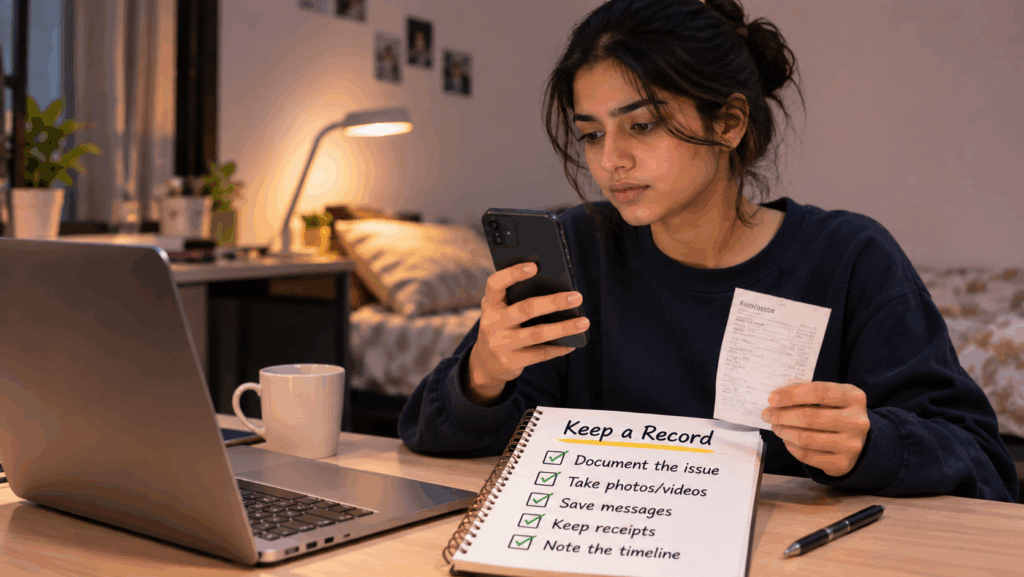
For the complaint itself, keep a dated record of the interruption. Photograph or record the affected tap or unlit room safely, retain the agreement and payment receipts, and save the owner’s messages. Record neighbours’ observations where available. Do not open electrical panels, break seals or attempt an unauthorised reconnection.
A short message to the owner or manager
Adapt this request to the facts rather than making allegations you cannot support:
Water/electricity supply to my room at [address and room number] stopped on [date and time]. Please arrange immediate restoration and confirm the reason for the interruption. Please also provide an itemised statement of any rent or utility dues you claim. I will address the payment issue separately and request that essential services remain available.
Send it through a channel that preserves the communication, such as email or a saved message thread. Note any response, promised repair time and further interruption. A restoration request creates evidence; it does not guarantee that the owner will act, so seek urgent local help when the situation requires it.
Where should you complain if supply stays off?
Choose the route according to the problem. A supplier’s billing decision, a landlord’s pressure tactic and a threat to your safety do not necessarily belong before the same authority.
| Situation | Appropriate starting point | What to request or retain |
|---|---|---|
| Electricity supplier’s outage, billing or disconnection issue | DISCOM complaint channel | Reason, restoration requirements and complaint number |
| Unresolved eligible electricity-service grievance | Consumer Grievance Redressal Forum, then Electricity Ombudsman under local rules | Earlier complaint, response, bills and supporting records |
| Municipal water-supply problem | Water board or municipal supplier | Service complaint and explanation of the interruption |
| Owner withholds essential services | Applicable Rent Controller, Rent Authority or competent court, after checking jurisdiction | Urgent restoration relief and protection against further interference |
| Threats, violence, confinement or property damage | Local police; 112 for emergencies | Factual written complaint and acknowledgement |
The Ministry of Power confirms the DISCOM–CGRF–Ombudsman grievance sequence. Eligibility and procedure depend on local regulations, particularly when the main connection belongs to the owner.
Urgent orders and compensation require the right application
Ask a local lawyer about interim restoration relief. Depending on the applicable law and forum, this may involve a statutory application or a civil claim seeking an injunction, including a mandatory direction to restore supply. A police complaint does not replace that application or guarantee reconnection.
Keep evidence of reasonable losses, such as emergency water purchases or temporary accommodation. You may seek appropriate compensation, costs or damages, but the legal basis, proof and available amounts vary. Do not assume an automatic daily payout or that every interruption establishes a criminal offence.
For help finding the appropriate legal route, contact your District Legal Services Authority or call NALSA’s 15100 helpline. Free representation depends on eligibility.
Challenging a cutoff does not cancel your rent obligations
Continue dealing with legitimate rent and utility dues while pursuing restoration. Ask for an itemised balance, identify disputed charges and preserve proof of payments already made. If you need an extension, propose a realistic date or instalment plan and obtain written acceptance.
Avoid treating the interruption as automatic permission to stop all payments. If the landlord refuses to accept rent, seek advice promptly about the payment or deposit procedure available under the law governing your arrangement. Keeping money aside privately may not satisfy that procedure.
Similarly, a security deposit does not automatically become the last month’s rent. Any adjustment needs a valid basis under the agreement, applicable law or an accepted settlement. RentOK’s guide to keeping a separate PG deposit history explains why deposit balances and monthly dues need distinct records.
An owner’s improper collection method and a resident’s unpaid balance can both require resolution. Keep the two issues clear in your messages and any legal application, so a request for essential services does not become confused with a claim that nothing remains payable.
Landlords have lawful ways to pursue unpaid rent
Owners can protect their income through a documented collection process. First reconcile the ledger, including rent, agreed utility charges, receipts and prior adjustments. A demand based on an incorrect balance can escalate a dispute that accurate records would have resolved.
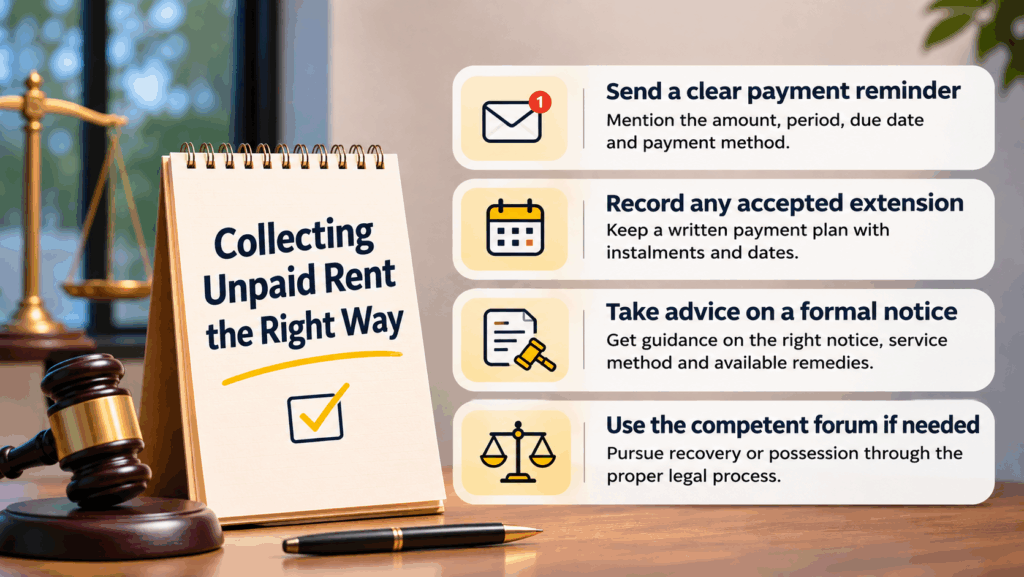
The next steps should fit the agreement and local law:
- Send a clear payment reminder. State the amount, period, due date and payment method. Allow the resident to identify a missing receipt or calculation error.
- Record any accepted extension. A written payment plan should explain the instalments and dates rather than relying on repeated verbal promises.
- Take advice on a formal notice. The correct notice, service method and available remedies depend on the tenancy or licence and the applicable legislation.
- Use the competent forum when necessary. Pursue recovery or possession through the required process. A notice alone does not authorise a forced lockout, removal of belongings or utility cutoff.
RentOK’s guide to managing late rent through a consistent process explores reminders, payment records and escalation. Use those operational practices alongside advice on the legal steps your particular arrangement requires.
The practical objective is a reliable payment record and a lawful resolution. Cutting water or power can create a separate restoration dispute and expose the owner to further legal consequences, depending on the conduct and applicable law.
How RentOK helps manage overdue rent without confrontation
A clear collection system gives owners an alternative to repeated personal demands and helps residents understand exactly what they owe. RentOK connects reminders, dues and payment records, making it easier to address a missed payment before the disagreement escalates.
- Automatic payment reminders: RentOK supports reminders through WhatsApp, SMS and notifications. Owners can communicate pending payments through a consistent workflow instead of relying on staff to remember every follow-up.
- Visible tenant-wise dues: Owners can review outstanding balances and payment history. Residents’ payment records help staff distinguish an unpaid amount from a transaction that needs reconciliation.
- Clear electricity-charge records: Add electricity dues under the appropriate category and retain the supporting readings and calculation. Separating these charges from rent helps both sides identify what the dispute actually concerns.
- Payment links and receipts: Online payment options make it easier to act on a reminder, while digital receipts provide a record for later queries. Residents should keep their own copies of relevant confirmations.
RentOK’s guide to collecting rent on time explains how these parts work together. Reminders and ledgers support communication and evidence; they do not replace a statutory notice, authorise disconnection or decide a legal dispute.
Conclusion
Unpaid rent does not give a landlord a general right to withhold water or electricity as pressure. Establish who interrupted the service, document the facts and seek restoration through the appropriate supplier, local tenancy authority or court. Use police assistance for threats or other relevant conduct, and reserve emergency numbers for urgent situations.
Residents should keep addressing legitimate dues, while owners should use reminders, clear accounts and lawful recovery procedures. Send rent reminders automatically on RentOK and keep the payment discussion supported by records, so an overdue balance can receive a proper response without putting essential services at the centre of the dispute.
Frequently Asked Questions
Find answers to common questions about this topic
About the Author
Ishika Pannu
Ishika Pannu brings you the latest insights and easy-to-apply strategies in property management—helping you simplify renting and grow with RentOk.