Tenant Rights
Is Your PG Building Safe? 12 Signs to Check Before You Pay

Written by
Ishika Pannu
Read Time
10 min read
Posted on
October 27, 2026
Overview
Overview
Is Your PG Building Safe? 12 Signs to Check Before You Pay
Most PG viewings begin with the room: the bed, the cupboard, the bathroom and the monthly rent. Yet some of the most important details sit outside that room. The stairs may double as storage, a gate may stay locked at night, or fresh paint may cover damage that the owner has never properly investigated.
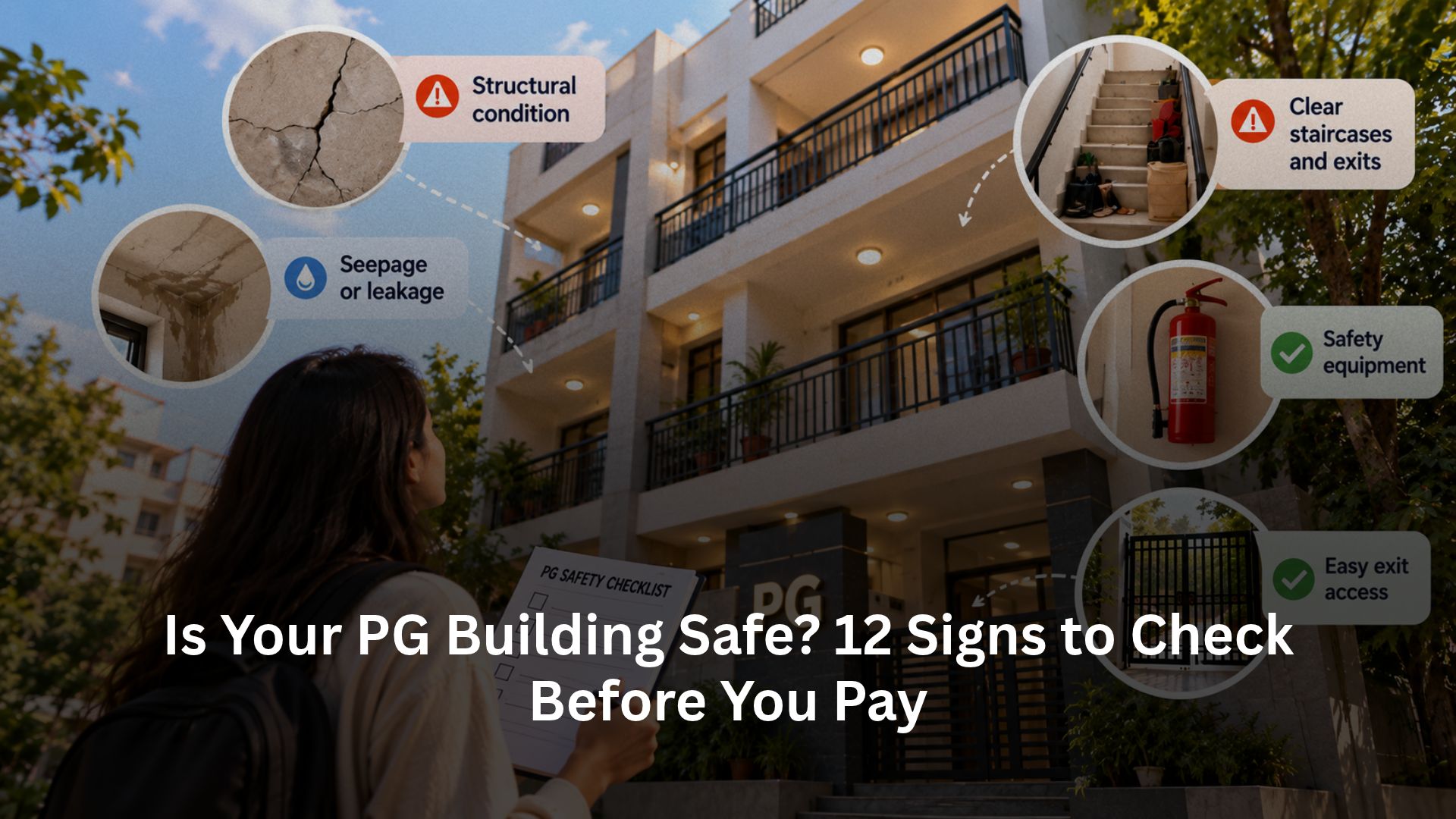
If you find yourself wondering “is my PG safe”, give the building the same attention you give the facilities. A tenant cannot certify structural safety, but a careful viewing can reveal warning signs and unanswered questions. This guide follows the visit from the building’s condition to its exits, documents and written commitments, with 12 checks collected in a simple checklist at the end.
The lesson behind the Satya Niketan tragedy
The September 2026 collapse of a building housing PG accommodation in Satya Niketan, near Delhi University’s South Campus, brought a difficult issue into focus: students often choose rooms without enough information about the buildings around them. Akashvani’s reporting on the subsequent inquiry described scrutiny of construction and operating permissions.
That does not mean tenants should attempt to identify the technical cause of a collapse. Reports about repair work, water accumulation or alterations need investigation before anyone treats them as a final explanation. The useful lesson is that an occupied building and a popular student address do not establish safety.
During your own visit, apply the wider safety lessons from the Satya Niketan PG collapse: look beyond the bedroom, ask about recent work and understand the way out. Owners, qualified professionals and relevant authorities retain responsibility for the assessments and actions within their roles.
The building’s condition deserves a closer look
Damage that needs more than fresh paint
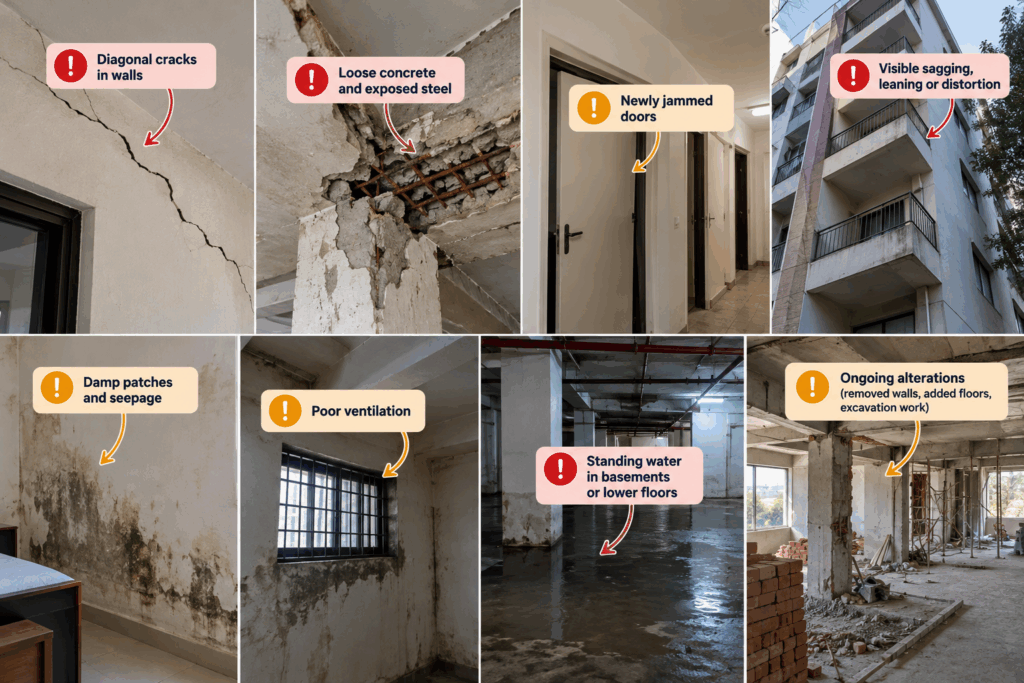
Notice the walls, ceilings, balconies and visible structural elements as you move through the property. Diagonal cracks, cracks near beams or columns, loose concrete and exposed reinforcing steel deserve an explanation. Ask when the damage appeared, whether it has changed and who assessed it.
A thin crack does not automatically mean danger, and a coat of plaster does not establish that a problem has been resolved. NIDM’s building-condition guidance identifies cracking, concrete damage and deformation among signs that require technical assessment. Your role is to notice and ask for evidence, rather than diagnose the cause from a photograph.
Visible sagging, leaning or distortion should also interrupt a casual room tour. Several newly jammed doors alongside cracks or other changes deserve investigation, although a stiff door alone does not prove structural movement. Stay away from damaged areas and never stand beneath loose material to inspect it.
If the owner promises to cover exposed steel or crumbling concrete before joining, ask for the assessment and repair record. Professional assessment of deterioration addresses the underlying condition; a cosmetic finish cannot tell you what caused it.
Seepage, lower floors and ongoing alterations
Look for recurring damp patches, standing water, poor ventilation and repeated leakage, particularly on lower floors and around accessible common areas. Speak to an existing resident about what happens during rain and whether earlier repairs solved the problem. Fresh paint can improve appearances without addressing the source.
A leak alone does not prove structural danger. Persistent moisture alongside damaged concrete, exposed steel or basement work, however, needs a more serious response than repainting. Do not enter a flooded basement to investigate.
Ask about excavation, removed walls, added floors or substantial layout changes. Find out what work is underway, who supervises it and whether the owner obtained the required permissions and professional advice. You cannot identify a load-bearing wall by looking at it, so unclear major alterations are a reason to pause payment, not an invitation to inspect the work yourself.
The escape route matters as much as the room
A clear way out, including after the gate closes
Walk from the proposed room to the final exit. Notice whether shoe racks, mattresses, cartons, parked vehicles or kitchen equipment narrow the route. Follow the staircase to its end rather than assuming an exit sign guarantees access to the street.
Delhi Fire Service’s residential precautions advise keeping stairs and escape routes free of obstructions. A blocked PG fire exit should affect your booking decision; it is more than a housekeeping issue.
Then ask staff to demonstrate the night-time opening arrangement. An emergency exit should not depend on someone finding a key or answering a phone. Have the manager show any alternative escape route, while remembering that a window, balcony or rooftop is not automatically an approved exit. The required arrangement depends on the building and applicable rules.
Equipment and staff that can support a response
An extinguisher on the wall is only the beginning. Check whether residents can reach it, whether identification and service information are available, and who maintains it. A pressure gauge, where fitted, provides one indication; it does not certify the whole fire arrangement. Do not discharge equipment during a viewing.
The responsibilities attached to fire approvals for PGs and hostels extend beyond displaying equipment. Ask how residents receive an alert, who responds at night and where everyone assembles. Existing residents can tell you whether staff have actually explained these procedures.
Check electrical fittings too. Exposed wiring, scorch marks, broken sockets and improvised connections for high-load appliances need attention. Delhi Fire Service’s electrical precautions explain overloading and overheating risks. Report suspected faults; do not touch hot fittings or open electrical panels.
During a fire, prioritise a usable safe exit. Delhi Fire Service advises against using lifts and lists 101 for fire calls; 112 provides emergency assistance. Do not delay escape to collect belongings or fight a fire.
Property records should match the premises
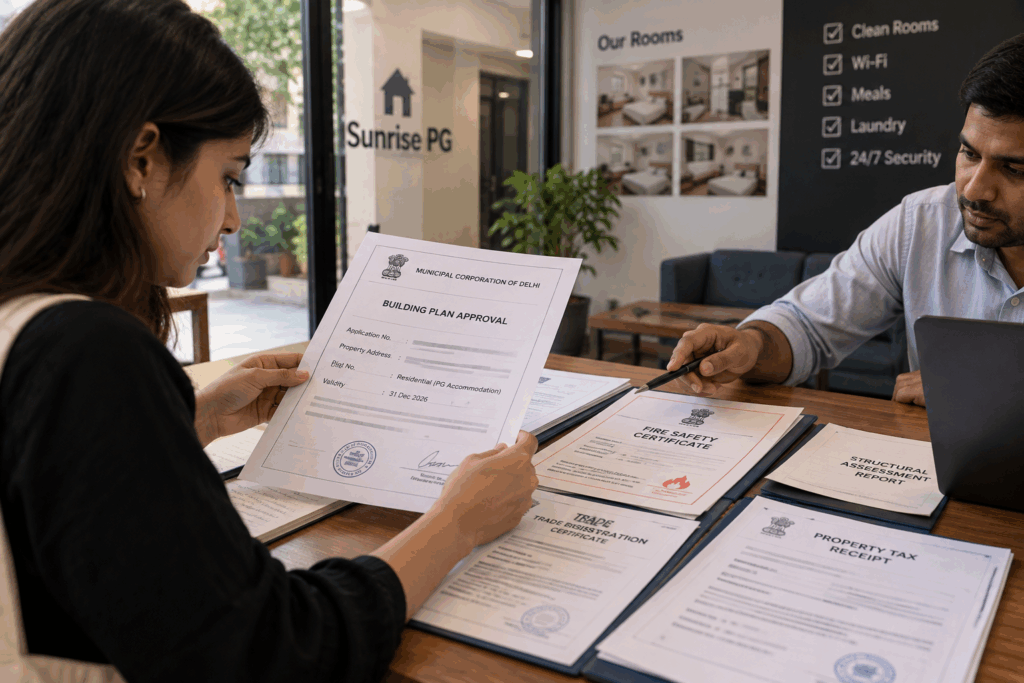
Ask which registrations and approvals apply to the PG, then look at what the records actually cover. Check the property address, issuing authority, validity, building use and scope. Depending on the location and premises, relevant documents may include accommodation permissions, building-plan or occupancy records, structural assessments and fire approvals.
There is no value in collecting impressive-looking paperwork if it relates to another property or a different use. City-specific PG registration requirements can help you identify the appropriate authority. A trade registration, police acknowledgement, property-tax receipt and structural assessment serve different purposes.
Verify details with the issuing authority where possible. MCD’s building-approval portal, for example, provides building-permission information and professional-registration resources. Do not treat an expired certificate or an application receipt as proof of a current clearance. At the same time, avoid assuming that every city issues a document literally called a “PG licence”.
The owner’s response reveals the management approach
A viewing should leave you with specific answers about maintenance and emergencies. Ask the owner to explain who handles reported hazards, how repairs receive follow-up and when a concern goes to a qualified professional. Clear answers matter more than repeated assurances that the building has “never had a problem”.
Discuss unresolved defects before paying. Ask for the proposed corrective work, the responsible person and evidence before occupancy. For recent alterations, request the nature of the work and relevant professional assessment or permission. For emergencies, confirm the night-time contact and exit procedure.
Be cautious when staff discourage access to common areas, dismiss visible damage or insist on an immediate transfer before you review the terms. A discount cannot resolve an unexplained building defect.
Read the agreement terms before signing, including the selected room, token purpose, refund conditions and any promised work. Choose PGs that use accessible digital agreements, while checking the terms and signing process themselves. Digital paperwork helps preserve the arrangement; it cannot prove building safety or replace applicable stamp-duty and registration requirements.
A viewing checklist to keep before payment
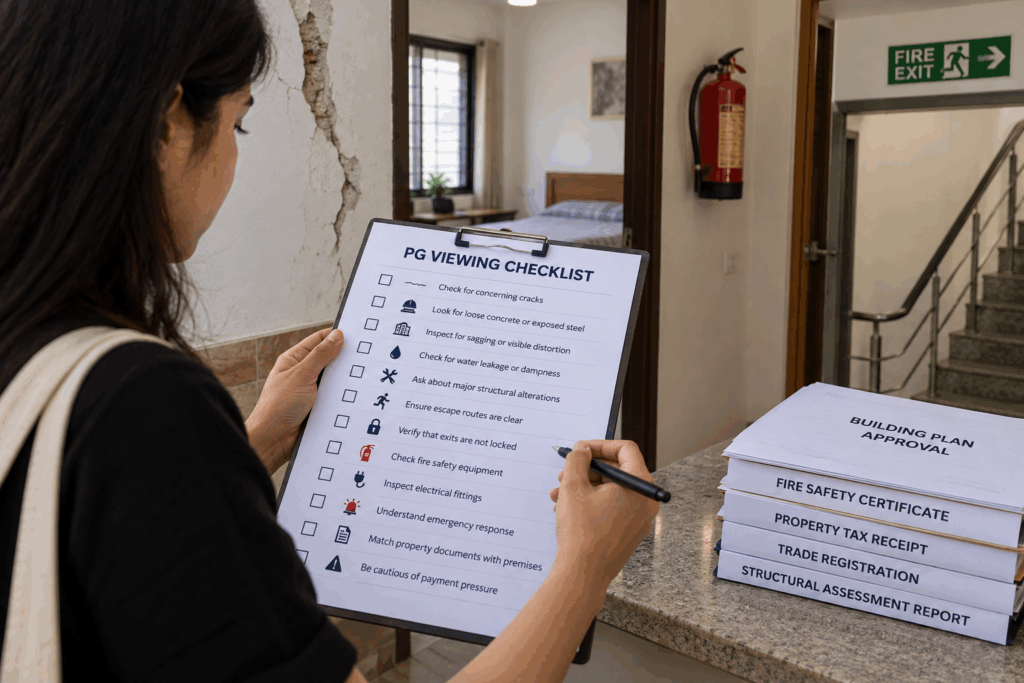
Use this single checklist during the visit. Each item identifies a concern to investigate, rather than a point in a safety score.
| Check | Evidence or action to seek |
|---|---|
| Concerning cracks | Explanation and professional assessment of significant patterns or changes. |
| Loose concrete or exposed steel | Keep clear and request assessment and repair evidence. |
| Sagging or visible distortion | Pause the viewing around affected areas and seek qualified advice. |
| Persistent water problems | Investigate recurring leakage and avoid flooded lower areas. |
| Unclear major alterations | Establish the nature of the work and responsible professional. |
| Blocked escape routes | Walk the route from the proposed room to the final exit. |
| Locked exits | Have staff demonstrate the emergency opening arrangement. |
| Unmaintained fire equipment | Check access, service information and staff awareness. |
| Damaged electrical fittings | Flag suspected faults and improvised high-load connections. |
| Unclear emergency response | Confirm alerts, the night-time contact and assembly location. |
| Mismatched property documents | Check the address, use, authority, scope and validity. |
| Evasive answers or payment pressure | Request written commitments and read refund conditions. |
Evidence before commitment
Immediate danger calls for leaving the affected area. Missing records or unresolved defects call for a pause and clarification. After completing the checks, consider the evidence and agreement together; a viewing cannot certify the structure.
Keep relevant photographs where permitted, written responses and the booking receipt. Include the room’s condition in your handover documentation. Where expert assessment is necessary, wait for it rather than letting a limited-time offer determine your move-in date.
How RentOK helps residents and owners keep follow-up clear
A maintenance concern becomes harder to follow when nobody can find the original report or remember who agreed to act. In properties using RentOK, resident records and operational workflows can help tenants and property teams keep those conversations organised:
- Recorded complaints: Keep the room details, reported issue and relevant evidence together. A defined PG maintenance workflow helps staff assign responsibility and follow progress.
- Resident communication: Property teams can share operational notices and updates. Confirm how the PG communicates urgent hazards; an app notification does not replace evacuation or an emergency call.
- Accessible rental records: Digital agreement workflows and connected payment records make the selected accommodation, agreed terms and payments easier to reference. Ask for your own copies before paying.
RentOK supports management and documentation. Engineers and relevant authorities assess matters within their remit; a platform listing, signed agreement or complaint status cannot certify structural or fire safety.
Conclusion
A worthwhile PG building safety check takes you beyond the room’s appearance. It follows the escape route, pays attention to visible defects, checks the records and considers whether the owner responds openly. Unexplained damage, unusable exits and pressure to pay deserve clarification before commitment.
Visit with someone you trust and allow enough time to check the evidence. Choose PGs that use digital agreements, clear complaint processes and transparent payment records, while giving the physical building equal attention. Better documentation can make the rental arrangement easier to understand and follow up; it works alongside proper safety assessment, not in place of it.
Frequently Asked Questions
Find answers to common questions about this topic
About the Author
Ishika Pannu
Ishika Pannu brings you the latest insights and easy-to-apply strategies in property management—helping you simplify renting and grow with RentOk.